Questões Militares
Para aspirante do corpo de bombeiro
Foram encontradas 1.768 questões
Resolva questões gratuitamente!
Junte-se a mais de 4 milhões de concurseiros!


Em julho de 1976, dom Tomás foi ao sepultamento do padre Rodolfo Lunkenbein e do índio Simão Bororo, assassinados por jagunços na aldeia de Merure, Mato Grosso. Em sua agenda, havia outra atividade prevista. Soube depois, por um jornalista, que durante essa atividade estava sendo preparado um atentado para eliminá-lo. Dom Tomás Balduíno foi ouvido pelo pesquisador da CNV Jorge Atílio Iulianelli.
Depoimento de Dom Tomás Balduíno em GO. Brasília, CNV. 13mar. 2014. Disponível em:<http://www.cnv.gov.br/outros-destaques/447-cnv-ouve-o-depoimento-de-dom-tomas-balduino-em-go.html> . Acesso em: 08 out. 2016. (Adaptação)
Esse texto aborda o depoimento do bispo Dom Tomás Balduíno, que atuou na diocese goiana naquele período.
O texto lido evidencia a/o
A divisão regional do Brasil (1950)
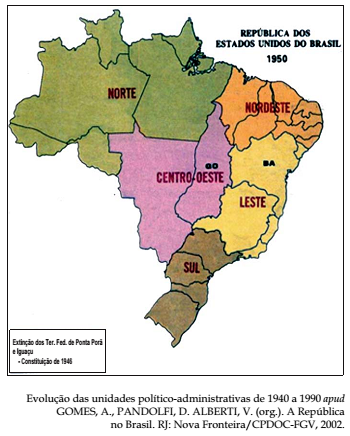
Da divisão regional nacional apresentada nesse mapa, até a década de 1990, a região Centro-Oeste passou por transformações do ponto de vista político, territorial e econômico.
Nesse período, o território da região Centro-Oeste foi
alterado com a
Número de Escravos em Goiás (1864-1887)
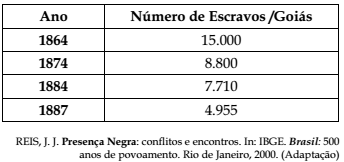
Essa tabela evidencia transformações ocorridas na composição da população do estado de Goiás, que estão relacionadas à aboliçãoda escravatura.
Quanto ao processo de abolição da escravatura
ocorrido no Brasil, na segunda metade do século XIX,
pode-se caracterizá-lo pelo/a
O cinema de ficção científica
A 'ciência' que os meios de comunicação de massa mostram, em geral, não corresponde ao trabalho desenvolvido porequipes de cientistase pesquisadores.
O pronome em destaque, nesse período, assume, na oração que inicia, a função sintáticade
O cinema de ficção científica
No entanto, a maior parte dessa divulgação é realizada por veículos que não têm a preocupação conceitual ou pedagógica, ou seja, não mostram a ciência como processo e nem explicam de forma simplificada suas metodologias.
Em relação à expressão destacada nesse período, pode-se afirmar que ela assume o sentidode
O cinema de ficção científica
O cinema de ficção científica
Leonardo da Vinci
Known as the greatest artist in the history of mankind, Leonardo da Vinci was also a great philosopher and scientist. Leonardo is the most influential figure in the Italian Renaissance and he is considered to be an inventive multi-genius.
Leonardo was born in 1452 in Vinci, Italy, as the child of Piero da Vinci, a notary, and Caterina, a country girl. He stayed with his father's family and they moved to Florence when he was just 12. At the age of 14, Leonardo started out his artist's apprenticeship at the studio of Andrea del Verrocchio (1435-1488), an Italian sculptor, goldsmith and painter.
The art of painting made Leonardo knowledgeable about anatomy and perspective. In addition to painting, Verrocchio's studio also offered technical and mechanical arts and sculpture. Leonardo had developed an interest in architecture so he went on to study engineering.
After a decade of highly original work as an artist, Leonardo wrote to several wealthy men to help finance his projects. The Duke of Milan, Ludovico Sforza (1452-1508), accepted his offer as Leonardo told him that he could design war weapons like guns and mines, and also structures like collapsible bridges. He lived in Milan with the Duke from 1482 to 1508, reportedly creating very innovational war machines. He also did painting and sculpture, as well as urban planning for large-scale water projects. There, he also wrote about making a telescope to view the moon.
Available at: <http://www.famousscientists.org/leonardo-da-vinc> (Edited).
Read this sentence from the text and analyze it:
“The Duke of Milan, Ludovico Sforza (1452-1508), accepted his offer as Leonardo told him that he could design war weapons like guns and mines, and also structures like collapsible bridges.”
This sentence presents an example of reported speech. Which of the following alternatives also presents an example of reported speech?
Leonardo da Vinci
Known as the greatest artist in the history of mankind, Leonardo da Vinci was also a great philosopher and scientist. Leonardo is the most influential figure in the Italian Renaissance and he is considered to be an inventive multi-genius.
Leonardo was born in 1452 in Vinci, Italy, as the child of Piero da Vinci, a notary, and Caterina, a country girl. He stayed with his father's family and they moved to Florence when he was just 12. At the age of 14, Leonardo started out his artist's apprenticeship at the studio of Andrea del Verrocchio (1435-1488), an Italian sculptor, goldsmith and painter.
The art of painting made Leonardo knowledgeable about anatomy and perspective. In addition to painting, Verrocchio's studio also offered technical and mechanical arts and sculpture. Leonardo had developed an interest in architecture so he went on to study engineering.
After a decade of highly original work as an artist, Leonardo wrote to several wealthy men to help finance his projects. The Duke of Milan, Ludovico Sforza (1452-1508), accepted his offer as Leonardo told him that he could design war weapons like guns and mines, and also structures like collapsible bridges. He lived in Milan with the Duke from 1482 to 1508, reportedly creating very innovational war machines. He also did painting and sculpture, as well as urban planning for large-scale water projects. There, he also wrote about making a telescope to view the moon.
Available at: <http://www.famousscientists.org/leonardo-da-vinc> (Edited).
Read this sentence from the text and analyze it:
“After a decade of highly original work as an artist, Leonardo wrote to several wealthy men to help finance his projects.”
The word “wealthy” could be replaced without change of meaning by
Leonardo da Vinci
Known as the greatest artist in the history of mankind, Leonardo da Vinci was also a great philosopher and scientist. Leonardo is the most influential figure in the Italian Renaissance and he is considered to be an inventive multi-genius.
Leonardo was born in 1452 in Vinci, Italy, as the child of Piero da Vinci, a notary, and Caterina, a country girl. He stayed with his father's family and they moved to Florence when he was just 12. At the age of 14, Leonardo started out his artist's apprenticeship at the studio of Andrea del Verrocchio (1435-1488), an Italian sculptor, goldsmith and painter.
The art of painting made Leonardo knowledgeable about anatomy and perspective. In addition to painting, Verrocchio's studio also offered technical and mechanical arts and sculpture. Leonardo had developed an interest in architecture so he went on to study engineering.
After a decade of highly original work as an artist, Leonardo wrote to several wealthy men to help finance his projects. The Duke of Milan, Ludovico Sforza (1452-1508), accepted his offer as Leonardo told him that he could design war weapons like guns and mines, and also structures like collapsible bridges. He lived in Milan with the Duke from 1482 to 1508, reportedly creating very innovational war machines. He also did painting and sculpture, as well as urban planning for large-scale water projects. There, he also wrote about making a telescope to view the moon.
Available at: <http://www.famousscientists.org/leonardo-da-vinc> (Edited).
Leonardo da Vinci
Known as the greatest artist in the history of mankind, Leonardo da Vinci was also a great philosopher and scientist. Leonardo is the most influential figure in the Italian Renaissance and he is considered to be an inventive multi-genius.
Leonardo was born in 1452 in Vinci, Italy, as the child of Piero da Vinci, a notary, and Caterina, a country girl. He stayed with his father's family and they moved to Florence when he was just 12. At the age of 14, Leonardo started out his artist's apprenticeship at the studio of Andrea del Verrocchio (1435-1488), an Italian sculptor, goldsmith and painter.
The art of painting made Leonardo knowledgeable about anatomy and perspective. In addition to painting, Verrocchio's studio also offered technical and mechanical arts and sculpture. Leonardo had developed an interest in architecture so he went on to study engineering.
After a decade of highly original work as an artist, Leonardo wrote to several wealthy men to help finance his projects. The Duke of Milan, Ludovico Sforza (1452-1508), accepted his offer as Leonardo told him that he could design war weapons like guns and mines, and also structures like collapsible bridges. He lived in Milan with the Duke from 1482 to 1508, reportedly creating very innovational war machines. He also did painting and sculpture, as well as urban planning for large-scale water projects. There, he also wrote about making a telescope to view the moon.
Available at: <http://www.famousscientists.org/leonardo-da-vinc> (Edited).
Leonardo da Vinci
Known as the greatest artist in the history of mankind, Leonardo da Vinci was also a great philosopher and scientist. Leonardo is the most influential figure in the Italian Renaissance and he is considered to be an inventive multi-genius.
Leonardo was born in 1452 in Vinci, Italy, as the child of Piero da Vinci, a notary, and Caterina, a country girl. He stayed with his father's family and they moved to Florence when he was just 12. At the age of 14, Leonardo started out his artist's apprenticeship at the studio of Andrea del Verrocchio (1435-1488), an Italian sculptor, goldsmith and painter.
The art of painting made Leonardo knowledgeable about anatomy and perspective. In addition to painting, Verrocchio's studio also offered technical and mechanical arts and sculpture. Leonardo had developed an interest in architecture so he went on to study engineering.
After a decade of highly original work as an artist, Leonardo wrote to several wealthy men to help finance his projects. The Duke of Milan, Ludovico Sforza (1452-1508), accepted his offer as Leonardo told him that he could design war weapons like guns and mines, and also structures like collapsible bridges. He lived in Milan with the Duke from 1482 to 1508, reportedly creating very innovational war machines. He also did painting and sculpture, as well as urban planning for large-scale water projects. There, he also wrote about making a telescope to view the moon.
Available at: <http://www.famousscientists.org/leonardo-da-vinc> (Edited).
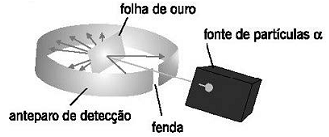
Disponível em:: <http://objetoseducacionais2.mec.gov.br/bitstream/handle/mec/12908/08_avaliacao.htm> . Acesso em: 11 jan. 2016.
Com esse experimento, é possível concluir:
Utilizando a lente de uma luneta, João consegue projetar a imagem de seu celular na parede branca de seu quarto.
Sobre a lente utilizada por João, é CORRETO afirmar:
Para descer por um toboágua, uma criança empurra para trás um suporte fixado acima da entrada desse brinquedo, a fim de que ela seja impulsionada.
Supondo que esse toboágua tenha 19,8 metros de altura, que não possua atrito e que a água não influencie na queda da criança e considerando que essa criança chega ao solo com uma velocidade de 72 km/h, é CORRETO afirmar que a velocidade inicial dela é de:
Três esferas metálicas idênticas A, B e C, com a quantidade de carga 6 μC, –10 μC e –18 μC, respectivamente, são colocadas no vácuo em contato, da seguinte forma:
• tocam-se as esferas A e B, deixando-se a esfera C muito distante;
• e, em seguida, tocam-se as esferas B e C, deixando-se a esfera A muito distante.
Após esse procedimento, as três esferas são fixadas de modo alinhado, e as esferas B e C distam da esfera A 3 m cada uma, segundo a figura a seguir.

Nessas condições, é CORRETO afirmar que a força resultante sobre a esfera B é de:
(Considere a constante eletrostática de 9,0 x 10⁹
N.m2
/C2
)
Uma aluna classifica diversos tipos de ondas como transversais ou longitudinais e como mecânicas ou eletromagnéticas.
Sobre o estudo de ondas, é CORRETO afirmar que:
Os gráficos a seguir são os resultados de um experimento que analisou o efeito da distância entre plantios e fragmentos florestais. Analisou-se como a distância influencia as características reprodutivas do vegetal cultivado, seja na polinização manual ou na polinização natural. Nesses fragmentos, foram encontradas populações de abelhas nativas polinizadoras.
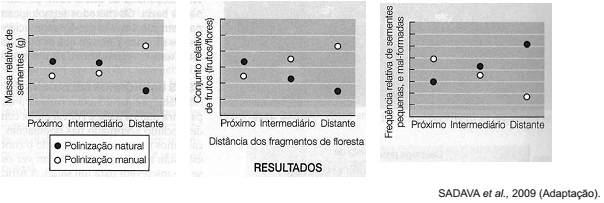
A partir da análise dos gráficos, é CORRETO concluir que:
Observe os seguintes gráficos a respeito da alteração da temperatura do meio ambiente de dois vertebrados.
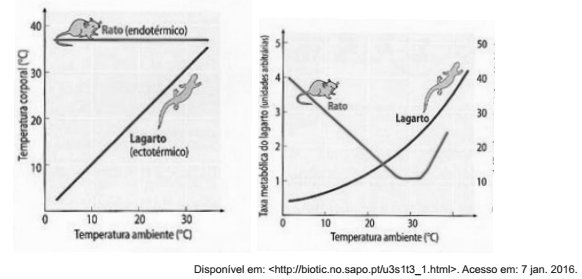
A partir da análise dos gráficos, é CORRETO concluir:

 Conheça nossos planos