Questões Militares
Para nível médio
Foram encontradas 145 questões
Resolva questões gratuitamente!
Junte-se a mais de 4 milhões de concurseiros!


(www.fitness4all.pt. Adaptado.)
Sabendo que a diferença entre as alturas do halter, em relação ao solo, nas posições 1 e 2 é de 40 cm e considerando a aceleração gravitacional igual a 10 m/s2 , o trabalho realizado pelo peso do halter no deslocamento entre as posições 1 e 2 foi de
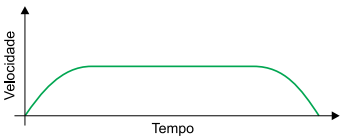
O gráfico representa o movimento de
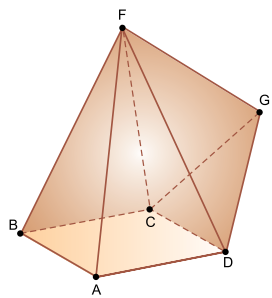
Sabendo que o volume da pirâmide GFCD é 4√10 cm³, o volume da pirâmide FABCD é
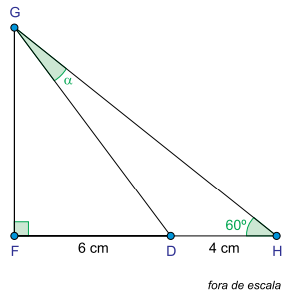
O valor de sen α é

O algarismo das unidades de x, considerado em cm, é
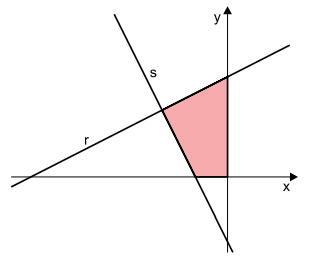
A área desse quadrilátero é
 e B =
e B =  em que x é um número positivo. Sabendo que os determinantes dessas duas matrizes são ambos iguais a y, o valor de y é
 • os números pares devem ser tais que c ≥ d e d > u;
• os números ímpares devem ser tais que c > u.
Nessas condições, o total de números distintos que podem ser formados é
Sabendo que –8 é uma raiz simples de P, o valor da constante k é
Leia o texto e o gráfico para responder à questão.
The 2020s have brought a degree of chaos not seen in decades. A pandemic was followed by a full-scale war in Europe; both sent food and fuel prices surging. Extreme weather events have shown that climate change is beginning to bite. The phrase “unprecedented times” soon sounded too common.
This all affected the global standards of living. One measure of this, the United Nations’ Human Development Index (HDI), fell in 2020 for the first time since its launch. It fell again in 2021. The HDI is one of the most widely used measures of countries’ development, after the Gross Domestic Product (GDP). It is not complete, though. It does not account for economic inequality, for example, or disparities between ethnicities and genders.
The latest figures show that the global HDI is rising again, but progress has been slow and uneven. It seems the long-term trend appears to have suffered a permanent setback since the pandemic. This setback will deeply affect the world’s poorest.
Yet there are reasons for hope. The chaos of the 2020s has also shown that governments can collaborate on some big issues. During the pandemic, vaccines were developed, produced and distributed at remarkable speed, saving an estimated 20 million lives in their first year alone. At the 28th United Nations Climate Change Conference (COP28) in 2023 the world proved that it could agree on a deal to tackle climate change (even if fulfilling it is another matter). More of that will be needed to overcome the setbacks from the start of the decade.

Leia o texto e o gráfico para responder à questão.
The 2020s have brought a degree of chaos not seen in decades. A pandemic was followed by a full-scale war in Europe; both sent food and fuel prices surging. Extreme weather events have shown that climate change is beginning to bite. The phrase “unprecedented times” soon sounded too common.
This all affected the global standards of living. One measure of this, the United Nations’ Human Development Index (HDI), fell in 2020 for the first time since its launch. It fell again in 2021. The HDI is one of the most widely used measures of countries’ development, after the Gross Domestic Product (GDP). It is not complete, though. It does not account for economic inequality, for example, or disparities between ethnicities and genders.
The latest figures show that the global HDI is rising again, but progress has been slow and uneven. It seems the long-term trend appears to have suffered a permanent setback since the pandemic. This setback will deeply affect the world’s poorest.
Yet there are reasons for hope. The chaos of the 2020s has also shown that governments can collaborate on some big issues. During the pandemic, vaccines were developed, produced and distributed at remarkable speed, saving an estimated 20 million lives in their first year alone. At the 28th United Nations Climate Change Conference (COP28) in 2023 the world proved that it could agree on a deal to tackle climate change (even if fulfilling it is another matter). More of that will be needed to overcome the setbacks from the start of the decade.
Leia o texto e o gráfico para responder à questão.
The 2020s have brought a degree of chaos not seen in decades. A pandemic was followed by a full-scale war in Europe; both sent food and fuel prices surging. Extreme weather events have shown that climate change is beginning to bite. The phrase “unprecedented times” soon sounded too common.
This all affected the global standards of living. One measure of this, the United Nations’ Human Development Index (HDI), fell in 2020 for the first time since its launch. It fell again in 2021. The HDI is one of the most widely used measures of countries’ development, after the Gross Domestic Product (GDP). It is not complete, though. It does not account for economic inequality, for example, or disparities between ethnicities and genders.
The latest figures show that the global HDI is rising again, but progress has been slow and uneven. It seems the long-term trend appears to have suffered a permanent setback since the pandemic. This setback will deeply affect the world’s poorest.
Yet there are reasons for hope. The chaos of the 2020s has also shown that governments can collaborate on some big issues. During the pandemic, vaccines were developed, produced and distributed at remarkable speed, saving an estimated 20 million lives in their first year alone. At the 28th United Nations Climate Change Conference (COP28) in 2023 the world proved that it could agree on a deal to tackle climate change (even if fulfilling it is another matter). More of that will be needed to overcome the setbacks from the start of the decade.
Leia o texto e o gráfico para responder à questão.
The 2020s have brought a degree of chaos not seen in decades. A pandemic was followed by a full-scale war in Europe; both sent food and fuel prices surging. Extreme weather events have shown that climate change is beginning to bite. The phrase “unprecedented times” soon sounded too common.
This all affected the global standards of living. One measure of this, the United Nations’ Human Development Index (HDI), fell in 2020 for the first time since its launch. It fell again in 2021. The HDI is one of the most widely used measures of countries’ development, after the Gross Domestic Product (GDP). It is not complete, though. It does not account for economic inequality, for example, or disparities between ethnicities and genders.
The latest figures show that the global HDI is rising again, but progress has been slow and uneven. It seems the long-term trend appears to have suffered a permanent setback since the pandemic. This setback will deeply affect the world’s poorest.
Yet there are reasons for hope. The chaos of the 2020s has also shown that governments can collaborate on some big issues. During the pandemic, vaccines were developed, produced and distributed at remarkable speed, saving an estimated 20 million lives in their first year alone. At the 28th United Nations Climate Change Conference (COP28) in 2023 the world proved that it could agree on a deal to tackle climate change (even if fulfilling it is another matter). More of that will be needed to overcome the setbacks from the start of the decade.
Leia o texto e o gráfico para responder à questão.
The 2020s have brought a degree of chaos not seen in decades. A pandemic was followed by a full-scale war in Europe; both sent food and fuel prices surging. Extreme weather events have shown that climate change is beginning to bite. The phrase “unprecedented times” soon sounded too common.
This all affected the global standards of living. One measure of this, the United Nations’ Human Development Index (HDI), fell in 2020 for the first time since its launch. It fell again in 2021. The HDI is one of the most widely used measures of countries’ development, after the Gross Domestic Product (GDP). It is not complete, though. It does not account for economic inequality, for example, or disparities between ethnicities and genders.
The latest figures show that the global HDI is rising again, but progress has been slow and uneven. It seems the long-term trend appears to have suffered a permanent setback since the pandemic. This setback will deeply affect the world’s poorest.
Yet there are reasons for hope. The chaos of the 2020s has also shown that governments can collaborate on some big issues. During the pandemic, vaccines were developed, produced and distributed at remarkable speed, saving an estimated 20 million lives in their first year alone. At the 28th United Nations Climate Change Conference (COP28) in 2023 the world proved that it could agree on a deal to tackle climate change (even if fulfilling it is another matter). More of that will be needed to overcome the setbacks from the start of the decade.

 Conheça nossos planos