Questões Militares
Para magistério superior
Foram encontradas 475 questões
Resolva questões gratuitamente!
Junte-se a mais de 4 milhões de concurseiros!


Leia o texto para responder à questão.
AI tech products at schools and universities
Every few years, an emerging technology shows up at the doorstep of schools and universities promising to transform education. The most recent? Technologies powered by generative artificial intelligence, also known as GenAI. These technologies are sold on the potential they hold for education. As optimistic as these visions of the future may be, the realities of educational technology over the past few decades have not lived up to their promises, as shown by rigorous investigations of technology after technology – from mechanical machines to computers, from mobile devices to massive open online courses.
Yet, educational technology evangelists forget, remain unaware or simply do not care. Or they may be overly optimistic that the next new technology will be different than before.
Here are four questions I believe should be answered before school officials purchase any technology that relies on AI.
1. Is there evidence that a product works?
Compelling evidence of the effect of GenAI products on educational outcomes does not yet exist. Therefore, and unfortunately, it is the consumer who carries the onus of appraising products. My recommendation is: use multiple means for assessing product effectiveness.
2. [...]
Oftentimes, there is a divide between what entrepreneurs build and educators need. For example, one shortcoming of the One Laptop Per Child program – an ambitious program that sought to put small, cheap but sturdy laptops in the hands of children from families of lesser means – is that the laptops were designed for idealized younger versions of the developers themselves, not so much the children who were actually using them.
Initiatives have been implemented in which entrepreneurs and educators work together to improve educational technology products. Some products are developed with input from students and educators. Questions to ask vendors might be: In what ways were educators and learners included? How did their input influence the final product?
3. What educational beliefs shape this product?
Educational technology is rarely neutral. It is designed by people, and people have beliefs, experiences, ideologies and biases that shape the technologies they develop.
It is important for educational technology products to rely on what educators have experienced as relevant to the students they meet in their real-life classes. Questions to ask include: What pedagogical principles guide this product? What particular learning does it support or discourage?
4. Does the product level the playing field?
Finally, people ought to ask how a product addresses educational inequities. Is this technology going to help reduce the learning gaps between different groups of learners? Or is it one that aids some learners – often those who are already successful or privileged – but not others? Is it adopting an asset-based or a deficit-based approach to addressing inequities?
Educational technology vendors and startups may not have answers to all of these questions. But they should still be asked and considered. Answers could lead to improved products.
(George Veletsianos. https://theconversation.com, 15.04.24. Adaptado)
Leia o texto para responder à questão.
AI tech products at schools and universities
Every few years, an emerging technology shows up at the doorstep of schools and universities promising to transform education. The most recent? Technologies powered by generative artificial intelligence, also known as GenAI. These technologies are sold on the potential they hold for education. As optimistic as these visions of the future may be, the realities of educational technology over the past few decades have not lived up to their promises, as shown by rigorous investigations of technology after technology – from mechanical machines to computers, from mobile devices to massive open online courses.
Yet, educational technology evangelists forget, remain unaware or simply do not care. Or they may be overly optimistic that the next new technology will be different than before.
Here are four questions I believe should be answered before school officials purchase any technology that relies on AI.
1. Is there evidence that a product works?
Compelling evidence of the effect of GenAI products on educational outcomes does not yet exist. Therefore, and unfortunately, it is the consumer who carries the onus of appraising products. My recommendation is: use multiple means for assessing product effectiveness.
2. [...]
Oftentimes, there is a divide between what entrepreneurs build and educators need. For example, one shortcoming of the One Laptop Per Child program – an ambitious program that sought to put small, cheap but sturdy laptops in the hands of children from families of lesser means – is that the laptops were designed for idealized younger versions of the developers themselves, not so much the children who were actually using them.
Initiatives have been implemented in which entrepreneurs and educators work together to improve educational technology products. Some products are developed with input from students and educators. Questions to ask vendors might be: In what ways were educators and learners included? How did their input influence the final product?
3. What educational beliefs shape this product?
Educational technology is rarely neutral. It is designed by people, and people have beliefs, experiences, ideologies and biases that shape the technologies they develop.
It is important for educational technology products to rely on what educators have experienced as relevant to the students they meet in their real-life classes. Questions to ask include: What pedagogical principles guide this product? What particular learning does it support or discourage?
4. Does the product level the playing field?
Finally, people ought to ask how a product addresses educational inequities. Is this technology going to help reduce the learning gaps between different groups of learners? Or is it one that aids some learners – often those who are already successful or privileged – but not others? Is it adopting an asset-based or a deficit-based approach to addressing inequities?
Educational technology vendors and startups may not have answers to all of these questions. But they should still be asked and considered. Answers could lead to improved products.
(George Veletsianos. https://theconversation.com, 15.04.24. Adaptado)
Observe a palavra destacada em negrito nas duas frases a seguir:
I. “Yet, educational technologist evangelists forget, remain unaware or simply do not care.” (parágrafo 2)
II. “Compelling evidence of the effect of GenAI products on educational outcomes does not yet exist” (parágrafo 5).
O uso da palavra yet está corretamente explicado na alternativa:
Leia o texto para responder à questão.
AI tech products at schools and universities
Every few years, an emerging technology shows up at the doorstep of schools and universities promising to transform education. The most recent? Technologies powered by generative artificial intelligence, also known as GenAI. These technologies are sold on the potential they hold for education. As optimistic as these visions of the future may be, the realities of educational technology over the past few decades have not lived up to their promises, as shown by rigorous investigations of technology after technology – from mechanical machines to computers, from mobile devices to massive open online courses.
Yet, educational technology evangelists forget, remain unaware or simply do not care. Or they may be overly optimistic that the next new technology will be different than before.
Here are four questions I believe should be answered before school officials purchase any technology that relies on AI.
1. Is there evidence that a product works?
Compelling evidence of the effect of GenAI products on educational outcomes does not yet exist. Therefore, and unfortunately, it is the consumer who carries the onus of appraising products. My recommendation is: use multiple means for assessing product effectiveness.
2. [...]
Oftentimes, there is a divide between what entrepreneurs build and educators need. For example, one shortcoming of the One Laptop Per Child program – an ambitious program that sought to put small, cheap but sturdy laptops in the hands of children from families of lesser means – is that the laptops were designed for idealized younger versions of the developers themselves, not so much the children who were actually using them.
Initiatives have been implemented in which entrepreneurs and educators work together to improve educational technology products. Some products are developed with input from students and educators. Questions to ask vendors might be: In what ways were educators and learners included? How did their input influence the final product?
3. What educational beliefs shape this product?
Educational technology is rarely neutral. It is designed by people, and people have beliefs, experiences, ideologies and biases that shape the technologies they develop.
It is important for educational technology products to rely on what educators have experienced as relevant to the students they meet in their real-life classes. Questions to ask include: What pedagogical principles guide this product? What particular learning does it support or discourage?
4. Does the product level the playing field?
Finally, people ought to ask how a product addresses educational inequities. Is this technology going to help reduce the learning gaps between different groups of learners? Or is it one that aids some learners – often those who are already successful or privileged – but not others? Is it adopting an asset-based or a deficit-based approach to addressing inequities?
Educational technology vendors and startups may not have answers to all of these questions. But they should still be asked and considered. Answers could lead to improved products.
(George Veletsianos. https://theconversation.com, 15.04.24. Adaptado)
Leia o texto para responder à questão.
AI tech products at schools and universities
Every few years, an emerging technology shows up at the doorstep of schools and universities promising to transform education. The most recent? Technologies powered by generative artificial intelligence, also known as GenAI. These technologies are sold on the potential they hold for education. As optimistic as these visions of the future may be, the realities of educational technology over the past few decades have not lived up to their promises, as shown by rigorous investigations of technology after technology – from mechanical machines to computers, from mobile devices to massive open online courses.
Yet, educational technology evangelists forget, remain unaware or simply do not care. Or they may be overly optimistic that the next new technology will be different than before.
Here are four questions I believe should be answered before school officials purchase any technology that relies on AI.
1. Is there evidence that a product works?
Compelling evidence of the effect of GenAI products on educational outcomes does not yet exist. Therefore, and unfortunately, it is the consumer who carries the onus of appraising products. My recommendation is: use multiple means for assessing product effectiveness.
2. [...]
Oftentimes, there is a divide between what entrepreneurs build and educators need. For example, one shortcoming of the One Laptop Per Child program – an ambitious program that sought to put small, cheap but sturdy laptops in the hands of children from families of lesser means – is that the laptops were designed for idealized younger versions of the developers themselves, not so much the children who were actually using them.
Initiatives have been implemented in which entrepreneurs and educators work together to improve educational technology products. Some products are developed with input from students and educators. Questions to ask vendors might be: In what ways were educators and learners included? How did their input influence the final product?
3. What educational beliefs shape this product?
Educational technology is rarely neutral. It is designed by people, and people have beliefs, experiences, ideologies and biases that shape the technologies they develop.
It is important for educational technology products to rely on what educators have experienced as relevant to the students they meet in their real-life classes. Questions to ask include: What pedagogical principles guide this product? What particular learning does it support or discourage?
4. Does the product level the playing field?
Finally, people ought to ask how a product addresses educational inequities. Is this technology going to help reduce the learning gaps between different groups of learners? Or is it one that aids some learners – often those who are already successful or privileged – but not others? Is it adopting an asset-based or a deficit-based approach to addressing inequities?
Educational technology vendors and startups may not have answers to all of these questions. But they should still be asked and considered. Answers could lead to improved products.
(George Veletsianos. https://theconversation.com, 15.04.24. Adaptado)
Another very relevant reading ability to be developed in students is that of recognizing the gist of a text, or of a self-contained part of a text. A teacher’s instruction to help develop this ability would include asking the students to reread subitem 2 and provide a subtitle that both shows their understanding of the excerpt and corresponds to the way the text has been structured.
One correct subtitle would be:
Leia o texto para responder à questão.
AI tech products at schools and universities
Every few years, an emerging technology shows up at the doorstep of schools and universities promising to transform education. The most recent? Technologies powered by generative artificial intelligence, also known as GenAI. These technologies are sold on the potential they hold for education. As optimistic as these visions of the future may be, the realities of educational technology over the past few decades have not lived up to their promises, as shown by rigorous investigations of technology after technology – from mechanical machines to computers, from mobile devices to massive open online courses.
Yet, educational technology evangelists forget, remain unaware or simply do not care. Or they may be overly optimistic that the next new technology will be different than before.
Here are four questions I believe should be answered before school officials purchase any technology that relies on AI.
1. Is there evidence that a product works?
Compelling evidence of the effect of GenAI products on educational outcomes does not yet exist. Therefore, and unfortunately, it is the consumer who carries the onus of appraising products. My recommendation is: use multiple means for assessing product effectiveness.
2. [...]
Oftentimes, there is a divide between what entrepreneurs build and educators need. For example, one shortcoming of the One Laptop Per Child program – an ambitious program that sought to put small, cheap but sturdy laptops in the hands of children from families of lesser means – is that the laptops were designed for idealized younger versions of the developers themselves, not so much the children who were actually using them.
Initiatives have been implemented in which entrepreneurs and educators work together to improve educational technology products. Some products are developed with input from students and educators. Questions to ask vendors might be: In what ways were educators and learners included? How did their input influence the final product?
3. What educational beliefs shape this product?
Educational technology is rarely neutral. It is designed by people, and people have beliefs, experiences, ideologies and biases that shape the technologies they develop.
It is important for educational technology products to rely on what educators have experienced as relevant to the students they meet in their real-life classes. Questions to ask include: What pedagogical principles guide this product? What particular learning does it support or discourage?
4. Does the product level the playing field?
Finally, people ought to ask how a product addresses educational inequities. Is this technology going to help reduce the learning gaps between different groups of learners? Or is it one that aids some learners – often those who are already successful or privileged – but not others? Is it adopting an asset-based or a deficit-based approach to addressing inequities?
Educational technology vendors and startups may not have answers to all of these questions. But they should still be asked and considered. Answers could lead to improved products.
(George Veletsianos. https://theconversation.com, 15.04.24. Adaptado)
Uma peculiaridade da Carta de 1824 foi incluir um artigo reproduzindo quase palavra por palavra a Declaração dos Direitos do Homem emitida na França em 1789. Comparado ao original havia, no entanto, algumas omissões bastante significativas e curiosas. Não foi incluído na Carta outorgada o artigo que, na versão original francesa, dizia: “O princípio de toda soberania reside essencialmente na nação. Nenhum corpo nem indivíduo podem exercer autoridade que não emane expressamente dela”. Também faltava o artigo VI: “A lei é expressão da vontade geral”. Finalmente, o artigo II: “O objetivo de toda associação política é a preservação dos direitos naturais e inalienáveis do homem. Estes direitos são a liberdade, a propriedade, a segurança e a resistência perante a opressão” foi reproduzido omitindo-se as seis últimas palavras.
(Emília Viotti da Costa, Da monarquia à república:
momentos decisivos, p. 141-142. Adaptado)
Para Emília Viotti da Costa, tais omissões podem revelar
Um plano π que contém os pontos A(1,1,2) e B(–1,1,1) é tangente ao gráfico da função cuja representação algébrica é f(x,y) = x ⋅ y.
As coordenadas do ponto de intersecção da função f com o plano π são
Considere a seguinte equação diferencial ordinária (EDO):

A solução geral para a EDO apresentada, sendo K uma constante, é
A área, em unidades de área, do domínio
D da função 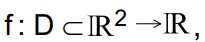 representada por
 , é
, é
Sobre a sequência numérica infinita com n natural positivo, é correto afirmar que é
Sobre um operador linear F em  3 , sabe-se que F(0, –3,1) = (0,3, –1), F(–1,1,1) = (–1,1,1) e F(0,0,1) = (0,0,2). Sendo
assim, o valor de F(4,2,0) é igual a
3 , sabe-se que F(0, –3,1) = (0,3, –1), F(–1,1,1) = (–1,1,1) e F(0,0,1) = (0,0,2). Sendo
assim, o valor de F(4,2,0) é igual a
Os planos de equações x + y + z – 1 = 0 e x – 2y + 3z –3 = 0 são secantes. Um vetor direção  para a reta de intersecção
desses planos é
para a reta de intersecção
desses planos é
Um triângulo equilátero que está inscrito em uma circunferência de centro na origem do sistema cartesiano tem um dos vértices no afixo z = 2i. A soma dos afixos correspondentes aos outros vértices desse triângulo é
Considere a progressão aritmética não constante x1 ,x2 ,...xn , xn+1, ... e uma função  tal que
d1= f(x2) – f(x1 ), d2 = f(x3) – f(x2), ..., dn = f(xn+1) – f(xn),... seja uma progressão aritmética não degenerada. Nesse caso, f
é, necessariamente, uma função
tal que
d1= f(x2) – f(x1 ), d2 = f(x3) – f(x2), ..., dn = f(xn+1) – f(xn),... seja uma progressão aritmética não degenerada. Nesse caso, f
é, necessariamente, uma função
Na função representada por y = f(x) = In  a
equação geral da reta tangente a f, no ponto de abscissa
4, é
a
equação geral da reta tangente a f, no ponto de abscissa
4, é
No desenvolvimento do binômio  considere k
como coeficiente do termo em que ocorre a7. Nesse caso,
é correto afirmar que
considere k
como coeficiente do termo em que ocorre a7. Nesse caso,
é correto afirmar que

 Conheça nossos planos