Questões Militares
Para apmbb
Foram encontradas 333 questões
Resolva questões gratuitamente!
Junte-se a mais de 4 milhões de concurseiros!


“E necessário contrapor-se a tal ausência de consciência, é preciso evitar que as pessoas golpeiem para os lados sem refletir a respeito de si próprias."
(Theodor Adorno. Educação após Auschwitz. Disponível em: https://ead.ufrgs. br/rooda/biblioteca/abrirArquivo.php/.../11142.pdf. Acesso em 18.05.2013
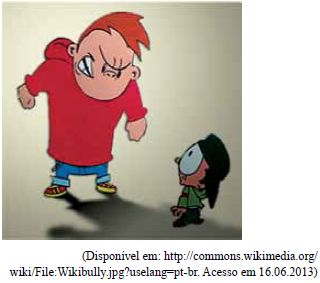
A violência é definida como o uso intencional da força física ou do poder contra si mesmo, outra pessoa, um grupo ou uma comunidade. A violência simbólica pode ser definida como
(David Hume, Tratado da natureza humana.São Paulo, Unesp, 2009. Adaptado)
Segundo o texto apresentado, é correto afirmar que
(G.W.F. Hegel, Cursos de Estética, vol.1, São Paulo, Edusp, 2001)
De acordo com texto apresentado, pode-se concluir que
(Henrique Cláudio de Lima Vaz, Escritos de Filosofia III – filosofia e cultura, São Paulo, Edições Loyola, 1997)
A partir da análise do texto, assinale a alternativa correta.
(J. J. Rousseau. Discurso sobre a origem e os fundamentos da desigualdade entre os homens. São Paulo, Abril Cultural, 1978)
A partir da análise do texto, assinale a alternativa correta.
(Alci Marcus Ribeiro Borges. Direitos humanos: conceitos e preconceitos. Jus Navigandi, Teresina, ano 11, n. 1248, 1 dez. 2006. Disponível em: http://jus.com.br. Acesso: 20.05.2013)
O texto apresentado procura
A partir de 1890, quando a capoeira foi criminalizada, através do artigo 402 do Código Penal, como atividade proibida (com pena que poderia levar de dois a seis meses de reclusão), a repressão policial abateu-se duramente sobre seus praticantes. Os capoeiristas eram considerados por muitos como “mendigos ou vagabundos”. Outras práticas afro-brasileiras, como o samba e os candomblés, foram igualmente perseguidas.
(Revista de História da Biblioteca Nacional, 21 jul.08)
A criminalização descrita no trecho pode ser associada
JORNAL DO COMMERCIO – O Brasil tem motivos para comemorar os 200 anos da chegada da família real?
EVALDO CABRAL DE MELLO – Só os cariocas. O Brasil ou é oito ou é oitenta. Há alguns anos, era oito: tinha grande êxito um filme que punha na tela antigos chavões sobre a presença da corte lusitana no Rio. Hoje estamos no oitenta: dom João VI passou de idiota régio a estadista ocidental.
JORNAL DO COMMERCIO – Se pudéssemos simplificar em duas palavras, a vinda da família real trouxe mais benefícios ou prejuízos para o Nordeste?
EVALDO CABRAL DE MELLO – Claro que prejuízos, e imediatos. Primeiro, a corte ficava muito mais perto, segundo, houve a espoliação das províncias promovida pela família real, em terceiro lugar, a presença de dom João era o esforço de um futuro regime centralizador, embora não se possa dizer que desde dom João o assunto já fosse de favas contadas.
Entre as reações à política estabelecida pela família real, é possível citar

Os três produtos representados nas imagens estiveram relacionados à interiorização da colonização, principalmente entre os séculos XVII e XVIII. O processo histórico que explica essa relação é
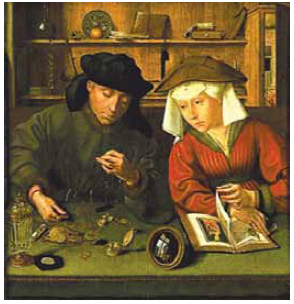
A obra O banqueiro e sua mulher (1514), de Quentin Matsys, retrata o casal

As mudanças ocorridas nos territórios representados entre os mapas 1 e 2 estão relacionadas
A cidadania nos Estados nacionais contemporâneos é um fenômeno único na História. Não podemos falar de continuidade do mundo antigo, de repetição de uma experiência passada e nem mesmo de um desenvolvimento progressivo que unisse o mundo contemporâneo ao antigo. São mundos diferentes, com sociedades distintas, nas quais pertencimento, participação e direitos têm sentidos diversos.
(Norberto Luiz Guarinello, Cidades-Estado na Antiguidade Clássica. In PINSKY, Jaime; PINSKY,
Carla Bassanezi (orgs.). História da Cidadania. São Paulo: Contexto, 2008, p. 29.)
Entre as diferenças que separam o Estado nacional contemporâneo da cidade-estado da Antiguidade, é possível destacar
Police and Human Rights – Manual for Police Training
How can respecting human rights help the police?
Respect for human rights by law enforcement agencies actually enhances the effectiveness of those agencies. Where human rights are systematically respected, police officers have developed professionalism in their approaches to solving and preventing crime and maintaining public order. In this sense, respect for human rights by police is, in addition to being a moral, legal and ethical imperative, also a practical requirement for law enforcement. When the police are seen to respect, uphold and defend human rights:
• Public confidence is built and community cooperation fostered.
• Legal prosecutions are successful in court. • Police are seen as part of the community, performing a valuable social function.
• The fair administration of justice is served, and, consequently, confidence in the system.
• An example is set for respect for the law by others in the society.
• Police are able to be closer to the community, and, therefore, in a position to prevent and solve crimes through proactive policing.
• Support is elicited from the media, from the international community, and from higher authorities.
• A contribution is made to the peaceful resolution of conflicts and complaints.
An effective police service is one that serves as the first line of defense in the protection of human rights. Its members carry out their work in a way, which does not rely upon fear and raw power but, on the contrary, is based on regard for the law, honor, and professionalism.
What role does training play in protecting human rights?
The effective training of police in human rights is an essential element in the global efforts to promote and protect human rights in every country. In order to protect human rights, the police must first know and understand them. Furthermore, police officers must be familiar with the various international guidelines and bodies of principles – such as the Code of Conduct for law enforcement officials and the principles on the use of force and firearms – and be able to use them as tools in their everyday work. They must understand the fact that international human rights standards concerning their work were developed to provide invaluable guidance for the performance of their crucial functions in a democratic society. However, police officers in the line of duty should know not only what the rules are, but also how to do their job effectively within the confines of those rules.
Most people have heard the argument that respect for human rights is somehow opposed to effective law enforcement. And effective law enforcement means to capture the criminal. And to secure his conviction, it is necessary to “bend the rules” a little. A tendency to use overwhelming force in controlling demonstrations, physical pressure to extract information from detainees, or excessive force to secure an arrest can be observed now and then. In this way of thinking, law enforcement is a war against crime, and human rights are merely obstacles thrown in the path of the police by lawyers and NGOs. In fact, violations of human rights ––78–––– police only make the already challenging task of law enforcement ––– 79––– . When the law enforcer ––– 80––– the lawbreaker, the result is an assault on human dignity, on the law itself and on all institutions of public authority.
(G. Kalajdziev, et al. www.humanrights.dk. Adaptado.)
Instrução: Na questão, assinale a alternativa que complete corretamente as respectivas lacunas, numeradas no último período do texto.
Police and Human Rights – Manual for Police Training
How can respecting human rights help the police?
Respect for human rights by law enforcement agencies actually enhances the effectiveness of those agencies. Where human rights are systematically respected, police officers have developed professionalism in their approaches to solving and preventing crime and maintaining public order. In this sense, respect for human rights by police is, in addition to being a moral, legal and ethical imperative, also a practical requirement for law enforcement. When the police are seen to respect, uphold and defend human rights:
• Public confidence is built and community cooperation fostered.
• Legal prosecutions are successful in court. • Police are seen as part of the community, performing a valuable social function.
• The fair administration of justice is served, and, consequently, confidence in the system.
• An example is set for respect for the law by others in the society.
• Police are able to be closer to the community, and, therefore, in a position to prevent and solve crimes through proactive policing.
• Support is elicited from the media, from the international community, and from higher authorities.
• A contribution is made to the peaceful resolution of conflicts and complaints.
An effective police service is one that serves as the first line of defense in the protection of human rights. Its members carry out their work in a way, which does not rely upon fear and raw power but, on the contrary, is based on regard for the law, honor, and professionalism.
What role does training play in protecting human rights?
The effective training of police in human rights is an essential element in the global efforts to promote and protect human rights in every country. In order to protect human rights, the police must first know and understand them. Furthermore, police officers must be familiar with the various international guidelines and bodies of principles – such as the Code of Conduct for law enforcement officials and the principles on the use of force and firearms – and be able to use them as tools in their everyday work. They must understand the fact that international human rights standards concerning their work were developed to provide invaluable guidance for the performance of their crucial functions in a democratic society. However, police officers in the line of duty should know not only what the rules are, but also how to do their job effectively within the confines of those rules.
Most people have heard the argument that respect for human rights is somehow opposed to effective law enforcement. And effective law enforcement means to capture the criminal. And to secure his conviction, it is necessary to “bend the rules” a little. A tendency to use overwhelming force in controlling demonstrations, physical pressure to extract information from detainees, or excessive force to secure an arrest can be observed now and then. In this way of thinking, law enforcement is a war against crime, and human rights are merely obstacles thrown in the path of the police by lawyers and NGOs. In fact, violations of human rights ––78–––– police only make the already challenging task of law enforcement ––– 79––– . When the law enforcer ––– 80––– the lawbreaker, the result is an assault on human dignity, on the law itself and on all institutions of public authority.
(G. Kalajdziev, et al. www.humanrights.dk. Adaptado.)
Instrução: Na questão, assinale a alternativa que complete corretamente as respectivas lacunas, numeradas no último período do texto.
Police and Human Rights – Manual for Police Training
How can respecting human rights help the police?
Respect for human rights by law enforcement agencies actually enhances the effectiveness of those agencies. Where human rights are systematically respected, police officers have developed professionalism in their approaches to solving and preventing crime and maintaining public order. In this sense, respect for human rights by police is, in addition to being a moral, legal and ethical imperative, also a practical requirement for law enforcement. When the police are seen to respect, uphold and defend human rights:
• Public confidence is built and community cooperation fostered.
• Legal prosecutions are successful in court. • Police are seen as part of the community, performing a valuable social function.
• The fair administration of justice is served, and, consequently, confidence in the system.
• An example is set for respect for the law by others in the society.
• Police are able to be closer to the community, and, therefore, in a position to prevent and solve crimes through proactive policing.
• Support is elicited from the media, from the international community, and from higher authorities.
• A contribution is made to the peaceful resolution of conflicts and complaints.
An effective police service is one that serves as the first line of defense in the protection of human rights. Its members carry out their work in a way, which does not rely upon fear and raw power but, on the contrary, is based on regard for the law, honor, and professionalism.
What role does training play in protecting human rights?
The effective training of police in human rights is an essential element in the global efforts to promote and protect human rights in every country. In order to protect human rights, the police must first know and understand them. Furthermore, police officers must be familiar with the various international guidelines and bodies of principles – such as the Code of Conduct for law enforcement officials and the principles on the use of force and firearms – and be able to use them as tools in their everyday work. They must understand the fact that international human rights standards concerning their work were developed to provide invaluable guidance for the performance of their crucial functions in a democratic society. However, police officers in the line of duty should know not only what the rules are, but also how to do their job effectively within the confines of those rules.
Most people have heard the argument that respect for human rights is somehow opposed to effective law enforcement. And effective law enforcement means to capture the criminal. And to secure his conviction, it is necessary to “bend the rules” a little. A tendency to use overwhelming force in controlling demonstrations, physical pressure to extract information from detainees, or excessive force to secure an arrest can be observed now and then. In this way of thinking, law enforcement is a war against crime, and human rights are merely obstacles thrown in the path of the police by lawyers and NGOs. In fact, violations of human rights ––78–––– police only make the already challenging task of law enforcement ––– 79––– . When the law enforcer ––– 80––– the lawbreaker, the result is an assault on human dignity, on the law itself and on all institutions of public authority.
(G. Kalajdziev, et al. www.humanrights.dk. Adaptado.)
Instrução: Na questão, assinale a alternativa que complete corretamente as respectivas lacunas, numeradas no último período do texto.
Police and Human Rights – Manual for Police Training
How can respecting human rights help the police?
Respect for human rights by law enforcement agencies actually enhances the effectiveness of those agencies. Where human rights are systematically respected, police officers have developed professionalism in their approaches to solving and preventing crime and maintaining public order. In this sense, respect for human rights by police is, in addition to being a moral, legal and ethical imperative, also a practical requirement for law enforcement. When the police are seen to respect, uphold and defend human rights:
• Public confidence is built and community cooperation fostered.
• Legal prosecutions are successful in court. • Police are seen as part of the community, performing a valuable social function.
• The fair administration of justice is served, and, consequently, confidence in the system.
• An example is set for respect for the law by others in the society.
• Police are able to be closer to the community, and, therefore, in a position to prevent and solve crimes through proactive policing.
• Support is elicited from the media, from the international community, and from higher authorities.
• A contribution is made to the peaceful resolution of conflicts and complaints.
An effective police service is one that serves as the first line of defense in the protection of human rights. Its members carry out their work in a way, which does not rely upon fear and raw power but, on the contrary, is based on regard for the law, honor, and professionalism.
What role does training play in protecting human rights?
The effective training of police in human rights is an essential element in the global efforts to promote and protect human rights in every country. In order to protect human rights, the police must first know and understand them. Furthermore, police officers must be familiar with the various international guidelines and bodies of principles – such as the Code of Conduct for law enforcement officials and the principles on the use of force and firearms – and be able to use them as tools in their everyday work. They must understand the fact that international human rights standards concerning their work were developed to provide invaluable guidance for the performance of their crucial functions in a democratic society. However, police officers in the line of duty should know not only what the rules are, but also how to do their job effectively within the confines of those rules.
Most people have heard the argument that respect for human rights is somehow opposed to effective law enforcement. And effective law enforcement means to capture the criminal. And to secure his conviction, it is necessary to “bend the rules” a little. A tendency to use overwhelming force in controlling demonstrations, physical pressure to extract information from detainees, or excessive force to secure an arrest can be observed now and then. In this way of thinking, law enforcement is a war against crime, and human rights are merely obstacles thrown in the path of the police by lawyers and NGOs. In fact, violations of human rights ––78–––– police only make the already challenging task of law enforcement ––– 79––– . When the law enforcer ––– 80––– the lawbreaker, the result is an assault on human dignity, on the law itself and on all institutions of public authority.
(G. Kalajdziev, et al. www.humanrights.dk. Adaptado.)
Tecendo a Manhã
Um galo sozinho não tece uma manhã:
ele precisará sempre de outros galos.
De um que apanhe esse grito que ele
e o lance a outro; de um outro galo
que apanhe o grito que um galo antes
e o lance a outro; e de outros galos
que com muitos outros galos se cruzem
os fios de sol de seus gritos de galo,
para que a manhã, desde uma teia tênue,
se vá tecendo, entre todos os galos.
E se encorpando em tela, entre todos,
se erguendo tenda, onde entrem todos,
se entretendendo* para todos,no toldo
(a manhã) que plana livre de armação.
A manhã, toldo de um tecido tão aéreo
que, tecido, se eleva por si: luz balão.
(João Cabral de Melo Neto. A educação pela pedra.)
* neologismo criado pelo autor, por meio da junção de “entre” + “entender”

 Conheça nossos planos