Questões Militares
Foram encontradas 14.724 questões
Resolva questões gratuitamente!
Junte-se a mais de 4 milhões de concurseiros!


Text II
Millions of people need homes. Millions of shipping containers are going unused. Could this be an answer to the global housing crisis? Cleveland Containers explore further.
England is facing a housing crisis. According to housing charity Shelter, more than 50,000 households a year are being forced out of their homes, and there are more than 9 million renters in unsecure rented accommodations.
The situation is shaky even for those who own their own homes. 28,900 homes were repossessed across the UK in 2013.
But this situation isn't unique to England. House prices are soaring across the world, which is placing home ownership out of reach for millions. And that's just in the developed world. Around 850 million people are currently living in “informal settlements”. In numerous rapidly urbanising cities, the average housing costs can be up to 200% of the net monthly income.
There is no single explanation as to why the world's facing a housing crisis, and there's no easy answer for how to solve it. But one major factor is a general dearth of good quality, affordable housing. Many developments in the housing market are focused on constructing high-end units that are expensive to build and out of the price range of most. This needs to change.
Desperate times often call for radical Solutions. One thing the world isn't lacking is shipping containers. There may be up to 40 million shipping containers in the world right now, and experts believe that only six million are currently in use.
Who'd live in a shipping Container?
Shipping containers are built to be strong, secure and practical. These are all sound benefits for storage and mass transit, but do they make for comfortable accommodation?
The idea of living in a shipping Container might strike some as odd, unfeasible, impractical and maybe even a little unappealing. But it's important to think of shipping containers not as finished products, but as raw materiais - as exoskeletons for future homes.
Because, really, there's no end to what you can do with a shipping Container. They can easily be insulated and fitted with Windows, doors, indoor partitions, electricity and running water - everything that's needed for human inhabitation. A single shipping Container can be transformed into a cosy dwelling in no time at all. But if more space is needed, you can just stack multiple containers on top of each other.
And if you're really wondering whether people would be comfortable living in converted shipping containers, just consider the great reaction that greets shipping containers converted for retail use. They're thought of as cool, hip and quirky. When used as affordable housing, it's no stretch to say that many won't think of shipping containers as a last resort, so much as actively desirable.
(Abridged and adapted from
https://www.openaccessgovemment.org)
Text II
Millions of people need homes. Millions of shipping containers are going unused. Could this be an answer to the global housing crisis? Cleveland Containers explore further.
England is facing a housing crisis. According to housing charity Shelter, more than 50,000 households a year are being forced out of their homes, and there are more than 9 million renters in unsecure rented accommodations.
The situation is shaky even for those who own their own homes. 28,900 homes were repossessed across the UK in 2013.
But this situation isn't unique to England. House prices are soaring across the world, which is placing home ownership out of reach for millions. And that's just in the developed world. Around 850 million people are currently living in “informal settlements”. In numerous rapidly urbanising cities, the average housing costs can be up to 200% of the net monthly income.
There is no single explanation as to why the world's facing a housing crisis, and there's no easy answer for how to solve it. But one major factor is a general dearth of good quality, affordable housing. Many developments in the housing market are focused on constructing high-end units that are expensive to build and out of the price range of most. This needs to change.
Desperate times often call for radical Solutions. One thing the world isn't lacking is shipping containers. There may be up to 40 million shipping containers in the world right now, and experts believe that only six million are currently in use.
Who'd live in a shipping Container?
Shipping containers are built to be strong, secure and practical. These are all sound benefits for storage and mass transit, but do they make for comfortable accommodation?
The idea of living in a shipping Container might strike some as odd, unfeasible, impractical and maybe even a little unappealing. But it's important to think of shipping containers not as finished products, but as raw materiais - as exoskeletons for future homes.
Because, really, there's no end to what you can do with a shipping Container. They can easily be insulated and fitted with Windows, doors, indoor partitions, electricity and running water - everything that's needed for human inhabitation. A single shipping Container can be transformed into a cosy dwelling in no time at all. But if more space is needed, you can just stack multiple containers on top of each other.
And if you're really wondering whether people would be comfortable living in converted shipping containers, just consider the great reaction that greets shipping containers converted for retail use. They're thought of as cool, hip and quirky. When used as affordable housing, it's no stretch to say that many won't think of shipping containers as a last resort, so much as actively desirable.
(Abridged and adapted from
https://www.openaccessgovemment.org)
Read the statements about the text and decide whether they are TRUE (T) or FALSE (F). Mark the correct option.
I - There is a surfeit of dwellings in England.
II - Housing is wobbly in England.
III - House prices are steep worldwide.
IV - Home ownership is attainable for many people.
V - Living in a shipping Container is alluring and ordinary throughout the world.
Text I
Read the text below and choose the correct option.
Buy a beach cruiser and help save sea turtles on Kiawah
Every spring, fierce female sea turtles-mostly loggerheads-make their way from the ocean to Kiawah Island during nesting season.
From May through October, Kiawah's beaches are home to 400 nests and thousands of baby loggerheads. But many of these endangered hatchlings would not survive without the island's hands-on nest protection program. Specifícally, the Kiawah Island Turtle Patrol efforts that help 75% of hatchlings make it from their nests to the ocean. Without these efforts: less than 10% have a chance.
Sea turtles are an endangered species and the loggerhead turtle has been on the threatened list since 1978. Over the years, the Kiawah Island Turtle Patrol has become one of the largest volunteer turtle efforts in the United States. From relocating nests to helping hatchlings find the sea, volunteering is open to island residents and guests, and the program relies on the community to help raise awareness about the importance of nesting season.
This May, you'11 see a custom fleet of beach cruisers with an original turtle print designed by Peter Millar at the new Timbers Kiawah Ocean Club and Residences.
“We approached Peter Millar, a favorite on Kiawah, to design a turtle-pattemed bike as a fun way to raise our owners' awareness about the turtles and show our commitment to protecting the wildlife on Kiawah”, says Chris Burden, managing director for Timbers Kiawah.
You don't have to be a Timbers' owner to help: the limited-edition beach cruisers are for sale to the public and 100% of the proceeds go to the turtle patrol. “Kiawah Island is one of the country's most vital nesting areas for loggerhead sea turtles and the turtle patrol is responsible for nesting patrols and monitoring efforts up and down the beach. The contributions will be used to fund their initiatives in whatever way they see fit”, Burden says. Anyone can volunteer in the nesting and hatching programs by contacting Kiawah Island Turtle Patrol.
(Abridged and adapted from https://www.newsweek.com/iawahsave-turtles-1412015)
It is possible to infer from the text that
What is Interpol?
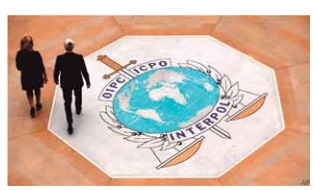
Founded in 1923, Interpol is an international police organisation made up of 194 member countries. It is not a police force in the traditional sense – its agents are not able to arrest criminals. Instead, it is more of an informationsharing network, providing a way for national police forces to co-operate effectively and tackle international crime ranging from human trafficking and terrorism to money laundering and illegal art dealing.
The organisation, based in France, operates centralised criminal databases that contain fingerprint records, DNA samples and stolen documents: a treasure trove so valuable that police consulted it 146 times every second in 2017. Interpol’s other main function is to issue notices: alerts to member states for missing or wanted persons. The bestknown of these is the “Red Notice”, a notification that a member state would like someone arrested. States are not obliged to follow these notices, but will often treat them as a warrant for someone’s arrest and extradition. “Diffusions”, which can be issued with less bureaucracy, are another popular way of seeking arrests through Interpol.
Notices and diffusions lie at the heart of the organisation’s recent turmoil. Though Interpol’s constitution explicitly forbids any activities of a political character, activists accuse it of failing to enforce this rule.
(www.economist.com/the-economist-explains/2018/11/22/ what-is-interpol. Adaptado)
What is Interpol?
Founded in 1923, Interpol is an international police organisation made up of 194 member countries. It is not a police force in the traditional sense – its agents are not able to arrest criminals. Instead, it is more of an informationsharing network, providing a way for national police forces to co-operate effectively and tackle international crime ranging from human trafficking and terrorism to money laundering and illegal art dealing.
The organisation, based in France, operates centralised criminal databases that contain fingerprint records, DNA samples and stolen documents: a treasure trove so valuable that police consulted it 146 times every second in 2017. Interpol’s other main function is to issue notices: alerts to member states for missing or wanted persons. The bestknown of these is the “Red Notice”, a notification that a member state would like someone arrested. States are not obliged to follow these notices, but will often treat them as a warrant for someone’s arrest and extradition. “Diffusions”, which can be issued with less bureaucracy, are another popular way of seeking arrests through Interpol.
Notices and diffusions lie at the heart of the organisation’s recent turmoil. Though Interpol’s constitution explicitly forbids any activities of a political character, activists accuse it of failing to enforce this rule.
(www.economist.com/the-economist-explains/2018/11/22/ what-is-interpol. Adaptado)
What is Interpol?
Founded in 1923, Interpol is an international police organisation made up of 194 member countries. It is not a police force in the traditional sense – its agents are not able to arrest criminals. Instead, it is more of an informationsharing network, providing a way for national police forces to co-operate effectively and tackle international crime ranging from human trafficking and terrorism to money laundering and illegal art dealing.
The organisation, based in France, operates centralised criminal databases that contain fingerprint records, DNA samples and stolen documents: a treasure trove so valuable that police consulted it 146 times every second in 2017. Interpol’s other main function is to issue notices: alerts to member states for missing or wanted persons. The bestknown of these is the “Red Notice”, a notification that a member state would like someone arrested. States are not obliged to follow these notices, but will often treat them as a warrant for someone’s arrest and extradition. “Diffusions”, which can be issued with less bureaucracy, are another popular way of seeking arrests through Interpol.
Notices and diffusions lie at the heart of the organisation’s recent turmoil. Though Interpol’s constitution explicitly forbids any activities of a political character, activists accuse it of failing to enforce this rule.
(www.economist.com/the-economist-explains/2018/11/22/ what-is-interpol. Adaptado)
What is Interpol?
Founded in 1923, Interpol is an international police organisation made up of 194 member countries. It is not a police force in the traditional sense – its agents are not able to arrest criminals. Instead, it is more of an informationsharing network, providing a way for national police forces to co-operate effectively and tackle international crime ranging from human trafficking and terrorism to money laundering and illegal art dealing.
The organisation, based in France, operates centralised criminal databases that contain fingerprint records, DNA samples and stolen documents: a treasure trove so valuable that police consulted it 146 times every second in 2017. Interpol’s other main function is to issue notices: alerts to member states for missing or wanted persons. The bestknown of these is the “Red Notice”, a notification that a member state would like someone arrested. States are not obliged to follow these notices, but will often treat them as a warrant for someone’s arrest and extradition. “Diffusions”, which can be issued with less bureaucracy, are another popular way of seeking arrests through Interpol.
Notices and diffusions lie at the heart of the organisation’s recent turmoil. Though Interpol’s constitution explicitly forbids any activities of a political character, activists accuse it of failing to enforce this rule.
(www.economist.com/the-economist-explains/2018/11/22/ what-is-interpol. Adaptado)
What is Interpol?
Founded in 1923, Interpol is an international police organisation made up of 194 member countries. It is not a police force in the traditional sense – its agents are not able to arrest criminals. Instead, it is more of an informationsharing network, providing a way for national police forces to co-operate effectively and tackle international crime ranging from human trafficking and terrorism to money laundering and illegal art dealing.
The organisation, based in France, operates centralised criminal databases that contain fingerprint records, DNA samples and stolen documents: a treasure trove so valuable that police consulted it 146 times every second in 2017. Interpol’s other main function is to issue notices: alerts to member states for missing or wanted persons. The bestknown of these is the “Red Notice”, a notification that a member state would like someone arrested. States are not obliged to follow these notices, but will often treat them as a warrant for someone’s arrest and extradition. “Diffusions”, which can be issued with less bureaucracy, are another popular way of seeking arrests through Interpol.
Notices and diffusions lie at the heart of the organisation’s recent turmoil. Though Interpol’s constitution explicitly forbids any activities of a political character, activists accuse it of failing to enforce this rule.
(www.economist.com/the-economist-explains/2018/11/22/ what-is-interpol. Adaptado)
What is Interpol?
Founded in 1923, Interpol is an international police organisation made up of 194 member countries. It is not a police force in the traditional sense – its agents are not able to arrest criminals. Instead, it is more of an informationsharing network, providing a way for national police forces to co-operate effectively and tackle international crime ranging from human trafficking and terrorism to money laundering and illegal art dealing.
The organisation, based in France, operates centralised criminal databases that contain fingerprint records, DNA samples and stolen documents: a treasure trove so valuable that police consulted it 146 times every second in 2017. Interpol’s other main function is to issue notices: alerts to member states for missing or wanted persons. The bestknown of these is the “Red Notice”, a notification that a member state would like someone arrested. States are not obliged to follow these notices, but will often treat them as a warrant for someone’s arrest and extradition. “Diffusions”, which can be issued with less bureaucracy, are another popular way of seeking arrests through Interpol.
Notices and diffusions lie at the heart of the organisation’s recent turmoil. Though Interpol’s constitution explicitly forbids any activities of a political character, activists accuse it of failing to enforce this rule.
(www.economist.com/the-economist-explains/2018/11/22/ what-is-interpol. Adaptado)
Os antigos
Os antigos invocavam as Musas.
Nós invocamo-nos a nós mesmos.
Não sei se as Musas apareciam –
Seria sem dúvida conforme o invocado e a invocação. –
Mas sei que nós não aparecemos.
Quantas vezes me tenho debruçado
Sobre o poço que me suponho
E balido “Ah!” para ouvir um eco,
E não tenho ouvido mais que o visto –
O vago alvor escuro com que a água resplandece
Lá na inutilidade do fundo…
Nenhum eco para mim…
Só vagamente uma cara,
Que deve ser a minha, por não poder ser de outro.
E uma coisa quase invisível,
Exceto como luminosamente vejo
Lá no fundo…
No silêncio e na luz falsa do fundo…
(Fernando Pessoa. Poemas de Álvaro de Campos. São Paulo, Saraiva, 2013, p. 156)
Os antigos
Os antigos invocavam as Musas.
Nós invocamo-nos a nós mesmos.
Não sei se as Musas apareciam –
Seria sem dúvida conforme o invocado e a invocação. –
Mas sei que nós não aparecemos.
Quantas vezes me tenho debruçado
Sobre o poço que me suponho
E balido “Ah!” para ouvir um eco,
E não tenho ouvido mais que o visto –
O vago alvor escuro com que a água resplandece
Lá na inutilidade do fundo…
Nenhum eco para mim…
Só vagamente uma cara,
Que deve ser a minha, por não poder ser de outro.
E uma coisa quase invisível,
Exceto como luminosamente vejo
Lá no fundo…
No silêncio e na luz falsa do fundo…
(Fernando Pessoa. Poemas de Álvaro de Campos. São Paulo, Saraiva, 2013, p. 156)
Os antigos
Os antigos invocavam as Musas.
Nós invocamo-nos a nós mesmos.
Não sei se as Musas apareciam –
Seria sem dúvida conforme o invocado e a invocação. –
Mas sei que nós não aparecemos.
Quantas vezes me tenho debruçado
Sobre o poço que me suponho
E balido “Ah!” para ouvir um eco,
E não tenho ouvido mais que o visto –
O vago alvor escuro com que a água resplandece
Lá na inutilidade do fundo…
Nenhum eco para mim…
Só vagamente uma cara,
Que deve ser a minha, por não poder ser de outro.
E uma coisa quase invisível,
Exceto como luminosamente vejo
Lá no fundo…
No silêncio e na luz falsa do fundo…
(Fernando Pessoa. Poemas de Álvaro de Campos. São Paulo, Saraiva, 2013, p. 156)
Os antigos
Os antigos invocavam as Musas.
Nós invocamo-nos a nós mesmos.
Não sei se as Musas apareciam –
Seria sem dúvida conforme o invocado e a invocação. –
Mas sei que nós não aparecemos.
Quantas vezes me tenho debruçado
Sobre o poço que me suponho
E balido “Ah!” para ouvir um eco,
E não tenho ouvido mais que o visto –
O vago alvor escuro com que a água resplandece
Lá na inutilidade do fundo…
Nenhum eco para mim…
Só vagamente uma cara,
Que deve ser a minha, por não poder ser de outro.
E uma coisa quase invisível,
Exceto como luminosamente vejo
Lá no fundo…
No silêncio e na luz falsa do fundo…
(Fernando Pessoa. Poemas de Álvaro de Campos. São Paulo, Saraiva, 2013, p. 156)
Leia o trecho inicial da crônica de Machado de Assis para responder à questão.
[19 maio de 1888]
Bons dias! Eu pertenço a uma família de profetas après coup1 , post factum2 , depois do gato morto, ou como melhor nome tenha em holandês. Por isso digo, juro se necessário for, que toda a história desta lei de 13 de maio estava por mim prevista, tanto que na segunda-feira, antes mesmo dos debates, tratei de alforriar um molecote que tinha, pessoa de seus dezoito anos, mais ou menos. Alforriá-lo era nada; entendi que, perdido por mil, perdido por mil e quinhentos, e dei um jantar.
Levantei-me eu com a taça de champanha e declarei que, acompanhando as ideias pregadas por Cristo, há dezoito séculos, restituía a liberdade ao meu escravo Pancrácio; que entendia que a nação inteira devia acompanhar as mesmas ideias e imitar o meu exemplo; finalmente, que a liberdade era um dom de Deus que os homens não podiam roubar sem pecado.
Pancrácio, que estava à espreita, entrou na sala, como um furacão, e veio abraçar-me os pés. Todos os lenços comovidos apanharam as lágrimas de admiração. Caí na cadeira e não vi mais nada. De noite, recebi muitos cartões. Creio que estão pintando o meu retrato, e suponho que a óleo.
No dia seguinte, chamei o Pancrácio e disse-lhe com rara franqueza:
– Tu és livre, podes ir para onde quiseres. Aqui tens casa amiga, já conhecida e tens mais um ordenado, um ordenado que...
– Oh! meu senhô! fico...
– Um ordenado pequeno, mas que há de crescer. Tudo cresce neste mundo: tu cresceste imensamente. Quando nasceste eras um pirralho deste tamanho; hoje estás mais alto que eu. Deixa ver; olha, és mais alto quatro dedos...
– Artura não qué dizê nada, não, senhô...
– Pequeno ordenado, repito, uns seis mil-réis: mas é de grão em grão que a galinha enche o seu papo. Tu vales muito mais que uma galinha.
– Justamente. Pois seis mil-réis. No fim de um ano, se andares bem, conta com oito. Oito ou sete. Pancrácio aceitou tudo: aceitou até um peteleco que lhe dei no dia seguinte, por me não escovar bem as botas; efeitos da liberdade. Mas eu expliquei-lhe que o peteleco, sendo um impulso natural, não podia anular o direito civil adquirido por um título que lhe dei. Ele continuava livre, eu de mau humor; eram dois estados naturais, quase divinos.
Tudo compreendeu o meu bom Pancrácio: daí para cá, tenho-lhe despedido alguns pontapés, um ou outro puxão de orelhas. E chamo-lhe besta quando lhe não chamo filho do diabo; coisas todas que ele recebe humildemente, e (Deus me perdoe!) creio que até alegre.
(Machado de Assis. Bons dias. www.dominiopublico.gov.br. Adaptado)
1 après coup: [francês] pós-golpe.
2 post factum: [latim] depois do fato.
Leia o trecho inicial da crônica de Machado de Assis para responder à questão.
[19 maio de 1888]
Bons dias! Eu pertenço a uma família de profetas après coup1 , post factum2 , depois do gato morto, ou como melhor nome tenha em holandês. Por isso digo, juro se necessário for, que toda a história desta lei de 13 de maio estava por mim prevista, tanto que na segunda-feira, antes mesmo dos debates, tratei de alforriar um molecote que tinha, pessoa de seus dezoito anos, mais ou menos. Alforriá-lo era nada; entendi que, perdido por mil, perdido por mil e quinhentos, e dei um jantar.
Levantei-me eu com a taça de champanha e declarei que, acompanhando as ideias pregadas por Cristo, há dezoito séculos, restituía a liberdade ao meu escravo Pancrácio; que entendia que a nação inteira devia acompanhar as mesmas ideias e imitar o meu exemplo; finalmente, que a liberdade era um dom de Deus que os homens não podiam roubar sem pecado.
Pancrácio, que estava à espreita, entrou na sala, como um furacão, e veio abraçar-me os pés. Todos os lenços comovidos apanharam as lágrimas de admiração. Caí na cadeira e não vi mais nada. De noite, recebi muitos cartões. Creio que estão pintando o meu retrato, e suponho que a óleo.
No dia seguinte, chamei o Pancrácio e disse-lhe com rara franqueza:
– Tu és livre, podes ir para onde quiseres. Aqui tens casa amiga, já conhecida e tens mais um ordenado, um ordenado que...
– Oh! meu senhô! fico...
– Um ordenado pequeno, mas que há de crescer. Tudo cresce neste mundo: tu cresceste imensamente. Quando nasceste eras um pirralho deste tamanho; hoje estás mais alto que eu. Deixa ver; olha, és mais alto quatro dedos...
– Artura não qué dizê nada, não, senhô...
– Pequeno ordenado, repito, uns seis mil-réis: mas é de grão em grão que a galinha enche o seu papo. Tu vales muito mais que uma galinha.
– Justamente. Pois seis mil-réis. No fim de um ano, se andares bem, conta com oito. Oito ou sete. Pancrácio aceitou tudo: aceitou até um peteleco que lhe dei no dia seguinte, por me não escovar bem as botas; efeitos da liberdade. Mas eu expliquei-lhe que o peteleco, sendo um impulso natural, não podia anular o direito civil adquirido por um título que lhe dei. Ele continuava livre, eu de mau humor; eram dois estados naturais, quase divinos.
Tudo compreendeu o meu bom Pancrácio: daí para cá, tenho-lhe despedido alguns pontapés, um ou outro puxão de orelhas. E chamo-lhe besta quando lhe não chamo filho do diabo; coisas todas que ele recebe humildemente, e (Deus me perdoe!) creio que até alegre.
(Machado de Assis. Bons dias. www.dominiopublico.gov.br. Adaptado)
1 après coup: [francês] pós-golpe.
2 post factum: [latim] depois do fato.
Considere os vocábulos destacados e enumerados na seguinte passagem do texto:
Levantei-me eu com a taça de champanha e declarei que (1), acompanhando as ideias pregadas por Cristo, há dezoito séculos, restituía a liberdade ao meu escravo Pancrácio; que (2) entendia que (3) a nação inteira devia acompanhar as mesmas ideias e imitar o meu exemplo; finalmente, que (4) a liberdade era um dom de Deus que (5) os homens não podiam roubar sem pecado.
O vocábulo que tem função pronominal, ou seja, que retoma e substitui uma expressão substantiva no texto, é o identificado pelo número
Leia o trecho inicial da crônica de Machado de Assis para responder à questão.
[19 maio de 1888]
Bons dias! Eu pertenço a uma família de profetas après coup1 , post factum2 , depois do gato morto, ou como melhor nome tenha em holandês. Por isso digo, juro se necessário for, que toda a história desta lei de 13 de maio estava por mim prevista, tanto que na segunda-feira, antes mesmo dos debates, tratei de alforriar um molecote que tinha, pessoa de seus dezoito anos, mais ou menos. Alforriá-lo era nada; entendi que, perdido por mil, perdido por mil e quinhentos, e dei um jantar.
Levantei-me eu com a taça de champanha e declarei que, acompanhando as ideias pregadas por Cristo, há dezoito séculos, restituía a liberdade ao meu escravo Pancrácio; que entendia que a nação inteira devia acompanhar as mesmas ideias e imitar o meu exemplo; finalmente, que a liberdade era um dom de Deus que os homens não podiam roubar sem pecado.
Pancrácio, que estava à espreita, entrou na sala, como um furacão, e veio abraçar-me os pés. Todos os lenços comovidos apanharam as lágrimas de admiração. Caí na cadeira e não vi mais nada. De noite, recebi muitos cartões. Creio que estão pintando o meu retrato, e suponho que a óleo.
No dia seguinte, chamei o Pancrácio e disse-lhe com rara franqueza:
– Tu és livre, podes ir para onde quiseres. Aqui tens casa amiga, já conhecida e tens mais um ordenado, um ordenado que...
– Oh! meu senhô! fico...
– Um ordenado pequeno, mas que há de crescer. Tudo cresce neste mundo: tu cresceste imensamente. Quando nasceste eras um pirralho deste tamanho; hoje estás mais alto que eu. Deixa ver; olha, és mais alto quatro dedos...
– Artura não qué dizê nada, não, senhô...
– Pequeno ordenado, repito, uns seis mil-réis: mas é de grão em grão que a galinha enche o seu papo. Tu vales muito mais que uma galinha.
– Justamente. Pois seis mil-réis. No fim de um ano, se andares bem, conta com oito. Oito ou sete. Pancrácio aceitou tudo: aceitou até um peteleco que lhe dei no dia seguinte, por me não escovar bem as botas; efeitos da liberdade. Mas eu expliquei-lhe que o peteleco, sendo um impulso natural, não podia anular o direito civil adquirido por um título que lhe dei. Ele continuava livre, eu de mau humor; eram dois estados naturais, quase divinos.
Tudo compreendeu o meu bom Pancrácio: daí para cá, tenho-lhe despedido alguns pontapés, um ou outro puxão de orelhas. E chamo-lhe besta quando lhe não chamo filho do diabo; coisas todas que ele recebe humildemente, e (Deus me perdoe!) creio que até alegre.
(Machado de Assis. Bons dias. www.dominiopublico.gov.br. Adaptado)
1 après coup: [francês] pós-golpe.
2 post factum: [latim] depois do fato.
Leia o trecho inicial da crônica de Machado de Assis para responder à questão.
[19 maio de 1888]
Bons dias! Eu pertenço a uma família de profetas après coup1 , post factum2 , depois do gato morto, ou como melhor nome tenha em holandês. Por isso digo, juro se necessário for, que toda a história desta lei de 13 de maio estava por mim prevista, tanto que na segunda-feira, antes mesmo dos debates, tratei de alforriar um molecote que tinha, pessoa de seus dezoito anos, mais ou menos. Alforriá-lo era nada; entendi que, perdido por mil, perdido por mil e quinhentos, e dei um jantar.
Levantei-me eu com a taça de champanha e declarei que, acompanhando as ideias pregadas por Cristo, há dezoito séculos, restituía a liberdade ao meu escravo Pancrácio; que entendia que a nação inteira devia acompanhar as mesmas ideias e imitar o meu exemplo; finalmente, que a liberdade era um dom de Deus que os homens não podiam roubar sem pecado.
Pancrácio, que estava à espreita, entrou na sala, como um furacão, e veio abraçar-me os pés. Todos os lenços comovidos apanharam as lágrimas de admiração. Caí na cadeira e não vi mais nada. De noite, recebi muitos cartões. Creio que estão pintando o meu retrato, e suponho que a óleo.
No dia seguinte, chamei o Pancrácio e disse-lhe com rara franqueza:
– Tu és livre, podes ir para onde quiseres. Aqui tens casa amiga, já conhecida e tens mais um ordenado, um ordenado que...
– Oh! meu senhô! fico...
– Um ordenado pequeno, mas que há de crescer. Tudo cresce neste mundo: tu cresceste imensamente. Quando nasceste eras um pirralho deste tamanho; hoje estás mais alto que eu. Deixa ver; olha, és mais alto quatro dedos...
– Artura não qué dizê nada, não, senhô...
– Pequeno ordenado, repito, uns seis mil-réis: mas é de grão em grão que a galinha enche o seu papo. Tu vales muito mais que uma galinha.
– Justamente. Pois seis mil-réis. No fim de um ano, se andares bem, conta com oito. Oito ou sete. Pancrácio aceitou tudo: aceitou até um peteleco que lhe dei no dia seguinte, por me não escovar bem as botas; efeitos da liberdade. Mas eu expliquei-lhe que o peteleco, sendo um impulso natural, não podia anular o direito civil adquirido por um título que lhe dei. Ele continuava livre, eu de mau humor; eram dois estados naturais, quase divinos.
Tudo compreendeu o meu bom Pancrácio: daí para cá, tenho-lhe despedido alguns pontapés, um ou outro puxão de orelhas. E chamo-lhe besta quando lhe não chamo filho do diabo; coisas todas que ele recebe humildemente, e (Deus me perdoe!) creio que até alegre.
(Machado de Assis. Bons dias. www.dominiopublico.gov.br. Adaptado)
1 après coup: [francês] pós-golpe.
2 post factum: [latim] depois do fato.
Leia o trecho inicial da crônica de Machado de Assis para responder à questão.
[19 maio de 1888]
Bons dias! Eu pertenço a uma família de profetas après coup1 , post factum2 , depois do gato morto, ou como melhor nome tenha em holandês. Por isso digo, juro se necessário for, que toda a história desta lei de 13 de maio estava por mim prevista, tanto que na segunda-feira, antes mesmo dos debates, tratei de alforriar um molecote que tinha, pessoa de seus dezoito anos, mais ou menos. Alforriá-lo era nada; entendi que, perdido por mil, perdido por mil e quinhentos, e dei um jantar.
Levantei-me eu com a taça de champanha e declarei que, acompanhando as ideias pregadas por Cristo, há dezoito séculos, restituía a liberdade ao meu escravo Pancrácio; que entendia que a nação inteira devia acompanhar as mesmas ideias e imitar o meu exemplo; finalmente, que a liberdade era um dom de Deus que os homens não podiam roubar sem pecado.
Pancrácio, que estava à espreita, entrou na sala, como um furacão, e veio abraçar-me os pés. Todos os lenços comovidos apanharam as lágrimas de admiração. Caí na cadeira e não vi mais nada. De noite, recebi muitos cartões. Creio que estão pintando o meu retrato, e suponho que a óleo.
No dia seguinte, chamei o Pancrácio e disse-lhe com rara franqueza:
– Tu és livre, podes ir para onde quiseres. Aqui tens casa amiga, já conhecida e tens mais um ordenado, um ordenado que...
– Oh! meu senhô! fico...
– Um ordenado pequeno, mas que há de crescer. Tudo cresce neste mundo: tu cresceste imensamente. Quando nasceste eras um pirralho deste tamanho; hoje estás mais alto que eu. Deixa ver; olha, és mais alto quatro dedos...
– Artura não qué dizê nada, não, senhô...
– Pequeno ordenado, repito, uns seis mil-réis: mas é de grão em grão que a galinha enche o seu papo. Tu vales muito mais que uma galinha.
– Justamente. Pois seis mil-réis. No fim de um ano, se andares bem, conta com oito. Oito ou sete. Pancrácio aceitou tudo: aceitou até um peteleco que lhe dei no dia seguinte, por me não escovar bem as botas; efeitos da liberdade. Mas eu expliquei-lhe que o peteleco, sendo um impulso natural, não podia anular o direito civil adquirido por um título que lhe dei. Ele continuava livre, eu de mau humor; eram dois estados naturais, quase divinos.
Tudo compreendeu o meu bom Pancrácio: daí para cá, tenho-lhe despedido alguns pontapés, um ou outro puxão de orelhas. E chamo-lhe besta quando lhe não chamo filho do diabo; coisas todas que ele recebe humildemente, e (Deus me perdoe!) creio que até alegre.
(Machado de Assis. Bons dias. www.dominiopublico.gov.br. Adaptado)
1 après coup: [francês] pós-golpe.
2 post factum: [latim] depois do fato.
Leia o trecho inicial da crônica de Machado de Assis para responder à questão.
[19 maio de 1888]
Bons dias! Eu pertenço a uma família de profetas après coup1 , post factum2 , depois do gato morto, ou como melhor nome tenha em holandês. Por isso digo, juro se necessário for, que toda a história desta lei de 13 de maio estava por mim prevista, tanto que na segunda-feira, antes mesmo dos debates, tratei de alforriar um molecote que tinha, pessoa de seus dezoito anos, mais ou menos. Alforriá-lo era nada; entendi que, perdido por mil, perdido por mil e quinhentos, e dei um jantar.
Levantei-me eu com a taça de champanha e declarei que, acompanhando as ideias pregadas por Cristo, há dezoito séculos, restituía a liberdade ao meu escravo Pancrácio; que entendia que a nação inteira devia acompanhar as mesmas ideias e imitar o meu exemplo; finalmente, que a liberdade era um dom de Deus que os homens não podiam roubar sem pecado.
Pancrácio, que estava à espreita, entrou na sala, como um furacão, e veio abraçar-me os pés. Todos os lenços comovidos apanharam as lágrimas de admiração. Caí na cadeira e não vi mais nada. De noite, recebi muitos cartões. Creio que estão pintando o meu retrato, e suponho que a óleo.
No dia seguinte, chamei o Pancrácio e disse-lhe com rara franqueza:
– Tu és livre, podes ir para onde quiseres. Aqui tens casa amiga, já conhecida e tens mais um ordenado, um ordenado que...
– Oh! meu senhô! fico...
– Um ordenado pequeno, mas que há de crescer. Tudo cresce neste mundo: tu cresceste imensamente. Quando nasceste eras um pirralho deste tamanho; hoje estás mais alto que eu. Deixa ver; olha, és mais alto quatro dedos...
– Artura não qué dizê nada, não, senhô...
– Pequeno ordenado, repito, uns seis mil-réis: mas é de grão em grão que a galinha enche o seu papo. Tu vales muito mais que uma galinha.
– Justamente. Pois seis mil-réis. No fim de um ano, se andares bem, conta com oito. Oito ou sete. Pancrácio aceitou tudo: aceitou até um peteleco que lhe dei no dia seguinte, por me não escovar bem as botas; efeitos da liberdade. Mas eu expliquei-lhe que o peteleco, sendo um impulso natural, não podia anular o direito civil adquirido por um título que lhe dei. Ele continuava livre, eu de mau humor; eram dois estados naturais, quase divinos.
Tudo compreendeu o meu bom Pancrácio: daí para cá, tenho-lhe despedido alguns pontapés, um ou outro puxão de orelhas. E chamo-lhe besta quando lhe não chamo filho do diabo; coisas todas que ele recebe humildemente, e (Deus me perdoe!) creio que até alegre.
(Machado de Assis. Bons dias. www.dominiopublico.gov.br. Adaptado)
1 après coup: [francês] pós-golpe.
2 post factum: [latim] depois do fato.
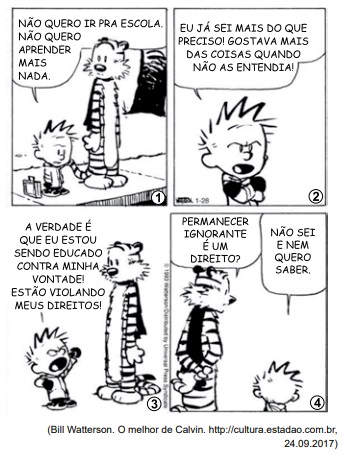
Considere a tira para responder a questão.
 Conheça nossos planos