Selecionar segmento
Estude com questões de diferentes segmentos
Atenção: Isso limpará todos os campos já preenchidos no filtro!
Foram encontradas 1.264 questões
Resolva questões gratuitamente!
Junte-se a mais de 4 milhões de concurseiros!


Ano: 2022
Banca:
INSTITUTO AOCP
Órgão:
CBM-GO
Prova:
INSTITUTO AOCP - 2022 - CBM-GO - Aspirante do Corpo de Bombeiros |
Q2154903
Noções de Informática
Durante a edição de um arquivo no Microsoft
Word 2016, instalação padrão em português do
Brasil para Windows 10, qual é a sequência de
comandos para carregar uma lista de
destinatários e endereços já criada e salva no
Microsoft Excel 2016?
Ano: 2022
Banca:
INSTITUTO AOCP
Órgão:
CBM-GO
Prova:
INSTITUTO AOCP - 2022 - CBM-GO - Aspirante do Corpo de Bombeiros |
Q2154902
Noções de Informática
Após clicar em um link de uma mensagem de e-mail, um usuário é direcionado para uma página
falsa semelhante à tela de entrada da caixa de
correio eletrônico do Corpo de Bombeiros Militar
do estado de Goiás. Como é chamado esse tipo
de fraude eletrônica?
Ano: 2022
Banca:
INSTITUTO AOCP
Órgão:
CBM-GO
Prova:
INSTITUTO AOCP - 2022 - CBM-GO - Aspirante do Corpo de Bombeiros |
Q2154900
História e Geografia de Estados e Municípios
Os povos e a cultura que formam uma sociedade
são elementos importantes constituintes de um
território. A partir do conhecimento desses
aspectos, é possível planejar ações voltadas à
segurança pública e ambiental de um local ou
região. Os grupos indígenas fazem parte do
contexto histórico de Goiás, alguns desses
grupos ainda resistem e buscam a manutenção da
sua cultura tradicional. Visando à valorização e à
ampliação dos saberes e da cultura indígena, no
Estado de Goiás, dois eventos se destacam, um
deles é
Ano: 2022
Banca:
INSTITUTO AOCP
Órgão:
CBM-GO
Prova:
INSTITUTO AOCP - 2022 - CBM-GO - Aspirante do Corpo de Bombeiros |
Q2154899
História e Geografia de Estados e Municípios
A atuação estatal entre os anos de 1930 e 1960
deu a Goiás a infraestrutura de produção
necessária ao desenvolvimento das forças
capitalistas na região. A construção de Goiânia e
Brasília garantiram a integração de Goiás ao
processo mais amplo de expansão do capitalismo
nacional. Todavia, sem a participação maciça de
capital privado, o quadro socioeconômico
permaneceu, naqueles momentos, praticamente
inalterado. Em outras palavras, o quadro
socioeconômico se pautava
Ano: 2022
Banca:
INSTITUTO AOCP
Órgão:
CBM-GO
Prova:
INSTITUTO AOCP - 2022 - CBM-GO - Aspirante do Corpo de Bombeiros |
Q2154898
Português
Texto associado
Ruanda descobriu um uso humanitário para os
drones
Esses aparelhos são enviados para distribuir
medicamentos em lugares remotos e de difícil
acesso, numa ação que, segundo Luli Radfahrer,
pode salvar muitas vidas
O tema desta coluna são os drones, a respeito dos
quais tendemos a pensar no uso convencional que
deles se faz no Oriente Médio, por exemplo, onde são
empregados como armas de destruição. Da mesma
forma, pode-se pensar neles em termos mais
fantasiosos, fazendo as vezes de prestadores de
serviço ao atuarem como entregadores de
encomendas. A verdade, porém, é que Ruanda, na
África, achou para os drones uma função bem mais
original, que é a de entregar remédios num país em
que existem muitas florestas e montanhas, o que
torna difícil o transporte de certos tipos de materiais –
alguns perecíveis, como são os casos dos
medicamentos – para vilarejos mais distantes. Daí
que se empregou a estratégia de colocar nos drones
pequenos pacotes de remédios para enviá-los para
as regiões mais necessitadas.
Não se trata, evidentemente, de mandar remédios
para o consumidor final, mas enviar de um centro de
distribuição para um posto de saúde ou algo que se
assemelhe a isso, que se responsabiliza pela
distribuição do material, o que permitiria até mesmo o
envio de sangue para transfusão em hospitais e
centros de saúde. “Isso tende a salvar muitas vidas e
a ideia mais bacana é que, além desse transporte
todo, esses aviõezinhos soltam a sua encomenda
num paraquedas.” O colunista encerra sua coluna
vislumbrando a possibilidade desse método ser
utilizado em lugares remotos do Brasil, como na
Amazônia, no sertão do Nordeste ou nas grandes
áreas rurais do País.
Datacracia
A coluna Datacracia, com o professor Luli Radfahrer,
vai ao ar toda sexta-feira às 8h30, na Rádio USP
(São Paulo 93,7 FM; Ribeirão Preto 107,9 FM) e
também no Youtube, com produção do Jornal da USP
e TV USP.
Adaptado de: https://jornal.usp.br/radio-usp/ruanda-descobriu-umuso-humanitario-para-os-drones/. Acesso em: 10 jul. 2022.
Assinale a alternativa em que o termo em
destaque NÃO tem função de retomar um termo
antecedente.
Ano: 2022
Banca:
INSTITUTO AOCP
Órgão:
CBM-GO
Prova:
INSTITUTO AOCP - 2022 - CBM-GO - Aspirante do Corpo de Bombeiros |
Q2154897
Português
Texto associado
Ruanda descobriu um uso humanitário para os
drones
Esses aparelhos são enviados para distribuir
medicamentos em lugares remotos e de difícil
acesso, numa ação que, segundo Luli Radfahrer,
pode salvar muitas vidas
O tema desta coluna são os drones, a respeito dos
quais tendemos a pensar no uso convencional que
deles se faz no Oriente Médio, por exemplo, onde são
empregados como armas de destruição. Da mesma
forma, pode-se pensar neles em termos mais
fantasiosos, fazendo as vezes de prestadores de
serviço ao atuarem como entregadores de
encomendas. A verdade, porém, é que Ruanda, na
África, achou para os drones uma função bem mais
original, que é a de entregar remédios num país em
que existem muitas florestas e montanhas, o que
torna difícil o transporte de certos tipos de materiais –
alguns perecíveis, como são os casos dos
medicamentos – para vilarejos mais distantes. Daí
que se empregou a estratégia de colocar nos drones
pequenos pacotes de remédios para enviá-los para
as regiões mais necessitadas.
Não se trata, evidentemente, de mandar remédios
para o consumidor final, mas enviar de um centro de
distribuição para um posto de saúde ou algo que se
assemelhe a isso, que se responsabiliza pela
distribuição do material, o que permitiria até mesmo o
envio de sangue para transfusão em hospitais e
centros de saúde. “Isso tende a salvar muitas vidas e
a ideia mais bacana é que, além desse transporte
todo, esses aviõezinhos soltam a sua encomenda
num paraquedas.” O colunista encerra sua coluna
vislumbrando a possibilidade desse método ser
utilizado em lugares remotos do Brasil, como na
Amazônia, no sertão do Nordeste ou nas grandes
áreas rurais do País.
Datacracia
A coluna Datacracia, com o professor Luli Radfahrer,
vai ao ar toda sexta-feira às 8h30, na Rádio USP
(São Paulo 93,7 FM; Ribeirão Preto 107,9 FM) e
também no Youtube, com produção do Jornal da USP
e TV USP.
Adaptado de: https://jornal.usp.br/radio-usp/ruanda-descobriu-umuso-humanitario-para-os-drones/. Acesso em: 10 jul. 2022.
Sobre a pontuação empregada no seguinte
excerto do texto, assinale a alternativa correta.
“A verdade, porém, é que Ruanda, na África,
achou para os drones uma função bem mais
original, que é a de entregar remédios num país
em que existem muitas florestas e montanhas, o
que torna difícil o transporte de certos tipos de
materiais – alguns perecíveis, como são os casos
dos medicamentos – para vilarejos mais
distantes.”
Ano: 2022
Banca:
INSTITUTO AOCP
Órgão:
CBM-GO
Prova:
INSTITUTO AOCP - 2022 - CBM-GO - Aspirante do Corpo de Bombeiros |
Q2154896
Português
Texto associado
Ruanda descobriu um uso humanitário para os
drones
Esses aparelhos são enviados para distribuir
medicamentos em lugares remotos e de difícil
acesso, numa ação que, segundo Luli Radfahrer,
pode salvar muitas vidas
O tema desta coluna são os drones, a respeito dos
quais tendemos a pensar no uso convencional que
deles se faz no Oriente Médio, por exemplo, onde são
empregados como armas de destruição. Da mesma
forma, pode-se pensar neles em termos mais
fantasiosos, fazendo as vezes de prestadores de
serviço ao atuarem como entregadores de
encomendas. A verdade, porém, é que Ruanda, na
África, achou para os drones uma função bem mais
original, que é a de entregar remédios num país em
que existem muitas florestas e montanhas, o que
torna difícil o transporte de certos tipos de materiais –
alguns perecíveis, como são os casos dos
medicamentos – para vilarejos mais distantes. Daí
que se empregou a estratégia de colocar nos drones
pequenos pacotes de remédios para enviá-los para
as regiões mais necessitadas.
Não se trata, evidentemente, de mandar remédios
para o consumidor final, mas enviar de um centro de
distribuição para um posto de saúde ou algo que se
assemelhe a isso, que se responsabiliza pela
distribuição do material, o que permitiria até mesmo o
envio de sangue para transfusão em hospitais e
centros de saúde. “Isso tende a salvar muitas vidas e
a ideia mais bacana é que, além desse transporte
todo, esses aviõezinhos soltam a sua encomenda
num paraquedas.” O colunista encerra sua coluna
vislumbrando a possibilidade desse método ser
utilizado em lugares remotos do Brasil, como na
Amazônia, no sertão do Nordeste ou nas grandes
áreas rurais do País.
Datacracia
A coluna Datacracia, com o professor Luli Radfahrer,
vai ao ar toda sexta-feira às 8h30, na Rádio USP
(São Paulo 93,7 FM; Ribeirão Preto 107,9 FM) e
também no Youtube, com produção do Jornal da USP
e TV USP.
Adaptado de: https://jornal.usp.br/radio-usp/ruanda-descobriu-umuso-humanitario-para-os-drones/. Acesso em: 10 jul. 2022.
Assinale a alternativa em que o tempo da forma
verbal destacada expressa um sentido de
possibilidade.
Ano: 2022
Banca:
INSTITUTO AOCP
Órgão:
CBM-GO
Prova:
INSTITUTO AOCP - 2022 - CBM-GO - Aspirante do Corpo de Bombeiros |
Q2154895
Português
Texto associado
Ruanda descobriu um uso humanitário para os
drones
Esses aparelhos são enviados para distribuir
medicamentos em lugares remotos e de difícil
acesso, numa ação que, segundo Luli Radfahrer,
pode salvar muitas vidas
O tema desta coluna são os drones, a respeito dos
quais tendemos a pensar no uso convencional que
deles se faz no Oriente Médio, por exemplo, onde são
empregados como armas de destruição. Da mesma
forma, pode-se pensar neles em termos mais
fantasiosos, fazendo as vezes de prestadores de
serviço ao atuarem como entregadores de
encomendas. A verdade, porém, é que Ruanda, na
África, achou para os drones uma função bem mais
original, que é a de entregar remédios num país em
que existem muitas florestas e montanhas, o que
torna difícil o transporte de certos tipos de materiais –
alguns perecíveis, como são os casos dos
medicamentos – para vilarejos mais distantes. Daí
que se empregou a estratégia de colocar nos drones
pequenos pacotes de remédios para enviá-los para
as regiões mais necessitadas.
Não se trata, evidentemente, de mandar remédios
para o consumidor final, mas enviar de um centro de
distribuição para um posto de saúde ou algo que se
assemelhe a isso, que se responsabiliza pela
distribuição do material, o que permitiria até mesmo o
envio de sangue para transfusão em hospitais e
centros de saúde. “Isso tende a salvar muitas vidas e
a ideia mais bacana é que, além desse transporte
todo, esses aviõezinhos soltam a sua encomenda
num paraquedas.” O colunista encerra sua coluna
vislumbrando a possibilidade desse método ser
utilizado em lugares remotos do Brasil, como na
Amazônia, no sertão do Nordeste ou nas grandes
áreas rurais do País.
Datacracia
A coluna Datacracia, com o professor Luli Radfahrer,
vai ao ar toda sexta-feira às 8h30, na Rádio USP
(São Paulo 93,7 FM; Ribeirão Preto 107,9 FM) e
também no Youtube, com produção do Jornal da USP
e TV USP.
Adaptado de: https://jornal.usp.br/radio-usp/ruanda-descobriu-umuso-humanitario-para-os-drones/. Acesso em: 10 jul. 2022.
No trecho destacado no excerto que segue,
ocorre a elipse/omissão de uma informação já
expressa no texto, de modo a manter a coesão
textual. “Não se trata, evidentemente, de mandar
remédios para o consumidor final, mas enviar de
um centro de distribuição para um posto de
saúde”. Assinale a alternativa que indica
corretamente a informação omitida.
Ano: 2022
Banca:
INSTITUTO AOCP
Órgão:
CBM-GO
Prova:
INSTITUTO AOCP - 2022 - CBM-GO - Aspirante do Corpo de Bombeiros |
Q2154894
Português
Texto associado
Ruanda descobriu um uso humanitário para os
drones
Esses aparelhos são enviados para distribuir
medicamentos em lugares remotos e de difícil
acesso, numa ação que, segundo Luli Radfahrer,
pode salvar muitas vidas
O tema desta coluna são os drones, a respeito dos
quais tendemos a pensar no uso convencional que
deles se faz no Oriente Médio, por exemplo, onde são
empregados como armas de destruição. Da mesma
forma, pode-se pensar neles em termos mais
fantasiosos, fazendo as vezes de prestadores de
serviço ao atuarem como entregadores de
encomendas. A verdade, porém, é que Ruanda, na
África, achou para os drones uma função bem mais
original, que é a de entregar remédios num país em
que existem muitas florestas e montanhas, o que
torna difícil o transporte de certos tipos de materiais –
alguns perecíveis, como são os casos dos
medicamentos – para vilarejos mais distantes. Daí
que se empregou a estratégia de colocar nos drones
pequenos pacotes de remédios para enviá-los para
as regiões mais necessitadas.
Não se trata, evidentemente, de mandar remédios
para o consumidor final, mas enviar de um centro de
distribuição para um posto de saúde ou algo que se
assemelhe a isso, que se responsabiliza pela
distribuição do material, o que permitiria até mesmo o
envio de sangue para transfusão em hospitais e
centros de saúde. “Isso tende a salvar muitas vidas e
a ideia mais bacana é que, além desse transporte
todo, esses aviõezinhos soltam a sua encomenda
num paraquedas.” O colunista encerra sua coluna
vislumbrando a possibilidade desse método ser
utilizado em lugares remotos do Brasil, como na
Amazônia, no sertão do Nordeste ou nas grandes
áreas rurais do País.
Datacracia
A coluna Datacracia, com o professor Luli Radfahrer,
vai ao ar toda sexta-feira às 8h30, na Rádio USP
(São Paulo 93,7 FM; Ribeirão Preto 107,9 FM) e
também no Youtube, com produção do Jornal da USP
e TV USP.
Adaptado de: https://jornal.usp.br/radio-usp/ruanda-descobriu-umuso-humanitario-para-os-drones/. Acesso em: 10 jul. 2022.
Assinale a alternativa em que o trecho é marcado
pela pessoalidade em relação à pessoa discursiva
empregada.
Ano: 2022
Banca:
INSTITUTO AOCP
Órgão:
CBM-GO
Prova:
INSTITUTO AOCP - 2022 - CBM-GO - Aspirante do Corpo de Bombeiros |
Q2154893
Português
Texto associado
Ruanda descobriu um uso humanitário para os
drones
Esses aparelhos são enviados para distribuir
medicamentos em lugares remotos e de difícil
acesso, numa ação que, segundo Luli Radfahrer,
pode salvar muitas vidas
O tema desta coluna são os drones, a respeito dos
quais tendemos a pensar no uso convencional que
deles se faz no Oriente Médio, por exemplo, onde são
empregados como armas de destruição. Da mesma
forma, pode-se pensar neles em termos mais
fantasiosos, fazendo as vezes de prestadores de
serviço ao atuarem como entregadores de
encomendas. A verdade, porém, é que Ruanda, na
África, achou para os drones uma função bem mais
original, que é a de entregar remédios num país em
que existem muitas florestas e montanhas, o que
torna difícil o transporte de certos tipos de materiais –
alguns perecíveis, como são os casos dos
medicamentos – para vilarejos mais distantes. Daí
que se empregou a estratégia de colocar nos drones
pequenos pacotes de remédios para enviá-los para
as regiões mais necessitadas.
Não se trata, evidentemente, de mandar remédios
para o consumidor final, mas enviar de um centro de
distribuição para um posto de saúde ou algo que se
assemelhe a isso, que se responsabiliza pela
distribuição do material, o que permitiria até mesmo o
envio de sangue para transfusão em hospitais e
centros de saúde. “Isso tende a salvar muitas vidas e
a ideia mais bacana é que, além desse transporte
todo, esses aviõezinhos soltam a sua encomenda
num paraquedas.” O colunista encerra sua coluna
vislumbrando a possibilidade desse método ser
utilizado em lugares remotos do Brasil, como na
Amazônia, no sertão do Nordeste ou nas grandes
áreas rurais do País.
Datacracia
A coluna Datacracia, com o professor Luli Radfahrer,
vai ao ar toda sexta-feira às 8h30, na Rádio USP
(São Paulo 93,7 FM; Ribeirão Preto 107,9 FM) e
também no Youtube, com produção do Jornal da USP
e TV USP.
Adaptado de: https://jornal.usp.br/radio-usp/ruanda-descobriu-umuso-humanitario-para-os-drones/. Acesso em: 10 jul. 2022.
Em qual das alternativas o “se” exerce a função
de partícula apassivadora?
Q2179201
Sociologia
Considere a seguinte passagem:
No final do século XIX e início do século XX, inúmeras leis de “proteção” à mulher passaram a proibir o trabalho feminino em ocupações consideradas mais pesadas ou perigosas, já que isso havia trazido problemas de ordem “moral” resultantes do fato de as mulheres terem mais mobilidade fora do espaço da casa. Na França, uma lei de 1892 proibia as mulheres de exercer o trabalho noturno. No Brasil, a mesma proibição foi expressa em um decreto de 1932. Embora muitas dessas leis visassem à “proteção” das mulheres, exploradas pela indústria – assim como ocorria com as crianças –, acabaram por confiná-las aos cuidados domésticos e a trabalhos realizados em casa, sub-remunerados. Durante o século XX, as duas guerras mundiais voltaram a impulsionar a presença das mulheres nas indústrias, pois, nesses momentos, os esforços produtivos eram necessários. No entanto, com o fim do período de guerras, novamente se reivindicou o retorno das mulheres à casa. O modelo de família almejado pela sociedade industrial e fordista do pós-guerra centrou-se, então, no “homem provedor e na mulher cuidadora”.
(SILVA, Afrânio et al. (orgs.). Sociologia em movimento. São Paulo: Moderna, 2016. p. 338.)
Sobre a participação das mulheres no mercado de trabalho, assinale a alternativa correta.
No final do século XIX e início do século XX, inúmeras leis de “proteção” à mulher passaram a proibir o trabalho feminino em ocupações consideradas mais pesadas ou perigosas, já que isso havia trazido problemas de ordem “moral” resultantes do fato de as mulheres terem mais mobilidade fora do espaço da casa. Na França, uma lei de 1892 proibia as mulheres de exercer o trabalho noturno. No Brasil, a mesma proibição foi expressa em um decreto de 1932. Embora muitas dessas leis visassem à “proteção” das mulheres, exploradas pela indústria – assim como ocorria com as crianças –, acabaram por confiná-las aos cuidados domésticos e a trabalhos realizados em casa, sub-remunerados. Durante o século XX, as duas guerras mundiais voltaram a impulsionar a presença das mulheres nas indústrias, pois, nesses momentos, os esforços produtivos eram necessários. No entanto, com o fim do período de guerras, novamente se reivindicou o retorno das mulheres à casa. O modelo de família almejado pela sociedade industrial e fordista do pós-guerra centrou-se, então, no “homem provedor e na mulher cuidadora”.
(SILVA, Afrânio et al. (orgs.). Sociologia em movimento. São Paulo: Moderna, 2016. p. 338.)
Sobre a participação das mulheres no mercado de trabalho, assinale a alternativa correta.
Q2179196
Química
O linalol é uma substância orgânica de origem natural presente em óleos essenciais de
diversas plantas aromáticas, como a lavanda e o manjericão. Essa substância é utilizada
como um fixador de fragrâncias na indústria química e apresenta uma série de
propriedades biológicas, por exemplo, atividade analgésica. Na estrutura química do
linalol, mostrada ao lado, estão presentes duas metilas (como grupos substituintes), além
das funções químicas alqueno e álcool.
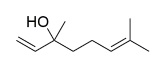
Com base nas informações acima e nos conhecimentos de nomenclatura de compostos orgânicos, assinale a alternativa que apresenta o nome do linalol recomendado pela IUPAC (União Internacional de Química Pura e Aplicada).
Com base nas informações acima e nos conhecimentos de nomenclatura de compostos orgânicos, assinale a alternativa que apresenta o nome do linalol recomendado pela IUPAC (União Internacional de Química Pura e Aplicada).
Q2179195
Química
No livro Harry Potter e a câmara secreta, os protagonistas têm uma aula sobre a colheita da mandrágora, uma planta
capaz de produzir uma poção restaurativa. De fato, a mandrágora é uma planta que foi associada às práticas de bruxaria
na Idade Média. Herboristas da época, na maioria mulheres, eram frequentemente acusadas e condenadas à fogueira
por bruxaria. Essas mulheres detinham o conhecimento para extrair o extrato da raiz de mandrágora e preparar um
unguento, à base de óleos ou gordura animal, com propriedades medicinais, anestésicas e (em doses mais altas)
alucinógenas. Os dois principais alcaloides presentes na raiz da mandrágora são hioscina e hiosciamina, cujas
estruturas são mostradas a seguir:

Esses alcaloides apresentam alta combinação com óleos e gorduras bem como baixíssima solubilidade em água. Isso se justifica porque eles:
Esses alcaloides apresentam alta combinação com óleos e gorduras bem como baixíssima solubilidade em água. Isso se justifica porque eles:
Q2179186
Matemática
O gráfico ao lado descreve o deslocamento em metros, em
relação ao tempo em segundos, de duas partículas A e B,
ambas movendo-se em linha reta. A respeito dessas
partículas, considere as seguintes afirmativas:
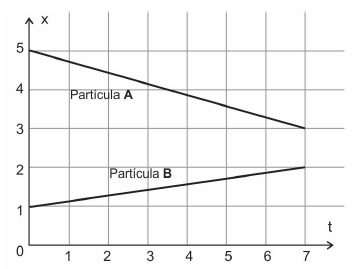
1. A partícula B percorreu √50 metros em 7 segundos.
2. O deslocamento da partícula A é dado pela função x(t) = 5 - 2t/7 .
3. As partículas A e B estão se aproximando ao longo do deslocamento.
4. A velocidade da partícula A é o dobro da velocidade da partícula B.
Assinale a alternativa correta.
1. A partícula B percorreu √50 metros em 7 segundos.
2. O deslocamento da partícula A é dado pela função x(t) = 5 - 2t/7 .
3. As partículas A e B estão se aproximando ao longo do deslocamento.
4. A velocidade da partícula A é o dobro da velocidade da partícula B.
Assinale a alternativa correta.
Q2179184
Filosofia
Considere o seguinte texto:
Não vos deixeis enganar! É vossa curta vista, não a essência das coisas, que vos faz acreditar ver terra firme onde quer que seja no mar do vir-a-ser e perecer. Usais nomes das coisas, como se estas tivessem uma duração fixa: mas mesmo o rio, em que entrais pela segunda vez, não é o mesmo da primeira vez.
(HERÁCLITO DE ÉFESO. Coleção Os Pensadores. Vol. I. São Paulo: Victor Civita, 1973, p. 109.)
Com base no texto e no conhecimento sobre o pensamento de Heráclito de Éfeso, considere as seguintes afirmativas:
1. Em todas as coisas, tem-se a constante transformação e não realidades fixas.
2. Os olhos e os ouvidos são más testemunhas para os homens.
3. A ideia de que tudo se transforma diz respeito ao mundo físico, sendo que em sua essência as coisas não se alteram.
4. O vir-a-ser e o perecer conduzem as pessoas ao engano.
Assinale a alternativa correta.
Não vos deixeis enganar! É vossa curta vista, não a essência das coisas, que vos faz acreditar ver terra firme onde quer que seja no mar do vir-a-ser e perecer. Usais nomes das coisas, como se estas tivessem uma duração fixa: mas mesmo o rio, em que entrais pela segunda vez, não é o mesmo da primeira vez.
(HERÁCLITO DE ÉFESO. Coleção Os Pensadores. Vol. I. São Paulo: Victor Civita, 1973, p. 109.)
Com base no texto e no conhecimento sobre o pensamento de Heráclito de Éfeso, considere as seguintes afirmativas:
1. Em todas as coisas, tem-se a constante transformação e não realidades fixas.
2. Os olhos e os ouvidos são más testemunhas para os homens.
3. A ideia de que tudo se transforma diz respeito ao mundo físico, sendo que em sua essência as coisas não se alteram.
4. O vir-a-ser e o perecer conduzem as pessoas ao engano.
Assinale a alternativa correta.
Q2179183
Filosofia
O livro X da obra A República é, em grande parte, dedicado aos poetas em geral e a Homero em particular. Tendo em
vista os argumentos desenvolvidos nesse livro, é correto afirmar que, para Platão:
Q2179182
Filosofia
Na introdução ao Ensaio sobre o entendimento humano, John Locke declara que nessa obra ele pretende investigar
“a origem, a certeza e a extensão do conhecimento humano, juntamente com as bases e graus da crença, opinião e
assentimento”.
(LOCKE, John. Coleção Os Pensadores. Vol. XVIII. São Paulo: Victor Civita, 1973. p. 145.)
Com base nessa citação e na obra de que foi retirada, é correto afirmar que essa investigação:
(LOCKE, John. Coleção Os Pensadores. Vol. XVIII. São Paulo: Victor Civita, 1973. p. 145.)
Com base nessa citação e na obra de que foi retirada, é correto afirmar que essa investigação:
Q2179175
Biologia
O arquipélago de Galápagos é formado por dezenas de ilhas vulcânicas e rochedos. O ancestral comum dos tentilhões
de Darwin chegou às Ilhas Galápagos há cerca de dois milhões de anos. Ao longo do tempo, esses tentilhões evoluíram
para 15 espécies distintas, diferindo no tamanho do corpo, no formato do bico, no canto e no comportamento alimentar.
Com base no texto, é correto afirmar que os tentilhões de Darwin são um exemplo de:
Q2179174
Biologia
Existem, atualmente, pelo menos oito tipos de vacinas sendo testadas contra o coronavírus, utilizando diferentes vírus
ou partes virais. Considerando as características das vacinas que utilizam o próprio vírus atenuado ou inativado,
assinale a alternativa correta.
Q2179172
Biologia
A mosca-branca secreta uma substância chamada melada, que é rica em carboidratos. Um estudo realizado em uma
plantação de mandioca relata interações entre formigas, abelhas sem ferrão e moscas-brancas secretoras de melada.
Nessas interações, as formigas se beneficiam da melada e, em troca, protegem as moscas-brancas contra seus
predadores naturais. Em períodos de escassez alimentar, abelhas sem ferrão consomem a melada, mas não oferecem
proteção às moscas. As abelhas escolhem moscas-brancas localizadas em folhas de mandioca sem formigas para
buscar pela melada, e quando as formigas percebem sua presença, exibem comportamento agressivo e espantam as
abelhas das folhas. Considerando as interações ecológicas entre moscas-brancas, formigas e abelhas sem ferrão, é
correto afirmar:

 Conheça nossos planos