Questões Militares
Comentadas para aluno do colégio naval
Foram encontradas 847 questões
Resolva questões gratuitamente!
Junte-se a mais de 4 milhões de concurseiros!


Leia o texto abaixo e responda a pergunta a seguir.
Hábitos podem agravar problemas urinários em adultos e crianças.
Segundo o médico, professor e orientador do programa de pós-graduação em Urologia da Faculdade de Medicina da USP, Cristiano Mendes Gomes, uma dieta balanceada, exercícios físicos e um intestino equilibrado, contribuem para o bom funcionamento do sistema urinário.
Gomes aponta, contudo, que maus hábitos raramente afetam os rins de indivíduos sem problemas crônicos. Pessoas com doenças neurológicas, como a esclerose, e crianças com refluxo de urina tendem a ter disfunções renais.
Disponível em:<https://www.google.eom/amp/s/jornal, usp.br/atualidades/habitos-podem-agravar-problemas-urinarios-em-adultos-e-criancas/%3famp>
Assinale a opção que apresenta a ordem correta dos
órgãos do sistema urinário até a saída da urina do
organismo.
Observe a charge a seguir.

A charge satiriza a atuação do Barão do Rio Branco na
Questão do Acre. É correto afirmar que o acordo entre os
países, Tratado de Petrópoiis (1903), estipulava
Leia o texto a seguir.
“AH CUIABÁ, COMO É BOM VIVER AQUI!!!
Cidade verde, linda e hospitaleira. Consegue ser a capital tricentenária, mas sem perder a essência. Cuiabá dos 300 Anos que vem sendo marcada por muitas transformações e mudanças.
BREVE HISTÓRICO
Cuiabá foi fundada em 08 de abril de 1719 às margens do Rio Coxipó, a ata de fundação foi assinada por Pascoal Moreira Cabral.
Cuiabá foi elevada à condição de cidade em 17 de setembro de 1818, tornando-se a capital da então província de Mato Grosso.
A igreja do Rosário, um dos pontos turísticos da cidade, construída na época no centro da pequena cidade, marcou a localização de uma rica cultura de ouro."
Disponível em: https://turismo.cuiaba.mt.gov.br/Acesso em: 10/04/2019
A respeito da fundação de Cuiabá, é correto afirmar que
está relacionada com
Leia o texto a seguir.
“Assim, a 14 de novembro de 1822, dois meses após sua proclamação, fazia-se ao mar a primeira esquadra brasileira, rumo a Montevidéu, com a missão de expulsar as forças que lutavam para manter a Província Cispiatina sob o domínio português.”
https://www. marinha.mil. br/content/historia-naval
Sobre o contexto da criação da primeira esquadra
brasileira, é correto afirmar que ela teve como objetivo
Leia o texto a seguir.
“Deu no Mercúrio Portuguez. “... e do Brasil virá também o galeão chamado Padre Eterno, que se faz no Rio de Janeiro, e é o mais famoso baixei de guerra que os mares jamais viram”. A gazeta mensal lisboeta trazia a notícia acima fechando a edição de março de 1665. O periódico de Antônio de Souza de Macedo, secretário de estado do Reino de Portugal, se referia ao barco de 53 metros (m), que deslocava 2 mil toneladas (t), com um mastro feito num só tronco de 2,97 m de circunferência na base. O navio começou a ser construído em 1659 a mando do governador da capitania do Rio, Salvador Correia de Sá e Benevides, na Ilha do Governador, em um local conhecido como Ponta do Galeão (onde fica hoje o Aeroporto Internacional Tom Jobim). Militar e político português, dono de engenhos e currais, Sá fez o mais potente galeão que pôde para evitar depender da proteção das frotas do governo ao se aventurar no comércio pelos mares."
MARCOLIN, Neldson. Por mares sempre navegados. Disponível em: http://revistapesquisa.fapesp.br/2011/11/30/por-mares-sempre-navegados. Acesso em: OS de abril de 2019.
É correto afirmar que a existência de estaleiros destinados
à construção de grandes navios no Brasil do século XVII
demonstrava
Leia o texto a seguir.
“Eu, EIRei, faço saber a vós, Tomé de Sousa, fidalgo de minha casa, que vendo eu quanto serviço de Deus e meu é conservar e enobrecer as Capitanias e povoações das terras do Brasil e dar ordem e maneira com que melhor e mais seguramente se possam ir povoando, para exalçamento da nossa Santa Fé e proveito de meus Reinos e Senhorios, e dos naturais deles, ordenei ora de mandar nas ditas terras fazer uma fortaleza e povoação grande e forte, em um lugar conveniente, para daí se dar favor e ajuda às outras povoações e se ministrar justiça e prover nas cousas que cumprirem a meu serviço e aos negócios de minha Fazenda e a bem das partes.”
Fonte: Regimento que levou Tomé de Sousa Governador do Brasil, Almerím, 17/12/1548,Lisboa, Arquivo Histórico Ultramarino (AHU), códice 112, fls 1-9.
Sobre o texto, que é um importante marco da História do
Brasil, é correto afirmar que representava
Observe o gráfico abaixo.
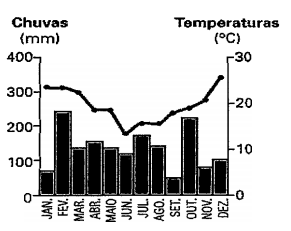
O climograma destacado faz alusão a um tipo climático
brasileiro. Sobre a realidade envolvendo esse climograma,
é correto afirmar que está indicando o clima:
O espaço geográfico tem cada vez mais despertado interesses de grupos, países e empresários pela disponibilidade dos recursos naturais dispostos nos territórios. Essa cobiça exige dos países detentores de grandes riquezas cada vez mais a implementação de políticas adequadas à proteção da soberania nacional.No Brasil é crescente o debate sobre a importância da Amazônia Azul, uma imensa área do litoral medindo quase 4,5 milhões de quilômetros quadrados, o que acrescentaria ao país uma área equivalente a mais de 50% de sua extensão territorial.
Sobre as potencialidades e desafios marítimos do Brasil, assinale a opção correta.
Leia o texto a seguir.
"Os limites dos Estados nacionais parecem tão exatos nos mapas políticos que fica difícil duvidar que não estiveram sempre ali. Suas demarcações são estabelecidas com base em posições calculadas por coordenadas geográficas; assim, os limites tornam-se concretos. As bacias hidrográficas têm um papel decisivo no estabelecimento de áreas fronteiriças entre os territórios: rios e divisores de água estão entre os elementos da superfície terrestre mais utilizados no estabelecimento de limites territoriais". SANTOS,Douglas.
(Geografia das redes: o mundo e seus lugares). São Paulo: Editora do Brasil, 2016. Coleção Geografia das redes; v. 2, p. 136-140
Sobre o entorno geográfico da Bacia do Rio Paraná, com base no texto acima, analise as afirmativas abaixo.
I- A hidrovia do Rio Paraná possui um potencial quase esgotado em virtude do volume de carga transportada no comércio entre as economias brasileira, argentina e uruguaia.
II- A existência da hidrelétrica binacional de Itaipu, entre Brasil e Paraguai, reforça a dependência entre as duas economias que consomem igualitariamente a energia produzida.
III- O Sul do Brasil apresenta a maior quantidade de cidades gêmeas com grande dinâmica transfronteiriça e elevada integração econômica e cultural, exemplificada pelos fluxos comerciais entre Foz do Iguaçu e Ciudad Del Este.
IV- A porosidade das fronteiras entre Brasil, Argentina e Paraguai tem facilitado o contrabando de produtos eletrônicos, cigarros, drogas, entre outros, realizado pelos rios devido à dificuldade de fiscalização.
Assinale a opção correta.
Observe a figura abaixo.
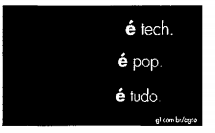
Nos últimos anos, a mídia brasileira tem veiculado propagandas que ressaltam a importância do setor agrário, principaimente o agroindustrial, na formação do Produto Interno Bruto(PlB). No entanto, o setor tem gerado críticas quanto a seus impactos no espaço brasileiro.
Em relação ao agronegócio brasileiro, assinale a opção
correta.
Observe a figura abaixo.
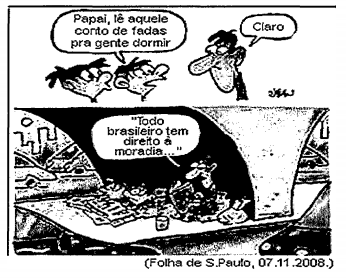
A urbanização brasileira desenvolveu-se de maneira acelerada e provocou grande concentração da população, sobretudo nas áreas metropolitanas. Tal crescimento não foi acompanhado por investimentos sociais, causando graves problemas socioespaciais, principalmente o da habitação, ilustrado pela charge.
De acordo com as condições de moradia nas cidades
brasileiras, assinale à opção correta.

Redes sociais: o reino encantado da intimidade de faz de conta
Recebi, por e-mail, um convite para um evento literário. Aceitei, e logo a moça que me convidou pediu meu número de Whatsapp para agilizar algumas informações. No dia seguinte, nossa formalidade havia evoluído para emojis de coraçãozinho. No terceiro dia, eia iniciou a mensagem com um "bom dia, amiga". Quando eu fizer aniversário, acho que vou convidá-la pra festa.
Postei no Instagram a foto de um cartaz de cinema, e uma leitora deixou um comentário no Direct. Disse que vem passando por um drama parecido como do filme; algo tão pessoal, que ela só quis contar para mim, em quem confia 100%. Como não chamá-la para a próxima ceia de Natal aqui em casa? Fotos de recém-nascidos me são enviadas por mulheres que eu nem sabia que estavam grávidas. Mando condolências pela morte do avô de alguém que mal cumprimento quando encontro num bar. Acompanho a dieta alimentar de estranhos. Fico sabendo que o amigo de uma conhecida troca, todos os dias, as fraldas de sua mãe velhinha, mas que não faria isso pelo pai, que sempre foi seco e frio com ele - e me comovo; sinto como se estivesse sentada a seu lado no sofá, enxugando suas lágrimas.
Mas não estou sentada a seu lado no sofá e nem mesmo sei quem ele é; apenas li um comentário deixado numa postagem do Facebook, entre outras milhares de postagens diárias que não são pra mim, mas que estão ao alcance dos meus olhos. É o reino encantado das confidências instantâneas e das distâncias suprimidas: nunca fomos tão íntimos de todos.
Pena que esse mundo fofo é de faz de conta, intimidade, pra valer, exige paciência e convivência, tudo o que, infelizmente, tornou-se sinônimo de perda de tempo. Mais vale a aproximação ilusória: as pessoas amam você, mesmo sem conhecê-la de verdade. É como disse, certa vez, o ator Daniel Dantas em entrevista à Marilia Gabriela: "Eu gostaria de ser a pessoa que meu cachorro pensa que eu sou".
Genial. Um cachorro começa a seguir você na rua e, se você der atenção e o levar pra casa, ganha um amigo na hora. O cachorro vai achá-lo o máximo, pois a única coisa que ele quer é pertencer. Ele não está nem aí para suas fraquezas, para suas esquisitices, para a pessoa que você realmente é: basta que você o adote.
A comparação é meio forçada, mas tem alguma relação com o que acontece nas redes. Farejamos uns aos outros, ofertamos um like e, de imediato, ganhamos um amigo que não sabe nada de profundo sobre nós, e provavelmente nunca saberá. A diferença - a favor do cachorro - é que este está realmente por perto, todos os dias, e é sensível aos nossos estados de ânimo, tornando-se íntimo a seu modo. Já alguns seres humanos seguem outros seres humanos sem que jamais venham a pertencer à vida um do outro, inaugurando uma nova intimidade: a que não existe de modo nenhum.
Martha Medeiros <https://www, revistaversar.com. br/redes-sociais-inttmÍdade/>
Redes sociais: o reino encantado da intimidade de faz de conta
Recebi, por e-mail, um convite para um evento literário. Aceitei, e logo a moça que me convidou pediu meu número de Whatsapp para agilizar algumas informações. No dia seguinte, nossa formalidade havia evoluído para emojis de coraçãozinho. No terceiro dia, eia iniciou a mensagem com um "bom dia, amiga". Quando eu fizer aniversário, acho que vou convidá-la pra festa.
Postei no Instagram a foto de um cartaz de cinema, e uma leitora deixou um comentário no Direct. Disse que vem passando por um drama parecido como do filme; algo tão pessoal, que ela só quis contar para mim, em quem confia 100%. Como não chamá-la para a próxima ceia de Natal aqui em casa? Fotos de recém-nascidos me são enviadas por mulheres que eu nem sabia que estavam grávidas. Mando condolências pela morte do avô de alguém que mal cumprimento quando encontro num bar. Acompanho a dieta alimentar de estranhos. Fico sabendo que o amigo de uma conhecida troca, todos os dias, as fraldas de sua mãe velhinha, mas que não faria isso pelo pai, que sempre foi seco e frio com ele - e me comovo; sinto como se estivesse sentada a seu lado no sofá, enxugando suas lágrimas.
Mas não estou sentada a seu lado no sofá e nem mesmo sei quem ele é; apenas li um comentário deixado numa postagem do Facebook, entre outras milhares de postagens diárias que não são pra mim, mas que estão ao alcance dos meus olhos. É o reino encantado das confidências instantâneas e das distâncias suprimidas: nunca fomos tão íntimos de todos.
Pena que esse mundo fofo é de faz de conta, intimidade, pra valer, exige paciência e convivência, tudo o que, infelizmente, tornou-se sinônimo de perda de tempo. Mais vale a aproximação ilusória: as pessoas amam você, mesmo sem conhecê-la de verdade. É como disse, certa vez, o ator Daniel Dantas em entrevista à Marilia Gabriela: "Eu gostaria de ser a pessoa que meu cachorro pensa que eu sou".
Genial. Um cachorro começa a seguir você na rua e, se você der atenção e o levar pra casa, ganha um amigo na hora. O cachorro vai achá-lo o máximo, pois a única coisa que ele quer é pertencer. Ele não está nem aí para suas fraquezas, para suas esquisitices, para a pessoa que você realmente é: basta que você o adote.
A comparação é meio forçada, mas tem alguma relação com o que acontece nas redes. Farejamos uns aos outros, ofertamos um like e, de imediato, ganhamos um amigo que não sabe nada de profundo sobre nós, e provavelmente nunca saberá. A diferença - a favor do cachorro - é que este está realmente por perto, todos os dias, e é sensível aos nossos estados de ânimo, tornando-se íntimo a seu modo. Já alguns seres humanos seguem outros seres humanos sem que jamais venham a pertencer à vida um do outro, inaugurando uma nova intimidade: a que não existe de modo nenhum.
Martha Medeiros <https://www, revistaversar.com. br/redes-sociais-inttmÍdade/>
Redes sociais: o reino encantado da intimidade de faz de conta
Recebi, por e-mail, um convite para um evento literário. Aceitei, e logo a moça que me convidou pediu meu número de Whatsapp para agilizar algumas informações. No dia seguinte, nossa formalidade havia evoluído para emojis de coraçãozinho. No terceiro dia, eia iniciou a mensagem com um "bom dia, amiga". Quando eu fizer aniversário, acho que vou convidá-la pra festa.
Postei no Instagram a foto de um cartaz de cinema, e uma leitora deixou um comentário no Direct. Disse que vem passando por um drama parecido como do filme; algo tão pessoal, que ela só quis contar para mim, em quem confia 100%. Como não chamá-la para a próxima ceia de Natal aqui em casa? Fotos de recém-nascidos me são enviadas por mulheres que eu nem sabia que estavam grávidas. Mando condolências pela morte do avô de alguém que mal cumprimento quando encontro num bar. Acompanho a dieta alimentar de estranhos. Fico sabendo que o amigo de uma conhecida troca, todos os dias, as fraldas de sua mãe velhinha, mas que não faria isso pelo pai, que sempre foi seco e frio com ele - e me comovo; sinto como se estivesse sentada a seu lado no sofá, enxugando suas lágrimas.
Mas não estou sentada a seu lado no sofá e nem mesmo sei quem ele é; apenas li um comentário deixado numa postagem do Facebook, entre outras milhares de postagens diárias que não são pra mim, mas que estão ao alcance dos meus olhos. É o reino encantado das confidências instantâneas e das distâncias suprimidas: nunca fomos tão íntimos de todos.
Pena que esse mundo fofo é de faz de conta, intimidade, pra valer, exige paciência e convivência, tudo o que, infelizmente, tornou-se sinônimo de perda de tempo. Mais vale a aproximação ilusória: as pessoas amam você, mesmo sem conhecê-la de verdade. É como disse, certa vez, o ator Daniel Dantas em entrevista à Marilia Gabriela: "Eu gostaria de ser a pessoa que meu cachorro pensa que eu sou".
Genial. Um cachorro começa a seguir você na rua e, se você der atenção e o levar pra casa, ganha um amigo na hora. O cachorro vai achá-lo o máximo, pois a única coisa que ele quer é pertencer. Ele não está nem aí para suas fraquezas, para suas esquisitices, para a pessoa que você realmente é: basta que você o adote.
A comparação é meio forçada, mas tem alguma relação com o que acontece nas redes. Farejamos uns aos outros, ofertamos um like e, de imediato, ganhamos um amigo que não sabe nada de profundo sobre nós, e provavelmente nunca saberá. A diferença - a favor do cachorro - é que este está realmente por perto, todos os dias, e é sensível aos nossos estados de ânimo, tornando-se íntimo a seu modo. Já alguns seres humanos seguem outros seres humanos sem que jamais venham a pertencer à vida um do outro, inaugurando uma nova intimidade: a que não existe de modo nenhum.
Martha Medeiros <https://www, revistaversar.com. br/redes-sociais-inttmÍdade/>
Redes sociais: o reino encantado da intimidade de faz de conta
Recebi, por e-mail, um convite para um evento literário. Aceitei, e logo a moça que me convidou pediu meu número de Whatsapp para agilizar algumas informações. No dia seguinte, nossa formalidade havia evoluído para emojis de coraçãozinho. No terceiro dia, eia iniciou a mensagem com um "bom dia, amiga". Quando eu fizer aniversário, acho que vou convidá-la pra festa.
Postei no Instagram a foto de um cartaz de cinema, e uma leitora deixou um comentário no Direct. Disse que vem passando por um drama parecido como do filme; algo tão pessoal, que ela só quis contar para mim, em quem confia 100%. Como não chamá-la para a próxima ceia de Natal aqui em casa? Fotos de recém-nascidos me são enviadas por mulheres que eu nem sabia que estavam grávidas. Mando condolências pela morte do avô de alguém que mal cumprimento quando encontro num bar. Acompanho a dieta alimentar de estranhos. Fico sabendo que o amigo de uma conhecida troca, todos os dias, as fraldas de sua mãe velhinha, mas que não faria isso pelo pai, que sempre foi seco e frio com ele - e me comovo; sinto como se estivesse sentada a seu lado no sofá, enxugando suas lágrimas.
Mas não estou sentada a seu lado no sofá e nem mesmo sei quem ele é; apenas li um comentário deixado numa postagem do Facebook, entre outras milhares de postagens diárias que não são pra mim, mas que estão ao alcance dos meus olhos. É o reino encantado das confidências instantâneas e das distâncias suprimidas: nunca fomos tão íntimos de todos.
Pena que esse mundo fofo é de faz de conta, intimidade, pra valer, exige paciência e convivência, tudo o que, infelizmente, tornou-se sinônimo de perda de tempo. Mais vale a aproximação ilusória: as pessoas amam você, mesmo sem conhecê-la de verdade. É como disse, certa vez, o ator Daniel Dantas em entrevista à Marilia Gabriela: "Eu gostaria de ser a pessoa que meu cachorro pensa que eu sou".
Genial. Um cachorro começa a seguir você na rua e, se você der atenção e o levar pra casa, ganha um amigo na hora. O cachorro vai achá-lo o máximo, pois a única coisa que ele quer é pertencer. Ele não está nem aí para suas fraquezas, para suas esquisitices, para a pessoa que você realmente é: basta que você o adote.
A comparação é meio forçada, mas tem alguma relação com o que acontece nas redes. Farejamos uns aos outros, ofertamos um like e, de imediato, ganhamos um amigo que não sabe nada de profundo sobre nós, e provavelmente nunca saberá. A diferença - a favor do cachorro - é que este está realmente por perto, todos os dias, e é sensível aos nossos estados de ânimo, tornando-se íntimo a seu modo. Já alguns seres humanos seguem outros seres humanos sem que jamais venham a pertencer à vida um do outro, inaugurando uma nova intimidade: a que não existe de modo nenhum.
Martha Medeiros <https://www, revistaversar.com. br/redes-sociais-inttmÍdade/>
Redes sociais: o reino encantado da intimidade de faz de conta
Recebi, por e-mail, um convite para um evento literário. Aceitei, e logo a moça que me convidou pediu meu número de Whatsapp para agilizar algumas informações. No dia seguinte, nossa formalidade havia evoluído para emojis de coraçãozinho. No terceiro dia, eia iniciou a mensagem com um "bom dia, amiga". Quando eu fizer aniversário, acho que vou convidá-la pra festa.
Postei no Instagram a foto de um cartaz de cinema, e uma leitora deixou um comentário no Direct. Disse que vem passando por um drama parecido como do filme; algo tão pessoal, que ela só quis contar para mim, em quem confia 100%. Como não chamá-la para a próxima ceia de Natal aqui em casa? Fotos de recém-nascidos me são enviadas por mulheres que eu nem sabia que estavam grávidas. Mando condolências pela morte do avô de alguém que mal cumprimento quando encontro num bar. Acompanho a dieta alimentar de estranhos. Fico sabendo que o amigo de uma conhecida troca, todos os dias, as fraldas de sua mãe velhinha, mas que não faria isso pelo pai, que sempre foi seco e frio com ele - e me comovo; sinto como se estivesse sentada a seu lado no sofá, enxugando suas lágrimas.
Mas não estou sentada a seu lado no sofá e nem mesmo sei quem ele é; apenas li um comentário deixado numa postagem do Facebook, entre outras milhares de postagens diárias que não são pra mim, mas que estão ao alcance dos meus olhos. É o reino encantado das confidências instantâneas e das distâncias suprimidas: nunca fomos tão íntimos de todos.
Pena que esse mundo fofo é de faz de conta, intimidade, pra valer, exige paciência e convivência, tudo o que, infelizmente, tornou-se sinônimo de perda de tempo. Mais vale a aproximação ilusória: as pessoas amam você, mesmo sem conhecê-la de verdade. É como disse, certa vez, o ator Daniel Dantas em entrevista à Marilia Gabriela: "Eu gostaria de ser a pessoa que meu cachorro pensa que eu sou".
Genial. Um cachorro começa a seguir você na rua e, se você der atenção e o levar pra casa, ganha um amigo na hora. O cachorro vai achá-lo o máximo, pois a única coisa que ele quer é pertencer. Ele não está nem aí para suas fraquezas, para suas esquisitices, para a pessoa que você realmente é: basta que você o adote.
A comparação é meio forçada, mas tem alguma relação com o que acontece nas redes. Farejamos uns aos outros, ofertamos um like e, de imediato, ganhamos um amigo que não sabe nada de profundo sobre nós, e provavelmente nunca saberá. A diferença - a favor do cachorro - é que este está realmente por perto, todos os dias, e é sensível aos nossos estados de ânimo, tornando-se íntimo a seu modo. Já alguns seres humanos seguem outros seres humanos sem que jamais venham a pertencer à vida um do outro, inaugurando uma nova intimidade: a que não existe de modo nenhum.
Martha Medeiros <https://www, revistaversar.com. br/redes-sociais-inttmÍdade/>
Redes sociais: o reino encantado da intimidade de faz de conta
Recebi, por e-mail, um convite para um evento literário. Aceitei, e logo a moça que me convidou pediu meu número de Whatsapp para agilizar algumas informações. No dia seguinte, nossa formalidade havia evoluído para emojis de coraçãozinho. No terceiro dia, eia iniciou a mensagem com um "bom dia, amiga". Quando eu fizer aniversário, acho que vou convidá-la pra festa.
Postei no Instagram a foto de um cartaz de cinema, e uma leitora deixou um comentário no Direct. Disse que vem passando por um drama parecido como do filme; algo tão pessoal, que ela só quis contar para mim, em quem confia 100%. Como não chamá-la para a próxima ceia de Natal aqui em casa? Fotos de recém-nascidos me são enviadas por mulheres que eu nem sabia que estavam grávidas. Mando condolências pela morte do avô de alguém que mal cumprimento quando encontro num bar. Acompanho a dieta alimentar de estranhos. Fico sabendo que o amigo de uma conhecida troca, todos os dias, as fraldas de sua mãe velhinha, mas que não faria isso pelo pai, que sempre foi seco e frio com ele - e me comovo; sinto como se estivesse sentada a seu lado no sofá, enxugando suas lágrimas.
Mas não estou sentada a seu lado no sofá e nem mesmo sei quem ele é; apenas li um comentário deixado numa postagem do Facebook, entre outras milhares de postagens diárias que não são pra mim, mas que estão ao alcance dos meus olhos. É o reino encantado das confidências instantâneas e das distâncias suprimidas: nunca fomos tão íntimos de todos.
Pena que esse mundo fofo é de faz de conta, intimidade, pra valer, exige paciência e convivência, tudo o que, infelizmente, tornou-se sinônimo de perda de tempo. Mais vale a aproximação ilusória: as pessoas amam você, mesmo sem conhecê-la de verdade. É como disse, certa vez, o ator Daniel Dantas em entrevista à Marilia Gabriela: "Eu gostaria de ser a pessoa que meu cachorro pensa que eu sou".
Genial. Um cachorro começa a seguir você na rua e, se você der atenção e o levar pra casa, ganha um amigo na hora. O cachorro vai achá-lo o máximo, pois a única coisa que ele quer é pertencer. Ele não está nem aí para suas fraquezas, para suas esquisitices, para a pessoa que você realmente é: basta que você o adote.
A comparação é meio forçada, mas tem alguma relação com o que acontece nas redes. Farejamos uns aos outros, ofertamos um like e, de imediato, ganhamos um amigo que não sabe nada de profundo sobre nós, e provavelmente nunca saberá. A diferença - a favor do cachorro - é que este está realmente por perto, todos os dias, e é sensível aos nossos estados de ânimo, tornando-se íntimo a seu modo. Já alguns seres humanos seguem outros seres humanos sem que jamais venham a pertencer à vida um do outro, inaugurando uma nova intimidade: a que não existe de modo nenhum.
Martha Medeiros <https://www, revistaversar.com. br/redes-sociais-inttmÍdade/>
Analise as setenças abaixo.
I- A maior parte das pessoas ama você, mesmo sem qualquer intimidade.
II- Nas redes sociais, 60 por cento das pessoas se consideram íntimas de seus contatos virtuais.
III- Algumas pessoas seguem outras pessoas sem conhecê-las.
IV- Boa parte das fotos de recém-nascidos é envida através da internet.
A forma verba! pode ser flexionada indiferentemente no singular ou plural apenas em

 Conheça nossos planos