Foram encontradas 214 questões

Resolva questões gratuitamente!

Junte-se a mais de 4 milhões de concurseiros!

Ano: 2022 Banca: NC-UFPR Órgão: CBM-PR Prova: NC-UFPR - 2022 - CBM-PR - Cadete |
Q2210663 História
Leia o seguinte excerto:
[...] essa foi a única revolta de escravos bem-sucedida da História, e as dificuldades que tiveram de superar colocam em evidência a magnitude dos interesses envolvidos.
(JAMES, C. J. R. Os Jacobinos Negros. Tradução Afonso Teixeira Filho. São Paulo: Boitempo, 2010, p. 15.)
O excerto acima se refere à/ao:  
Alternativas
Ano: 2022 Banca: NC-UFPR Órgão: CBM-PR Prova: NC-UFPR - 2022 - CBM-PR - Cadete |
Q2210662 História
Leia o seguinte excerto:
[...] o acúmulo de agressões que atingiram as populações do Ocidente de 1348 ao começo do século XVIII criou, de alto a baixo do corpo social, um abalo psíquico profundo [...]. Constitui-se um ‘país do medo’ no interior do qual uma civilização se sentiu ‘pouco à vontade’ e povoou de fantasmas mórbidos.
(DELUMEAU, J. História do Medo no Ocidente: 1300-1800, Uma Cidade Sitiada. Tradução Maria Lucia Machado. São Paulo: Companhia das Letras, 2009, p. 43.)
De acordo com os conhecimentos sobre a Europa no século XIV, são duas das principais “agressões” relacionadas ao excerto acima: 
Alternativas
Ano: 2022 Banca: NC-UFPR Órgão: CBM-PR Prova: NC-UFPR - 2022 - CBM-PR - Cadete |
Q2210661 História
Leia o seguinte excerto:
O choque da morte de Maomé foi uma das mais sérias crises que a comunidade muçulmana teve de enfrentar. Até então, Maomé guiara cada um de seus passos. Como então poderiam continuar sem ele? [...] Alguns muçulmanos mais comprometidos também ficaram imaginando se a morte de Maomé pusera mesmo fim à sua empreitada, e os que desejavam apontar um sucessor dividiram-se imediatamente em grupos rivais.
(ARMSTRONG, Karen. Maomé: uma biografia do profeta. Tradução Andréia Guerini, Fabiano Seixas Fernandes, Walter Carlos Costa. São Paulo: Companhia das Letras, 2002, p. 288-289.)
Considerando o excerto acima, é correto afirmar que a crise acarretada pela morte de Maomé teve como resultado: 
Alternativas
Ano: 2022 Banca: NC-UFPR Órgão: CBM-PR Prova: NC-UFPR - 2022 - CBM-PR - Cadete |
Q2210660 Matemática

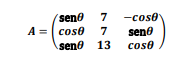
Considere a seguinte matriz:


Imagem associada para resolução da questão


Assinale a alternativa que corresponde à soma dos valores de Imagem associada para resolução da questão


Alternativas
Ano: 2022 Banca: NC-UFPR Órgão: CBM-PR Prova: NC-UFPR - 2022 - CBM-PR - Cadete |
Q2210658 Matemática
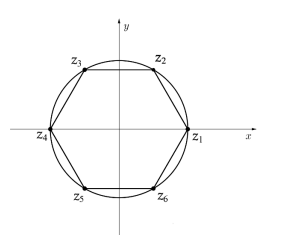
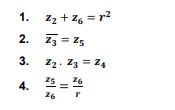
Na abaixo, temos uma circunferência de raio r>0 com centro na origem do plano complexo e, ao longo da circunferência, temos 6 os que Supondo Z1, Z2, Z3, Z4, Z5, Z6 :complexos números 6 números complexos são vértices de um hexágono regular e que Z1 está no eixo x, considere as seguintes equações: 

Imagem associada para resolução da questão


Imagem associada para resolução da questão

Assinale a alternativa correta.
Alternativas
Ano: 2022 Banca: NC-UFPR Órgão: CBM-PR Prova: NC-UFPR - 2022 - CBM-PR - Cadete |
Q2210657 Matemática
No plano cartesiano, considere o triângulo ABC com Imagem associada para resolução da questão Seja D o ponto de intersecção do segmento AB com o eixo r. Se r é a reta que passa por D, sendo essa reta paralela à reta que passa por B e C, assinale a alternativa que corresponde à equação de r.  
Alternativas
Ano: 2022 Banca: NC-UFPR Órgão: CBM-PR Prova: NC-UFPR - 2022 - CBM-PR - Cadete |
Q2210656 Matemática
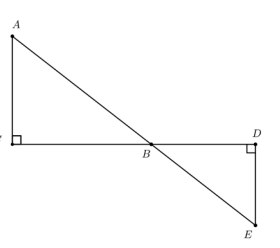
Na abaixo, considere os segmentos de reta AE e CD, e os triângulos retângulos ABC e BDE. Suponha que o comprimento de AB é igual a x, e que o comprimento de AC é igual a y. Considerando que os segmentos AC e BD têm o mesmo comprimento, qual das alternativas abaixo corresponde ao valor do comprimento do segmento DE ?
Imagem associada para resolução da questão
Alternativas
Ano: 2022 Banca: NC-UFPR Órgão: CBM-PR Prova: NC-UFPR - 2022 - CBM-PR - Cadete |
Q2210654 Biologia
Em relação ao processo de fotossíntese nas plantas, é correto afirmar que:
Alternativas
Ano: 2022 Banca: NC-UFPR Órgão: CBM-PR Prova: NC-UFPR - 2022 - CBM-PR - Cadete |
Q2210653 Biologia
No que diz respeito aos mecanismos de transporte transmembranar, assinale a alternativa correta.
Alternativas
Ano: 2022 Banca: NC-UFPR Órgão: CBM-PR Prova: NC-UFPR - 2022 - CBM-PR - Cadete |
Q2210652 Biologia
Espécime, população biológica e espécie são conceitos relacionados e muito importantes para o estudo da biodiversidade. A respeito desses conceitos, assinale a afirmativa correta. 
Alternativas
Ano: 2022 Banca: NC-UFPR Órgão: CBM-PR Prova: NC-UFPR - 2022 - CBM-PR - Cadete |
Q2210650 Biologia
Além da presença de glândulas mamárias, são características exclusivas da classe Mammalia:
Alternativas
Ano: 2022 Banca: NC-UFPR Órgão: CBM-PR Prova: NC-UFPR - 2022 - CBM-PR - Cadete |
Q2210649 Biologia
Na espécie A, linhagens puras de plantas com flores brancas cruzadas com plantas de flores vermelhas produziram apenas plantas com flores vermelhas. Essas plantas com flores vermelhas cruzadas entre si produziram ¾ de plantas com flores vermelhas e ¼ de plantas com flores brancas. Na espécie B, linhagens puras de plantas com flores brancas cruzadas com plantas de flores vermelhas produziram apenas plantas com flores cor-de-rosa. Essas plantas com flores cor-de-rosa cruzadas entre si produziram ¼ de plantas com flores vermelhas, ½ de plantas com flores cor-de-rosa e ¼ de plantas com flores brancas.
Para esse caso, considerando o padrão de herança e as interações alélicas dos genes que determinam a cor da flor nas espécies A e B, assinale a alternativa correta. 
Alternativas
Ano: 2022 Banca: NC-UFPR Órgão: CBM-PR Prova: NC-UFPR - 2022 - CBM-PR - Cadete |
Q2210648 Inglês
Consider the following piece of news:
Coal fire crackdown and London mosque stabbing
(Available in: https://www.bbc.com/news/blogs-the-papers-51581385.)
The headline in a British newspaper refers to:  
Alternativas
Ano: 2022 Banca: NC-UFPR Órgão: CBM-PR Prova: NC-UFPR - 2022 - CBM-PR - Cadete |
Q2210647 Inglês
The surprising history of India’s vibrant sari tradition

    South Asian women have draped themselves in colorful silks and cottons for eons. The ways they’re made and worn are dazzling and diverse.
    The word “sari” means “strip of cloth” in Sanskrit. But for the Indian women – and a few men – who have been wrapping themselves in silk, cotton, or linen for millennia, these swaths of fabric are more than just simple garments. They’re symbols of national pride, ambassadors for traditional (and cutting-edge) design and craftsmanship, and a prime example of the rich differences in India’s 29 states.
     “The sari both as symbol and reality has filled the imagination of the subcontinent, with its appeal and its ability to conceal and reveal the personality of the person wearing it,” says Delhi-based textile historian Rta Kapur Chishti, author of Saris of India: Tradition and Beyond and co-founder of Taanbaan, a fabric company devoted to reviving and preserving traditional Indian spinning and weaving methods.
    The first mention of saris (alternately spelled sarees) is in the Rig Veda, a Hindu book of hymns dating to 3,000 B.C.; draped garments show up on Indian sculptures from the first through sixth centuries, too. What Delhi-based textile historian Rta Kapur Chishti calls the “magical unstitched garment” is ideally suited to India’s blazingly hot climate and the modest-dress customs of both Hindu and Muslim communities. Saris also remain traditional for women in other South Asian countries including Pakistan, Bangladesh, and Nepal.

(Available in: https://www.nationalgeographic.com/travel/photography/the-story-of-the-sari-in-india/.) 
In the fourth paragraph, Delhi-based textile historian Rta Kapur Chishti calls the sari the “unstitched garment” because it:  
Alternativas
Ano: 2022 Banca: NC-UFPR Órgão: CBM-PR Prova: NC-UFPR - 2022 - CBM-PR - Cadete |
Q2210646 Inglês
The surprising history of India’s vibrant sari tradition

    South Asian women have draped themselves in colorful silks and cottons for eons. The ways they’re made and worn are dazzling and diverse.
    The word “sari” means “strip of cloth” in Sanskrit. But for the Indian women – and a few men – who have been wrapping themselves in silk, cotton, or linen for millennia, these swaths of fabric are more than just simple garments. They’re symbols of national pride, ambassadors for traditional (and cutting-edge) design and craftsmanship, and a prime example of the rich differences in India’s 29 states.
     “The sari both as symbol and reality has filled the imagination of the subcontinent, with its appeal and its ability to conceal and reveal the personality of the person wearing it,” says Delhi-based textile historian Rta Kapur Chishti, author of Saris of India: Tradition and Beyond and co-founder of Taanbaan, a fabric company devoted to reviving and preserving traditional Indian spinning and weaving methods.
    The first mention of saris (alternately spelled sarees) is in the Rig Veda, a Hindu book of hymns dating to 3,000 B.C.; draped garments show up on Indian sculptures from the first through sixth centuries, too. What Delhi-based textile historian Rta Kapur Chishti calls the “magical unstitched garment” is ideally suited to India’s blazingly hot climate and the modest-dress customs of both Hindu and Muslim communities. Saris also remain traditional for women in other South Asian countries including Pakistan, Bangladesh, and Nepal.

(Available in: https://www.nationalgeographic.com/travel/photography/the-story-of-the-sari-in-india/.) 
In the first sentence of the text, the underlined and in bold type word “eons” means:
Alternativas
Ano: 2022 Banca: NC-UFPR Órgão: CBM-PR Prova: NC-UFPR - 2022 - CBM-PR - Cadete |
Q2210645 Inglês
The surprising history of India’s vibrant sari tradition

    South Asian women have draped themselves in colorful silks and cottons for eons. The ways they’re made and worn are dazzling and diverse.
    The word “sari” means “strip of cloth” in Sanskrit. But for the Indian women – and a few men – who have been wrapping themselves in silk, cotton, or linen for millennia, these swaths of fabric are more than just simple garments. They’re symbols of national pride, ambassadors for traditional (and cutting-edge) design and craftsmanship, and a prime example of the rich differences in India’s 29 states.
     “The sari both as symbol and reality has filled the imagination of the subcontinent, with its appeal and its ability to conceal and reveal the personality of the person wearing it,” says Delhi-based textile historian Rta Kapur Chishti, author of Saris of India: Tradition and Beyond and co-founder of Taanbaan, a fabric company devoted to reviving and preserving traditional Indian spinning and weaving methods.
    The first mention of saris (alternately spelled sarees) is in the Rig Veda, a Hindu book of hymns dating to 3,000 B.C.; draped garments show up on Indian sculptures from the first through sixth centuries, too. What Delhi-based textile historian Rta Kapur Chishti calls the “magical unstitched garment” is ideally suited to India’s blazingly hot climate and the modest-dress customs of both Hindu and Muslim communities. Saris also remain traditional for women in other South Asian countries including Pakistan, Bangladesh, and Nepal.

(Available in: https://www.nationalgeographic.com/travel/photography/the-story-of-the-sari-in-india/.) 
Sari, which in Sanskrit means “strip of cloth”, represents more than a piece of clothing in India. In relation to the different meaning(s) attributed to the sari, consider the following affirmatives:
1. It stands for both up-to-date and conventional patterns. 2. People wear it in different ways. 3. Both men and women can wear it. 4. People cannot avoid an arrogant attitude when they put it on.
Mark the affirmative(s) that is/are present in the text. 
Alternativas
Q2179186 Matemática
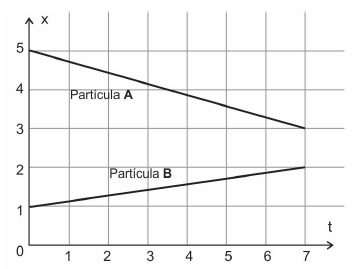
O gráfico ao lado descreve o deslocamento em metros, em relação ao tempo em segundos, de duas partículas A e B, ambas movendo-se em linha reta. A respeito dessas partículas, considere as seguintes afirmativas: Imagem associada para resolução da questão

1. A partícula B percorreu √50 metros em 7 segundos.

2. O deslocamento da partícula A é dado pela função x(t) = 5 - 2t/7 .
3. As partículas A e B estão se aproximando ao longo do deslocamento.
4. A velocidade da partícula A é o dobro da velocidade da partícula B.

Assinale a alternativa correta.
Alternativas
Q2179170 Biologia
Ervilhas lisas e rugosas foram estudadas por Gregor Mendel e a característica ervilha rugosa é dita recessiva, uma vez que esse fenótipo não ocorre no heterozigoto, que sempre exibe ervilhas lisas. A mutação presente no alelo recessivo, que determina ervilhas rugosas, é uma inserção de 800 pares de bases na região codificadora de aminoácidos do gene que codifica a enzima ramificadora de amido, gene SBE1. A inserção é transcrita juntamente com a região codificadora do gene e passa a fazer parte do RNA mensageiro.
(Texto adaptado do artigo “Dominante ou Recessivo?”, de Regina Célia Mingroni Netto, Genética na Escola, v. 7, n. 2, 2012.)

A respeito do assunto, considere as seguintes afirmativas:
1. A proteína traduzida a partir do alelo recessivo é uma enzima ramificadora de amido não funcional.
2. O alelo dominante é transcrito e traduzido, enquanto no alelo recessivo a tradução está bloqueada.
3. O fenótipo recessivo só pode se manifestar em homozigose, pois há o bloqueio da sua tradução pela presença do alelo dominante.
4. Nos heterozigotos, mesmo com metade da quantidade da enzima funcional, a ramificação do amido ocorre normalmente e não há alterações perceptíveis na forma dos grãos de ervilha.

Assinale a alternativa correta. 
Alternativas
Q2179169 Geografia
No clima dos grandes centros urbanos, os enormes edifícios, as vastas áreas impermeabilizadas, o asfaltamento de ruas e avenidas e a redução das áreas verdes ocasionam a elevação das médias térmicas de tal modo que a área central é mais quente que as áreas mais afastadas, como as periferias urbanas e as áreas rurais vizinhas. A denominação atribuída a esse fenômeno é:
Alternativas
Q2179145 Inglês

The following text refers to question.


There have been 18 opioid-related deaths in Nova Scotia so far this year


        Paramedics in Nova Scotia used naloxone to save 165 people from opioid overdoses in 2018 and 188 people in 2019. In 2020, 102 people were saved as of July 31.

        Eight years ago, Matthew Bonn watched his friend turn blue and become deathly quiet as fentanyl flooded his body. Bonn jumped in, performing rescue breathing until paramedics arrived. That was the first time Bonn fought to keep someone alive during an overdose.

        But it wouldn't be his last. Over the years, he tried more dangerous ways to snap people out of an overdose.

        "I remember doing crazy things like throwing people in bathtubs, or, you know, giving them cocaine. As we know now, that doesn't help," said Bonn, a harm-reduction advocate in Halifax. "But ... in those panic modes, you try to do whatever you can to keep that person alive."

        This was before naloxone – a drug that can reverse an opioid overdose – became widely available to the public. In 2017, the Nova Scotia government made kits with the drug available for free at pharmacies.

        Whether used by community members or emergency crews, naloxone has helped save hundreds of lives in the province. Matthew Bonn is a program co-ordinator with the Canadian Association of People Who Use Drugs, and a current drug user himself.

        Almost every other day in Nova Scotia, paramedics and medical first responders in the province use the drug to reverse an opioid overdose, according to Emergency Health Services (EHS).


(Available in: https://www.cbc.ca/news/canada/nova-scotia/ehs-naloxone-opioids-drug-use-emergency-care-1.5745907.)

In the text, the word “whether” underlined and in bold type can be replaced without losing its meaning by:
Alternativas
Respostas
121: A
122: E
123: B
124: C
125: C
126: A
127: D
128: C
129: D
130: A
131: E
132: D
133: A
134: C
135: B
136: D
137: C
138: C
139: E
140: C