Foram encontradas 670 questões
Resolva questões gratuitamente!
Junte-se a mais de 4 milhões de concurseiros!


Which option best completes the gap?
“Are you going to the movies alone?”
“Yes, but 1 wish Susan _____________ with me.”
Survivors say Canadian tall ship sank in minutes
Students and crew rescued from the sinking of a Canadia nowned tal ship in the South Atlantic were back on solid and Saturday after spending up to 40 hours in life rafts after their ship capsized.
The first of 64 people on board the three-masted SV Concordia were ferried into Rio de Janeiro aboard Brazilian Navy and merchant vessels, exhausted but relieved after their long ordeal.
Wearing navy caps and borrowed clothing, 12 of those rescued held an emotional news conference in Rio. The rest were to arrive later in the afternoon on two merchant vessels.
CTV producer Ana Pereira said survivors indicated that the ship went down very quickly, slipping beneath the waves. The ship’s captain said that his vessel sank Wednesday afternoon-a day earlier than previously reported - after being flipped on its side by a powerful gust of wind. He and his passengers and crew were rescued by merchant ships early Friday.
Capt. William Curry told reporters he was below deck when the ship suddenly keeled, banking over at a sharp, angle in the strong wind. Curry said that was normal, but when the vessel immediately went over a second time, he knew the vessel was in great danger.
The captain blamed the wreck on a “microburst”, a sudden, vertical downdraft that struck the entire surf ace area of the Concordia’s sails as it was angled over to one side. Within seconds, the boat went from sailing upright to lying on its side and beginning to sink.
Thirty minutes later it was completely underwater, Curry said.
“The boat started keeling a lot”, said 16-year-old passenger Lauren Unsworth, a Dutch-Canadian who lives in Amsterdam. “It came back up, keeled again, was basically lying on its side and all the windows began to break. That’s when we knew it was time to flee.”
Curry said that they abandoned ship and took to their life rafts in high winds and heavy seas, spending more than a day adrift in the Atlantic before spotting their rescuers.
“We had been in the life raft for about 30 hours when we saw a search plane for the first time”, Unsworth added. “That’s when we knew we were not alone and that help was on the way.” Toronto-native Keaton Farwell said her biggest fear was that no one was aware the group needed to be rescued.
“We thought our signal had failed and nobody knew and it could be weeks before we were saved”, she told a news conference. “The worst life-and-death thoughts were going through our heads, and everybody was panicking.”
The Navy said the distress signal was picked up about 5 p.m. Thursday. An Air Force plane later spotted life rafts in the ocean about 500 kilometers from Rio and a Navy ship and nearby merchant vessels moved in to aid in the rescue.
The first 12 crew and students came into port aboard a Brazilian Navy frigate. The rest were heading into Rio aboard slower merchant vessels and were expected to arrive later Saturday afternoon.
The Concordia was five days out from Montevideo, Uruguay, when it sank.
The Federal Transportations Safety Board says it will assist in an investigation to be led by the ship’s flag state country, Barbados.
The Concordia is owned by West Island College International with offices in Lunenburg, N.S. Forty-two of those onboard were identified as Canadians, mostly high school and university students, said Kate Knight, head of West Island College International of Lunenburg, which operates the Class Afloat program.
Prime Minister Stephen Harper issued a statement thanking the Brazilian Navy and the merchant ships “for their swift and heroic response.”
(Adapted from: www.ctv.ca, www.ap.com, Feb. 2010)
Survivors say Canadian tall ship sank in minutes
Students and crew rescued from the sinking of a Canadia nowned tal ship in the South Atlantic were back on solid and Saturday after spending up to 40 hours in life rafts after their ship capsized.
The first of 64 people on board the three-masted SV Concordia were ferried into Rio de Janeiro aboard Brazilian Navy and merchant vessels, exhausted but relieved after their long ordeal.
Wearing navy caps and borrowed clothing, 12 of those rescued held an emotional news conference in Rio. The rest were to arrive later in the afternoon on two merchant vessels.
CTV producer Ana Pereira said survivors indicated that the ship went down very quickly, slipping beneath the waves. The ship’s captain said that his vessel sank Wednesday afternoon-a day earlier than previously reported - after being flipped on its side by a powerful gust of wind. He and his passengers and crew were rescued by merchant ships early Friday.
Capt. William Curry told reporters he was below deck when the ship suddenly keeled, banking over at a sharp, angle in the strong wind. Curry said that was normal, but when the vessel immediately went over a second time, he knew the vessel was in great danger.
The captain blamed the wreck on a “microburst”, a sudden, vertical downdraft that struck the entire surf ace area of the Concordia’s sails as it was angled over to one side. Within seconds, the boat went from sailing upright to lying on its side and beginning to sink.
Thirty minutes later it was completely underwater, Curry said.
“The boat started keeling a lot”, said 16-year-old passenger Lauren Unsworth, a Dutch-Canadian who lives in Amsterdam. “It came back up, keeled again, was basically lying on its side and all the windows began to break. That’s when we knew it was time to flee.”
Curry said that they abandoned ship and took to their life rafts in high winds and heavy seas, spending more than a day adrift in the Atlantic before spotting their rescuers.
“We had been in the life raft for about 30 hours when we saw a search plane for the first time”, Unsworth added. “That’s when we knew we were not alone and that help was on the way.” Toronto-native Keaton Farwell said her biggest fear was that no one was aware the group needed to be rescued.
“We thought our signal had failed and nobody knew and it could be weeks before we were saved”, she told a news conference. “The worst life-and-death thoughts were going through our heads, and everybody was panicking.”
The Navy said the distress signal was picked up about 5 p.m. Thursday. An Air Force plane later spotted life rafts in the ocean about 500 kilometers from Rio and a Navy ship and nearby merchant vessels moved in to aid in the rescue.
The first 12 crew and students came into port aboard a Brazilian Navy frigate. The rest were heading into Rio aboard slower merchant vessels and were expected to arrive later Saturday afternoon.
The Concordia was five days out from Montevideo, Uruguay, when it sank.
The Federal Transportations Safety Board says it will assist in an investigation to be led by the ship’s flag state country, Barbados.
The Concordia is owned by West Island College International with offices in Lunenburg, N.S. Forty-two of those onboard were identified as Canadians, mostly high school and university students, said Kate Knight, head of West Island College International of Lunenburg, which operates the Class Afloat program.
Prime Minister Stephen Harper issued a statement thanking the Brazilian Navy and the merchant ships “for their swift and heroic response.”
(Adapted from: www.ctv.ca, www.ap.com, Feb. 2010)
Survivors say Canadian tall ship sank in minutes
Students and crew rescued from the sinking of a Canadia nowned tal ship in the South Atlantic were back on solid and Saturday after spending up to 40 hours in life rafts after their ship capsized.
The first of 64 people on board the three-masted SV Concordia were ferried into Rio de Janeiro aboard Brazilian Navy and merchant vessels, exhausted but relieved after their long ordeal.
Wearing navy caps and borrowed clothing, 12 of those rescued held an emotional news conference in Rio. The rest were to arrive later in the afternoon on two merchant vessels.
CTV producer Ana Pereira said survivors indicated that the ship went down very quickly, slipping beneath the waves. The ship’s captain said that his vessel sank Wednesday afternoon-a day earlier than previously reported - after being flipped on its side by a powerful gust of wind. He and his passengers and crew were rescued by merchant ships early Friday.
Capt. William Curry told reporters he was below deck when the ship suddenly keeled, banking over at a sharp, angle in the strong wind. Curry said that was normal, but when the vessel immediately went over a second time, he knew the vessel was in great danger.
The captain blamed the wreck on a “microburst”, a sudden, vertical downdraft that struck the entire surf ace area of the Concordia’s sails as it was angled over to one side. Within seconds, the boat went from sailing upright to lying on its side and beginning to sink.
Thirty minutes later it was completely underwater, Curry said.
“The boat started keeling a lot”, said 16-year-old passenger Lauren Unsworth, a Dutch-Canadian who lives in Amsterdam. “It came back up, keeled again, was basically lying on its side and all the windows began to break. That’s when we knew it was time to flee.”
Curry said that they abandoned ship and took to their life rafts in high winds and heavy seas, spending more than a day adrift in the Atlantic before spotting their rescuers.
“We had been in the life raft for about 30 hours when we saw a search plane for the first time”, Unsworth added. “That’s when we knew we were not alone and that help was on the way.” Toronto-native Keaton Farwell said her biggest fear was that no one was aware the group needed to be rescued.
“We thought our signal had failed and nobody knew and it could be weeks before we were saved”, she told a news conference. “The worst life-and-death thoughts were going through our heads, and everybody was panicking.”
The Navy said the distress signal was picked up about 5 p.m. Thursday. An Air Force plane later spotted life rafts in the ocean about 500 kilometers from Rio and a Navy ship and nearby merchant vessels moved in to aid in the rescue.
The first 12 crew and students came into port aboard a Brazilian Navy frigate. The rest were heading into Rio aboard slower merchant vessels and were expected to arrive later Saturday afternoon.
The Concordia was five days out from Montevideo, Uruguay, when it sank.
The Federal Transportations Safety Board says it will assist in an investigation to be led by the ship’s flag state country, Barbados.
The Concordia is owned by West Island College International with offices in Lunenburg, N.S. Forty-two of those onboard were identified as Canadians, mostly high school and university students, said Kate Knight, head of West Island College International of Lunenburg, which operates the Class Afloat program.
Prime Minister Stephen Harper issued a statement thanking the Brazilian Navy and the merchant ships “for their swift and heroic response.”
(Adapted from: www.ctv.ca, www.ap.com, Feb. 2010)
Survivors say Canadian tall ship sank in minutes
Students and crew rescued from the sinking of a Canadia nowned tal ship in the South Atlantic were back on solid and Saturday after spending up to 40 hours in life rafts after their ship capsized.
The first of 64 people on board the three-masted SV Concordia were ferried into Rio de Janeiro aboard Brazilian Navy and merchant vessels, exhausted but relieved after their long ordeal.
Wearing navy caps and borrowed clothing, 12 of those rescued held an emotional news conference in Rio. The rest were to arrive later in the afternoon on two merchant vessels.
CTV producer Ana Pereira said survivors indicated that the ship went down very quickly, slipping beneath the waves. The ship’s captain said that his vessel sank Wednesday afternoon-a day earlier than previously reported - after being flipped on its side by a powerful gust of wind. He and his passengers and crew were rescued by merchant ships early Friday.
Capt. William Curry told reporters he was below deck when the ship suddenly keeled, banking over at a sharp, angle in the strong wind. Curry said that was normal, but when the vessel immediately went over a second time, he knew the vessel was in great danger.
The captain blamed the wreck on a “microburst”, a sudden, vertical downdraft that struck the entire surf ace area of the Concordia’s sails as it was angled over to one side. Within seconds, the boat went from sailing upright to lying on its side and beginning to sink.
Thirty minutes later it was completely underwater, Curry said.
“The boat started keeling a lot”, said 16-year-old passenger Lauren Unsworth, a Dutch-Canadian who lives in Amsterdam. “It came back up, keeled again, was basically lying on its side and all the windows began to break. That’s when we knew it was time to flee.”
Curry said that they abandoned ship and took to their life rafts in high winds and heavy seas, spending more than a day adrift in the Atlantic before spotting their rescuers.
“We had been in the life raft for about 30 hours when we saw a search plane for the first time”, Unsworth added. “That’s when we knew we were not alone and that help was on the way.” Toronto-native Keaton Farwell said her biggest fear was that no one was aware the group needed to be rescued.
“We thought our signal had failed and nobody knew and it could be weeks before we were saved”, she told a news conference. “The worst life-and-death thoughts were going through our heads, and everybody was panicking.”
The Navy said the distress signal was picked up about 5 p.m. Thursday. An Air Force plane later spotted life rafts in the ocean about 500 kilometers from Rio and a Navy ship and nearby merchant vessels moved in to aid in the rescue.
The first 12 crew and students came into port aboard a Brazilian Navy frigate. The rest were heading into Rio aboard slower merchant vessels and were expected to arrive later Saturday afternoon.
The Concordia was five days out from Montevideo, Uruguay, when it sank.
The Federal Transportations Safety Board says it will assist in an investigation to be led by the ship’s flag state country, Barbados.
The Concordia is owned by West Island College International with offices in Lunenburg, N.S. Forty-two of those onboard were identified as Canadians, mostly high school and university students, said Kate Knight, head of West Island College International of Lunenburg, which operates the Class Afloat program.
Prime Minister Stephen Harper issued a statement thanking the Brazilian Navy and the merchant ships “for their swift and heroic response.”
(Adapted from: www.ctv.ca, www.ap.com, Feb. 2010)
Survivors say Canadian tall ship sank in minutes
Students and crew rescued from the sinking of a Canadia nowned tal ship in the South Atlantic were back on solid and Saturday after spending up to 40 hours in life rafts after their ship capsized.
The first of 64 people on board the three-masted SV Concordia were ferried into Rio de Janeiro aboard Brazilian Navy and merchant vessels, exhausted but relieved after their long ordeal.
Wearing navy caps and borrowed clothing, 12 of those rescued held an emotional news conference in Rio. The rest were to arrive later in the afternoon on two merchant vessels.
CTV producer Ana Pereira said survivors indicated that the ship went down very quickly, slipping beneath the waves. The ship’s captain said that his vessel sank Wednesday afternoon-a day earlier than previously reported - after being flipped on its side by a powerful gust of wind. He and his passengers and crew were rescued by merchant ships early Friday.
Capt. William Curry told reporters he was below deck when the ship suddenly keeled, banking over at a sharp, angle in the strong wind. Curry said that was normal, but when the vessel immediately went over a second time, he knew the vessel was in great danger.
The captain blamed the wreck on a “microburst”, a sudden, vertical downdraft that struck the entire surf ace area of the Concordia’s sails as it was angled over to one side. Within seconds, the boat went from sailing upright to lying on its side and beginning to sink.
Thirty minutes later it was completely underwater, Curry said.
“The boat started keeling a lot”, said 16-year-old passenger Lauren Unsworth, a Dutch-Canadian who lives in Amsterdam. “It came back up, keeled again, was basically lying on its side and all the windows began to break. That’s when we knew it was time to flee.”
Curry said that they abandoned ship and took to their life rafts in high winds and heavy seas, spending more than a day adrift in the Atlantic before spotting their rescuers.
“We had been in the life raft for about 30 hours when we saw a search plane for the first time”, Unsworth added. “That’s when we knew we were not alone and that help was on the way.” Toronto-native Keaton Farwell said her biggest fear was that no one was aware the group needed to be rescued.
“We thought our signal had failed and nobody knew and it could be weeks before we were saved”, she told a news conference. “The worst life-and-death thoughts were going through our heads, and everybody was panicking.”
The Navy said the distress signal was picked up about 5 p.m. Thursday. An Air Force plane later spotted life rafts in the ocean about 500 kilometers from Rio and a Navy ship and nearby merchant vessels moved in to aid in the rescue.
The first 12 crew and students came into port aboard a Brazilian Navy frigate. The rest were heading into Rio aboard slower merchant vessels and were expected to arrive later Saturday afternoon.
The Concordia was five days out from Montevideo, Uruguay, when it sank.
The Federal Transportations Safety Board says it will assist in an investigation to be led by the ship’s flag state country, Barbados.
The Concordia is owned by West Island College International with offices in Lunenburg, N.S. Forty-two of those onboard were identified as Canadians, mostly high school and university students, said Kate Knight, head of West Island College International of Lunenburg, which operates the Class Afloat program.
Prime Minister Stephen Harper issued a statement thanking the Brazilian Navy and the merchant ships “for their swift and heroic response.”
(Adapted from: www.ctv.ca, www.ap.com, Feb. 2010)
Observe a figura a seguir.
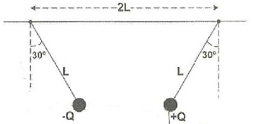
Duas esferas iguais estão em equilíbrio e suspensas por dois fios isolantes de mesmo comprimento L = 20cm, conforme mostra a figura acima. Sabendo que elas estão carregadas com cargas de sinais opostos, mas de mesmo valor absoluto Q = 2μC, e que a distância entre os pontos de apoio dos fios é 2L, qual é o módulo, em newtons, da tração em cada fio?
Dados: k0 = 9 x 10⁹N.m2 /C2
Observe a figura a seguir.
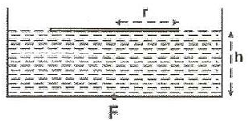
Uma fonte F de luz puntiforme está no fundo de um tanque que
contém um líquido de índice de refração n. Um disco de madeira
de raio r, de comprimento igual à coluna h de líquido, é colocado
rente à superfície do líquido, de tal forma que nenhum raio de luz
vindo de F seja refratado. Nessas condições, qual é o índice de
refração n?
Observe a figura a seguir.
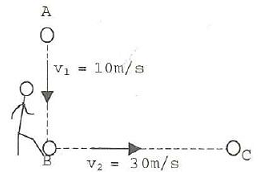
Um jogador de futebol chuta uma bola de massa 1,0kg vinda com
velocidade de 10m/s da direção AB e a arremessa na direção BC
com velocidade de 30m/s, conforme a figura acima. Sabendo que
as direções AB e BC são perpendiculares e o tempo de contato do
pé com a bola é de 10-2s, qual é a intensidade, em newtons, da
força aplicada na bola pelo jogador?
Observe a figura a seguir.
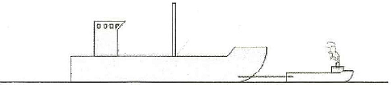
Um rebocador arrasta uma embarcação de 30 toneladas com
velocidade constante, conforme indica a figura acima. A tração no
cabo que puxa a embarcação é de 4,0 .105N. Assinale a opção
que apresenta o módulo, em newtons, e esboça a direção e o
sentido da força  que a embarcação exerce sobre a água.
Dado: g = 10m/s2
Observe a figura a seguir.
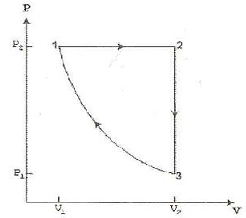
Um gás ideal sofre uma transformação descrita pelo ciclo 1 → 2 → 3 → 1, ilustrado no gráfico PV acima, sendo que no trecho 3 → 1 o gás sofre uma compressão adiabática. Considere U1, U2, e U3 as energias internas do gás em 1, 2 e 3, respectivamente. Nessas condições, analise as afirmativas abaixo.
I. No trecho 3 → 1 não há troca de calor entre o gás e o meio ambiente.
II. O trabalho realizado pelo gás no trecho 2 → 3 é igual a U3 – U2.
III. O trabalho realizado sobre o gás no trecho 3 → 1 é igual a U1 – U3.
IV. O trabalho realizado pelo gás no trecho 1 → 2 é igual a U2 – U1.
Assinale a opção correta.
Observe a figura a seguir.
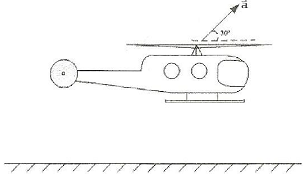
Um helicóptero decola de sua base que está ao nível do mar, com uma aceleração constante de 2,0m/s2 , fazendo um ângulo de 30° com a horizontal, conforme indica a figura acima. Após 10 segundos, qual será a altitude do helicóptero, em metros?
Dados: sen30° = 0,50 e cos30° = 0,87
Observe a figura a seguir.
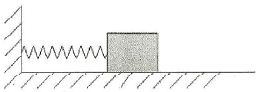
Considere o sistema massa-mola indicado acima, que oscila sobre
um plano horizontal num movimento harmônico simples com
energia mecânica E, amplitude A, frequência f e velocidade
máxima vm. Se a energia mecânica deste sistema for aumentada
para 2E, quais serão, respectivamente, a amplitude, a frequência
e a velocidade máxima do novo movimento harmônico simples?
Analise a figura a seguir.
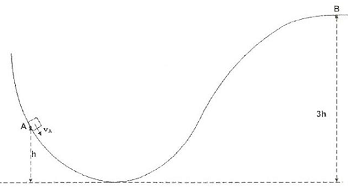
Considere o bloco percorrendo a rampa ilustrada na figura acima, sendo que, ao passar pelo ponto A, o módulo de sua velocidade é VA = 8,0m/s. Sabe-se que h = 2m e que o atrito entre as superfícies da rampa e do bloco é desprezível. Com relação ao ponto B da rampa, é correto afirmar que o bloco
Dado: g = 10m/s2
Observe a figura a seguir.
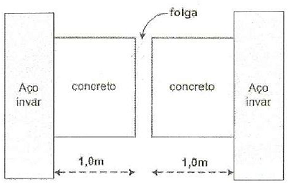
Duas placas de concreto de comprimento 1,0m devem ser construídas entre duas barras de aço invar (aço de coeficiente de dilação desprezível). Qual é a folga mínima, em centímetros, entre as placas para não haver rachaduras quando a temperatura variar positivamente de 40°C?
Dado: coef. de dilatação linear do concreto = 12 x 10-6 °C
-1
Observe a figura a seguir.

Uma mola ideal tem uma de suas extremidades presa ao teto e a
outra a uma esfera de massa m que oscila em movimento
harmônico simples. Ligada à esfera, tem-se um fio muito longo de
massa desprezível, e nele observa-se, conforme indica a figura
acima, a formação de uma onda harmônica progressiva que se
propaga com velocidade V. Sendo assim, a constante elástica da
mola é igual a
Analise a figura a seguir.
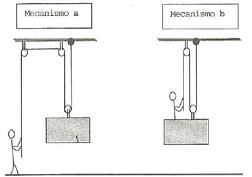
Um trabalhador pretende elevar uma carga de peso W usando um
dos mecanismos a e b mostrados acima. Sabendo que o peso do
trabalhador é igual ao da carga e que o atrito nas roldanas é
desprezível, é correto afirmar que a relação entre as trações, Ta e
Tb, que o trabalhador exerce sobre cada um dos mecanismos é
Observe a figura a seguir.
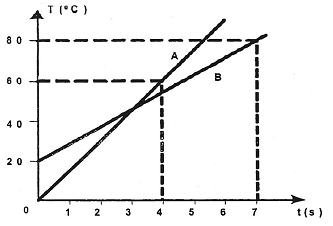
Dois corpos A e B são aquecidos separadamente por fontes de
calor idênticas. A massa do corpo A é 200g e a do corpo B é
800g. Analisando o gráfico, que mostra a temperatura do
corpo em função do tempo de ação da fonte, verifica-se que o
calor específico do corpo A (CA) e o calor específico do
corpo B (CB) obedecem a relação
observe a figura a seguir.
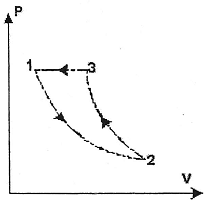
Uma certa massa de gás ideal encontra-se inicialmente no
estado termodinâmico 1, indicado no diagrama PV acima. Em
seguida, essa massa gasosa sofre uma expansão isotérmica até
atingir o estado 2, logo depois uma compressão adiabática
até o estado 3 e retornando ao estado 1 através de uma
compressão isobárica. Sobre a série de transformações, pode-se
dizer que,
Analise a figura a seguir.
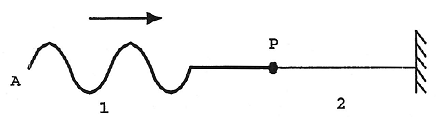
Considere um cabo composto de dois segmentos, 1 e 2, sendo
que a densidade do segmento 2 é menor que a do segmento 1.
Suponha que uma onda seja gerada na extremidade A do
segmento 1, conforme indica a figura acima. Após a onda
atingir o ponto P e comparando os parâmetros V (velocidade) ,
F(frequência) e L(comprimento de onda) das ondas incidente e
refratada, pode-se afirmar que
 Conheça nossos planos