Foram encontradas 338 questões

Resolva questões gratuitamente!

Junte-se a mais de 4 milhões de concurseiros!

Q602132 Português
Para responder a questão, leia o seguinte diálogo entre os personagens Simei e Colonna, no romance Número Zero, de Umberto Eco: 

      – Colonna, exemplifique para os nossos amigos como é que se pode seguir, ou dar mostras de seguir, um princípio fundamental do jornalismo democrático: fatos separados de opiniões. Opiniões no Amanhã [nome do jornal] haverá inúmeras, e evidenciadas como tais, mas como é que se demonstra que em outros artigos são citados apenas fatos?

      – Muito simples – disse eu. – Observem os grandes jornais de língua inglesa. Quando falam, sei lá, de um incêndio ou de um acidente de carro, evidentemente não podem dizer o que acham daquilo. Então inserem no artigo, entre aspas, as declarações de uma testemunha, um homem comum, um representante da opinião pública. Pondo-se aspas, essas afirmações se tornam fatos, ou seja, é um fato que aquele sujeito tenha expressado tal opinião. Mas seria possível supor que o jornalista tivesse dado a palavra somente a quem pensasse como ele. Portanto, haverá duas declarações discordantes entre si, para mostrar que é fato que há opiniões diferentes sobre um caso, e o jornal expõe esse fato irretorquível. A esperteza está em pôr antes entre aspas uma opinião banal e depois outra opinião, mais racional, que se assemelhe muito à opinião do jornalista. Assim o leitor tem a impressão de estar sendo informado de dois fatos, mas é induzido a aceitar uma única opinião como a mais convincente. Vamos ver um exemplo. Um viaduto desmoronou, um caminhão caiu e o motorista morreu. O texto, depois de relatar rigorosamente o fato, dirá: Ouvimos o senhor Rossi, 42 anos, que tem uma banca de jornal na esquina. Fazer o quê, foi uma fatalidade, disse ele, sinto pena desse coitado, mas destino é destino. Logo depois um senhor Bianchi, 34 anos, pedreiro que estava trabalhando numa obra ao lado, dirá: É culpa da prefeitura, que esse viaduto estava com problemas eu já sabia há muito tempo. Com quem o leitor se identificará? Com quem culpa alguém ou alguma coisa, com quem aponta responsabilidade. Está claro? O problema é no quê e como pôr aspas.

                          ECO, Umberto. Número Zero. Rio de Janeiro: Record, 2015, p. 55-6.
Assinale a alternativa correta sobre afirmações encontradas no texto.
Alternativas
Q602131 Português
Para responder a questão, leia o seguinte diálogo entre os personagens Simei e Colonna, no romance Número Zero, de Umberto Eco: 

      – Colonna, exemplifique para os nossos amigos como é que se pode seguir, ou dar mostras de seguir, um princípio fundamental do jornalismo democrático: fatos separados de opiniões. Opiniões no Amanhã [nome do jornal] haverá inúmeras, e evidenciadas como tais, mas como é que se demonstra que em outros artigos são citados apenas fatos?

      – Muito simples – disse eu. – Observem os grandes jornais de língua inglesa. Quando falam, sei lá, de um incêndio ou de um acidente de carro, evidentemente não podem dizer o que acham daquilo. Então inserem no artigo, entre aspas, as declarações de uma testemunha, um homem comum, um representante da opinião pública. Pondo-se aspas, essas afirmações se tornam fatos, ou seja, é um fato que aquele sujeito tenha expressado tal opinião. Mas seria possível supor que o jornalista tivesse dado a palavra somente a quem pensasse como ele. Portanto, haverá duas declarações discordantes entre si, para mostrar que é fato que há opiniões diferentes sobre um caso, e o jornal expõe esse fato irretorquível. A esperteza está em pôr antes entre aspas uma opinião banal e depois outra opinião, mais racional, que se assemelhe muito à opinião do jornalista. Assim o leitor tem a impressão de estar sendo informado de dois fatos, mas é induzido a aceitar uma única opinião como a mais convincente. Vamos ver um exemplo. Um viaduto desmoronou, um caminhão caiu e o motorista morreu. O texto, depois de relatar rigorosamente o fato, dirá: Ouvimos o senhor Rossi, 42 anos, que tem uma banca de jornal na esquina. Fazer o quê, foi uma fatalidade, disse ele, sinto pena desse coitado, mas destino é destino. Logo depois um senhor Bianchi, 34 anos, pedreiro que estava trabalhando numa obra ao lado, dirá: É culpa da prefeitura, que esse viaduto estava com problemas eu já sabia há muito tempo. Com quem o leitor se identificará? Com quem culpa alguém ou alguma coisa, com quem aponta responsabilidade. Está claro? O problema é no quê e como pôr aspas.

                          ECO, Umberto. Número Zero. Rio de Janeiro: Record, 2015, p. 55-6.
Segundo o texto, são estratégias utilizadas pelos jornais ao fazer citações:

1. Escolher criteriosamente as citações das testemunhas para contemplar pontos de vista divergentes sobre um mesmo fato.

2. Salientar os pontos de vista que mais interessam ao jornalista.

3. Redigir as notícias de tal forma que as opiniões sejam apresentadas como fatos.

4. Citar em primeiro lugar as palavras da testemunha que faz uma análise mais racional dos acontecimentos.

Estão de acordo com o texto as estratégias: 
Alternativas
Ano: 2014 Banca: NC-UFPR Órgão: PM-PR Prova: NC-UFPR - 2014 - PM-PR - Bombeiro Militar |
Q2024826 Inglês
Why do we have blood types?


    In 1996 a naturopath named Peter D’Adamo published a book called Eat Right 4 Your Type. D’Adamo argued that we must eat according to our blood type, in order to harmonise with our evolutionary heritage. Blood types, he claimed, “appear to have arrived at critical junctures of human development.” According to D’Adamo, type O blood arose in our hunter-gatherer ancestors in Africa, type A at the dawn of agriculture, and type B developed between 10,000 and 15,000 years ago in the Himalayan highlands. Type AB, he argued, is a modern blending of A and B.
    From these suppositions, D’Adamo then claimed that our blood type determines what food we should eat. With my agriculture-based type A blood, for example, I should be a vegetarian. People with the ancient hunter type O should have a meat-rich diet and avoid grains and dairy. According to the book, foods that are not suited to our blood type contain antigens that can cause all sorts of illness. D’Adamo recommended his diet as a way to reduce infections, lose weight, fight cancer and diabetes, and slow the ageing process.
    D’Adamo’s book has sold seven million copies and has been translated into 60 languages. It has been followed by a string of other blood type diet books; D’Adamo also sells a line of blood-type-tailored diet supplements on his website. As a result, doctors often get asked by their patients if blood type diets actually work. 
    The best way to answer that question is to run an experiment. In Eat Right 4 Your Type D’Adamo wrote that he was in the eighth year of a decade-long trial of blood type diets on women with cancer. Eighteen years later, however, the data from this trial have not yet been published.
    Recently, researchers at the Red Cross in Belgium decided to see if there was any other evidence in the diet’s favor. They hunted through the scientific literature for experiments that measured the benefits of diets based on blood types. Although they examined over 1,000 studies, their efforts were fruitless. “There is no direct evidence supporting the health effects of the ABO blood type diet,” says Emmy De Buck of the Belgian Red Cross-Flanders.
    After De Buck and her colleagues published their review in the American Journal of Clinical Nutrition, D’Adamo responded on his blog. In spite of the lack of published evidence supporting his Blood Type Diet, he claimed that the science behind it is right. “There is good science behind the blood type diets, just like there was good science behind Einstein’s mathematical calculations that led to the Theory of Relativity,” he wrote.

Adapted from: ZIMMER, Carl. Why do we have blood types? Crash diet. Retrieved from: http://www.bbc.com/future/story/20140715-why-do-wehave-blood-types. Access: August, 2014.
According to the text, what is correct to say about Peter D’Adamo?
Alternativas
Ano: 2014 Banca: NC-UFPR Órgão: PM-PR Prova: NC-UFPR - 2014 - PM-PR - Bombeiro Militar |
Q2024825 Inglês
Why do we have blood types?


    In 1996 a naturopath named Peter D’Adamo published a book called Eat Right 4 Your Type. D’Adamo argued that we must eat according to our blood type, in order to harmonise with our evolutionary heritage. Blood types, he claimed, “appear to have arrived at critical junctures of human development.” According to D’Adamo, type O blood arose in our hunter-gatherer ancestors in Africa, type A at the dawn of agriculture, and type B developed between 10,000 and 15,000 years ago in the Himalayan highlands. Type AB, he argued, is a modern blending of A and B.
    From these suppositions, D’Adamo then claimed that our blood type determines what food we should eat. With my agriculture-based type A blood, for example, I should be a vegetarian. People with the ancient hunter type O should have a meat-rich diet and avoid grains and dairy. According to the book, foods that are not suited to our blood type contain antigens that can cause all sorts of illness. D’Adamo recommended his diet as a way to reduce infections, lose weight, fight cancer and diabetes, and slow the ageing process.
    D’Adamo’s book has sold seven million copies and has been translated into 60 languages. It has been followed by a string of other blood type diet books; D’Adamo also sells a line of blood-type-tailored diet supplements on his website. As a result, doctors often get asked by their patients if blood type diets actually work. 
    The best way to answer that question is to run an experiment. In Eat Right 4 Your Type D’Adamo wrote that he was in the eighth year of a decade-long trial of blood type diets on women with cancer. Eighteen years later, however, the data from this trial have not yet been published.
    Recently, researchers at the Red Cross in Belgium decided to see if there was any other evidence in the diet’s favor. They hunted through the scientific literature for experiments that measured the benefits of diets based on blood types. Although they examined over 1,000 studies, their efforts were fruitless. “There is no direct evidence supporting the health effects of the ABO blood type diet,” says Emmy De Buck of the Belgian Red Cross-Flanders.
    After De Buck and her colleagues published their review in the American Journal of Clinical Nutrition, D’Adamo responded on his blog. In spite of the lack of published evidence supporting his Blood Type Diet, he claimed that the science behind it is right. “There is good science behind the blood type diets, just like there was good science behind Einstein’s mathematical calculations that led to the Theory of Relativity,” he wrote.

Adapted from: ZIMMER, Carl. Why do we have blood types? Crash diet. Retrieved from: http://www.bbc.com/future/story/20140715-why-do-wehave-blood-types. Access: August, 2014.
Consider the sentence: “There is good science behind the blood type diets, just like there was good science behind Einstein’s mathematical calculations that led to the Theory of Relativity,” Peter D’Adamo says this with the purpose of
Alternativas
Ano: 2014 Banca: NC-UFPR Órgão: PM-PR Prova: NC-UFPR - 2014 - PM-PR - Bombeiro Militar |
Q2024824 Inglês
Why do we have blood types?


    In 1996 a naturopath named Peter D’Adamo published a book called Eat Right 4 Your Type. D’Adamo argued that we must eat according to our blood type, in order to harmonise with our evolutionary heritage. Blood types, he claimed, “appear to have arrived at critical junctures of human development.” According to D’Adamo, type O blood arose in our hunter-gatherer ancestors in Africa, type A at the dawn of agriculture, and type B developed between 10,000 and 15,000 years ago in the Himalayan highlands. Type AB, he argued, is a modern blending of A and B.
    From these suppositions, D’Adamo then claimed that our blood type determines what food we should eat. With my agriculture-based type A blood, for example, I should be a vegetarian. People with the ancient hunter type O should have a meat-rich diet and avoid grains and dairy. According to the book, foods that are not suited to our blood type contain antigens that can cause all sorts of illness. D’Adamo recommended his diet as a way to reduce infections, lose weight, fight cancer and diabetes, and slow the ageing process.
    D’Adamo’s book has sold seven million copies and has been translated into 60 languages. It has been followed by a string of other blood type diet books; D’Adamo also sells a line of blood-type-tailored diet supplements on his website. As a result, doctors often get asked by their patients if blood type diets actually work. 
    The best way to answer that question is to run an experiment. In Eat Right 4 Your Type D’Adamo wrote that he was in the eighth year of a decade-long trial of blood type diets on women with cancer. Eighteen years later, however, the data from this trial have not yet been published.
    Recently, researchers at the Red Cross in Belgium decided to see if there was any other evidence in the diet’s favor. They hunted through the scientific literature for experiments that measured the benefits of diets based on blood types. Although they examined over 1,000 studies, their efforts were fruitless. “There is no direct evidence supporting the health effects of the ABO blood type diet,” says Emmy De Buck of the Belgian Red Cross-Flanders.
    After De Buck and her colleagues published their review in the American Journal of Clinical Nutrition, D’Adamo responded on his blog. In spite of the lack of published evidence supporting his Blood Type Diet, he claimed that the science behind it is right. “There is good science behind the blood type diets, just like there was good science behind Einstein’s mathematical calculations that led to the Theory of Relativity,” he wrote.

Adapted from: ZIMMER, Carl. Why do we have blood types? Crash diet. Retrieved from: http://www.bbc.com/future/story/20140715-why-do-wehave-blood-types. Access: August, 2014.
Consider the following statements concerning blood types and their specific diets defended by Peter D’Adamo:
1. Type O blood people must eat a lot of meat and avoid milk, yogurt and cheese, for example. 2. Type O blood appeared before the other blood types. 3. Type B diet, which is rich in yogurt, milk, cheese and meat, can cause diabetes. 4. People who want to slow the ageing process or fight cancer and diabetes should follow the blood type diet. 5. Type A blood people should eat many vegetables because this blood type is related to agriculture.
Which of the statements above are TRUE, according to Peter D’Adamo’s ideas? 
Alternativas
Ano: 2014 Banca: NC-UFPR Órgão: PM-PR Prova: NC-UFPR - 2014 - PM-PR - Bombeiro Militar |
Q2024823 Inglês
Why do we have blood types?


    In 1996 a naturopath named Peter D’Adamo published a book called Eat Right 4 Your Type. D’Adamo argued that we must eat according to our blood type, in order to harmonise with our evolutionary heritage. Blood types, he claimed, “appear to have arrived at critical junctures of human development.” According to D’Adamo, type O blood arose in our hunter-gatherer ancestors in Africa, type A at the dawn of agriculture, and type B developed between 10,000 and 15,000 years ago in the Himalayan highlands. Type AB, he argued, is a modern blending of A and B.
    From these suppositions, D’Adamo then claimed that our blood type determines what food we should eat. With my agriculture-based type A blood, for example, I should be a vegetarian. People with the ancient hunter type O should have a meat-rich diet and avoid grains and dairy. According to the book, foods that are not suited to our blood type contain antigens that can cause all sorts of illness. D’Adamo recommended his diet as a way to reduce infections, lose weight, fight cancer and diabetes, and slow the ageing process.
    D’Adamo’s book has sold seven million copies and has been translated into 60 languages. It has been followed by a string of other blood type diet books; D’Adamo also sells a line of blood-type-tailored diet supplements on his website. As a result, doctors often get asked by their patients if blood type diets actually work. 
    The best way to answer that question is to run an experiment. In Eat Right 4 Your Type D’Adamo wrote that he was in the eighth year of a decade-long trial of blood type diets on women with cancer. Eighteen years later, however, the data from this trial have not yet been published.
    Recently, researchers at the Red Cross in Belgium decided to see if there was any other evidence in the diet’s favor. They hunted through the scientific literature for experiments that measured the benefits of diets based on blood types. Although they examined over 1,000 studies, their efforts were fruitless. “There is no direct evidence supporting the health effects of the ABO blood type diet,” says Emmy De Buck of the Belgian Red Cross-Flanders.
    After De Buck and her colleagues published their review in the American Journal of Clinical Nutrition, D’Adamo responded on his blog. In spite of the lack of published evidence supporting his Blood Type Diet, he claimed that the science behind it is right. “There is good science behind the blood type diets, just like there was good science behind Einstein’s mathematical calculations that led to the Theory of Relativity,” he wrote.

Adapted from: ZIMMER, Carl. Why do we have blood types? Crash diet. Retrieved from: http://www.bbc.com/future/story/20140715-why-do-wehave-blood-types. Access: August, 2014.
Mark the correct alternative, according to the text.
Alternativas
Ano: 2014 Banca: NC-UFPR Órgão: PM-PR Prova: NC-UFPR - 2014 - PM-PR - Bombeiro Militar |
Q2024822 Inglês
Why do we have blood types?


    In 1996 a naturopath named Peter D’Adamo published a book called Eat Right 4 Your Type. D’Adamo argued that we must eat according to our blood type, in order to harmonise with our evolutionary heritage. Blood types, he claimed, “appear to have arrived at critical junctures of human development.” According to D’Adamo, type O blood arose in our hunter-gatherer ancestors in Africa, type A at the dawn of agriculture, and type B developed between 10,000 and 15,000 years ago in the Himalayan highlands. Type AB, he argued, is a modern blending of A and B.
    From these suppositions, D’Adamo then claimed that our blood type determines what food we should eat. With my agriculture-based type A blood, for example, I should be a vegetarian. People with the ancient hunter type O should have a meat-rich diet and avoid grains and dairy. According to the book, foods that are not suited to our blood type contain antigens that can cause all sorts of illness. D’Adamo recommended his diet as a way to reduce infections, lose weight, fight cancer and diabetes, and slow the ageing process.
    D’Adamo’s book has sold seven million copies and has been translated into 60 languages. It has been followed by a string of other blood type diet books; D’Adamo also sells a line of blood-type-tailored diet supplements on his website. As a result, doctors often get asked by their patients if blood type diets actually work. 
    The best way to answer that question is to run an experiment. In Eat Right 4 Your Type D’Adamo wrote that he was in the eighth year of a decade-long trial of blood type diets on women with cancer. Eighteen years later, however, the data from this trial have not yet been published.
    Recently, researchers at the Red Cross in Belgium decided to see if there was any other evidence in the diet’s favor. They hunted through the scientific literature for experiments that measured the benefits of diets based on blood types. Although they examined over 1,000 studies, their efforts were fruitless. “There is no direct evidence supporting the health effects of the ABO blood type diet,” says Emmy De Buck of the Belgian Red Cross-Flanders.
    After De Buck and her colleagues published their review in the American Journal of Clinical Nutrition, D’Adamo responded on his blog. In spite of the lack of published evidence supporting his Blood Type Diet, he claimed that the science behind it is right. “There is good science behind the blood type diets, just like there was good science behind Einstein’s mathematical calculations that led to the Theory of Relativity,” he wrote.

Adapted from: ZIMMER, Carl. Why do we have blood types? Crash diet. Retrieved from: http://www.bbc.com/future/story/20140715-why-do-wehave-blood-types. Access: August, 2014.
Which of these statements DOES NOT CORRESPOND to information given in the text about the blood type diet?
Alternativas
Ano: 2014 Banca: NC-UFPR Órgão: PM-PR Prova: NC-UFPR - 2014 - PM-PR - Bombeiro Militar |
Q2024821 Inglês
Why do we have blood types?


    In 1996 a naturopath named Peter D’Adamo published a book called Eat Right 4 Your Type. D’Adamo argued that we must eat according to our blood type, in order to harmonise with our evolutionary heritage. Blood types, he claimed, “appear to have arrived at critical junctures of human development.” According to D’Adamo, type O blood arose in our hunter-gatherer ancestors in Africa, type A at the dawn of agriculture, and type B developed between 10,000 and 15,000 years ago in the Himalayan highlands. Type AB, he argued, is a modern blending of A and B.
    From these suppositions, D’Adamo then claimed that our blood type determines what food we should eat. With my agriculture-based type A blood, for example, I should be a vegetarian. People with the ancient hunter type O should have a meat-rich diet and avoid grains and dairy. According to the book, foods that are not suited to our blood type contain antigens that can cause all sorts of illness. D’Adamo recommended his diet as a way to reduce infections, lose weight, fight cancer and diabetes, and slow the ageing process.
    D’Adamo’s book has sold seven million copies and has been translated into 60 languages. It has been followed by a string of other blood type diet books; D’Adamo also sells a line of blood-type-tailored diet supplements on his website. As a result, doctors often get asked by their patients if blood type diets actually work. 
    The best way to answer that question is to run an experiment. In Eat Right 4 Your Type D’Adamo wrote that he was in the eighth year of a decade-long trial of blood type diets on women with cancer. Eighteen years later, however, the data from this trial have not yet been published.
    Recently, researchers at the Red Cross in Belgium decided to see if there was any other evidence in the diet’s favor. They hunted through the scientific literature for experiments that measured the benefits of diets based on blood types. Although they examined over 1,000 studies, their efforts were fruitless. “There is no direct evidence supporting the health effects of the ABO blood type diet,” says Emmy De Buck of the Belgian Red Cross-Flanders.
    After De Buck and her colleagues published their review in the American Journal of Clinical Nutrition, D’Adamo responded on his blog. In spite of the lack of published evidence supporting his Blood Type Diet, he claimed that the science behind it is right. “There is good science behind the blood type diets, just like there was good science behind Einstein’s mathematical calculations that led to the Theory of Relativity,” he wrote.

Adapted from: ZIMMER, Carl. Why do we have blood types? Crash diet. Retrieved from: http://www.bbc.com/future/story/20140715-why-do-wehave-blood-types. Access: August, 2014.
According to the text, the expression “that question” in boldface and italics (paragraph 04) refers to
Alternativas
Ano: 2014 Banca: NC-UFPR Órgão: PM-PR Prova: NC-UFPR - 2014 - PM-PR - Bombeiro Militar |
Q2024820 Inglês
texto_73 74.png (627×217)

http://www.d.umn.edu/~lmillerc/TeachingEnglishHomePage/5902/deadlines.html. Acesso em: 25/09/2014.
Hobbes suggests that Calvin should not think about the result of a writing task but rather have fun with the process of creating. Why is this suggestion NOT a profitable one?
Alternativas
Ano: 2014 Banca: NC-UFPR Órgão: PM-PR Prova: NC-UFPR - 2014 - PM-PR - Bombeiro Militar |
Q2024819 Inglês
texto_73 74.png (627×217)

http://www.d.umn.edu/~lmillerc/TeachingEnglishHomePage/5902/deadlines.html. Acesso em: 25/09/2014.
Consider the question Calvin asks: “How can you be creative when someone’s breathing down your neck?”. The purpose of it is:
Alternativas
Ano: 2014 Banca: NC-UFPR Órgão: PM-PR Prova: NC-UFPR - 2014 - PM-PR - Bombeiro Militar |
Q2024813 Biologia
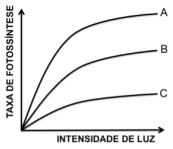
Plantas da mesma espécie foram submetidas a três condições experimentais e a taxa de fotossíntese avaliada em função da intensidade luminosa. 
67_1.png (369×103) 67_2.png (213×163)
Assinale a alternativa que associa corretamente cada condição à respectiva curva. 
Alternativas
Ano: 2014 Banca: NC-UFPR Órgão: PM-PR Prova: NC-UFPR - 2014 - PM-PR - Bombeiro Militar |
Q2024812 Biologia
A pressão parcial de oxigênio (pO2) no sangue foi medida simultaneamente em diferentes pontos do sistema circulatório de um mamífero. Em condições normais espera-se que
Alternativas
Ano: 2014 Banca: NC-UFPR Órgão: PM-PR Prova: NC-UFPR - 2014 - PM-PR - Bombeiro Militar |
Q2024809 Matemática
Duas escadas foram usadas para bloquear um corredor de 2,4 m de largura, conforme indica a figura ao lado. Uma mede 4 m de comprimento e outra 3 m. A altura h, do ponto onde as escadas se tocam, em relação ao chão, é de aproximadamente
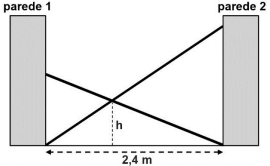
63.png (288×183)
Alternativas
Ano: 2014 Banca: NC-UFPR Órgão: PM-PR Prova: NC-UFPR - 2014 - PM-PR - Bombeiro Militar |
Q2024805 Matemática
O ângulo de visão de um motorista diminui conforme aumenta a velocidade de seu veículo. Isso pode representar riscos para o trânsito e os pedestres, pois o condutor deixa de prestar atenção a veículos e pessoas fora desse ângulo conforme aumenta sua velocidade. Suponha que o ângulo de visão A relaciona-se com a velocidade v através da expressão A = k v + b, na qual k e b são constantes. Sabendo que o ângulo de visão a 40 km/h é de 100o , e que a 120 km/h fica reduzido a apenas 30o , qual o ângulo de visão do motorista à velocidade de 64 km/h?
Alternativas
Ano: 2014 Banca: NC-UFPR Órgão: PM-PR Prova: NC-UFPR - 2014 - PM-PR - Bombeiro Militar |
Q2024798 História
Considere a charge abaixo, publicada na revista humorística brasileira Pif-Paf, em 27 de julho de 1964: 
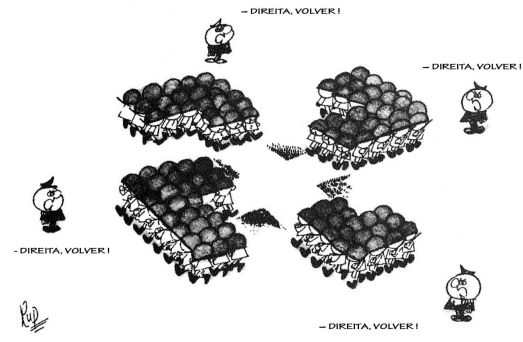
52.png (550×380) 
CARDOSO, Oldimar. Tudo é história (9o ano). S. Paulo: Ática, 2006, p. 231.
A partir dos elementos da charge e dos conhecimentos sobre o período da ditadura civil-militar no Brasil (1964-1985), identifique as seguintes afirmativas como verdadeiras (V) ou falsas (F):
( ) A charge faz referência ao símbolo da suástica nazista, pois iguala a cassação de direitos civis e políticos que ocorreu após o golpe militar brasileiro com a cassação de direitos civis dos judeus alemães no regime nazista. ( ) A direita na América Latina, durante o período da Guerra Fria (1945-1989), recebeu apoio da União Soviética para instituir governos autoritários que afirmavam proteger o bem maior da população contra inimigos comunistas. ( ) A charge faz referência ao caráter do governo instituído ser de direita, para proteger o país de uma alegada “ameaça comunista”, que foi associada pelos militares e seus apoiadores ao presidente deposto João Goulart e demais grupos de esquerda. ( ) Eventos como a Revolução Cubana (1959) não somente inspiraram diversos movimentos de esquerda antes e depois do golpe militar, como impulsionaram os Estados Unidos para o estreitamento de laços com a direita na América Latina.
Assinale a alternativa que apresenta a sequência correta, de cima para baixo.
Alternativas
Ano: 2014 Banca: NC-UFPR Órgão: PM-PR Prova: NC-UFPR - 2014 - PM-PR - Bombeiro Militar |
Q2024787 Química
O palito de fósforo é um dos artigos mais úteis no nosso cotidiano. Na sua composição, possui fósforo vermelho, enxofre e clorato de potássio. A cabeça de um palito de fósforo pesa aproximadamente 0,05 g. A reação que ocorre na queima da cabeça de fósforo está representada a seguir:
41.png (495×35)


O cheiro característico de “fósforo queimado” se deve ao dióxido de enxofre formado.
Dados: No palito de fósforo, os componentes estão em quantidades estequiométricas. M (g mol-1 ): Cl = 35,5; K = 39; O= 16; P = 31; S = 32.
A massa (em g) de dióxido de enxofre produzido ao queimar uma cabeça de fósforo é aproximadamente:

Alternativas
Ano: 2014 Banca: NC-UFPR Órgão: PM-PR Prova: NC-UFPR - 2014 - PM-PR - Bombeiro Militar |
Q2024786 Química
Recentemente, a produção fotocatalítica de hidrogênio vem atraindo atenção devido ao processo que gera um combustível limpo, o qual é utilizado em células a combustível. O processo se baseia na separação da água nos seus componentes, conforme equilíbrio inserido no esquema, utilizando luz solar e um fotocatalisador (p. ex. NaTaO3:La). O processo é extremamente endotérmico, necessitando 1,23 eV para ocorrer. Num experimento, o processo foi realizado num sistema fechado, como esquematizado ao lado. Considerando essas informações, identifique as afirmativas a seguir como verdadeiras (V) ou falsas (F):
( ) A quantidade de fotocatalisador limita a conversão. ( ) O aumento da temperatura irá favorecer a conversão. ( ) A diminuição do volume do sistema irá favorecer a conversão. ( ) É condição necessária para a produção de hidrogênio que o fotocatalisador absorva energia solar superior a 1,23 eV.
40.png (266×296)
Assinale a alternativa que apresenta a sequência correta, de cima para baixo.
Alternativas
Ano: 2014 Banca: NC-UFPR Órgão: PM-PR Prova: NC-UFPR - 2014 - PM-PR - Bombeiro Militar |
Q2024780 Português
O poema “Legado” integra a primeira parte do livro Claro enigma (1951), a que o autor denominou “Entre lobo e cão”.
                        Legado
Que lembrança darei ao país que me deu tudo que lembro e sei, tudo quanto senti? Na noite do sem-fim, breve o tempo esqueceu minha incerta medalha, e a meu nome se ri.
E mereço esperar mais do que os outros, eu? Tu não me enganas, mundo, e não te engano a ti. Esses monstros atuais, não os cativa Orfeu, a vagar, taciturno, entre o talvez e o se.
Não deixarei de mim nenhum canto radioso, uma voz matinal palpitando na bruma e que arranque de alguém seu mais secreto espinho.
De tudo quanto foi meu passo caprichoso na vida, restará, pois o resto se esfuma, uma pedra que havia em meio do caminho.
ANDRADE, Carlos Drummond de, Claro enigma. São Paulo: Companhia das Letras, 2012, p. 19.
Considerando o poema, sua relação com o livro, e a poética de Carlos Drummond de Andrade, assinale a alternativa correta.k
Alternativas
Ano: 2014 Banca: NC-UFPR Órgão: PM-PR Prova: NC-UFPR - 2014 - PM-PR - Bombeiro Militar |
Q2024762 Física
A função principal de geradores elétricos é transformar em energia elétrica algum outro tipo de energia. No caso de geradores elementares de corrente contínua, cujo circuito equivalente está mostrado ao lado, onde r é a resistência interna do gerador e 16_teste.png (10×16) sua força eletromotriz, o comportamento característico é descrito pela conhecida equação do gerador, que fornece a diferença de potencial 16_teste 2.png (22×20) em seus terminais A e B em função da corrente i fornecida por ele. Um dado gerador tem a curva característica mostrada no gráfico ao lado.
A partir do circuito e do gráfico apresentados, assinale a alternativa correta para a potência dissipada internamente na fonte quando esta fornece uma corrente de 2,0 mA. 
16.png (485×166)
Alternativas
Ano: 2014 Banca: NC-UFPR Órgão: PM-PR Prova: NC-UFPR - 2014 - PM-PR - Bombeiro Militar |
Q2024755 Geografia
Neste fim do século XX, as fronteiras econômicas se ampliam, mais áreas são ocupadas e pode-se mesmo dizer, [...], que o território brasileiro está inteiramente apropriado. Por outro lado, a natureza recuou consideravelmente, enquanto todas as formas de densidade humana ficam cada vez mais presentes. Ainda que sua distribuição seja desigual, há, em uma porção considerável do território, maior densidade técnica, acompanhada de maior densidade informacional.
 SANTOS, M.; SILVEIRA, M. L. O Brasil – Território e sociedade no início do século XXI. Rio de Janeiro: Record, 2001, p. 279.
Com base na reflexão oferecida pelo texto e no conhecimento sobre geografia do Brasil, assinale a alternativa INCORRETA. 
Alternativas
Respostas
241: B
242: C
243: D
244: A
245: D
246: E
247: B
248: D
249: E
250: D
251: D
252: B
253: A
254: C
255: A
256: C
257: B
258: A
259: A
260: E