Foram encontradas 24.192 questões

Resolva questões gratuitamente!

Junte-se a mais de 4 milhões de concurseiros!

Q3516999 Inglês
Read the text and answer question.


Earthquake levels city of Antakya in southern Turkey 


    The Turkish city of Antakya, one of  the hardest‐hit  towns in  the earthquake  zone,  has  been  nearly  destroyed  by  the massive  7.8  quake  that  struck  on  6th  February.  Tall  apartment  buildings were  flattened,  trapping  residents  who  were  sleeping  when  the  quake  struck  in  the  early  morning  hours.  Thousands  are  __________  to  be  buried  in  their  homes.  Most  of  the  city  was  heavily  damaged  and  rescuers  have  been  working  around  the  clock to pull survivors from under the rubble, racing against time  in  cold  weather. Many  residents  were  left  homeless  and  had  to  spend nights outdoors, burning debris to keep warm as overnight temperatures  dropped  below  freezing. Workers  pulled  a man  in  his 30s out of the ruins as a jubilant crowd burst into cheers and  tears. Not  long after,  they  found an elderly woman. Then, a  10‐ year‐old girl was also rescued: the child was under the rubble for  90  hours.  These moments  of  hope  among  the  devastation  keep  them going as darkness falls. More than 80 hours after the quake,  rescuers using pails along with other equipment, found a man and  his mother, and pulled  them out alive. Amid  the  rubble, a group of rescuers were able to pull out lost family members alive. 


    Even  as  more  help  arrives,  hope  for  finding  survivors  dwindles.  Family  members  wait  in  the  cold  to  see  if  their  loved ones will be found, alive or dead. There are more than 100 bodies  waiting  for  identification  in  a  makeshift  morgue  outside  the  Antakya hospital. More than 600 aftershocks are slowing recovery  efforts  and  make  the  task  more  dangerous.  Little  aid  from  the  government has reached  the city and  the need is overwhelming.  People walk  the  streets  in  tears,  dazed. There  is  no  place  to go.  Everything  is  covered  in  dust.  Even  with  some  120,000  rescuers  across Turkey and Syria now  taking part in  the effort,  the  task is  daunting.  With  every  passing  hour,  the  likelihood  of  finding  survivors diminishes. 


Adapted. Internet: www.abcnews.go.com/International.  
The main idea in the text is the  
Alternativas
Q3516998 Inglês
Read the text and answer question.


Earthquake levels city of Antakya in southern Turkey 


    The Turkish city of Antakya, one of  the hardest‐hit  towns in  the earthquake  zone,  has  been  nearly  destroyed  by  the massive  7.8  quake  that  struck  on  6th  February.  Tall  apartment  buildings were  flattened,  trapping  residents  who  were  sleeping  when  the  quake  struck  in  the  early  morning  hours.  Thousands  are  __________  to  be  buried  in  their  homes.  Most  of  the  city  was  heavily  damaged  and  rescuers  have  been  working  around  the  clock to pull survivors from under the rubble, racing against time  in  cold  weather. Many  residents  were  left  homeless  and  had  to  spend nights outdoors, burning debris to keep warm as overnight temperatures  dropped  below  freezing. Workers  pulled  a man  in  his 30s out of the ruins as a jubilant crowd burst into cheers and  tears. Not  long after,  they  found an elderly woman. Then, a  10‐ year‐old girl was also rescued: the child was under the rubble for  90  hours.  These moments  of  hope  among  the  devastation  keep  them going as darkness falls. More than 80 hours after the quake,  rescuers using pails along with other equipment, found a man and  his mother, and pulled  them out alive. Amid  the  rubble, a group of rescuers were able to pull out lost family members alive. 


    Even  as  more  help  arrives,  hope  for  finding  survivors  dwindles.  Family  members  wait  in  the  cold  to  see  if  their  loved ones will be found, alive or dead. There are more than 100 bodies  waiting  for  identification  in  a  makeshift  morgue  outside  the  Antakya hospital. More than 600 aftershocks are slowing recovery  efforts  and  make  the  task  more  dangerous.  Little  aid  from  the  government has reached  the city and  the need is overwhelming.  People walk  the  streets  in  tears,  dazed. There  is  no  place  to go.  Everything  is  covered  in  dust.  Even  with  some  120,000  rescuers  across Turkey and Syria now  taking part in  the effort,  the  task is  daunting.  With  every  passing  hour,  the  likelihood  of  finding  survivors diminishes. 


Adapted. Internet: www.abcnews.go.com/International.  
The word them, in bold in the text, refers to the  
Alternativas
Q3516997 Inglês
Read the text and answer question.


Earthquake levels city of Antakya in southern Turkey 


    The Turkish city of Antakya, one of  the hardest‐hit  towns in  the earthquake  zone,  has  been  nearly  destroyed  by  the massive  7.8  quake  that  struck  on  6th  February.  Tall  apartment  buildings were  flattened,  trapping  residents  who  were  sleeping  when  the  quake  struck  in  the  early  morning  hours.  Thousands  are  __________  to  be  buried  in  their  homes.  Most  of  the  city  was  heavily  damaged  and  rescuers  have  been  working  around  the  clock to pull survivors from under the rubble, racing against time  in  cold  weather. Many  residents  were  left  homeless  and  had  to  spend nights outdoors, burning debris to keep warm as overnight temperatures  dropped  below  freezing. Workers  pulled  a man  in  his 30s out of the ruins as a jubilant crowd burst into cheers and  tears. Not  long after,  they  found an elderly woman. Then, a  10‐ year‐old girl was also rescued: the child was under the rubble for  90  hours.  These moments  of  hope  among  the  devastation  keep  them going as darkness falls. More than 80 hours after the quake,  rescuers using pails along with other equipment, found a man and  his mother, and pulled  them out alive. Amid  the  rubble, a group of rescuers were able to pull out lost family members alive. 


    Even  as  more  help  arrives,  hope  for  finding  survivors  dwindles.  Family  members  wait  in  the  cold  to  see  if  their  loved ones will be found, alive or dead. There are more than 100 bodies  waiting  for  identification  in  a  makeshift  morgue  outside  the  Antakya hospital. More than 600 aftershocks are slowing recovery  efforts  and  make  the  task  more  dangerous.  Little  aid  from  the  government has reached  the city and  the need is overwhelming.  People walk  the  streets  in  tears,  dazed. There  is  no  place  to go.  Everything  is  covered  in  dust.  Even  with  some  120,000  rescuers  across Turkey and Syria now  taking part in  the effort,  the  task is  daunting.  With  every  passing  hour,  the  likelihood  of  finding  survivors diminishes. 


Adapted. Internet: www.abcnews.go.com/International.  
Read the sentences and choose the best alternative. 

I‐ As  time went  by,  the  probability  of  finding  people alive was  negatively affected. 
II‐ Under  strict  local  laws,  the  rescuers  were  only  allowed  to  work up to eight hours a day. 
III‐ Most  of  the  homes  have  suffered major  damage  due  to  the  earthquake’s intensity.
  IV‐ There  weren’t  many  victims,  as  the  government  had  been  warned of the quake by seismologists. 
V‐ Many people chose to spend the night outdoors because they  didn’t feel safe inside their homes. 

According to the text, 
Alternativas
Q3516996 Inglês
Read the text and answer question.


Global coral reef bleaching event underway as oceans get  warmer  


    The  world’s  oceans  experience  unprecedented  rising  temperatures:  last  month,  the  average  global  sea  surface  temperature reached a record 21° Celsius. Last week, the National  Oceanic  and  Atmospheric  Administration  (NOAA)  reported  the  4th  global  bleaching  event  on  record.  A  press  release  stated,  “Within  the  last  14 months,  significant  coral  bleaching  has  been  documented in  the Northern and Southern Hemispheres of each  major  ocean  basin.  Since  2023,  the  problem  has  become  more  frequent in the Atlantic, Pacific and Indian oceans.”


    According  to NOAA, warmer  ocean  temperatures  can  result  in expulsion of algae that live in the coral tissue, leaving the coral  completely  white  ‐  something  known  as  ‘coral  bleaching’.  This  does  not  necessarily mean  corals will  die,  as  they  can  recover  if  the strain on their ecosystems is reduced. At a local level, storms,  disease,  sediments  and  changes  in  salinity  can  cause  corals  to  bleach. However, mass bleaching, which is when several varieties  of  coral  reefs  are  bleached,  is  largely  caused  by  increased  sea temperatures.  When  these  events  are  sufficiently  severe  or  prolonged, they can cause coral mortality, which hurts the people  who depend on the coral reefs for their livelihoods.


    In  2019, NOAA  published  a  study  that  provided  “resilience‐ based management practices” and __________ the importance of  coral restoration. “We are on the frontlines of coral reef research,  management  and  restoration,  and  are  actively  and  aggressively  implementing  the  recommendations  of  the  2019  study.” A  buoy  in  Florida  reported  an  ocean  temperature  of  38°  Celsius  in  July 2023, according to meteorologists at the time. In response, NOAA  started  a  program  to  attempt  to  offset  the  effects  of  global  climate change on the local coral reefs by moving coral nurseries  to  deeper,  cooler  waters  and  deploying  sunshades  to  protect  corals in other areas. 


Adapted. Internet: www.abcnews.go.com/International.  
Choose the best alternative to fill in the blank.
Alternativas
Q3516995 Inglês
Read the text and answer question.


Global coral reef bleaching event underway as oceans get  warmer  


    The  world’s  oceans  experience  unprecedented  rising  temperatures:  last  month,  the  average  global  sea  surface  temperature reached a record 21° Celsius. Last week, the National  Oceanic  and  Atmospheric  Administration  (NOAA)  reported  the  4th  global  bleaching  event  on  record.  A  press  release  stated,  “Within  the  last  14 months,  significant  coral  bleaching  has  been  documented in  the Northern and Southern Hemispheres of each  major  ocean  basin.  Since  2023,  the  problem  has  become  more  frequent in the Atlantic, Pacific and Indian oceans.”


    According  to NOAA, warmer  ocean  temperatures  can  result  in expulsion of algae that live in the coral tissue, leaving the coral  completely  white  ‐  something  known  as  ‘coral  bleaching’.  This  does  not  necessarily mean  corals will  die,  as  they  can  recover  if  the strain on their ecosystems is reduced. At a local level, storms,  disease,  sediments  and  changes  in  salinity  can  cause  corals  to  bleach. However, mass bleaching, which is when several varieties  of  coral  reefs  are  bleached,  is  largely  caused  by  increased  sea temperatures.  When  these  events  are  sufficiently  severe  or  prolonged, they can cause coral mortality, which hurts the people  who depend on the coral reefs for their livelihoods.


    In  2019, NOAA  published  a  study  that  provided  “resilience‐ based management practices” and __________ the importance of  coral restoration. “We are on the frontlines of coral reef research,  management  and  restoration,  and  are  actively  and  aggressively  implementing  the  recommendations  of  the  2019  study.” A  buoy  in  Florida  reported  an  ocean  temperature  of  38°  Celsius  in  July 2023, according to meteorologists at the time. In response, NOAA  started  a  program  to  attempt  to  offset  the  effects  of  global  climate change on the local coral reefs by moving coral nurseries  to  deeper,  cooler  waters  and  deploying  sunshades  to  protect  corals in other areas. 


Adapted. Internet: www.abcnews.go.com/International.  
The word livelihoods, in bold in the text, refers to 
Alternativas
Q3516994 Inglês
Read the text and answer question.


Global coral reef bleaching event underway as oceans get  warmer  


    The  world’s  oceans  experience  unprecedented  rising  temperatures:  last  month,  the  average  global  sea  surface  temperature reached a record 21° Celsius. Last week, the National  Oceanic  and  Atmospheric  Administration  (NOAA)  reported  the  4th  global  bleaching  event  on  record.  A  press  release  stated,  “Within  the  last  14 months,  significant  coral  bleaching  has  been  documented in  the Northern and Southern Hemispheres of each  major  ocean  basin.  Since  2023,  the  problem  has  become  more  frequent in the Atlantic, Pacific and Indian oceans.”


    According  to NOAA, warmer  ocean  temperatures  can  result  in expulsion of algae that live in the coral tissue, leaving the coral  completely  white  ‐  something  known  as  ‘coral  bleaching’.  This  does  not  necessarily mean  corals will  die,  as  they  can  recover  if  the strain on their ecosystems is reduced. At a local level, storms,  disease,  sediments  and  changes  in  salinity  can  cause  corals  to  bleach. However, mass bleaching, which is when several varieties  of  coral  reefs  are  bleached,  is  largely  caused  by  increased  sea temperatures.  When  these  events  are  sufficiently  severe  or  prolonged, they can cause coral mortality, which hurts the people  who depend on the coral reefs for their livelihoods.


    In  2019, NOAA  published  a  study  that  provided  “resilience‐ based management practices” and __________ the importance of  coral restoration. “We are on the frontlines of coral reef research,  management  and  restoration,  and  are  actively  and  aggressively  implementing  the  recommendations  of  the  2019  study.” A  buoy  in  Florida  reported  an  ocean  temperature  of  38°  Celsius  in  July 2023, according to meteorologists at the time. In response, NOAA  started  a  program  to  attempt  to  offset  the  effects  of  global  climate change on the local coral reefs by moving coral nurseries  to  deeper,  cooler  waters  and  deploying  sunshades  to  protect  corals in other areas. 


Adapted. Internet: www.abcnews.go.com/International.  
The  word  underway,  in  the  title  of  the  text,  means  that  something is  
Alternativas
Q3516993 Inglês
Read the text and answer question.


Global coral reef bleaching event underway as oceans get  warmer  


    The  world’s  oceans  experience  unprecedented  rising  temperatures:  last  month,  the  average  global  sea  surface  temperature reached a record 21° Celsius. Last week, the National  Oceanic  and  Atmospheric  Administration  (NOAA)  reported  the  4th  global  bleaching  event  on  record.  A  press  release  stated,  “Within  the  last  14 months,  significant  coral  bleaching  has  been  documented in  the Northern and Southern Hemispheres of each  major  ocean  basin.  Since  2023,  the  problem  has  become  more  frequent in the Atlantic, Pacific and Indian oceans.”


    According  to NOAA, warmer  ocean  temperatures  can  result  in expulsion of algae that live in the coral tissue, leaving the coral  completely  white  ‐  something  known  as  ‘coral  bleaching’.  This  does  not  necessarily mean  corals will  die,  as  they  can  recover  if  the strain on their ecosystems is reduced. At a local level, storms,  disease,  sediments  and  changes  in  salinity  can  cause  corals  to  bleach. However, mass bleaching, which is when several varieties  of  coral  reefs  are  bleached,  is  largely  caused  by  increased  sea temperatures.  When  these  events  are  sufficiently  severe  or  prolonged, they can cause coral mortality, which hurts the people  who depend on the coral reefs for their livelihoods.


    In  2019, NOAA  published  a  study  that  provided  “resilience‐ based management practices” and __________ the importance of  coral restoration. “We are on the frontlines of coral reef research,  management  and  restoration,  and  are  actively  and  aggressively  implementing  the  recommendations  of  the  2019  study.” A  buoy  in  Florida  reported  an  ocean  temperature  of  38°  Celsius  in  July 2023, according to meteorologists at the time. In response, NOAA  started  a  program  to  attempt  to  offset  the  effects  of  global  climate change on the local coral reefs by moving coral nurseries  to  deeper,  cooler  waters  and  deploying  sunshades  to  protect  corals in other areas. 


Adapted. Internet: www.abcnews.go.com/International.  
According to the text, the NOAA 
Alternativas
Q3516992 Inglês
Read the text and answer question.


Global coral reef bleaching event underway as oceans get  warmer  


    The  world’s  oceans  experience  unprecedented  rising  temperatures:  last  month,  the  average  global  sea  surface  temperature reached a record 21° Celsius. Last week, the National  Oceanic  and  Atmospheric  Administration  (NOAA)  reported  the  4th  global  bleaching  event  on  record.  A  press  release  stated,  “Within  the  last  14 months,  significant  coral  bleaching  has  been  documented in  the Northern and Southern Hemispheres of each  major  ocean  basin.  Since  2023,  the  problem  has  become  more  frequent in the Atlantic, Pacific and Indian oceans.”


    According  to NOAA, warmer  ocean  temperatures  can  result  in expulsion of algae that live in the coral tissue, leaving the coral  completely  white  ‐  something  known  as  ‘coral  bleaching’.  This  does  not  necessarily mean  corals will  die,  as  they  can  recover  if  the strain on their ecosystems is reduced. At a local level, storms,  disease,  sediments  and  changes  in  salinity  can  cause  corals  to  bleach. However, mass bleaching, which is when several varieties  of  coral  reefs  are  bleached,  is  largely  caused  by  increased  sea temperatures.  When  these  events  are  sufficiently  severe  or  prolonged, they can cause coral mortality, which hurts the people  who depend on the coral reefs for their livelihoods.


    In  2019, NOAA  published  a  study  that  provided  “resilience‐ based management practices” and __________ the importance of  coral restoration. “We are on the frontlines of coral reef research,  management  and  restoration,  and  are  actively  and  aggressively  implementing  the  recommendations  of  the  2019  study.” A  buoy  in  Florida  reported  an  ocean  temperature  of  38°  Celsius  in  July 2023, according to meteorologists at the time. In response, NOAA  started  a  program  to  attempt  to  offset  the  effects  of  global  climate change on the local coral reefs by moving coral nurseries  to  deeper,  cooler  waters  and  deploying  sunshades  to  protect  corals in other areas. 


Adapted. Internet: www.abcnews.go.com/International.  
According to the text, coral reefs may 
Alternativas
Q3516991 Inglês
Read the text and answer question.


Global coral reef bleaching event underway as oceans get  warmer  


    The  world’s  oceans  experience  unprecedented  rising  temperatures:  last  month,  the  average  global  sea  surface  temperature reached a record 21° Celsius. Last week, the National  Oceanic  and  Atmospheric  Administration  (NOAA)  reported  the  4th  global  bleaching  event  on  record.  A  press  release  stated,  “Within  the  last  14 months,  significant  coral  bleaching  has  been  documented in  the Northern and Southern Hemispheres of each  major  ocean  basin.  Since  2023,  the  problem  has  become  more  frequent in the Atlantic, Pacific and Indian oceans.”


    According  to NOAA, warmer  ocean  temperatures  can  result  in expulsion of algae that live in the coral tissue, leaving the coral  completely  white  ‐  something  known  as  ‘coral  bleaching’.  This  does  not  necessarily mean  corals will  die,  as  they  can  recover  if  the strain on their ecosystems is reduced. At a local level, storms,  disease,  sediments  and  changes  in  salinity  can  cause  corals  to  bleach. However, mass bleaching, which is when several varieties  of  coral  reefs  are  bleached,  is  largely  caused  by  increased  sea temperatures.  When  these  events  are  sufficiently  severe  or  prolonged, they can cause coral mortality, which hurts the people  who depend on the coral reefs for their livelihoods.


    In  2019, NOAA  published  a  study  that  provided  “resilience‐ based management practices” and __________ the importance of  coral restoration. “We are on the frontlines of coral reef research,  management  and  restoration,  and  are  actively  and  aggressively  implementing  the  recommendations  of  the  2019  study.” A  buoy  in  Florida  reported  an  ocean  temperature  of  38°  Celsius  in  July 2023, according to meteorologists at the time. In response, NOAA  started  a  program  to  attempt  to  offset  the  effects  of  global  climate change on the local coral reefs by moving coral nurseries  to  deeper,  cooler  waters  and  deploying  sunshades  to  protect  corals in other areas. 


Adapted. Internet: www.abcnews.go.com/International.  
According to the text, warm sea temperatures
Alternativas
Q3516989 Física
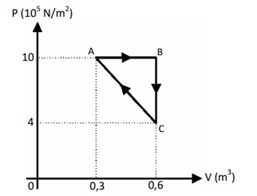
A  figura a  seguir ilustra as  transformações  sofridas por um  gás  ideal  contido  em  um  recipiente  fechado  com  um  pistão  móvel. A partir da figura, avalie as afirmações abaixo e coloque V  para verdadeiro ou F para falso. Em seguida assinale a alternativa  com a sequência correta.

Q71.png (257×196)

(   ) O trabalho realizado pelo gás é de 3.105  J. 
(   ) A  transformação  BC  se  deu  a  volume  constante,  portanto  é  uma transformação isocórica. 
(   ) A  quantidade  de  calor  trocado  no  ciclo  é  igual  a  zero,  pois  temos uma transformação cíclica. 
(   ) O trabalho realizado sobre o gás é de 0,9.105  J. 
Alternativas
Q3516976 Física
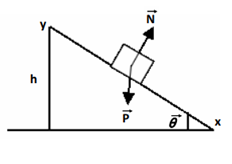
Um bloco de massa 5 kg desliza em uma rampa inclinada a  45°  em  relação  à  horizontal,  conforme  a  figura  a  seguir.  O  deslizamento  ocorre  do  ponto  y  ao  ponto  x,  percorrendo  10  metros  até  a  base.  Admitindo  que  não  há  atrito,  assinale  a  alternativa  que  apresenta  o  valor  da  aceleração,  em  m/s2 ,  do  bloco  no  movimento  de  descida  e  a  intensidade  da  força  de  reação  normal,  em  Newton,  que  age  sobre  o  bloco.  Considere   sen 45° = cos 45° = 0,7 e g = 9,8 m/s2

Q58.png (232×164)
Alternativas
Q3516973 Física
Para alterar a  inércia  rotacional  de  um anel  de massa m e  raio r, girando em torno de seu centro de massa, é necessário que  seja  aplicada  uma  força  neste  corpo,  na  qual  a  resultante  seja  diferente de zero. Assinale a alternativa que indica corretamente  a unidade do  torque  (Tr), no Sistema Internacional  (SI), exercido  em um corpo rígido em movimento de rotação.  
Alternativas
Q3516947 Matemática
Com  relação  ao  conjunto  dos  números  reais,  é  correto afirmar  que  a  solução  da  inequação Q29.png (84×52) <  0  é  dada por: 
Alternativas
Q3516241 Inglês

Read the text and answer the question.


What is a friend?

Márcio Paulo Barbosa Pena Mascarenhas


Laurie: To me, a friend is someone who stands by you when you need them, someone who cares. Not like your parents, ________. Parents are either picking on you or telling you off, so sometimes it’s a pain. To a friend you can always open up.


Angela: I agree with Laurie but personally, I don’t think a friend has to be physically around all the time. I have friends that I haven’t seen in years, but I know if we get together, we’ll pick up right where we left off.


Fran: I think a friend is that old pal you’ve always gotten on with. I often look back on my schooldays and I think of the funny things my friends and I did together. As I see it, the friends you make in youth are friends to keep for a lifetime.


Gary: If you ask me, a friend is a person you have fun and relax with. My friends and I talk about movies, sports or politics. I don’t go round telling them my troubles and I don’t particularly want to hear theirs. I believe that if you don’t expect too much from people, you won’t be let down.

Grade 1, Student’s book, Belo Horizonte, 14th edition.

In the sentence: “I often look back on my schooldays and I think of the funny things my friends and I did together”, which word can replace the frequency adverb in bold without changing the meaning and structure of the sentence? Choose the correct option
Alternativas
Q3516238 Inglês

Read the text and answer the question


One man in a boat

L.G. Alexander


Fishing is my favourite sport. I often fish for hours without catching anything. But this does not worry me. Some fishermen are unlucky. Instead of catching fish, they catch old boots and rubbish. I am even less lucky. I never catch anything ‐ not even old boots. After having spent whole mornings on the river, I always go home with an empty bag. “You must give up fishing!” my friends say. “It’s a waste of time.” But they don’t realize one important thing. I’m not really interested in fishing. I am only interested in sitting in a boat and doing nothing at all!


PRACTICE AND PROGRESS ‐ An Integrated Course for Pre‐Intermediate Students, L.G Alexander, Longman Group Limited, London.

According to the text, choose the alternative that best rewrites the sentence: “Some fishermen are unlucky (...) I am  even less lucky”.
Alternativas
Q3516233 Eletricidade
Em relação aos fenômenos elétricos, marque V para verdadeiro ou F para falso. Em seguida, assinale a alternativa com a sequência correta. ( ) Na corrente contínua (CC), o fluxo de cargas elétricas ocorre em um único sentido. Esse tipo de corrente é produzido por pilhas e células fotovoltaicas. O sentido da corrente contínua real é dado pelo sentido do fluxo dos portadores das cargas negativas.

( ) A corrente alternada (CA) é um fluxo oscilante de cargas elétricas que ora se movimenta em um sentido, ora em outro. Esse tipo de corrente é produzido por baterias e hidroelétricas. O sentido da corrente alternada real é dado pelo sentido do fluxo dos portadores das cargas positivas.
( ) O fenômeno de emissão de luz que ocorre quando uma corrente elétrica passa através de um gás rarefeito é conhecido como efeito térmico.
( ) Para medir a tensão aplicada aos terminais de um resistor, um voltímetro deve ser inserido a este de forma paralela. Além disso, para não influenciar no circuito medido, o voltímetro deve possuir a maior resistência interna possível, fazendo com que a corrente que o atravessa seja insignificante.
Alternativas
Q3516224 Física
Um cubo de gelo é colocado em uma das faces de uma parede que possui 10 cm de espessura e área de 15.104 cm2. Na outra face, existe uma fonte de calor. Esse cubo de gelo se funde quando absorve o calor que atravessa essa parede. Sabendo que o cubo necessita absorver 0,9.102 kcal e precisa de 600 segundos para se fundir completamente, assinale a alternativa que indica corretamente a diferença de temperatura, em °C, entre as duas faces da parede.

Considere coeficiente de condutibilidade térmica da parede k = 2,0.10‐3 cal/s.cm °C.
Alternativas
Q3516216 Física
Para alterar a  inércia  rotacional  de  um anel  de massa m e  raio r, girando em torno de seu centro de massa, é necessário que  seja aplicada uma força neste corpo, na qual a resultante seja diferente de zero. Assinale a alternativa que indica corretamente  a unidade do torque (Tr), no Sistema Internacional (SI), exercido  em um corpo rígido em movimento de rotação. 
Alternativas
Q3516182 Português
Assinale a alternativa em que não há a presença de predicativo do sujeito ou do objeto.
Alternativas
Q3516180 Português

Em relação ao termo sintático sujeito, marque V para verdadeiro ou F para falso. Em seguida, assinale a alternativa com a sequência correta.


( ) Em Ana levantou a menina, o sujeito Ana executa a ação expressa pela forma verbal levantou. O sujeito é, pois, o agente.


( ) Os sujeitos da 3.a pessoa não podem ter como núcleo uma palavra ou expressão substantivada, como em “O por fazer é só com Deus”. (Fernando Pessoa)


( ) Quando o verbo evoca um estado, a atitude da pessoa ou da coisa que dele participa é de neutralidade. O sujeito, no caso, não é o agente nem o paciente.


( ) Sujeito oculto é aquele que não está materialmente expresso na oração, mas pode ser identificado pela presença do sujeito em outra oração do mesmo período ou de período contíguo, como em “Guilhermina bocejou. Iria adormecer? Pôs‐se a calcular as horas.” (C. de Oliveira)

Alternativas
Respostas
61: B
62: B
63: A
64: C
65: A
66: B
67: B
68: D
69: C
70: D
71: B
72: A
73: B
74: B
75: B
76: D
77: B
78: A
79: D
80: D