Questões Militares
Foram encontradas 33.824 questões
Resolva questões gratuitamente!
Junte-se a mais de 4 milhões de concurseiros!


Atendendo ao emprego e à colocação dos pronomes estabelecidos pela norma-padrão, os trechos destacados podem ser substituídos por:
De acordo com a norma-padrão da língua portuguesa, a lacuna dessa frase deve ser preenchida por:
As nossas necessidades de dinheiro estão intimamente ligadas com o tipo de pessoa que queremos realmente ser.
Em conformidade com a regência nominal estabelecida pela norma-padrão, o trecho destacado pode ser substituído por:
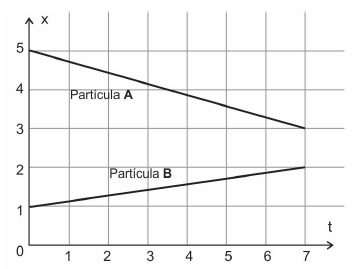
1. A partícula B percorreu √50 metros em 7 segundos.
2. O deslocamento da partícula A é dado pela função x(t) = 5 - 2t/7 .
3. As partículas A e B estão se aproximando ao longo do deslocamento.
4. A velocidade da partícula A é o dobro da velocidade da partícula B.
Assinale a alternativa correta.
(Texto adaptado do artigo “Dominante ou Recessivo?”, de Regina Célia Mingroni Netto, Genética na Escola, v. 7, n. 2, 2012.)
A respeito do assunto, considere as seguintes afirmativas:
1. A proteína traduzida a partir do alelo recessivo é uma enzima ramificadora de amido não funcional.
2. O alelo dominante é transcrito e traduzido, enquanto no alelo recessivo a tradução está bloqueada.
3. O fenótipo recessivo só pode se manifestar em homozigose, pois há o bloqueio da sua tradução pela presença do alelo dominante.
4. Nos heterozigotos, mesmo com metade da quantidade da enzima funcional, a ramificação do amido ocorre normalmente e não há alterações perceptíveis na forma dos grãos de ervilha.
Assinale a alternativa correta.
The following text refers to question.
There have been 18 opioid-related deaths in Nova Scotia so far this year
Paramedics in Nova Scotia used naloxone to save 165 people from opioid overdoses in 2018 and 188 people in 2019. In 2020, 102 people were saved as of July 31.
Eight years ago, Matthew Bonn watched his friend turn blue and become deathly quiet as fentanyl flooded his body. Bonn jumped in, performing rescue breathing until paramedics arrived. That was the first time Bonn fought to keep someone alive during an overdose.
But it wouldn't be his last. Over the years, he tried more dangerous ways to snap people out of an overdose.
"I remember doing crazy things like throwing people in bathtubs, or, you know, giving them cocaine. As we know now, that doesn't help," said Bonn, a harm-reduction advocate in Halifax. "But ... in those panic modes, you try to do whatever you can to keep that person alive."
This was before naloxone – a drug that can reverse an opioid overdose – became widely available to the public. In 2017, the Nova Scotia government made kits with the drug available for free at pharmacies.
Whether used by community members or emergency crews, naloxone has helped save hundreds of lives in the province. Matthew Bonn is a program co-ordinator with the Canadian Association of People Who Use Drugs, and a current drug user himself.
Almost every other day in Nova Scotia, paramedics and medical first responders in the province use the drug to reverse an opioid overdose, according to Emergency Health Services (EHS).
(Available in: https://www.cbc.ca/news/canada/nova-scotia/ehs-naloxone-opioids-drug-use-emergency-care-1.5745907.)
The following text refers to question.
There have been 18 opioid-related deaths in Nova Scotia so far this year
Paramedics in Nova Scotia used naloxone to save 165 people from opioid overdoses in 2018 and 188 people in 2019. In 2020, 102 people were saved as of July 31.
Eight years ago, Matthew Bonn watched his friend turn blue and become deathly quiet as fentanyl flooded his body. Bonn jumped in, performing rescue breathing until paramedics arrived. That was the first time Bonn fought to keep someone alive during an overdose.
But it wouldn't be his last. Over the years, he tried more dangerous ways to snap people out of an overdose.
"I remember doing crazy things like throwing people in bathtubs, or, you know, giving them cocaine. As we know now, that doesn't help," said Bonn, a harm-reduction advocate in Halifax. "But ... in those panic modes, you try to do whatever you can to keep that person alive."
This was before naloxone – a drug that can reverse an opioid overdose – became widely available to the public. In 2017, the Nova Scotia government made kits with the drug available for free at pharmacies.
Whether used by community members or emergency crews, naloxone has helped save hundreds of lives in the province. Matthew Bonn is a program co-ordinator with the Canadian Association of People Who Use Drugs, and a current drug user himself.
Almost every other day in Nova Scotia, paramedics and medical first responders in the province use the drug to reverse an opioid overdose, according to Emergency Health Services (EHS).
(Available in: https://www.cbc.ca/news/canada/nova-scotia/ehs-naloxone-opioids-drug-use-emergency-care-1.5745907.)
The following text refers to question.
There have been 18 opioid-related deaths in Nova Scotia so far this year
Paramedics in Nova Scotia used naloxone to save 165 people from opioid overdoses in 2018 and 188 people in 2019. In 2020, 102 people were saved as of July 31.
Eight years ago, Matthew Bonn watched his friend turn blue and become deathly quiet as fentanyl flooded his body. Bonn jumped in, performing rescue breathing until paramedics arrived. That was the first time Bonn fought to keep someone alive during an overdose.
But it wouldn't be his last. Over the years, he tried more dangerous ways to snap people out of an overdose.
"I remember doing crazy things like throwing people in bathtubs, or, you know, giving them cocaine. As we know now, that doesn't help," said Bonn, a harm-reduction advocate in Halifax. "But ... in those panic modes, you try to do whatever you can to keep that person alive."
This was before naloxone – a drug that can reverse an opioid overdose – became widely available to the public. In 2017, the Nova Scotia government made kits with the drug available for free at pharmacies.
Whether used by community members or emergency crews, naloxone has helped save hundreds of lives in the province. Matthew Bonn is a program co-ordinator with the Canadian Association of People Who Use Drugs, and a current drug user himself.
Almost every other day in Nova Scotia, paramedics and medical first responders in the province use the drug to reverse an opioid overdose, according to Emergency Health Services (EHS).
(Available in: https://www.cbc.ca/news/canada/nova-scotia/ehs-naloxone-opioids-drug-use-emergency-care-1.5745907.)
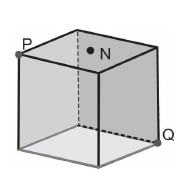
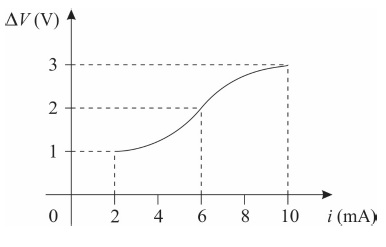
Considerando as informações apresentadas no enunciado e no gráfico, assinale a alternativa que apresenta corretamente o valor da potência PR dissipada pelo resistor quando uma diferença de potencial ΔV = 2 V é aplicada sobre ele.
 Conheça nossos planos