Questões Militares
Comentadas sobre sinônimos | synonyms em inglês
Foram encontradas 228 questões


Read the cartoon below and answer question 41.

TEXT II
The four-thousand-year-old computer
In 1901, a group of divers excavating an ancient Roman shipwreck near the island of Antikythera, off the southern coast of Greece, found a mysterious object - a lump of calcified stone that contained within it several gearwheels welded together after years under the sea. The 2,000-year-old object, no bigger than a modern laptop, is now regarded as the world's oldest computer, devised to predict solar eclipses and, according to recent findings, calculate the timing of the ancient Olympics. Following the efforts of an international team of scientists, the mysteries of the Antikythera Mechanism are uncovered, revealing surprising and awe-inspiring details of the object that continues to mystify.
(From: http://www.bbc.co.uk/programmes/b01hlkcq)
Text 1
Luis Suárez joins anti-racism calls after Dani Alves banana incident
The Barcelona defender Dani Alves has sparked a social media campaign against racism in football as support flooded in from fellow professionals for his decision to eat a banana thrown at him by an opposition fan.
Luis Suárez, Neymar, Hulk, Mario Balotelli and Sergio Agüero were among those who posted pictures of themselves taking bites out of bananas in tribute to Alves' actions in his side's La Liga match at Villarreal on Sunday.
The Fifa president Joseph Blatter has branded the abuse directed at Alves an "outrage" and promised zero tolerance towards discrimination at the World Cup, while Villarreal took swift action by identifying the culprit and handing him a lifetime stadium ban.
Alves' response to the banana being thrown on to the pitch in front of him as he prepared to take a corner was to nonchalantly pick it up, peel it and take a bite before continuing with the game. The 30-yearold, who has been the victim of racist abuse before during his time in La Liga, said: "You need to take these situations with a dose of humour."
Players across Europe paid homage on Twitter and Instagram, including Suárez, who served an eight-match ban for racially abusing Patrice Evra.
Alves's Barça and Brazil team-mate Neymar led the way after posting a picture on Instagram of himself holding a banana, while writing "We are all monkeys". Balotelli, Milan's former Manchester City striker, posted a picture of himself in a similar pose.
Suárez posted a picture on Twitter of himself and Liverpool team-mate Philippe Coutinho taking bites out of bananas, along with the words: "#SayNoToRacism #WeAreAllMonkeys."
(...)
Barça gave their player their "complete support and solidarity" and thanked Villarreal for their "immediate condemnation" of the incident. Villarreal later revealed they had, with the help of fans, found out who the culprit was, had withdrawn his season ticket and banned him from the El Madrigal stadium for life.
Disponível em:<http://www.theguardian.com/football/2014/apr/29/luis-suarez-anti-racism-dani-alvesbanana>
Investigators trying to find out what happened to a Malaysia Airlines jet that disappeared en route to Beijing on Saturday morning were examining the causes of plane crashes: mechanical failure, pilot error, bad weather. But the discovery that two of the passengers were carrying stolen passports also raised the possibility of criminal violence.
(Adapted from “Passport Theft adds mystery of missing Malaysia Airlines Jet”)
GLOSSARY
raised – aumentou, ampliou
Which word is a synonym for evaluations in the text?
INSTRUCTIONS – Read the following text carefully and then choose the correct alternatives that answer the question.
SOUTHERN HUMPBACK WHALE
INTRODUCTION
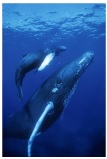
During the Australian winter, these ocean leviathans journey 3,100 miles north from their Antarctic feeding grounds to the warm tropical waters near Australia´s Whitsunday Islands. At the southern edge of the Great Barrier Reef, the 40-ton female humpbacks give birth to calves measuring 14 feet long and weighing over one ton. The Whitsundays´ sheltered bays keep the calves warm and safe from predators. During the next few months, the whales rest, sing, play and mate. The calves nurse, but the one thing the adult whales don´t do while in the tropical seas is eat. By winter´s end, adults are famished, and they head south. This life cycle is repeated throughout the Southern Hemisphere: one group migrates along the western coast of Australia, others to southern Africa and South America.
SIGHT UNSEEN
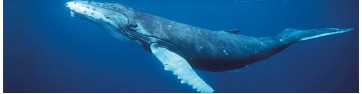
Underneath the blue Australian ocean, film crews captured the elegant rituals of southern humpbacks as they swim, sing, nurse, and play. A mother humpback whale supported her young calf from underneath, so it could breathe easier near the surface. Calves drink 130 gallons of milk a day! While baby grows fat, the mother starves for five months, her blubber stores depleting daily. Unlike the cold Antarctic waters, the seas here don´t grow rich with krill that humpbacks filer through their baleen plates. But she provides her calf with rich milk that contains some of the highest fat content of any mammal´s milk – 45 percent.
UNIQUE BEHAVIOR
Humpback males sing a unique melody, full of high-pitched chirps and whistles interspersed with deeper gurgles and moans. Each male repeats his song for hours, which likely plays a role in courtship. The song may change over time, with males singing a modified melody in consecutive years.
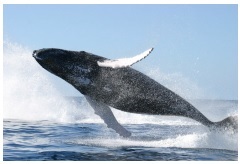
Whale-watching tours take advantage of the humpback´s playful and curious nature. They often approach boats and put on quite a show. As whales journey south along the eastern coast of Australia, many stop in sheltered Platypus Bay around Fraser Island – a World Heritage Site – where they display the charismatic behaviors loved by whale-watchers. The crystal blue waters give a perfect window to watch the whales twist, roll and swim upside down, emerging to breathe, slap their tails or pectoral fins on the water´s surface. Breaching whales jump nearly all the way out of the water. “Spyhopping" means their head emerges, and they peer at the surroundings with their large eyes.
STATUS/CONSERVATION
Commercial hunting in the 19th and 20th centuries decimated most whale species. Because they migrate close to shore and swim slowly, humpbacks became a popular whalers´ target, and were hunted down to a few hundred animals in the Southern Hemisphere. The International Whaling Commission (IWC) implemented a moratorium on harvesting all species starting in 1986, and in 1994, declared Antarctica´s Southern Ocean a whale sanctuary. Now numbering over 10,000 in the Southern Hemisphere, humpbacks have shown incredible resilience, but their numbers still remain a fraction of their historic abundance. Recovery of regional populations varies, and the World Conservation Union (IUCN) lists the humpback as vulnerable.
Humpbacks also have two Northern Hemisphere populations that number around 11,500 in the North Atlantic and 6,000 in the North Pacific. Northern humpbacks are genetically differentiated from the Southern Hemisphere population, and have dark bellies, while the southern humpbacks have all-white bellies. They don´t interbreed, because while the southern populations are mating and calving in the warm tropical seas, northern populations are near the polar Arctic.
OUTLOOK
The International Whaling Commission (IWC) allows hunting by indigenous cultures but bans hunting of humpback whales. Japan has long engaged in IWC-sanctioned “scientific whaling" of minke and other whales, and plans to start hunting humpbacks in 2007. “We are all concerned about Japan´s plans to add this species to the scientific whaling quota", says Dr. Scott Baker, a renowned cetacean conservation biologist. Iceland also just started commercial whaling in 2006.
Some Asian countries allow the sale of whale meat from incidental bycatch, and a whale´s value of $100,000 provides incentive for illegal harvest. Baker and colleagues used DNA to show that the whale meat being sold in South Korean shops did not match that reported to the IWC. Illegal harvest and sale of whale meat is occurring.
Australia and New Zealand have petitioned the IWC to create a South Pacific Sanctuary adjoining the Southern Ocean Sanctuary where whaling would be illegal. Thus far, it has not been approved by IWC.
http://dsc.discovery.com/convergence/planet-earth/...
INSTRUCTIONS – Read the following text carefully and then choose the correct alternatives that answer the question.
SOUTHERN HUMPBACK WHALE
INTRODUCTION
During the Australian winter, these ocean leviathans journey 3,100 miles north from their Antarctic feeding grounds to the warm tropical waters near Australia´s Whitsunday Islands. At the southern edge of the Great Barrier Reef, the 40-ton female humpbacks give birth to calves measuring 14 feet long and weighing over one ton. The Whitsundays´ sheltered bays keep the calves warm and safe from predators. During the next few months, the whales rest, sing, play and mate. The calves nurse, but the one thing the adult whales don´t do while in the tropical seas is eat. By winter´s end, adults are famished, and they head south. This life cycle is repeated throughout the Southern Hemisphere: one group migrates along the western coast of Australia, others to southern Africa and South America.
SIGHT UNSEEN
Underneath the blue Australian ocean, film crews captured the elegant rituals of southern humpbacks as they swim, sing, nurse, and play. A mother humpback whale supported her young calf from underneath, so it could breathe easier near the surface. Calves drink 130 gallons of milk a day! While baby grows fat, the mother starves for five months, her blubber stores depleting daily. Unlike the cold Antarctic waters, the seas here don´t grow rich with krill that humpbacks filer through their baleen plates. But she provides her calf with rich milk that contains some of the highest fat content of any mammal´s milk – 45 percent.
UNIQUE BEHAVIOR
Humpback males sing a unique melody, full of high-pitched chirps and whistles interspersed with deeper gurgles and moans. Each male repeats his song for hours, which likely plays a role in courtship. The song may change over time, with males singing a modified melody in consecutive years.
Whale-watching tours take advantage of the humpback´s playful and curious nature. They often approach boats and put on quite a show. As whales journey south along the eastern coast of Australia, many stop in sheltered Platypus Bay around Fraser Island – a World Heritage Site – where they display the charismatic behaviors loved by whale-watchers. The crystal blue waters give a perfect window to watch the whales twist, roll and swim upside down, emerging to breathe, slap their tails or pectoral fins on the water´s surface. Breaching whales jump nearly all the way out of the water. “Spyhopping" means their head emerges, and they peer at the surroundings with their large eyes.
STATUS/CONSERVATION
Commercial hunting in the 19th and 20th centuries decimated most whale species. Because they migrate close to shore and swim slowly, humpbacks became a popular whalers´ target, and were hunted down to a few hundred animals in the Southern Hemisphere. The International Whaling Commission (IWC) implemented a moratorium on harvesting all species starting in 1986, and in 1994, declared Antarctica´s Southern Ocean a whale sanctuary. Now numbering over 10,000 in the Southern Hemisphere, humpbacks have shown incredible resilience, but their numbers still remain a fraction of their historic abundance. Recovery of regional populations varies, and the World Conservation Union (IUCN) lists the humpback as vulnerable.
Humpbacks also have two Northern Hemisphere populations that number around 11,500 in the North Atlantic and 6,000 in the North Pacific. Northern humpbacks are genetically differentiated from the Southern Hemisphere population, and have dark bellies, while the southern humpbacks have all-white bellies. They don´t interbreed, because while the southern populations are mating and calving in the warm tropical seas, northern populations are near the polar Arctic.
OUTLOOK
The International Whaling Commission (IWC) allows hunting by indigenous cultures but bans hunting of humpback whales. Japan has long engaged in IWC-sanctioned “scientific whaling" of minke and other whales, and plans to start hunting humpbacks in 2007. “We are all concerned about Japan´s plans to add this species to the scientific whaling quota", says Dr. Scott Baker, a renowned cetacean conservation biologist. Iceland also just started commercial whaling in 2006.
Some Asian countries allow the sale of whale meat from incidental bycatch, and a whale´s value of $100,000 provides incentive for illegal harvest. Baker and colleagues used DNA to show that the whale meat being sold in South Korean shops did not match that reported to the IWC. Illegal harvest and sale of whale meat is occurring.
Australia and New Zealand have petitioned the IWC to create a South Pacific Sanctuary adjoining the Southern Ocean Sanctuary where whaling would be illegal. Thus far, it has not been approved by IWC.
http://dsc.discovery.com/convergence/planet-earth/...
INSTRUCTIONS – Read the following text carefully and then choose the correct alternatives that answer the question.
SOUTHERN HUMPBACK WHALE
INTRODUCTION
During the Australian winter, these ocean leviathans journey 3,100 miles north from their Antarctic feeding grounds to the warm tropical waters near Australia´s Whitsunday Islands. At the southern edge of the Great Barrier Reef, the 40-ton female humpbacks give birth to calves measuring 14 feet long and weighing over one ton. The Whitsundays´ sheltered bays keep the calves warm and safe from predators. During the next few months, the whales rest, sing, play and mate. The calves nurse, but the one thing the adult whales don´t do while in the tropical seas is eat. By winter´s end, adults are famished, and they head south. This life cycle is repeated throughout the Southern Hemisphere: one group migrates along the western coast of Australia, others to southern Africa and South America.
SIGHT UNSEEN
Underneath the blue Australian ocean, film crews captured the elegant rituals of southern humpbacks as they swim, sing, nurse, and play. A mother humpback whale supported her young calf from underneath, so it could breathe easier near the surface. Calves drink 130 gallons of milk a day! While baby grows fat, the mother starves for five months, her blubber stores depleting daily. Unlike the cold Antarctic waters, the seas here don´t grow rich with krill that humpbacks filer through their baleen plates. But she provides her calf with rich milk that contains some of the highest fat content of any mammal´s milk – 45 percent.
UNIQUE BEHAVIOR
Humpback males sing a unique melody, full of high-pitched chirps and whistles interspersed with deeper gurgles and moans. Each male repeats his song for hours, which likely plays a role in courtship. The song may change over time, with males singing a modified melody in consecutive years.
Whale-watching tours take advantage of the humpback´s playful and curious nature. They often approach boats and put on quite a show. As whales journey south along the eastern coast of Australia, many stop in sheltered Platypus Bay around Fraser Island – a World Heritage Site – where they display the charismatic behaviors loved by whale-watchers. The crystal blue waters give a perfect window to watch the whales twist, roll and swim upside down, emerging to breathe, slap their tails or pectoral fins on the water´s surface. Breaching whales jump nearly all the way out of the water. “Spyhopping" means their head emerges, and they peer at the surroundings with their large eyes.
STATUS/CONSERVATION
Commercial hunting in the 19th and 20th centuries decimated most whale species. Because they migrate close to shore and swim slowly, humpbacks became a popular whalers´ target, and were hunted down to a few hundred animals in the Southern Hemisphere. The International Whaling Commission (IWC) implemented a moratorium on harvesting all species starting in 1986, and in 1994, declared Antarctica´s Southern Ocean a whale sanctuary. Now numbering over 10,000 in the Southern Hemisphere, humpbacks have shown incredible resilience, but their numbers still remain a fraction of their historic abundance. Recovery of regional populations varies, and the World Conservation Union (IUCN) lists the humpback as vulnerable.
Humpbacks also have two Northern Hemisphere populations that number around 11,500 in the North Atlantic and 6,000 in the North Pacific. Northern humpbacks are genetically differentiated from the Southern Hemisphere population, and have dark bellies, while the southern humpbacks have all-white bellies. They don´t interbreed, because while the southern populations are mating and calving in the warm tropical seas, northern populations are near the polar Arctic.
OUTLOOK
The International Whaling Commission (IWC) allows hunting by indigenous cultures but bans hunting of humpback whales. Japan has long engaged in IWC-sanctioned “scientific whaling" of minke and other whales, and plans to start hunting humpbacks in 2007. “We are all concerned about Japan´s plans to add this species to the scientific whaling quota", says Dr. Scott Baker, a renowned cetacean conservation biologist. Iceland also just started commercial whaling in 2006.
Some Asian countries allow the sale of whale meat from incidental bycatch, and a whale´s value of $100,000 provides incentive for illegal harvest. Baker and colleagues used DNA to show that the whale meat being sold in South Korean shops did not match that reported to the IWC. Illegal harvest and sale of whale meat is occurring.
Australia and New Zealand have petitioned the IWC to create a South Pacific Sanctuary adjoining the Southern Ocean Sanctuary where whaling would be illegal. Thus far, it has not been approved by IWC.
http://dsc.discovery.com/convergence/planet-earth/...

“excuse" is closest in meaning to, except:
Derek Workman
These days it seems that there's always someone there to pick you up, help you out and give your life a new start.
You can find someone to choose your clothes for you, or sort out your wardrobe, if you already have enough; there's someone to arrange your dinner parties and someone else who will look after your diary, or if life just seems to be too much trouble to do anything at all, you can find a psychotherapist to help you deal with your problems.
Fine as it is to have all this help at hand, if we look closely at ourselves, we can begin to see that we don't actually need all these people to look after us. To help us do this is the role of the Life Coach - someone who won't judge us, who won't tell us what to do and is there to support us in those nervous life decisions that we all have to make.
Mike Lewis was a self-confessed computer geek in his hometown of Southampton, England, but rose high up the corporate ladder in California. He now lives in a small coastal town in Spain where he acts as a Life Coach to clients in Europe, America, India and Australia, chatting with them on a regular basis by telephone. But why should we need anybody to help us along?
A life coach is basically a support system for people who want to make some change in their life. The sig- nificant thing about personal development is this: there's relatively few people that I've ever met that don't want to get on in life, but it's hard to get on if you try and find all this stimulus from the outside. The difference between coaching and other forms of personal development is primarily this: with life coaching, nobody tells you what to do, nobody tells you who you should be, nobody tries to change you 'cause we're all perfect as we are! What a life coach does is encourage you to find the answers to all life's problems from within, not from without.
Fonte: Revista Speak UP, edição 201, fev. 2004.
ARE YOU A FACEBOOK ADDICT?
Are you a social media enthusiast or simply a Facebook addict? Researchers from Norway have developed a new instrument to measure Facebook addiction, the Bergen Facebook Addiction Scale.
"The use of Facebook has increased rapidly. We are dealing with a subdivision of Internet addiction connected to social media," Doctor of Psychology Cecilie Schou Andreassen says about the study, which is the first of its kind worldwide.
Andreassen heads the research project “Facebook Addiction” at the University of Bergen (UiB). An article about the results has just been published in the renowned journal Psychological Reports. She has clear views as to why some people develop Facebook dependency.
"It occurs more regularly among younger than older users. We have also found that people who are anxious and socially insecure use Facebook more than those with lower scores on those traits, probably because those who are anxious find it easier to communicate via social media than face-to face," Andreassen says.
People who are organised and more ambitious tend to be less at risk from Facebook addiction. They will often use social media as an integral part of work and networking.
"Our research also indicates that women are more at risk of developing Facebook addiction, probably due to the social nature of Facebook," Andreassen says.
Six warning signs
As Facebook has become as ubiquitous as television in our everyday lives, it is becoming increasingly difficult for many people to know if they are addicted to social media. Andreassen’s study shows that the symptoms of Facebook addiction resemble those of drug addic addiction, and chemical substance addiction.
The Bergen Facebook Addiction Scale is based on six basic criteria, where all items are scored on the following scale: (1) Very rarely, (2) Rarely, (3) Sometimes, (4) Often Always.
• You spend a lot of time thinking about Facebook or planning to use of Facebook.
• You feel an urge to use Facebook more and more.
• You use Facebook in order to forget about personal problems.
• You have tried to cut down on the use of Facebook without success.
• You become restless or troubled if you are prohibited from using Facebook.
• You use Facebook so much that it has had a negative impact on your job/studies.
Andreassen’s study shows that scoring “often” or “very often” on at least four of the six items may suggest that you are addicted to Facebook.
Disponível em: <http://www.sciencedaily.com/releases/2012/05/120507102054.htm> Acesso em: 3 jun. 2013 (Texto adaptado)

 Conheça nossos planos