Questões do Enem
Comentadas sobre interpretação de texto | reading comprehension em inglês
Foram encontradas 157 questões


Remember the sky that you were born under,
know each of the star’s stories.
Remember the moon, know who she is.
Remember the sun’s birth at dawn. [...]
Remember your birth, how your mother struggled
to give you form and breath [...]
Remember the earth whose skin you are:
red earth, black earth, yellow earth, white earth
brown earth, we are earth.
Remember the plants, trees, animal life who all have their
tribes, their families, their histories, too [...]
Remember you are all people and all people are you.
Remember you are this universe and this universe is you.
Remember all is in motion, is growing, is you.
HARJO, J. She Had Some Horses. Londres: W. Norton & Company, 1983 (fragmento).
Nesse poema, de uma autora de ascendência indígena, o eu lírico ressalta a
My idea of philosophy is that if it is not relevant to human problems, if it does not tell us how we can go about eradicating some of the misery in this world, then it is not worth the name of philosophy. I think Socrates made a very profound statement when he asserted that philosophy is to teach us proper living. In this day and age “proper living” means liberation from the urgent problems of poverty, economic necessity and indoctrination, mental oppression.
DAVIS, A. Lectures on Liberation. Washington: Smithsonian Libraries, 1971 (adaptado).
Nesse texto, ao discorrer sobre a relevância da filosofia, a escritora Angela Davis tem por objetivo
“I want you to speak English […]”, my mother would say, mortified that I spoke English like a Mexican. At Pan American University, I and all Chicano students were required to take two speech classes. Their purpose: to get rid of our accents.
ANZALDÚA, G. Borderlands/La Frontera: The New Mestiza. San Francisco: Aunt Lute Books, 1987.
O problema abordado nesse texto sobre imigrantes residentes nos Estados Unidos diz respeito aos prejuízos gerados pelo(a)
Oh, so we can hate each other and fear each other We can build these walls between each other Baby, blow by blow and brick by brick Keep yourself locked in, yourself locked in […] Oh, maybe we should love somebody Oh, maybe we could care a little more So maybe we should love somebody Instead of polishing the bombs of holy war
KEYS, A. Here. Estados Unidos: RCA Records, 2016.
Nessa letra de canção, que aborda um contexto de ódio e intolerância, o marcador “instead of ” introduz a ideia de
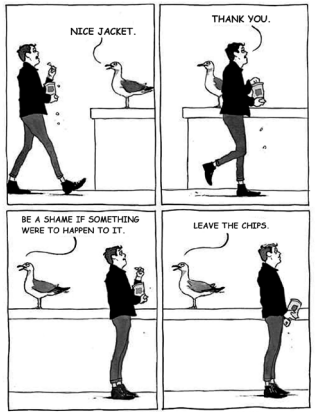
MCPHAIL, W. Disponível em: https://fineartamerica.com. Acesso em: 25 out. 2021.
Ao utilizar a expressão “be a shame if something were to happen to it”, o pássaro
we gave birth to a new generation AmeRícan, it includes everything imaginable you-name-it-we-got-it society.
we gave birth to a new generation, AmeRícan salutes all folklores, european, indian, black, spanish and anything else compatible.
AmeRícan, yes, for now, for i love this, my second land, and i dream to take the accent from the altercation, and be proud to call myself american, in the u.s. sense of the word, AmeRícan, America!
LAVIERA, T. Benedición: The Complete Poetry of Tato Laviera. Houston: Arte Público Press, 2014 (fragmento).
Nos versos desse poema, o eu lírico adota um tom de
RUSHDIE, S. Imaginary Homelands. Londres: Vintage Books, 2010 (adaptado).
Nesse fragmento de texto, ao abordar a literatura anglo-indiana, o autor Salman Rushdie ressalta a relação entre criação literária e
“You think not? We Earth Men have a talent for ruining big, beautiful things. The only reason we didn’t set up hot-dog stands in the midst of the Egyptian temple of Karnak is because it was out of the way and served no large commercial purpose. And Egypt is a small part of Earth. But here, this whole thing is ancient and different, and we have to set down somewhere and start fouling it up. We’ll call the canal the Rockefeller Canal and the mountain King George Mountain and the sea the Dupont Sea, and there’ll be Roosevelt and Lincoln and Coolidge cities, and it won’t ever be right, when there are the proper names for these places.”
BRADBURY, R. And the Moon Be Still as Bright. In: The Martian Chronicles. Londres: Harper Collins, 2014.
Nesse fragmento de um conto do autor Ray Bradbury, o personagem revela ao capitão
Michael Gerson’s Oct. 19 Tuesday Opinion column, “The state laboratory of idiocracy strikes again” did not highlight the disservice done to the Black community or any other minority group affected by White history. I wonder about how this will manipulate the perceptions of minorities in the eyes of students. The misguided stereotypes and assumptions perpetuated by these curriculum restrictions will likely prevent Black Americans from expressing themselves safely.
It’s plausible to assume that continued miseducation over generations could create a sense of false comfort for Black Americans. Without proper access to history, minorities might begin to forget the oppression they have faced and the injustices they are currently dealing with. Lacking this vital historical education only serves to continue the longstanding issue of misinformation in modern generations.
The problems are only the start of the issues that could begin to plague the American education system.
Riley Kilcarr, Springfield.
Disponível em: www.washingtonpost.com. Acesso em: 29 out. 2021.
O autor dessa carta se reporta ao editor de um jornal para
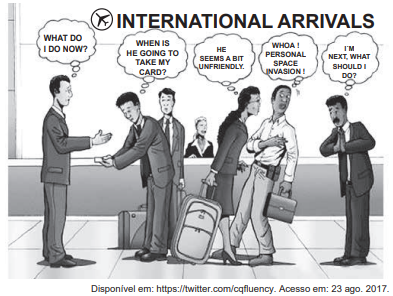
Os recursos verbais e não verbais do cartum fazem
referência a situações comuns em aeroportos, motivadas
pelo fato de que os(as)
“Most people chose Swahili names in the ’60s”, Bankole told me. He wanted to be called Bankole. “My father had to do something different. All his life he had to be different”.
“I don’t know my grandfather’s reasons”, I said. “His last name was Broome before he changed it, and that was no loss’. But why he chose Olamina…? Even my father didn’t know. He made the change before my father was born, so my father was always Olamina, and so were we.
BUTLER, O. E. Parable of the Sower. New York: Hachette, 2019 (adaptado).
Nesse trecho do romance Parable of the Sower, os nomes “Bankole” e “Olamina” representam o(a)
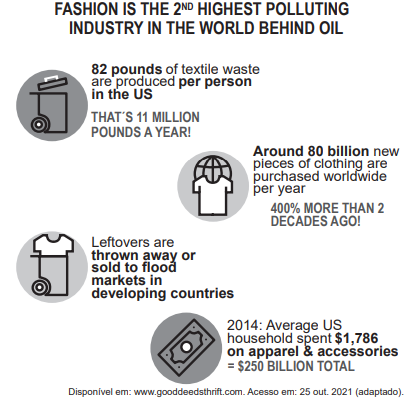
Esse infográfico, composto de textos verbais e não
verbais, tem por finalidade
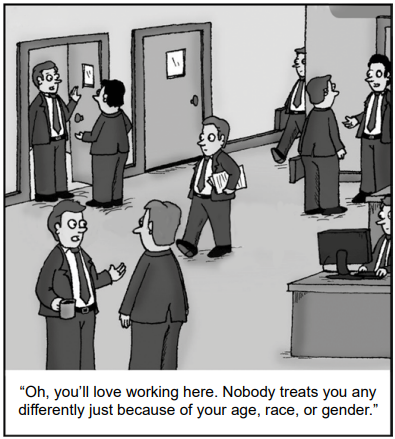
Disponível em: www.cartoonstock.com. Acesso em: 25 out. 2021.
Ao retratar o ambiente de trabalho em um escritório, esse cartum tem por objetivo
pues estoy creando Spanglish bi-cultural systems scientific lexicographical inter-textual integrations two expressions existentially wired two dominant languages continentally abrazándose in colloquial combate imperio spanglish emerges sobre territorio bi-lingual las novelas mexicanas mixing with radiorocknroll immigrant/migrant nasal mispronouncements hip-hop, street salsa, spanish pop standard english classroom with computer technicalities spanglish is literally perfect
LAVIERA, T. Benedición: The Complete Poetry of Tato Laviera. Houston: Arte Público Press, 2014 (fragmento).
Nesse poema de Tato Laviera, o eu lírico destaca uma
We carry tears in our eyes: good-bye father, good-bye [mother
We carry soil in small bags: may home never fade in our [hearts We carry carnage of mining, droughts, floods, genocides
We carry dust of our families and neighbors incinerated [in mushroom clouds
We carry our islands sinking under the sea We carry our hands, feet, bones, hearts and best minds [for a new life
We carry diplomas: medicine, engineer, nurse, [education, math, poetry, even if they mean [nothing to the other shore
We carry railroads, plantations, laundromats, [bodegas, taco trucks, farms, factories, nursing [homes, hospitals, schools, temples... built on [our ancestors’ backs
We carry old homes along the spine, new dreams in our [chests
We carry yesterday, today and tomorrow
We’re orphans of the wars forced upon us
We’re refugees of the sea rising from industrial wastes
And we carry our mother tongues
[...]
As we drift... in our rubber boats... from shore... to shore... [to shore...
PING, W. Disponível em: https://poets.org. Acesso em: 1 jun. 2023 (fragmento).
Ao retratar a trajetória de refugiados, o poema recorre à imagem de viagem marítima para destacar o(a)
DONNE, J. The Works of John Donne. Londres: John W. Parker, 1839 (fragmento).
Nesse poema, a expressão “No man is an island”ressalta o(a)
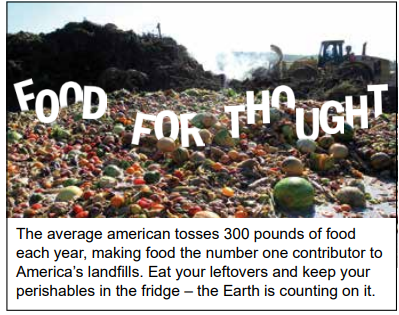
Disponível em: https://mir-s3-cdn-cf.behance.net. Acesso em: 29 out. 2021 (adaptado).
Esse cartaz de campanha sugere que
We text, text, text our significant words.
I re-read your first, your second, your third,
Look for your small xx, feeling absurd.
The codes we send arrive with a broken chord.
I try to picture your hands, their image is blurred.
Nothing my thumbs press will ever be heard.
DUFFY, C. Disponível em: www.independent.co.uk. Acesso em: 27 out 2021
Nesse poema, o eu lírico evidencia um sentimento de

 Conheça nossos planos