Questões de Vestibular

Foram encontradas 75.429 questões

Resolva questões gratuitamente!

Junte-se a mais de 4 milhões de concurseiros!

Ano: 2020 Banca: SELECON Órgão: CEDERJ Prova: SELECON - 2020 - CEDERJ - Vestibular - Opção Inglês |
Q1705851 Química

A reação de decomposição do ozônio é representada pela equação a seguir:
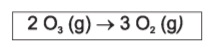

Imagem associada para resolução da questão


Num dado experimento de decomposição do ozônio, observou-se a variação da concentração molar de O3 em função do tempo, demonstrada no quadro abaixo.
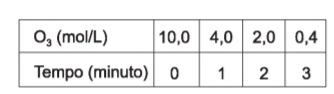

Imagem associada para resolução da questão


Analisando os dados experimentais, a velocidade média de produção de gás oxigênio (O2), em mol/L.minuto, nos 3 minutos iniciais da reação é:

Alternativas
Ano: 2020 Banca: SELECON Órgão: CEDERJ Prova: SELECON - 2020 - CEDERJ - Vestibular - Opção Inglês |
Q1705850 Química
Os estereoisômeros, conhecidos também como compostos quirais, são divididos em dois grupos: os enantiômeros e os diastereoisômeros . Analisando as estruturas quirais (estereoisômeros) do 3-cloro-butan-2-ol, conclui-se que este composto apresenta:
Alternativas
Ano: 2020 Banca: SELECON Órgão: CEDERJ Prova: SELECON - 2020 - CEDERJ - Vestibular - Opção Inglês |
Q1705849 Química

Um paciente, com recomendação médica para lúpus eritematoso, fez uso da hidroxicloroquina, ingerindo uma dose diária de 400 mg durante 4 semanas.

Afórmula deste composto é dada a seguir.
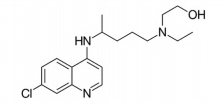
Imagem associada para resolução da questão

A quantidade de matéria , em mol, de hidroxicloroquina, ingerida pelo paciente ao longo das 4 semanas de tratamento foi de:

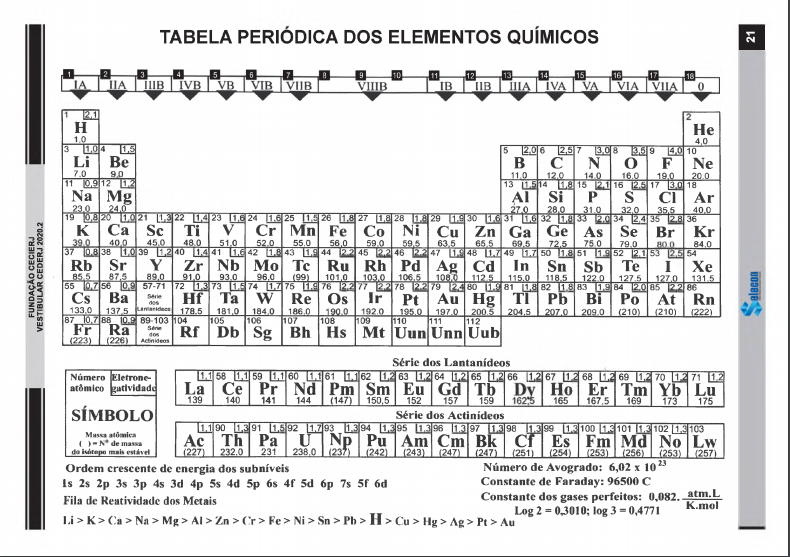
(Dado: massa molar da hidroxicloroquina = 335,5 g/mol)
Alternativas
Ano: 2020 Banca: SELECON Órgão: CEDERJ Prova: SELECON - 2020 - CEDERJ - Vestibular - Opção Inglês |
Q1705848 Química

Muitos laboratórios armazenam em seus estoques soluções concentradas de reagentes. Um técnico responsável dispõe, em seu laboratório, de uma solução de etanol (álcool absoluto) a 16,3 mol/L. O volume de água, em litros, que deve ser adicionado a 400 mL de solução de etanol a 16,3 mol/L (álcool absoluto) para produzir etanol hidratado a 70 % v/v é, aproximadamente:

(Dado: detanol = 0,8 g/mL)

Alternativas
Ano: 2020 Banca: SELECON Órgão: CEDERJ Prova: SELECON - 2020 - CEDERJ - Vestibular - Opção Inglês |
Q1705847 Química

Em um laboratório, foi realizada a reação de hidratação do pent-1-ino em meio contendo H2SO4 e HgSO4.

O principal produto orgânico formado nesta reação é nomeado por:

Alternativas
Ano: 2020 Banca: SELECON Órgão: CEDERJ Prova: SELECON - 2020 - CEDERJ - Vestibular - Opção Inglês |
Q1705846 Química
Manganês metálico é obtido industrialmente a partir do processo representado pela equação química a seguir:
3 Mn3O4 + 8 Al -> 9 Mn + 4 Al2O3
Em uma operação industrial, reagiu-se 13740 kg de Mn3O4 e 6480 kg de Al. Admitindo-se o consumo do reagente limitante por completo, a massa de Mn formado, em quilogramas, é igual a:
Alternativas
Ano: 2020 Banca: SELECON Órgão: CEDERJ Prova: SELECON - 2020 - CEDERJ - Vestibular - Opção Inglês |
Q1705845 Química
Um efluente aquoso apresenta pH ácido devido à presença de ácido nítrico. Visando neutralizar este ácido, foi adicionado hidróxido de cálcio ao efluente. Admitindo-se que ocorreu uma reação de neutralização total, a fórmula química do sal formado nesse processo corresponde a:
Alternativas
Ano: 2020 Banca: SELECON Órgão: CEDERJ Prova: SELECON - 2020 - CEDERJ - Vestibular - Opção Inglês |
Q1705844 Química

 A molécula representada a seguir corresponde à forma mais ativa da vitamina E.
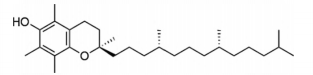
Imagem associada para resolução da questão


Estão presentes as duas seguintes funções orgânicas oxigenadas nessa molécula: 

Alternativas
Ano: 2020 Banca: SELECON Órgão: CEDERJ Prova: SELECON - 2020 - CEDERJ - Vestibular - Opção Inglês |
Q1705843 Biologia
No capítulo 3 de A Origem das Espécies, Darwin disse que linhagens de animais com mais espécies também devem conter mais 'variedades', o que hoje chamaríamos de subespécies. A pesquisadora Laura van Holstein, da Universidade de Cambridge, no Reino Unido, esclarece que investigações recentes comprovam que as subespécies desempenham um papel crítico na dinâmica evolutiva a longo prazo e na evolução futura das espécies.
Disponível em: https://revistagalileu.globo.com/Ciencia/Biologia/ noticia/2020/03/cientista-comprova-teoria-das-subespecies-dedarwin-pela-primeira-vez.html Acesso em: 25 abr. 2020. Adaptado.
Atualmente, subespécies podem ser definidas como:
Alternativas
Ano: 2020 Banca: SELECON Órgão: CEDERJ Prova: SELECON - 2020 - CEDERJ - Vestibular - Opção Inglês |
Q1705842 Biologia
Vírus não pertencem a nenhum dos cinco reinos ou três domínios dos seres vivos e é provável que tenham se originado de fragmentos de ácidos nucleicos, que se desprenderam de alguma célula e penetraram em outra. Para muitos cientistas, vírus não devem ser considerados seres vivos, pois:
Alternativas
Ano: 2020 Banca: SELECON Órgão: CEDERJ Prova: SELECON - 2020 - CEDERJ - Vestibular - Opção Inglês |
Q1705841 Biologia

Imagens de satélite mostram que os níveis de poluição do ar diminuíram durante o período de isolamento social provocado pela pandemia de Covid-19, registrando-se acentuada queda nos níveis de dióxido de nitrogênio (NO2) e dióxido de carbono (CO2).


Disponível em:https://www2.ufjf.br/noticias/2020/04/24/pandemia-e-meio-ambiente-impactos-momentaneos-ou-novanormalidade/Acesso em: 25 abr. 2020. Adaptado.


Os principais desequilíbrios ambientais causados pelos gases citados no texto a cima são, respectivamente: 

Alternativas
Ano: 2020 Banca: SELECON Órgão: CEDERJ Prova: SELECON - 2020 - CEDERJ - Vestibular - Opção Inglês |
Q1705840 Biologia

Mamíferos de grande porte, como a onçap-intada e o lobo-guará, precisam de grandes quantidades de alimento e demandam áreas extensas para viver, por isso a disputa por recursos entre eles se torna particularmente acirrada, em função da destruição de habitats. O desaparecimento desses animais resulta no aumento na população de suas presas, como ratos e camundongos, que carregam diversos patógenos. Assim, muitas das doenças zoonóticas com as quais se têm lidado nos últimos tempos - como Covid-19, ebola, gripes suína e aviária - possuem uma relação direta com o impacto humano em habitats naturais.

As relações ecológicas que envolvem onças-pintadas/lobos-guará, onças-pintadas/camundongos e ratos/agentes patogênicos são, respectivamente:

Alternativas
Ano: 2020 Banca: SELECON Órgão: CEDERJ Prova: SELECON - 2020 - CEDERJ - Vestibular - Opção Inglês |
Q1705839 Biologia

Texto para a questão.

A temida altitude: Flamengo só venceu um dos cinco jogos acima de 3000 metros na libertadores.

Com apenas 26,6% de aproveitamento nas maiores alturas do continente, o Rubro-Negro já experimentou diferentes tipos de aclimatação à altitude desde 1983. Único triunfo foi em 2008 no Peru. Preocupada, a diretoria do Flamengo preparou uma força-tarefa anti-altitude que envolve: vitaminas e exercícios respiratórios com os jogadore ; escolta de ambulância durante toda a estadia em Oruro; 10 cilindros de oxigênio, que só serão usados em eventuais emergências e não serão exibidos para não assustar os atletas. Além disso, para minimizar os efeitos dos 3.700 metros, o Flamengo ficará em Santa Cruz de la Sierra - 400 metros acima do mar - até horas antes do jogo. 

Disponível em: https://globoesporte.globo.com/futebol/times/flamengo/ noticia/a-temida-altitude-flamengo-so-venceu-um-dos-cinco-jogosacima-de-3000-metros-na-libertadores.ghtml Acesso em 16/05/2020. Adaptado

A função primordial do gás contido nos 10 cilindros, citados na reportagem , durante a respiração celular dos atletas é:
Alternativas
Ano: 2020 Banca: SELECON Órgão: CEDERJ Prova: SELECON - 2020 - CEDERJ - Vestibular - Opção Inglês |
Q1705838 Biologia

Texto para a questão.

A temida altitude: Flamengo só venceu um dos cinco jogos acima de 3000 metros na libertadores.

Com apenas 26,6% de aproveitamento nas maiores alturas do continente, o Rubro-Negro já experimentou diferentes tipos de aclimatação à altitude desde 1983. Único triunfo foi em 2008 no Peru. Preocupada, a diretoria do Flamengo preparou uma força-tarefa anti-altitude que envolve: vitaminas e exercícios respiratórios com os jogadore ; escolta de ambulância durante toda a estadia em Oruro; 10 cilindros de oxigênio, que só serão usados em eventuais emergências e não serão exibidos para não assustar os atletas. Além disso, para minimizar os efeitos dos 3.700 metros, o Flamengo ficará em Santa Cruz de la Sierra - 400 metros acima do mar - até horas antes do jogo. 

Disponível em: https://globoesporte.globo.com/futebol/times/flamengo/ noticia/a-temida-altitude-flamengo-so-venceu-um-dos-cinco-jogosacima-de-3000-metros-na-libertadores.ghtml Acesso em 16/05/2020. Adaptado

Segundo os geneticistas, o processo de aclimatação fisiológica à altitude é um exemplo clássico do conceito intitulado:
Alternativas
Ano: 2020 Banca: SELECON Órgão: CEDERJ Prova: SELECON - 2020 - CEDERJ - Vestibular - Opção Inglês |
Q1705837 Biologia

Texto para a questão.

A temida altitude: Flamengo só venceu um dos cinco jogos acima de 3000 metros na libertadores.

Com apenas 26,6% de aproveitamento nas maiores alturas do continente, o Rubro-Negro já experimentou diferentes tipos de aclimatação à altitude desde 1983. Único triunfo foi em 2008 no Peru. Preocupada, a diretoria do Flamengo preparou uma força-tarefa anti-altitude que envolve: vitaminas e exercícios respiratórios com os jogadore ; escolta de ambulância durante toda a estadia em Oruro; 10 cilindros de oxigênio, que só serão usados em eventuais emergências e não serão exibidos para não assustar os atletas. Além disso, para minimizar os efeitos dos 3.700 metros, o Flamengo ficará em Santa Cruz de la Sierra - 400 metros acima do mar - até horas antes do jogo. 

Disponível em: https://globoesporte.globo.com/futebol/times/flamengo/ noticia/a-temida-altitude-flamengo-so-venceu-um-dos-cinco-jogosacima-de-3000-metros-na-libertadores.ghtml Acesso em 16/05/2020. Adaptado

O hormônio responsável pela alteração celular sanguínea do processo de aclimatação à altitude é denominado:
Alternativas
Ano: 2020 Banca: SELECON Órgão: CEDERJ Prova: SELECON - 2020 - CEDERJ - Vestibular - Opção Inglês |
Q1705836 Biologia

Texto para a questão.

A temida altitude: Flamengo só venceu um dos cinco jogos acima de 3000 metros na libertadores.

Com apenas 26,6% de aproveitamento nas maiores alturas do continente, o Rubro-Negro já experimentou diferentes tipos de aclimatação à altitude desde 1983. Único triunfo foi em 2008 no Peru. Preocupada, a diretoria do Flamengo preparou uma força-tarefa anti-altitude que envolve: vitaminas e exercícios respiratórios com os jogadore ; escolta de ambulância durante toda a estadia em Oruro; 10 cilindros de oxigênio, que só serão usados em eventuais emergências e não serão exibidos para não assustar os atletas. Além disso, para minimizar os efeitos dos 3.700 metros, o Flamengo ficará em Santa Cruz de la Sierra - 400 metros acima do mar - até horas antes do jogo. 

Disponível em: https://globoesporte.globo.com/futebol/times/flamengo/ noticia/a-temida-altitude-flamengo-so-venceu-um-dos-cinco-jogosacima-de-3000-metros-na-libertadores.ghtml Acesso em 16/05/2020. Adaptado

O processo de aclimatação fisiológica à altitude citado no texto provoca, a longo prazo, o aumento da produção de uma importante célula sanguínea denominada:
Alternativas
Ano: 2020 Banca: SELECON Órgão: CEDERJ Prova: SELECON - 2020 - CEDERJ - Vestibular - Opção Inglês |
Q1705835 Inglês
Social Distancing, Without the Police

Letting members of the community enforce social distancing is the better way.

   Of the 125 people arrested over offenses that law enforcement officials described as related to the coronavirus pandemic, 113 were black or Hispanic. Of the 374 summonses from March 16 to May 5, a vast majority — 300 — were given to black and Hispanic New Yorkers.
   Videos of some of the arrests are hard to watch. In one posted to Facebook last week, a group of some six police officers are seen tackling a black woman in a subway station as heryoung child looks on. “She's got a baby with her!” a bystander shouts. Police officials told The Daily News the woman had refused to comply when officers directed her to put the mask she was wearing over her nose and mouth.
   Contrast that with photographs across social media showing crowds of sun-seekers packed into parks in wealthy, whiter areas of the city, lounging undisturbed as police officers hand out masks.
   So it is obvious that the city needs a different approach to enforcing public health measures during the pandemic. Mayor Bill de Blasio seems to understand this, and he has promised to hire 2,300 people to serve as social distancing “ambassadors.”
   Hopefully, the mayor will think bigger.
  One promising idea , promoted by City Councilman Brad Lander and others, is to build quickly a kind of “public health corps" to enforce social-distancing measures.
  In this approach, specially trained civilians could fan out across the neighborhoods and parks, helping with pedestrian traffic control and politely encouraging New Yorkers entering parks to protect one another by wearing masks and keeping their distance. Police Department school safety agents, who are not armed, could help. Such a program could also provide muchneeded employment for young people, especially with New York's summer jobs program, which serves people 14 to 24, threatened by budget cuts.
   Another method to help social-distancing efforts may be the community-based groups that have been effective in reducing gun violence in some of the city's toughest neighborhoods.
   The Police Department would play only a minimal role in this approach, stepping in to help with crowd control, for example, something it does extremely well.
   Without a significant course correction, the department's role in the pandemic may look more and more like stop-and-frisk, the policing tactic that led to the harassment of hundreds of thousands of innocent people, most of them black and Hispanic, while rarely touching white New Yorkers. Mr. de Blasio has scoffed at the comparison, though it's not clear why.
   Aggressive police enforcement of socialdistancing measures is nearly certain to harm the health and dignity of the city's black and Hispanic residents. 
   It could also diminish respect for the Police Department. Which is why it makes sense that the city's largest police union has said that its members want little to do with social-distancing enforcement. “The N.Y.P.D. needs to get cops out of the socialdistancing-enforcement business altogether,” Patrick Lynch, president of the Police Benevolent Association, said in a statement on May 4. On this issue, Mr. Lynch gets it.
   New York is facing a public health crisis, not a spike in crime. Black and Hispanic New Yorkers are already suffering disproportionately from the coronavirus. They don't need more policing. They need more help. 

Available at https://www.nytimes.com/2020/05/18/opinion/nypdcoronavirus-arrests-nyc.html. Accessed May 18,2020. 
One of the main objectives of the text is to discuss:
Alternativas
Ano: 2020 Banca: SELECON Órgão: CEDERJ Prova: SELECON - 2020 - CEDERJ - Vestibular - Opção Inglês |
Q1705834 Inglês
Social Distancing, Without the Police

Letting members of the community enforce social distancing is the better way.

   Of the 125 people arrested over offenses that law enforcement officials described as related to the coronavirus pandemic, 113 were black or Hispanic. Of the 374 summonses from March 16 to May 5, a vast majority — 300 — were given to black and Hispanic New Yorkers.
   Videos of some of the arrests are hard to watch. In one posted to Facebook last week, a group of some six police officers are seen tackling a black woman in a subway station as heryoung child looks on. “She's got a baby with her!” a bystander shouts. Police officials told The Daily News the woman had refused to comply when officers directed her to put the mask she was wearing over her nose and mouth.
   Contrast that with photographs across social media showing crowds of sun-seekers packed into parks in wealthy, whiter areas of the city, lounging undisturbed as police officers hand out masks.
   So it is obvious that the city needs a different approach to enforcing public health measures during the pandemic. Mayor Bill de Blasio seems to understand this, and he has promised to hire 2,300 people to serve as social distancing “ambassadors.”
   Hopefully, the mayor will think bigger.
  One promising idea , promoted by City Councilman Brad Lander and others, is to build quickly a kind of “public health corps" to enforce social-distancing measures.
  In this approach, specially trained civilians could fan out across the neighborhoods and parks, helping with pedestrian traffic control and politely encouraging New Yorkers entering parks to protect one another by wearing masks and keeping their distance. Police Department school safety agents, who are not armed, could help. Such a program could also provide muchneeded employment for young people, especially with New York's summer jobs program, which serves people 14 to 24, threatened by budget cuts.
   Another method to help social-distancing efforts may be the community-based groups that have been effective in reducing gun violence in some of the city's toughest neighborhoods.
   The Police Department would play only a minimal role in this approach, stepping in to help with crowd control, for example, something it does extremely well.
   Without a significant course correction, the department's role in the pandemic may look more and more like stop-and-frisk, the policing tactic that led to the harassment of hundreds of thousands of innocent people, most of them black and Hispanic, while rarely touching white New Yorkers. Mr. de Blasio has scoffed at the comparison, though it's not clear why.
   Aggressive police enforcement of socialdistancing measures is nearly certain to harm the health and dignity of the city's black and Hispanic residents. 
   It could also diminish respect for the Police Department. Which is why it makes sense that the city's largest police union has said that its members want little to do with social-distancing enforcement. “The N.Y.P.D. needs to get cops out of the socialdistancing-enforcement business altogether,” Patrick Lynch, president of the Police Benevolent Association, said in a statement on May 4. On this issue, Mr. Lynch gets it.
   New York is facing a public health crisis, not a spike in crime. Black and Hispanic New Yorkers are already suffering disproportionately from the coronavirus. They don't need more policing. They need more help. 

Available at https://www.nytimes.com/2020/05/18/opinion/nypdcoronavirus-arrests-nyc.html. Accessed May 18,2020. 
The adverb that best conveys the of the underlined word in the sentence "Hopefully, the mayor will think bigger" (paragraph 5) is:
Alternativas
Ano: 2020 Banca: SELECON Órgão: CEDERJ Prova: SELECON - 2020 - CEDERJ - Vestibular - Opção Inglês |
Q1705833 Inglês
Social Distancing, Without the Police

Letting members of the community enforce social distancing is the better way.

   Of the 125 people arrested over offenses that law enforcement officials described as related to the coronavirus pandemic, 113 were black or Hispanic. Of the 374 summonses from March 16 to May 5, a vast majority — 300 — were given to black and Hispanic New Yorkers.
   Videos of some of the arrests are hard to watch. In one posted to Facebook last week, a group of some six police officers are seen tackling a black woman in a subway station as heryoung child looks on. “She's got a baby with her!” a bystander shouts. Police officials told The Daily News the woman had refused to comply when officers directed her to put the mask she was wearing over her nose and mouth.
   Contrast that with photographs across social media showing crowds of sun-seekers packed into parks in wealthy, whiter areas of the city, lounging undisturbed as police officers hand out masks.
   So it is obvious that the city needs a different approach to enforcing public health measures during the pandemic. Mayor Bill de Blasio seems to understand this, and he has promised to hire 2,300 people to serve as social distancing “ambassadors.”
   Hopefully, the mayor will think bigger.
  One promising idea , promoted by City Councilman Brad Lander and others, is to build quickly a kind of “public health corps" to enforce social-distancing measures.
  In this approach, specially trained civilians could fan out across the neighborhoods and parks, helping with pedestrian traffic control and politely encouraging New Yorkers entering parks to protect one another by wearing masks and keeping their distance. Police Department school safety agents, who are not armed, could help. Such a program could also provide muchneeded employment for young people, especially with New York's summer jobs program, which serves people 14 to 24, threatened by budget cuts.
   Another method to help social-distancing efforts may be the community-based groups that have been effective in reducing gun violence in some of the city's toughest neighborhoods.
   The Police Department would play only a minimal role in this approach, stepping in to help with crowd control, for example, something it does extremely well.
   Without a significant course correction, the department's role in the pandemic may look more and more like stop-and-frisk, the policing tactic that led to the harassment of hundreds of thousands of innocent people, most of them black and Hispanic, while rarely touching white New Yorkers. Mr. de Blasio has scoffed at the comparison, though it's not clear why.
   Aggressive police enforcement of socialdistancing measures is nearly certain to harm the health and dignity of the city's black and Hispanic residents. 
   It could also diminish respect for the Police Department. Which is why it makes sense that the city's largest police union has said that its members want little to do with social-distancing enforcement. “The N.Y.P.D. needs to get cops out of the socialdistancing-enforcement business altogether,” Patrick Lynch, president of the Police Benevolent Association, said in a statement on May 4. On this issue, Mr. Lynch gets it.
   New York is facing a public health crisis, not a spike in crime. Black and Hispanic New Yorkers are already suffering disproportionately from the coronavirus. They don't need more policing. They need more help. 

Available at https://www.nytimes.com/2020/05/18/opinion/nypdcoronavirus-arrests-nyc.html. Accessed May 18,2020. 
The sum of “113” (paragraph 1) refers to:
Alternativas
Ano: 2020 Banca: SELECON Órgão: CEDERJ Prova: SELECON - 2020 - CEDERJ - Vestibular - Opção Inglês |
Q1705832 Inglês
Social Distancing, Without the Police

Letting members of the community enforce social distancing is the better way.

   Of the 125 people arrested over offenses that law enforcement officials described as related to the coronavirus pandemic, 113 were black or Hispanic. Of the 374 summonses from March 16 to May 5, a vast majority — 300 — were given to black and Hispanic New Yorkers.
   Videos of some of the arrests are hard to watch. In one posted to Facebook last week, a group of some six police officers are seen tackling a black woman in a subway station as heryoung child looks on. “She's got a baby with her!” a bystander shouts. Police officials told The Daily News the woman had refused to comply when officers directed her to put the mask she was wearing over her nose and mouth.
   Contrast that with photographs across social media showing crowds of sun-seekers packed into parks in wealthy, whiter areas of the city, lounging undisturbed as police officers hand out masks.
   So it is obvious that the city needs a different approach to enforcing public health measures during the pandemic. Mayor Bill de Blasio seems to understand this, and he has promised to hire 2,300 people to serve as social distancing “ambassadors.”
   Hopefully, the mayor will think bigger.
  One promising idea , promoted by City Councilman Brad Lander and others, is to build quickly a kind of “public health corps" to enforce social-distancing measures.
  In this approach, specially trained civilians could fan out across the neighborhoods and parks, helping with pedestrian traffic control and politely encouraging New Yorkers entering parks to protect one another by wearing masks and keeping their distance. Police Department school safety agents, who are not armed, could help. Such a program could also provide muchneeded employment for young people, especially with New York's summer jobs program, which serves people 14 to 24, threatened by budget cuts.
   Another method to help social-distancing efforts may be the community-based groups that have been effective in reducing gun violence in some of the city's toughest neighborhoods.
   The Police Department would play only a minimal role in this approach, stepping in to help with crowd control, for example, something it does extremely well.
   Without a significant course correction, the department's role in the pandemic may look more and more like stop-and-frisk, the policing tactic that led to the harassment of hundreds of thousands of innocent people, most of them black and Hispanic, while rarely touching white New Yorkers. Mr. de Blasio has scoffed at the comparison, though it's not clear why.
   Aggressive police enforcement of socialdistancing measures is nearly certain to harm the health and dignity of the city's black and Hispanic residents. 
   It could also diminish respect for the Police Department. Which is why it makes sense that the city's largest police union has said that its members want little to do with social-distancing enforcement. “The N.Y.P.D. needs to get cops out of the socialdistancing-enforcement business altogether,” Patrick Lynch, president of the Police Benevolent Association, said in a statement on May 4. On this issue, Mr. Lynch gets it.
   New York is facing a public health crisis, not a spike in crime. Black and Hispanic New Yorkers are already suffering disproportionately from the coronavirus. They don't need more policing. They need more help. 

Available at https://www.nytimes.com/2020/05/18/opinion/nypdcoronavirus-arrests-nyc.html. Accessed May 18,2020. 
According to the text it is true that:
Alternativas
Respostas
13001: C
13002: B
13003: C
13004: A
13005: C
13006: B
13007: C
13008: D
13009: A
13010: D
13011: A
13012: D
13013: B
13014: D
13015: C
13016: A
13017: D
13018: B
13019: B
13020: C