Questões de Vestibular
Nível médio
Foram encontradas 72.375 questões
Resolva questões gratuitamente!
Junte-se a mais de 4 milhões de concurseiros!


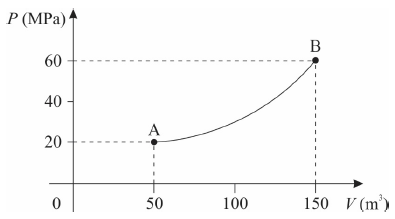
Considerando que a temperatura do gás no ponto A vale TA = 50 K, assinale a alternativa que apresenta corretamente a temperatura TB do gás no ponto B.
1. Se por um lado o governo brasileiro precisa conhecer bem as transformações em andamento na política e na sociedade chinesas no que tange à criação de oportunidades para o agronegócio brasileiro, por outro lado o governo do Brasil necessita investir internamente em infraestrutura para tornar o país mais competitivo no mercado chinês de commodities. 2. Dado o enorme consumo de uma população superior a 1,4 bilhão de pessoas associado ao fato de uma agricultura com produção insuficiente para abastecer as demandas internas, a China necessita importar soja, arroz, milho e trigo, podendo beneficiar-se do agronegócio brasileiro. 3. Diferentemente do Brasil, boa parte das terras chinesas são inaproveitáveis para a agricultura, devido à declividade do relevo, ao clima inadequado e a processos de desertificação, assim como à degradação de terras aráveis e sua contaminação decorrente do uso excessivo de insumos, exigindo novas práticas ambientalmente adequadas. 4. Desde 2009, a China é considerada o maior parceiro comercial do Brasil, e a parceria entre ambos já é vista como parceria global, em que o agronegócio é um dos pilares da relação bilateral, demandando a cooperação em ciência e tecnologia agropecuária.
Assinale a alternativa correta.
O texto a seguir é referência para a questão.
Do que tanto ri esse tal de Scorsese?
Sergio Del Molino


1. Na linha 7, “um engraçadinho” refere-se a David Lynch. 2. Na linha 10, Ginia Bellafante é a velha que resmunga. 3. Na linha 12, “um deus maior do Parnaso” faz referência ao diretor de cinema que participa do seriado “Faz de conta que NY é uma cidade”.
Assinale a alternativa correta.
O texto a seguir é referência para a questão.
Do que tanto ri esse tal de Scorsese?
Sergio Del Molino
O texto a seguir é referência para a questão.

(Peter Burke. Quando foi a globalização? In: O historiador como colunista: ensaios da Folha. RJ: Civilização Brasileira, 2009. Adaptado.)
“Sí hombre, ¿no t’acuerdas de uno que vivía ahí al lao de la plaza, que era mozo viejo?”
A partir de esa frase, es correcto afirmar:
T E X T
Men Fall Behind in College Enrollment.
Women Still Play Catch-Up at Work.
The coronavirus upended the lives of millions of college students. The Wall Street Journal reported this week that men have been hit particularly hard — accounting for roughly three-fourths of pandemic-driven dropouts — and depicted an accelerating crisis in male enrollment.
A closer look at historical trends and the labor market reveals a more complex picture, one in which women keep playing catch-up in an economy structured to favor men.
In many ways, the college gender imbalance is not new. Women have outnumbered men on campus since the late 1970s. The ratio of female to male undergraduates increased much more from 1970 to 1980 than from 1980 to the present. And the numbers haven’t changed much in recent decades. In 1992, 55 percent of college students were women. By 2019, the number had nudged up to 57.4 percent.
While the shift in the college gender ratio is often characterized as men “falling behind,” men are actually more likely to go to college today than they were when they were the majority, many decades ago. In 1970, 32 percent of men 18 to 24 were enrolled in college, a level that was most likely inflated by the opportunity to avoid being drafted into the Vietnam War. That percentage dropped to 24 percent in 1978 and then steadily grew to a stable 37 percent to 39 percent over the last decade.
The gender ratio mostly changed because female enrollment increased even faster, more than doubling over the last half-century.
Because of the change in ratio, some selective colleges discriminate against women in admissions to maintain a gender balance, as The Journal reported. Generally, admissions officials prefer to limit the disparity to 55 percent female and 45 percent male. Their reason not to let the gender ratio drift further toward 2 to 1 is straightforward: Such a ratio would most likely cause a decrease in applications.
In a New York Times essay in 2006 titled “To All the Girls I’ve Rejected,” the dean of admissions at Kenyon College at the time explained: “Beyond the availability of dance partners for the winter formal, gender balance matters in ways both large and small on a residential college campus. Once you become decidedly female in enrollment, fewer males and, as it turns out, fewer females find your campus attractive.”
The raw numbers don’t take into account the varying value of college degrees. Men still dominate in fields like technology and engineering, which offer some of the highest salaries for recent graduates. Perhaps not coincidentally, the professors in those fields remain overwhelmingly male.
Women surged into college because they were able to, but also because many had to. There are still some good-paying jobs available to men without college credentials. There are relatively few for such women. And despite the considerable cost in time and money of earning a degree, many female-dominated jobs don’t pay well.
The fact that the male-female wage gap remains large after more than four decades in which women outnumbered men in college strongly suggests that college alone offers a narrow view of opportunity. Women often seem stuck in place: As they overcome obstacles and use their degrees to move into male-dominated fields, the fields offer less pay in return.
None of this diminishes the significance of the male decrease in college enrollment and graduation. Educators view the male-driven dive in community college enrollment over the last 18 months as a calamity. The pandemic confirmed what was already known. Higher socioeconomic classes are deeply embedded in college and will bear considerable cost and inconvenience to stay there, even if it means watching lectures on a laptop in the room above your parent’s garage and missing a season of parties and football games.
For other people, college attendance is far more fragile. It does not define their identities and is not as important as earning a steady paycheck or starting and nurturing a family. In a time of crisis, it can be delayed — but the reality is that people who drop out of college are statistically unlikely to complete a degree.
Last year, women were less likely than men to leave community college, despite their disproportionate responsibility for caregiving and domestic work, because they no doubt understood the bleak long-term job prospects for women without a credential.
www.nytimes.com/Sept.9,2021
T E X T
Men Fall Behind in College Enrollment.
Women Still Play Catch-Up at Work.
The coronavirus upended the lives of millions of college students. The Wall Street Journal reported this week that men have been hit particularly hard — accounting for roughly three-fourths of pandemic-driven dropouts — and depicted an accelerating crisis in male enrollment.
A closer look at historical trends and the labor market reveals a more complex picture, one in which women keep playing catch-up in an economy structured to favor men.
In many ways, the college gender imbalance is not new. Women have outnumbered men on campus since the late 1970s. The ratio of female to male undergraduates increased much more from 1970 to 1980 than from 1980 to the present. And the numbers haven’t changed much in recent decades. In 1992, 55 percent of college students were women. By 2019, the number had nudged up to 57.4 percent.
While the shift in the college gender ratio is often characterized as men “falling behind,” men are actually more likely to go to college today than they were when they were the majority, many decades ago. In 1970, 32 percent of men 18 to 24 were enrolled in college, a level that was most likely inflated by the opportunity to avoid being drafted into the Vietnam War. That percentage dropped to 24 percent in 1978 and then steadily grew to a stable 37 percent to 39 percent over the last decade.
The gender ratio mostly changed because female enrollment increased even faster, more than doubling over the last half-century.
Because of the change in ratio, some selective colleges discriminate against women in admissions to maintain a gender balance, as The Journal reported. Generally, admissions officials prefer to limit the disparity to 55 percent female and 45 percent male. Their reason not to let the gender ratio drift further toward 2 to 1 is straightforward: Such a ratio would most likely cause a decrease in applications.
In a New York Times essay in 2006 titled “To All the Girls I’ve Rejected,” the dean of admissions at Kenyon College at the time explained: “Beyond the availability of dance partners for the winter formal, gender balance matters in ways both large and small on a residential college campus. Once you become decidedly female in enrollment, fewer males and, as it turns out, fewer females find your campus attractive.”
The raw numbers don’t take into account the varying value of college degrees. Men still dominate in fields like technology and engineering, which offer some of the highest salaries for recent graduates. Perhaps not coincidentally, the professors in those fields remain overwhelmingly male.
Women surged into college because they were able to, but also because many had to. There are still some good-paying jobs available to men without college credentials. There are relatively few for such women. And despite the considerable cost in time and money of earning a degree, many female-dominated jobs don’t pay well.
The fact that the male-female wage gap remains large after more than four decades in which women outnumbered men in college strongly suggests that college alone offers a narrow view of opportunity. Women often seem stuck in place: As they overcome obstacles and use their degrees to move into male-dominated fields, the fields offer less pay in return.
None of this diminishes the significance of the male decrease in college enrollment and graduation. Educators view the male-driven dive in community college enrollment over the last 18 months as a calamity. The pandemic confirmed what was already known. Higher socioeconomic classes are deeply embedded in college and will bear considerable cost and inconvenience to stay there, even if it means watching lectures on a laptop in the room above your parent’s garage and missing a season of parties and football games.
For other people, college attendance is far more fragile. It does not define their identities and is not as important as earning a steady paycheck or starting and nurturing a family. In a time of crisis, it can be delayed — but the reality is that people who drop out of college are statistically unlikely to complete a degree.
Last year, women were less likely than men to leave community college, despite their disproportionate responsibility for caregiving and domestic work, because they no doubt understood the bleak long-term job prospects for women without a credential.
www.nytimes.com/Sept.9,2021
T E X T
Men Fall Behind in College Enrollment.
Women Still Play Catch-Up at Work.
The coronavirus upended the lives of millions of college students. The Wall Street Journal reported this week that men have been hit particularly hard — accounting for roughly three-fourths of pandemic-driven dropouts — and depicted an accelerating crisis in male enrollment.
A closer look at historical trends and the labor market reveals a more complex picture, one in which women keep playing catch-up in an economy structured to favor men.
In many ways, the college gender imbalance is not new. Women have outnumbered men on campus since the late 1970s. The ratio of female to male undergraduates increased much more from 1970 to 1980 than from 1980 to the present. And the numbers haven’t changed much in recent decades. In 1992, 55 percent of college students were women. By 2019, the number had nudged up to 57.4 percent.
While the shift in the college gender ratio is often characterized as men “falling behind,” men are actually more likely to go to college today than they were when they were the majority, many decades ago. In 1970, 32 percent of men 18 to 24 were enrolled in college, a level that was most likely inflated by the opportunity to avoid being drafted into the Vietnam War. That percentage dropped to 24 percent in 1978 and then steadily grew to a stable 37 percent to 39 percent over the last decade.
The gender ratio mostly changed because female enrollment increased even faster, more than doubling over the last half-century.
Because of the change in ratio, some selective colleges discriminate against women in admissions to maintain a gender balance, as The Journal reported. Generally, admissions officials prefer to limit the disparity to 55 percent female and 45 percent male. Their reason not to let the gender ratio drift further toward 2 to 1 is straightforward: Such a ratio would most likely cause a decrease in applications.
In a New York Times essay in 2006 titled “To All the Girls I’ve Rejected,” the dean of admissions at Kenyon College at the time explained: “Beyond the availability of dance partners for the winter formal, gender balance matters in ways both large and small on a residential college campus. Once you become decidedly female in enrollment, fewer males and, as it turns out, fewer females find your campus attractive.”
The raw numbers don’t take into account the varying value of college degrees. Men still dominate in fields like technology and engineering, which offer some of the highest salaries for recent graduates. Perhaps not coincidentally, the professors in those fields remain overwhelmingly male.
Women surged into college because they were able to, but also because many had to. There are still some good-paying jobs available to men without college credentials. There are relatively few for such women. And despite the considerable cost in time and money of earning a degree, many female-dominated jobs don’t pay well.
The fact that the male-female wage gap remains large after more than four decades in which women outnumbered men in college strongly suggests that college alone offers a narrow view of opportunity. Women often seem stuck in place: As they overcome obstacles and use their degrees to move into male-dominated fields, the fields offer less pay in return.
None of this diminishes the significance of the male decrease in college enrollment and graduation. Educators view the male-driven dive in community college enrollment over the last 18 months as a calamity. The pandemic confirmed what was already known. Higher socioeconomic classes are deeply embedded in college and will bear considerable cost and inconvenience to stay there, even if it means watching lectures on a laptop in the room above your parent’s garage and missing a season of parties and football games.
For other people, college attendance is far more fragile. It does not define their identities and is not as important as earning a steady paycheck or starting and nurturing a family. In a time of crisis, it can be delayed — but the reality is that people who drop out of college are statistically unlikely to complete a degree.
Last year, women were less likely than men to leave community college, despite their disproportionate responsibility for caregiving and domestic work, because they no doubt understood the bleak long-term job prospects for women without a credential.
www.nytimes.com/Sept.9,2021
 Conheça nossos planos