Questões de Vestibular
Foram encontradas 75.219 questões
Resolva questões gratuitamente!
Junte-se a mais de 4 milhões de concurseiros!


Ano: 2025
Banca:
VUNESP
Órgão:
UNIFIPA
Prova:
VUNESP - 2025 - UNIFIPA - Vestibular Medicina - Conhecimentos Gerais |
Q3966743
Biologia
Texto associado
Leia o excerto para responder à questão.
Os fungos têm vida longa, porém, como todo ser vivo,
começam muito pequenos: como esporos. E os esporos
têm um grande problema. Se caírem diretamente do chapéu
do corpo de frutificação (o cogumelo), podem aterrissar no
espaço já ocupado por suas mães, o que significa que não
vão colonizar um novo território.
(Peter Wohlleben. A sabedoria secreta da natureza, 2022.)
O “grande problema”, citado no excerto, refere-se ao fato
de que os futuros cogumelos terão com “suas mães” uma
relação ecológica de
Ano: 2025
Banca:
VUNESP
Órgão:
UNIFIPA
Prova:
VUNESP - 2025 - UNIFIPA - Vestibular Medicina - Conhecimentos Gerais |
Q3966742
Biologia
Por mais que o status de emergência global por covid-19
tenha sido encerrado, o vírus SARS-CoV-2 continua em
ação, infectando pessoas e sofrendo mutações. Uma das
novas variantes, a nimbus ou NB.1.8.1, tem se destacado
por levar a um incômodo sintoma: uma forte dor de garganta
descrita por médicos como se uma “lâmina de barbear” estivesse no local.
(https://veja.abril.com.br, 17.06.2025. Adaptado.)
Novas variantes virais que afetam os seres humanos surgem porque
(https://veja.abril.com.br, 17.06.2025. Adaptado.)
Novas variantes virais que afetam os seres humanos surgem porque
Ano: 2025
Banca:
VUNESP
Órgão:
UNIFIPA
Prova:
VUNESP - 2025 - UNIFIPA - Vestibular Medicina - Conhecimentos Gerais |
Q3966741
Biologia
Analise o esquema que mostra a atuação das proteínas LC3
no controle de um processo intracelular em que há a participação da organela X.

(www.nature.com. Adaptado.)
A organela X é o
(www.nature.com. Adaptado.)
A organela X é o
Ano: 2025
Banca:
VUNESP
Órgão:
UNIFIPA
Prova:
VUNESP - 2025 - UNIFIPA - Vestibular Medicina - Conhecimentos Gerais |
Q3966740
Raciocínio Lógico
Ao trabalhar com fluxogramas, uma referência a uma variável
é uma referência ao valor que ela armazena. Por exemplo,
se uma variável x armazena o valor 10, a instrução “Aumente
x em 50 unidades” modifica o valor dessa variável para 60;
se as variáveis x e i armazenam, respectivamente, 10 e 2,
a instrução “Aumente x em i unidades” modifica o valor da
variável x para 12.
Considere que, no início do fluxograma, a variável x armazena o valor 5 e a variável i armazena o valor 0 (zero).
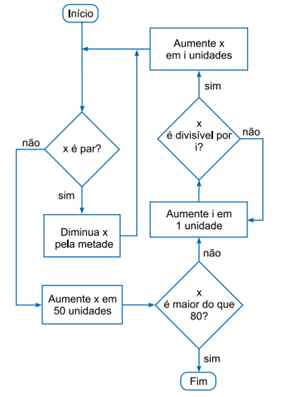
Ao chegar ao fim da execução do fluxograma, o valor armazenado na variável i será
Considere que, no início do fluxograma, a variável x armazena o valor 5 e a variável i armazena o valor 0 (zero).
Ao chegar ao fim da execução do fluxograma, o valor armazenado na variável i será
Ano: 2025
Banca:
VUNESP
Órgão:
UNIFIPA
Prova:
VUNESP - 2025 - UNIFIPA - Vestibular Medicina - Conhecimentos Gerais |
Q3966739
Matemática
No plano cartesiano, um quadrado tem um dos lados sobre
o eixo x e a reta r contém a diagonal que passa pelo vértice
A(–2, 15) do quadrado. Os pontos P e Q sobre os lados desse
quadrado são tais que a medida do segmento PQ é igual à
medida do lado do quadrado e a medida do segmento BQ é 3.
A reta s passa por P e é paralela à reta r, ou seja, r e s têm
o mesmo coeficiente angular.
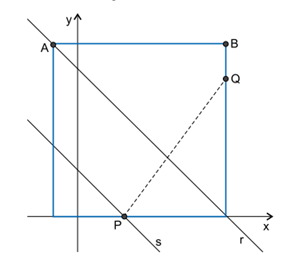
A equação da reta s é:
A equação da reta s é:
Ano: 2025
Banca:
VUNESP
Órgão:
UNIFIPA
Prova:
VUNESP - 2025 - UNIFIPA - Vestibular Medicina - Conhecimentos Gerais |
Q3966738
Matemática
O Instituto de Matemática de uma universidade ofereceu N
cursos de verão para o mês de janeiro, sendo que cada interessado só podia se inscrever em um curso. Após a primeira semana de inscrições para os cursos, a média aritmética
do número de alunos por curso era igual a 16. Na segunda
semana de inscrições, mais 98 alunos se matricularam nos
cursos e a média do número de alunos por curso passou a
ser igual a 18,8.
O valor de N é
O valor de N é
Ano: 2025
Banca:
VUNESP
Órgão:
UNIFIPA
Prova:
VUNESP - 2025 - UNIFIPA - Vestibular Medicina - Conhecimentos Gerais |
Q3966737
Matemática
Uma montagem foi feita com 1 cubo, 1 pirâmide e 2 paralelepípedos retorretângulos. Um dos paralelepípedos tem dois
vértices em comum com o cubo e uma face em comum com
o outro paralelepípedo. A base da pirâmide coincide com uma
das faces do cubo e o vértice da pirâmide coincide com um
vértice de um dos paralelepípedos, conforme a figura.
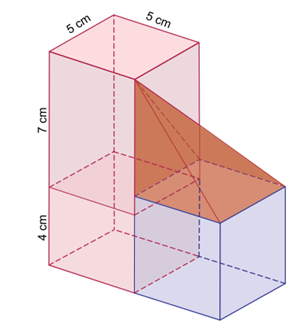
O volume da pirâmide é igual a
O volume da pirâmide é igual a
Ano: 2025
Banca:
VUNESP
Órgão:
UNIFIPA
Prova:
VUNESP - 2025 - UNIFIPA - Vestibular Medicina - Conhecimentos Gerais |
Q3966736
Matemática
No plano cartesiano, os gráficos das funções f(x) = 8x – 15
e g(x) = kx2
– 4x + 3, sendo k uma constante real, têm em
comum apenas o ponto de coordenadas (p, q) do primeiro
quadrante.
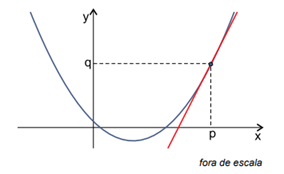
O valor de q é
O valor de q é
Ano: 2025
Banca:
VUNESP
Órgão:
UNIFIPA
Prova:
VUNESP - 2025 - UNIFIPA - Vestibular Medicina - Conhecimentos Gerais |
Q3966735
Matemática
No plano cartesiano, está representado um esboço do gráfico
da função trigonométrica f(x) = 2 sen(x) – cos2
(x), cujo período
é igual a 2π.
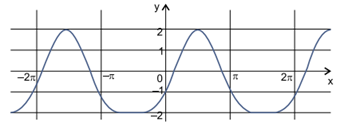
O número de soluções da equação 2 sen(x) – cos2 (x) = – x/3 é
O número de soluções da equação 2 sen(x) – cos2 (x) = – x/3 é
Ano: 2025
Banca:
VUNESP
Órgão:
UNIFIPA
Prova:
VUNESP - 2025 - UNIFIPA - Vestibular Medicina - Conhecimentos Gerais |
Q3966734
Matemática
Uma banca comercializa suas revistas apenas em pacotes
com 3 unidades ou pacotes com 8 unidades. Durante certo
dia, a loja vendeu 39 desses pacotes, totalizando 162 revistas vendidas. Nesse dia, o número de pacotes com 8 unidades que foram vendidos foi igual a
Ano: 2025
Banca:
VUNESP
Órgão:
UNIFIPA
Prova:
VUNESP - 2025 - UNIFIPA - Vestibular Medicina - Conhecimentos Gerais |
Q3966733
Matemática
Um torneio de atletismo será disputado por alunos de 4 escolas, A, B, C e D. O número de atletas da escola A é o triplo do
número de atletas da escola B, o número de atletas da escola C é igual a metade do número de atletas da escola D e o
número de atletas da escola D é 30 a menos do que o número de atletas da escola B. No final do torneio, um dos alunos
será sorteado para hastear a bandeira nacional. Sabendo que é igual a 4/19 a probabilidade de o atleta sorteado ser da
escola B, o número de alunos da escola B que participarão
do torneio é
Ano: 2025
Banca:
VUNESP
Órgão:
UNIFIPA
Prova:
VUNESP - 2025 - UNIFIPA - Vestibular Medicina - Conhecimentos Gerais |
Q3966732
Raciocínio Lógico
As bebês Lalá, Lelé e Lili são trigêmeas e, toda noite, cada
uma delas usa um pijama e uma touca. Todos os pijamas
e todas as toucas dessas bebês são iguais e a mãe delas
sempre coloca, em cada uma, o pijama antes da touca, mas
não coloca em uma mesma bebê, necessariamente, a touca
imediatamente após colocar o pijama, de modo que a única
condição para uma bebê vestir a touca é já estar de pijama.
Por exemplo, a mãe pode primeiro colocar o pijama em todas
elas e depois, em qualquer ordem, colocar as toucas.
O número de maneiras ordenadas diferentes de essa mãe colocar os pijamas e as toucas em suas filhas é
O número de maneiras ordenadas diferentes de essa mãe colocar os pijamas e as toucas em suas filhas é
Ano: 2025
Banca:
VUNESP
Órgão:
UNIFIPA
Prova:
VUNESP - 2025 - UNIFIPA - Vestibular Medicina - Conhecimentos Gerais |
Q3966731
Matemática
A figura mostra um quadrado ABCD, dividido em 4 quadrados
e um retângulo, e o segmento com extremidades nos vértices
C e P desses polígonos.
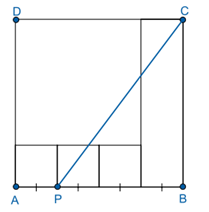
Sabendo que o segmento CP mede 15 cm, o perímetro do retângulo é igual a
Sabendo que o segmento CP mede 15 cm, o perímetro do retângulo é igual a
Ano: 2025
Banca:
VUNESP
Órgão:
UNIFIPA
Prova:
VUNESP - 2025 - UNIFIPA - Vestibular Medicina - Conhecimentos Gerais |
Q3966730
Matemática
Em determinada semana, na segunda-feira, considerando o
total de usuários de uma estação de metrô, a razão entre o
número dos que partiram da estação e o número dos que
chegaram a essa mesma estação foi 11/14. Na terça-feira, chegaram a essa estação 700 pessoas a mais do que na
segunda-feira, e o número dos que partiram dela manteve-se
o mesmo, de modo que, nesse dia, a razão entre o número dos que partiram e o número dos que chegaram foi 11/15. Na
segunda-feira, a soma do número de usuários que chegaram
à estação com o número de usuários que partiram dela foi
Ano: 2025
Banca:
FUVEST
Órgão:
FUVEST
Prova:
FUVEST - 2025 - FUVEST - Vestibular - 1ª Fase - Conhecimentos Gerais |
Q3946342
Português
Quando no dia seguinte, também no final da tarde, Fio
Jasmim se dirigiu para a pequena joalheria, ele pensou em ser
mais cuidadoso ao pronunciar qualquer nome de mulher perto
de Dolores dos Santos. Quando contou o incidente para os
companheiros maquinistas, os mais velhos riram dele e
perguntaram qual o motivo de ele estar tão preocupado com
a pequena distração cometida. Nem ele sabia bem o porquê.
Entretanto, não gostava de pronunciar o nome da esposa para
outras mulheres. A de casa é santa, pensava ele. Se ele
tivesse dito pelo menos Juventina, seria mais fácil explicar.
Assustado com o próprio pensamento, Fio Jasmim não
entendia o que estava se passando com ele. Estaria por acaso
pensando em alguma conquista? Ouvira dizer que ela era uma
mulher namoradeira, mas que não parava com homem algum,
tinha um gênio indomável. Todas essas considerações não lhe
importavam, não estava interessado na mulher. Mas e se ela
estivesse interessada nele...
Conceição Evaristo. Canção para ninar menino grande.
No romance de Conceição Evaristo, Fio Jasmim, por meio de suas viagens, é o elo que agrega as várias personagens femininas que se relacionam com ele. De acordo com essa consideração, Fio Jasmim
Conceição Evaristo. Canção para ninar menino grande.
No romance de Conceição Evaristo, Fio Jasmim, por meio de suas viagens, é o elo que agrega as várias personagens femininas que se relacionam com ele. De acordo com essa consideração, Fio Jasmim
Ano: 2025
Banca:
FUVEST
Órgão:
FUVEST
Prova:
FUVEST - 2025 - FUVEST - Vestibular - 1ª Fase - Conhecimentos Gerais |
Q3946341
Português
A família de Neide fazia questão de conservar o pomposo
sobrenome, “Paranhos”, herdado dos tempos da escravatura.
A manutenção do nome dos descendentes dos antigos
colonizadores, cuja família era tradicional na cidade, para o
clã descendente de africanos escravizados, ganhara um
sentido de enfrentamento aos brancos “Paranhos”. Para além
de ser um destino histórico, era uma velada reivindicação de
uma fortuna familiar dos brancos, que em grande parte era de
pertença dos negros “Paranhos”.
Conceição Evaristo. Canção para ninar menino grande.
No excerto, o uso do mesmo nome por uma família branca e uma família negra indica
Conceição Evaristo. Canção para ninar menino grande.
No excerto, o uso do mesmo nome por uma família branca e uma família negra indica
Ano: 2025
Banca:
FUVEST
Órgão:
FUVEST
Prova:
FUVEST - 2025 - FUVEST - Vestibular - 1ª Fase - Conhecimentos Gerais |
Q3946340
História
Entre 1810 e 1850 os debates acalorados giraram em torno
do fim do tráfico internacional, da sua legislação, da sua
repressão, num impressionante vaivém, ou na famosa
expressão:¬¬“Para inglês ver”. Até que o comércio internacional
de almas fosse extinto em 1850, e na verdade alguns anos
depois, muita pressão externa foi necessária. O fim do tráfico
não significou a abolição da escravidão, que ainda
permaneceria forte por quase quarenta anos.
Lilia M. Schwarcz e Flávio Gomes. “Apresentação”. In: Dicionário da escravidão e liberdade. São Paulo: Companhia das Letras, 2018. Adaptado.
De acordo com o excerto, é correto afirmar:
Lilia M. Schwarcz e Flávio Gomes. “Apresentação”. In: Dicionário da escravidão e liberdade. São Paulo: Companhia das Letras, 2018. Adaptado.
De acordo com o excerto, é correto afirmar:
Ano: 2025
Banca:
FUVEST
Órgão:
FUVEST
Prova:
FUVEST - 2025 - FUVEST - Vestibular - 1ª Fase - Conhecimentos Gerais |
Q3946339
Português
As plantas viam o jardineiro como as plantas vêem. Não se
sentiam agradecidas. Tratavam o seu regador à semelhança
da chuva que caía sobre elas nas noites de Outono.
Florescerem não era o seu meio de meterem conversa com o
jardineiro, mas uma forma de acentuarem a sua indiferença à
declaração de amor que ele cultivava a cada hora.
Tanto lhes fazia serem cuidadas por um assassino, se eram sujas as mãos que as amparavam ou o que viera antes do amor que ele lhes dedicava.
Seguiam‑no com o seu olhar sem julgamento, alheias a que, todas as manhãs, Celestino acordava por elas. Vigiavam os seus passos, pressentiam a sua presença, alegravam‑se de o ver, conheciam as suas rotinas. Sem que por um instante lhe sentissem a falta, ou se afligissem com as suas ausências ocasionais.
Djaimilia Pereira de Almeida. A visão das plantas.
Considerando o trecho citado, depreende-se que o “olhar sem julgamento”
Tanto lhes fazia serem cuidadas por um assassino, se eram sujas as mãos que as amparavam ou o que viera antes do amor que ele lhes dedicava.
Seguiam‑no com o seu olhar sem julgamento, alheias a que, todas as manhãs, Celestino acordava por elas. Vigiavam os seus passos, pressentiam a sua presença, alegravam‑se de o ver, conheciam as suas rotinas. Sem que por um instante lhe sentissem a falta, ou se afligissem com as suas ausências ocasionais.
Djaimilia Pereira de Almeida. A visão das plantas.
Considerando o trecho citado, depreende-se que o “olhar sem julgamento”
Ano: 2025
Banca:
FUVEST
Órgão:
FUVEST
Prova:
FUVEST - 2025 - FUVEST - Vestibular - 1ª Fase - Conhecimentos Gerais |
Q3946338
Biologia
A rega e o zelo geraram uma infinidade de seres que
descobria nos dedos ao mexer na terra: minhocas, besouros
verdes, bichos-de-conta.
Djaimilia Pereira de Almeida. A visão das plantas.
Na obra A visão das plantas (2021) são descritas características dos animais e das plantas no jardim cuidado por Celestino. Nesta frase, são citados animais que pertencem a diferentes grupos de invertebrados, como as minhocas (anelídeos), os besouros (insetos) e os bichos-de-conta (crustáceos), também conhecidos como tatuzinhos de jardim. Assinale a alternativa que apresenta corretamente a informação sobre o sistema respiratório destes grupos.
Djaimilia Pereira de Almeida. A visão das plantas.
Na obra A visão das plantas (2021) são descritas características dos animais e das plantas no jardim cuidado por Celestino. Nesta frase, são citados animais que pertencem a diferentes grupos de invertebrados, como as minhocas (anelídeos), os besouros (insetos) e os bichos-de-conta (crustáceos), também conhecidos como tatuzinhos de jardim. Assinale a alternativa que apresenta corretamente a informação sobre o sistema respiratório destes grupos.
Ano: 2025
Banca:
FUVEST
Órgão:
FUVEST
Prova:
FUVEST - 2025 - FUVEST - Vestibular - 1ª Fase - Conhecimentos Gerais |
Q3946337
Biologia
A figura a seguir representa nichos ecológicos de duas
espécies que utilizam um dado recurso ambiental em comum
e de forma semelhante.
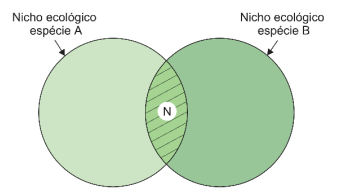
É correto afirmar que a área N representa
É correto afirmar que a área N representa

 Conheça nossos planos