Foram encontradas 36.755 questões
Resolva questões gratuitamente!
Junte-se a mais de 4 milhões de concurseiros!


Várias mudanças ambientais interferem no ciclo biogeoquímico do carbono. Sabe-se que a maior parte desse elemento está armazenada nas rochas e sedimentos da crosta terrestre, como indica a tabela.
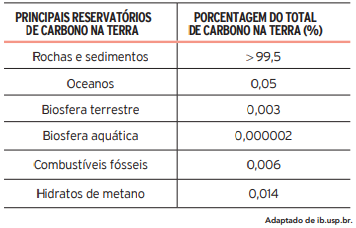
A exploração intensa dos recursos naturais acelera o processo de conversão do carbono encontrado em rochas e sedimentos, em compostos de carbono que circulam nos outros reservatórios.
Uma consequência desse processo é:
OBAMA ACRESCENTA A SEU LEGADO A LUTA CONTRA A MUDANÇA CLIMÁTICA
O presidente dos Estados Unidos, Barack Obama, revelou, em agosto de 2015, seu plano definitivo para reduzir as emissões de dióxido de carbono na atmosfera, consideradas as principais responsáveis pelo aquecimento global. É a primeira vez que um presidente norte-americano determina limites para as emissões das usinas de energia do país. “A mudança climática já não é um problema das gerações futuras”, afirma o presidente num vídeo publicado em sua página no Facebook. Nele, Obama descreve o novo plano como “o maior e mais importante passo dado pelos E.U.A. na luta contra o aquecimento global”. As previsões mais recentes indicam graves consequências se a temperatura global média subir 2 °C. Como Obama alerta no vídeo mencionado, seu conjunto de medidas “pode não ser suficiente”.
Adaptado de brasil.elpais.com, agosto/2015.
DONALD TRUMP DECIDE RETIRAR E.U.A. DO ACORDO CLIMÁTICO DE PARIS
O presidente dos Estados Unidos, Donald Trump, anunciou em junho de 2017 que o país sairá do Acordo de Paris. Em declaração realizada nos jardins da Casa Branca, afirmou: “Para proteger a América e seus cidadãos, os Estados Unidos se retirarão do Acordo Climático de Paris. Mas começaremos a rediscutir esses acordos em termos justos para os trabalhadores e os contribuintes: estamos saindo, mas iniciaremos negociações para um acordo justo”. A saída norte-americana abre precedente para que outros Estados repensem e até desistam do Acordo de 2015, algo considerado extremamente preocupante por especialistas no assunto. Afinal, o tratado também deseja garantir que o aumento da temperatura média global fique 2 °C abaixo dos níveis da época pré-industrial, além de prosseguir com os esforços para limitar o aumento da temperatura em até 1,5 °C.
Adaptado de revistagalileu.globo.com, junho/2017.
A diferença entre as posições de Barack Obama e Donald Trump, quanto aos problemas
relacionados à mudança climática na atualidade, está associada, respectivamente, aos
seguintes aspectos:
Segundo, por ser alguém que, aos 21 anos, foi informado pelos médicos de que teria apenas mais cinco anos de vida e que completou 76 anos em 2018. (l. 2-3)
Os verbos sublinhados descrevem dois fatos que podem ser caracterizados, respectivamente, como:
SOBRE A FORMA DA TERRA
Nesses últimos tempos, tem-se difundido na internet uma concepção sobre a forma da Terra: a Terra Plana. Na verdade, essa concepção está associada com outras ideias em conflito com o conhecimento científico atual. Afirma-se, por exemplo, que a gravidade inexiste; a Lua é autoiluminada; o Sol e os demais astros se encontram a não mais de alguns milhares de quilômetros de nós; o Sol e a Lua descrevem órbitas paralelas à superfície da Terra; as viagens espaciais são impossíveis. Negam-se, assim, a ida do homem à Lua e a existência de satélites artificiais, ao mesmo tempo que se afirmam o geocentrismo antropocêntrico e o criacionismo fixista dos 6 mil anos, segundo o qual tudo teria sido criado como é hoje há cerca de 6 mil anos.
FERNANDO LANG DA SILVEIRA
Adaptado de researchgate.net, maio/2017.
De acordo com essa concepção sobre a forma da Terra, dentre as viagens empreendidas pelos exploradores do período das Grandes Navegações, a que faz alusão Stephen Hawking, seria impossível a realização do seguinte percurso:
Big Tech made the social media mess. It has to fix it
Analysis by David Goldman, CNN Business
Social media has given people a platform to spew hate speech and radical beliefs to other people, amplifying what are otherwise fringe opinions. A few have turned that hate into violence.
Silicon Valley has built the biggest, most powerful companies in the world. Now, tech leaders have a responsibility to rein in the creations that have grown too unwieldy for them to control.
These are businesses, and their leaders will have to And out how to do that without destroying their companies. So far, balancing Big Tech's responsibilities to society and its duties to investors has proven difficult.
A difficult balance
Facebook (FB) announced in July it would invest billions of dollars a year to improve safety and security on the platform. The company said the effort would come at the expense of user growth and profitability. The company's stock lost about a third of its value because investors were concerned about Facebook's growth stalling.
Twitter has largely rid ISIS recruiters from the social network. Facebook and YouTube have labeled fake news stories as such. Yet, the work isn't close to done. Google has also made significant changes to YouTube's advertising policies after ads from 300 companies and organizations ran on channels promoting hate groups.
"YouTube has strict policies that prohibit content which incites others to violence or promotes hatred," a YouTube spokesperson said. "We quickly remove videos violating our policies when flagged by our users."
What seemed to cross no one's mind a decade ago was the potential downside to building a platform with billions of customers. So many posts can't possibly be monitored in real time. The networks gave the dregs of society the ability to reach like-minded people and poison the minds of others.
Without that foresight, Silicon Valley allowed their creations to break down. They're not beyond repair, but fixing them will be costly and difficult. Whether Big Tech is up to the task will determine the fates of their platforms.
Available: https://edition.cnn.com/2018/10/29/tech/social-media- -hate-speech/index.html. Access: 30 may 2019. Adapted.
Glossary: spew: lançar; fringe: periféricas; to rein in: controlar; unwieldy: desordenado; duties: deveres; profitability, lucro;
stock: ação (no mercado); stalling: interrupção; flagged: sinalizados; dregs of society: pessoas inescrupulosas; like-minded: pessoas que compartilham ideias semelhantes; poison: envenenar;
foresight: visão; beyond repair: sem conserto; up to the task: à
altura da tarefa.
Big Tech made the social media mess. It has to fix it
Analysis by David Goldman, CNN Business
Social media has given people a platform to spew hate speech and radical beliefs to other people, amplifying what are otherwise fringe opinions. A few have turned that hate into violence.
Silicon Valley has built the biggest, most powerful companies in the world. Now, tech leaders have a responsibility to rein in the creations that have grown too unwieldy for them to control.
These are businesses, and their leaders will have to And out how to do that without destroying their companies. So far, balancing Big Tech's responsibilities to society and its duties to investors has proven difficult.
A difficult balance
Facebook (FB) announced in July it would invest billions of dollars a year to improve safety and security on the platform. The company said the effort would come at the expense of user growth and profitability. The company's stock lost about a third of its value because investors were concerned about Facebook's growth stalling.
Twitter has largely rid ISIS recruiters from the social network. Facebook and YouTube have labeled fake news stories as such. Yet, the work isn't close to done. Google has also made significant changes to YouTube's advertising policies after ads from 300 companies and organizations ran on channels promoting hate groups.
"YouTube has strict policies that prohibit content which incites others to violence or promotes hatred," a YouTube spokesperson said. "We quickly remove videos violating our policies when flagged by our users."
What seemed to cross no one's mind a decade ago was the potential downside to building a platform with billions of customers. So many posts can't possibly be monitored in real time. The networks gave the dregs of society the ability to reach like-minded people and poison the minds of others.
Without that foresight, Silicon Valley allowed their creations to break down. They're not beyond repair, but fixing them will be costly and difficult. Whether Big Tech is up to the task will determine the fates of their platforms.
Available: https://edition.cnn.com/2018/10/29/tech/social-media- -hate-speech/index.html. Access: 30 may 2019. Adapted.
Glossary: spew: lançar; fringe: periféricas; to rein in: controlar; unwieldy: desordenado; duties: deveres; profitability, lucro;
stock: ação (no mercado); stalling: interrupção; flagged: sinalizados; dregs of society: pessoas inescrupulosas; like-minded: pessoas que compartilham ideias semelhantes; poison: envenenar;
foresight: visão; beyond repair: sem conserto; up to the task: à
altura da tarefa.
Big Tech made the social media mess. It has to fix it
Analysis by David Goldman, CNN Business
Social media has given people a platform to spew hate speech and radical beliefs to other people, amplifying what are otherwise fringe opinions. A few have turned that hate into violence.
Silicon Valley has built the biggest, most powerful companies in the world. Now, tech leaders have a responsibility to rein in the creations that have grown too unwieldy for them to control.
These are businesses, and their leaders will have to And out how to do that without destroying their companies. So far, balancing Big Tech's responsibilities to society and its duties to investors has proven difficult.
A difficult balance
Facebook (FB) announced in July it would invest billions of dollars a year to improve safety and security on the platform. The company said the effort would come at the expense of user growth and profitability. The company's stock lost about a third of its value because investors were concerned about Facebook's growth stalling.
Twitter has largely rid ISIS recruiters from the social network. Facebook and YouTube have labeled fake news stories as such. Yet, the work isn't close to done. Google has also made significant changes to YouTube's advertising policies after ads from 300 companies and organizations ran on channels promoting hate groups.
"YouTube has strict policies that prohibit content which incites others to violence or promotes hatred," a YouTube spokesperson said. "We quickly remove videos violating our policies when flagged by our users."
What seemed to cross no one's mind a decade ago was the potential downside to building a platform with billions of customers. So many posts can't possibly be monitored in real time. The networks gave the dregs of society the ability to reach like-minded people and poison the minds of others.
Without that foresight, Silicon Valley allowed their creations to break down. They're not beyond repair, but fixing them will be costly and difficult. Whether Big Tech is up to the task will determine the fates of their platforms.
Available: https://edition.cnn.com/2018/10/29/tech/social-media- -hate-speech/index.html. Access: 30 may 2019. Adapted.
Glossary: spew: lançar; fringe: periféricas; to rein in: controlar; unwieldy: desordenado; duties: deveres; profitability, lucro;
stock: ação (no mercado); stalling: interrupção; flagged: sinalizados; dregs of society: pessoas inescrupulosas; like-minded: pessoas que compartilham ideias semelhantes; poison: envenenar;
foresight: visão; beyond repair: sem conserto; up to the task: à
altura da tarefa.
Big Tech made the social media mess. It has to fix it
Analysis by David Goldman, CNN Business
Social media has given people a platform to spew hate speech and radical beliefs to other people, amplifying what are otherwise fringe opinions. A few have turned that hate into violence.
Silicon Valley has built the biggest, most powerful companies in the world. Now, tech leaders have a responsibility to rein in the creations that have grown too unwieldy for them to control.
These are businesses, and their leaders will have to And out how to do that without destroying their companies. So far, balancing Big Tech's responsibilities to society and its duties to investors has proven difficult.
A difficult balance
Facebook (FB) announced in July it would invest billions of dollars a year to improve safety and security on the platform. The company said the effort would come at the expense of user growth and profitability. The company's stock lost about a third of its value because investors were concerned about Facebook's growth stalling.
Twitter has largely rid ISIS recruiters from the social network. Facebook and YouTube have labeled fake news stories as such. Yet, the work isn't close to done. Google has also made significant changes to YouTube's advertising policies after ads from 300 companies and organizations ran on channels promoting hate groups.
"YouTube has strict policies that prohibit content which incites others to violence or promotes hatred," a YouTube spokesperson said. "We quickly remove videos violating our policies when flagged by our users."
What seemed to cross no one's mind a decade ago was the potential downside to building a platform with billions of customers. So many posts can't possibly be monitored in real time. The networks gave the dregs of society the ability to reach like-minded people and poison the minds of others.
Without that foresight, Silicon Valley allowed their creations to break down. They're not beyond repair, but fixing them will be costly and difficult. Whether Big Tech is up to the task will determine the fates of their platforms.
Available: https://edition.cnn.com/2018/10/29/tech/social-media- -hate-speech/index.html. Access: 30 may 2019. Adapted.
Glossary: spew: lançar; fringe: periféricas; to rein in: controlar; unwieldy: desordenado; duties: deveres; profitability, lucro;
stock: ação (no mercado); stalling: interrupção; flagged: sinalizados; dregs of society: pessoas inescrupulosas; like-minded: pessoas que compartilham ideias semelhantes; poison: envenenar;
foresight: visão; beyond repair: sem conserto; up to the task: à
altura da tarefa.
O Cardanol é um fenol obtido do líquido da castanha de caju (LCC), a partir do processo de aquecimento a que as castanhas são submetidas para fins alimentícios, de modo a romper a casca externa e liberar o óleo.
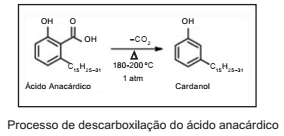
Sendo o LCC um subproduto de agronegócio do caju e
correspondente a, aproximadamente, 25% do peso da castanha, supõe-se que 5% desse líquido seja o ácido anacárdico. Assim, para produzir 5.96 toneladas de Cardanol,
supondo que sua massa molar seja de aproximadamente,
298 g/mol, a quantidade necessária de castanhas em toneladas é de:
O TBT (M.M = 291 g/mol) é um composto polar, hidrofóbico e lipofílico que foi introduzido no mercado nos anos 40. É componente de tintas anti-incrustantes, utilizadas em cascos de barcos, redes e jaulas de aquacultura a fim de impedir a fixação de organismos como algas e invertebrados (mexilhão, cracas, etc.). Além disso, o TBT é utilizado também na agricultura como pesticida, conservante de madeiras e, numa escala menor, em desinfetantes e em tratamentos algicidas em materiais de construção. A sua elevada difusão no meio marinho tornou-se uma preocupação ambiental em nível mundial. Atualmente, é considerada a substância mais tóxica produzida pelo homem.
A composição centesimal do TBT é de 49.49% de Carbono, 9.62% de Hidrogênio e 40.89% de Estanho e sua fórmula molecular é:
Os feromônios são usados pelos insetos para se defenderem, encontrarem os parceiros ou acharem comida. Esse acontecimento ocorre sempre entre indivíduos da mesma espécie. O Bombicol foi o primeiro feromônio descrito na literatura Química, tendo sido isolado, em 1959, do bicho-da-seda, ou seja, da lagarta da mariposa Bombyx mori e corresponde à seguinte estrutura:
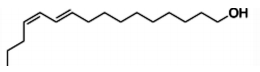
Em relação à estrutura do Bombicol é correto afirmar que se
trata de um composto de cadeia
O ácido fumárico é um composto orgânico usado, com muita frequência, pela indústria de alimentos por ser um acidulante que ajuda a prolongar o prazo de validade dos produtos. É comum encontrá-lo em refrigerantes, sucos e geleias. Ele é um ácido dicarboxílico, insaturado, de cadeia normal, também conhecido como ácido donítico, cuja fórmula estrutural é:
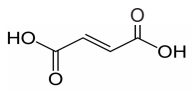
Sabendo que na titulação de 30.00 mL de solução deste
ácido foram gastos 60.00 mL de NaOH 0.120 mol/L, sua
molaridade em mol/L é
O etanol (álcool etílico) tem grande importância na indústria pelo fato de servir como matéria-prima para a produção de outras substâncias. As reações do etanol na produção de outros compostos são dependentes do meio reacional.
A esse respeito, o etanol, quando em
Tem-se uma solução de hidróxido de amônio (Kb = 1.7x10⁻⁵) que apresenta um pH igual a 10.00.
A molaridade desta solução é:
 Conheça nossos planos