Questões de Vestibular
Comentadas
Foram encontradas 36.665 questões
Resolva questões gratuitamente!
Junte-se a mais de 4 milhões de concurseiros!


A alternativa que contribuiria para a redução do impacto ambiental seria:
Disponível em: wiki.redejuntos.org.br/busca/o-impacto-traco-do-saneamento-basico-na-desigualdade-social-o-que-diz-o-atlas-do-saneamento. Acesso em: 25 abr. 2019.
A respeito dessa informação de desigualdade social, pode-se deduzir que:
Disponível em: https://www.terra.com.br/noticias/quem-era-jacqui-saburido-simbolo-da-luta-contra-alcool-e-direcao-apos-perder-o-rosto-emacidente,6d0a7dd89f68c3ff286ccedebcbf7d7fu24aynxw.html. Acesso em: 25 abr. 2019.
Com relação aos efeitos do álcool no organismo, pode-se afirmar que:
BUTLER, Judit. Problemas de gênero: feminismo e subversão da identidade. Rio de Janeiro: Civilização Brasileira, 2003. Disponível em: https://cadernoselivros.files.wordpress.com/2017/04/butler-problemasdegenero-ocr.pdf. Acesso em: 23 abr. 2019.
Sobre o trecho acima e os movimentos de gênero na atualidade, identifica-se

Fonte: JORNAL DO BRASIL, 19 DE FEVEREIRO DE 1997.
A crítica apresentada pela charge refere-se
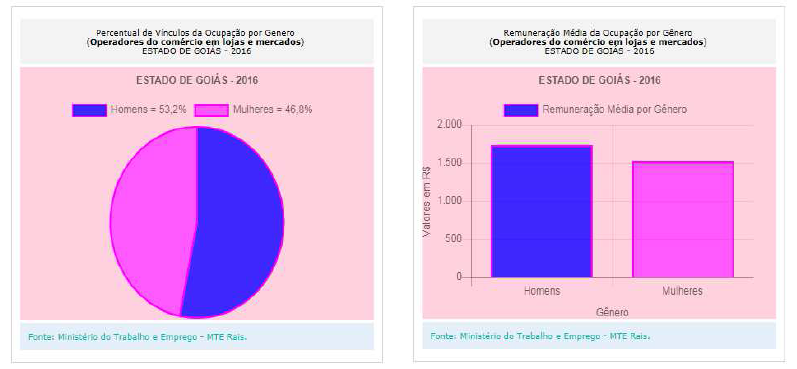
Disponível em: http://profissoes.imb.go.gov.br/profissoes/view/graficos.php?tipo=1&loc_fam=5211%20- %20Operadores%20do%20com%E9rcio%20em%20lojas%20e%20mercados. Acesso em: 23 abr. 2019.
Considerando os dados apresentados pelos gráficos, constata-se que
(JESUS, Carolina Maria de. Quarto de despejo. São Paulo: Ática, 2004. p.160)
A partir dos estudos sobre os reflexos do crescimento urbano desordenado, constata-se
Um potenciômetro foi construído utilizando-se dois fios resistivos ôhmicos, paralelos, de mesmo comprimento e mesma resistência elétrica. Os fios são tocados por um contato móvel, de resistência desprezível, que desliza perpendicularmente aos fios, tornando todo o conjunto um potenciômetro. Este potenciômetro está ligado a um gerador de 100 V e a um amperímetro, ambos ideais.
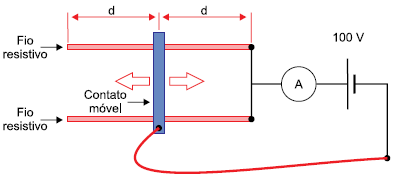
Quando o contato móvel do potenciômetro se encontra na posição indicada na figura, o amperímetro indica a passagem de uma corrente elétrica de 5 A.
Individualmente, cada um dos fios resistivos que constituem
o potenciômetro apresenta, entre seus extremos, a resistência elétrica de
A figura mostra uma esfera, de 250 g, em repouso, apoiada sobre uma mola ideal comprimida. Ao ser liberada, a mola transfere 50 J à esfera, que inicia, a partir do repouso e da altura indicada na figura, um movimento vertical para cima.
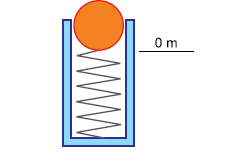
Desprezando-se a resistência do ar e adotando-se g=10 m/s2
,
a máxima altura que a esfera alcança, em relação à altura de
sua partida, é
De dentro do ônibus, que ainda fazia manobras para estacionar no ponto de parada, o rapaz, atrasado para o encontro com a namorada, a vê indo embora pela calçada. Quando finalmente o ônibus para e o rapaz desce, a distância que o separa da namorada é de 180 m.
Sabendo que a namorada do rapaz se movimenta com velocidade constante de 0,5 m/s e que o rapaz pode correr com velocidade constante de 5 m/s, o tempo mínimo para que ele consiga alcançá-la é de
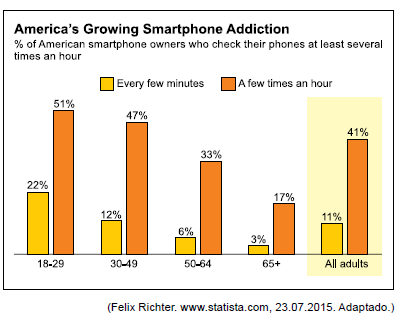
According to the chart,
An increasing body of evidence suggests that the time we spend on our smartphones is interfering with our sleep, self-esteem, relationships, memory, attention spans, creativity, productivity and problem-solving and decision-making skills. But there is another reason for us to rethink our relationships with our devices. By chronically raising levels of cortisol, the body’s main stress hormone, our phones may be threatening our health and shortening our lives.
If they happened only occasionally, phone-induced cortisol spikes might not matter. But the average American spends four hours a day staring at their smartphone and keeps it within arm’s reach nearly all the time, according to a tracking app called Moment.
“Your cortisol levels are elevated when your phone is in sight or nearby, or when you hear it or even think you hear it,” says David Greenfield, professor of clinical psychiatry at the University of Connecticut School of Medicine and founder of the Center for Internet and Technology Addiction. “It’s a stress response, and it feels unpleasant, and the body’s natural response is to want to check the phone to make the stress go away.”
But while doing so might soothe you for a second, it probably will make things worse in the long run. Any time you check your phone, you’re likely to find something else stressful waiting for you, leading to another spike in cortisol and another craving to check your phone to make your anxiety go away. This cycle, when continuously reinforced, leads to chronically elevated cortisol levels. And chronically elevated cortisol levels have been tied to an increased risk of serious health problems, including depression, obesity, metabolic syndrome, Type 2 diabetes, fertility issues, high blood pressure, heart attack, dementia and stroke.
(Catherine Price. www.nytimes.com, 24.04.2019. Adaptado.)
An increasing body of evidence suggests that the time we spend on our smartphones is interfering with our sleep, self-esteem, relationships, memory, attention spans, creativity, productivity and problem-solving and decision-making skills. But there is another reason for us to rethink our relationships with our devices. By chronically raising levels of cortisol, the body’s main stress hormone, our phones may be threatening our health and shortening our lives.
If they happened only occasionally, phone-induced cortisol spikes might not matter. But the average American spends four hours a day staring at their smartphone and keeps it within arm’s reach nearly all the time, according to a tracking app called Moment.
“Your cortisol levels are elevated when your phone is in sight or nearby, or when you hear it or even think you hear it,” says David Greenfield, professor of clinical psychiatry at the University of Connecticut School of Medicine and founder of the Center for Internet and Technology Addiction. “It’s a stress response, and it feels unpleasant, and the body’s natural response is to want to check the phone to make the stress go away.”
But while doing so might soothe you for a second, it probably will make things worse in the long run. Any time you check your phone, you’re likely to find something else stressful waiting for you, leading to another spike in cortisol and another craving to check your phone to make your anxiety go away. This cycle, when continuously reinforced, leads to chronically elevated cortisol levels. And chronically elevated cortisol levels have been tied to an increased risk of serious health problems, including depression, obesity, metabolic syndrome, Type 2 diabetes, fertility issues, high blood pressure, heart attack, dementia and stroke.
(Catherine Price. www.nytimes.com, 24.04.2019. Adaptado.)
An increasing body of evidence suggests that the time we spend on our smartphones is interfering with our sleep, self-esteem, relationships, memory, attention spans, creativity, productivity and problem-solving and decision-making skills. But there is another reason for us to rethink our relationships with our devices. By chronically raising levels of cortisol, the body’s main stress hormone, our phones may be threatening our health and shortening our lives.
If they happened only occasionally, phone-induced cortisol spikes might not matter. But the average American spends four hours a day staring at their smartphone and keeps it within arm’s reach nearly all the time, according to a tracking app called Moment.
“Your cortisol levels are elevated when your phone is in sight or nearby, or when you hear it or even think you hear it,” says David Greenfield, professor of clinical psychiatry at the University of Connecticut School of Medicine and founder of the Center for Internet and Technology Addiction. “It’s a stress response, and it feels unpleasant, and the body’s natural response is to want to check the phone to make the stress go away.”
But while doing so might soothe you for a second, it probably will make things worse in the long run. Any time you check your phone, you’re likely to find something else stressful waiting for you, leading to another spike in cortisol and another craving to check your phone to make your anxiety go away. This cycle, when continuously reinforced, leads to chronically elevated cortisol levels. And chronically elevated cortisol levels have been tied to an increased risk of serious health problems, including depression, obesity, metabolic syndrome, Type 2 diabetes, fertility issues, high blood pressure, heart attack, dementia and stroke.
(Catherine Price. www.nytimes.com, 24.04.2019. Adaptado.)
No trecho do primeiro parágrafo “But there is another reason for us to rethink our relationships with our devices”, o termo sublinhado introduz uma
An increasing body of evidence suggests that the time we spend on our smartphones is interfering with our sleep, self-esteem, relationships, memory, attention spans, creativity, productivity and problem-solving and decision-making skills. But there is another reason for us to rethink our relationships with our devices. By chronically raising levels of cortisol, the body’s main stress hormone, our phones may be threatening our health and shortening our lives.
If they happened only occasionally, phone-induced cortisol spikes might not matter. But the average American spends four hours a day staring at their smartphone and keeps it within arm’s reach nearly all the time, according to a tracking app called Moment.
“Your cortisol levels are elevated when your phone is in sight or nearby, or when you hear it or even think you hear it,” says David Greenfield, professor of clinical psychiatry at the University of Connecticut School of Medicine and founder of the Center for Internet and Technology Addiction. “It’s a stress response, and it feels unpleasant, and the body’s natural response is to want to check the phone to make the stress go away.”
But while doing so might soothe you for a second, it probably will make things worse in the long run. Any time you check your phone, you’re likely to find something else stressful waiting for you, leading to another spike in cortisol and another craving to check your phone to make your anxiety go away. This cycle, when continuously reinforced, leads to chronically elevated cortisol levels. And chronically elevated cortisol levels have been tied to an increased risk of serious health problems, including depression, obesity, metabolic syndrome, Type 2 diabetes, fertility issues, high blood pressure, heart attack, dementia and stroke.
(Catherine Price. www.nytimes.com, 24.04.2019. Adaptado.)
Num mundo cada vez mais globalizado, o fato de as ciências naturais falarem uma única língua universal e operarem sob uma única metodologia ajudou paradoxalmente a concentrá-las nos poucos centros com recursos adequados para seu desenvolvimento, isto é, nuns poucos Estados ricos altamente desenvolvidos. Os cérebros do mundo, que na Era das Catástrofes (entre 1914 e 1945) fugiram da Europa por motivos políticos, desde 1945 foram drenados dos países pobres para os ricos por motivos sobretudo econômicos. Nas décadas de 1970 e 1980, os países capitalistas desenvolvidos gastaram quase três quartos de todos os orçamentos do mundo em pesquisa.
(Eric Hobsbawm. Era dos Extremos, 1995. Adaptado.)
De acordo com o excerto, a globalização
 Conheça nossos planos