Selecionar segmento
Estude com questões de diferentes segmentos
Atenção: Isso limpará todos os campos já preenchidos no filtro!
Foram encontradas 36.666 questões
Resolva questões gratuitamente!
Junte-se a mais de 4 milhões de concurseiros!


Ano: 2019
Banca:
VUNESP
Órgão:
SÃO CAMILO
Prova:
VUNESP - 2019 - SÃO CAMILO - Processo Seletivo - 2º Semestre de 2019 - Medicina |
Q1798268
Física
Um raio de luz monocromático propaga-se pelo ar e incide
em um bloco de cristal de quartzo homogêneo sob um ângulo
de incidência de 50º, passando a propagar-se pelo cristal,
conforme a figura 1. No gráfico da figura 2 está representada
a velocidade de propagação da luz, em função do tempo, no
ar e no interior do cristal.
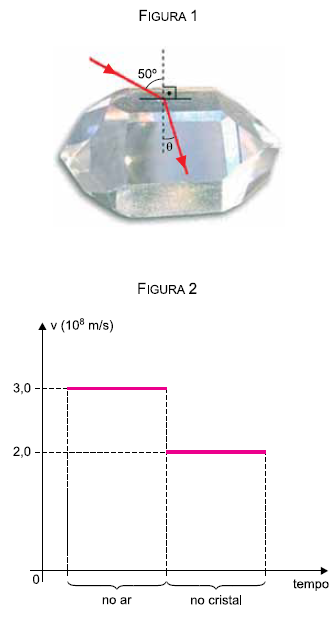
Considerando sen 50º = 0,76, o valor de sen θ, em que θ é o ângulo indicado na figura 1, é aproximadamente
Considerando sen 50º = 0,76, o valor de sen θ, em que θ é o ângulo indicado na figura 1, é aproximadamente
Ano: 2019
Banca:
VUNESP
Órgão:
SÃO CAMILO
Prova:
VUNESP - 2019 - SÃO CAMILO - Processo Seletivo - 2º Semestre de 2019 - Medicina |
Q1798267
Física
Em uma fábrica de artefatos para festa, as bexigas são
infladas com o gás hélio armazenado em um cilindro rígido
de volume 0,2 m³
sob pressão de 192 atm. Sabendo que o
volume de cada bexiga é de 0,032 m³, que dentro de cada
uma delas o gás fica submetido a uma pressão de 1,2 atm e
considerando a mesma temperatura do gás no cilindro e nas
bexigas, o número de bexigas que podem ser infladas com o
gás contido no cilindro é
Ano: 2019
Banca:
VUNESP
Órgão:
SÃO CAMILO
Prova:
VUNESP - 2019 - SÃO CAMILO - Processo Seletivo - 2º Semestre de 2019 - Medicina |
Q1798266
Física
Um cubo de madeira de aresta 0,4 m e densidade 600 kg/m³
flutua, em equilíbrio, em água pura (figura 1). Um bloco de
massa m é apoiado sobre esse cubo de modo que o sistema
formado por eles passe a flutuar em equilíbrio com o topo do
cubo de madeira no nível da superfície da água (figura 2).
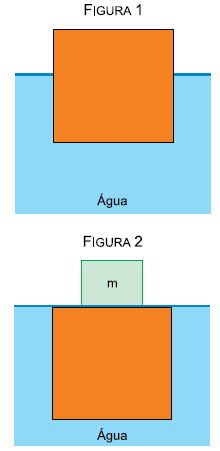
Considerando a densidade da água igual a 10³kg/m³ , a massa m do bloco colocado sobre o cubo de madeira é
Considerando a densidade da água igual a 10³kg/m³ , a massa m do bloco colocado sobre o cubo de madeira é
Ano: 2019
Banca:
VUNESP
Órgão:
SÃO CAMILO
Prova:
VUNESP - 2019 - SÃO CAMILO - Processo Seletivo - 2º Semestre de 2019 - Medicina |
Q1798265
Física
Uma composição, formada por uma locomotiva de massa M
e um vagão A, move-se para direita por trilhos retilíneos
com velocidade de 3 m/s. Para acoplar-se a outro vagão B,
que se move nos mesmos trilhos e no mesmo sentido que a
locomotiva com velocidade de 2 m/s, essa composição colide
inelasticamente com ele.
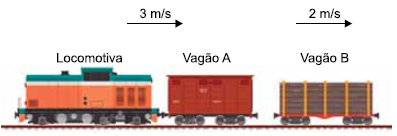
Sabendo que as massas dos vagões A e B são mA = mB = 2 × 10⁴ kg e que imediatamente após a colisão o conjunto formado pela locomotiva e pelos dois vagões se move com velocidade 2,8 m/s, a massa M da locomotiva é
Sabendo que as massas dos vagões A e B são mA = mB = 2 × 10⁴ kg e que imediatamente após a colisão o conjunto formado pela locomotiva e pelos dois vagões se move com velocidade 2,8 m/s, a massa M da locomotiva é
Ano: 2019
Banca:
VUNESP
Órgão:
SÃO CAMILO
Prova:
VUNESP - 2019 - SÃO CAMILO - Processo Seletivo - 2º Semestre de 2019 - Medicina |
Q1798264
Física
A figura mostra uma atleta de salto com vara, em repouso,
antes de iniciar sua corrida para o salto. Ela segura em suas
mãos, na posição horizontal, uma vara homogênea de 6 m de
comprimento e de 4 kg de massa.
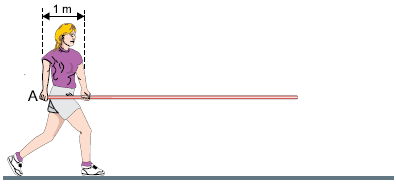
Adotando g = 10 m/s² , a intensidade da força vertical que a atleta deve fazer com sua mão direita no ponto A para manter a vara em equilíbrio na posição mostrada na figura é
Adotando g = 10 m/s² , a intensidade da força vertical que a atleta deve fazer com sua mão direita no ponto A para manter a vara em equilíbrio na posição mostrada na figura é
Ano: 2019
Banca:
VUNESP
Órgão:
SÃO CAMILO
Prova:
VUNESP - 2019 - SÃO CAMILO - Processo Seletivo - 2º Semestre de 2019 - Medicina |
Q1798263
Física
Dois blocos, A e B, de massas mA = 6 kg e mB = 4 kg, são
conectados por um fio que passa por uma polia fixa, como
representado na figura. Quando o corpo A é abandonado, a
partir do repouso, de uma altura h = 2 m do solo horizontal, o
sistema move-se livre de resistência do ar.
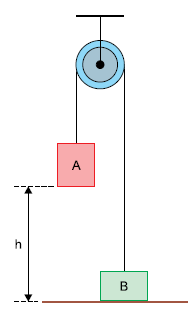
Considerando a polia e o fio ideais e g = 10 m/s² , a velocidade do bloco B quando o bloco A atinge o solo é
Considerando a polia e o fio ideais e g = 10 m/s² , a velocidade do bloco B quando o bloco A atinge o solo é
Ano: 2019
Banca:
VUNESP
Órgão:
SÃO CAMILO
Prova:
VUNESP - 2019 - SÃO CAMILO - Processo Seletivo - 2º Semestre de 2019 - Medicina |
Q1798262
Física
Depois de ter feito uma viagem entre duas cidades, o motorista calculou sua velocidade escalar média no percurso considerando seu deslocamento escalar e o intervalo de tempo
gasto. Após alguns cálculos, ele concluiu que se tivesse feito
a mesma viagem, pela mesma trajetória, com uma velocidade escalar média 25% maior, o intervalo de tempo gasto
teria sido reduzido em
Ano: 2019
Banca:
VUNESP
Órgão:
SÃO CAMILO
Prova:
VUNESP - 2019 - SÃO CAMILO - Processo Seletivo - 2º Semestre de 2019 - Medicina |
Q1798261
Inglês
Texto associado


Leia a tirinha e o quadrinho para responder à questão.
(http://leadership-learning-with-dilbert.blogspot.com)
(www.glasbergen.com. Adaptado.)
Na última fala da tira “I hate him, but I also love him”, os
termos sublinhados referem-se
Ano: 2019
Banca:
VUNESP
Órgão:
SÃO CAMILO
Prova:
VUNESP - 2019 - SÃO CAMILO - Processo Seletivo - 2º Semestre de 2019 - Medicina |
Q1798259
Inglês
Texto associado

Leia o texto para responder à questão.
Worshiping the false idols of wellness
Before we go further, I’d like to clear something up:
wellness is not the same as medicine. Medicine is the science
of reducing death and disease, and increasing long and
healthy lives. Wellness used to mean a blend of health and
happiness. Something that made you feel good or brought
joy and was not medically harmful — perhaps a massage or
a walk along the beach. But it has become a false antidote to
the fear of modern life and death.
The wellness industry takes medical terminology, such as
“inflammation” or “free radicals,” and polishes it to the point of
incomprehension. The resulting product is a “Do It Yourself”
medicine for longevity that comes with a confidence that
science can only aspire to achieve.
Let’s take the trend of adding a pinch of activated charcoal
to your food or drink. While the black color is strikingly
unexpected and alluring, it’s sold as a supposed “detox.”
Guess what? It has the same efficacy as a spell from the local
witch. Maybe it’s a matter of aesthetics. Wellness potions in
beautiful jars with untested ingredients of unknown purity are
practically packaged for Instagram.
Medicine and religion have long been deeply intertwined,
and it’s only relatively recently that they have separated.
The wellness-industrial complex seeks to resurrect that
connection. It’s like a medical throwback, as if the idyllic days
of health were 5,000 years ago. Ancient cleansing rituals
with a modern twist — supplements, useless products and
scientifically unsupported tests.
The dietary supplements that are the backbone of
wellness make up a $30 billion a year business despite studies
showing they have no value for longevity (only a few vitamins
have proven medical benefits, like folic acid before and during
pregnancy and vitamin D for older people at risk of falling).
Modern medicine wants you to get your micronutrients from
your diet, which is inarguably the most natural source.
Yet the wellness-industrial complex has managed to
pervert that narrative and make supplements a necessary tool
for nonsensical practices, such as boosting the immune system
or fighting the war on inflammation. The resulting fluorescent
yellow urine from multivitamins may provide a false sense of
efficacy, but it’s a fool’s gold (and the consequence of excessive
B2 that couldn’t possibly be absorbed). So what’s the harm of
spending money on charcoal for non-existent toxins or vitamins
for expensive urine? Here’s what: the placebo effect or “trying
something natural” can lead people with serious illnesses to
postpone effective medical care. However, I admit that doctors
can learn something from wellness. It’s clear that some people
are looking for healers, so we must find ways to serve that need
that are medically ethical.
(Jen Gunter. www.nytimes.com, 01.08.2018. Adaptado.)
De acordo com o último parágrafo, as práticas promovidas
pela indústria do bem-estar
Ano: 2019
Banca:
VUNESP
Órgão:
SÃO CAMILO
Prova:
VUNESP - 2019 - SÃO CAMILO - Processo Seletivo - 2º Semestre de 2019 - Medicina |
Q1798258
Inglês
Texto associado
Leia o texto para responder à questão.
Worshiping the false idols of wellness
Before we go further, I’d like to clear something up:
wellness is not the same as medicine. Medicine is the science
of reducing death and disease, and increasing long and
healthy lives. Wellness used to mean a blend of health and
happiness. Something that made you feel good or brought
joy and was not medically harmful — perhaps a massage or
a walk along the beach. But it has become a false antidote to
the fear of modern life and death.
The wellness industry takes medical terminology, such as
“inflammation” or “free radicals,” and polishes it to the point of
incomprehension. The resulting product is a “Do It Yourself”
medicine for longevity that comes with a confidence that
science can only aspire to achieve.
Let’s take the trend of adding a pinch of activated charcoal
to your food or drink. While the black color is strikingly
unexpected and alluring, it’s sold as a supposed “detox.”
Guess what? It has the same efficacy as a spell from the local
witch. Maybe it’s a matter of aesthetics. Wellness potions in
beautiful jars with untested ingredients of unknown purity are
practically packaged for Instagram.
Medicine and religion have long been deeply intertwined,
and it’s only relatively recently that they have separated.
The wellness-industrial complex seeks to resurrect that
connection. It’s like a medical throwback, as if the idyllic days
of health were 5,000 years ago. Ancient cleansing rituals
with a modern twist — supplements, useless products and
scientifically unsupported tests.
The dietary supplements that are the backbone of
wellness make up a $30 billion a year business despite studies
showing they have no value for longevity (only a few vitamins
have proven medical benefits, like folic acid before and during
pregnancy and vitamin D for older people at risk of falling).
Modern medicine wants you to get your micronutrients from
your diet, which is inarguably the most natural source.
Yet the wellness-industrial complex has managed to
pervert that narrative and make supplements a necessary tool
for nonsensical practices, such as boosting the immune system
or fighting the war on inflammation. The resulting fluorescent
yellow urine from multivitamins may provide a false sense of
efficacy, but it’s a fool’s gold (and the consequence of excessive
B2 that couldn’t possibly be absorbed). So what’s the harm of
spending money on charcoal for non-existent toxins or vitamins
for expensive urine? Here’s what: the placebo effect or “trying
something natural” can lead people with serious illnesses to
postpone effective medical care. However, I admit that doctors
can learn something from wellness. It’s clear that some people
are looking for healers, so we must find ways to serve that need
that are medically ethical.
(Jen Gunter. www.nytimes.com, 01.08.2018. Adaptado.)
In the fifth paragraph, the text in brackets
Ano: 2019
Banca:
VUNESP
Órgão:
SÃO CAMILO
Prova:
VUNESP - 2019 - SÃO CAMILO - Processo Seletivo - 2º Semestre de 2019 - Medicina |
Q1798256
Inglês
Texto associado
Leia o texto para responder à questão.
Worshiping the false idols of wellness
Before we go further, I’d like to clear something up:
wellness is not the same as medicine. Medicine is the science
of reducing death and disease, and increasing long and
healthy lives. Wellness used to mean a blend of health and
happiness. Something that made you feel good or brought
joy and was not medically harmful — perhaps a massage or
a walk along the beach. But it has become a false antidote to
the fear of modern life and death.
The wellness industry takes medical terminology, such as
“inflammation” or “free radicals,” and polishes it to the point of
incomprehension. The resulting product is a “Do It Yourself”
medicine for longevity that comes with a confidence that
science can only aspire to achieve.
Let’s take the trend of adding a pinch of activated charcoal
to your food or drink. While the black color is strikingly
unexpected and alluring, it’s sold as a supposed “detox.”
Guess what? It has the same efficacy as a spell from the local
witch. Maybe it’s a matter of aesthetics. Wellness potions in
beautiful jars with untested ingredients of unknown purity are
practically packaged for Instagram.
Medicine and religion have long been deeply intertwined,
and it’s only relatively recently that they have separated.
The wellness-industrial complex seeks to resurrect that
connection. It’s like a medical throwback, as if the idyllic days
of health were 5,000 years ago. Ancient cleansing rituals
with a modern twist — supplements, useless products and
scientifically unsupported tests.
The dietary supplements that are the backbone of
wellness make up a $30 billion a year business despite studies
showing they have no value for longevity (only a few vitamins
have proven medical benefits, like folic acid before and during
pregnancy and vitamin D for older people at risk of falling).
Modern medicine wants you to get your micronutrients from
your diet, which is inarguably the most natural source.
Yet the wellness-industrial complex has managed to
pervert that narrative and make supplements a necessary tool
for nonsensical practices, such as boosting the immune system
or fighting the war on inflammation. The resulting fluorescent
yellow urine from multivitamins may provide a false sense of
efficacy, but it’s a fool’s gold (and the consequence of excessive
B2 that couldn’t possibly be absorbed). So what’s the harm of
spending money on charcoal for non-existent toxins or vitamins
for expensive urine? Here’s what: the placebo effect or “trying
something natural” can lead people with serious illnesses to
postpone effective medical care. However, I admit that doctors
can learn something from wellness. It’s clear that some people
are looking for healers, so we must find ways to serve that need
that are medically ethical.
(Jen Gunter. www.nytimes.com, 01.08.2018. Adaptado.)
De acordo com o quarto parágrafo, “wellness”, ou seja, a
indústria do bem-estar,
Ano: 2019
Banca:
VUNESP
Órgão:
SÃO CAMILO
Prova:
VUNESP - 2019 - SÃO CAMILO - Processo Seletivo - 2º Semestre de 2019 - Medicina |
Q1798255
Inglês
Texto associado
Leia o texto para responder à questão.
Worshiping the false idols of wellness
Before we go further, I’d like to clear something up:
wellness is not the same as medicine. Medicine is the science
of reducing death and disease, and increasing long and
healthy lives. Wellness used to mean a blend of health and
happiness. Something that made you feel good or brought
joy and was not medically harmful — perhaps a massage or
a walk along the beach. But it has become a false antidote to
the fear of modern life and death.
The wellness industry takes medical terminology, such as
“inflammation” or “free radicals,” and polishes it to the point of
incomprehension. The resulting product is a “Do It Yourself”
medicine for longevity that comes with a confidence that
science can only aspire to achieve.
Let’s take the trend of adding a pinch of activated charcoal
to your food or drink. While the black color is strikingly
unexpected and alluring, it’s sold as a supposed “detox.”
Guess what? It has the same efficacy as a spell from the local
witch. Maybe it’s a matter of aesthetics. Wellness potions in
beautiful jars with untested ingredients of unknown purity are
practically packaged for Instagram.
Medicine and religion have long been deeply intertwined,
and it’s only relatively recently that they have separated.
The wellness-industrial complex seeks to resurrect that
connection. It’s like a medical throwback, as if the idyllic days
of health were 5,000 years ago. Ancient cleansing rituals
with a modern twist — supplements, useless products and
scientifically unsupported tests.
The dietary supplements that are the backbone of
wellness make up a $30 billion a year business despite studies
showing they have no value for longevity (only a few vitamins
have proven medical benefits, like folic acid before and during
pregnancy and vitamin D for older people at risk of falling).
Modern medicine wants you to get your micronutrients from
your diet, which is inarguably the most natural source.
Yet the wellness-industrial complex has managed to
pervert that narrative and make supplements a necessary tool
for nonsensical practices, such as boosting the immune system
or fighting the war on inflammation. The resulting fluorescent
yellow urine from multivitamins may provide a false sense of
efficacy, but it’s a fool’s gold (and the consequence of excessive
B2 that couldn’t possibly be absorbed). So what’s the harm of
spending money on charcoal for non-existent toxins or vitamins
for expensive urine? Here’s what: the placebo effect or “trying
something natural” can lead people with serious illnesses to
postpone effective medical care. However, I admit that doctors
can learn something from wellness. It’s clear that some people
are looking for healers, so we must find ways to serve that need
that are medically ethical.
(Jen Gunter. www.nytimes.com, 01.08.2018. Adaptado.)
Assinale a alternativa que apresenta o trecho do terceiro parágrafo que indica que o carvão ativado é inócuo para a saúde.
Ano: 2019
Banca:
VUNESP
Órgão:
SÃO CAMILO
Prova:
VUNESP - 2019 - SÃO CAMILO - Processo Seletivo - 2º Semestre de 2019 - Medicina |
Q1798253
Inglês
Texto associado
Leia o texto para responder à questão.
Worshiping the false idols of wellness
Before we go further, I’d like to clear something up:
wellness is not the same as medicine. Medicine is the science
of reducing death and disease, and increasing long and
healthy lives. Wellness used to mean a blend of health and
happiness. Something that made you feel good or brought
joy and was not medically harmful — perhaps a massage or
a walk along the beach. But it has become a false antidote to
the fear of modern life and death.
The wellness industry takes medical terminology, such as
“inflammation” or “free radicals,” and polishes it to the point of
incomprehension. The resulting product is a “Do It Yourself”
medicine for longevity that comes with a confidence that
science can only aspire to achieve.
Let’s take the trend of adding a pinch of activated charcoal
to your food or drink. While the black color is strikingly
unexpected and alluring, it’s sold as a supposed “detox.”
Guess what? It has the same efficacy as a spell from the local
witch. Maybe it’s a matter of aesthetics. Wellness potions in
beautiful jars with untested ingredients of unknown purity are
practically packaged for Instagram.
Medicine and religion have long been deeply intertwined,
and it’s only relatively recently that they have separated.
The wellness-industrial complex seeks to resurrect that
connection. It’s like a medical throwback, as if the idyllic days
of health were 5,000 years ago. Ancient cleansing rituals
with a modern twist — supplements, useless products and
scientifically unsupported tests.
The dietary supplements that are the backbone of
wellness make up a $30 billion a year business despite studies
showing they have no value for longevity (only a few vitamins
have proven medical benefits, like folic acid before and during
pregnancy and vitamin D for older people at risk of falling).
Modern medicine wants you to get your micronutrients from
your diet, which is inarguably the most natural source.
Yet the wellness-industrial complex has managed to
pervert that narrative and make supplements a necessary tool
for nonsensical practices, such as boosting the immune system
or fighting the war on inflammation. The resulting fluorescent
yellow urine from multivitamins may provide a false sense of
efficacy, but it’s a fool’s gold (and the consequence of excessive
B2 that couldn’t possibly be absorbed). So what’s the harm of
spending money on charcoal for non-existent toxins or vitamins
for expensive urine? Here’s what: the placebo effect or “trying
something natural” can lead people with serious illnesses to
postpone effective medical care. However, I admit that doctors
can learn something from wellness. It’s clear that some people
are looking for healers, so we must find ways to serve that need
that are medically ethical.
(Jen Gunter. www.nytimes.com, 01.08.2018. Adaptado.)
O trecho inicial do primeiro parágrafo “Before we go further”
tem sentido equivalente, em português, a
Ano: 2019
Banca:
VUNESP
Órgão:
SÃO CAMILO
Prova:
VUNESP - 2019 - SÃO CAMILO - Processo Seletivo - 2º Semestre de 2019 - Medicina |
Q1798252
Inglês
Texto associado
Leia o texto para responder à questão.
Worshiping the false idols of wellness
Before we go further, I’d like to clear something up:
wellness is not the same as medicine. Medicine is the science
of reducing death and disease, and increasing long and
healthy lives. Wellness used to mean a blend of health and
happiness. Something that made you feel good or brought
joy and was not medically harmful — perhaps a massage or
a walk along the beach. But it has become a false antidote to
the fear of modern life and death.
The wellness industry takes medical terminology, such as
“inflammation” or “free radicals,” and polishes it to the point of
incomprehension. The resulting product is a “Do It Yourself”
medicine for longevity that comes with a confidence that
science can only aspire to achieve.
Let’s take the trend of adding a pinch of activated charcoal
to your food or drink. While the black color is strikingly
unexpected and alluring, it’s sold as a supposed “detox.”
Guess what? It has the same efficacy as a spell from the local
witch. Maybe it’s a matter of aesthetics. Wellness potions in
beautiful jars with untested ingredients of unknown purity are
practically packaged for Instagram.
Medicine and religion have long been deeply intertwined,
and it’s only relatively recently that they have separated.
The wellness-industrial complex seeks to resurrect that
connection. It’s like a medical throwback, as if the idyllic days
of health were 5,000 years ago. Ancient cleansing rituals
with a modern twist — supplements, useless products and
scientifically unsupported tests.
The dietary supplements that are the backbone of
wellness make up a $30 billion a year business despite studies
showing they have no value for longevity (only a few vitamins
have proven medical benefits, like folic acid before and during
pregnancy and vitamin D for older people at risk of falling).
Modern medicine wants you to get your micronutrients from
your diet, which is inarguably the most natural source.
Yet the wellness-industrial complex has managed to
pervert that narrative and make supplements a necessary tool
for nonsensical practices, such as boosting the immune system
or fighting the war on inflammation. The resulting fluorescent
yellow urine from multivitamins may provide a false sense of
efficacy, but it’s a fool’s gold (and the consequence of excessive
B2 that couldn’t possibly be absorbed). So what’s the harm of
spending money on charcoal for non-existent toxins or vitamins
for expensive urine? Here’s what: the placebo effect or “trying
something natural” can lead people with serious illnesses to
postpone effective medical care. However, I admit that doctors
can learn something from wellness. It’s clear that some people
are looking for healers, so we must find ways to serve that need
that are medically ethical.
(Jen Gunter. www.nytimes.com, 01.08.2018. Adaptado.)
According to the first paragraph, medicine and wellness
Ano: 2019
Banca:
VUNESP
Órgão:
SÃO CAMILO
Prova:
VUNESP - 2019 - SÃO CAMILO - Processo Seletivo - 2º Semestre de 2019 - Medicina |
Q1798251
Conhecimentos Gerais
O volume de investimentos diretos do exterior passou
de uma média anual de 17,6 milhões de dólares no período
1947-1955, para 106 milhões entre 1956-1962; enquanto o
valor médio dos empréstimos aumentou, nos períodos citados, de 202 milhões de dólares anuais para 549,2 milhões.
(Tania Regina de Luca. Indústria e trabalho na história do Brasil, 2001.)
Os dados apresentados no texto correspondem
(Tania Regina de Luca. Indústria e trabalho na história do Brasil, 2001.)
Os dados apresentados no texto correspondem
Ano: 2019
Banca:
VUNESP
Órgão:
SÃO CAMILO
Prova:
VUNESP - 2019 - SÃO CAMILO - Processo Seletivo - 2º Semestre de 2019 - Medicina |
Q1798250
Conhecimentos Gerais
O regime do apartheid, vigente na África do Sul entre as
décadas de 1940 e 1990,
Ano: 2019
Banca:
VUNESP
Órgão:
SÃO CAMILO
Prova:
VUNESP - 2019 - SÃO CAMILO - Processo Seletivo - 2º Semestre de 2019 - Medicina |
Q1798249
Conhecimentos Gerais
Analise a imagem da tela Abaporu, pintada por Tarsila do
Amaral em 1928.
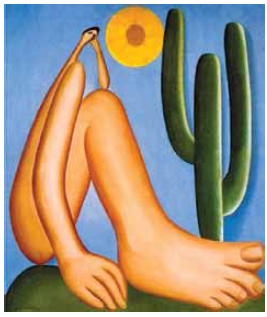
(https://malba.org.ar)
Sobre a tela, pode-se afirmar que:
(https://malba.org.ar)
Sobre a tela, pode-se afirmar que:
Ano: 2019
Banca:
VUNESP
Órgão:
SÃO CAMILO
Prova:
VUNESP - 2019 - SÃO CAMILO - Processo Seletivo - 2º Semestre de 2019 - Medicina |
Q1798248
Conhecimentos Gerais
A Constituição brasileira de 1824 estabelecia quatro poderes:
Executivo, Legislativo, Judiciário e Moderador. Essa divisão
Ano: 2019
Banca:
VUNESP
Órgão:
SÃO CAMILO
Prova:
VUNESP - 2019 - SÃO CAMILO - Processo Seletivo - 2º Semestre de 2019 - Medicina |
Q1798247
História
— De volta à França, Bonaparte é visto como o salvador por toda uma facção, mas também por um grande número de capitalistas. Ele, por sua vez, prepara o golpe de Estado, um golpe de Estado militar que acontece no dia 18 Brumário do ano VIII (9 de novembro de 1799), após o que os deputados são afastados e ele assume o cargo de primeiro cônsul. Um poder que ele vai consolidar entre 1800 e 1804, até se tornar imperador.
— Então é o fim da Revolução?
— Não e sim.
(Michel Vovelle. A Revolução Francesa explicada
à minha neta, 2007. Adaptado.)
A ambiguidade da última frase é explicada pelo fato de que Napoleão Bonaparte
Ano: 2019
Banca:
VUNESP
Órgão:
SÃO CAMILO
Prova:
VUNESP - 2019 - SÃO CAMILO - Processo Seletivo - 2º Semestre de 2019 - Medicina |
Q1798246
História
Texto associado
Leia o texto para responder à questão.
No concernente à mão de obra, a economia colonial hispano-americana baseou-se em variadas formas de trabalho
compulsório.
A escravidão indígena teve, no conjunto, escassa importância, salvo no “ensaio antilhano”, a inícios do século XVI,
e nas regiões de “índios bravos”, reduzidos à escravidão
quando aprisionados em guerra. A escravização dos rebeldes
(“guerra justa”) era, aliás, a única via de legitimação da escravidão indígena, pois desde cedo a Coroa e a Igreja trataram,
com relativo êxito, de combater tais práticas. Mas o sucesso
desta política deveu-se, em grande medida, à existência
de sistemas tributários pré-coloniais no México, na América
Central e nos Andes.
(Ronaldo Vainfas. Economia e sociedade na
América Espanhola, 1984. Adaptado.)
Uma semelhança e uma diferença entre o panorama descrito
no segundo parágrafo do texto e a experiência da colonização portuguesa no Brasil são, respectivamente:
 Conheça nossos planos