Foram encontradas 1.619 questões
Resolva questões gratuitamente!
Junte-se a mais de 4 milhões de concurseiros!


Texto para a questão

Mário Quintana, As cem melhores crônicas brasileiras.
*Glossário:
estremunhado: mal acordado.
chiru: que ou aquele que tem pele morena, traços acaboclados
(regionalismo: Sul do Brasil).
Texto para a questão
Mário Quintana, As cem melhores crônicas brasileiras.
*Glossário:
estremunhado: mal acordado.
chiru: que ou aquele que tem pele morena, traços acaboclados
(regionalismo: Sul do Brasil).
Texto para a questão
Mário Quintana, As cem melhores crônicas brasileiras.
*Glossário:
estremunhado: mal acordado.
chiru: que ou aquele que tem pele morena, traços acaboclados
(regionalismo: Sul do Brasil).
Texto para a questão
Mário Quintana, As cem melhores crônicas brasileiras.
*Glossário:
estremunhado: mal acordado.
chiru: que ou aquele que tem pele morena, traços acaboclados
(regionalismo: Sul do Brasil).
E. J. Hobsbawm. A era do capital 1848-1875.
A “ordem social” e as “ideias e credos” a que se refere o autor caracterizam-se, respectivamente, como
F. A. Varnhagen. História geral do Brasil, 1854.
O texto trata da Revolução pernambucana de 1817. Com relação a esse acontecimento é possível afirmar que os insurgentes
João Antonil. Cultura e opulência do Brasil por suas drogas e minas, 1711.
Esta frase indica que as riquezas minerais da colônia
Marc Bloch. Os caracteres originais da França rural, 1952.
Esta frase sobre o feudalismo trata
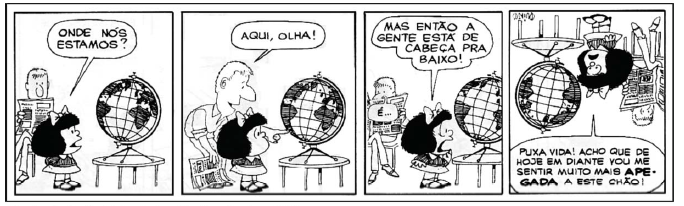
Fonte: Toda Mafalda. Quino. Martins Fontes, 1999.
A personagem Mafalda, que está em Buenos Aires, olha o globo em que o Norte está para cima e afirma: “a gente está
de cabeça pra baixo”. Quem olha para o céu noturno dessa posição geográfica não vê a estrela Polar, referência do
polo astronômico Norte, e sim o Cruzeiro do Sul, referência do polo astronômico Sul. Se os polos do globo de Mafalda
estivessem posicionados de acordo com os polos astronômicos, ou seja, o polo geográfico Sul apontando para o polo
astronômico Sul, seria correto afirmar que
IMC Classificação
até 18,4 Abaixo do peso de 18,5 a 24,9 Peso normal de 25,0 a 29,9 Sobrepeso de 30,0 a 34,9 Obesidade Grau 1 de 35,0 a 39,9 Obesidade Grau 2 a partir de 40,0 Obesidade Grau 3
Levando em conta esses dados, considere as seguintes afirmações:
I. Um indivíduo adulto de 1,70 m e 100 kg apresenta Obesidade Grau 1. II. Uma das estratégias para diminuir a obesidade na população é aumentar a altura média de seus indivíduos por meio de atividades físicas orientadas para adultos. III. Uma nova classificação que considere obesos somente indivíduos com IMC maior que 40 pode diminuir os problemas de saúde pública.
Está correto o que se afirma somente em
Relatório da Organização das Nações Unidas para a Agricultura e Alimentação [FAO], primeiro semestre de 2009.
Tendo em vista as questões levantadas pelo texto, é correto afirmar que
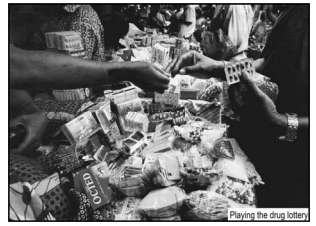
The perils of counterfeit drugs go way beyond being ripped off by dubious online pill-pushers. The World Health Organization (WHO) estimates that 50 per cent of all medicines sold online are worthless counterfeits. In developing nations fake pills may account for as much as 30 per cent of all drugs on the market. Even in the developed world, 1 per cent of medicines bought over the counter are fakes.
Some key events illustrate the risk these pose. In Nigeria, 2500 children died in 1995 after receiving fake meningitis vaccines. In Haiti, Bangladesh and Nigeria, around 400 people died in 1998 after being given paracetamol that had been prepared with diethylene glycol – a solvent used in wallpaper stripper. The fakers are nothing if not market-aware: in the face of an outbreak of H5N1 bird flu in 2005, they began offering fake Tamiflu.
What can be done? The WHO coordinates an umbrella body called the International Medical Products Anti-Counterfeiting Taskforce (IMPACT), an industry initiative that issues alerts when it finds anomalies in the medicine supply chain. Such events include sudden drops in wholesale prices, hinting at fakes coming onto the market, or the mimicking of anti-counterfeiting features on packaging, such as holograms or barcodes, says Nimo Ahmed, head of intelligence at the UK’s Medicine and Healthcare Products Regulatory Agency.
New Scientist, 10 July 2010, p. 18. Adaptado.
The perils of counterfeit drugs go way beyond being ripped off by dubious online pill-pushers. The World Health Organization (WHO) estimates that 50 per cent of all medicines sold online are worthless counterfeits. In developing nations fake pills may account for as much as 30 per cent of all drugs on the market. Even in the developed world, 1 per cent of medicines bought over the counter are fakes.
Some key events illustrate the risk these pose. In Nigeria, 2500 children died in 1995 after receiving fake meningitis vaccines. In Haiti, Bangladesh and Nigeria, around 400 people died in 1998 after being given paracetamol that had been prepared with diethylene glycol – a solvent used in wallpaper stripper. The fakers are nothing if not market-aware: in the face of an outbreak of H5N1 bird flu in 2005, they began offering fake Tamiflu.
What can be done? The WHO coordinates an umbrella body called the International Medical Products Anti-Counterfeiting Taskforce (IMPACT), an industry initiative that issues alerts when it finds anomalies in the medicine supply chain. Such events include sudden drops in wholesale prices, hinting at fakes coming onto the market, or the mimicking of anti-counterfeiting features on packaging, such as holograms or barcodes, says Nimo Ahmed, head of intelligence at the UK’s Medicine and Healthcare Products Regulatory Agency.
New Scientist, 10 July 2010, p. 18. Adaptado.
 Conheça nossos planos