Questões de Vestibular FAMERP 2025 para Vestibular - Conhecimentos Gerais
Foram encontradas 10 questões


Ano: 2025
Banca:
VUNESP
Órgão:
FAMERP
Prova:
VUNESP - 2025 - FAMERP - Vestibular - Conhecimentos Gerais |
Q4143779
Inglês
Texto associado
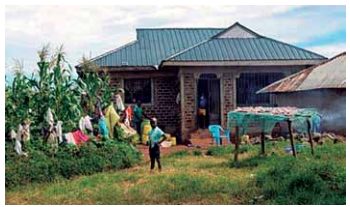
Leia o texto para responder à questão.
Of every 1,000 children born in Kenya, a country in East
Africa, 32 don’t make it to their first birthdays. Study after study
has explored how to improve those impressive numbers, in
Kenya and elsewhere. But a decade-long study on alleviating
poverty found a simple solution. Giving $1,000 to poor families
lowered infant mortality rates by nearly half, and deaths
in children under 5 by 45 percent. Those are much bigger
drops than have been credited to routine immunizations, for
example, or bed nets to prevent malaria.
“This is easily the biggest impact on child survival that
I’ve seen from an intervention that was designed to alleviate
poverty,” said Harsha Thirumurthy, an economist at the
University of Pennsylvania who was not involved in the work.
The decline in infant mortality is a “showstopping result,”
he said.
The outcomes suggest that delivering even smaller
amounts of money to families — especially those that live
near a hospital — immediately before or after the birth
of a child might allow women to seek medical care and
drastically improve their children’s chances of survival. More
than 100 low- and middle-income countries have explored
so-called cash transfers, especially after the pandemic
began. Generally, the experiments have found that giving
money to poor families improves school attendance, nutrition
and use of health services.
(Apoorva Mandavilli. www.nytimes.com, 18.08.2025. Adaptado.)
The main purpose of the text is to
Ano: 2025
Banca:
VUNESP
Órgão:
FAMERP
Prova:
VUNESP - 2025 - FAMERP - Vestibular - Conhecimentos Gerais |
Q4143780
Inglês
Texto associado
Leia o texto para responder à questão.
Of every 1,000 children born in Kenya, a country in East
Africa, 32 don’t make it to their first birthdays. Study after study
has explored how to improve those impressive numbers, in
Kenya and elsewhere. But a decade-long study on alleviating
poverty found a simple solution. Giving $1,000 to poor families
lowered infant mortality rates by nearly half, and deaths
in children under 5 by 45 percent. Those are much bigger
drops than have been credited to routine immunizations, for
example, or bed nets to prevent malaria.
“This is easily the biggest impact on child survival that
I’ve seen from an intervention that was designed to alleviate
poverty,” said Harsha Thirumurthy, an economist at the
University of Pennsylvania who was not involved in the work.
The decline in infant mortality is a “showstopping result,”
he said.
The outcomes suggest that delivering even smaller
amounts of money to families — especially those that live
near a hospital — immediately before or after the birth
of a child might allow women to seek medical care and
drastically improve their children’s chances of survival. More
than 100 low- and middle-income countries have explored
so-called cash transfers, especially after the pandemic
began. Generally, the experiments have found that giving
money to poor families improves school attendance, nutrition
and use of health services.
(Apoorva Mandavilli. www.nytimes.com, 18.08.2025. Adaptado.)
In the excerpt from the first paragraph “Those are much
bigger drops than have been credited”, the underlined word
refers to
Ano: 2025
Banca:
VUNESP
Órgão:
FAMERP
Prova:
VUNESP - 2025 - FAMERP - Vestibular - Conhecimentos Gerais |
Q4143781
Inglês
Texto associado
Leia o texto para responder à questão.
Of every 1,000 children born in Kenya, a country in East
Africa, 32 don’t make it to their first birthdays. Study after study
has explored how to improve those impressive numbers, in
Kenya and elsewhere. But a decade-long study on alleviating
poverty found a simple solution. Giving $1,000 to poor families
lowered infant mortality rates by nearly half, and deaths
in children under 5 by 45 percent. Those are much bigger
drops than have been credited to routine immunizations, for
example, or bed nets to prevent malaria.
“This is easily the biggest impact on child survival that
I’ve seen from an intervention that was designed to alleviate
poverty,” said Harsha Thirumurthy, an economist at the
University of Pennsylvania who was not involved in the work.
The decline in infant mortality is a “showstopping result,”
he said.
The outcomes suggest that delivering even smaller
amounts of money to families — especially those that live
near a hospital — immediately before or after the birth
of a child might allow women to seek medical care and
drastically improve their children’s chances of survival. More
than 100 low- and middle-income countries have explored
so-called cash transfers, especially after the pandemic
began. Generally, the experiments have found that giving
money to poor families improves school attendance, nutrition
and use of health services.
(Apoorva Mandavilli. www.nytimes.com, 18.08.2025. Adaptado.)
No trecho do segundo parágrafo “The decline in infant
mortality is a ‘showstopping result,’ he said”, o termo sublinhado pode ser substituído, sem alteração de sentido para
o texto, por:
Ano: 2025
Banca:
VUNESP
Órgão:
FAMERP
Prova:
VUNESP - 2025 - FAMERP - Vestibular - Conhecimentos Gerais |
Q4143782
Inglês
Texto associado
Leia o texto para responder à questão.
Of every 1,000 children born in Kenya, a country in East
Africa, 32 don’t make it to their first birthdays. Study after study
has explored how to improve those impressive numbers, in
Kenya and elsewhere. But a decade-long study on alleviating
poverty found a simple solution. Giving $1,000 to poor families
lowered infant mortality rates by nearly half, and deaths
in children under 5 by 45 percent. Those are much bigger
drops than have been credited to routine immunizations, for
example, or bed nets to prevent malaria.
“This is easily the biggest impact on child survival that
I’ve seen from an intervention that was designed to alleviate
poverty,” said Harsha Thirumurthy, an economist at the
University of Pennsylvania who was not involved in the work.
The decline in infant mortality is a “showstopping result,”
he said.
The outcomes suggest that delivering even smaller
amounts of money to families — especially those that live
near a hospital — immediately before or after the birth
of a child might allow women to seek medical care and
drastically improve their children’s chances of survival. More
than 100 low- and middle-income countries have explored
so-called cash transfers, especially after the pandemic
began. Generally, the experiments have found that giving
money to poor families improves school attendance, nutrition
and use of health services.
(Apoorva Mandavilli. www.nytimes.com, 18.08.2025. Adaptado.)
In the excerpt from the third paragraph “The outcomes suggest
that delivering even smaller amounts of money to families
— especially those that live near a hospital — immediately
before or after the birth of a child might allow women to seek
medical care and drastically improve their children’s chances
of survival”, the underlined word expresses a
Ano: 2025
Banca:
VUNESP
Órgão:
FAMERP
Prova:
VUNESP - 2025 - FAMERP - Vestibular - Conhecimentos Gerais |
Q4143783
Inglês
Texto associado
Leia o texto para responder à questão.
Of every 1,000 children born in Kenya, a country in East
Africa, 32 don’t make it to their first birthdays. Study after study
has explored how to improve those impressive numbers, in
Kenya and elsewhere. But a decade-long study on alleviating
poverty found a simple solution. Giving $1,000 to poor families
lowered infant mortality rates by nearly half, and deaths
in children under 5 by 45 percent. Those are much bigger
drops than have been credited to routine immunizations, for
example, or bed nets to prevent malaria.
“This is easily the biggest impact on child survival that
I’ve seen from an intervention that was designed to alleviate
poverty,” said Harsha Thirumurthy, an economist at the
University of Pennsylvania who was not involved in the work.
The decline in infant mortality is a “showstopping result,”
he said.
The outcomes suggest that delivering even smaller
amounts of money to families — especially those that live
near a hospital — immediately before or after the birth
of a child might allow women to seek medical care and
drastically improve their children’s chances of survival. More
than 100 low- and middle-income countries have explored
so-called cash transfers, especially after the pandemic
began. Generally, the experiments have found that giving
money to poor families improves school attendance, nutrition
and use of health services.
(Apoorva Mandavilli. www.nytimes.com, 18.08.2025. Adaptado.)
De acordo com o texto, o subsídio financeiro destinado a pessoas em situação de vulnerabilidade econômica no Quênia
demonstrou ter um impacto para além da redução no índice
de mortalidade infantil. O trecho do texto que confirma essa
afirmação é:
Ano: 2025
Banca:
VUNESP
Órgão:
FAMERP
Prova:
VUNESP - 2025 - FAMERP - Vestibular - Conhecimentos Gerais |
Q4143784
Inglês
Read the quote from basketball player Michael Jordan.
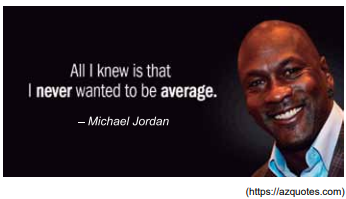
According to the quote, Michael Jordan
Ano: 2025
Banca:
VUNESP
Órgão:
FAMERP
Prova:
VUNESP - 2025 - FAMERP - Vestibular - Conhecimentos Gerais |
Q4143785
Inglês
Texto associado
Leia o trecho de uma música escrita pelo cantor George
Michael para responder à questão.
How can I help you?
Please let me try to
I can heal the pain that you’re feeling inside
Whenever you want me, you know that I will be
Waiting for the day that you say you’ll be mine
Won’t you let me in? Let this love begin
Won’t you show me your heart now?
I’ll be good to you, I can make this thing true
Show me that heart right now
Who needs a lover that can’t be a friend
Something tells me I’m the one you’ve been looking for, oh
If you ever should see him again
Won’t you tell him you’ve found someone who gives you more?
Someone who will protect you, love and respect you
All those things that he never could bring to you
Like I do or rather I would
Won’t you show me your heart like you should?
(www.streetdirectory.com. Adaptado.)
The lyrics suggest that the speaker is primarily expressing
Ano: 2025
Banca:
VUNESP
Órgão:
FAMERP
Prova:
VUNESP - 2025 - FAMERP - Vestibular - Conhecimentos Gerais |
Q4143786
Inglês
Texto associado
Leia o trecho de uma música escrita pelo cantor George
Michael para responder à questão.
How can I help you?
Please let me try to
I can heal the pain that you’re feeling inside
Whenever you want me, you know that I will be
Waiting for the day that you say you’ll be mine
Won’t you let me in? Let this love begin
Won’t you show me your heart now?
I’ll be good to you, I can make this thing true
Show me that heart right now
Who needs a lover that can’t be a friend
Something tells me I’m the one you’ve been looking for, oh
If you ever should see him again
Won’t you tell him you’ve found someone who gives you more?
Someone who will protect you, love and respect you
All those things that he never could bring to you
Like I do or rather I would
Won’t you show me your heart like you should?
(www.streetdirectory.com. Adaptado.)
No trecho “Who needs a lover that can’t be a friend” (3ª
estrofe),
o termo sublinhado é empregado com o mesmo sentido do
termo sublinhado em:
Ano: 2025
Banca:
VUNESP
Órgão:
FAMERP
Prova:
VUNESP - 2025 - FAMERP - Vestibular - Conhecimentos Gerais |
Q4143787
Inglês
Texto associado
Leia o trecho de uma música escrita pelo cantor George
Michael para responder à questão.
How can I help you?
Please let me try to
I can heal the pain that you’re feeling inside
Whenever you want me, you know that I will be
Waiting for the day that you say you’ll be mine
Won’t you let me in? Let this love begin
Won’t you show me your heart now?
I’ll be good to you, I can make this thing true
Show me that heart right now
Who needs a lover that can’t be a friend
Something tells me I’m the one you’ve been looking for, oh
If you ever should see him again
Won’t you tell him you’ve found someone who gives you more?
Someone who will protect you, love and respect you
All those things that he never could bring to you
Like I do or rather I would
Won’t you show me your heart like you should?
(www.streetdirectory.com. Adaptado.)
O trecho da música que revela uma correção enunciativa no
discurso do eu lírico é:
Ano: 2025
Banca:
VUNESP
Órgão:
FAMERP
Prova:
VUNESP - 2025 - FAMERP - Vestibular - Conhecimentos Gerais |
Q4143788
Inglês
Read the poster of a campaign launched by the New York State Office of Addiction Services and Supports (OASAS)
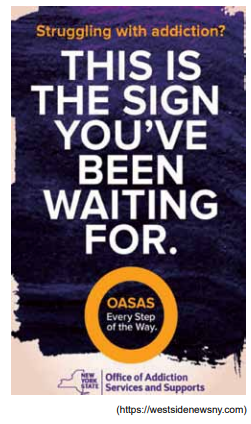
The campaign intends to.

 Conheça nossos planos