Questões de Vestibular FEMPAR 2023 para Vestibular - Medicina
Foram encontradas 80 questões


“Que sacada!” é a frase que você mais dirá, folheando este livro. E não é um livro de arquitetura!
O humor desse pequeno texto é formado a partir de uma característica da linguagem. Assinale a opção que a apresenta.
Sobre a estruturação desse pensamento, assinale a afirmativa correta.
Assinale a opção que apresenta a frase em que a repetição do termo sublinhado foi evitada por elipse.
Observe a placa de sinalização de trânsito a seguir, que indica a proibição de ultrapassagem.

Nesse caso, a placa é uma forma abreviada de
“ABERTURA DOS PORTOS – Monumento erigido na Praia do Russel, em comemoração ao Decreto de D. João VI, em 28/01/1808, determinando a abertura dos portos, medida que acarretou a integração do Brasil no comércio exterior. Este monumento, de bronze, é constituído por duas imagens de mulher, simbolizando o ‘Comércio’ e a ‘Navegação’. O referido monumento, foi obra de Eugène Benet, escultor francês.”
Assinale a opção em que a exemplificação do conteúdo do texto está inadequada.
“As palavras são os utensílios, a ferramenta do escritor. E como em todo ofício ou profissão é imprescindível o conhecimento – o manejo – dos utensílios de trabalho, assim também na arte de escrever. Nossa base, pois, é o conhecimento do vocabulário. O emprego da palavra exata, própria e adequada, é uma das regras fundamentais do estilo. Como o pintor, por exemplo, deve conhecer as cores, assim o escritor deve conhecer os vocábulos.” VIVALDI, Martin. Curso de Redação
Assinale a opção que apresenta a mensagem mais importante desse texto, considerando o livro em que está inserido.
“A cigarra passou o verão cantando, enquanto a formiga juntava seus grãos. Quando chegou o inverno, a cigarra veio à casa da formiga para pedir que lhe desse o que comer. A formiga então perguntou a ela: — E o que é que você fez durante todo o verão? — Durante o verão eu cantei — disse a cigarra. E a formiga respondeu: — Muito bem, pois agora dance!”
Assinale a opção que apresenta, nessa pequena narrativa, o acontecimento desequilibrador do estado inicial.
O chefe de uma empresa, vira-se para o secretário e diz: – Por favor, dê um pulo ao meu carro, no estacionamento, e pegue o livro que esqueci no banco de trás; é um carro alemão, importado e novo, cinza, com a capota preta.
Assinale a opção que identifica o maior interesse textual dos adjetivos sublinhados nesse pequeno texto.
Assinale a frase que mostra a possibilidade de um só sentido.
Assinale a opção que apresenta a qualidade que se destaca no “bom piloto”.
Read the text below and answer the question.
TEXT I
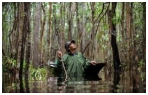
The Amazon is often referred to as "the world's largest medicine cabinet" CREDIT: Getty
(https://www.telegraph.co.uk/travel/cruises/articles/how-to-be-a-botanical-buff/)
Medicinal Treasures of the Rainforest
The widespread destruction of tropical rainforest ecosystems and the consequent extinction of numerous plant and animal species is happening before we know even the most basic facts about what we are losing.
Covering only 6 percent of the Earth's surface, tropical moist forests contain at least half of all species. The abundant botanical resources of tropical forests have already provided tangible medical advances; yet only 1 percent of the known plant and animal species have been thoroughly examined for their medicinal potentials. Meanwhile, 2 percent of the world's rainforests are irreparably damaged each year.
Approximately 7,000 medical compounds prescribed by Western doctors are derived from plants. These drugs had an estimated retail value of US$43 billion in 1985. Seventy percent of the 3000 plants identified by the United States National Cancer Institute as having potential anti-cancer properties are endemic to the rainforest. Tropical forest species serve Western surgery and internal medicine in three ways. First, extracts from organisms can be used directly as drugs. For maladies ranging from nagging headaches to lethal contagions such as malaria, rainforest medicines have provided modern society with a variety of cures and pain relievers.
[…]
Secondly, chemical structures of forest organisms sometimes serve as templates from which scientists and researchers can chemically synthesize drug compounds.[…]
Finally, rainforest plants provide aids for research. Certain plant compounds enable scientists to understand how cancer cells grow, while others serve as testing agents for potentially harmful food and drug products. Tropical forests offer hope for safer contraceptives for both women and men. The exponential growth of world population clearly demonstrates the need for more reliable and effective birth control methods. Worldwide, approximately 4,000 plant species have been shown to offer contraceptive possibilities. The rainforest also holds secrets for safer pesticides for farmers. Two species of potatoes have leaves that produce a sticky substance that traps and kills predatory insects. This natural self-defense mechanism could potentially reduce the need for using pesticides on potatoes. Who knows what other tricks the rainforest might have up its leaves?
Adapted from https://www.adventure-life.com/amazon/articles/medicinaltreasures-of-the-rainforest
( ) The medicinal potentials of all Amazonian plants are well known.
( ) The structure of plants can be used as patterns for producing drugs.
( ) Amazonian plants have been proven to be useless as contraceptives.
The statements are, respectively,
Read the text below and answer the question.
TEXT I
The Amazon is often referred to as "the world's largest medicine cabinet" CREDIT: Getty
(https://www.telegraph.co.uk/travel/cruises/articles/how-to-be-a-botanical-buff/)
Medicinal Treasures of the Rainforest
The widespread destruction of tropical rainforest ecosystems and the consequent extinction of numerous plant and animal species is happening before we know even the most basic facts about what we are losing.
Covering only 6 percent of the Earth's surface, tropical moist forests contain at least half of all species. The abundant botanical resources of tropical forests have already provided tangible medical advances; yet only 1 percent of the known plant and animal species have been thoroughly examined for their medicinal potentials. Meanwhile, 2 percent of the world's rainforests are irreparably damaged each year.
Approximately 7,000 medical compounds prescribed by Western doctors are derived from plants. These drugs had an estimated retail value of US$43 billion in 1985. Seventy percent of the 3000 plants identified by the United States National Cancer Institute as having potential anti-cancer properties are endemic to the rainforest. Tropical forest species serve Western surgery and internal medicine in three ways. First, extracts from organisms can be used directly as drugs. For maladies ranging from nagging headaches to lethal contagions such as malaria, rainforest medicines have provided modern society with a variety of cures and pain relievers.
[…]
Secondly, chemical structures of forest organisms sometimes serve as templates from which scientists and researchers can chemically synthesize drug compounds.[…]
Finally, rainforest plants provide aids for research. Certain plant compounds enable scientists to understand how cancer cells grow, while others serve as testing agents for potentially harmful food and drug products. Tropical forests offer hope for safer contraceptives for both women and men. The exponential growth of world population clearly demonstrates the need for more reliable and effective birth control methods. Worldwide, approximately 4,000 plant species have been shown to offer contraceptive possibilities. The rainforest also holds secrets for safer pesticides for farmers. Two species of potatoes have leaves that produce a sticky substance that traps and kills predatory insects. This natural self-defense mechanism could potentially reduce the need for using pesticides on potatoes. Who knows what other tricks the rainforest might have up its leaves?
Adapted from https://www.adventure-life.com/amazon/articles/medicinaltreasures-of-the-rainforest
Read the text below and answer the question.
TEXT I
The Amazon is often referred to as "the world's largest medicine cabinet" CREDIT: Getty
(https://www.telegraph.co.uk/travel/cruises/articles/how-to-be-a-botanical-buff/)
Medicinal Treasures of the Rainforest
The widespread destruction of tropical rainforest ecosystems and the consequent extinction of numerous plant and animal species is happening before we know even the most basic facts about what we are losing.
Covering only 6 percent of the Earth's surface, tropical moist forests contain at least half of all species. The abundant botanical resources of tropical forests have already provided tangible medical advances; yet only 1 percent of the known plant and animal species have been thoroughly examined for their medicinal potentials. Meanwhile, 2 percent of the world's rainforests are irreparably damaged each year.
Approximately 7,000 medical compounds prescribed by Western doctors are derived from plants. These drugs had an estimated retail value of US$43 billion in 1985. Seventy percent of the 3000 plants identified by the United States National Cancer Institute as having potential anti-cancer properties are endemic to the rainforest. Tropical forest species serve Western surgery and internal medicine in three ways. First, extracts from organisms can be used directly as drugs. For maladies ranging from nagging headaches to lethal contagions such as malaria, rainforest medicines have provided modern society with a variety of cures and pain relievers.
[…]
Secondly, chemical structures of forest organisms sometimes serve as templates from which scientists and researchers can chemically synthesize drug compounds.[…]
Finally, rainforest plants provide aids for research. Certain plant compounds enable scientists to understand how cancer cells grow, while others serve as testing agents for potentially harmful food and drug products. Tropical forests offer hope for safer contraceptives for both women and men. The exponential growth of world population clearly demonstrates the need for more reliable and effective birth control methods. Worldwide, approximately 4,000 plant species have been shown to offer contraceptive possibilities. The rainforest also holds secrets for safer pesticides for farmers. Two species of potatoes have leaves that produce a sticky substance that traps and kills predatory insects. This natural self-defense mechanism could potentially reduce the need for using pesticides on potatoes. Who knows what other tricks the rainforest might have up its leaves?
Adapted from https://www.adventure-life.com/amazon/articles/medicinaltreasures-of-the-rainforest
Read the text below and answer the question.
TEXT I
The Amazon is often referred to as "the world's largest medicine cabinet" CREDIT: Getty
(https://www.telegraph.co.uk/travel/cruises/articles/how-to-be-a-botanical-buff/)
Medicinal Treasures of the Rainforest
The widespread destruction of tropical rainforest ecosystems and the consequent extinction of numerous plant and animal species is happening before we know even the most basic facts about what we are losing.
Covering only 6 percent of the Earth's surface, tropical moist forests contain at least half of all species. The abundant botanical resources of tropical forests have already provided tangible medical advances; yet only 1 percent of the known plant and animal species have been thoroughly examined for their medicinal potentials. Meanwhile, 2 percent of the world's rainforests are irreparably damaged each year.
Approximately 7,000 medical compounds prescribed by Western doctors are derived from plants. These drugs had an estimated retail value of US$43 billion in 1985. Seventy percent of the 3000 plants identified by the United States National Cancer Institute as having potential anti-cancer properties are endemic to the rainforest. Tropical forest species serve Western surgery and internal medicine in three ways. First, extracts from organisms can be used directly as drugs. For maladies ranging from nagging headaches to lethal contagions such as malaria, rainforest medicines have provided modern society with a variety of cures and pain relievers.
[…]
Secondly, chemical structures of forest organisms sometimes serve as templates from which scientists and researchers can chemically synthesize drug compounds.[…]
Finally, rainforest plants provide aids for research. Certain plant compounds enable scientists to understand how cancer cells grow, while others serve as testing agents for potentially harmful food and drug products. Tropical forests offer hope for safer contraceptives for both women and men. The exponential growth of world population clearly demonstrates the need for more reliable and effective birth control methods. Worldwide, approximately 4,000 plant species have been shown to offer contraceptive possibilities. The rainforest also holds secrets for safer pesticides for farmers. Two species of potatoes have leaves that produce a sticky substance that traps and kills predatory insects. This natural self-defense mechanism could potentially reduce the need for using pesticides on potatoes. Who knows what other tricks the rainforest might have up its leaves?
Adapted from https://www.adventure-life.com/amazon/articles/medicinaltreasures-of-the-rainforest
Read the text below and answer the question.
TEXT I
The Amazon is often referred to as "the world's largest medicine cabinet" CREDIT: Getty
(https://www.telegraph.co.uk/travel/cruises/articles/how-to-be-a-botanical-buff/)
Medicinal Treasures of the Rainforest
The widespread destruction of tropical rainforest ecosystems and the consequent extinction of numerous plant and animal species is happening before we know even the most basic facts about what we are losing.
Covering only 6 percent of the Earth's surface, tropical moist forests contain at least half of all species. The abundant botanical resources of tropical forests have already provided tangible medical advances; yet only 1 percent of the known plant and animal species have been thoroughly examined for their medicinal potentials. Meanwhile, 2 percent of the world's rainforests are irreparably damaged each year.
Approximately 7,000 medical compounds prescribed by Western doctors are derived from plants. These drugs had an estimated retail value of US$43 billion in 1985. Seventy percent of the 3000 plants identified by the United States National Cancer Institute as having potential anti-cancer properties are endemic to the rainforest. Tropical forest species serve Western surgery and internal medicine in three ways. First, extracts from organisms can be used directly as drugs. For maladies ranging from nagging headaches to lethal contagions such as malaria, rainforest medicines have provided modern society with a variety of cures and pain relievers.
[…]
Secondly, chemical structures of forest organisms sometimes serve as templates from which scientists and researchers can chemically synthesize drug compounds.[…]
Finally, rainforest plants provide aids for research. Certain plant compounds enable scientists to understand how cancer cells grow, while others serve as testing agents for potentially harmful food and drug products. Tropical forests offer hope for safer contraceptives for both women and men. The exponential growth of world population clearly demonstrates the need for more reliable and effective birth control methods. Worldwide, approximately 4,000 plant species have been shown to offer contraceptive possibilities. The rainforest also holds secrets for safer pesticides for farmers. Two species of potatoes have leaves that produce a sticky substance that traps and kills predatory insects. This natural self-defense mechanism could potentially reduce the need for using pesticides on potatoes. Who knows what other tricks the rainforest might have up its leaves?
Adapted from https://www.adventure-life.com/amazon/articles/medicinaltreasures-of-the-rainforest

 Conheça nossos planos