Questões de Vestibular Sobre psiquiatria
Foram encontradas 75.231 questões


Ano: 2023
Banca:
VUNESP
Órgão:
FCM/SANTA CASA
Prova:
VUNESP - 2023 - FCM/SANTA CASA - Vestibular - Medicina |
Q4149771
Geografia
Analise a imagem.
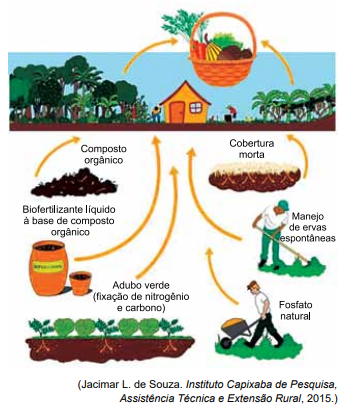
Os métodos e práticas de produção apresentados na imagem envolvem
Ano: 2023
Banca:
VUNESP
Órgão:
FCM/SANTA CASA
Prova:
VUNESP - 2023 - FCM/SANTA CASA - Vestibular - Medicina |
Q4149770
Geografia
Analise o gráfico de participação setorial no PIB em 2019.
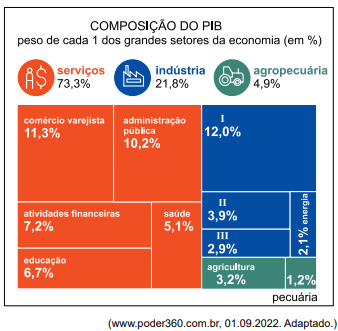
Considerando os setores da indústria, os números I, II e III presentes no gráfico correspondem, respectivamente, a
Ano: 2023
Banca:
VUNESP
Órgão:
FCM/SANTA CASA
Prova:
VUNESP - 2023 - FCM/SANTA CASA - Vestibular - Medicina |
Q4149769
Geografia
Analise o mapa que apresenta a região de passagem de
migrantes sul-americanos que tentam chegar aos Estados
Unidos.
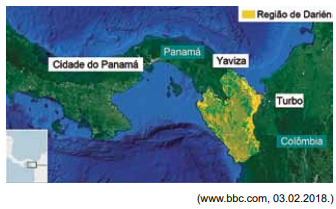
Considerando o mapa e conhecimentos sobre a região, uma característica natural dessa rota migratória é a
Considerando o mapa e conhecimentos sobre a região, uma característica natural dessa rota migratória é a
Ano: 2023
Banca:
VUNESP
Órgão:
FCM/SANTA CASA
Prova:
VUNESP - 2023 - FCM/SANTA CASA - Vestibular - Medicina |
Q4149768
Atualidades
A Argentina é um dos países que não tem isenção de
taxa alfandegária, mesmo para importações de pequeno valor. De acordo com informações do governo argentino, produtos importados para consumidores finais são tributados pelo
“Imposto para uma Argentina Inclusiva e Solidária” (PAIS),
que é de 30% sobre o valor da mercadoria importada e é
usado para financiar políticas sociais e econômicas.
(Giulia Granchi. www.bbc.com, 14.04.2023. Adaptado.)
Essa prática fiscal argentina tem como intuito
(Giulia Granchi. www.bbc.com, 14.04.2023. Adaptado.)
Essa prática fiscal argentina tem como intuito
Ano: 2023
Banca:
VUNESP
Órgão:
FCM/SANTA CASA
Prova:
VUNESP - 2023 - FCM/SANTA CASA - Vestibular - Medicina |
Q4149767
Direito Constitucional
Ao reconhecer aos povos indígenas o direito às terras
que habitam, a Constituição Federal de 1988 favoreceu processos de demarcação e delimitação de territórios [...]. As
terras indígenas são definidas como “as habitadas em caráter permanente; as utilizadas para suas atividades produtivas, as imprescindíveis à preservação dos recursos ambientais necessários a seu bem-estar; e as necessárias a sua
reprodução física e cultural, segundo seus usos, costumes
e tradições”.
(Diego Viana. “Quando o mapa é o território”. Revista Pesquisa FAPESP, maio de 2023.)
A propósito das terras indígenas, a Constituição de 1988
(Diego Viana. “Quando o mapa é o território”. Revista Pesquisa FAPESP, maio de 2023.)
A propósito das terras indígenas, a Constituição de 1988
Ano: 2023
Banca:
VUNESP
Órgão:
FCM/SANTA CASA
Prova:
VUNESP - 2023 - FCM/SANTA CASA - Vestibular - Medicina |
Q4149766
História
Tudo no governo Geisel girou, desde o princípio, em
torno da distensão, pensamento central do presidente e de
seu assessor político transformado em chefe da Casa Civil,
o general Golbery do Couto e Silva. Sobreviventes ambos
do governo Castelo Branco, retomaram em política interna
a orientação geral dos primeiros tempos. [...] O nome oficial
“distensão”, e não abertura ou redemocratização, denunciava
o real significado da ideia: não se cogitava devolver logo o
poder aos civis como se os objetivos de 1964 tivessem sido
alcançados.
(Rubens Ricupero. A diplomacia na construção do Brasil: 1750-2016, 2017.)
A distensão mencionada no excerto
(Rubens Ricupero. A diplomacia na construção do Brasil: 1750-2016, 2017.)
A distensão mencionada no excerto
Ano: 2023
Banca:
VUNESP
Órgão:
FCM/SANTA CASA
Prova:
VUNESP - 2023 - FCM/SANTA CASA - Vestibular - Medicina |
Q4149765
História
Os efeitos da crise econômica de 1929 logo se fizeram
sentir na América Latina: forte queda das exportações, saída de capitais de países desenvolvidos, suspensão de novos
empréstimos norte-americanos para as economias locais.
(Javier Bustos Díaz. Historia económica. Desde el imperialismo hasta el fin de la URSS, 2023. Adaptado.)
A economia brasileira da década de 1930 procurou ajustar-se a essa situação de crise internacional, mencionada pelo excerto, por meio
(Javier Bustos Díaz. Historia económica. Desde el imperialismo hasta el fin de la URSS, 2023. Adaptado.)
A economia brasileira da década de 1930 procurou ajustar-se a essa situação de crise internacional, mencionada pelo excerto, por meio
Ano: 2023
Banca:
VUNESP
Órgão:
FCM/SANTA CASA
Prova:
VUNESP - 2023 - FCM/SANTA CASA - Vestibular - Medicina |
Q4149764
História
Texto associado
O Reino Unido tinha sido tudo, menos parcimonioso, em
suas aquisições territoriais, e a construção de um império no
mundo não ocidental fora parte integrante de sua hegemonia
mundial. Quanto aos Estados Unidos, o desenvolvimento que
transformou o país no principal polo de atração da mão de
obra, do capital e dos recursos empresariais da economia
mundial esteve estreitamente vinculado ao âmbito continental atingido por sua economia doméstica no curso do século
XIX.
(Giovanni Arrighi. O longo século XX, 2013.)
O modelo de expansão da economia capitalista nos Estados
Unidos da América no século XIX resultou
Ano: 2023
Banca:
VUNESP
Órgão:
FCM/SANTA CASA
Prova:
VUNESP - 2023 - FCM/SANTA CASA - Vestibular - Medicina |
Q4149763
História
Texto associado
O Reino Unido tinha sido tudo, menos parcimonioso, em
suas aquisições territoriais, e a construção de um império no
mundo não ocidental fora parte integrante de sua hegemonia
mundial. Quanto aos Estados Unidos, o desenvolvimento que
transformou o país no principal polo de atração da mão de
obra, do capital e dos recursos empresariais da economia
mundial esteve estreitamente vinculado ao âmbito continental atingido por sua economia doméstica no curso do século
XIX.
(Giovanni Arrighi. O longo século XX, 2013.)
A construção do Império não ocidental do Reino Unido foi o
resultado
Ano: 2023
Banca:
VUNESP
Órgão:
FCM/SANTA CASA
Prova:
VUNESP - 2023 - FCM/SANTA CASA - Vestibular - Medicina |
Q4149762
Literatura
O Romantismo no Brasil foi episódio do grande processo
de tomada de consciência nacional, constituindo um aspecto
do movimento de independência. Afirmar a autonomia no setor literário significava cortar mais um laço com a mãe-pátria.
(Antonio Candido. Formação da literatura brasileira: momentos decisivos, 2017.)
O vínculo estético-político, mencionado no excerto, exprimia-se literariamente
(Antonio Candido. Formação da literatura brasileira: momentos decisivos, 2017.)
O vínculo estético-político, mencionado no excerto, exprimia-se literariamente
Ano: 2023
Banca:
VUNESP
Órgão:
FCM/SANTA CASA
Prova:
VUNESP - 2023 - FCM/SANTA CASA - Vestibular - Medicina |
Q4149761
História
A centralização, tal qual existe, representa o despotismo,
dá força ao poder pessoal, comprime a liberdade, subordina
o direito de todos ao arbítrio de um só poder, mata o estímulo
do progresso local, suga a riqueza peculiar das províncias,
constituindo-as satélites obrigados do grande astro da corte.
(“Manifesto Republicano de 1870”. In: Reynaldo Xavier Carneiro Pessoa. A ideia republicana no Brasil através dos documentos, 1973. Adaptado.)
Esse manifesto foi publicado pela primeira vez no jornal “A República” em 3 de dezembro de 1870. A metáfora astronômica empregada pelos republicanos
(“Manifesto Republicano de 1870”. In: Reynaldo Xavier Carneiro Pessoa. A ideia republicana no Brasil através dos documentos, 1973. Adaptado.)
Esse manifesto foi publicado pela primeira vez no jornal “A República” em 3 de dezembro de 1870. A metáfora astronômica empregada pelos republicanos
Ano: 2023
Banca:
VUNESP
Órgão:
FCM/SANTA CASA
Prova:
VUNESP - 2023 - FCM/SANTA CASA - Vestibular - Medicina |
Q4149760
História
A exploração aurífera obedecia, no seu desenvolvimento,
ao lucro mais imediato: voltava-se inicialmente para o ouro
depositado no fundo dos rios (aluvião), depois para o ouro
depositado nas encostas (grupiaras) e, finalmente, para os
veios subterrâneos (galerias). Nesse contexto, era a fase inicial a que maiores lucros apresentava.
(Laura de Mello e Souza. Desclassificados do ouro: a pobreza mineira no século XVIII, 1982.)
O excerto descreve uma espécie de itinerância na exploração do ouro em Minas Gerais no século XVIII,
(Laura de Mello e Souza. Desclassificados do ouro: a pobreza mineira no século XVIII, 1982.)
O excerto descreve uma espécie de itinerância na exploração do ouro em Minas Gerais no século XVIII,
Ano: 2023
Banca:
VUNESP
Órgão:
FCM/SANTA CASA
Prova:
VUNESP - 2023 - FCM/SANTA CASA - Vestibular - Medicina |
Q4149759
História
Analise o “Mapa do Céu”, desenhado no século XIII, numa
parede da Igreja de Saint-Sernin da cidade de Toulouse, no
sul da França.
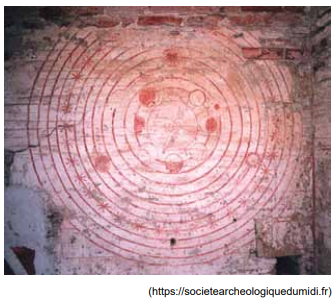
Nesse mapa, o planeta Terra é representado imóvel no centro do universo, em consonância com os saberes de astronomia
Nesse mapa, o planeta Terra é representado imóvel no centro do universo, em consonância com os saberes de astronomia
Ano: 2023
Banca:
VUNESP
Órgão:
FCM/SANTA CASA
Prova:
VUNESP - 2023 - FCM/SANTA CASA - Vestibular - Medicina |
Q4149758
História
O Mediterrâneo é o único grande mar quase integralmente cercado por terra em toda a circunferência do planeta: só
ele oferecia a velocidade do transporte marítimo, com proteção terrestre contra ondas e ventos fortes, ao longo de uma
zona geográfica considerável. A posição ímpar da Antiguidade clássica dentro da história universal não pode ser separada de seu privilégio físico.
(Perry Anderson. Passagens da Antiguidade ao feudalismo, 2016. Adaptado.)
Os vínculos entre condições geográficas e históricas, descritos no excerto,
(Perry Anderson. Passagens da Antiguidade ao feudalismo, 2016. Adaptado.)
Os vínculos entre condições geográficas e históricas, descritos no excerto,
Ano: 2023
Banca:
VUNESP
Órgão:
FCM/SANTA CASA
Prova:
VUNESP - 2023 - FCM/SANTA CASA - Vestibular - Medicina |
Q4149757
Inglês
Leia a tirinha de Jim Davis.
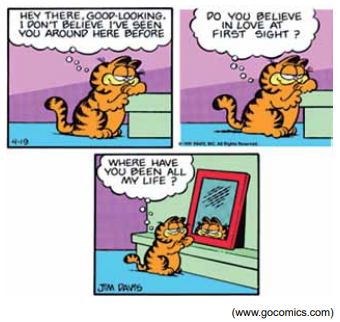
Na tirinha, o gato se mostra
Ano: 2023
Banca:
VUNESP
Órgão:
FCM/SANTA CASA
Prova:
VUNESP - 2023 - FCM/SANTA CASA - Vestibular - Medicina |
Q4149756
Inglês
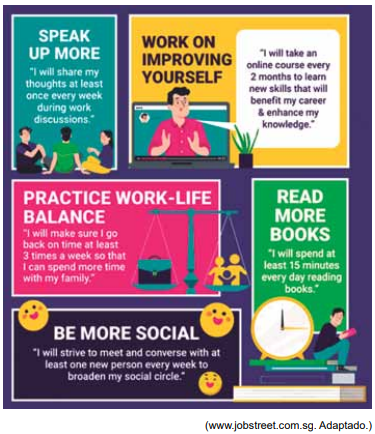
In the section “Be more social”, the expression “I will strive”
means to
Ano: 2023
Banca:
VUNESP
Órgão:
FCM/SANTA CASA
Prova:
VUNESP - 2023 - FCM/SANTA CASA - Vestibular - Medicina |
Q4149755
Inglês
The main purpose of the infographic is to present
Ano: 2023
Banca:
VUNESP
Órgão:
FCM/SANTA CASA
Prova:
VUNESP - 2023 - FCM/SANTA CASA - Vestibular - Medicina |
Q4149754
Inglês
Texto associado
Some of the world’s leading artificial intelligence (AI)
researchers are calling for a pause on research into AI,
claiming that safety issues must first be urgently addressed.
If not, the outcomes could be devastating for humanity.
Others say any pause in development would not only be
impractical to enforce on a global scale, but could also stand
in the way of advances that could both improve and save
lives.
The AI that is currently available already has the power
to radically alter society, in new ways that we are seeing
every day. So how might it progress over the coming years?
Are we on the brink of an artificial intelligence-powered
utopia or dystopia?
Firstly, technology has been automating jobs since the
Industrial Revolution, though never before has it happened
on this scale. Everyone from truck drivers to voice over artists
are at risk of being replaced by AI. A recent study found that
just over 30 jobs are considered safe from automation in the
near future. They range from mechanics to athletes, though
they represent just a sliver of the current labour market.
While new jobs will be created, there is a significant chance
that the majority of the population will be left jobless. This
could either lead to:
Utopia: A new leisure class emerges, living off a
universal basic income funded by taxes on robots and the
companies that operate them.
Dystopia: Mass unemployment results in social unrest,
similar to the way laid off factory workers trashed the
machines that replaced them. With so many jobs at risk and
the potential for huge wealth inequality, some fear it could
ultimately result in societal collapse.
Secondly, artificial intelligence is already contributing
to major scientific advances, dramatically accelerating
the time it takes to make discoveries. It has been used to
invent millions of materials that did not previously exist, find
potential drug molecules 1,000 times faster than previous
methods, and improve our understanding of the universe.
This could either lead to:
Utopia: Cancer and all other life-threatening diseases
are cured, leading to a new age of health and prosperity.
Scientists are already using AI tools to make breakthroughs
in longevity medicine, which aims to end or even reverse
ageing.
Dystopia: The same AI-enabled technology could
be used for malevolent purposes, creating entirely new
diseases and viruses. These could be used as bioweapons,
capable of devastating populations that don’t have access to
cures or the tech needed to develop them.
(Anthony Cuthbertson. www.independent.co.uk, 03.05.2023. Adaptado.)
In the excerpt from the seventh paragraph “which aims to end
or even reverse ageing”, the underlined word refers to
Ano: 2023
Banca:
VUNESP
Órgão:
FCM/SANTA CASA
Prova:
VUNESP - 2023 - FCM/SANTA CASA - Vestibular - Medicina |
Q4149753
Inglês
Texto associado
Some of the world’s leading artificial intelligence (AI)
researchers are calling for a pause on research into AI,
claiming that safety issues must first be urgently addressed.
If not, the outcomes could be devastating for humanity.
Others say any pause in development would not only be
impractical to enforce on a global scale, but could also stand
in the way of advances that could both improve and save
lives.
The AI that is currently available already has the power
to radically alter society, in new ways that we are seeing
every day. So how might it progress over the coming years?
Are we on the brink of an artificial intelligence-powered
utopia or dystopia?
Firstly, technology has been automating jobs since the
Industrial Revolution, though never before has it happened
on this scale. Everyone from truck drivers to voice over artists
are at risk of being replaced by AI. A recent study found that
just over 30 jobs are considered safe from automation in the
near future. They range from mechanics to athletes, though
they represent just a sliver of the current labour market.
While new jobs will be created, there is a significant chance
that the majority of the population will be left jobless. This
could either lead to:
Utopia: A new leisure class emerges, living off a
universal basic income funded by taxes on robots and the
companies that operate them.
Dystopia: Mass unemployment results in social unrest,
similar to the way laid off factory workers trashed the
machines that replaced them. With so many jobs at risk and
the potential for huge wealth inequality, some fear it could
ultimately result in societal collapse.
Secondly, artificial intelligence is already contributing
to major scientific advances, dramatically accelerating
the time it takes to make discoveries. It has been used to
invent millions of materials that did not previously exist, find
potential drug molecules 1,000 times faster than previous
methods, and improve our understanding of the universe.
This could either lead to:
Utopia: Cancer and all other life-threatening diseases
are cured, leading to a new age of health and prosperity.
Scientists are already using AI tools to make breakthroughs
in longevity medicine, which aims to end or even reverse
ageing.
Dystopia: The same AI-enabled technology could
be used for malevolent purposes, creating entirely new
diseases and viruses. These could be used as bioweapons,
capable of devastating populations that don’t have access to
cures or the tech needed to develop them.
(Anthony Cuthbertson. www.independent.co.uk, 03.05.2023. Adaptado.)
No terceiro parágrafo, a expressão “be left jobless” pode ser
associada ao seguinte trecho do texto:
Ano: 2023
Banca:
VUNESP
Órgão:
FCM/SANTA CASA
Prova:
VUNESP - 2023 - FCM/SANTA CASA - Vestibular - Medicina |
Q4149752
Inglês
Texto associado
Some of the world’s leading artificial intelligence (AI)
researchers are calling for a pause on research into AI,
claiming that safety issues must first be urgently addressed.
If not, the outcomes could be devastating for humanity.
Others say any pause in development would not only be
impractical to enforce on a global scale, but could also stand
in the way of advances that could both improve and save
lives.
The AI that is currently available already has the power
to radically alter society, in new ways that we are seeing
every day. So how might it progress over the coming years?
Are we on the brink of an artificial intelligence-powered
utopia or dystopia?
Firstly, technology has been automating jobs since the
Industrial Revolution, though never before has it happened
on this scale. Everyone from truck drivers to voice over artists
are at risk of being replaced by AI. A recent study found that
just over 30 jobs are considered safe from automation in the
near future. They range from mechanics to athletes, though
they represent just a sliver of the current labour market.
While new jobs will be created, there is a significant chance
that the majority of the population will be left jobless. This
could either lead to:
Utopia: A new leisure class emerges, living off a
universal basic income funded by taxes on robots and the
companies that operate them.
Dystopia: Mass unemployment results in social unrest,
similar to the way laid off factory workers trashed the
machines that replaced them. With so many jobs at risk and
the potential for huge wealth inequality, some fear it could
ultimately result in societal collapse.
Secondly, artificial intelligence is already contributing
to major scientific advances, dramatically accelerating
the time it takes to make discoveries. It has been used to
invent millions of materials that did not previously exist, find
potential drug molecules 1,000 times faster than previous
methods, and improve our understanding of the universe.
This could either lead to:
Utopia: Cancer and all other life-threatening diseases
are cured, leading to a new age of health and prosperity.
Scientists are already using AI tools to make breakthroughs
in longevity medicine, which aims to end or even reverse
ageing.
Dystopia: The same AI-enabled technology could
be used for malevolent purposes, creating entirely new
diseases and viruses. These could be used as bioweapons,
capable of devastating populations that don’t have access to
cures or the tech needed to develop them.
(Anthony Cuthbertson. www.independent.co.uk, 03.05.2023. Adaptado.)
O termo “while”, no trecho do terceiro parágrafo “While new
jobs will be created, there is a significant chance that the
majority of the population will be left jobless”, é empregado
com o mesmo sentido em:

 Conheça nossos planos