Questões de Vestibular
Sobre verbos modais | modal verbs em inglês
Foram encontradas 67 questões


Q518448
Inglês
Texto associado

images1.fanpop.com
And I should know. (panel 4)
Modal verbs can be used to refer to a speaker’s attitude.
The modal should indicates that Calvin believes his knowledge of the bad quality of the TV show would be characterized as:
Modal verbs can be used to refer to a speaker’s attitude.
The modal should indicates that Calvin believes his knowledge of the bad quality of the TV show would be characterized as:
Ano: 2014
Banca:
IF-BA
Órgão:
IF-BA
Prova:
IF-BA - 2014 - IF-BA - Vestibular - CURSOS SUPERIORES - INGLÊS |
Q1370997
Inglês


Consider the statements given and mark the
correct option, according to their grammar
features:
I. In the sentence “President Lula took part in a ceremony that focused firmly on the future” the relative pronoun that can be replaced by which without changing the meaning of the sentence.
II. In the sentence “We have a chip, we have a level that can be used on frontier control, we can guarantee citizenship, and it can guarantee transactions in the virtual world” the modal verb can indicates an ability.
III. The word currently in the sentence “Currently, Brazilians have to deal with a confusing array of identity numbers” can be substituted by the word nowadays without changing the meaning of the sentence.
I. In the sentence “President Lula took part in a ceremony that focused firmly on the future” the relative pronoun that can be replaced by which without changing the meaning of the sentence.
II. In the sentence “We have a chip, we have a level that can be used on frontier control, we can guarantee citizenship, and it can guarantee transactions in the virtual world” the modal verb can indicates an ability.
III. The word currently in the sentence “Currently, Brazilians have to deal with a confusing array of identity numbers” can be substituted by the word nowadays without changing the meaning of the sentence.
Ano: 2014
Banca:
PUC - RJ
Órgão:
PUC - RJ
Prova:
PUC - RJ - 2014 - PUC - RJ - Vestibular - 1° Dia - Prova Tarde grupos 1, 3 e 4 |
Q538128
Inglês

In the fragment “The research should also motivate
publishers…” (line 66), “should” conveys the idea of
Ano: 2014
Banca:
VUNESP
Órgão:
UNESP
Prova:
VUNESP - 2014 - UNESP - Vestibular - Primeiro Semestre |
Q491447
Inglês
Examine o quadrinho para responder à questão.
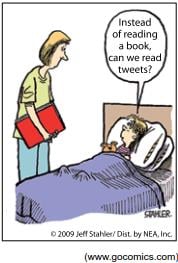
No contexto do quadrinho, o termo “can” indica uma ideia de
No contexto do quadrinho, o termo “can” indica uma ideia de
Q397532
Inglês
Texto associado
Are You Addicted to Sports?
Sports addictions are real and do conflict with relationships. As with anything that can be addictive there is a threshold where something healthy becomes unhealthy. Addiction is defined as "the state of being enslaved to a habit or practice or to something that is psychologically or physically habit-forming". An addiction to sports is not always a bad thing, but can be. Often this addiction comes along with another addiction whether it be cigarettes, alcohol, or gambling.
If you or someone you love is addicted to sports make sure you approach it in a proper manner. If this is your spouse and it is coming between you and him/her then you may want to seek counseling. If you personally are addicted to sports then try picking up another hobby because you may just have too much free time. Get out of the house once in a while and enjoy life. Don't let the athletic ability of others control your life.
Signs of sports addiction: mood swings during events; outcome ruins your day or even week; sports gambling; fantasy sports; attending an excess number of events; excessive merchandise; arguments and fights.
If you or someone you love is addicted to sports make sure you approach it in a proper manner. If this is your spouse and it is coming between you and him/her then you may want to seek counseling. If you personally are addicted to sports then try picking up another hobby because you may just have too much free time. Get out of the house once in a while and enjoy life. Don't let the athletic ability of others control your life.
Signs of sports addiction: mood swings during events; outcome ruins your day or even week; sports gambling; fantasy sports; attending an excess number of events; excessive merchandise; arguments and fights.
Considerando os aspectos estruturais do texto, percebe-se que:
Q1362662
Inglês
Texto associado
TEXT

(Disponível em <http://www.careerbuilder.com/JobSeeker/Jobs/Job Details. aspx? Job_DID=J3J0Y86B...>. Acesso em 23/05/2013.)
According to the text, it is correct to affirm that
the modal verb “must” (line 6) is used to express the idea of possibility.
the modal verb “must” (line 6) is used to express the idea of possibility.
Ano: 2013
Banca:
CESGRANRIO
Órgão:
PUC - RJ
Prova:
CESGRANRIO - 2013 - PUC - RJ - Vestibular - Prova de Inglês - Relações Internacionais |
Q538067
Inglês

In “The interesting point is that this may present more of an
opportunity than a threat…” (lines 160-161), ‘may present’
is replaced without change in meaning by
Ano: 2013
Banca:
CESGRANRIO
Órgão:
PUC - RJ
Prova:
CESGRANRIO - 2013 - PUC - RJ - Vestibular - 1º Dia - Prova Manhã grupo 2 |
Q537920
Inglês

At the end of the text (. 103-106), “might” suggests
Q339612
Inglês

most people should reach 80 or 90. (l. 31)
The function of should in the fragment above is to:
The function of should in the fragment above is to:
Q1378955
Inglês

Mark the alternative which contains a modal verb which expresses permission:
Ano: 2012
Banca:
IF-BA
Órgão:
IF-BA
Prova:
IF-BA - 2012 - IF-BA - Vestibular - CURSOS SUPERIORES - INGLÊS |
Q1369594
Inglês

Sobre o uso da língua, no Texto I, é correto afirmar que:
I. As palavras “easier” e “harder”, que iniciam, respectivamente, o 1º e o 2º parágrafos do texto I, são exemplos de comparativos no grau superlativo.
II. “Who” (l.2) é um pronome relativo, na função de objeto, e refere-se a “patriot”.
III. As palavras “fatherland” (l.5), “homeland” (l.6), “attachment” (l.6),”physical” (l.6) e “devotion” (l.12) são formadas por afixação e/ou justaposição.
IV. O termo “its”, presente três vezes nas linhas 11 e 12, é um pronome possessivo e refere-se a “love”.
V. O modal “should” (l.17) expressa uma sugestão, um aconselhamento.
A alternativa em que todas as afirmativas são verdadeiras é a:
I. As palavras “easier” e “harder”, que iniciam, respectivamente, o 1º e o 2º parágrafos do texto I, são exemplos de comparativos no grau superlativo.
II. “Who” (l.2) é um pronome relativo, na função de objeto, e refere-se a “patriot”.
III. As palavras “fatherland” (l.5), “homeland” (l.6), “attachment” (l.6),”physical” (l.6) e “devotion” (l.12) são formadas por afixação e/ou justaposição.
IV. O termo “its”, presente três vezes nas linhas 11 e 12, é um pronome possessivo e refere-se a “love”.
V. O modal “should” (l.17) expressa uma sugestão, um aconselhamento.
A alternativa em que todas as afirmativas são verdadeiras é a:
Ano: 2012
Banca:
IF-BA
Órgão:
IF-BA
Prova:
IF-BA - 2012 - IF-BA - Curso Técnico - MODALIDADE SUBSEQUENTE - INGLÊS |
Q1369472
Inglês

Sobre o uso da língua, no Texto I, é correto afirmar que
I. o termo “our” (l.2) é um pronome possessivo e refere-se aos leitores.
II. “which” (l.3) é um pronome relativo, na função de sujeito, e refere-se a “daily activities”.
III. os termos “useless” e “unwanted” (l.5) são formados por afixação.
IV. os modais “can” (l.5) e “may” (l.12) expressam a mesma ideia: possibilidade.
V. os marcadores discursivos “or” (l.3), “and” (l.5) e “but” (l.12) expressam, respectivamente, proporcionalidade, adição e condição.
A alternativa em que todas as afirmativas são verdadeiras é a:
I. o termo “our” (l.2) é um pronome possessivo e refere-se aos leitores.
II. “which” (l.3) é um pronome relativo, na função de sujeito, e refere-se a “daily activities”.
III. os termos “useless” e “unwanted” (l.5) são formados por afixação.
IV. os modais “can” (l.5) e “may” (l.12) expressam a mesma ideia: possibilidade.
V. os marcadores discursivos “or” (l.3), “and” (l.5) e “but” (l.12) expressam, respectivamente, proporcionalidade, adição e condição.
A alternativa em que todas as afirmativas são verdadeiras é a:
Q325346
Inglês

Instrução: Assinale as alternativas que completam, correta e respectivamente, as lacunas numeradas de 42 a 45 no texto.
Q325343
Inglês
In the excerpt from the third paragraph – may suffer from a variety of problems later in life –, the word may carries the idea of
Ano: 2012
Banca:
PUC - RJ
Órgão:
PUC - RJ
Prova:
PUC - RJ - 2012 - PUC - RJ - Vestibular - Biologia e Inglês 02 |
Q290109
Inglês

“We can’t deny” in “...we can’t deny that the world has changed very quickly...” (L. 12-13) and “My phone can make” in “My phone can make and receive phone calls...” (L. 19-20) express the ideas of, respectively:
Ano: 2012
Banca:
PUC - RJ
Órgão:
PUC - RJ
Prova:
PUC - RJ - 2012 - PUC - RJ - Vestibular - Biologia e Inglês 01 |
Q283952
Inglês

“Might” in “...might save your life” (L. 10) and “Shouldn’t” in “Shouldn’t evolution have selected for a species...” (L. 29-31) express the ideas of, respectively:
Q277180
Inglês

The boldfaced expression conveys the idea of advice in
Ano: 2012
Banca:
UNICENTRO
Órgão:
UNICENTRO
Prova:
UNICENTRO - 2012 - UNICENTRO - Vestibular - Inglês |
Q264530
Inglês

Considering language use in the text, it’s correct to say:
Q1377205
Inglês


In the sentence, “while it’s impossible to believe that everyone can speak in exactly the same way in all areas of
a vast nation, the different accents may at times be so difficult to understand that they inhibit communication”.
The modal verbs can and may express:
Ano: 2011
Banca:
UEFS
Órgão:
UEFS
Prova:
UEFS - 2011 - UEFS - Vestibular Segundo Semestre - Dia 1 - Inglês |
Q1365146
Inglês
Texto associado

EVANS, Stephen. Disponível em: <www.bbc.co.uk/worldservice/learningenglish/language/wordsinthenews/2011/05/110518_witn_electric_cars_page.shtml>. Acesso em: 2 jun. 2011.
Considering language use in the text, it’s correct to say:

 Conheça nossos planos