Questões de Vestibular Comentadas sobre inglês
Foram encontradas 2.807 questões


Exam ine the follow ing cartoon to answ er question.
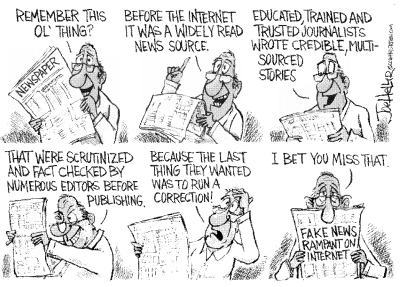
Sobre o cartoon, qual das afirmações a seguir é FALSA?
Tell Us What to Call the Generation After Millennials {Please)
Millennials are getting older. Not that much older, of course. We're a roughly defined generational cohort, but arguably the oldest members of our demographic set are just beginning to reach the age of 40.
Meanwhile, the American generation behind millennials has started to move intothe workplace. And while some have proposed names for this group born in 1995 and after — Generation Z, PostMillennials, The Homeland Generation, iGeneration — all of these names are bad. The first two don't even strive for originality! Come on. Then again, it's hard to know what makes a generational name stick.
"Millennial" was coined in the late 1980s by the consultants Neil Howe and William Strauss, both baby boomers, before the term Generation X was even popularized. (They wanted to call them "13th Gen," but that didn't stick, and neither did "slackers."
But their term "millennial" did not become the dominant name for the huge generation after those two until much later. "In retrospect, it's easy to see that names that people gravitate to say something," Mr. Howe said in a recent interview. "Either the name itself or the way in which it was adapted."
But Malcolm Harris, the millennial author of "Kids These Days: Human Capital and the Making of Millennials," argues that those most interested in naming generations are those trying to sell things to that cohort.
"Generations are really only understood in retrospect," Mr. Harris said. "Some people have a financial interest in naming them as soon as possible, people trying to sell stuff. That's the first perspective we get on any cohort, and I don't think it's necessarily a very good one."
One stumbling block is a lack of agreement about the birth years for each generation. People on the fringes can feel as if they've got almost nothing in common with the rest of the group. A few years' difference can determine if you could have been drafted for Vietnam, watched the first MTV videos, or were born into a world of instant messaging.
In 2015, the Census Bureau said that there were 83.1 million American millennials (born between 1982 and 2000), exceeding the 75.4 million baby boomers (between 1946 and 1964), and the 65 million that Pew Research said belong in Generation X (between 1965 and 1980). But the generation after millennials is still so ill-defined (probably because of the whole name issue) that an accurate count has not yet been established.
And a good name? Nope.
Fonte: New York Times. Publicado em 23/01/2018. Disponível em: https://www.nytimes.
com/2018/01/23/style/generation-names.html
Tell Us What to Call the Generation After Millennials {Please)
Millennials are getting older. Not that much older, of course. We're a roughly defined generational cohort, but arguably the oldest members of our demographic set are just beginning to reach the age of 40.
Meanwhile, the American generation behind millennials has started to move intothe workplace. And while some have proposed names for this group born in 1995 and after — Generation Z, PostMillennials, The Homeland Generation, iGeneration — all of these names are bad. The first two don't even strive for originality! Come on. Then again, it's hard to know what makes a generational name stick.
"Millennial" was coined in the late 1980s by the consultants Neil Howe and William Strauss, both baby boomers, before the term Generation X was even popularized. (They wanted to call them "13th Gen," but that didn't stick, and neither did "slackers."
But their term "millennial" did not become the dominant name for the huge generation after those two until much later. "In retrospect, it's easy to see that names that people gravitate to say something," Mr. Howe said in a recent interview. "Either the name itself or the way in which it was adapted."
But Malcolm Harris, the millennial author of "Kids These Days: Human Capital and the Making of Millennials," argues that those most interested in naming generations are those trying to sell things to that cohort.
"Generations are really only understood in retrospect," Mr. Harris said. "Some people have a financial interest in naming them as soon as possible, people trying to sell stuff. That's the first perspective we get on any cohort, and I don't think it's necessarily a very good one."
One stumbling block is a lack of agreement about the birth years for each generation. People on the fringes can feel as if they've got almost nothing in common with the rest of the group. A few years' difference can determine if you could have been drafted for Vietnam, watched the first MTV videos, or were born into a world of instant messaging.
In 2015, the Census Bureau said that there were 83.1 million American millennials (born between 1982 and 2000), exceeding the 75.4 million baby boomers (between 1946 and 1964), and the 65 million that Pew Research said belong in Generation X (between 1965 and 1980). But the generation after millennials is still so ill-defined (probably because of the whole name issue) that an accurate count has not yet been established.
And a good name? Nope.
Fonte: New York Times. Publicado em 23/01/2018. Disponível em: https://www.nytimes.
com/2018/01/23/style/generation-names.html
Tell Us What to Call the Generation After Millennials {Please)
Millennials are getting older. Not that much older, of course. We're a roughly defined generational cohort, but arguably the oldest members of our demographic set are just beginning to reach the age of 40.
Meanwhile, the American generation behind millennials has started to move intothe workplace. And while some have proposed names for this group born in 1995 and after — Generation Z, PostMillennials, The Homeland Generation, iGeneration — all of these names are bad. The first two don't even strive for originality! Come on. Then again, it's hard to know what makes a generational name stick.
"Millennial" was coined in the late 1980s by the consultants Neil Howe and William Strauss, both baby boomers, before the term Generation X was even popularized. (They wanted to call them "13th Gen," but that didn't stick, and neither did "slackers."
But their term "millennial" did not become the dominant name for the huge generation after those two until much later. "In retrospect, it's easy to see that names that people gravitate to say something," Mr. Howe said in a recent interview. "Either the name itself or the way in which it was adapted."
But Malcolm Harris, the millennial author of "Kids These Days: Human Capital and the Making of Millennials," argues that those most interested in naming generations are those trying to sell things to that cohort.
"Generations are really only understood in retrospect," Mr. Harris said. "Some people have a financial interest in naming them as soon as possible, people trying to sell stuff. That's the first perspective we get on any cohort, and I don't think it's necessarily a very good one."
One stumbling block is a lack of agreement about the birth years for each generation. People on the fringes can feel as if they've got almost nothing in common with the rest of the group. A few years' difference can determine if you could have been drafted for Vietnam, watched the first MTV videos, or were born into a world of instant messaging.
In 2015, the Census Bureau said that there were 83.1 million American millennials (born between 1982 and 2000), exceeding the 75.4 million baby boomers (between 1946 and 1964), and the 65 million that Pew Research said belong in Generation X (between 1965 and 1980). But the generation after millennials is still so ill-defined (probably because of the whole name issue) that an accurate count has not yet been established.
And a good name? Nope.
Fonte: New York Times. Publicado em 23/01/2018. Disponível em: https://www.nytimes.
com/2018/01/23/style/generation-names.html
Tell Us What to Call the Generation After Millennials {Please)
Millennials are getting older. Not that much older, of course. We're a roughly defined generational cohort, but arguably the oldest members of our demographic set are just beginning to reach the age of 40.
Meanwhile, the American generation behind millennials has started to move intothe workplace. And while some have proposed names for this group born in 1995 and after — Generation Z, PostMillennials, The Homeland Generation, iGeneration — all of these names are bad. The first two don't even strive for originality! Come on. Then again, it's hard to know what makes a generational name stick.
"Millennial" was coined in the late 1980s by the consultants Neil Howe and William Strauss, both baby boomers, before the term Generation X was even popularized. (They wanted to call them "13th Gen," but that didn't stick, and neither did "slackers."
But their term "millennial" did not become the dominant name for the huge generation after those two until much later. "In retrospect, it's easy to see that names that people gravitate to say something," Mr. Howe said in a recent interview. "Either the name itself or the way in which it was adapted."
But Malcolm Harris, the millennial author of "Kids These Days: Human Capital and the Making of Millennials," argues that those most interested in naming generations are those trying to sell things to that cohort.
"Generations are really only understood in retrospect," Mr. Harris said. "Some people have a financial interest in naming them as soon as possible, people trying to sell stuff. That's the first perspective we get on any cohort, and I don't think it's necessarily a very good one."
One stumbling block is a lack of agreement about the birth years for each generation. People on the fringes can feel as if they've got almost nothing in common with the rest of the group. A few years' difference can determine if you could have been drafted for Vietnam, watched the first MTV videos, or were born into a world of instant messaging.
In 2015, the Census Bureau said that there were 83.1 million American millennials (born between 1982 and 2000), exceeding the 75.4 million baby boomers (between 1946 and 1964), and the 65 million that Pew Research said belong in Generation X (between 1965 and 1980). But the generation after millennials is still so ill-defined (probably because of the whole name issue) that an accurate count has not yet been established.
And a good name? Nope.
Fonte: New York Times. Publicado em 23/01/2018. Disponível em: https://www.nytimes.
com/2018/01/23/style/generation-names.html
WHETHER YOU’RE TWEETING, SHOPPING OR JUST BROWSING, INTERNET COMPANIES ARE MONITORING YOU.
Nobody likes being spied on. When you’re innocently browsing the web, it’s deeply unpleasant to think that faceless technology corporations are monitoring and recording your every move. While such data collection is legal, that doesn’t mean it’s all right. There are plenty of things you might prefer to keep to yourself, such as your income, your sexuality, your political views or your membership of the Yoko Ono fanclub.
While you might console yourself with the knowledge that all of this information is mostly used for targeting ads, that might not be the case for much longer. The internet giants are building up ever more detailed user profiles – and finding new ways to exploit that information.
Even if you’ve nothing to hide, therefore, it may be wise to minimise your exposure to online tracking. Here’s how Google spy on you – and how to protect your privacy.
Most of us use Google services every day, and as a result the web giant knows a huge amount about our movements and interests. You can find out everything it’s learned about you at myaccount.google.com. Your data is all set out in an impressively forthright way; the only problem is, there’s so much information to work through that it can be bewildering to navigate.
One section that’s worth your attention is “Manage your Google activity”. Here you’ll find Google’s activity controls, which let you disable various types of data collection.
For example, you can tell Google not to log your Chrome browsing history and activity, to stop tracking your location and to desist from keeping records of any voice commands you might issue. Turning these features off can make Google services less smart, but you might consider that a price worth paying. For a closer look at the information Google’s been collecting on you lately, click on “My activity”. This brings up a timeline showing all of your searches, webpage visits, Android app activity and so forth. Seeing your digital life laid bare like this can be pretty unnerving: if there’s something you’d prefer Google to forget, simply click on the menu icon to its right and delete.
If you want to thoroughly inspect everything Google knows about you, you can even download a comprehensive archive of personal information by clicking on “Control your content” > “Download your data”. Be warned, though, this archive can be huge: the default settings include all the emails in your Gmail account, and any videos you may have uploaded to YouTube.
If you want to limit the information you share with Google in the future, the easiest way is simply to use it less. For example, try the privacy-focused search engine at duckduckgo.com, and use an alternative browser such as Firefox.
Fonte: https://www.theguardian.com/technology/2017/may/13/ how-to-get-privacy-digital-life-data-monitoring-gathering-amazon-facebook-google (editado). Acesso em: 10 de novembro de 2017.
Segundo o texto, as informações que o usuário gera ao navegar pela internet podem servir para fins outros que não apenas publicitários. A empresa Google, por exemplo, oferece recursos que permitem ao usuário evitar a espionagem excessiva. Abaixo, marque a alternativa em que constam as orientações sobre como evitar o recolhimento de informações pelo Google, de acordo com o texto:
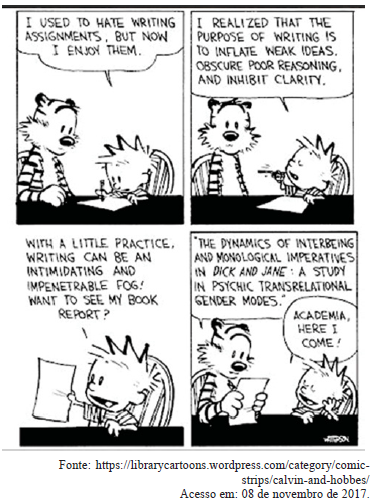
Na tirinha ao lado:
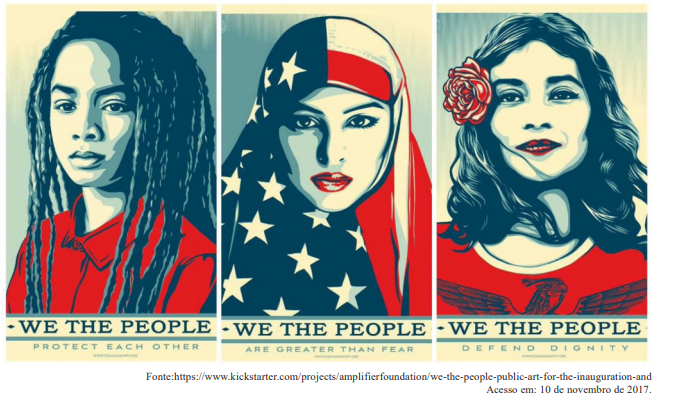
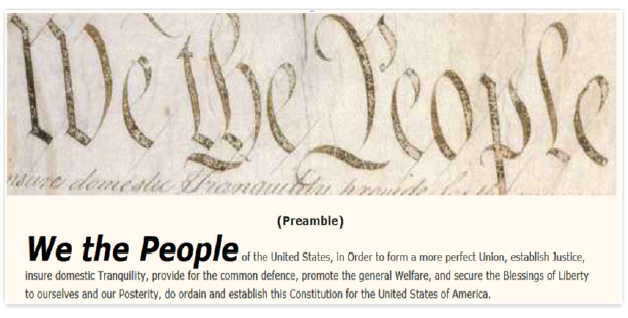
Fonte: http://constitutionus.com/ Acesso em: 10 de novembro de 2017.
Nesse sentido, a mensagem verbo-visual dos referidos cartazes busca:
At Hwaban, Mihyun Han with her husband, Key Kim, will present their take on Korean fare, traditional and personalized with modern touches. The serene, neutral-toned dining room with pale brick walls, accented by dark furniture, is the setting for their varied menu. Some of the small plates to start are shrimp or scallop, an organic egg with king crab in a pine nut sauce, and pan-seared zucchini with shrimp in a soy sauce. More substantial dishes include poached lemon sole with vegetables, chicken with root vegetables, and grilled New York strip steak with Korean mountain greens and mustard dressing. Classics like bibimbap, kimchi stew with pork belly, and galbi (short ribs) are also served, and there is a set array of dishes called Hwaban Table. The name of the restaurant means “as beautiful as a flower,” and there are floral elements in the dining room and on some plates.
(Florence Fabricant. www.nytimes.com, 14.08.2018. Adaptado.)
At Hwaban, Mihyun Han with her husband, Key Kim, will present their take on Korean fare, traditional and personalized with modern touches. The serene, neutral-toned dining room with pale brick walls, accented by dark furniture, is the setting for their varied menu. Some of the small plates to start are shrimp or scallop, an organic egg with king crab in a pine nut sauce, and pan-seared zucchini with shrimp in a soy sauce. More substantial dishes include poached lemon sole with vegetables, chicken with root vegetables, and grilled New York strip steak with Korean mountain greens and mustard dressing. Classics like bibimbap, kimchi stew with pork belly, and galbi (short ribs) are also served, and there is a set array of dishes called Hwaban Table. The name of the restaurant means “as beautiful as a flower,” and there are floral elements in the dining room and on some plates.
(Florence Fabricant. www.nytimes.com, 14.08.2018. Adaptado.)
Fake news can distort people’s beliefs even after being debunked. A study recently published in the journal Intelligence suggests that some people may have an especially difficult time rejecting misinformation. Asked to rate a fictitious person on a range of character traits, people who scored low on a test of cognitive ability continued to be influenced by damaging information about the person even after they were explicitly told the information was false. The study is significant because it identifies what may be a major risk factor for vulnerability to fake news.
One possible explanation for this finding is based on the theory that a person’s cognitive ability reflects how well they can regulate the contents of working memory – their “mental workspace” for processing information. First proposed by the cognitive psychologists Lynn Hasher and Rose Zacks, this theory holds that some people are more prone to “mental clutter” than other people. In other words, some people are less able to discard (or “inhibit”) information from their working memory that is no longer relevant to the task at hand, or information that has been discredited. Research on cognitive aging indicates that, in adulthood, this ability declines considerably with advancing age, suggesting that older adults may also be especially vulnerable to fake news. Another reason why cognitive ability may predict vulnerability to fake news is that it correlates highly with education. Through education, people may develop meta-cognitive skills – strategies for monitoring and regulating one’s own thinking – that can be used to combat the effects of misinformation.
(www.scientificamerican.com, 06.02.2018. Adaptado.)
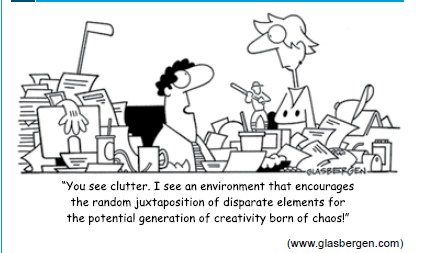
A partir da associação entre o texto e o cartum, depreende-
-se que a expressão “mental clutter”, empregada no segundo
parágrafo do texto, significa
Fake news can distort people’s beliefs even after being debunked. A study recently published in the journal Intelligence suggests that some people may have an especially difficult time rejecting misinformation. Asked to rate a fictitious person on a range of character traits, people who scored low on a test of cognitive ability continued to be influenced by damaging information about the person even after they were explicitly told the information was false. The study is significant because it identifies what may be a major risk factor for vulnerability to fake news.
One possible explanation for this finding is based on the theory that a person’s cognitive ability reflects how well they can regulate the contents of working memory – their “mental workspace” for processing information. First proposed by the cognitive psychologists Lynn Hasher and Rose Zacks, this theory holds that some people are more prone to “mental clutter” than other people. In other words, some people are less able to discard (or “inhibit”) information from their working memory that is no longer relevant to the task at hand, or information that has been discredited. Research on cognitive aging indicates that, in adulthood, this ability declines considerably with advancing age, suggesting that older adults may also be especially vulnerable to fake news. Another reason why cognitive ability may predict vulnerability to fake news is that it correlates highly with education. Through education, people may develop meta-cognitive skills – strategies for monitoring and regulating one’s own thinking – that can be used to combat the effects of misinformation.
(www.scientificamerican.com, 06.02.2018. Adaptado.)
Fake news can distort people’s beliefs even after being debunked. A study recently published in the journal Intelligence suggests that some people may have an especially difficult time rejecting misinformation. Asked to rate a fictitious person on a range of character traits, people who scored low on a test of cognitive ability continued to be influenced by damaging information about the person even after they were explicitly told the information was false. The study is significant because it identifies what may be a major risk factor for vulnerability to fake news.
One possible explanation for this finding is based on the theory that a person’s cognitive ability reflects how well they can regulate the contents of working memory – their “mental workspace” for processing information. First proposed by the cognitive psychologists Lynn Hasher and Rose Zacks, this theory holds that some people are more prone to “mental clutter” than other people. In other words, some people are less able to discard (or “inhibit”) information from their working memory that is no longer relevant to the task at hand, or information that has been discredited. Research on cognitive aging indicates that, in adulthood, this ability declines considerably with advancing age, suggesting that older adults may also be especially vulnerable to fake news. Another reason why cognitive ability may predict vulnerability to fake news is that it correlates highly with education. Through education, people may develop meta-cognitive skills – strategies for monitoring and regulating one’s own thinking – that can be used to combat the effects of misinformation.
(www.scientificamerican.com, 06.02.2018. Adaptado.)
Disponível em:<http://culturaesquizofrenica.blogspot.com/2012/02/historias-cruzadas-help.html>. Acesso em: 17 out. 2018.
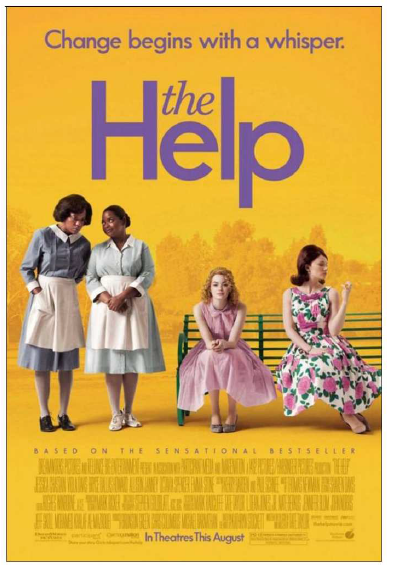
The four women shown in the picture (Text 3) are in different positions: two standing and two sitting. These positions may be related to
Read the ad.
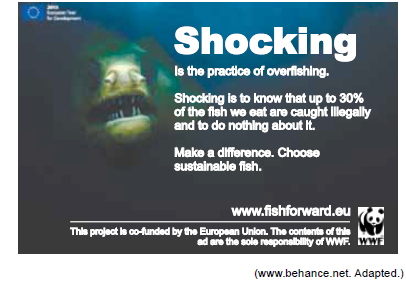
This piece of advertisement is asking people to make a
difference by


 Conheça nossos planos