Questões de Vestibular Sobre inglês
Foram encontradas 6.365 questões


(www.thesunshinegrove.blogspot.com.br) accessed on March 27th, 2018
Responda a questão de acordo com o texto de Lauren Camera.
Supreme Court Expands Rights for Students with Disabilities
By Lauren Camera, Education Reporter - March 22, 2017. Adaptado.
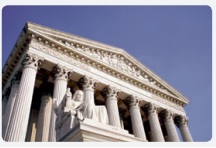
In a unanimous decision with major implications for students with disabilities, the U.S. Supreme Court ruled Wednesday that schools must provide higher educational standards for children with special needs. Schools must do more than provide a ‘merely more than de minimis’ education for students with disabilities and instead must provide them with an opportunity to make "appropriately ambitious" progress in line with the federal education law.
“When all is said and done,” wrote Chief Justice John G. Roberts, “a student offered an education program providing a ‘merely more than de minimis’ progress from year to year can hardly be said to have been offered an education at all.” He continued, citing a 1982 Supreme Court ruling on special education: “For children with disabilities, receiving an instruction that aims so low would be equivalent to ‘sitting idly... awaiting the time when they were old enough to drop out.’”
There are roughly 6.4 million students with disabilities between ages 3 to 21, representing roughly 13 percent of all students, according to Institute for Education Statistics. Each year 300,000 of those students leave school and just 65 percent of students with disabilities complete high school.
The case which culminated in the Supreme Court decision originated with an autistic boy in Colorado named Endrew. His parents pulled him out of school in 5th grade because they disagreed with his individualized education plan. Under federal law, the Individuals with Disabilities Education Act (IDEA), schools must work with families to develop individualized learning plans for students with disabilities.
While Endrew had been making progress in the public schools, his parents felt his plan for that year simply replicated goals from years past. As a result, they enrolled him in a private school where, they argued, Endrew made academic and social progress.
Seeking tuition reimbursement*, they filed a complaint with the state’s department of education in which they argued that Endrew had been denied a "free appropriate public education". The school district won the suit, and when his parents filed a lawsuit in federal district court, the judge also sided with the school district. In the Supreme Court case, Endrew and his family asked for clarification about the type of education benefits the federal law requires of schools, specifically, whether it requires ‘merely more than de minimis’, or something greater.
“The IDEA demands more,” Roberts wrote in the opinion. “It requires an educational program reasonably calculated to enable a child to make progress appropriate in light of the child’s circumstances.”
*reimbursement – a sum paid to cover money that has been spent or lost.
In:<https://www.usnews.com/news/education-news/articles/2017-03-22/supreme-court-expands-rights-for-students-with-disabilities>
Responda a questão de acordo com o texto de Lauren Camera.
Supreme Court Expands Rights for Students with Disabilities
By Lauren Camera, Education Reporter - March 22, 2017. Adaptado.
In a unanimous decision with major implications for students with disabilities, the U.S. Supreme Court ruled Wednesday that schools must provide higher educational standards for children with special needs. Schools must do more than provide a ‘merely more than de minimis’ education for students with disabilities and instead must provide them with an opportunity to make "appropriately ambitious" progress in line with the federal education law.
“When all is said and done,” wrote Chief Justice John G. Roberts, “a student offered an education program providing a ‘merely more than de minimis’ progress from year to year can hardly be said to have been offered an education at all.” He continued, citing a 1982 Supreme Court ruling on special education: “For children with disabilities, receiving an instruction that aims so low would be equivalent to ‘sitting idly... awaiting the time when they were old enough to drop out.’”
There are roughly 6.4 million students with disabilities between ages 3 to 21, representing roughly 13 percent of all students, according to Institute for Education Statistics. Each year 300,000 of those students leave school and just 65 percent of students with disabilities complete high school.
The case which culminated in the Supreme Court decision originated with an autistic boy in Colorado named Endrew. His parents pulled him out of school in 5th grade because they disagreed with his individualized education plan. Under federal law, the Individuals with Disabilities Education Act (IDEA), schools must work with families to develop individualized learning plans for students with disabilities.
While Endrew had been making progress in the public schools, his parents felt his plan for that year simply replicated goals from years past. As a result, they enrolled him in a private school where, they argued, Endrew made academic and social progress.
Seeking tuition reimbursement*, they filed a complaint with the state’s department of education in which they argued that Endrew had been denied a "free appropriate public education". The school district won the suit, and when his parents filed a lawsuit in federal district court, the judge also sided with the school district. In the Supreme Court case, Endrew and his family asked for clarification about the type of education benefits the federal law requires of schools, specifically, whether it requires ‘merely more than de minimis’, or something greater.
“The IDEA demands more,” Roberts wrote in the opinion. “It requires an educational program reasonably calculated to enable a child to make progress appropriate in light of the child’s circumstances.”
*reimbursement – a sum paid to cover money that has been spent or lost.
In:<https://www.usnews.com/news/education-news/articles/2017-03-22/supreme-court-expands-rights-for-students-with-disabilities>
Responda a questão de acordo com o texto de Lauren Camera.
Supreme Court Expands Rights for Students with Disabilities
By Lauren Camera, Education Reporter - March 22, 2017. Adaptado.
In a unanimous decision with major implications for students with disabilities, the U.S. Supreme Court ruled Wednesday that schools must provide higher educational standards for children with special needs. Schools must do more than provide a ‘merely more than de minimis’ education for students with disabilities and instead must provide them with an opportunity to make "appropriately ambitious" progress in line with the federal education law.
“When all is said and done,” wrote Chief Justice John G. Roberts, “a student offered an education program providing a ‘merely more than de minimis’ progress from year to year can hardly be said to have been offered an education at all.” He continued, citing a 1982 Supreme Court ruling on special education: “For children with disabilities, receiving an instruction that aims so low would be equivalent to ‘sitting idly... awaiting the time when they were old enough to drop out.’”
There are roughly 6.4 million students with disabilities between ages 3 to 21, representing roughly 13 percent of all students, according to Institute for Education Statistics. Each year 300,000 of those students leave school and just 65 percent of students with disabilities complete high school.
The case which culminated in the Supreme Court decision originated with an autistic boy in Colorado named Endrew. His parents pulled him out of school in 5th grade because they disagreed with his individualized education plan. Under federal law, the Individuals with Disabilities Education Act (IDEA), schools must work with families to develop individualized learning plans for students with disabilities.
While Endrew had been making progress in the public schools, his parents felt his plan for that year simply replicated goals from years past. As a result, they enrolled him in a private school where, they argued, Endrew made academic and social progress.
Seeking tuition reimbursement*, they filed a complaint with the state’s department of education in which they argued that Endrew had been denied a "free appropriate public education". The school district won the suit, and when his parents filed a lawsuit in federal district court, the judge also sided with the school district. In the Supreme Court case, Endrew and his family asked for clarification about the type of education benefits the federal law requires of schools, specifically, whether it requires ‘merely more than de minimis’, or something greater.
“The IDEA demands more,” Roberts wrote in the opinion. “It requires an educational program reasonably calculated to enable a child to make progress appropriate in light of the child’s circumstances.”
*reimbursement – a sum paid to cover money that has been spent or lost.
In:<https://www.usnews.com/news/education-news/articles/2017-03-22/supreme-court-expands-rights-for-students-with-disabilities>
Responda a questão de acordo com o texto de Lauren Camera.
Supreme Court Expands Rights for Students with Disabilities
By Lauren Camera, Education Reporter - March 22, 2017. Adaptado.
In a unanimous decision with major implications for students with disabilities, the U.S. Supreme Court ruled Wednesday that schools must provide higher educational standards for children with special needs. Schools must do more than provide a ‘merely more than de minimis’ education for students with disabilities and instead must provide them with an opportunity to make "appropriately ambitious" progress in line with the federal education law.
“When all is said and done,” wrote Chief Justice John G. Roberts, “a student offered an education program providing a ‘merely more than de minimis’ progress from year to year can hardly be said to have been offered an education at all.” He continued, citing a 1982 Supreme Court ruling on special education: “For children with disabilities, receiving an instruction that aims so low would be equivalent to ‘sitting idly... awaiting the time when they were old enough to drop out.’”
There are roughly 6.4 million students with disabilities between ages 3 to 21, representing roughly 13 percent of all students, according to Institute for Education Statistics. Each year 300,000 of those students leave school and just 65 percent of students with disabilities complete high school.
The case which culminated in the Supreme Court decision originated with an autistic boy in Colorado named Endrew. His parents pulled him out of school in 5th grade because they disagreed with his individualized education plan. Under federal law, the Individuals with Disabilities Education Act (IDEA), schools must work with families to develop individualized learning plans for students with disabilities.
While Endrew had been making progress in the public schools, his parents felt his plan for that year simply replicated goals from years past. As a result, they enrolled him in a private school where, they argued, Endrew made academic and social progress.
Seeking tuition reimbursement*, they filed a complaint with the state’s department of education in which they argued that Endrew had been denied a "free appropriate public education". The school district won the suit, and when his parents filed a lawsuit in federal district court, the judge also sided with the school district. In the Supreme Court case, Endrew and his family asked for clarification about the type of education benefits the federal law requires of schools, specifically, whether it requires ‘merely more than de minimis’, or something greater.
“The IDEA demands more,” Roberts wrote in the opinion. “It requires an educational program reasonably calculated to enable a child to make progress appropriate in light of the child’s circumstances.”
*reimbursement – a sum paid to cover money that has been spent or lost.
In:<https://www.usnews.com/news/education-news/articles/2017-03-22/supreme-court-expands-rights-for-students-with-disabilities>
Responda a questão de acordo com o texto de Lauren Camera.
Supreme Court Expands Rights for Students with Disabilities
By Lauren Camera, Education Reporter - March 22, 2017. Adaptado.
In a unanimous decision with major implications for students with disabilities, the U.S. Supreme Court ruled Wednesday that schools must provide higher educational standards for children with special needs. Schools must do more than provide a ‘merely more than de minimis’ education for students with disabilities and instead must provide them with an opportunity to make "appropriately ambitious" progress in line with the federal education law.
“When all is said and done,” wrote Chief Justice John G. Roberts, “a student offered an education program providing a ‘merely more than de minimis’ progress from year to year can hardly be said to have been offered an education at all.” He continued, citing a 1982 Supreme Court ruling on special education: “For children with disabilities, receiving an instruction that aims so low would be equivalent to ‘sitting idly... awaiting the time when they were old enough to drop out.’”
There are roughly 6.4 million students with disabilities between ages 3 to 21, representing roughly 13 percent of all students, according to Institute for Education Statistics. Each year 300,000 of those students leave school and just 65 percent of students with disabilities complete high school.
The case which culminated in the Supreme Court decision originated with an autistic boy in Colorado named Endrew. His parents pulled him out of school in 5th grade because they disagreed with his individualized education plan. Under federal law, the Individuals with Disabilities Education Act (IDEA), schools must work with families to develop individualized learning plans for students with disabilities.
While Endrew had been making progress in the public schools, his parents felt his plan for that year simply replicated goals from years past. As a result, they enrolled him in a private school where, they argued, Endrew made academic and social progress.
Seeking tuition reimbursement*, they filed a complaint with the state’s department of education in which they argued that Endrew had been denied a "free appropriate public education". The school district won the suit, and when his parents filed a lawsuit in federal district court, the judge also sided with the school district. In the Supreme Court case, Endrew and his family asked for clarification about the type of education benefits the federal law requires of schools, specifically, whether it requires ‘merely more than de minimis’, or something greater.
“The IDEA demands more,” Roberts wrote in the opinion. “It requires an educational program reasonably calculated to enable a child to make progress appropriate in light of the child’s circumstances.”
*reimbursement – a sum paid to cover money that has been spent or lost.
In:<https://www.usnews.com/news/education-news/articles/2017-03-22/supreme-court-expands-rights-for-students-with-disabilities>
DIFFERENCE BETWEEN AMERICAN AND BRITISH
VERSIONS OF HARRY POTTER SERIES
Philosopher’s vs. Sorcerer
When Scholastic was publishing Harry Potter and the Philosopher’s Stone in America, they decided to rename the book Harry Potter and the Sorcerer’s Stone. They claimed that the American and British uses of the word philosopher were a bit different, so therefore sorcerer was a more appropriate word. Any true Harry Potter fan, American or British, Australian or Hungarian, I’m sure will agree with MuggleMix when we say that decision should not have been made the reasons are:
1) J.K. Rowling said so therefore it must be true. She says that if she was in a better position, she would have disagreed at the time.
2) It belittles Americans, making it seem as if they do not understand what the word “philosopher” means. Americans are smarter than that.
3) Sorcerer is unspecific. The stone could have belonged to anybody with magical powers in the book. But the British name defines who the stone belongs to and gives the name an entirely different meaning. Sorcerer is a very different word to philosopher.
4) The stone is referred to as the “Philosopher’s Stone” throughout J.K. Rowling’s original version, never the “Sorcerer’s Stone”, so why should the most central object of the book be labeled something completely different in the book title, even if its just being published in a different place?
5) How is the word “philosopher” in Britain different from the word “sorcerer” in America?
6) Philosopher’s Stone is actually a historical object that people used to search for, while the Sorcerer’s Stone has no factual background in real life.
Ah well…
Other terminology
There are some other minor changes that occurred in case Americans got confused. Some ones, such as turning “mum” into “mom” and “trainers” into “sneakers”, J.K. Rowling refused to let happen. However, she allowed some changes to be made that, if they were not made, would befuddle the readers:
UK: Skip – US: Dumpster
UK: Minister for Magic – US: Minister of Magic
[…]
UK: Car park – US: Parking lot
[…]
Disponível em http://w w w .fanpop.com/clubs/harry-potter/articles/4309/title/difference-between-american-british-versions-harry-potter-series. Acesso em nov. 2015.
Com base no texto, analise as afirmativas.
I. A palavra ‘filosofal’ aparece como ‘sorcerer’, na edição americana do livro “Harry Potter e a pedra filosofal” (editora Scholastic), e ‘philosopher’, na edição britânica (editora Bloomsbury), porque a editora americana achou que a palavra ‘sorcerer’ daria mais credibilidade à obra.
II. Um dos argumentos do texto contrários à mudança do título em inglês, de ‘philosopher’ para ‘sorcerer’, é a de que os editores estariam menosprezando a capacidade de compreensão dos americanos, já que a alegação foi a de que o uso da palavra ‘philosopher’ tem pequenas variações no inglês britânico e no norteamericano.
III. A autora do livro, J.K. Rowling, confirmou que a mudança ocorreu porque o uso da palavra ‘philosopher’ difere na cultura norte-americana e na britânica e que, por esse motivo, ela concordou com a editora Scholastic.
IV. O autor do artigo argumenta que o termo ‘sorcerer’ (em inglês americano) deixa em aberto quem seria o dono da pedra na estória, enquanto o termo ‘philosopher’ (em inglês britânico) é mais específico, definindo, deste modo, quem é o dono da pedra.
V. Houve trocas de algumas outras palavras no livro, porque são usadas de modo diferente pelos norte-americanos e pelos ingleses, por exemplo, cab (Br) mudou para taxi (Am), sneakers (Br) mudou para tennis shoes (Am), dust (Br) mudou para garbage (Am), etc.
Com base no texto e nas afirmativas, assinale a
alternativa correta.
DIFFERENCE BETWEEN AMERICAN AND BRITISH
VERSIONS OF HARRY POTTER SERIES
Philosopher’s vs. Sorcerer
When Scholastic was publishing Harry Potter and the Philosopher’s Stone in America, they decided to rename the book Harry Potter and the Sorcerer’s Stone. They claimed that the American and British uses of the word philosopher were a bit different, so therefore sorcerer was a more appropriate word. Any true Harry Potter fan, American or British, Australian or Hungarian, I’m sure will agree with MuggleMix when we say that decision should not have been made the reasons are:
1) J.K. Rowling said so therefore it must be true. She says that if she was in a better position, she would have disagreed at the time.
2) It belittles Americans, making it seem as if they do not understand what the word “philosopher” means. Americans are smarter than that.
3) Sorcerer is unspecific. The stone could have belonged to anybody with magical powers in the book. But the British name defines who the stone belongs to and gives the name an entirely different meaning. Sorcerer is a very different word to philosopher.
4) The stone is referred to as the “Philosopher’s Stone” throughout J.K. Rowling’s original version, never the “Sorcerer’s Stone”, so why should the most central object of the book be labeled something completely different in the book title, even if its just being published in a different place?
5) How is the word “philosopher” in Britain different from the word “sorcerer” in America?
6) Philosopher’s Stone is actually a historical object that people used to search for, while the Sorcerer’s Stone has no factual background in real life.
Ah well…
Other terminology
There are some other minor changes that occurred in case Americans got confused. Some ones, such as turning “mum” into “mom” and “trainers” into “sneakers”, J.K. Rowling refused to let happen. However, she allowed some changes to be made that, if they were not made, would befuddle the readers:
UK: Skip – US: Dumpster
UK: Minister for Magic – US: Minister of Magic
[…]
UK: Car park – US: Parking lot
[…]
Disponível em http://w w w .fanpop.com/clubs/harry-potter/articles/4309/title/difference-between-american-british-versions-harry-potter-series. Acesso em nov. 2015.


 Conheça nossos planos