Questões de Vestibular Sobre inglês
Foram encontradas 6.365 questões


Read the graph below and answer the following question.
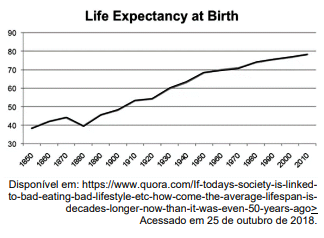
According to the graph above we can assert that
Read the graph below and answer the following question.
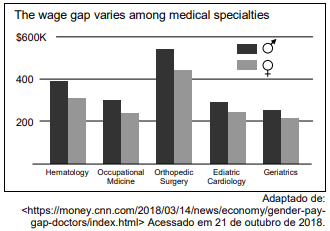
According to the graph above it is true to assert that
Read the text below and answer the following question.
Can Cellular Agriculture Feed the World?
Within 20 years, there will be 2 billion more people than today — over 9 billion people in total. The impact to the environment could be severe. Just feeding that population using current methods is problematic.
On average, cattle ranchers need 100 times more land than corn growers to produce a gram of food. So, if that hungry world continues to eat meat like we do, the demand for land — and fresh water — will be alarming, not to mention the environmental impact of raising so many animals. Meat production aside, the large-scale monoculture of crops like corn usually results in damaging terrestrial pollution from pesticides and soil depletion. The impact to the oceans is equally perilous.
Instead of farming animals, fish and plants, cellular agriculture grows the proteins and nutrients we consume from a culture, cell by cell. With this alternative approach, the consumable meat and plant tissues produced don’t need to be harvested from animals or plants. It’s food production on an industrial scale.
The technology to do this is not new. Growing meat from a scaffold embedded in growth culture is no different in theory than making bread from yeast. The vast majority of insulin for diabetics is already manufactured by genetically engineered bacteria, as is the rennet used to culture cheese. In the past 10 years, this approach has been pioneered with a variety of foodstuffs: milk, eggs, beef, chicken, fish — even coffee.
To succeed, cellular agriculture must overcome 6,000 years of established dependence on traditional agriculture, and it has to do so via one of the most finicky human senses: taste. No one will eat manufactured meat or fish if it doesn’t have the same sensual satisfaction generated by the grown version. So, in addition to all the technical challenges in creating edible tissues from cultures, the startups pioneering this approach are working diligently to make their products tasty.
The possibilities for cellular agriculture are seemingly limitless; it may be possible to grow human organs for transplant using the method. But it is still early days.
Adaptado de: <https://earth911.com/business-policy/cellular-agriculture/>
Read the text below and answer the following question.
Can Cellular Agriculture Feed the World?
Within 20 years, there will be 2 billion more people than today — over 9 billion people in total. The impact to the environment could be severe. Just feeding that population using current methods is problematic.
On average, cattle ranchers need 100 times more land than corn growers to produce a gram of food. So, if that hungry world continues to eat meat like we do, the demand for land — and fresh water — will be alarming, not to mention the environmental impact of raising so many animals. Meat production aside, the large-scale monoculture of crops like corn usually results in damaging terrestrial pollution from pesticides and soil depletion. The impact to the oceans is equally perilous.
Instead of farming animals, fish and plants, cellular agriculture grows the proteins and nutrients we consume from a culture, cell by cell. With this alternative approach, the consumable meat and plant tissues produced don’t need to be harvested from animals or plants. It’s food production on an industrial scale.
The technology to do this is not new. Growing meat from a scaffold embedded in growth culture is no different in theory than making bread from yeast. The vast majority of insulin for diabetics is already manufactured by genetically engineered bacteria, as is the rennet used to culture cheese. In the past 10 years, this approach has been pioneered with a variety of foodstuffs: milk, eggs, beef, chicken, fish — even coffee.
To succeed, cellular agriculture must overcome 6,000 years of established dependence on traditional agriculture, and it has to do so via one of the most finicky human senses: taste. No one will eat manufactured meat or fish if it doesn’t have the same sensual satisfaction generated by the grown version. So, in addition to all the technical challenges in creating edible tissues from cultures, the startups pioneering this approach are working diligently to make their products tasty.
The possibilities for cellular agriculture are seemingly limitless; it may be possible to grow human organs for transplant using the method. But it is still early days.
Adaptado de: <https://earth911.com/business-policy/cellular-agriculture/>
Read the text below and answer the following question.
Can Cellular Agriculture Feed the World?
Within 20 years, there will be 2 billion more people than today — over 9 billion people in total. The impact to the environment could be severe. Just feeding that population using current methods is problematic.
On average, cattle ranchers need 100 times more land than corn growers to produce a gram of food. So, if that hungry world continues to eat meat like we do, the demand for land — and fresh water — will be alarming, not to mention the environmental impact of raising so many animals. Meat production aside, the large-scale monoculture of crops like corn usually results in damaging terrestrial pollution from pesticides and soil depletion. The impact to the oceans is equally perilous.
Instead of farming animals, fish and plants, cellular agriculture grows the proteins and nutrients we consume from a culture, cell by cell. With this alternative approach, the consumable meat and plant tissues produced don’t need to be harvested from animals or plants. It’s food production on an industrial scale.
The technology to do this is not new. Growing meat from a scaffold embedded in growth culture is no different in theory than making bread from yeast. The vast majority of insulin for diabetics is already manufactured by genetically engineered bacteria, as is the rennet used to culture cheese. In the past 10 years, this approach has been pioneered with a variety of foodstuffs: milk, eggs, beef, chicken, fish — even coffee.
To succeed, cellular agriculture must overcome 6,000 years of established dependence on traditional agriculture, and it has to do so via one of the most finicky human senses: taste. No one will eat manufactured meat or fish if it doesn’t have the same sensual satisfaction generated by the grown version. So, in addition to all the technical challenges in creating edible tissues from cultures, the startups pioneering this approach are working diligently to make their products tasty.
The possibilities for cellular agriculture are seemingly limitless; it may be possible to grow human organs for transplant using the method. But it is still early days.
Adaptado de: <https://earth911.com/business-policy/cellular-agriculture/>

Natural selection gave a freediving people in Southeast Asia bigger spleens
The Bajau people of Southeast Asia, known as Sea Nomads, spend their whole lives at sea, working eight-hour diving shifts with traditional equipment and short breaks to catch fish and shellfish for their families. In a study published April 19 in the journal Cell, researchers report that the extraordinary diving abilities of the Bajau may be thanks in part to their unusually large spleens. The adaptation, the researchers say, is a rare example of natural selection in modern humans -- and one that could provide medically relevant insight into how humans manage acute hypoxia.
Vocabulary: Spleens – baços
Hypoxia – hipóxia (baixa concentração de oxigênio nos tecidos)
Story from Science Daily
https://www.sciencedaily.com/releases/2018/04/180419131128.htm
Published: 19 April 2018
Segundo o estudo apresentado,
A University of Montana researcher and her collaborators have published a new study that reveals increased risks for Alzheimer's and suicide among children and young adults living in polluted megacities.
Story from Science Daily https://www.sciencedaily.com/releases/2018/04/180413155259.htm Published: 13 April 2018
Podemos afirmar que
Smartphones are an integral part of most people's lives, allowing us to stay connected and in-the-know at all times. The downside of that convenience is that many of us are also addicted to the constant pings, chimes, vibrations and other alerts from our devices, unable to ignore new emails, texts and images. In a new study published in NeuroRegulation, San Francisco State University Professor of Health Education Erik Peper and Associate Professor of Health Education Richard Harvey argue that overuse of smart phones is just like any other type of substance abuse.
Story from: Science Daily https://www.sciencedaily.com/releases/2018/04/180411161316.htm Published: 11 April 2018
Segundo o texto,

Beyonce, colorism, and why all of this needs to end
by Ernest Owens
Yes, the Super Bowl was on fire. As one who is very critical of halftime show performances, I cannot deny that Beyoncé brought the energy and attention. All of this led to her releasing her tour dates for the Mrs. Carter Show. As excited as I was to actually buy these tickets, something turned me off. The poster.

If you haven’t seen the photographs for Beyonce’s new world tour, you probably wouldn’t even recognize her. You will see an image of what looks like a Victorian white woman in the Elizabethan era. Her (prosthetic) blonde hair puffed and extended to reveal a face that is almost as white as snow. Lips red and her skin powdered. This is not the same bronze Beyonce that I saw rocking the stage in an all female band with her darker Destiny’s Child counterparts. I was only left with memories of previous patterns that the multi-Grammy award winning artist had done in previous years in regards to her skin. And I asked myself the question: why, Bey?
Let’s not act like this is something new. Over the years, it seems as though Beyonce has gotten lighter as she has gotten older. No, this is not genetics and let’s not pretend her skin color in her first Destiny’s Child album cover matches that of her latest album. Whether it is that highly controversial Revlon advertisement or her own album cover art, Beyonce has consistently been called out on alterations done to her pigments.
What does this say about our society for black women? It tells me that, an independent, confident and successful woman of color still struggles to have the confidence to fully embrace the skin she is in. If one of the most powerful women in entertainment feels she has to lighten her skin for projection, what does that say for the rest of us?
Believe it or not, colorism, the stigma associated with skin complexion, has been an ill that has not yet been dissolved by the black community. What was first given to us by slave masters in separating the house slaves from the field ones, has now taken place in how we objectify our women and each other.
This is pretty problematic in many ways. It’s first of all self-loathing and unnecessary for today’s times. The fact that our nation had an African-American first lady with a complexion that isn’t on the lighter side of the spectrum, nor does it try to be, shows a compelling advancement in appreciation for all women of color in many ways.
Furthermore, the only reason why such stigma in our country continues is contributed to our own behavior that is shaped by the influential people of color around us. It devastated me when I saw that Sammy Sosa had lightened his skin. As successful as he was in a field that was not necessarily fixated on male skin complexion, it saddened me to see him do it. In many ways, it even made me reflect back on the transition of the late great Michael Jackson and what explanations he had for such a more pale white appearance.
And why does all of this matter? Because I grew up hearing stories of young dark black girls getting their faces scrubbed with skin lightening soaps out of their free will. Tales of young women being abandoned by their mothers because they were too dark.
If this is the reality that had more implications back in the early 20th century than it does now, please stop it. Stop trying to explain why you are dating the ebony skin girl. Stop making it seem exceptional that a girl of a darker complexion is actually attractive. Celebrities, stop putting extraneous powders and lighteners on your skin: we all know what you used to look like and we still love you. And people of color: let’s not continue to perpetuate an oppressive cycle of self-loathing of our appearance and heritage. If this can be accomplished, then perhaps even in our own race we can truly make our lives not be judged by the color of our skin but by the content of our character.
(adapted from www.huffingtonpost.com, 14/02/2013)
Beyonce, colorism, and why all of this needs to end
by Ernest Owens
Yes, the Super Bowl was on fire. As one who is very critical of halftime show performances, I cannot deny that Beyoncé brought the energy and attention. All of this led to her releasing her tour dates for the Mrs. Carter Show. As excited as I was to actually buy these tickets, something turned me off. The poster.
If you haven’t seen the photographs for Beyonce’s new world tour, you probably wouldn’t even recognize her. You will see an image of what looks like a Victorian white woman in the Elizabethan era. Her (prosthetic) blonde hair puffed and extended to reveal a face that is almost as white as snow. Lips red and her skin powdered. This is not the same bronze Beyonce that I saw rocking the stage in an all female band with her darker Destiny’s Child counterparts. I was only left with memories of previous patterns that the multi-Grammy award winning artist had done in previous years in regards to her skin. And I asked myself the question: why, Bey?
Let’s not act like this is something new. Over the years, it seems as though Beyonce has gotten lighter as she has gotten older. No, this is not genetics and let’s not pretend her skin color in her first Destiny’s Child album cover matches that of her latest album. Whether it is that highly controversial Revlon advertisement or her own album cover art, Beyonce has consistently been called out on alterations done to her pigments.
What does this say about our society for black women? It tells me that, an independent, confident and successful woman of color still struggles to have the confidence to fully embrace the skin she is in. If one of the most powerful women in entertainment feels she has to lighten her skin for projection, what does that say for the rest of us?
Believe it or not, colorism, the stigma associated with skin complexion, has been an ill that has not yet been dissolved by the black community. What was first given to us by slave masters in separating the house slaves from the field ones, has now taken place in how we objectify our women and each other.
This is pretty problematic in many ways. It’s first of all self-loathing and unnecessary for today’s times. The fact that our nation had an African-American first lady with a complexion that isn’t on the lighter side of the spectrum, nor does it try to be, shows a compelling advancement in appreciation for all women of color in many ways.
Furthermore, the only reason why such stigma in our country continues is contributed to our own behavior that is shaped by the influential people of color around us. It devastated me when I saw that Sammy Sosa had lightened his skin. As successful as he was in a field that was not necessarily fixated on male skin complexion, it saddened me to see him do it. In many ways, it even made me reflect back on the transition of the late great Michael Jackson and what explanations he had for such a more pale white appearance.
And why does all of this matter? Because I grew up hearing stories of young dark black girls getting their faces scrubbed with skin lightening soaps out of their free will. Tales of young women being abandoned by their mothers because they were too dark.
If this is the reality that had more implications back in the early 20th century than it does now, please stop it. Stop trying to explain why you are dating the ebony skin girl. Stop making it seem exceptional that a girl of a darker complexion is actually attractive. Celebrities, stop putting extraneous powders and lighteners on your skin: we all know what you used to look like and we still love you. And people of color: let’s not continue to perpetuate an oppressive cycle of self-loathing of our appearance and heritage. If this can be accomplished, then perhaps even in our own race we can truly make our lives not be judged by the color of our skin but by the content of our character.
(adapted from www.huffingtonpost.com, 14/02/2013)
Beyonce, colorism, and why all of this needs to end
by Ernest Owens
Yes, the Super Bowl was on fire. As one who is very critical of halftime show performances, I cannot deny that Beyoncé brought the energy and attention. All of this led to her releasing her tour dates for the Mrs. Carter Show. As excited as I was to actually buy these tickets, something turned me off. The poster.
If you haven’t seen the photographs for Beyonce’s new world tour, you probably wouldn’t even recognize her. You will see an image of what looks like a Victorian white woman in the Elizabethan era. Her (prosthetic) blonde hair puffed and extended to reveal a face that is almost as white as snow. Lips red and her skin powdered. This is not the same bronze Beyonce that I saw rocking the stage in an all female band with her darker Destiny’s Child counterparts. I was only left with memories of previous patterns that the multi-Grammy award winning artist had done in previous years in regards to her skin. And I asked myself the question: why, Bey?
Let’s not act like this is something new. Over the years, it seems as though Beyonce has gotten lighter as she has gotten older. No, this is not genetics and let’s not pretend her skin color in her first Destiny’s Child album cover matches that of her latest album. Whether it is that highly controversial Revlon advertisement or her own album cover art, Beyonce has consistently been called out on alterations done to her pigments.
What does this say about our society for black women? It tells me that, an independent, confident and successful woman of color still struggles to have the confidence to fully embrace the skin she is in. If one of the most powerful women in entertainment feels she has to lighten her skin for projection, what does that say for the rest of us?
Believe it or not, colorism, the stigma associated with skin complexion, has been an ill that has not yet been dissolved by the black community. What was first given to us by slave masters in separating the house slaves from the field ones, has now taken place in how we objectify our women and each other.
This is pretty problematic in many ways. It’s first of all self-loathing and unnecessary for today’s times. The fact that our nation had an African-American first lady with a complexion that isn’t on the lighter side of the spectrum, nor does it try to be, shows a compelling advancement in appreciation for all women of color in many ways.
Furthermore, the only reason why such stigma in our country continues is contributed to our own behavior that is shaped by the influential people of color around us. It devastated me when I saw that Sammy Sosa had lightened his skin. As successful as he was in a field that was not necessarily fixated on male skin complexion, it saddened me to see him do it. In many ways, it even made me reflect back on the transition of the late great Michael Jackson and what explanations he had for such a more pale white appearance.
And why does all of this matter? Because I grew up hearing stories of young dark black girls getting their faces scrubbed with skin lightening soaps out of their free will. Tales of young women being abandoned by their mothers because they were too dark.
If this is the reality that had more implications back in the early 20th century than it does now, please stop it. Stop trying to explain why you are dating the ebony skin girl. Stop making it seem exceptional that a girl of a darker complexion is actually attractive. Celebrities, stop putting extraneous powders and lighteners on your skin: we all know what you used to look like and we still love you. And people of color: let’s not continue to perpetuate an oppressive cycle of self-loathing of our appearance and heritage. If this can be accomplished, then perhaps even in our own race we can truly make our lives not be judged by the color of our skin but by the content of our character.
(adapted from www.huffingtonpost.com, 14/02/2013)

 Conheça nossos planos