🎯 Saiba o que estudar

Avançado com Treinador a partir de R$ 0,76/dia

Questões de Vestibular Sobre inglês

Questões Discursivas

Foram encontradas 6.365 questões

Q2030404 Inglês
Americans May Add Five Times More Plastic to the Oceans Than Thought

The United States is using more
plastic than ever, and waste exported for
recycling is often mishandled, according
to a new study.
The United States contribution
to coastal plastic pollution worldwide is
significantly larger than previously
thought, possibly by as much as five
times, according to a study published
Friday. The research, published in Science
Advances, is the sequel to a 2015 paper
by the same authors. Two factors
contributed to the sharp increase:
Americans are using more plastic than
ever and the current study included
pollution generated by United States
exports of plastic waste, while the earlier
one did not.
The United States, which does
not have sufficient infrastructure to
handle its recycling demands at home,
exports about half of its recyclable waste.
Of the total exported, about 88 percent
ends up in countries considered to have
inadequate waste management.
“When you consider how much
of our plastic waste isn’t actually
recyclable because it is low-value,
contaminated or difficult to process, it’s
not surprising that a lot of it ends up
polluting the environment,” said the
study’s lead author, Kara Lavender Law,
research professor of oceanography at
Sea Education Association, in a
statement.
The study estimates that in
2016, the United States contributed
between 1.1 and 2.2 million metric tons of
plastic waste to the oceans through a
combination of littering, dumping and 
mismanaged exports. At a minimum,
that’s almost double the total estimated
waste in the team’s previous study. At the
high end, it would be a fivefold increase
over the earlier estimate.
Nicholas Mallos, a senior
director at the Ocean Conservancy and an
author of the study, said the upper
estimate would be equal to a pile of
plastic covering the area of the White
House Lawn and reaching as high as the
Empire State Building.
The ranges are wide partly
because “there’s no real standard for
being able to provide good quality data on
collection and disposal of waste in
general,” said Ted Siegler, a resource
economist at DSM Environmental
Solutions, a consulting firm, and an
author of the study. Mr. Siegler said the
researchers had evaluated waste-disposal
practices in countries around the world
and used their “best professional
judgment” to determine the lowest and
highest amounts of plastic waste likely to
escape into the environment. They settled
on a range of 25 percent to 75 percent.
Tony Walker, an associate
professor at the Dalhousie University
School for Resource and Environmental
Studies in Halifax, Nova Scotia, said that
analyzing waste data can amount to a
“data minefield” because there are no
data standards across municipalities.
Moreover, once plastic waste is shipped
overseas, he said, data is often not
recorded at all.
Nonetheless, Dr. Walker, who
was not involved in the study, said it
could offer a more accurate accounting of
plastic pollution than the previous study,
which likely underestimated the United
States’ contribution. “They’ve put their
best estimate, as accurate as they can be
with this data,” he said, and used ranges,
which underscores that the figures are
estimates.
Of the plastics that go into the
United States recycling system, about 9
percent of the country’s total plastic
waste, there is no guarantee that they’ll
be remade into new consumer goods. New
plastic is so inexpensive to manufacture
that only certain expensive, high-grade
plastics are profitable to recycle within the
United States, which is why roughly half
of the country’s plastic waste was shipped
abroad in 2016, the most recent year for
which data is available.
Since 2016, however, the
recycling landscape has changed. China
and many countries in Southeast Asia
have stopped accepting plastic waste
imports. And lower oil prices have further
reduced the market for recycled plastic.
“What the new study really underscores is
we have to get a handle on source
reduction at home,” Mr. Mallos said. “That
starts with eliminating unnecessary and
problematic single-use plastics.”

From: https://www.nytimes.com/2020/10/30/
As to the use of plastic by Americans, the text mentions that it
Alternativas
Q1796833 Inglês
Read the text to answer question.

     The formula for calculating people’s environmental footprint is simple, but widely misunderstood: Impact = Population x Affluence x Technology (I = PAT). The global rate of consumption growth, before the pandemic, was 3% a year. Population growth is 1%. Some people assume this means that the rise in population bears one-third of the responsibility for increased consumption. But population growth is overwhelmingly concentrated among the world’s poorest people, who have scarcely any A or T to multiply their P.
     Yet it is widely used as a blanket explanation of environment breakdown. Panic about population growth enables the people most responsible for the impacts of rising consumption (the affluent) to blame those who are least responsible.

(George Monbiot. www.theguardian.com, 26.08.2020. Adapted.)
The formula for calculating people’s environmental footprint
Alternativas
Q1796832 Inglês
Read the text to answer question.

     The formula for calculating people’s environmental footprint is simple, but widely misunderstood: Impact = Population x Affluence x Technology (I = PAT). The global rate of consumption growth, before the pandemic, was 3% a year. Population growth is 1%. Some people assume this means that the rise in population bears one-third of the responsibility for increased consumption. But population growth is overwhelmingly concentrated among the world’s poorest people, who have scarcely any A or T to multiply their P.
     Yet it is widely used as a blanket explanation of environment breakdown. Panic about population growth enables the people most responsible for the impacts of rising consumption (the affluent) to blame those who are least responsible.

(George Monbiot. www.theguardian.com, 26.08.2020. Adapted.)
The text states that
Alternativas
Q1796831 Inglês
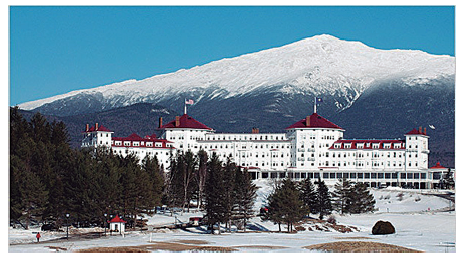
Imagem associada para resolução da questão
(nytimes.com)
Shimmering white and gracefully statuesque, the Mount Washington Hotel is a granite fortress, a manmade anomaly among the raw wilderness of the surrounding White Mountains in remote northern New Hampshire, U.S. Even to this day, the hotel is geographically secured by 800,000 acres of the White Mountain National Forest around it. This was the main reason why the Hotel was chosen for a World War Two meeting – a meeting that shaped present-day global economic policies.
(Linda Laban. www.bbc.com, 26.08.2020. Adapted.)
The term “this”, which introduces the last sentence in the text, refers to the fact that the Mount Washington Hotel
Alternativas
Q1796830 Inglês
The American embassy escaped the blast in Beirut’s port unscathed. Many Western countries either have missions in the city centre or diplomats who live in the area. The wife of the Dutch ambassador was killed, as was a German diplomat. But America’s embassy sits in the mountain village of Awkar, five miles from the port. Security measures are onerous, a hangover from the bombing of the American embassy in Beirut in 1983, which killed 63 people. It took a week before the ambassador, Dorothy Shea, a career diplomat, toured the port. Even on social media it has been far quieter than other foreign powers.
(www.economist.com, 13.08.2020. Adapted.)
The descriptions in the paragraph
Alternativas
Q1796829 Inglês
Read the text and the graphs.
Bypassed by the rescue
In a pandemic that’s wreaked widespread economic havoc, Cleveland has been among the hardesthit cities in the U.S. And at a time when the U.S. is engaged in another conversation about its foundational racial inequalities, not much of Washington’ $2 trillion has reached Cleveland’s predominantly Black neighborhoods.
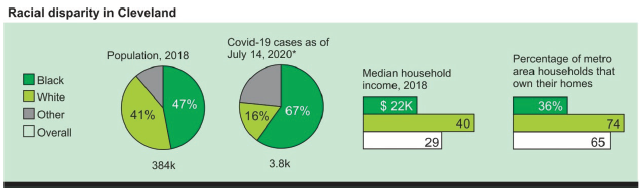
Imagem associada para resolução da questão
(Bloomberg Businessweek, 20.07.2020. Adapted.)
By comparing the text and the graphs it is possible to state that
Alternativas
Q1796828 Inglês
Read the text to answer question.


     We are at the beginning of a long road to rethinking and rebuilding supply chain models to encompass not just financial priorities but also business operations continuity in the most trying of circumstances. Executives from France and Italy, for example, are discussing ways to remake their businesses in the wake of the Covid-19 pandemic. Their specialty is supply chains. They are smart people at the core of the world’s most sophisticated and valuable systems of manufacture, shipment, and inventory, and yet many of their supply systems staggered in the past few months – the byproduct of reliance on old business models.
(Antonio Gulli. www.forbes.com, 28.07.2020. Adapted.)
In the fragment “and yet many of their supply systems staggered in the past few months”, the underlined word introduces a
Alternativas
Q1796827 Inglês
Read the text to answer question.


     We are at the beginning of a long road to rethinking and rebuilding supply chain models to encompass not just financial priorities but also business operations continuity in the most trying of circumstances. Executives from France and Italy, for example, are discussing ways to remake their businesses in the wake of the Covid-19 pandemic. Their specialty is supply chains. They are smart people at the core of the world’s most sophisticated and valuable systems of manufacture, shipment, and inventory, and yet many of their supply systems staggered in the past few months – the byproduct of reliance on old business models.
(Antonio Gulli. www.forbes.com, 28.07.2020. Adapted.)
One problem concerning supply chains after the outbreak of Covid-19 relates to
Alternativas
Q1796826 Inglês
Read the text to answer question.

         It wasn’t the first attempt to deter foreign students, but it could have been the most disruptive. The U.S. Immigration and Customs Enforcement agency sought to bar visas for international students at colleges that offer only virtual instruction. Students on existing visas would have had to transfer to a school that offers at least some in-person teaching if they wanted to remain in the U.S.
     The policy swiftly brought together a broad coalition of colleges, states and businesses that opposed it. “The overwhelming negative reaction to this proposal in a very short period of time shows that the administration really struck a nerve with this,” says Terry Hartle, from the American Council on Education. “It’s unprecedented for that many colleges and universities to file suit against the federal government.”

(Bloomberg Businessweek, 20.07.2020. Adapted.)
The expression from the second paragraph “struck a nerve” means, in the context:
Alternativas
Q1796825 Inglês
Read the text to answer question.

         It wasn’t the first attempt to deter foreign students, but it could have been the most disruptive. The U.S. Immigration and Customs Enforcement agency sought to bar visas for international students at colleges that offer only virtual instruction. Students on existing visas would have had to transfer to a school that offers at least some in-person teaching if they wanted to remain in the U.S.
     The policy swiftly brought together a broad coalition of colleges, states and businesses that opposed it. “The overwhelming negative reaction to this proposal in a very short period of time shows that the administration really struck a nerve with this,” says Terry Hartle, from the American Council on Education. “It’s unprecedented for that many colleges and universities to file suit against the federal government.”

(Bloomberg Businessweek, 20.07.2020. Adapted.)
The expressions from the first paragraph “could have been” and “would have had” help understand that, as to exclusively virtual instruction in U.S. universities and colleges,
Alternativas
Q1796824 Inglês
Read the text to answer question.

The aliens among us

     Humans think of themselves as the world’s apex predators. Hence the silence of sabre-tooth tigers, the absence of moas from New Zealand and the long list of endangered megafauna. But sars-cov-2 shows how people can also end up as prey. Viruses have caused a litany of modern pandemics, from Covid-19, to hiv/aids to the influenza outbreak in 1918-20, which killed many more people than the first world war. Before that, the colonisation of the Americas by Europeans was abetted – and perhaps made possible – by epidemics of smallpox, measles and influenza brought unwittingly by the invaders, which annihilated many of the original inhabitants.

(www.economist.com, 22.08.2020. Adapted.)
In the fragment “epidemics of smallpox, measles and influenza brought unwittingly by the invaders”, the underlined word can be replaced, with no change in meaning, by
Alternativas
Q1796823 Inglês
Read the text to answer question.

The aliens among us

     Humans think of themselves as the world’s apex predators. Hence the silence of sabre-tooth tigers, the absence of moas from New Zealand and the long list of endangered megafauna. But sars-cov-2 shows how people can also end up as prey. Viruses have caused a litany of modern pandemics, from Covid-19, to hiv/aids to the influenza outbreak in 1918-20, which killed many more people than the first world war. Before that, the colonisation of the Americas by Europeans was abetted – and perhaps made possible – by epidemics of smallpox, measles and influenza brought unwittingly by the invaders, which annihilated many of the original inhabitants.

(www.economist.com, 22.08.2020. Adapted.)
According to the text,
Alternativas
Q1796822 Inglês
Read the text to answer question.

The aliens among us

     Humans think of themselves as the world’s apex predators. Hence the silence of sabre-tooth tigers, the absence of moas from New Zealand and the long list of endangered megafauna. But sars-cov-2 shows how people can also end up as prey. Viruses have caused a litany of modern pandemics, from Covid-19, to hiv/aids to the influenza outbreak in 1918-20, which killed many more people than the first world war. Before that, the colonisation of the Americas by Europeans was abetted – and perhaps made possible – by epidemics of smallpox, measles and influenza brought unwittingly by the invaders, which annihilated many of the original inhabitants.

(www.economist.com, 22.08.2020. Adapted.)
In the second sentence in the text, the term “hence” can be replaced, with no change in meaning, by
Alternativas
Q1796821 Inglês
Read the text to answer question.

     The image depicts a nearly naked man amid a vast area of rainforest, spear pointed at the helicopter hovering above him – a man defending his territory and people from outside influence. This very scene made front-page news some years ago in the UK. It instantly highlighted the loss of ancestral homelands some tribal communities round the world face.
     Bad news has a way of dominating the headlines, so we're of the opinion that all indigenous communities and their culture are in decline – and that's not true. But the allure of propagating the "disappearing tribe" narrative is strong. It’s frustrating to see journalists who go on assignment with a set story in mind and then seek out quotes, experiences or interviews to fit their predetermined angle.

(Jonny Bealby. www.newsweek.com, 27.08.2019. Adapted.) 
In the context of the second paragraph, the expression “the allure of” means
Alternativas
Q1796820 Inglês
Read the text to answer question.

     The image depicts a nearly naked man amid a vast area of rainforest, spear pointed at the helicopter hovering above him – a man defending his territory and people from outside influence. This very scene made front-page news some years ago in the UK. It instantly highlighted the loss of ancestral homelands some tribal communities round the world face.
     Bad news has a way of dominating the headlines, so we're of the opinion that all indigenous communities and their culture are in decline – and that's not true. But the allure of propagating the "disappearing tribe" narrative is strong. It’s frustrating to see journalists who go on assignment with a set story in mind and then seek out quotes, experiences or interviews to fit their predetermined angle.

(Jonny Bealby. www.newsweek.com, 27.08.2019. Adapted.) 
In the fragment from the second paragraph “so we’re of the opinion that”, the underlined word refers to
Alternativas
Q1796819 Inglês
Read the text to answer question.

     The image depicts a nearly naked man amid a vast area of rainforest, spear pointed at the helicopter hovering above him – a man defending his territory and people from outside influence. This very scene made front-page news some years ago in the UK. It instantly highlighted the loss of ancestral homelands some tribal communities round the world face.
     Bad news has a way of dominating the headlines, so we're of the opinion that all indigenous communities and their culture are in decline – and that's not true. But the allure of propagating the "disappearing tribe" narrative is strong. It’s frustrating to see journalists who go on assignment with a set story in mind and then seek out quotes, experiences or interviews to fit their predetermined angle.

(Jonny Bealby. www.newsweek.com, 27.08.2019. Adapted.) 
. In the text the author expresses his opinion that
Alternativas
Ano: 2020 Banca: CEPERJ Órgão: CEDERJ Prova: CEPERJ - 2020 - CEDERJ - Vestibular - Inglês |
Q1712827 Inglês

What about the artists?

The Guardian - Wed 14 Oct 2020


The government is deaf to the plight of freelance musicians and othercreatives


      On Monday, a number of British arts organisations finally heard whether they had received grants from the £1.57bn bailout fund announced in July by the chancellor, Rishi Sunak. Not a moment too soon, institutions such as Wigmore Hall in London, Bristol Old Vic and the City of Birmingham Symphony Orchestra have been given a cash bufferthatshould keep them alive until March.

     The welcome announcement has been marred, though, by the failure of the government to address the question of freelancers and self-employed people in the arts. In an interview with ITV last week, Mr. Sunak was asked what he thought professional musicians ought to do, given that they can’t earn enough to live. He answered that up to 3 million people in the country qualified for help under the self-employed support scheme. Pressed on whether musicians oughttofind differentwork, he mentioned retraining schemes that are "providing new and fresh opportunity”. People must adapt, he said. He added that it was untrue that there was no work for musicians. Music lessons, in his own household at least, were still going on.

     The interviewer’s question was specifically about musicians - a third of whom have been ineligible for the selfemployed support scheme. So even if, as he later asserted, Mr Sunak was talking about the workforce as a whole rather than cultural workers in particular when he spoke of the need to retrain, he certainly gave a strong impression of indifference to and ignorance of musicians’ plight. This was reinforced on Monday when a government-backed advertisement went viral, launching hundreds of derisive parodies. Aiming to recruit workers into cybersecurity roles, it showed a dancer doing up her ballet shoes. It read: "Fatima’s next job could be in cyber (she just doesn’t know it yet)”. 
     The culture secretary, Oliver Dowden, was forced to condemn the advertisement as "crass” as his day of good news descended into farce and contumely. The government seems unable to grasp that putting money into the arts infrastructure is only part of the solution; creatives themselves need to be helped to survive economically too. Though some institutions are putting work on stage - and will be helped to do so in the months to come by the rescue package - these events will necessarily be small-scale, representing a drop in the ocean compared with the industry working at full tilt.
     New digital business models are being explored, but they are in their infancy and are not going to pay next month’s rent. Moreover, performance dates in the diary - that is, employment opportunities for freelancers - amount to perilous bets against the future course of the virus. As infections soar, organisations are bound, quite rightly, to be cautious, particularly in the face of the catastrophic failure of the government’s test-and-trace scheme.
     Meanwhile, musicians and others are certainly "adapting” - often to unskilled, low-paid work, though there is not much of that to go around. The government’s continued implication that musicians and other creative workers - many of whom have trained since childhood for some of the most demanding, competitive and highly skilled work in the economy - are somehow not "viable” is both insulting and ignorant. Underlying Mr Sunak’s remarks was the tired old Tory notion that creative jobs are not "real jobs”, and are undertaken by some fantastical species who are not, in fact, real people. Perhaps the chancellor should ask his family’s music teacher what it’s really like for artists right now - and actually listen to the answer.

Source: The Guardian, available at https://www.theguardian. com/commentisfree/2020/oct/14/the-guardian-view-on-saving-thearts-what-about-the-artists, accessed on October21st, 2020.

Considering the expression of happenings in the past, verbs vary following time precision or imprecision. The example extracted from the editorial that reflects unspecified time is:
Alternativas
Ano: 2020 Banca: CEPERJ Órgão: CEDERJ Prova: CEPERJ - 2020 - CEDERJ - Vestibular - Inglês |
Q1712826 Inglês

What about the artists?

The Guardian - Wed 14 Oct 2020


The government is deaf to the plight of freelance musicians and othercreatives


      On Monday, a number of British arts organisations finally heard whether they had received grants from the £1.57bn bailout fund announced in July by the chancellor, Rishi Sunak. Not a moment too soon, institutions such as Wigmore Hall in London, Bristol Old Vic and the City of Birmingham Symphony Orchestra have been given a cash bufferthatshould keep them alive until March.

     The welcome announcement has been marred, though, by the failure of the government to address the question of freelancers and self-employed people in the arts. In an interview with ITV last week, Mr. Sunak was asked what he thought professional musicians ought to do, given that they can’t earn enough to live. He answered that up to 3 million people in the country qualified for help under the self-employed support scheme. Pressed on whether musicians oughttofind differentwork, he mentioned retraining schemes that are "providing new and fresh opportunity”. People must adapt, he said. He added that it was untrue that there was no work for musicians. Music lessons, in his own household at least, were still going on.

     The interviewer’s question was specifically about musicians - a third of whom have been ineligible for the selfemployed support scheme. So even if, as he later asserted, Mr Sunak was talking about the workforce as a whole rather than cultural workers in particular when he spoke of the need to retrain, he certainly gave a strong impression of indifference to and ignorance of musicians’ plight. This was reinforced on Monday when a government-backed advertisement went viral, launching hundreds of derisive parodies. Aiming to recruit workers into cybersecurity roles, it showed a dancer doing up her ballet shoes. It read: "Fatima’s next job could be in cyber (she just doesn’t know it yet)”. 
     The culture secretary, Oliver Dowden, was forced to condemn the advertisement as "crass” as his day of good news descended into farce and contumely. The government seems unable to grasp that putting money into the arts infrastructure is only part of the solution; creatives themselves need to be helped to survive economically too. Though some institutions are putting work on stage - and will be helped to do so in the months to come by the rescue package - these events will necessarily be small-scale, representing a drop in the ocean compared with the industry working at full tilt.
     New digital business models are being explored, but they are in their infancy and are not going to pay next month’s rent. Moreover, performance dates in the diary - that is, employment opportunities for freelancers - amount to perilous bets against the future course of the virus. As infections soar, organisations are bound, quite rightly, to be cautious, particularly in the face of the catastrophic failure of the government’s test-and-trace scheme.
     Meanwhile, musicians and others are certainly "adapting” - often to unskilled, low-paid work, though there is not much of that to go around. The government’s continued implication that musicians and other creative workers - many of whom have trained since childhood for some of the most demanding, competitive and highly skilled work in the economy - are somehow not "viable” is both insulting and ignorant. Underlying Mr Sunak’s remarks was the tired old Tory notion that creative jobs are not "real jobs”, and are undertaken by some fantastical species who are not, in fact, real people. Perhaps the chancellor should ask his family’s music teacher what it’s really like for artists right now - and actually listen to the answer.

Source: The Guardian, available at https://www.theguardian. com/commentisfree/2020/oct/14/the-guardian-view-on-saving-thearts-what-about-the-artists, accessed on October21st, 2020.

The second and first paragraphs are linked by a notion of contrast, which is explicitly conveyed by the linking word "though” (2nd paragraph). The contrast refers to the difference in treatment between::
Alternativas
Ano: 2020 Banca: CEPERJ Órgão: CEDERJ Prova: CEPERJ - 2020 - CEDERJ - Vestibular - Inglês |
Q1712825 Inglês

What about the artists?

The Guardian - Wed 14 Oct 2020


The government is deaf to the plight of freelance musicians and othercreatives


      On Monday, a number of British arts organisations finally heard whether they had received grants from the £1.57bn bailout fund announced in July by the chancellor, Rishi Sunak. Not a moment too soon, institutions such as Wigmore Hall in London, Bristol Old Vic and the City of Birmingham Symphony Orchestra have been given a cash bufferthatshould keep them alive until March.

     The welcome announcement has been marred, though, by the failure of the government to address the question of freelancers and self-employed people in the arts. In an interview with ITV last week, Mr. Sunak was asked what he thought professional musicians ought to do, given that they can’t earn enough to live. He answered that up to 3 million people in the country qualified for help under the self-employed support scheme. Pressed on whether musicians oughttofind differentwork, he mentioned retraining schemes that are "providing new and fresh opportunity”. People must adapt, he said. He added that it was untrue that there was no work for musicians. Music lessons, in his own household at least, were still going on.

     The interviewer’s question was specifically about musicians - a third of whom have been ineligible for the selfemployed support scheme. So even if, as he later asserted, Mr Sunak was talking about the workforce as a whole rather than cultural workers in particular when he spoke of the need to retrain, he certainly gave a strong impression of indifference to and ignorance of musicians’ plight. This was reinforced on Monday when a government-backed advertisement went viral, launching hundreds of derisive parodies. Aiming to recruit workers into cybersecurity roles, it showed a dancer doing up her ballet shoes. It read: "Fatima’s next job could be in cyber (she just doesn’t know it yet)”. 
     The culture secretary, Oliver Dowden, was forced to condemn the advertisement as "crass” as his day of good news descended into farce and contumely. The government seems unable to grasp that putting money into the arts infrastructure is only part of the solution; creatives themselves need to be helped to survive economically too. Though some institutions are putting work on stage - and will be helped to do so in the months to come by the rescue package - these events will necessarily be small-scale, representing a drop in the ocean compared with the industry working at full tilt.
     New digital business models are being explored, but they are in their infancy and are not going to pay next month’s rent. Moreover, performance dates in the diary - that is, employment opportunities for freelancers - amount to perilous bets against the future course of the virus. As infections soar, organisations are bound, quite rightly, to be cautious, particularly in the face of the catastrophic failure of the government’s test-and-trace scheme.
     Meanwhile, musicians and others are certainly "adapting” - often to unskilled, low-paid work, though there is not much of that to go around. The government’s continued implication that musicians and other creative workers - many of whom have trained since childhood for some of the most demanding, competitive and highly skilled work in the economy - are somehow not "viable” is both insulting and ignorant. Underlying Mr Sunak’s remarks was the tired old Tory notion that creative jobs are not "real jobs”, and are undertaken by some fantastical species who are not, in fact, real people. Perhaps the chancellor should ask his family’s music teacher what it’s really like for artists right now - and actually listen to the answer.

Source: The Guardian, available at https://www.theguardian. com/commentisfree/2020/oct/14/the-guardian-view-on-saving-thearts-what-about-the-artists, accessed on October21st, 2020.

The "3 million people in the country qualified for help under the self-employed support scheme” (2nd paragraph) includes the following group of people:
Alternativas
Ano: 2020 Banca: CEPERJ Órgão: CEDERJ Prova: CEPERJ - 2020 - CEDERJ - Vestibular - Inglês |
Q1712824 Inglês

What about the artists?

The Guardian - Wed 14 Oct 2020


The government is deaf to the plight of freelance musicians and othercreatives


      On Monday, a number of British arts organisations finally heard whether they had received grants from the £1.57bn bailout fund announced in July by the chancellor, Rishi Sunak. Not a moment too soon, institutions such as Wigmore Hall in London, Bristol Old Vic and the City of Birmingham Symphony Orchestra have been given a cash bufferthatshould keep them alive until March.

     The welcome announcement has been marred, though, by the failure of the government to address the question of freelancers and self-employed people in the arts. In an interview with ITV last week, Mr. Sunak was asked what he thought professional musicians ought to do, given that they can’t earn enough to live. He answered that up to 3 million people in the country qualified for help under the self-employed support scheme. Pressed on whether musicians oughttofind differentwork, he mentioned retraining schemes that are "providing new and fresh opportunity”. People must adapt, he said. He added that it was untrue that there was no work for musicians. Music lessons, in his own household at least, were still going on.

     The interviewer’s question was specifically about musicians - a third of whom have been ineligible for the selfemployed support scheme. So even if, as he later asserted, Mr Sunak was talking about the workforce as a whole rather than cultural workers in particular when he spoke of the need to retrain, he certainly gave a strong impression of indifference to and ignorance of musicians’ plight. This was reinforced on Monday when a government-backed advertisement went viral, launching hundreds of derisive parodies. Aiming to recruit workers into cybersecurity roles, it showed a dancer doing up her ballet shoes. It read: "Fatima’s next job could be in cyber (she just doesn’t know it yet)”. 
     The culture secretary, Oliver Dowden, was forced to condemn the advertisement as "crass” as his day of good news descended into farce and contumely. The government seems unable to grasp that putting money into the arts infrastructure is only part of the solution; creatives themselves need to be helped to survive economically too. Though some institutions are putting work on stage - and will be helped to do so in the months to come by the rescue package - these events will necessarily be small-scale, representing a drop in the ocean compared with the industry working at full tilt.
     New digital business models are being explored, but they are in their infancy and are not going to pay next month’s rent. Moreover, performance dates in the diary - that is, employment opportunities for freelancers - amount to perilous bets against the future course of the virus. As infections soar, organisations are bound, quite rightly, to be cautious, particularly in the face of the catastrophic failure of the government’s test-and-trace scheme.
     Meanwhile, musicians and others are certainly "adapting” - often to unskilled, low-paid work, though there is not much of that to go around. The government’s continued implication that musicians and other creative workers - many of whom have trained since childhood for some of the most demanding, competitive and highly skilled work in the economy - are somehow not "viable” is both insulting and ignorant. Underlying Mr Sunak’s remarks was the tired old Tory notion that creative jobs are not "real jobs”, and are undertaken by some fantastical species who are not, in fact, real people. Perhaps the chancellor should ask his family’s music teacher what it’s really like for artists right now - and actually listen to the answer.

Source: The Guardian, available at https://www.theguardian. com/commentisfree/2020/oct/14/the-guardian-view-on-saving-thearts-what-about-the-artists, accessed on October21st, 2020.

The opinion editorial above advances the following position:
Alternativas
Respostas
941: B
942: E
943: C
944: D
945: E
946: B
947: A
948: D
949: E
950: A
951: D
952: E
953: B
954: C
955: C
956: B
957: C
958: D
959: C
960: A