Questões de Vestibular Sobre inglês
Foram encontradas 6.365 questões


Q1994393
Inglês
Texto associado
Essential reading on, and beyond, Indigenous Peoples Day

what is most sacred to us. (l. 22-23)
Regarding the indigenous peoples, the fragment above refers to the following elements:
Q1994392
Inglês
Texto associado
Essential reading on, and beyond, Indigenous Peoples Day
In relation to the process of colonization described in the second paragraph, the text implies the
following idea:
Q1994391
Inglês
Texto associado
Essential reading on, and beyond, Indigenous Peoples Day
In this text, the authors advocate the following cause:
Q1994364
Inglês

No meme, a inadequação da resposta à questão está baseada no efeito de sentido proveniente da presença de
Q1994359
Inglês
Texto associado
The expression “dark doldrums” chills the hearts of
renewable-energy engineers, who use it to refer to the lulls
when solar panels and wind turbines are thwarted by clouds,
night, or still air. On a bright, cloudless day, a solar farm can
generate prodigious amounts of electricity. But at night solar
cells do little, and in calm air turbines sit useless.
The dark doldrums make it difficult for us to rely totally on
renewable energy. Power companies need to plan not just for
individual storms or windless nights but for difficulties that
can stretch for days. Last year, Europe experienced a weekslong “wind drought,” and in 2006 Hawaii endured six weeks of
consecutive rainy days. On a smaller scale, communities that
want to go all-renewable need to fill the gaps. The obvious
solution is batteries, which power everything from mobile
phones to electric vehicles; they are relatively inexpensive to
make and getting cheaper. But typical models exhaust their
stored energy after only three or four hours of maximum
output, and—as every smartphone owner knows—their
capacity dwindles with each recharge. Moreover, it is
expensive to collect enough batteries to cover longer
discharges.
We already have one kind of renewable energy storage:
more than ninety per cent of the world’s energy-storage
capacity is in reservoirs, as part of a technology called
pumped-storage hydropower, used to smooth out sharp
increases in electricity demand. Motors pump water uphill
from a river or a reservoir to a higher reservoir; when the
water is released downhill, it spins a turbine, generating
power. A pumped-hydro installation is like a giant, permanent
battery, charged when water is pumped uphill and depleted
as it flows down. Some countries are expanding their use of
pumped hydro, but the right geography is hard to find,
permits are difficult to obtain, and construction is slow and
expensive. The hunt is on for new approaches to energy
storage.
The New Yorker. Abril, 2022. Adaptado.
Segundo o texto, quando a geração de energia por células
solares ou turbinas eólicas é insuficiente para atender à
demanda, uma fonte de energia alternativa envolveria a
conversão de
Q1994358
Inglês
Texto associado
The expression “dark doldrums” chills the hearts of
renewable-energy engineers, who use it to refer to the lulls
when solar panels and wind turbines are thwarted by clouds,
night, or still air. On a bright, cloudless day, a solar farm can
generate prodigious amounts of electricity. But at night solar
cells do little, and in calm air turbines sit useless.
The dark doldrums make it difficult for us to rely totally on
renewable energy. Power companies need to plan not just for
individual storms or windless nights but for difficulties that
can stretch for days. Last year, Europe experienced a weekslong “wind drought,” and in 2006 Hawaii endured six weeks of
consecutive rainy days. On a smaller scale, communities that
want to go all-renewable need to fill the gaps. The obvious
solution is batteries, which power everything from mobile
phones to electric vehicles; they are relatively inexpensive to
make and getting cheaper. But typical models exhaust their
stored energy after only three or four hours of maximum
output, and—as every smartphone owner knows—their
capacity dwindles with each recharge. Moreover, it is
expensive to collect enough batteries to cover longer
discharges.
We already have one kind of renewable energy storage:
more than ninety per cent of the world’s energy-storage
capacity is in reservoirs, as part of a technology called
pumped-storage hydropower, used to smooth out sharp
increases in electricity demand. Motors pump water uphill
from a river or a reservoir to a higher reservoir; when the
water is released downhill, it spins a turbine, generating
power. A pumped-hydro installation is like a giant, permanent
battery, charged when water is pumped uphill and depleted
as it flows down. Some countries are expanding their use of
pumped hydro, but the right geography is hard to find,
permits are difficult to obtain, and construction is slow and
expensive. The hunt is on for new approaches to energy
storage.
The New Yorker. Abril, 2022. Adaptado.
Na frase “But typical models exhaust their stored energy after
only three or four hours of maximum output, and—as every
smartphone owner knows—their capacity dwindles with each
recharge.” (2º parágrafo), “dwindles” poderia ser substituído,
sem prejuízo de sentido, por
Q1994357
Inglês
Texto associado
The expression “dark doldrums” chills the hearts of
renewable-energy engineers, who use it to refer to the lulls
when solar panels and wind turbines are thwarted by clouds,
night, or still air. On a bright, cloudless day, a solar farm can
generate prodigious amounts of electricity. But at night solar
cells do little, and in calm air turbines sit useless.
The dark doldrums make it difficult for us to rely totally on
renewable energy. Power companies need to plan not just for
individual storms or windless nights but for difficulties that
can stretch for days. Last year, Europe experienced a weekslong “wind drought,” and in 2006 Hawaii endured six weeks of
consecutive rainy days. On a smaller scale, communities that
want to go all-renewable need to fill the gaps. The obvious
solution is batteries, which power everything from mobile
phones to electric vehicles; they are relatively inexpensive to
make and getting cheaper. But typical models exhaust their
stored energy after only three or four hours of maximum
output, and—as every smartphone owner knows—their
capacity dwindles with each recharge. Moreover, it is
expensive to collect enough batteries to cover longer
discharges.
We already have one kind of renewable energy storage:
more than ninety per cent of the world’s energy-storage
capacity is in reservoirs, as part of a technology called
pumped-storage hydropower, used to smooth out sharp
increases in electricity demand. Motors pump water uphill
from a river or a reservoir to a higher reservoir; when the
water is released downhill, it spins a turbine, generating
power. A pumped-hydro installation is like a giant, permanent
battery, charged when water is pumped uphill and depleted
as it flows down. Some countries are expanding their use of
pumped hydro, but the right geography is hard to find,
permits are difficult to obtain, and construction is slow and
expensive. The hunt is on for new approaches to energy
storage.
The New Yorker. Abril, 2022. Adaptado.
No texto, a expressão “dark doldrums” descreve
Q1994324
Inglês
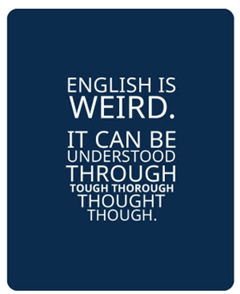
Disponível em https://br.pinterest.com/.
Em relação à compreensão do idioma inglês, o texto ilustra
Q1994322
Inglês
Texto associado
From French electronic and Japanese indie to K-pop and
Spanish jazz, it’s common for people to listen to songs they
don’t necessarily understand. Not knowing the language of
the lyrics, it seems, doesn’t stop people from liking—and
sometimes even singing along to—a song. Unless the listener
is looking up the dictionary meaning of the lyrics, then the
dictionary meaning of the lyrics doesn’t make or break their
appreciation of a song. But why?
“It’s a complicated answer,” said musicologist Lisa
Decenteceo, adding that it all starts with what’s called “sound
symbolism.” Sound symbolism refers to the study of the
relationships between utterances and their meaning. This
doesn’t have to do only with music. Marketers, for example,
can tune into sound symbolism as part of their strategy in
coming up with appealing brand names. In music as well as in
branding, Decenteceo explained, there’s something about the
appeal of words as sounds, beyond their meaning in a
language. While things like culture and personal experiences
affect people’s responses to different kinds of music, she
explained there are certain musical techniques that are
generally used to convey certain moods. One of which is scale.
“Songs in a major scale usually have brighter, happier sounds,
while minor scales usually have the slightly darker,
melancholic feel,” explains Thea Tolentino, a music teacher.
The human brain is wired to respond to sound, she added.
In a process called entrainment, the brain “synchronizes our
breathing, our movement, even neural activities with the
sounds we hear.” This is why fast-paced music is so popular
for running, for example, or why some yoga teachers play
rhythmic and melodic tracks in their classes. And there are
also the things that accompany the words. “Elements of sound
and music like pitch, melody, harmony, timbre, and amplitude
have an affective, emotional, psychological, cognitive, and
even physical impact on listeners. Music adds so much
meaning and dimension to texts through a complex of these
avenues,” said Decenteceo. What all these things do, she
added, is liberate the words. “Song frees the voice from any
burden of saying anything meaningful”. It’s important, then,
to understand music as a discourse between musical
elements. But all in all, Decenteceo said there’s value in
whatever immediate appeal people find in the music they
listen to, whether or not they understand the words. Music,
after all, is the universal language.
Disponível em https://www.vice.com/. March, 2022. Adaptado.
Na frase “there are certain musical techniques that are
generally used to convey certain moods” (2º parágrafo), a
palavra “convey” poderia ser substituída, sem prejuízo de
sentido, por
Q1994321
Inglês
Texto associado
From French electronic and Japanese indie to K-pop and
Spanish jazz, it’s common for people to listen to songs they
don’t necessarily understand. Not knowing the language of
the lyrics, it seems, doesn’t stop people from liking—and
sometimes even singing along to—a song. Unless the listener
is looking up the dictionary meaning of the lyrics, then the
dictionary meaning of the lyrics doesn’t make or break their
appreciation of a song. But why?
“It’s a complicated answer,” said musicologist Lisa
Decenteceo, adding that it all starts with what’s called “sound
symbolism.” Sound symbolism refers to the study of the
relationships between utterances and their meaning. This
doesn’t have to do only with music. Marketers, for example,
can tune into sound symbolism as part of their strategy in
coming up with appealing brand names. In music as well as in
branding, Decenteceo explained, there’s something about the
appeal of words as sounds, beyond their meaning in a
language. While things like culture and personal experiences
affect people’s responses to different kinds of music, she
explained there are certain musical techniques that are
generally used to convey certain moods. One of which is scale.
“Songs in a major scale usually have brighter, happier sounds,
while minor scales usually have the slightly darker,
melancholic feel,” explains Thea Tolentino, a music teacher.
The human brain is wired to respond to sound, she added.
In a process called entrainment, the brain “synchronizes our
breathing, our movement, even neural activities with the
sounds we hear.” This is why fast-paced music is so popular
for running, for example, or why some yoga teachers play
rhythmic and melodic tracks in their classes. And there are
also the things that accompany the words. “Elements of sound
and music like pitch, melody, harmony, timbre, and amplitude
have an affective, emotional, psychological, cognitive, and
even physical impact on listeners. Music adds so much
meaning and dimension to texts through a complex of these
avenues,” said Decenteceo. What all these things do, she
added, is liberate the words. “Song frees the voice from any
burden of saying anything meaningful”. It’s important, then,
to understand music as a discourse between musical
elements. But all in all, Decenteceo said there’s value in
whatever immediate appeal people find in the music they
listen to, whether or not they understand the words. Music,
after all, is the universal language.
Disponível em https://www.vice.com/. March, 2022. Adaptado.
De acordo com o texto, os estudos sobre as propriedades do
som
Q1862484
Inglês

Concerning tooth loss, according to the last paragraph, Dr. Elani and her research team:
Q1862483
Inglês
Yet, many people with dental disease may not see a dentist until
the process has advanced far beyond the point of saving a tooth. (l. 11-12)
A word with the same semantic value can be found in one of the fragments below:
the process has advanced far beyond the point of saving a tooth. (l. 11-12)
A word with the same semantic value can be found in one of the fragments below:
Q1862482
Inglês
Considering dental assessments, machine learning tools should:
Q1862481
Inglês
The central idea of the news article is the following:
Ano: 2021
Banca:
VUNESP
Órgão:
UNESP
Prova:
VUNESP - 2021 - UNESP - Vestibular - Cursos das Áreas de Biológicas |
Q4204437
Inglês
Texto associado
Leia a tira para responder à questão.

(https://thebrickinthesky.wordpress.com)
No trecho do primeiro quadrinho “I guess we should start it
over again”, o termo sublinhado pode ser substituído, sem
alteração de sentido, por
Ano: 2021
Banca:
VUNESP
Órgão:
UNESP
Prova:
VUNESP - 2021 - UNESP - Vestibular - Cursos das Áreas de Biológicas |
Q4204436
Inglês
Texto associado
Leia a tira para responder à questão.
(https://thebrickinthesky.wordpress.com)
From the comic strip, one can say that
Ano: 2021
Banca:
VUNESP
Órgão:
UNESP
Prova:
VUNESP - 2021 - UNESP - Vestibular - Cursos das Áreas de Biológicas |
Q4204435
Inglês
Texto associado
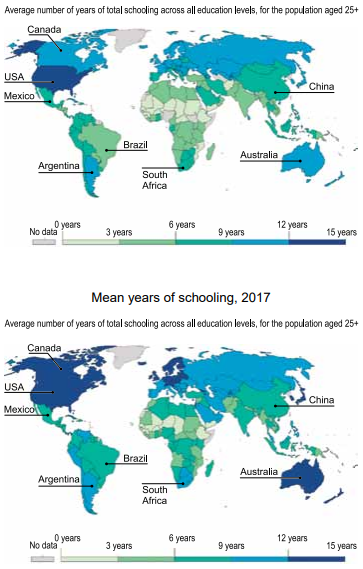
Examine os mapas que apresentam a média de anos de
escolaridade para a população de 25 anos ou mais, do ano
2000 e do ano 2017, para responder à questão.
Mean years of schooling, 2000
(https://ourworldindata.org. Adapted.)
After comparing both maps, one can say that:
Ano: 2021
Banca:
VUNESP
Órgão:
UNESP
Prova:
VUNESP - 2021 - UNESP - Vestibular - Cursos das Áreas de Biológicas |
Q4204434
Inglês
Texto associado
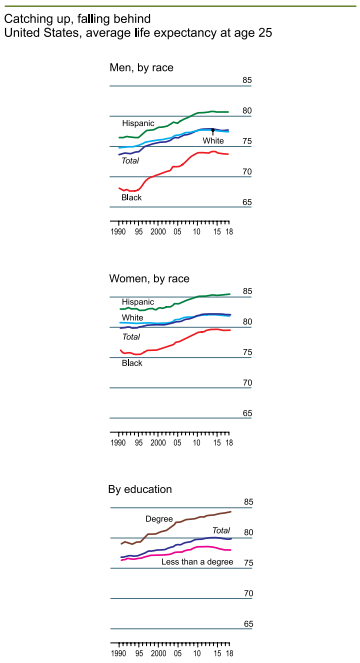
Examine os gráficos e leia o texto para responder à questão.
Educated Americans live longer, as others die younger
(Anne Case and Angus Deaton. “Life expectancy in adulthood is falling for
those without a BA degree, but as educational gaps have widened, racial
gaps have narrowed”. PNAS, 2021. Adaptado.)
A 25-year-old American with a university degree can
expect to live almost a decade longer than a contemporary who
dropped out of high school. Although researchers have long
known that the rich live longer than the poor, this education
gap is less well documented — and is especially marked in
rich countries. And whereas the average American’s expected
span has been flat in recent years — and, strikingly, even
fell between 2015 and 2017 — that of the one-third with a
bachelor’s degree has continued to lengthen.
This disparity in life expectancy is growing, according to
new research published in the Proceedings of the National
Academy of Sciences. Using data from nearly 50m death
certificates filed between 1990 and 2018, Anne Case and
Angus Deaton of Princeton University analysed differences
in life expectancy by sex, race, ethnicity and education. They
found that the lifespans of those with and without a bachelor’s
degree started to diverge in the 1990s and 2000s. This gap grew even wider in the 2010s as the life expectancy of
degree-holders continued to rise while that of other Americans
got shorter.
What is the link between schooling and longevity? Some
argue that better-educated people develop healthier lifestyles:
each additional year of study reduces the chances of being a
smoker and of being overweight. The better-educated earn
more, which in turn is associated with greater health. Ms
Case and Mr Deaton argue that changes in labour markets,
including the rise of automation and increased demand for
highly-educated workers, coupled with the rising costs of
employer-provided health care, have depressed the supply
of well-paid jobs for those without a degree. This may be
contributing to higher rates of alcohol and drug use, suicide
and other “deaths of despair”.
(www.economist.com,17.03.2021. Adaptado.)
No trecho do terceiro parágrafo “The better-educated
earn more, which in turn is associated with”, a expressão
sublinhada equivale, em português, a
Ano: 2021
Banca:
VUNESP
Órgão:
UNESP
Prova:
VUNESP - 2021 - UNESP - Vestibular - Cursos das Áreas de Biológicas |
Q4204433
Inglês
Texto associado
Examine os gráficos e leia o texto para responder à questão.
Educated Americans live longer, as others die younger
(Anne Case and Angus Deaton. “Life expectancy in adulthood is falling for
those without a BA degree, but as educational gaps have widened, racial
gaps have narrowed”. PNAS, 2021. Adaptado.)
A 25-year-old American with a university degree can
expect to live almost a decade longer than a contemporary who
dropped out of high school. Although researchers have long
known that the rich live longer than the poor, this education
gap is less well documented — and is especially marked in
rich countries. And whereas the average American’s expected
span has been flat in recent years — and, strikingly, even
fell between 2015 and 2017 — that of the one-third with a
bachelor’s degree has continued to lengthen.
This disparity in life expectancy is growing, according to
new research published in the Proceedings of the National
Academy of Sciences. Using data from nearly 50m death
certificates filed between 1990 and 2018, Anne Case and
Angus Deaton of Princeton University analysed differences
in life expectancy by sex, race, ethnicity and education. They
found that the lifespans of those with and without a bachelor’s
degree started to diverge in the 1990s and 2000s. This gap grew even wider in the 2010s as the life expectancy of
degree-holders continued to rise while that of other Americans
got shorter.
What is the link between schooling and longevity? Some
argue that better-educated people develop healthier lifestyles:
each additional year of study reduces the chances of being a
smoker and of being overweight. The better-educated earn
more, which in turn is associated with greater health. Ms
Case and Mr Deaton argue that changes in labour markets,
including the rise of automation and increased demand for
highly-educated workers, coupled with the rising costs of
employer-provided health care, have depressed the supply
of well-paid jobs for those without a degree. This may be
contributing to higher rates of alcohol and drug use, suicide
and other “deaths of despair”.
(www.economist.com,17.03.2021. Adaptado.)
According to the third paragraph, better-educated people
Ano: 2021
Banca:
VUNESP
Órgão:
UNESP
Prova:
VUNESP - 2021 - UNESP - Vestibular - Cursos das Áreas de Biológicas |
Q4204432
Inglês
Texto associado
Examine os gráficos e leia o texto para responder à questão.
Educated Americans live longer, as others die younger
(Anne Case and Angus Deaton. “Life expectancy in adulthood is falling for
those without a BA degree, but as educational gaps have widened, racial
gaps have narrowed”. PNAS, 2021. Adaptado.)
A 25-year-old American with a university degree can
expect to live almost a decade longer than a contemporary who
dropped out of high school. Although researchers have long
known that the rich live longer than the poor, this education
gap is less well documented — and is especially marked in
rich countries. And whereas the average American’s expected
span has been flat in recent years — and, strikingly, even
fell between 2015 and 2017 — that of the one-third with a
bachelor’s degree has continued to lengthen.
This disparity in life expectancy is growing, according to
new research published in the Proceedings of the National
Academy of Sciences. Using data from nearly 50m death
certificates filed between 1990 and 2018, Anne Case and
Angus Deaton of Princeton University analysed differences
in life expectancy by sex, race, ethnicity and education. They
found that the lifespans of those with and without a bachelor’s
degree started to diverge in the 1990s and 2000s. This gap grew even wider in the 2010s as the life expectancy of
degree-holders continued to rise while that of other Americans
got shorter.
What is the link between schooling and longevity? Some
argue that better-educated people develop healthier lifestyles:
each additional year of study reduces the chances of being a
smoker and of being overweight. The better-educated earn
more, which in turn is associated with greater health. Ms
Case and Mr Deaton argue that changes in labour markets,
including the rise of automation and increased demand for
highly-educated workers, coupled with the rising costs of
employer-provided health care, have depressed the supply
of well-paid jobs for those without a degree. This may be
contributing to higher rates of alcohol and drug use, suicide
and other “deaths of despair”.
(www.economist.com,17.03.2021. Adaptado.)
No trecho do segundo parágrafo “while that of other
Americans got shorter”, o termo sublinhado refere-se a

 Conheça nossos planos