🎯 Saiba o que estudar

Avançado com Treinador a partir de R$ 0,76/dia

Questões de Vestibular Sobre inglês

Questões Discursivas

Foram encontradas 6.365 questões

Ano: 2022 Banca: VUNESP Órgão: FAMERP Prova: VUNESP - 2022 - FAMERP - Vestibular - Conhecimentos Gerais |
Q4146216 Inglês
Leia o texto para responder à questão.


   Daters are astonished by the high prices of wining and dining a romantic interest with inflation at its highest rate in over 40 years. The consumer price index category for food away from home rose 7.7% in June 2022 from a year earlier, while full-service restaurants climbed 8.9%. For those testing the waters with a cocktail or two, prices for alcoholic beverages rose by 4%.

   Those searching for love say they’re feeling the pain. Among 3,000 users on the popular dating app Hinge, almost 41% said they were more concerned with the cost of dates now versus a year ago, with Generation Z respondents more likely to feel the pressure. Emily Derby, a 27-year-old in Tulsa, Oklahoma, said her dating costs have doubled from $200 to $400 a month.

   As costs escalate, some singles are scaling back and being more selective about the dates they’re going on, while others are pausing their search for “the one” entirely. On dating site OKCupid, 34% of 70,000 users reported that inflation was impacting their love life.

   “In the fall of 2020, I was going on dates left and right not really thinking about the costs,” said Seth Rosenberg, a 25-year-old in Philadelphia. “Now, it’s harder to be excited because if a date goes bad, you’re out anywhere from $50 to $100.”

   Those still in the dating game have both love and money on the mind. New York City-based dating coach Amy Nobile said even her wealthy clients, many of whom pay $15,000 for a four-month program, are trying to cut their dating costs in half. Clients who would typically spend as much as $150 on a date are seeing if they can get away with $75 or less.

   “People are feeling rising prices,” she said. “For those in the long game to find a partner, they feel like they really need to monitor their money flow in the dating world.” As a result, people are on the hunt for less expensive options, said Logan Ury, director of relationship science at Hinge.


(Paulina Cachero. www.bloomberg.com, 21.07.2022. Adaptado.)
In the excerpt from the third paragraph “while others are pausing their search”, the underlined word can be replaced, without meaning change, by
Alternativas
Ano: 2022 Banca: VUNESP Órgão: FAMERP Prova: VUNESP - 2022 - FAMERP - Vestibular - Conhecimentos Gerais |
Q4146215 Inglês
Leia o texto para responder à questão.


   Daters are astonished by the high prices of wining and dining a romantic interest with inflation at its highest rate in over 40 years. The consumer price index category for food away from home rose 7.7% in June 2022 from a year earlier, while full-service restaurants climbed 8.9%. For those testing the waters with a cocktail or two, prices for alcoholic beverages rose by 4%.

   Those searching for love say they’re feeling the pain. Among 3,000 users on the popular dating app Hinge, almost 41% said they were more concerned with the cost of dates now versus a year ago, with Generation Z respondents more likely to feel the pressure. Emily Derby, a 27-year-old in Tulsa, Oklahoma, said her dating costs have doubled from $200 to $400 a month.

   As costs escalate, some singles are scaling back and being more selective about the dates they’re going on, while others are pausing their search for “the one” entirely. On dating site OKCupid, 34% of 70,000 users reported that inflation was impacting their love life.

   “In the fall of 2020, I was going on dates left and right not really thinking about the costs,” said Seth Rosenberg, a 25-year-old in Philadelphia. “Now, it’s harder to be excited because if a date goes bad, you’re out anywhere from $50 to $100.”

   Those still in the dating game have both love and money on the mind. New York City-based dating coach Amy Nobile said even her wealthy clients, many of whom pay $15,000 for a four-month program, are trying to cut their dating costs in half. Clients who would typically spend as much as $150 on a date are seeing if they can get away with $75 or less.

   “People are feeling rising prices,” she said. “For those in the long game to find a partner, they feel like they really need to monitor their money flow in the dating world.” As a result, people are on the hunt for less expensive options, said Logan Ury, director of relationship science at Hinge.


(Paulina Cachero. www.bloomberg.com, 21.07.2022. Adaptado.)
According to the text, daters are reassessing their priorities due to
Alternativas
Ano: 2022 Banca: VUNESP Órgão: FAMERP Prova: VUNESP - 2022 - FAMERP - Vestibular - Conhecimentos Gerais |
Q4146214 Inglês
Leia o texto para responder à questão.


   Daters are astonished by the high prices of wining and dining a romantic interest with inflation at its highest rate in over 40 years. The consumer price index category for food away from home rose 7.7% in June 2022 from a year earlier, while full-service restaurants climbed 8.9%. For those testing the waters with a cocktail or two, prices for alcoholic beverages rose by 4%.

   Those searching for love say they’re feeling the pain. Among 3,000 users on the popular dating app Hinge, almost 41% said they were more concerned with the cost of dates now versus a year ago, with Generation Z respondents more likely to feel the pressure. Emily Derby, a 27-year-old in Tulsa, Oklahoma, said her dating costs have doubled from $200 to $400 a month.

   As costs escalate, some singles are scaling back and being more selective about the dates they’re going on, while others are pausing their search for “the one” entirely. On dating site OKCupid, 34% of 70,000 users reported that inflation was impacting their love life.

   “In the fall of 2020, I was going on dates left and right not really thinking about the costs,” said Seth Rosenberg, a 25-year-old in Philadelphia. “Now, it’s harder to be excited because if a date goes bad, you’re out anywhere from $50 to $100.”

   Those still in the dating game have both love and money on the mind. New York City-based dating coach Amy Nobile said even her wealthy clients, many of whom pay $15,000 for a four-month program, are trying to cut their dating costs in half. Clients who would typically spend as much as $150 on a date are seeing if they can get away with $75 or less.

   “People are feeling rising prices,” she said. “For those in the long game to find a partner, they feel like they really need to monitor their money flow in the dating world.” As a result, people are on the hunt for less expensive options, said Logan Ury, director of relationship science at Hinge.


(Paulina Cachero. www.bloomberg.com, 21.07.2022. Adaptado.)
No trecho do segundo parágrafo “with Generation Z respondents more likely to feel the pressure”, o termo sublinhado equivale, em português, a 
Alternativas
Ano: 2022 Banca: VUNESP Órgão: FAMERP Prova: VUNESP - 2022 - FAMERP - Vestibular - Conhecimentos Gerais |
Q4146213 Inglês
Leia o texto para responder à questão.


   Daters are astonished by the high prices of wining and dining a romantic interest with inflation at its highest rate in over 40 years. The consumer price index category for food away from home rose 7.7% in June 2022 from a year earlier, while full-service restaurants climbed 8.9%. For those testing the waters with a cocktail or two, prices for alcoholic beverages rose by 4%.

   Those searching for love say they’re feeling the pain. Among 3,000 users on the popular dating app Hinge, almost 41% said they were more concerned with the cost of dates now versus a year ago, with Generation Z respondents more likely to feel the pressure. Emily Derby, a 27-year-old in Tulsa, Oklahoma, said her dating costs have doubled from $200 to $400 a month.

   As costs escalate, some singles are scaling back and being more selective about the dates they’re going on, while others are pausing their search for “the one” entirely. On dating site OKCupid, 34% of 70,000 users reported that inflation was impacting their love life.

   “In the fall of 2020, I was going on dates left and right not really thinking about the costs,” said Seth Rosenberg, a 25-year-old in Philadelphia. “Now, it’s harder to be excited because if a date goes bad, you’re out anywhere from $50 to $100.”

   Those still in the dating game have both love and money on the mind. New York City-based dating coach Amy Nobile said even her wealthy clients, many of whom pay $15,000 for a four-month program, are trying to cut their dating costs in half. Clients who would typically spend as much as $150 on a date are seeing if they can get away with $75 or less.

   “People are feeling rising prices,” she said. “For those in the long game to find a partner, they feel like they really need to monitor their money flow in the dating world.” As a result, people are on the hunt for less expensive options, said Logan Ury, director of relationship science at Hinge.


(Paulina Cachero. www.bloomberg.com, 21.07.2022. Adaptado.)
The main purpose of the text is to reveal why
Alternativas
Ano: 2022 Banca: FGV Órgão: FEMPAR Prova: FGV - 2022 - FEMPAR - Vestibular - Medicina |
Q4142182 Inglês
Read the following text and answer the question.

The “Modern Physician” needs to embrace technology

February 12, 2021
Veronica Diaz, MD

texto_1.jpg (236×139)

        Even before the COVID-19 pandemic forced health systems and private practices to implement technology solutions such as telehealth, the evolution toward a more tech-savvy healthcare experience was firmly underway. The days of carting paper charts and hard film x-rays has been broadly supplanted with cloudbased electronic health records and digital Picture Archiving Communications Systems (PACS). The pandemic has made those previously reticent to adopt technology wake up to its necessity.

        Practicing medicine today requires a higher degree of technical literacy than ever before, and the challenges of the pandemic have only reinforced and accelerated that trend. We have reached an inflection point in the industry where clinical expertise is not the only prerequisite for a successful career. Physicians who familiarize, vet, and incorporate new technology into their practices will likely be in the best position to deliver optimal care. 

From: https://www.physicianspractice.com/view/ the-modern-physician-needs-to-embrace-technology
“Likely” in “Physicians […] will likely be in the best position to deliver optimal care” (2nd paragraph) introduces a
Alternativas
Ano: 2022 Banca: FGV Órgão: FEMPAR Prova: FGV - 2022 - FEMPAR - Vestibular - Medicina |
Q4142181 Inglês
Read the following text and answer the question.

The “Modern Physician” needs to embrace technology

February 12, 2021
Veronica Diaz, MD

texto_1.jpg (236×139)

        Even before the COVID-19 pandemic forced health systems and private practices to implement technology solutions such as telehealth, the evolution toward a more tech-savvy healthcare experience was firmly underway. The days of carting paper charts and hard film x-rays has been broadly supplanted with cloudbased electronic health records and digital Picture Archiving Communications Systems (PACS). The pandemic has made those previously reticent to adopt technology wake up to its necessity.

        Practicing medicine today requires a higher degree of technical literacy than ever before, and the challenges of the pandemic have only reinforced and accelerated that trend. We have reached an inflection point in the industry where clinical expertise is not the only prerequisite for a successful career. Physicians who familiarize, vet, and incorporate new technology into their practices will likely be in the best position to deliver optimal care. 

From: https://www.physicianspractice.com/view/ the-modern-physician-needs-to-embrace-technology
In the first sentence, the author makes clear that technology in healthcare had been evolving
Alternativas
Ano: 2022 Banca: FGV Órgão: FEMPAR Prova: FGV - 2022 - FEMPAR - Vestibular - Medicina |
Q4142180 Inglês
Read the following text and answer the question.

The “Modern Physician” needs to embrace technology

February 12, 2021
Veronica Diaz, MD

texto_1.jpg (236×139)

        Even before the COVID-19 pandemic forced health systems and private practices to implement technology solutions such as telehealth, the evolution toward a more tech-savvy healthcare experience was firmly underway. The days of carting paper charts and hard film x-rays has been broadly supplanted with cloudbased electronic health records and digital Picture Archiving Communications Systems (PACS). The pandemic has made those previously reticent to adopt technology wake up to its necessity.

        Practicing medicine today requires a higher degree of technical literacy than ever before, and the challenges of the pandemic have only reinforced and accelerated that trend. We have reached an inflection point in the industry where clinical expertise is not the only prerequisite for a successful career. Physicians who familiarize, vet, and incorporate new technology into their practices will likely be in the best position to deliver optimal care. 

From: https://www.physicianspractice.com/view/ the-modern-physician-needs-to-embrace-technology
The text implies that, in today’s medicine, technology should be
Alternativas
Ano: 2022 Banca: FGV Órgão: FEMPAR Prova: FGV - 2022 - FEMPAR - Vestibular - Medicina |
Q4142179 Inglês

22.jpg (327×151)

Source: https://www.brainyquote.com/quotes/mark_twain_102859


The phrase “the world owes you nothing” means that the world

Alternativas
Ano: 2022 Banca: FGV Órgão: FEMPAR Prova: FGV - 2022 - FEMPAR - Vestibular - Medicina |
Q4142178 Inglês

Read the text below and answer the question. 


Advancing gender equity in medicine


        […]


        The problem of gender inequity in medical leadership is not the result of too few candidates who are not men with the appropriate experience and training to fulfill leadership roles, nor can it be explained by merely suggesting that different genders do not have the same aspirations as men. Gender inequity is largely underpinned by socially constructed gender norms, roles and relations. For example, gender roles explain why female clinicians with children spend 100.2 minutes more per day on household activities and child care than their male counterparts. This makes it more challenging for female clinicians with children to get ahead. Gender norms explain why more men are given leadership opportunities and have stronger letters of reference than other genders. Furthermore, gender relations explain why men have fewer consequences for uncivil behaviour or for harassment in the workplace compared with other genders. A recent observational study of operating room culture evaluated the prevalence and predictors of exposure to disruptive behaviour in the operating room. Disruptive behaviour was described as a range of unacceptable workplace behaviours, including incivility, bullying and harassment. A further definition provided is “interpersonal behaviour (i.e., directed toward others or occurring in the presence of others) that results in a perceived threat to victims and/or witnesses and violates a reasonable person’s standard of respectful behaviour.” The study found that clinicians who are women report more exposure to disruptive behaviour and are substantially less confident or empowered to take action to address incivility in their hospital and university settings. Gender and sexual harassment may be associated with environments that exhibit gender inequity in pay, opportunity and promotion. Disruptive behaviour and overt harassment likely endure within our medical institutions because the offenders are often considered invaluable to the organization for their stature, leadership, productivity or reputation, and are largely not held unaccountable for their actions, which further amplifies gender inequities.


        Ensuring gender equity in medicine is an issue of justice and rights. Having more physicians who are women and more women in health policy leadership also appears to enhance the provision of high-quality patient care. Large, well-conducted observational studies have shown that patients of female clinicians experience better quality of care for diabetes, and significantly lower rates of mortality, hospital readmissions and emergency department visits than those treated by male clinicians. One study considered that reasons for this may include that women spend more time with their patients, are more patient-centred in their approach and provide more evidence-based care. Two recent opinion pieces discuss research showing that female representation on corporate boards, such as hospital boards, results in more socially thoughtful decisions and less corruption. Without gender equity, we risk extinguishing creative solutions to complex health problems and, most importantly, limiting patient access to the best care. 


From: https://www.ncbi.nlm.nih.gov/pmc/articles/PMC8034331/ CMAJ. 2021 Feb 16; 193(7): E244–E250.

The opposite of “often” in “the offenders are often considered invaluable” (1st paragraph) is 
Alternativas
Ano: 2022 Banca: FGV Órgão: FEMPAR Prova: FGV - 2022 - FEMPAR - Vestibular - Medicina |
Q4142177 Inglês

Read the text below and answer the question. 


Advancing gender equity in medicine


        […]


        The problem of gender inequity in medical leadership is not the result of too few candidates who are not men with the appropriate experience and training to fulfill leadership roles, nor can it be explained by merely suggesting that different genders do not have the same aspirations as men. Gender inequity is largely underpinned by socially constructed gender norms, roles and relations. For example, gender roles explain why female clinicians with children spend 100.2 minutes more per day on household activities and child care than their male counterparts. This makes it more challenging for female clinicians with children to get ahead. Gender norms explain why more men are given leadership opportunities and have stronger letters of reference than other genders. Furthermore, gender relations explain why men have fewer consequences for uncivil behaviour or for harassment in the workplace compared with other genders. A recent observational study of operating room culture evaluated the prevalence and predictors of exposure to disruptive behaviour in the operating room. Disruptive behaviour was described as a range of unacceptable workplace behaviours, including incivility, bullying and harassment. A further definition provided is “interpersonal behaviour (i.e., directed toward others or occurring in the presence of others) that results in a perceived threat to victims and/or witnesses and violates a reasonable person’s standard of respectful behaviour.” The study found that clinicians who are women report more exposure to disruptive behaviour and are substantially less confident or empowered to take action to address incivility in their hospital and university settings. Gender and sexual harassment may be associated with environments that exhibit gender inequity in pay, opportunity and promotion. Disruptive behaviour and overt harassment likely endure within our medical institutions because the offenders are often considered invaluable to the organization for their stature, leadership, productivity or reputation, and are largely not held unaccountable for their actions, which further amplifies gender inequities.


        Ensuring gender equity in medicine is an issue of justice and rights. Having more physicians who are women and more women in health policy leadership also appears to enhance the provision of high-quality patient care. Large, well-conducted observational studies have shown that patients of female clinicians experience better quality of care for diabetes, and significantly lower rates of mortality, hospital readmissions and emergency department visits than those treated by male clinicians. One study considered that reasons for this may include that women spend more time with their patients, are more patient-centred in their approach and provide more evidence-based care. Two recent opinion pieces discuss research showing that female representation on corporate boards, such as hospital boards, results in more socially thoughtful decisions and less corruption. Without gender equity, we risk extinguishing creative solutions to complex health problems and, most importantly, limiting patient access to the best care. 


From: https://www.ncbi.nlm.nih.gov/pmc/articles/PMC8034331/ CMAJ. 2021 Feb 16; 193(7): E244–E250.

The excerpt that contains a comparison is:
Alternativas
Ano: 2022 Banca: FGV Órgão: FEMPAR Prova: FGV - 2022 - FEMPAR - Vestibular - Medicina |
Q4142176 Inglês

Read the text below and answer the question. 


Advancing gender equity in medicine


        […]


        The problem of gender inequity in medical leadership is not the result of too few candidates who are not men with the appropriate experience and training to fulfill leadership roles, nor can it be explained by merely suggesting that different genders do not have the same aspirations as men. Gender inequity is largely underpinned by socially constructed gender norms, roles and relations. For example, gender roles explain why female clinicians with children spend 100.2 minutes more per day on household activities and child care than their male counterparts. This makes it more challenging for female clinicians with children to get ahead. Gender norms explain why more men are given leadership opportunities and have stronger letters of reference than other genders. Furthermore, gender relations explain why men have fewer consequences for uncivil behaviour or for harassment in the workplace compared with other genders. A recent observational study of operating room culture evaluated the prevalence and predictors of exposure to disruptive behaviour in the operating room. Disruptive behaviour was described as a range of unacceptable workplace behaviours, including incivility, bullying and harassment. A further definition provided is “interpersonal behaviour (i.e., directed toward others or occurring in the presence of others) that results in a perceived threat to victims and/or witnesses and violates a reasonable person’s standard of respectful behaviour.” The study found that clinicians who are women report more exposure to disruptive behaviour and are substantially less confident or empowered to take action to address incivility in their hospital and university settings. Gender and sexual harassment may be associated with environments that exhibit gender inequity in pay, opportunity and promotion. Disruptive behaviour and overt harassment likely endure within our medical institutions because the offenders are often considered invaluable to the organization for their stature, leadership, productivity or reputation, and are largely not held unaccountable for their actions, which further amplifies gender inequities.


        Ensuring gender equity in medicine is an issue of justice and rights. Having more physicians who are women and more women in health policy leadership also appears to enhance the provision of high-quality patient care. Large, well-conducted observational studies have shown that patients of female clinicians experience better quality of care for diabetes, and significantly lower rates of mortality, hospital readmissions and emergency department visits than those treated by male clinicians. One study considered that reasons for this may include that women spend more time with their patients, are more patient-centred in their approach and provide more evidence-based care. Two recent opinion pieces discuss research showing that female representation on corporate boards, such as hospital boards, results in more socially thoughtful decisions and less corruption. Without gender equity, we risk extinguishing creative solutions to complex health problems and, most importantly, limiting patient access to the best care. 


From: https://www.ncbi.nlm.nih.gov/pmc/articles/PMC8034331/ CMAJ. 2021 Feb 16; 193(7): E244–E250.

“Nor” in “nor can it be explained” (1st paragraph) signals a(n)
Alternativas
Ano: 2022 Banca: FGV Órgão: FEMPAR Prova: FGV - 2022 - FEMPAR - Vestibular - Medicina |
Q4142175 Inglês

Read the text below and answer the question. 


Advancing gender equity in medicine


        […]


        The problem of gender inequity in medical leadership is not the result of too few candidates who are not men with the appropriate experience and training to fulfill leadership roles, nor can it be explained by merely suggesting that different genders do not have the same aspirations as men. Gender inequity is largely underpinned by socially constructed gender norms, roles and relations. For example, gender roles explain why female clinicians with children spend 100.2 minutes more per day on household activities and child care than their male counterparts. This makes it more challenging for female clinicians with children to get ahead. Gender norms explain why more men are given leadership opportunities and have stronger letters of reference than other genders. Furthermore, gender relations explain why men have fewer consequences for uncivil behaviour or for harassment in the workplace compared with other genders. A recent observational study of operating room culture evaluated the prevalence and predictors of exposure to disruptive behaviour in the operating room. Disruptive behaviour was described as a range of unacceptable workplace behaviours, including incivility, bullying and harassment. A further definition provided is “interpersonal behaviour (i.e., directed toward others or occurring in the presence of others) that results in a perceived threat to victims and/or witnesses and violates a reasonable person’s standard of respectful behaviour.” The study found that clinicians who are women report more exposure to disruptive behaviour and are substantially less confident or empowered to take action to address incivility in their hospital and university settings. Gender and sexual harassment may be associated with environments that exhibit gender inequity in pay, opportunity and promotion. Disruptive behaviour and overt harassment likely endure within our medical institutions because the offenders are often considered invaluable to the organization for their stature, leadership, productivity or reputation, and are largely not held unaccountable for their actions, which further amplifies gender inequities.


        Ensuring gender equity in medicine is an issue of justice and rights. Having more physicians who are women and more women in health policy leadership also appears to enhance the provision of high-quality patient care. Large, well-conducted observational studies have shown that patients of female clinicians experience better quality of care for diabetes, and significantly lower rates of mortality, hospital readmissions and emergency department visits than those treated by male clinicians. One study considered that reasons for this may include that women spend more time with their patients, are more patient-centred in their approach and provide more evidence-based care. Two recent opinion pieces discuss research showing that female representation on corporate boards, such as hospital boards, results in more socially thoughtful decisions and less corruption. Without gender equity, we risk extinguishing creative solutions to complex health problems and, most importantly, limiting patient access to the best care. 


From: https://www.ncbi.nlm.nih.gov/pmc/articles/PMC8034331/ CMAJ. 2021 Feb 16; 193(7): E244–E250.

The last sentence carries a
Alternativas
Ano: 2022 Banca: FGV Órgão: FEMPAR Prova: FGV - 2022 - FEMPAR - Vestibular - Medicina |
Q4142174 Inglês

Read the text below and answer the question. 


Advancing gender equity in medicine


        […]


        The problem of gender inequity in medical leadership is not the result of too few candidates who are not men with the appropriate experience and training to fulfill leadership roles, nor can it be explained by merely suggesting that different genders do not have the same aspirations as men. Gender inequity is largely underpinned by socially constructed gender norms, roles and relations. For example, gender roles explain why female clinicians with children spend 100.2 minutes more per day on household activities and child care than their male counterparts. This makes it more challenging for female clinicians with children to get ahead. Gender norms explain why more men are given leadership opportunities and have stronger letters of reference than other genders. Furthermore, gender relations explain why men have fewer consequences for uncivil behaviour or for harassment in the workplace compared with other genders. A recent observational study of operating room culture evaluated the prevalence and predictors of exposure to disruptive behaviour in the operating room. Disruptive behaviour was described as a range of unacceptable workplace behaviours, including incivility, bullying and harassment. A further definition provided is “interpersonal behaviour (i.e., directed toward others or occurring in the presence of others) that results in a perceived threat to victims and/or witnesses and violates a reasonable person’s standard of respectful behaviour.” The study found that clinicians who are women report more exposure to disruptive behaviour and are substantially less confident or empowered to take action to address incivility in their hospital and university settings. Gender and sexual harassment may be associated with environments that exhibit gender inequity in pay, opportunity and promotion. Disruptive behaviour and overt harassment likely endure within our medical institutions because the offenders are often considered invaluable to the organization for their stature, leadership, productivity or reputation, and are largely not held unaccountable for their actions, which further amplifies gender inequities.


        Ensuring gender equity in medicine is an issue of justice and rights. Having more physicians who are women and more women in health policy leadership also appears to enhance the provision of high-quality patient care. Large, well-conducted observational studies have shown that patients of female clinicians experience better quality of care for diabetes, and significantly lower rates of mortality, hospital readmissions and emergency department visits than those treated by male clinicians. One study considered that reasons for this may include that women spend more time with their patients, are more patient-centred in their approach and provide more evidence-based care. Two recent opinion pieces discuss research showing that female representation on corporate boards, such as hospital boards, results in more socially thoughtful decisions and less corruption. Without gender equity, we risk extinguishing creative solutions to complex health problems and, most importantly, limiting patient access to the best care. 


From: https://www.ncbi.nlm.nih.gov/pmc/articles/PMC8034331/ CMAJ. 2021 Feb 16; 193(7): E244–E250.

According to the text, some offenders may get away with punishment because of their 
Alternativas
Ano: 2022 Banca: FGV Órgão: FEMPAR Prova: FGV - 2022 - FEMPAR - Vestibular - Medicina |
Q4142173 Inglês

Read the text below and answer the question. 


Advancing gender equity in medicine


        […]


        The problem of gender inequity in medical leadership is not the result of too few candidates who are not men with the appropriate experience and training to fulfill leadership roles, nor can it be explained by merely suggesting that different genders do not have the same aspirations as men. Gender inequity is largely underpinned by socially constructed gender norms, roles and relations. For example, gender roles explain why female clinicians with children spend 100.2 minutes more per day on household activities and child care than their male counterparts. This makes it more challenging for female clinicians with children to get ahead. Gender norms explain why more men are given leadership opportunities and have stronger letters of reference than other genders. Furthermore, gender relations explain why men have fewer consequences for uncivil behaviour or for harassment in the workplace compared with other genders. A recent observational study of operating room culture evaluated the prevalence and predictors of exposure to disruptive behaviour in the operating room. Disruptive behaviour was described as a range of unacceptable workplace behaviours, including incivility, bullying and harassment. A further definition provided is “interpersonal behaviour (i.e., directed toward others or occurring in the presence of others) that results in a perceived threat to victims and/or witnesses and violates a reasonable person’s standard of respectful behaviour.” The study found that clinicians who are women report more exposure to disruptive behaviour and are substantially less confident or empowered to take action to address incivility in their hospital and university settings. Gender and sexual harassment may be associated with environments that exhibit gender inequity in pay, opportunity and promotion. Disruptive behaviour and overt harassment likely endure within our medical institutions because the offenders are often considered invaluable to the organization for their stature, leadership, productivity or reputation, and are largely not held unaccountable for their actions, which further amplifies gender inequities.


        Ensuring gender equity in medicine is an issue of justice and rights. Having more physicians who are women and more women in health policy leadership also appears to enhance the provision of high-quality patient care. Large, well-conducted observational studies have shown that patients of female clinicians experience better quality of care for diabetes, and significantly lower rates of mortality, hospital readmissions and emergency department visits than those treated by male clinicians. One study considered that reasons for this may include that women spend more time with their patients, are more patient-centred in their approach and provide more evidence-based care. Two recent opinion pieces discuss research showing that female representation on corporate boards, such as hospital boards, results in more socially thoughtful decisions and less corruption. Without gender equity, we risk extinguishing creative solutions to complex health problems and, most importantly, limiting patient access to the best care. 


From: https://www.ncbi.nlm.nih.gov/pmc/articles/PMC8034331/ CMAJ. 2021 Feb 16; 193(7): E244–E250.

Based on the text, mark the statements below as true (T) or false (F).


( ) Gender inequity in medical leadership is due to few women who want to take leading positions.


( ) Difference between genders has little effect when disciplining transgressive attitudes at work.


( ) Women physicians have been found to improve the quality of health care services.


The statements are, respectively,

Alternativas
Ano: 2022 Banca: VUNESP Órgão: EINSTEIN Prova: VUNESP - 2022 - EINSTEIN - Vestibular Unificado - Prova I |
Q4112851 Inglês

Read the advertisement.

Imagem associada para resolução da questão


The advertisement uses text and the image of two women astronauts in spacesuits to suggest that both the bath oil “Skin-So-Soft” and the suit
Alternativas
Ano: 2022 Banca: VUNESP Órgão: EINSTEIN Prova: VUNESP - 2022 - EINSTEIN - Vestibular Unificado - Prova I |
Q4112850 Inglês
Read the text to answer question

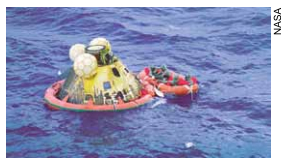
    In the late 1960s, following the Apollo 11 Moon landings, the three astronauts were waiting to be picked up inside their capsule floating in the Pacific Ocean — and they were hot and uncomfortable. NASA officials decided to make things more pleasant for their three national heroes. The downside? There was a small possibility of unleashing deadly alien microbes on Earth.
    When humanity first made plans to send probes and people into space in the mid-20th Century, the issue of contamination came up. Firstly, there was the fear of “forward” contamination — the possibility that Earth-based life might accidentally hitch a ride into the cosmos. Spacecraft needed to be sterilised and carefully packaged before launch. If microbes silently moved onboard, it would confuse any attempts to detect alien life. And if there were extra-terrestrial organisms out there, we might end up inadvertently killing them with Earth-based bacteria or viruses. These concerns matter just as much today as they did back in the Space Race era.
   A second concern was “back” contamination. This was the idea that astronauts, rockets or probes returning to Earth might bring back life that could prove catastrophic, either by consuming all our oxygen or outcompeting Earth organisms. What if the astronauts brought back something dangerous? At the time, the probability was not considered high, but still, the scenario had to be explored. “Maybe it’s sure to 99% that Apollo 11 will not bring back lunar organisms,” said one influential scientist at the time, “but even that 1% of uncertainty is too large to be complacent about.”
    NASA put several quarantine measures in place — in some cases, a little reluctantly. Concerned officials from the US Public Health Service argued for stricter measures than initially planned, pointing out that they had the power to refuse border entry to contaminated astronauts. NASA then agreed to install a costly quarantine facility on the ship that would pick up the men from their splashdown in the Pacific Ocean. It was also agreed that the lunar explorers would then spend three weeks in isolation before they could hug their families or shake the hand of the president.

(Richard Fisher. www.bbc.com, 18.02.2021. Adapted.)
According to the third and fourth paragraphs, the disputes over the potential risks posed by the return of Apollo 11 from outer space were eventually settled as follows:
Alternativas
Ano: 2022 Banca: VUNESP Órgão: EINSTEIN Prova: VUNESP - 2022 - EINSTEIN - Vestibular Unificado - Prova I |
Q4112849 Inglês
Read the text to answer question

    In the late 1960s, following the Apollo 11 Moon landings, the three astronauts were waiting to be picked up inside their capsule floating in the Pacific Ocean — and they were hot and uncomfortable. NASA officials decided to make things more pleasant for their three national heroes. The downside? There was a small possibility of unleashing deadly alien microbes on Earth.
    When humanity first made plans to send probes and people into space in the mid-20th Century, the issue of contamination came up. Firstly, there was the fear of “forward” contamination — the possibility that Earth-based life might accidentally hitch a ride into the cosmos. Spacecraft needed to be sterilised and carefully packaged before launch. If microbes silently moved onboard, it would confuse any attempts to detect alien life. And if there were extra-terrestrial organisms out there, we might end up inadvertently killing them with Earth-based bacteria or viruses. These concerns matter just as much today as they did back in the Space Race era.
   A second concern was “back” contamination. This was the idea that astronauts, rockets or probes returning to Earth might bring back life that could prove catastrophic, either by consuming all our oxygen or outcompeting Earth organisms. What if the astronauts brought back something dangerous? At the time, the probability was not considered high, but still, the scenario had to be explored. “Maybe it’s sure to 99% that Apollo 11 will not bring back lunar organisms,” said one influential scientist at the time, “but even that 1% of uncertainty is too large to be complacent about.”
    NASA put several quarantine measures in place — in some cases, a little reluctantly. Concerned officials from the US Public Health Service argued for stricter measures than initially planned, pointing out that they had the power to refuse border entry to contaminated astronauts. NASA then agreed to install a costly quarantine facility on the ship that would pick up the men from their splashdown in the Pacific Ocean. It was also agreed that the lunar explorers would then spend three weeks in isolation before they could hug their families or shake the hand of the president.

(Richard Fisher. www.bbc.com, 18.02.2021. Adapted.)
In the second paragraph, “‘forward’ contamination” is explained as contamination which
Alternativas
Ano: 2022 Banca: VUNESP Órgão: EINSTEIN Prova: VUNESP - 2022 - EINSTEIN - Vestibular Unificado - Prova I |
Q4112848 Inglês
Read the text to answer question

    In the late 1960s, following the Apollo 11 Moon landings, the three astronauts were waiting to be picked up inside their capsule floating in the Pacific Ocean — and they were hot and uncomfortable. NASA officials decided to make things more pleasant for their three national heroes. The downside? There was a small possibility of unleashing deadly alien microbes on Earth.
    When humanity first made plans to send probes and people into space in the mid-20th Century, the issue of contamination came up. Firstly, there was the fear of “forward” contamination — the possibility that Earth-based life might accidentally hitch a ride into the cosmos. Spacecraft needed to be sterilised and carefully packaged before launch. If microbes silently moved onboard, it would confuse any attempts to detect alien life. And if there were extra-terrestrial organisms out there, we might end up inadvertently killing them with Earth-based bacteria or viruses. These concerns matter just as much today as they did back in the Space Race era.
   A second concern was “back” contamination. This was the idea that astronauts, rockets or probes returning to Earth might bring back life that could prove catastrophic, either by consuming all our oxygen or outcompeting Earth organisms. What if the astronauts brought back something dangerous? At the time, the probability was not considered high, but still, the scenario had to be explored. “Maybe it’s sure to 99% that Apollo 11 will not bring back lunar organisms,” said one influential scientist at the time, “but even that 1% of uncertainty is too large to be complacent about.”
    NASA put several quarantine measures in place — in some cases, a little reluctantly. Concerned officials from the US Public Health Service argued for stricter measures than initially planned, pointing out that they had the power to refuse border entry to contaminated astronauts. NASA then agreed to install a costly quarantine facility on the ship that would pick up the men from their splashdown in the Pacific Ocean. It was also agreed that the lunar explorers would then spend three weeks in isolation before they could hug their families or shake the hand of the president.

(Richard Fisher. www.bbc.com, 18.02.2021. Adapted.)
The first paragraph mentions
Alternativas
Ano: 2022 Banca: VUNESP Órgão: EINSTEIN Prova: VUNESP - 2022 - EINSTEIN - Vestibular Unificado - Prova I |
Q4112847 Inglês
Read the text to answer question

    In the late 1960s, following the Apollo 11 Moon landings, the three astronauts were waiting to be picked up inside their capsule floating in the Pacific Ocean — and they were hot and uncomfortable. NASA officials decided to make things more pleasant for their three national heroes. The downside? There was a small possibility of unleashing deadly alien microbes on Earth.
    When humanity first made plans to send probes and people into space in the mid-20th Century, the issue of contamination came up. Firstly, there was the fear of “forward” contamination — the possibility that Earth-based life might accidentally hitch a ride into the cosmos. Spacecraft needed to be sterilised and carefully packaged before launch. If microbes silently moved onboard, it would confuse any attempts to detect alien life. And if there were extra-terrestrial organisms out there, we might end up inadvertently killing them with Earth-based bacteria or viruses. These concerns matter just as much today as they did back in the Space Race era.
   A second concern was “back” contamination. This was the idea that astronauts, rockets or probes returning to Earth might bring back life that could prove catastrophic, either by consuming all our oxygen or outcompeting Earth organisms. What if the astronauts brought back something dangerous? At the time, the probability was not considered high, but still, the scenario had to be explored. “Maybe it’s sure to 99% that Apollo 11 will not bring back lunar organisms,” said one influential scientist at the time, “but even that 1% of uncertainty is too large to be complacent about.”
    NASA put several quarantine measures in place — in some cases, a little reluctantly. Concerned officials from the US Public Health Service argued for stricter measures than initially planned, pointing out that they had the power to refuse border entry to contaminated astronauts. NASA then agreed to install a costly quarantine facility on the ship that would pick up the men from their splashdown in the Pacific Ocean. It was also agreed that the lunar explorers would then spend three weeks in isolation before they could hug their families or shake the hand of the president.

(Richard Fisher. www.bbc.com, 18.02.2021. Adapted.)
The text discusses
Alternativas
Ano: 2022 Banca: CECIERJ Órgão: CEDERJ Prova: CECIERJ - 2022 - CEDERJ - Vestibular - Primeiro Semestre |
Q3777442 Inglês

Online Education and Its Effective Practice: A Research Review


By: Anna Sun, Xiufang Chen 


   Online education is here to stay and grow. The review of its history clearly shows that online education has developed rapidly, mostly as a result of Internet connectivity, advanced technology, and a massive market. It has evolved from 19th century correspondence programs to the 21st century’s vibrant and well-designed institutional online courses.


   The fast development of the Internet and the World Wide Web (WWW) has produced numerous benefits to education. Online education provides potential opportunities to open new markets for higher education institutions. Many adult learners may enjoy the flexibility when they have to balance work, study, and family responsibilities. The wide range of various technology advancements used by universities’ online programs may promote the interaction between students and instructors, and among students at large. Finally, the upgraded technology and software may allow instructors, students, and university administrators to collect data, feedback, and evaluation regarding their online experiences.


   We can anticipate that online education will continue to increase its presence and influence higher education through a vigorous process of reshaping, refining, and restructuring. It is unlikely, however, to replace entirely traditional higher education, but merely to be an alternative. But, because of its flexibility and accessibility, online education is gaining in popularity, especially for people who are otherwise unable to obtain education because of physical distance, schedule conflicts, and unaffordable costs.


Available in: https://www.informingscience.org/

Publications/3502. Access 28 set. 2022. Adapted

The authors’ opinion about the future of online education, in the context of higher education (university), expresses their:
Alternativas
Respostas
581: D
582: E
583: A
584: B
585: A
586: B
587: C
588: A
589: C
590: B
591: D
592: B
593: D
594: E
595: C
596: E
597: C
598: A
599: E
600: C