Questões de Vestibular
Comentadas sobre pronomes | pronouns em inglês
Foram encontradas 57 questões


Leia o texto.
Harry had the best morning he’d had in a long time. Harry was careful to walk a little way apart from the Dursleys so that Dudley and Piers, [as] they were starting to get bored with the animals by lunchtime, wouldn‘t fall back on Dudley and Piers‘ favorite hobby of hitting Harry. Harry and the Dursleys ate in the zoo restaurant, and when Dudley had a tantrum because his knickerbocker glory didn‘t have enough ice cream on top, Uncle Vernon bought Dudley another knickerbocker glory and Harry was allowed to finish the first. Harry felt, afterward, that he should have known the joy was all too good to last. After lunch Harry and the Durlseys went to the reptile house. The reptile house was cool and dark, with lit windows all along the walls. Behind the glass, all sorts of lizards and snakes were crawling and slithering over bits of wood and stone. Dudley and Piers wanted to see huge, poisonous cobras and thick, man-crushing pythons. Dudley quickly found the largest snake in the place. It could have wrapped its body twice around Uncle Vernon‘s car and crushed the car into a trash can – but at the moment the largest snake in the place didn‘t look in the mood. In fact, the largest snake in the place was fast asleep.
Disponível em: https://www.sjsu.edu/writingcenter/docs/handouts/Pronouns.pdf/. Acesso em 9 set. 2025. Adaptado.
I. The person to .......... you spoke yesterday is my neighbour. (whom - which)
II. The car, ............. is parked outside, needs a wash. (which - that)
III. The boy .............. bike was stolen reported it to the police. (which - whose)
IV. The house ............. we bought last year needs some repairs. (that - whom)
V. He is the teacher ......... inspired me to study science. (who - which)
VI. He’s the author of the book about ........ everyone is talking. (who - whom)
Mark the alternative that corresponds to the CORRECT sequence from I to VI, respectively, to complete the sentences.

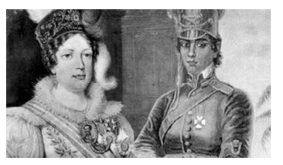
In the title of the letter alluded to in the first paragraph, the word “her” is used four times with the same meaning and could correctly be replaced by his in all four cases, had the letter been written to the Prince.
When most of us think back to our childhood school days, we can also remember at least a handful of kids who thought history class was a drag. To (1) them, history just seemed like a jumble of names and dates attached to events long over with and people long dead. What was the point of learning (2) it at all?
They didn’t know then that history was one of the most important subjects they’d ever study. Here we’ll take a closer look at why history is important and explore why everyone should make it a point to study it in depth.
History helps us understand ourselves.
To understand who you are, you need to develop a sense of self. A large part of that is learning where you fit into the story of your country or the global community in the grand scheme of things. History tells you the story of how your nation, city, or community came to be everything that it is. It tells you where your ancestors came from and tells you who (3) they were. Most importantly of all, it gives you the ability to spot (and appreciate) the legacies you may have inherited from (4) them.
Arcadia Publishing. Why it's important that we study History. Available in:https://www.arcadiapublishing.com/Navigation/Community/Arcadia-andTHP-Blog/June-2016/Why-It%E2%80%99s-Important-That-We-Study-History. Access in: July, 22 2020 (Adapted).
Escolha a alternativa cujas expressões se referem, correta e respectivamente, às quatro palavras destacadas e numeradas no texto.
Text
The School of the Future


Disponível em: https://www.typekids.com/blog/the-school-of-the-future/ Texto adaptado. Acesso em: 30 ago. 2020.
The pronoun it is referring respectively to

Text 2
Home

No one leaves
home unless home is the mouth of a shark
you only run for the border
when you see the whole city running as well
Your neighbors running faster than you
breath bloody in their throats
the boy you went to school with
who kissed you dizzy behind the old tin factory
is holding a gun bigger than his body
you only leave homewhen
home won‘t let you stay.
No one leaves home unless home chases you
fire under feet
hot blood in your belly
it‘s not something you ever thought of doing
until the blade burnt threats into
your neck
and even then you carried the anthem under
your breath
only tearing up your passport in an airport toilet
sobbing as each mouthful of paper
made it clear that you wouldn‘t be going back.
You have to understand,
that no one puts their children in a boat
unless the water is safer than the land
no one burns their palms
under trains
beneath carriages (…)

I want to go home,
but home is the mouth of a shark
home is the barrel of the gun
and no one would leave home
unless home chased you to the shore
unless home told you to quicken your legs
leave your clothes behind
crawl through the desert
wade through the oceans (…)
No one leaves home until home is a sweaty voice in your ear
saying –
leave,
run away from me now
I dont know what I‘ve become
but I know that anywhere
is safer than here.
By Warsan Shire. Disponível em: https://www.facinghistory.org/educator-resources/current-events/many-faces-global-migration#8 Excertos.
Acesso em: set. 2020.
Text 1
What is Distance Learning and Why Is It So Important?

(nytimes.com)
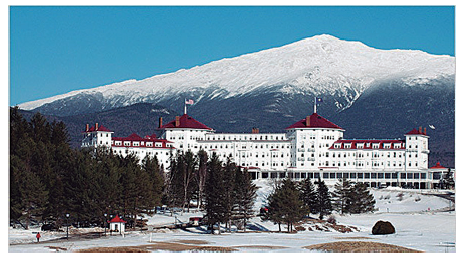
Shimmering white and gracefully statuesque, the Mount Washington Hotel is a granite fortress, a manmade anomaly among the raw wilderness of the surrounding White Mountains in remote northern New Hampshire, U.S. Even to this day, the hotel is geographically secured by 800,000 acres of the White Mountain National Forest around it. This was the main reason why the Hotel was chosen for a World War Two meeting – a meeting that shaped present-day global economic policies.
(Linda Laban. www.bbc.com, 26.08.2020. Adapted.)
The term “this”, which introduces the last sentence in the text, refers to the fact that the Mount Washington Hotel
Big education publisher to end printed textbooks
The world's largest education publisher, Pearson, has said it will gradually phase out printed textbooks. It has taken a decision to make all of its learning resources "digital first". Pearson said the future of the industry is in e-books and digital services. Pearson CEO John Fallon explained more about the company's future direction. He told the BBC: "We are now over the digital tipping point. Over half our annual revenues come from digital sales, so we've decided, a little bit like in other industries like newspapers or music or in broadcast, that it is time to flick the switch in how we primarily make and create our products." He added: "I am increasingly confident and excited about this." Pearson said a huge advantage of digital books is that they can be continually updated, _________3 means teachers will always have access to the latest versions of textbooks. Mr. Fallon said Pearson would stop its current business model of revising printed course books every three years. He said this model has dominated the industry for over four decades and is now past its use-by date. Fallon said: "We learn by engaging and sharing with others, and a digital environment enables you to do that in a much more effective way." He added the digital books will appeal to the "Netflix and Spotify generation". Textbook writers are worried they will earn less from their books as digital products are sold on a subscription basis.
Source: https://breakingnewsenglish.com/1907/190718- textbooks.html Captured on: 26/07/19
I. _____ was this house built? In 1980. II. ______ hit you? Martha’s brother hit me. III. __________ do you study English? Twice a week. IV. __________ sisters do you have? Two. Their names are Paola and Marianne. V. __________ is your school? Only 2 Km.
Assinale a alternativa com a seqüência correta de respostas:
The Laziest Countries
Disponível em: <https://allthatsinteresting.com/worlds-laziest-countries> Acesso em 10 set. 2018

Brazil must legalise drugs – its existing policy just destroys lives
For decades, guns and imprisonment have been the hallmarks of Brazil’s war against the drug trafficking. But the only way to beat the gangs is to stop creating criminals, says a top Brazilian judge
“The war raging in Rocinha, Latin America’s largest favela, has already been lost. Rooted in a dispute between gangs for control of drug trafficking, it has disrupted the daily life of the community in Rio de Janeiro since mid-September. With the sound of shots coming from all sides, schools and shops are constantly forced to close. Recently, a stray bullet killed a Spanish tourist. The war is not the only thing being lost.
For decades, Brazil has had the same drug policy approach. Police, weapons and numerous arrests. It does not take an expert to conclude the obvious: the strategy has failed. Drug trafficking and consumption have only increased. […]
In a case still before the Brazilian supreme court, I voted for decriminalising the possession of marijuana for private consumption. […]
Drugs are an issue that has a profound impact on the criminal justice system, and it is legitimate for the supreme court to participate in the public debate. So here are the reasons for my views.
First, drugs are bad and it is therefore the role of the state and society to discourage consumption, treat dependents and repress trafficking. The rationale behind legalisation is rooted in the belief that it will help in achieving these goals.
Second, the war on drugs has failed. Since the 1970s, under the influence and leadership of the US, the world has tackled this problem with the use of police forces, armies, and armaments. The tragic reality is that 40 years, billions of dollars, hundreds of thousands of prisoners and thousands of deaths later, things are worse. At least in countries like Brazil.
Third, as the American economist Milton Friedman argued, the only result of criminalisation is ensuring the trafficker’s monopoly.
With these points in mind, what would legalisation achieve?
In most countries in North America and Europe, the greatest concern of the authorities is users and the impact drugs have on their lives and on society. These are all important considerations. In Brazil, however, the principal focus must be ending the dominance drug dealers exercise over poor communities. Gangs have become the main political and economic power in thousands of modest neighbourhoods in Brazil. This scenario prevents a family of honest and hard-working people from educating their children away from the influence of criminal factions, who intimidate, co-opt and exercise an unfair advantage over any lawful activity. Crucially, this power of trafficking comes from illegality.
Another benefit of legalisation would be to prevent the mass incarceration of impoverished young people with no criminal record who are arrested for trafficking because they are caught in possession of negligible amounts of marijuana. A third of detainees in Brazil are imprisoned for drug trafficking. Once arrested, young prisoners will have to join one of the factions that control the penitentiaries – and on that day, they become dangerous.
[…]
We cannot be certain that a progressive and cautious policy of decriminalisation and legalisation will be successful. What we can affirm is that the existing policy of criminalisation has failed. We must take chances; otherwise, we risk simply accepting a terrible situation. As the Brazilian navigator Amyr Klink said: “The worst shipwreck is not setting off at all.”
Disponível em: <https://www.theguardian.com/global-development/2017/nov/15/brazil-must-legalise-drugs-existing-policy-destroys-lives-luis-roberto-barroso-supreme-court-judge>

 Conheça nossos planos