Questões de Vestibular Comentadas sobre palavras conectivas | connective words em inglês

Foram encontradas 31 questões

Ano: 2025 Banca: VUNESP Órgão: UNIFIPA Prova: VUNESP - 2025 - UNIFIPA - Vestibular Medicina - Conhecimentos Gerais |
Q3966809 Inglês
Leia o texto para responder à questão.


Admixture’s impact on Brazilian population evolution and health


    Brazil is a vast continental country home to the largest population in Latin America and boasts the world’s largest recently admixed population1 . The colonization process brought approximately 5 million Europeans to Brazil, alongside the forced migration of at least 5 million Africans and the decimation of Indigenous populations, which once included more than 10 million people speaking more than 1000 languages. This distinctive historical interplay shaped a complex mosaic of genetic diversity, underscoring the importance of detailed genomic studies. Nevertheless, similar to other populations in the Global South2 , the Brazilian population remains notably underrepresented in genomic research, where there is a lack of studies investigating the effects of this population’s admixture on its evolution, diversity, and health status.

    To address these gaps, a research group generated 2723 high-coverage whole-genome sequences of the Brazilian population, encompassing urban, rural, and riverine communities from all five geographical regions of Brazil. This dataset reflects a diverse group of ethnic backgrounds, including Afro-Brazilians and descendants of Indigenous people, and provides a comprehensive representation of Brazilian genomic diversity.


(Kelly Nunes et al. www.science.org, 15.05.2025. Adaptado.)


1admixed population: group of individuals formed through interbreeding of two or more previously isolated populations.

2Global South: a group of countries mainly located in the Southern Hemisphere that are often characterized as developing, less developed or underdeveloped.
In the excerpt from the first paragraph “Nevertheless, similar to other populations in the Global South”, the underlined word expresses
Alternativas
Q3857482 Inglês

Leia o texto para responder à questão.


Dr. Mariangela Hungria will receive the $500,000 award for her work to utilize biological processes to sustainably improve crop1 nutrition, yields2 and productivity. The scientist whose discoveries helped Brazil become a global agricultural powerhouse has been named the 2025 World Food Prize Laureate.


Dr. Mariangela Hungria, a microbiologist from São Paulo, has developed dozens of biological seed and soil treatments that help crops source nutrients through soil bacteria, significantly increasing yields of major crops while also reducing the need for synthetic fertilizer. Her products are estimated to have been used across more than 40 million hectares in Brazil, saving farmers up to US$40 billion a year in costs while avoiding more than 180 million metric tons of CO2 equivalent emissions per year.


Dr. Hungria’s work has helped improve yields of wheat, corn, rice, common beans, and other major crops, including soybean, which is now Brazil’s top agricultural export. Over her 40-year career with the Brazilian Agricultural Research Corporation (Embrapa), national soybean production increased from 15 million tons in 1979 to an anticipated 173 million tons in the next harvest3 in 2025.


Dr. Hungria, who overcame prejudices against women and young mothers in academia to be named one of the 100 most powerful women in agriculture in Brazil by Forbes magazine in 2021, said she was inspired by Dr. Norman Borlaug, the father of the Green Revolution and founder of the World Food Prize. “I like to say that he made the Green Revolution possible, and we had this great opportunity to start a ‘micro green revolution’ — a green revolution, but with microorganisms,” she added. “I can’t quite believe I am now receiving the World Food Prize. Many people questioned me and my abilities throughout my career but I believed in what I was doing and persevered. The role of women in agriculture, from farming to science, deserves more recognition. I hope my achievement inspires others to pursue their passions in science.”


(www.worldfoodprize.org, 13.05.2025. Adaptado.)


1crop: cultivated plant that is grown as food, especially grain, fruit or vegetable.


2yields: the full amounts of an agricultural product.


3harvest: the crops that are cut and collected.

No trecho do segundo parágrafo “saving farmers up to US$40 billion a year in costs while avoiding more than 180 million metric tons of CO2 equivalent emissions per year”, o termo sublinhado indica

Alternativas
Ano: 2025 Banca: FGV Órgão: FEMPAR Prova: FGV - 2025 - FEMPAR - Vestibular - Medicina |
Q3840968 Inglês
Read Text I below and answer the  question that follow it.


Text I


Jonathan Haidt: How to make the 'anxious generation' happy again


Academics researching wellbeing have for a long time almost unanimously agreed on one thing: over the typical lifetime, happiness tends to follow a U-shaped curve, peaking at 30, plummeting at age 50, before spiking again after 70. It’s a pattern replicated using data going back as far as the 1970s in almost 150 countries.

But around 2011, researchers noticed an astonishing reversal in this trend. “This empirical regularity has been replaced by a monotonic decrease in ill-being by age,” they reported in an NBER working paper. In plain English, younger people today are unhappier, both compared to previous generations and to their older peers. Or, to quote the title of the most recent book from Jonathan Haidt, Professor of Ethical Leadership at New York University, they are the anxious generation […].

Today, rather than playing with their friends, kids stay at home on their devices. Instead of hearing chatter and laughter in the corridor of schools, we hear the gentle tapping of screens. The social isolation many of us experienced during pandemic-induced lockdowns was nothing new for children, Haidt said. “They began social distancing as soon as they got smartphones.”

The good news for parents is that, while this trend is worrying, it is not inevitable. There are things we can do. “We can turn this around with four new norms,” Haidt proposed.

The first norm is a commitment to not give our children a smartphone until they are at least 14. “Give them a flip-phone if you want to, so they can call and text you,” he said. “But don’t give the entire world access to your child.” The second is to not allow our children to use social media until they are at least 16. “Social media is wildly inappropriate for children — you have strangers trying to talk to them, cyberbullying, explosive drama.”

The third norm is that schools should be a phone-free environment. “All schools need to be phone free from bell to bell — from the morning when kids arrive to the end when they leave,” Haidt explained.

And finally, the fourth norm involves going back to a time where parents felt more comfortable letting their kids walk to the shops or play outside with friends. “The fourth norm is to give them much more independence in the real world,” he said. “Ultimately, our mission is to restore childhood: the kind of wonderful, fun, exciting childhood we all had, which was full of conflicts, failures, exploration, adventure, risk-taking, thrills and all those emotions that you experienced not with your parents, but when you were out, away from your secure home base.”


Adapted from https://www.weforum.org/stories/2025/01/jonathan-haidt-digitaltechnology-social-media-childhood/
The phrase “as soon as” in “as soon as they got smartphones” (3rd paragraph) indicates 
Alternativas
Ano: 2025 Banca: CECIERJ Órgão: CEDERJ Prova: CECIERJ - 2025 - CEDERJ - Vestibular - Segundo Semestre |
Q3776532 Inglês
Bill Gates and his vision of the future of jobs with AI

By Clément Pessaux

April 29, 2025


According to Bill Gates, artificial intelligence is about to redefine the job market. Among the professions likely to be widely replaced, Gates directly mentions doctors and teachers. Why these specific sectors? AI has the ability to take on complex tasks such as medical diagnosis or personalized learning, making these services more accessible. In fact, in some developing countries where access to education and healthcare remains limited, such advancements could transform daily life.

But this progress raises concerns. Can we really do without human empathy in these fields? And what about the judgment or sensitivity that a machine can never fully reproduce?

On the other hand, there are professions that AI does not seem ready to replace. Gates specifically mentions energy experts, biologists, and developers. These jobs require specialized expertise, as well as creativity and constant adaptability in the face of environmental or technological challenges.

Creativity, strategic thinking, and empathy remain areas where humans will always have the upper hand. Although he recognizes the immense potential of AI, Gates also emphasizes the limits and the need to think about its deployment by keeping humans at the center of priorities.


Available at: https://3dvf.com/en/bill-gates-predicts-ai-willreplace-humans-in-almost-all-fields-except-these-jobs/ Access: 03 may 2025. Adapted.
In the sentence “But this progress raises concerns.”, the connector “but” expresses:
Alternativas
Ano: 2025 Banca: FUNDEP (Gestão de Concursos) Órgão: FAME Prova: FUNDEP (Gestão de Concursos) - 2025 - FAME - Vestibular - Primeiro Semestre - Medicina |
Q3747587 Inglês
INSTRUCTION: Read the following text to answer the questions.

What is fatal familial insomnia?

In the mid‑1980s, a family with a mysterious problem lived in a small town in Italy. For many years, members of this family had trouble sleeping, but no one knew why. One day, a family member named Silvano decided to find out what was causing this strange problem. Silvano traveled to the city of Bologna to meet with the best sleep doctors. He told them all about his family’s mystery.
The doctors were intrigued by Silvano’s story and immediately began to study his case. After much research, the doctors discovered something never seen before: a tiny change in a special gene passed down from generation to generation in Silvano’s family, which stopped them from sleeping. They called this disease fatal familial insomnia (FFI).
Fatal familial insomnia is an extremely rare disease. Like many other rare diseases, FFI is passed on through the DNA from parents to their children. The symptoms of FFI start slowly and get worse over time. People with FFI start to have difficulty falling and / or staying asleep, and then, as it gets worse, they may suddenly fall asleep without warning. People with FFI also tend to develop other problems like a fast heartbeat; high blood pressure; hormonal, mood and behavior swings; anxiety; excessive sweating; and trouble thinking clearly and moving their bodies. The symptoms usually start between the ages of 51 and 60, although rarely they can start as early as 18 – 20 years old. FFI affects both men and women equally. To date, more than 70 families around the world have been found to have FFI.
[...]
Although there is still no cure for FFI, research is happening all over the world. Researchers are working to find new pieces to help them solve the complex puzzle of FFI and to develop treatments that can improve the lives of those affected. Ongoing research aims to understand the underlying mechanisms of FFI, especially how genetic mutations change healthy prion proteins into abnormal ones and how the buildup of abnormal prions in the brain causes FFI symptoms. This understanding is essential for developing effective therapies.
Additionally, researchers are searching for biomarkers of FFI. Biomarkers are things that can be measured through blood tests or brain scans, for example, that indicate the presence of a disease or the risk of developing it. Biomarkers could help doctors to diagnose FFI earlier and to track how it changes over time.
In terms of developing therapies for FFI, gene therapy is a promising approach that aims to fix or replace defective genes. Gene therapy could eventually improve patients’ quality of life. Researchers are also studying drugs that might stop or slow down the buildup of PrPSc in the brain. New drugs are first tested on animals to see if they work and are safe, and drugs that pass these initial tests are then tested on people. With effective new medicines, it might be possible to slow down or even stop FFI.

Available at: https://kids.frontiersin.org/articles/10.3389/frym.2025.1523273. Accessed on: Aug 4th, 2025. [Adapted]
The word although in the sentence “Although there is still no cure for FFI, research is happening all over the world.” refers to
Alternativas
Ano: 2023 Banca: CESPE / CEBRASPE Órgão: UNB Prova: CESPE / CEBRASPE - 2023 - UNB - Prova de Conhecimentos I - 1° dia - Inglês |
Q3108557 Inglês
          Israel and the Palestinian territories are among the most climate vulnerable places on the planet. Whereas worldwide temperatures have increased by an average of 1.1 °C (1.9 °F) since pre-industrial times, in Israel and the surrounding areas, average temperatures have risen by 1.5 °C (2.7 °F) between 1950 and 2017, with a forecasted increase of 4 °C (7.2 °F) by the end of the century. Meanwhile, rising sea levels — projected by Israel’s Environment Ministry to be as high as a meter by 2050, according to a new investigative report by Haaretz newspaper — threaten to obliterate Israel’s famed beaches, damage its desalination plants and undermine the sewage and drainage systems of many coastal cities. In the densely populated Gaza strip, where 2.1 million Palestinians are crammed into 365 square km (141 sq. mi.), sea level rise means a loss of precious real estate as well as saltwater intrusion into an already overtaxed aquifer.

         In an arid region already threatened by desertification and declining precipitation, one would think that the looming climate catastrophe would catalyze a powerful climate movement. Instead, the whole thing is largely an afterthought. In Israel and the Palestinian territories the threat is both existential and more acute. In this contested land, climate action is hamstrung by zerosum battles over territorial, political and historic rights, even as a warming climate exacerbates those tensions. 


Aryn Baker. The Israeli-Palestinian conflict is also
a looming climate disaster. Time, January 2023 (adapted). 
Based on the preceding text, judge the following item.  

The word “Whereas” (second sentence of the first paragraph) can be correctly replaced, without changing the meaning of the text, by While
Alternativas
Ano: 2021 Banca: CECIERJ Órgão: CEDERJ Prova: CECIERJ - 2021 - CEDERJ - Vestibular - Língua Inglesa - 2022.1 |
Q1859703 Inglês

TEXT 2

Imagem associada para resolução da questão

Available from: www.nature.com/naturemedicine. Access: 10 Oct. 2021. Adapted.


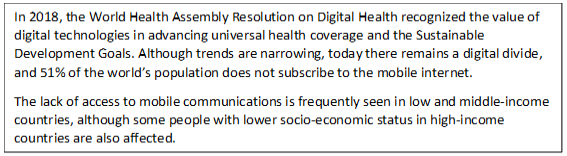
The linking word “although” (underlined in two sentences of the text) establishes a contrast between ideas, and it may be replaced by “but”. The alternative which correctly expresses the ideas which are contrasted in the two sentences is: 

Alternativas
Ano: 2021 Banca: UPENET/IAUPE Órgão: UPE Prova: UPENET/IAUPE - 2021 - UPE - Vestibular - 2º Fase - 1º Dia |
Q1675845 Inglês

Text 1


What is Distance Learning and Why Is It So Important?


1 Distance learning – any form of remote education where the student is not physically present for the lesson – is booming thanks to the power of the Internet. In fact, there are a number of advantages of learning remotely over even traditional teaching models. As the Internet blurs the line between near and far, distance learning is set to disrupt the current paradigm of education.
2 Historically, distance learning described correspondence courses in which students would communicate with their schools or teachers by mail. More recently, distance education has moved online to include a huge range of systems and methods on practically any connected device.
3 Distance education is clearly different from regular education in terms of a student or teacher‘s physical presence. For the most part, it translates into increased freedom for both learners and educators, but it also requires higher degrees of discipline and planning to successfully complete the course of study.
4 The enhanced freedom of remote learning is most clearly seen in the fact that students can choose courses that fit their schedules and resources. (Teachers can do the same.) And in the case of digital learning, students can also choose the location and teaching styles that best suit their needs.
5 Remote education is certainly not a magic bullet and there will always be a place for in-class learning. At the same time, distance learning still has a lot of untapped potential to reach students where they are and connect educators and learners in new ways. From increased flexibility to new learning styles, it seems that the future of learning will be as diverse in time and place as it will be in thought.

Disponível em: https://www.viewsonic.com/library/education/what-is-distance-learning-and-why-is-it-so-important/. Texto adaptado. Acesso em: 20 set. 2020.

In the 2 nd paragraph: Historically, distance learning described correspondence courses in which students would communicate with their schools or teachers by mail., in which is
Alternativas
Q1796822 Inglês
Read the text to answer question.

The aliens among us

     Humans think of themselves as the world’s apex predators. Hence the silence of sabre-tooth tigers, the absence of moas from New Zealand and the long list of endangered megafauna. But sars-cov-2 shows how people can also end up as prey. Viruses have caused a litany of modern pandemics, from Covid-19, to hiv/aids to the influenza outbreak in 1918-20, which killed many more people than the first world war. Before that, the colonisation of the Americas by Europeans was abetted – and perhaps made possible – by epidemics of smallpox, measles and influenza brought unwittingly by the invaders, which annihilated many of the original inhabitants.

(www.economist.com, 22.08.2020. Adapted.)
In the second sentence in the text, the term “hence” can be replaced, with no change in meaning, by
Alternativas
Q1797668 Inglês
Leia o texto para responder à questão.

The fantastic appeal of fantasy


The fantasy genre starts where science ends

     Few things can brighten up a dark morning in a Scottish seaside resort during an Atlantic storm. Yet while sheltering in a bookshop from the rain, I had a moment of sunny revelation. Stacked almost as high as my 11-year-old self were copies of The Lord of the Rings, with a cover illustration that promised mystery and magic. That chance discovery started a lifelong love of the fantasy genre1 , both as reader and writer. 
   The fantasy genre has had more and more success, but today we’re in the middle of an unprecedented fantasy boom. Sales continue to rise and it is now the biggest genre in publishing. The more rational the world gets, with super-science all around us, the more we demand the irrational in our fiction.
     Fantasy is not simply a case of swords2 and sorcery3 . Yes, there is that by the shelf. But the genre is as broad as the imagination. The genre starts where science ends.
    “In these modern times, where most of us sit at computers, fantasy books offer a chance to break out of mundane moments,” says Mark Newton, an editor with the genre. “People like to explore themes that go beyond the limited palette that literary fiction claims to offer.” 
     A search for the origins of fantasy will usually have academics muttering about Beowulf or Homer’s The Iliad, but they come from a time when all stories were fantasy: gods and monsters and supernatural artefacts with humanity caught in the middle. The first modern fantasy writer is usually considered to be William Morris, in the late 19th Century. But it was the early 20th Century where fantasy really started to gain status.
     Fantasy fiction has always been about visionary ideas. You can get artful words in plenty of literary fiction, but being able to see beyond the boundaries4 of the world around us — now that’s a special skill.
     I don’t write fantasy fiction simply to provide a trapdoor5 from the real world. For me, the genre is about the reality. But instead of coming up against it, fantasy maps the unconscious aspirations of our modern society through allegory in story- -forms as old as humanity. It’s about turning off the mobile phone and the computer and remembering who we are in the deepest parts of ourselves.

(Mark Chadbourn. www.telegraph.co.uk, 12.04.2008. Adaptado.)

1genre: gênero. Categoria distintiva de composição literária, como romance, poesia etc.
2sword: espada.
3sorcery: feitiçaria.
4boundary: fronteira.
5trapdoor: alçapão
No trecho “Yet while sheltering in a bookshop from the rain” (1° parágrafo), o termo sublinhado indica ideia de
Alternativas
Ano: 2019 Banca: Instituto Consulplan Órgão: FIMCA Prova: Instituto Consulplan - 2019 - FIMCA - Vestibular de Medicina - Edital nº 01/ 2020 |
Q1790468 Inglês
Science Education in the United States of America

(Audrey B. Champagne.)

    Science education in the United States of America is in the midst of an unprecedented reform movement-unprecedented because the movement is driven by national standards developed with support from the federal government. The standards for science education are redefining the character of science education from kindergarten to the postgraduate education of scientists and science teachers. Unlike the education in most countries of the world, education of students in kindergarten through grade twelve in the United States is not the responsibility of the federal government but is controlled by the individual states. States have the right to regulate all elements of the curriculum-the content all students are expected to learn, the structural organization of programs across all grades, the structural organization of the yearly curriculum in each subject, teaching methods, and textbooks. Historically, and even now, the states jealously guard all their rights and resist efforts by the federal government to exercise control over matters that are the responsibility of the states. The federal government's involvement in education has been to identify matters of national priority and to provide funds and other resources to the states to meet the national priorities. So, for instance, in the late 1960s and early 1970s, when the United States felt that its perceived preeminence in scientific research and its national safety were threatened, science education was identified as a national priority. The primary purpose of the federal government's initiatives was to encourage and upgrade the science education of young people who would become practicing scientists. This effort was not perceived by the states as an erosion of their rights because it was a response to a threat to the nation and was targeted on the science education of a relatively few students. The current situation is quite different.
    The federal government's underwriting of the development of national standards for education has the potential for shifting the control of the curriculum from the states to the federal government. This initiative, supported by the National Association of Governors, is the result of the concern of political, business and industrial leaders with the poor quality of education across the nation and with the effect this poor quality has on the U.S. position in the world economy. The goal of the standards movement from the prospective of political, business, and industrial leaders is to strengthen education so that the schools will produce graduates with the knowledge and skills required of them to be productive in the workplace.
   The pedagogy and attitudes of many teachers and professors alike has been that science is for the few. So little concern or effort was applied to make science interesting or to make learning it easy. Consequently, only highly motivated and highly intelligent students survived science courses. Thus it appears education in the natural sciences develops individuals who reason well, are critical thinkers, are creative problem solvers-in short, are intelligent. But, we must ask, does education in the natural sciences produce smarter people or do smart people survive science as it is taught? While historically the answer to the question may well have been survival, the national standards are based on the beliefs that science is for all and can produce smarter people.

(Available: https://files.eric.ed.gov/fulltext/EJ608194.pdf. Adapted.)
Analyse the items usage in the text. Mark the one which is a modifier.
Alternativas
Ano: 2019 Banca: Instituto Consulplan Órgão: FIMCA Prova: Instituto Consulplan - 2019 - FIMCA - Vestibular de Medicina - Edital nº 01/ 2020 |
Q1790463 Inglês
Science Education in the United States of America

(Audrey B. Champagne.)

    Science education in the United States of America is in the midst of an unprecedented reform movement-unprecedented because the movement is driven by national standards developed with support from the federal government. The standards for science education are redefining the character of science education from kindergarten to the postgraduate education of scientists and science teachers. Unlike the education in most countries of the world, education of students in kindergarten through grade twelve in the United States is not the responsibility of the federal government but is controlled by the individual states. States have the right to regulate all elements of the curriculum-the content all students are expected to learn, the structural organization of programs across all grades, the structural organization of the yearly curriculum in each subject, teaching methods, and textbooks. Historically, and even now, the states jealously guard all their rights and resist efforts by the federal government to exercise control over matters that are the responsibility of the states. The federal government's involvement in education has been to identify matters of national priority and to provide funds and other resources to the states to meet the national priorities. So, for instance, in the late 1960s and early 1970s, when the United States felt that its perceived preeminence in scientific research and its national safety were threatened, science education was identified as a national priority. The primary purpose of the federal government's initiatives was to encourage and upgrade the science education of young people who would become practicing scientists. This effort was not perceived by the states as an erosion of their rights because it was a response to a threat to the nation and was targeted on the science education of a relatively few students. The current situation is quite different.
    The federal government's underwriting of the development of national standards for education has the potential for shifting the control of the curriculum from the states to the federal government. This initiative, supported by the National Association of Governors, is the result of the concern of political, business and industrial leaders with the poor quality of education across the nation and with the effect this poor quality has on the U.S. position in the world economy. The goal of the standards movement from the prospective of political, business, and industrial leaders is to strengthen education so that the schools will produce graduates with the knowledge and skills required of them to be productive in the workplace.
   The pedagogy and attitudes of many teachers and professors alike has been that science is for the few. So little concern or effort was applied to make science interesting or to make learning it easy. Consequently, only highly motivated and highly intelligent students survived science courses. Thus it appears education in the natural sciences develops individuals who reason well, are critical thinkers, are creative problem solvers-in short, are intelligent. But, we must ask, does education in the natural sciences produce smarter people or do smart people survive science as it is taught? While historically the answer to the question may well have been survival, the national standards are based on the beliefs that science is for all and can produce smarter people.

(Available: https://files.eric.ed.gov/fulltext/EJ608194.pdf. Adapted.)
“Thus” (L52) introduces a/an:
Alternativas
Ano: 2019 Banca: UNIVESP Órgão: UNIVESP Prova: UNIVESP - 2019 - UNIVESP - Vestibular 1º semestre |
Q1280812 Inglês
Leia o excerto a seguir.
My sister is married _____ she lives in London.
Assinale a alternativa que preencha corretamente a lacuna.

Alternativas
Ano: 2019 Banca: UNIVESP Órgão: UNIVESP Prova: UNIVESP - 2019 - UNIVESP - Vestibular 1º semestre |
Q1280811 Inglês
Leia o excerto a seguir.
Some artists were imprisoned during the dictatorship in Brazil. _____, some of them were exiled.
Assinale a alternativa que preencha corretamente a lacuna.
Alternativas
Ano: 2018 Banca: VUNESP Órgão: UNIFESP Prova: VUNESP - 2018 - UNIFESP - Vestibular |
Q976407 Inglês

                                  Why so few nurses are men


      Ask health professionals in any country what the biggest problem in their health-care system is and one of the most common answers is the shortage of nurses. In ageing rich countries, demand for nursing care is becoming increasingly insatiable. Britain’s National Health Service, for example, has 40,000-odd nurse vacancies. Poor countries struggle with the emigration of nurses for greener pastures. One obvious solution seems neglected: recruit more men. Typically, just 5-10% of nurses registered in a given country are men. Why so few?

      Views of nursing as a “woman’s job” have deep roots. Florence Nightingale, who established the principles of modern nursing in the 1860s, insisted that men’s “hard and horny” hands were “not fitted to touch, bathe and dress wounded limbs”. In Britain the Royal College of Nursing, the profession’s union, did not even admit men as members until 1960. Some nursing schools in America started admitting men only in 1982, after a Supreme Court ruling forced them to. Senior nurse titles such as “sister” (a ward manager) and “matron” (which in some countries is used for men as well) do not help matters. Unsurprisingly, some older people do not even know that men can be nurses too. Male nurses often encounter patients who assume they are doctors.

      Another problem is that beliefs about what a nursing job entails are often outdated – in ways that may be particularly off-putting for men. In films, nurses are commonly portrayed as the helpers of heroic male doctors. In fact, nurses do most of their work independently and are the first responders to patients in crisis. To dispel myths, nurse-recruitment campaigns display nursing as a professional job with career progression, specialisms like anaesthetics, cardiology or emergency care, and use for skills related to technology, innovation and leadership. However, attracting men without playing to gender stereotypes can be tricky. “Are you man enough to be a nurse?”, the slogan of an American campaign, was involved in controversy.

      Nursing is not a career many boys aspire to, or are encouraged to consider. Only two-fifths of British parents say they would be proud if their son became a nurse. Because of all this, men who go into nursing are usually already closely familiar with the job. Some are following in the career footsteps of their mothers. Others decide that the job would suit them after they see a male nurse care for a relative or they themselves get care from a male nurse when hospitalised. Although many gender stereotypes about jobs and caring have crumbled, nursing has, so far, remained unaffected.

                                              (www.economist.com, 22.08.2018. Adaptado.)

No trecho do quarto parágrafo “Although many gender stereotypes about jobs and caring have crumbled”, o termo sublinhado pode ser substituído, sem alteração de sentido, por
Alternativas
Ano: 2017 Banca: VUNESP Órgão: SÃO CAMILO Prova: VUNESP - 2017 - SÃO CAMILO - Processo Seletivo - 2º Semestre de 2017 - Medicina |
Q1799440 Inglês
Leia o texto para responder à questão.

New crab species honors Harry Potter

     A recently discovered crab species has been somewhat tenuously named in honor of characters from the magical world of Harry Potter.
    The crab’s official name is Harryplax severus, with the genus Harryplax named after the crab’s collector, the late researcher and former marine Harry Conley, who died from a gunshot in 2002, as well as the protagonist in J. K. Rowling’s novels. Conley dug up many specimens in Guam’s coral reef rubble almost 20 years ago.
      The latter species part of its name is inspired by the character Severus Snape, who “despite being a central character in the series, keeps his background and agenda mysterious until the very end,” the statement announcing the naming said. The authors note this is “just like the present new species, which has eluded discovery until now, nearly 20 years after it was first collected”.
      Even though Conley found the specimen long ago, its status as a new species and genus was only realized recently by Dr Peter Ng and Dr Jose Cristopher E. Mendoza from the National University of Singapore.
     The crab is tiny, measuring just 7.9 by 5.6 millimeters (0.3 by 0.2 inches), and known only to herald from the island of Guam. It’s found deep in coral rubble or under subtidal rocks, and survives at dark depths with reduced eyes, ones that are not used extensively. Instead, it has antennae to probe the depths, and gets around on long thin legs.
     In the statement, Dr Mendoza was said to be a self-confessed “Potterhead”, hence the somewhat unusual moniker. But it’s not the first time Potter has inspired the naming of a new species – The magazine Popular Science notes that a dinosaur species was named after Hogwarts in 2006 (Dracorex hogwartsia), a wasp in Thailand was named Ampulex dementor in 2014, and a spider was named Eriovixia gryffindori last year.

(Jonathan O’Callaghan. www.iflscience.com, 24.01.17. Adaptado.)
In the sentence of the third paragraph “despite being a central character”, the word in bold expresses the idea of
Alternativas
Ano: 2017 Banca: VUNESP Órgão: SÃO CAMILO Prova: VUNESP - 2017 - SÃO CAMILO - Processo Seletivo - 2º Semestre de 2017 - Medicina |
Q1799438 Inglês
Leia o texto para responder à questão.

New crab species honors Harry Potter

     A recently discovered crab species has been somewhat tenuously named in honor of characters from the magical world of Harry Potter.
    The crab’s official name is Harryplax severus, with the genus Harryplax named after the crab’s collector, the late researcher and former marine Harry Conley, who died from a gunshot in 2002, as well as the protagonist in J. K. Rowling’s novels. Conley dug up many specimens in Guam’s coral reef rubble almost 20 years ago.
      The latter species part of its name is inspired by the character Severus Snape, who “despite being a central character in the series, keeps his background and agenda mysterious until the very end,” the statement announcing the naming said. The authors note this is “just like the present new species, which has eluded discovery until now, nearly 20 years after it was first collected”.
      Even though Conley found the specimen long ago, its status as a new species and genus was only realized recently by Dr Peter Ng and Dr Jose Cristopher E. Mendoza from the National University of Singapore.
     The crab is tiny, measuring just 7.9 by 5.6 millimeters (0.3 by 0.2 inches), and known only to herald from the island of Guam. It’s found deep in coral rubble or under subtidal rocks, and survives at dark depths with reduced eyes, ones that are not used extensively. Instead, it has antennae to probe the depths, and gets around on long thin legs.
     In the statement, Dr Mendoza was said to be a self-confessed “Potterhead”, hence the somewhat unusual moniker. But it’s not the first time Potter has inspired the naming of a new species – The magazine Popular Science notes that a dinosaur species was named after Hogwarts in 2006 (Dracorex hogwartsia), a wasp in Thailand was named Ampulex dementor in 2014, and a spider was named Eriovixia gryffindori last year.

(Jonathan O’Callaghan. www.iflscience.com, 24.01.17. Adaptado.)
No trecho do segundo parágrafo “as well as the protagonist in J. K. Rowling’s novels”, a expressão em destaque veicula a ideia de
Alternativas
Ano: 2017 Banca: FEPESE Órgão: ABEPRO Prova: FEPESE - 2017 - ABEPRO - Processo de Seleção |
Q1789296 Inglês

Opportunity Cost


This phenomenon goes by the name of ‘opportunity cost,’ since by not investing in more equipment and a more rigid production flow, the company is forgoing the opportunity to earn increased profits. These costs are every bite as real as the payment of dollars out-of-pocket.


This notion _______ opportunity cost can be reinforced _________ a famous saying ______ Benjamin Franklin, no slouch himself _________ operations management. To make the point, however, we must make a brief excursion into logic. One truth of logic is the validity of the so-called contrapositive, which says simply that if the statement “If A, then B” is true, then it is also true that “If not B, then not A.” That is, of every time A occurs B follows, then we can be sure that if B does not occur, then A did not occur as well. Enough logic then, and back to Ben Franklin.


One of his Poor Richard sayings is that “A penny saved is a penny earned.” We have all recognized the truth of that since childhood, but I assert that by this saying Ben showed us he knows everything about opportunity cost. After all, what is the contrapositive of “A penny not earned is a penny not saved (i.e., a penny sent). All we are saying by this notion of opportunity cost is that “a penny not earned (an opportunity forgone) is a penny spent.” We shall often have occasion to consider opportunity costs, in analyzing and deciding various operations issues.


SCHMENNER, Roger W. Production/Operations Management. 5th Edition. Prentice-Hall, 1993.

Analyze the sentences according to structure and grammar use.
1. The word ‘himself’ underlined in the text, is being used in the sentence as a reflexive pronoun. 2. The negative form of: ‘This phenomenon goes by the name of ‘opportunity cost,...’, is: ‘This phenomenon doesn’t go by the name of ‘opportunity cost,…’ 3. The words in bold in the text are examples of irregular verbs. 4. The word ‘however’ in: ‘To make the point, however, we must make a brief excursion into logic.’ is being used as a contrastive connector
Choose the alternative which presents the correct ones:
Alternativas
Ano: 2017 Banca: IF Sudeste - MG Órgão: IF Sudeste - MG Prova: IF Sudeste - MG - 2017 - IF Sudeste - MG - Vestibular - Primeiro Semestre |
Q1395626 Inglês
Read the following article, ignoring the empty spaces (1-5) for the time being. Then, check the alternative that shows the sequence of words that CORRECTLY fill in the gaps:

Your gut, your emotions
What controls our emotions? The same two people might see the same tragic newspaper headline, (1) __________ one is much more emotionally affected than the other. Why is that? According to an international team led by UCLA researchers, these emotions may be partially driven by an unlikely source: our gut bacteria. In fact, the bacteria that colonize our intestines may influence the architecture of the brain itself.
The experiment examining the relationship between brain development and the gut microbiome was conducted with mice. Specific strains of mice, one that lacked a complete gut microbiome and one that had a normal microbiome, were compared in terms of their brain development and behavior. The influence of microorganisms is not limited to brain development.
Interestingly, the mice with the ―normal‖ microbiome had more anxiety and moved less than the mice without the microbiome. (2) __________ exposed to a microbiome early in life, the active, calm mice began to act more anxious and reduced their movements. Microbiota evidently had this influence by affecting hormonal expression and building particular pathways in the brain associated with anxiety. The influence on brain development apparently occurred at a particular point early in the mouse‘s life, so it‘s possible early exposure to a proper microbiome is important for normal development. The researchers speculate that the microbiome helps the mice develop an appropriate sense of caution.
The influence of microorganisms is not limited to brain development. (3) __________ no conclusive link has been established, a few studies have detected abnormalities in the gut microbiomes of children with Autism Spectrum Disorders compared to non-affected children. Nor is microorganism influence limited to gut bacteria. A separate study in hyenas (also awaiting conclusive proof) suggests that individual hyenas use a specific cocktail of stinky bacteria in their scent markers left as a message to other hyenas.
(4) __________ some fungus can get in on the act, hijacking ants and forcing the unfortunate insects to relocate to a place favorable for a fungus to grow. The ant does not survive, but it makes great fungus food. (5) __________ a growing body of evidence from other animals, until the UCLA study there was not much direct research on how the microbiome affects humans. But given its potential importance, hopefully there will soon be more research along these lines. Going with your gut, indeed!
Disponível em:< https://daily.jstor.org/your-gut-youremotions/?utm_term=YOUR%20GUT%2C%20YOUR%20EMOTIONS&utm_campaign=jstordaily_08032017&utm_content=e mail&utm_source=Act-On+Software&utm_medium=email>. Acesso em: 15 Set. 2017.

Check the CORRECT alternative.
Alternativas
Ano: 2017 Banca: VUNESP Órgão: UNESP Prova: VUNESP - 2017 - UNESP - Vestibular - Primeiro Semestre |
Q869582 Inglês

                        When does the brain work best?

                     The peak times and ages for learning


      What’s your ideal time of the day for brain performance? Surprisingly, the answer to this isn’t as simple as being a morning or a night person. New research has shown that certain times of the day are best for completing specific tasks, and listening to your body’s natural clock may help you to accomplish more in 24 hours.

      Science suggests that the best time for our natural peak productivity is late morning. Our body temperatures start to rise just before we wake up in the morning and continue to increase through midday, Steve Kay, a professor of molecular and computational biology at the University of Southern California told The Wall Street Journal. This gradual increase in body temperature means that our working memory, alertness, and concentration also gradually improve, peaking at about mid morning. Our alertness tends to dip after this point, but one study suggested that midday fatigue may actually boost our creative abilities. For a 2011 study, 428 students were asked to solve a series of two types of problems, requiring either analytical or novel thinking. Results showed that their performance on the second type was best at non-peak times of day when they were tired.

      As for the age where our brains are at peak condition, science has long held that fluid intelligence, or the ability to think quickly and recall information, peaks at around age 20. However, a 2015 study revealed that peak brain age is far more complicated than previously believed and concluded that there are about 30 subsets of intelligence, all of which peak at different ages for different people. For example, the study found that raw speed in processing information appears to peak around age 18 or 19, then immediately starts to decline, but short-term memory continues to improve until around age 25, and then begins to drop around age 35, Medical Xpress reported. The ability to evaluate other people’s emotional states peaked much later, in the 40s or 50s. In addition, the study suggested that out our vocabulary may peak as late as our 60s’s or 70’s.

      Still, while working according to your body’s natural clock may sound helpful, it’s important to remember that these times may differ from person to person. On average, people can be divided into two distinct groups: morning people tend to wake up and go to sleep earlier and to be most productive early in the day. Evening people tend to wake up later, start more slowly and peak in the evening. If being a morning or evening person has been working for you the majority of your life, it may be best to not fix what’s not broken.

           (Dana Dovey. www.medicaldaily.com, 08.08.2016. Adaptado.)

No trecho do terceiro parágrafo “However, a 2015 study revealed”, o termo em destaque pode ser substituído, sem alteração de sentido, por
Alternativas
Respostas
1: E
2: C
3: C
4: D
5: C
6: C
7: D
8: A
9: B
10: E
11: C
12: C
13: B
14: E
15: D
16: C
17: E
18: E
19: A
20: B