Questões de Vestibular Sobre interpretação de texto | reading comprehension em inglês

Foram encontradas 5.299 questões

Ano: 2019 Banca: FATEC Órgão: FATEC Prova: FATEC - 2019 - FATEC - Vestibular - Primeiro Semestre |
Q1266574 Inglês

Leia o texto para responder a questão.


Minority ethnic Britons face ‘shocking’ job discrimination

Haroon Siddique

Thu 17 Jan 2019 17.00 GMT Last modified on Fri 18 Jan 2019 00.50 GMT


A study by experts based at the Centre for Social Investigation at Nuffield College, University of Oxford, found applicants from minority ethnic backgrounds had to send 80% more applications to get a positive response from an employer than a white person of British origin.

A linked study by the same researchers, comparing their results with similar field experiments dating back to 1969, found discrimination against black Britons and those of south Asian origin – particularly Pakistanis – unchanged over almost 50 years.

The research, part of a larger cross-national project funded by the European Union and shared exclusively with the Guardian before its official launch, prompted concerns that race relations legislation had failed.

It echoes findings published as part of the Guardian’s Bias in Britain series that people from minority ethnic backgrounds face discrimination when seeking a room to rent. In a snapshot survey of online flatshare ads the Guardian found that an applicant called Muhammad was significantly less likely to receive a positive response than an applicant called David.

Prof Anthony Heath, co-author and emeritus fellow of Nuffield College, said: “The absence of any real decline in discrimination against black British and people of Pakistani background is a disturbing finding, which calls into question the effectiveness of previous policies. Ethnic inequality remains a burning injustice and there needs to be a radical rethink about how to tackle it.”

Dr Zubaida Haque, the deputy director of the race equality thinktank Runnymede, described the  findings as shocking. They demonstrated that “it’s not just covert racism or unconscious bias that we need to worry about; it’s overt and conscious racism, where applicants are getting shortlisted on the basis of their ethnicity and/or name”, she said.

“It’s clear that race relations legislation is not sufficient to hold employers to account. There are no real consequences for employers of racially discriminating in subtle ways, but for BME* applicants or employees it means higher unemployment, lower wages, poorer conditions and less security in work and life.” 


<https://tinyurl.com/y9nohdte>  Acesso em: 07.10.2019. Adaptado.


*BME – Black and Minority Ethnicity

De acordo com o Professor Anthony Heath, o que causa surpresa em relação à pesquisa apresentada é que
Alternativas
Ano: 2019 Banca: FATEC Órgão: FATEC Prova: FATEC - 2019 - FATEC - Vestibular - Primeiro Semestre |
Q1266573 Inglês

Leia o texto para responder a questão.


Minority ethnic Britons face ‘shocking’ job discrimination

Haroon Siddique

Thu 17 Jan 2019 17.00 GMT Last modified on Fri 18 Jan 2019 00.50 GMT


A study by experts based at the Centre for Social Investigation at Nuffield College, University of Oxford, found applicants from minority ethnic backgrounds had to send 80% more applications to get a positive response from an employer than a white person of British origin.

A linked study by the same researchers, comparing their results with similar field experiments dating back to 1969, found discrimination against black Britons and those of south Asian origin – particularly Pakistanis – unchanged over almost 50 years.

The research, part of a larger cross-national project funded by the European Union and shared exclusively with the Guardian before its official launch, prompted concerns that race relations legislation had failed.

It echoes findings published as part of the Guardian’s Bias in Britain series that people from minority ethnic backgrounds face discrimination when seeking a room to rent. In a snapshot survey of online flatshare ads the Guardian found that an applicant called Muhammad was significantly less likely to receive a positive response than an applicant called David.

Prof Anthony Heath, co-author and emeritus fellow of Nuffield College, said: “The absence of any real decline in discrimination against black British and people of Pakistani background is a disturbing finding, which calls into question the effectiveness of previous policies. Ethnic inequality remains a burning injustice and there needs to be a radical rethink about how to tackle it.”

Dr Zubaida Haque, the deputy director of the race equality thinktank Runnymede, described the  findings as shocking. They demonstrated that “it’s not just covert racism or unconscious bias that we need to worry about; it’s overt and conscious racism, where applicants are getting shortlisted on the basis of their ethnicity and/or name”, she said.

“It’s clear that race relations legislation is not sufficient to hold employers to account. There are no real consequences for employers of racially discriminating in subtle ways, but for BME* applicants or employees it means higher unemployment, lower wages, poorer conditions and less security in work and life.” 


<https://tinyurl.com/y9nohdte>  Acesso em: 07.10.2019. Adaptado.


*BME – Black and Minority Ethnicity

Segundo o texto, estudos indicam que a discriminação está presente tanto na busca por emprego, quanto
Alternativas
Ano: 2019 Banca: FATEC Órgão: FATEC Prova: FATEC - 2019 - FATEC - Vestibular - Primeiro Semestre |
Q1266572 Inglês

Leia o texto para responder a questão.


Minority ethnic Britons face ‘shocking’ job discrimination

Haroon Siddique

Thu 17 Jan 2019 17.00 GMT Last modified on Fri 18 Jan 2019 00.50 GMT


A study by experts based at the Centre for Social Investigation at Nuffield College, University of Oxford, found applicants from minority ethnic backgrounds had to send 80% more applications to get a positive response from an employer than a white person of British origin.

A linked study by the same researchers, comparing their results with similar field experiments dating back to 1969, found discrimination against black Britons and those of south Asian origin – particularly Pakistanis – unchanged over almost 50 years.

The research, part of a larger cross-national project funded by the European Union and shared exclusively with the Guardian before its official launch, prompted concerns that race relations legislation had failed.

It echoes findings published as part of the Guardian’s Bias in Britain series that people from minority ethnic backgrounds face discrimination when seeking a room to rent. In a snapshot survey of online flatshare ads the Guardian found that an applicant called Muhammad was significantly less likely to receive a positive response than an applicant called David.

Prof Anthony Heath, co-author and emeritus fellow of Nuffield College, said: “The absence of any real decline in discrimination against black British and people of Pakistani background is a disturbing finding, which calls into question the effectiveness of previous policies. Ethnic inequality remains a burning injustice and there needs to be a radical rethink about how to tackle it.”

Dr Zubaida Haque, the deputy director of the race equality thinktank Runnymede, described the  findings as shocking. They demonstrated that “it’s not just covert racism or unconscious bias that we need to worry about; it’s overt and conscious racism, where applicants are getting shortlisted on the basis of their ethnicity and/or name”, she said.

“It’s clear that race relations legislation is not sufficient to hold employers to account. There are no real consequences for employers of racially discriminating in subtle ways, but for BME* applicants or employees it means higher unemployment, lower wages, poorer conditions and less security in work and life.” 


<https://tinyurl.com/y9nohdte>  Acesso em: 07.10.2019. Adaptado.


*BME – Black and Minority Ethnicity

O estudo mencionado no texto aponta para a discriminação racial de
Alternativas
Ano: 2019 Banca: FATEC Órgão: FATEC Prova: FATEC - 2019 - FATEC - Vestibular - Primeiro Semestre |
Q1266548 Inglês

Leia a charge.


Imagem associada para resolução da questão

<https://tinyurl.com/y3lrke6a> Acesso em: 08.10.2019. Original colorido.


A ironia da charge se constrói no fato de

Alternativas
Ano: 2019 Banca: FATEC Órgão: FATEC Prova: FATEC - 2019 - FATEC - Vestibular |
Q1266062 Inglês
Leia o texto para responder a questão.

The Most Important Skill For 21st–Century Success
By Kevin H. Johnson


The world of work is changing so rapidly, as emerging technologies like artificial intelligence, machine learning, and automation change job requirements. As technologies continue to evolve and business conditions shift, employees must stay in learning mode so their skills don’t lose currency.
It’s one thing to keep up with skills as they’re changing in the here and now. It’s a whole different challenge to prepare yourself for tools and technologies that may exist only in the minds of engineers, if at all. 
There’s so much uncertainty and ambiguity around the future of work, it doesn’t matter your industry or job function. That’s why, when anyone asks what the next “hot” skill will be, I say it’s the same skill that will serve people today, tomorrow, and far into the future — the ability to learn.   
When people embrace lifelong learning, assimilating new skills isn’t a source of fear and stress — it’s just another part of their career journey. Separating process from outcome will make you a better learner too, as you get less fixated on immediate mastery of a skill and more appreciative of how moving outside your comfort zone helps you grow as a person.
A learning mindset also makes it less likely you’ll be thrown off or immobilized when a project changes scope or a job function undergoes transformation. While others scramble to figure out where to go from here, lifelong learners maintain momentum and productivity.
<https://tinyurl.com/ya42xtrr> Acesso em: 15.03.2019. Adaptado. Original colorido.
Na oração “A learning mindset also makes it less likely you’ll be thrown off or immobilized when a project changes scope or a job function undergoes transformation”, presente no quinto parágrafo do texto, o autor afirma que as pessoas que têm disposição para aprender têm menor chance de
Alternativas
Ano: 2019 Banca: FATEC Órgão: FATEC Prova: FATEC - 2019 - FATEC - Vestibular |
Q1266061 Inglês
Leia o texto para responder a questão.

The Most Important Skill For 21st–Century Success
By Kevin H. Johnson


The world of work is changing so rapidly, as emerging technologies like artificial intelligence, machine learning, and automation change job requirements. As technologies continue to evolve and business conditions shift, employees must stay in learning mode so their skills don’t lose currency.
It’s one thing to keep up with skills as they’re changing in the here and now. It’s a whole different challenge to prepare yourself for tools and technologies that may exist only in the minds of engineers, if at all. 
There’s so much uncertainty and ambiguity around the future of work, it doesn’t matter your industry or job function. That’s why, when anyone asks what the next “hot” skill will be, I say it’s the same skill that will serve people today, tomorrow, and far into the future — the ability to learn.   
When people embrace lifelong learning, assimilating new skills isn’t a source of fear and stress — it’s just another part of their career journey. Separating process from outcome will make you a better learner too, as you get less fixated on immediate mastery of a skill and more appreciative of how moving outside your comfort zone helps you grow as a person.
A learning mindset also makes it less likely you’ll be thrown off or immobilized when a project changes scope or a job function undergoes transformation. While others scramble to figure out where to go from here, lifelong learners maintain momentum and productivity.
<https://tinyurl.com/ya42xtrr> Acesso em: 15.03.2019. Adaptado. Original colorido.
No texto, a expressão lifelong learning, presente no quarto parágrafo do texto, significa a habilidade de
Alternativas
Ano: 2019 Banca: FATEC Órgão: FATEC Prova: FATEC - 2019 - FATEC - Vestibular |
Q1266060 Inglês
Leia o texto para responder a questão.

The Most Important Skill For 21st–Century Success
By Kevin H. Johnson


The world of work is changing so rapidly, as emerging technologies like artificial intelligence, machine learning, and automation change job requirements. As technologies continue to evolve and business conditions shift, employees must stay in learning mode so their skills don’t lose currency.
It’s one thing to keep up with skills as they’re changing in the here and now. It’s a whole different challenge to prepare yourself for tools and technologies that may exist only in the minds of engineers, if at all. 
There’s so much uncertainty and ambiguity around the future of work, it doesn’t matter your industry or job function. That’s why, when anyone asks what the next “hot” skill will be, I say it’s the same skill that will serve people today, tomorrow, and far into the future — the ability to learn.   
When people embrace lifelong learning, assimilating new skills isn’t a source of fear and stress — it’s just another part of their career journey. Separating process from outcome will make you a better learner too, as you get less fixated on immediate mastery of a skill and more appreciative of how moving outside your comfort zone helps you grow as a person.
A learning mindset also makes it less likely you’ll be thrown off or immobilized when a project changes scope or a job function undergoes transformation. While others scramble to figure out where to go from here, lifelong learners maintain momentum and productivity.
<https://tinyurl.com/ya42xtrr> Acesso em: 15.03.2019. Adaptado. Original colorido.
Na oração do terceiro parágrafo “... when anyone asks what the next ‘hot’ skill will be”, entende-se a expressão grifada como
Alternativas
Ano: 2019 Banca: FATEC Órgão: FATEC Prova: FATEC - 2019 - FATEC - Vestibular |
Q1266059 Inglês
Leia o texto para responder a questão.

The Most Important Skill For 21st–Century Success
By Kevin H. Johnson


The world of work is changing so rapidly, as emerging technologies like artificial intelligence, machine learning, and automation change job requirements. As technologies continue to evolve and business conditions shift, employees must stay in learning mode so their skills don’t lose currency.
It’s one thing to keep up with skills as they’re changing in the here and now. It’s a whole different challenge to prepare yourself for tools and technologies that may exist only in the minds of engineers, if at all. 
There’s so much uncertainty and ambiguity around the future of work, it doesn’t matter your industry or job function. That’s why, when anyone asks what the next “hot” skill will be, I say it’s the same skill that will serve people today, tomorrow, and far into the future — the ability to learn.   
When people embrace lifelong learning, assimilating new skills isn’t a source of fear and stress — it’s just another part of their career journey. Separating process from outcome will make you a better learner too, as you get less fixated on immediate mastery of a skill and more appreciative of how moving outside your comfort zone helps you grow as a person.
A learning mindset also makes it less likely you’ll be thrown off or immobilized when a project changes scope or a job function undergoes transformation. While others scramble to figure out where to go from here, lifelong learners maintain momentum and productivity.
<https://tinyurl.com/ya42xtrr> Acesso em: 15.03.2019. Adaptado. Original colorido.
O verbo may, na oração do segundo parágrafo “It’s a whole different challenge to prepare yourself for tools and technologies that may exist only in the minds of engineers, if at all”, indica
Alternativas
Ano: 2019 Banca: FATEC Órgão: FATEC Prova: FATEC - 2019 - FATEC - Vestibular |
Q1266058 Inglês
Leia o texto para responder a questão.

The Most Important Skill For 21st–Century Success
By Kevin H. Johnson


The world of work is changing so rapidly, as emerging technologies like artificial intelligence, machine learning, and automation change job requirements. As technologies continue to evolve and business conditions shift, employees must stay in learning mode so their skills don’t lose currency.
It’s one thing to keep up with skills as they’re changing in the here and now. It’s a whole different challenge to prepare yourself for tools and technologies that may exist only in the minds of engineers, if at all. 
There’s so much uncertainty and ambiguity around the future of work, it doesn’t matter your industry or job function. That’s why, when anyone asks what the next “hot” skill will be, I say it’s the same skill that will serve people today, tomorrow, and far into the future — the ability to learn.   
When people embrace lifelong learning, assimilating new skills isn’t a source of fear and stress — it’s just another part of their career journey. Separating process from outcome will make you a better learner too, as you get less fixated on immediate mastery of a skill and more appreciative of how moving outside your comfort zone helps you grow as a person.
A learning mindset also makes it less likely you’ll be thrown off or immobilized when a project changes scope or a job function undergoes transformation. While others scramble to figure out where to go from here, lifelong learners maintain momentum and productivity.
<https://tinyurl.com/ya42xtrr> Acesso em: 15.03.2019. Adaptado. Original colorido.
Para o autor, devido à contínua evolução da tecnologia e às mudanças constantes no mundo do trabalho, os profissionais do século XXI precisam permanecer em modo de aprendizagem para
Alternativas
Ano: 2019 Banca: FATEC Órgão: FATEC Prova: FATEC - 2019 - FATEC - Vestibular |
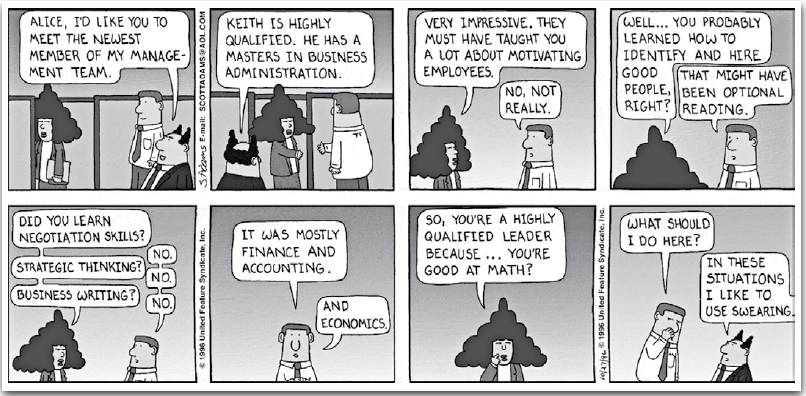
Q1266037 Inglês

Imagem associada para resolução da questão

<https://tinyurl.com/y6fbtptu> Acesso em: 15.03.2019. Original colorido


Nos quadrinhos, pode-se observar que Alice se sente um tanto quanto decepcionada com a formação do novo líder porque ele

Alternativas
Ano: 2019 Banca: FUVEST Órgão: USP Prova: FUVEST - 2019 - USP - Vestibular |
Q1169894 Inglês
Harlem
What happens to a dream deferred?
Does it dry up like a raisin in the sun? Or fester like a sore — And then run? Does it stink like rotten meat? Or crust and sugar over — like a syrupy sweet?
Maybe it just sags like a heavy load.
Or does it explode?
Langston Hughes, Selected Poems of Langston Hughes (1990). Disponível em http://www.poetryfoundation.org/.
As tentativas de resposta do poeta à pergunta “What happens to a dream deferred?” evocam imagens de

Alternativas
Ano: 2019 Banca: FUVEST Órgão: USP Prova: FUVEST - 2019 - USP - Vestibular |
Q1169893 Inglês
TEXTO PARA A QUESTÃO

    Scientists have long touted DNA’s potential as an ideal storage medium; it’s dense, easy to replicate, and stable over millennia. But in order to replace existing silicon‐chip or magnetic‐tape storage technologies, DNA will have to get a lot cheaper to predictably read, write, and package.
    That’s where scientists like Hyunjun Park come in. He and the other cofounders of Catalog, an MIT DNA‐storage spinoff emerging out of stealth on Tuesday, are building a machine that will write a terabyte of data a day, using 500 trillion molecules of DNA.  
    If successful, DNA storage could be the answer to a uniquely 21st‐century problem: information overload. Five years ago humans had produced 4.4 zettabytes of data; that's set to explode to 160 zettabytes (each year!) by 2025. Current infrastructure can handle only a fraction of the coming data deluge, which is expected to consume all the world's microchip‐grade silicon by 2040.
    “Today’s technology is already close to the physical limits of scaling,” says Victor Zhirnov, chief scientist of the Semiconductor Research Corporation. “DNA has an information‐storage density several orders of magnitude higher than any other known storage technology.”
    How dense exactly? Imagine formatting every movie ever made into DNA; it would be smaller than the size of a sugar cube. And it would last for 10,000 years.
Wired, June, 2018. Disponível em https://www.wired.com/. Adaptado.
Conforme o texto, cientistas preveem que, em pouco mais de 20 anos,
Alternativas
Ano: 2019 Banca: FUVEST Órgão: USP Prova: FUVEST - 2019 - USP - Vestibular |
Q1169892 Inglês
TEXTO PARA A QUESTÃO

    Scientists have long touted DNA’s potential as an ideal storage medium; it’s dense, easy to replicate, and stable over millennia. But in order to replace existing silicon‐chip or magnetic‐tape storage technologies, DNA will have to get a lot cheaper to predictably read, write, and package.
    That’s where scientists like Hyunjun Park come in. He and the other cofounders of Catalog, an MIT DNA‐storage spinoff emerging out of stealth on Tuesday, are building a machine that will write a terabyte of data a day, using 500 trillion molecules of DNA.  
    If successful, DNA storage could be the answer to a uniquely 21st‐century problem: information overload. Five years ago humans had produced 4.4 zettabytes of data; that's set to explode to 160 zettabytes (each year!) by 2025. Current infrastructure can handle only a fraction of the coming data deluge, which is expected to consume all the world's microchip‐grade silicon by 2040.
    “Today’s technology is already close to the physical limits of scaling,” says Victor Zhirnov, chief scientist of the Semiconductor Research Corporation. “DNA has an information‐storage density several orders of magnitude higher than any other known storage technology.”
    How dense exactly? Imagine formatting every movie ever made into DNA; it would be smaller than the size of a sugar cube. And it would last for 10,000 years.
Wired, June, 2018. Disponível em https://www.wired.com/. Adaptado.
Afirma‐se no texto que, no futuro, a tecnologia de gravação em moléculas de DNA
Alternativas
Ano: 2019 Banca: FUVEST Órgão: USP Prova: FUVEST - 2019 - USP - Vestibular |
Q1169891 Inglês
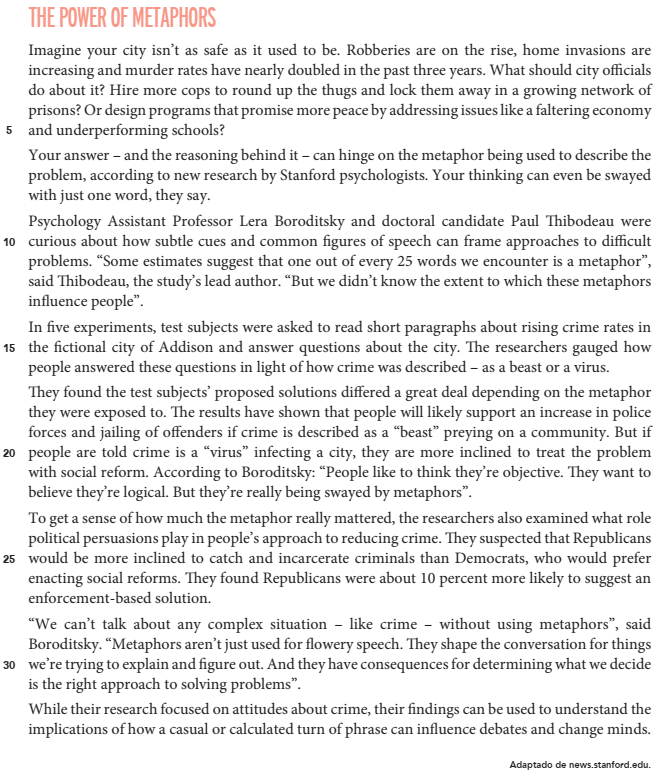
Imagem associada para resolução da questão Disponível em https://www.facebook.com/groups/englishmemes/.
O efeito de comicidade que se obtém do meme decorre, sobretudo, da
Alternativas
Ano: 2019 Banca: FUVEST Órgão: USP Prova: FUVEST - 2019 - USP - Vestibular |
Q1169890 Inglês
TEXTO PARA A QUESTÃO

    Assigning female genders to digital assistants such as Apple’s Siri and Amazon’s Alexa is helping entrench harmful gender biases, according to a UN agency.
    Research released by Unesco claims that the often submissive and flirty responses offered by the systemsto many queries – including outright abusive ones – reinforce ideas of women as subservient.
    “Because the speech of most voice assistants is female, it sends a signal that women are obliging, docile and eager‐to‐ please helpers, available at the touch of a button or with a blunt voice command like ‘hey’ or ‘OK’”, the report said.
    “The assistant holds no power of agency beyond what the commander asks of it. It honours commands and responds to queries regardless of their tone or hostility. In many communities, this reinforces commonly held gender biases that women are subservient and tolerant of poor treatment.”
    The Unesco publication was entitled “I’d Blush if I Could”; a reference to the response Apple’s Siri assistant offers to the phrase: “You’re a slut.” Amazon’s Alexa will respond: “Well, thanks for the feedback.”
    The paper said such firms were “staffed by overwhelmingly male engineering teams” and have built AI (Artificial Intelligence) systems that “cause their feminised digital assistants to greet verbal abuse with catch‐me‐if‐you‐can flirtation”.
    Saniye Gülser Corat, Unesco’s director for gender equality, said: “The world needs to pay much closer attention to how, when and whether AI technologies are gendered and, crucially, who is gendering them.”
The Guardian, May, 2019. Adaptado.
De acordo com o texto, na opinião de Saniye Gülser Corat, tecnologias que envolvem Inteligência Artificial, entre outros aspectos,
Alternativas
Ano: 2019 Banca: FUVEST Órgão: USP Prova: FUVEST - 2019 - USP - Vestibular |
Q1169889 Inglês
TEXTO PARA A QUESTÃO

    Assigning female genders to digital assistants such as Apple’s Siri and Amazon’s Alexa is helping entrench harmful gender biases, according to a UN agency.
    Research released by Unesco claims that the often submissive and flirty responses offered by the systemsto many queries – including outright abusive ones – reinforce ideas of women as subservient.
    “Because the speech of most voice assistants is female, it sends a signal that women are obliging, docile and eager‐to‐ please helpers, available at the touch of a button or with a blunt voice command like ‘hey’ or ‘OK’”, the report said.
    “The assistant holds no power of agency beyond what the commander asks of it. It honours commands and responds to queries regardless of their tone or hostility. In many communities, this reinforces commonly held gender biases that women are subservient and tolerant of poor treatment.”
    The Unesco publication was entitled “I’d Blush if I Could”; a reference to the response Apple’s Siri assistant offers to the phrase: “You’re a slut.” Amazon’s Alexa will respond: “Well, thanks for the feedback.”
    The paper said such firms were “staffed by overwhelmingly male engineering teams” and have built AI (Artificial Intelligence) systems that “cause their feminised digital assistants to greet verbal abuse with catch‐me‐if‐you‐can flirtation”.
    Saniye Gülser Corat, Unesco’s director for gender equality, said: “The world needs to pay much closer attention to how, when and whether AI technologies are gendered and, crucially, who is gendering them.”
The Guardian, May, 2019. Adaptado.
Segundo o texto, o título do relatório publicado pela Unesco ‐ “I´d Blush if I Could” ‐, no que diz respeito aos assistentes digitais, indica
Alternativas
Ano: 2019 Banca: FUVEST Órgão: USP Prova: FUVEST - 2019 - USP - Vestibular |
Q1169888 Inglês
TEXTO PARA A QUESTÃO

    Assigning female genders to digital assistants such as Apple’s Siri and Amazon’s Alexa is helping entrench harmful gender biases, according to a UN agency.
    Research released by Unesco claims that the often submissive and flirty responses offered by the systemsto many queries – including outright abusive ones – reinforce ideas of women as subservient.
    “Because the speech of most voice assistants is female, it sends a signal that women are obliging, docile and eager‐to‐ please helpers, available at the touch of a button or with a blunt voice command like ‘hey’ or ‘OK’”, the report said.
    “The assistant holds no power of agency beyond what the commander asks of it. It honours commands and responds to queries regardless of their tone or hostility. In many communities, this reinforces commonly held gender biases that women are subservient and tolerant of poor treatment.”
    The Unesco publication was entitled “I’d Blush if I Could”; a reference to the response Apple’s Siri assistant offers to the phrase: “You’re a slut.” Amazon’s Alexa will respond: “Well, thanks for the feedback.”
    The paper said such firms were “staffed by overwhelmingly male engineering teams” and have built AI (Artificial Intelligence) systems that “cause their feminised digital assistants to greet verbal abuse with catch‐me‐if‐you‐can flirtation”.
    Saniye Gülser Corat, Unesco’s director for gender equality, said: “The world needs to pay much closer attention to how, when and whether AI technologies are gendered and, crucially, who is gendering them.”
The Guardian, May, 2019. Adaptado.
Conforme o texto, em relação às mulheres, um efeito decorrente do fato de assistentes digitais reforçarem estereótipos de gênero é
Alternativas
Ano: 2019 Banca: UERJ Órgão: UERJ Prova: UERJ - 2019 - UERJ - Vestibular - Segundo Exame |
Q1041044 Inglês

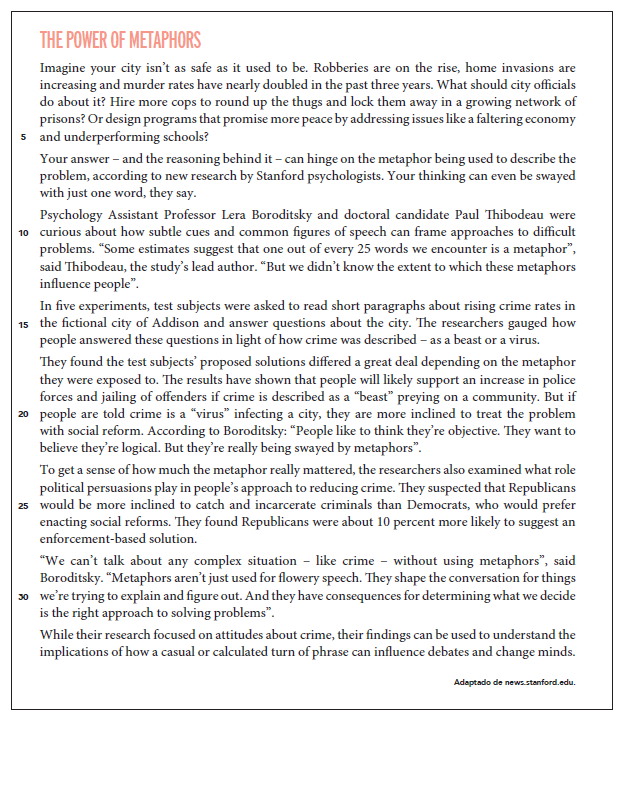
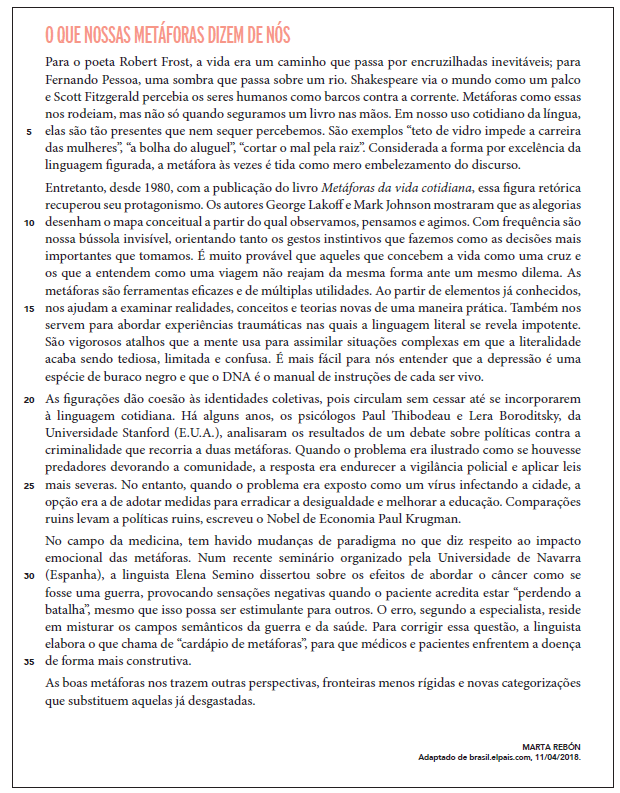
we didn’t know the extent to which these metaphors influence people. (ℓ. 12-13)


In the fragment above, the doubt expressed by the researcher can be formulated by the following question:
Alternativas
Ano: 2019 Banca: UERJ Órgão: UERJ Prova: UERJ - 2019 - UERJ - Vestibular - Segundo Exame |
Q1041043 Inglês
The author of the text introduces the topic by making use of the following strategy:
Alternativas
Ano: 2019 Banca: UERJ Órgão: UERJ Prova: UERJ - 2019 - UERJ - Vestibular - Segundo Exame |
Q1041042 Inglês

The power of metaphors discusses the use of metaphors in daily life, as well as the text O que nossas metáforas dizem de nós.

The following metaphor is present in both texts:

Alternativas
Respostas
1161: E
1162: A
1163: D
1164: A
1165: E
1166: C
1167: E
1168: B
1169: D
1170: E
1171: C
1172: B
1173: E
1174: B
1175: E
1176: A
1177: B
1178: A
1179: D
1180: C