Questões de Vestibular
Sobre interpretação de texto | reading comprehension em inglês
Foram encontradas 5.175 questões


AIRLINE COMPENSATION
By Susan Stellin

Adapted from The International Herald Tribune, August 31 – September 1, 2013.
AIRLINE COMPENSATION
By Susan Stellin
Adapted from The International Herald Tribune, August 31 – September 1, 2013.
AIRLINE COMPENSATION
By Susan Stellin
Adapted from The International Herald Tribune, August 31 – September 1, 2013.
AIRLINE COMPENSATION
By Susan Stellin
Adapted from The International Herald Tribune, August 31 – September 1, 2013.
LIBERALS AND ISLAMISTS
By Shadi Hamid

Adapted from Time, August 12, 2013.
LIBERALS AND ISLAMISTS
By Shadi Hamid
Adapted from Time, August 12, 2013.
LIBERALS AND ISLAMISTS
By Shadi Hamid
Adapted from Time, August 12, 2013.
LIBERALS AND ISLAMISTS
By Shadi Hamid
Adapted from Time, August 12, 2013.
LIBERALS AND ISLAMISTS
By Shadi Hamid
Adapted from Time, August 12, 2013.
LIBERALS AND ISLAMISTS
By Shadi Hamid
Adapted from Time, August 12, 2013.
LIBERALS AND ISLAMISTS
By Shadi Hamid
Adapted from Time, August 12, 2013.
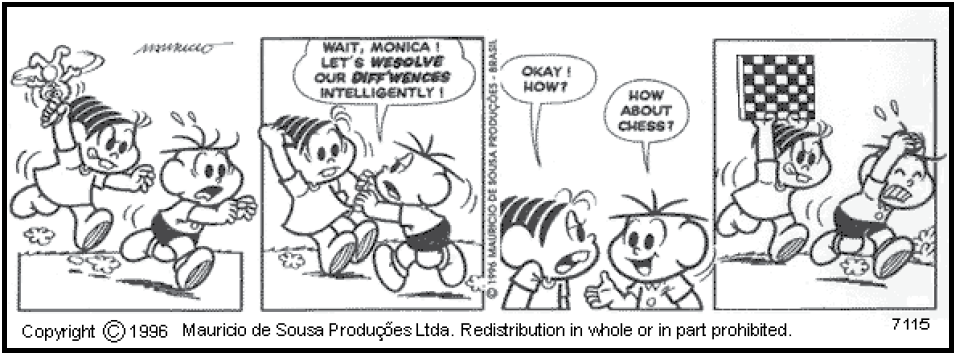
The sentence that does NOT make sense according to the comic strip is
FROM CURITIBA
The pictures, taken on a phone, were found by prison guards and posted online last April.
The 30 year-old detainees are in jail after being accused of drug trafficking. Both are serving provisional sentences, and are yet to be convicted.
One has been in jail since April, and the other for a year.
Detainees are not granted possession of cell phones, and, due to this breach, they were awarded a disciplinary sanction and have since been prevented from receiving visits or food sent by family members for 30 days.
Additionally, this occurrence may prevent them from shortening their sentences if they are eventually convicted.
They appear posing in underwear on concrete beds in the female dormitory, which is decorated with animal print.
After the prison guards discovered the images, they inspected the room the two women shared and found the cell phone used to take the pictures.
“This unfortunately happens. Detainees can hide things very well”, the prison chief, Altemir Nascimento, said.
According to Nascimento, 40 cell phones have been seized so far this year in the prison (which also houses men).
CELL PHONE THROWING
The location of the prison in downtown Guarapuava makes matters worse. According to the prison chief, during sunbathing, pedestrians toss cell phones over the wall.
“Cell phones and drugs are thrown over the wall. This happens regularly. On every sunny day two or three items are thrown”, Nascimento said.
At the beginning of the year, in order to bring the “deliveries” to a halt, the prison chief decided to install a protective net over the patio. Since then 77 cell phones have been caught on the net.
http://www1.folha.uol.com.br/internacional/
FROM CURITIBA
The pictures, taken on a phone, were found by prison guards and posted online last April.
The 30 year-old detainees are in jail after being accused of drug trafficking. Both are serving provisional sentences, and are yet to be convicted.
One has been in jail since April, and the other for a year.
Detainees are not granted possession of cell phones, and, due to this breach, they were awarded a disciplinary sanction and have since been prevented from receiving visits or food sent by family members for 30 days.
Additionally, this occurrence may prevent them from shortening their sentences if they are eventually convicted.
They appear posing in underwear on concrete beds in the female dormitory, which is decorated with animal print.
After the prison guards discovered the images, they inspected the room the two women shared and found the cell phone used to take the pictures.
“This unfortunately happens. Detainees can hide things very well”, the prison chief, Altemir Nascimento, said.
According to Nascimento, 40 cell phones have been seized so far this year in the prison (which also houses men).
CELL PHONE THROWING
The location of the prison in downtown Guarapuava makes matters worse. According to the prison chief, during sunbathing, pedestrians toss cell phones over the wall.
“Cell phones and drugs are thrown over the wall. This happens regularly. On every sunny day two or three items are thrown”, Nascimento said.
At the beginning of the year, in order to bring the “deliveries” to a halt, the prison chief decided to install a protective net over the patio. Since then 77 cell phones have been caught on the net.
http://www1.folha.uol.com.br/internacional/
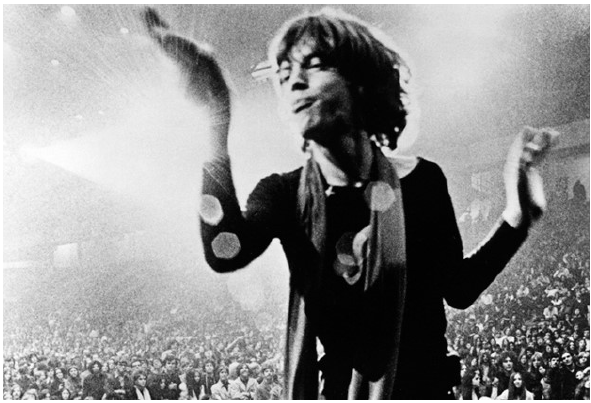
Mick Jagger performing on stage circa 1969.
It begins with two evening shows at the Forum in Los Angeles November 8th, with tickets priced from $5.50 to $8.50. (This compares to a $7.50 top price for a Blind Faith concert in the same arena, a $6.50 top for the Doors. And in both those concerts, tickets started at $3.50.) In arranging this show, a previously-set hockey game between the Los Angeles Kings and the New York Rangers was rescheduled – at the request of the man who owns both the Forum and the Kings.
Acts appearing at the concerts here will include Terry Reid, who will appear on all the dates, and the Ike and Tina Turner Revue. Negotiations were continuing to have Ike and Tina, B. B. King and Chuck Berry join the Stones in several other cities.
Promoters of the L.A. concerts said the gross for the evening would exceed $275,000 if the Stones filled the 18,000 seats in the Forum both shows. Similar grosses, on a per show basis, were expected throughout the tour, with the Stones getting guarantees of $25,000 a concert and up, against take home percentages running close to $60,000.
“Can the Rolling Stones actually need all that money?” Gleason asked. “If they really dig the black musicians as much as every note they play and every syllable they utter indicates, is it possible to take out a show with, say, Ike and Tina and some of the older men like Howlin’ Wolf and let them share in the loot? How much can the Stones take back to Merrie England after taxes, anyway? How much must the British manager and the American manager and the agency rake off the top?”
“Paying five, six and seven dollars for a Stones concert at the Oakland Coliseum for, say, an hour of the Stones seen a quarter of a mile away because the artists demand such outrageous fees that they can only be obtained under these circumstances, says a very bad thing to me about the artists’ attitude towards the public. It says they despise their own audience.”
When Mick Jagger was confronted by this criticism at a press conference at the Beverly Wilshire Hotel, he left the door slightly open to giving a free concert sometime during the 13-city, 18-concert tour, but his tone didn’t seem too promising.
“There has been talk of that,” he said. “I should think toward the end. We’ll have to see how things go. I don’t want to plan that right now, ‘cause we’re gonna be here some while. We’ve got time for all that. I don’t want to say that’s what we want to do or not do. I’m leaving it rather blurry. I’m not committing myself.”
And about the ticket cost, he strongly indicated that if some people thought prices were high, they might have been a lot worse.
“We were offered a lot of money to do some very good dates – money in front in Europe, before we left, really a lot of bread. We didn’t accept because we thought they’d be too expensive on the basis of the money we’d get. We didn’t say that unless we walk out of America with X dollars, we ain’t gonna come. We’re really not into that sort of economic scene. Either you’re gonna sing and all that crap, or you’re gonna be an economist. I really don’t know whether this is more expensive than recent tours by local bands. I don’t know how much people can afford. I’ve no idea. Is that a lot? You’ll have to tell me.”
www.rollingstone.com
Mick Jagger performing on stage circa 1969.
It begins with two evening shows at the Forum in Los Angeles November 8th, with tickets priced from $5.50 to $8.50. (This compares to a $7.50 top price for a Blind Faith concert in the same arena, a $6.50 top for the Doors. And in both those concerts, tickets started at $3.50.) In arranging this show, a previously-set hockey game between the Los Angeles Kings and the New York Rangers was rescheduled – at the request of the man who owns both the Forum and the Kings.
Acts appearing at the concerts here will include Terry Reid, who will appear on all the dates, and the Ike and Tina Turner Revue. Negotiations were continuing to have Ike and Tina, B. B. King and Chuck Berry join the Stones in several other cities.
Promoters of the L.A. concerts said the gross for the evening would exceed $275,000 if the Stones filled the 18,000 seats in the Forum both shows. Similar grosses, on a per show basis, were expected throughout the tour, with the Stones getting guarantees of $25,000 a concert and up, against take home percentages running close to $60,000.
“Can the Rolling Stones actually need all that money?” Gleason asked. “If they really dig the black musicians as much as every note they play and every syllable they utter indicates, is it possible to take out a show with, say, Ike and Tina and some of the older men like Howlin’ Wolf and let them share in the loot? How much can the Stones take back to Merrie England after taxes, anyway? How much must the British manager and the American manager and the agency rake off the top?”
“Paying five, six and seven dollars for a Stones concert at the Oakland Coliseum for, say, an hour of the Stones seen a quarter of a mile away because the artists demand such outrageous fees that they can only be obtained under these circumstances, says a very bad thing to me about the artists’ attitude towards the public. It says they despise their own audience.”
When Mick Jagger was confronted by this criticism at a press conference at the Beverly Wilshire Hotel, he left the door slightly open to giving a free concert sometime during the 13-city, 18-concert tour, but his tone didn’t seem too promising.
“There has been talk of that,” he said. “I should think toward the end. We’ll have to see how things go. I don’t want to plan that right now, ‘cause we’re gonna be here some while. We’ve got time for all that. I don’t want to say that’s what we want to do or not do. I’m leaving it rather blurry. I’m not committing myself.”
And about the ticket cost, he strongly indicated that if some people thought prices were high, they might have been a lot worse.
“We were offered a lot of money to do some very good dates – money in front in Europe, before we left, really a lot of bread. We didn’t accept because we thought they’d be too expensive on the basis of the money we’d get. We didn’t say that unless we walk out of America with X dollars, we ain’t gonna come. We’re really not into that sort of economic scene. Either you’re gonna sing and all that crap, or you’re gonna be an economist. I really don’t know whether this is more expensive than recent tours by local bands. I don’t know how much people can afford. I’ve no idea. Is that a lot? You’ll have to tell me.”
www.rollingstone.com
Mick Jagger performing on stage circa 1969.
It begins with two evening shows at the Forum in Los Angeles November 8th, with tickets priced from $5.50 to $8.50. (This compares to a $7.50 top price for a Blind Faith concert in the same arena, a $6.50 top for the Doors. And in both those concerts, tickets started at $3.50.) In arranging this show, a previously-set hockey game between the Los Angeles Kings and the New York Rangers was rescheduled – at the request of the man who owns both the Forum and the Kings.
Acts appearing at the concerts here will include Terry Reid, who will appear on all the dates, and the Ike and Tina Turner Revue. Negotiations were continuing to have Ike and Tina, B. B. King and Chuck Berry join the Stones in several other cities.
Promoters of the L.A. concerts said the gross for the evening would exceed $275,000 if the Stones filled the 18,000 seats in the Forum both shows. Similar grosses, on a per show basis, were expected throughout the tour, with the Stones getting guarantees of $25,000 a concert and up, against take home percentages running close to $60,000.
“Can the Rolling Stones actually need all that money?” Gleason asked. “If they really dig the black musicians as much as every note they play and every syllable they utter indicates, is it possible to take out a show with, say, Ike and Tina and some of the older men like Howlin’ Wolf and let them share in the loot? How much can the Stones take back to Merrie England after taxes, anyway? How much must the British manager and the American manager and the agency rake off the top?”
“Paying five, six and seven dollars for a Stones concert at the Oakland Coliseum for, say, an hour of the Stones seen a quarter of a mile away because the artists demand such outrageous fees that they can only be obtained under these circumstances, says a very bad thing to me about the artists’ attitude towards the public. It says they despise their own audience.”
When Mick Jagger was confronted by this criticism at a press conference at the Beverly Wilshire Hotel, he left the door slightly open to giving a free concert sometime during the 13-city, 18-concert tour, but his tone didn’t seem too promising.
“There has been talk of that,” he said. “I should think toward the end. We’ll have to see how things go. I don’t want to plan that right now, ‘cause we’re gonna be here some while. We’ve got time for all that. I don’t want to say that’s what we want to do or not do. I’m leaving it rather blurry. I’m not committing myself.”
And about the ticket cost, he strongly indicated that if some people thought prices were high, they might have been a lot worse.
“We were offered a lot of money to do some very good dates – money in front in Europe, before we left, really a lot of bread. We didn’t accept because we thought they’d be too expensive on the basis of the money we’d get. We didn’t say that unless we walk out of America with X dollars, we ain’t gonna come. We’re really not into that sort of economic scene. Either you’re gonna sing and all that crap, or you’re gonna be an economist. I really don’t know whether this is more expensive than recent tours by local bands. I don’t know how much people can afford. I’ve no idea. Is that a lot? You’ll have to tell me.”
www.rollingstone.com
Leia o infográfico para responder à questão.

(www.medicalnewstoday.com. Adaptado.)
Leia o infográfico para responder à questão.
(www.medicalnewstoday.com. Adaptado.)
Leia o texto para responder à questão.
Do fat people stay warmer than thin people?
Pack on some extra pounds for winter
By Daniel Engber
01.02.2014
At the yearly Rottnest Channel Swim in Western Australia, participants often smear their bodies with animal fat for insulation against the 70-degree water. But their own body fat also helps to keep them warm, like an extra layer of clothing beneath the skin. When scientists studied aspects of the event in 2006, they found that swimmers with a greater body mass index (BMI) appear to be at much lower risk of getting hypothermia.
The same effect has been demonstrated in hospitals where patients who’ve suffered cardiac arrest are treated with “therapeutic hypothermia” to stave off brain injury and inflammation. Studies have shown that it takes longer to induce hypothermia in obese patients than in their leaner counterparts. The extra fat seems to insulate the body’s core.
Under certain conditions, though, overweight people might feel colder than people of average weight. That’s because the brain combines two signals — the temperature inside the body and the temperature on the surface of the skin — to determine when it’s time to constrict blood vessels (which limits heat loss through the skin) and trigger shivering (which generates heat). And since subcutaneous fat traps heat, an obese person’s core will tend to remain warm while his or her skin cools down. According to Catherine O’Brien, a research physiologist with the U.S. Army Research Institute of Environmental Medicine, it’s possible that the lower skin temperature would give fatter people the sense of being colder overall.
But O’Brien points out that many other factors beyond subcutaneous fat help determine the rate at which we chill. Smaller people, who have more surface area compared to the total volume of their bodies, lose heat more quickly. (It’s often said that women feel colder than men; average body size may play a part.) A more muscular physique may also offer some protection against hypothermia, partly because muscle tissue generates lots of heat. “We have a joke around here that the person who’s best-suited for cold is fit and fat,” says O’Brien.
(www.popsci.com)

 Conheça nossos planos