🎯 Saiba o que estudar

Avançado com Treinador a partir de R$ 0,76/dia

Questões de Vestibular Comentadas sobre interpretação de texto | reading comprehension em inglês

Foram encontradas 2.293 questões

Ano: 2017 Banca: UNIOESTE Órgão: UNIOESTE Prova: UNIOESTE - 2017 - UNIOESTE - Vestibular - Manhã |
Q1261543 Inglês
What Parents Can Do to Nurture Good Writers

Steve Graham, a professor at Arizona State University’s Teachers College, has been researching how young people learn to write for more than 30 years. He is a co-author of numerous books on writing instruction, including “Powerful Writing Strategies for All Students.”
How does reading at home help children become better writers?
is really critical, but it’s not enough. We don’t have much evidence that if you just read more, you’ll be a better writer. But analyzing text does make a difference. So when we read to kids, we can also have conversations with them about the author’s craft. How did this author make this place seem real in terms of description? What words did they use? How did they present this idea or this argument?
Should a parent correct a child’s writing, or just be encouraging?
Sometimes when kids come to you to share what they’re writing, they’re not coming for feedback. They are coming for affirmation. It’s really important we emphasize first and foremost what we really like about it. And if you’re going to give feedback, just pick one or two things. English teachers — and parents are guilty of this, too — sometimes overwhelm kids with more feedback than they can absorb all at once. The other thing that’s really important, particularly for parents, is to remember that they don’t own this piece. It’s their child’s.
What should parents look for to assess the writing instruction at their child’s school?
After about third grade, very little time is devoted to explicit writing instruction. It’s like we’ve imagined that kids have acquired what they need to know to be good writers by then! In middle and high school, the most common activities are fill-in-the-blanks on worksheets, writing single sentences, making lists or writing a paragraph summary. When you start talking about persuasive essays or an informative paper, those things occur infrequently in English class and even less so in social studies and science. So the first questions are: “Is my kid writing at school, and was he given writing assignments to work on at home? Do those require writing more extended thoughts for the purposes of analysis and interpretation?” That’s what they need to be able to do for college.
Fonte: adaptado de < https://www.nytimes.com/2017/08/02/education/edlife/parents-children-writing.html

No texto, o autor afirma que
Alternativas
Ano: 2017 Banca: UNIOESTE Órgão: UNIOESTE Prova: UNIOESTE - 2017 - UNIOESTE - Vestibular - Manhã |
Q1261542 Inglês
What Parents Can Do to Nurture Good Writers

Steve Graham, a professor at Arizona State University’s Teachers College, has been researching how young people learn to write for more than 30 years. He is a co-author of numerous books on writing instruction, including “Powerful Writing Strategies for All Students.”
How does reading at home help children become better writers?
is really critical, but it’s not enough. We don’t have much evidence that if you just read more, you’ll be a better writer. But analyzing text does make a difference. So when we read to kids, we can also have conversations with them about the author’s craft. How did this author make this place seem real in terms of description? What words did they use? How did they present this idea or this argument?
Should a parent correct a child’s writing, or just be encouraging?
Sometimes when kids come to you to share what they’re writing, they’re not coming for feedback. They are coming for affirmation. It’s really important we emphasize first and foremost what we really like about it. And if you’re going to give feedback, just pick one or two things. English teachers — and parents are guilty of this, too — sometimes overwhelm kids with more feedback than they can absorb all at once. The other thing that’s really important, particularly for parents, is to remember that they don’t own this piece. It’s their child’s.
What should parents look for to assess the writing instruction at their child’s school?
After about third grade, very little time is devoted to explicit writing instruction. It’s like we’ve imagined that kids have acquired what they need to know to be good writers by then! In middle and high school, the most common activities are fill-in-the-blanks on worksheets, writing single sentences, making lists or writing a paragraph summary. When you start talking about persuasive essays or an informative paper, those things occur infrequently in English class and even less so in social studies and science. So the first questions are: “Is my kid writing at school, and was he given writing assignments to work on at home? Do those require writing more extended thoughts for the purposes of analysis and interpretation?” That’s what they need to be able to do for college.
Fonte: adaptado de < https://www.nytimes.com/2017/08/02/education/edlife/parents-children-writing.html

Mark the INCORRECT alternative.
Alternativas
Ano: 2017 Banca: UNIOESTE Órgão: UNIOESTE Prova: UNIOESTE - 2017 - UNIOESTE - Vestibular - Manhã |
Q1261541 Inglês
What Parents Can Do to Nurture Good Writers

Steve Graham, a professor at Arizona State University’s Teachers College, has been researching how young people learn to write for more than 30 years. He is a co-author of numerous books on writing instruction, including “Powerful Writing Strategies for All Students.”
How does reading at home help children become better writers?
is really critical, but it’s not enough. We don’t have much evidence that if you just read more, you’ll be a better writer. But analyzing text does make a difference. So when we read to kids, we can also have conversations with them about the author’s craft. How did this author make this place seem real in terms of description? What words did they use? How did they present this idea or this argument?
Should a parent correct a child’s writing, or just be encouraging?
Sometimes when kids come to you to share what they’re writing, they’re not coming for feedback. They are coming for affirmation. It’s really important we emphasize first and foremost what we really like about it. And if you’re going to give feedback, just pick one or two things. English teachers — and parents are guilty of this, too — sometimes overwhelm kids with more feedback than they can absorb all at once. The other thing that’s really important, particularly for parents, is to remember that they don’t own this piece. It’s their child’s.
What should parents look for to assess the writing instruction at their child’s school?
After about third grade, very little time is devoted to explicit writing instruction. It’s like we’ve imagined that kids have acquired what they need to know to be good writers by then! In middle and high school, the most common activities are fill-in-the-blanks on worksheets, writing single sentences, making lists or writing a paragraph summary. When you start talking about persuasive essays or an informative paper, those things occur infrequently in English class and even less so in social studies and science. So the first questions are: “Is my kid writing at school, and was he given writing assignments to work on at home? Do those require writing more extended thoughts for the purposes of analysis and interpretation?” That’s what they need to be able to do for college.
Fonte: adaptado de < https://www.nytimes.com/2017/08/02/education/edlife/parents-children-writing.html

A partir do texto acima, assinale a alternativa que contém a ideia central do texto.
Alternativas
Ano: 2017 Banca: UNIOESTE Órgão: UNIOESTE Prova: UNIOESTE - 2017 - UNIOESTE - Vestibular - Manhã |
Q1261540 Inglês
How does Hurricane Harvey compare with Katrina? Here’s what we know

Although it is still unfolding, Harvey, now a tropical storm, evokes comparisons to Hurricane Katrina in 2005. Here’s a quick rundown of what we know about similarities and differences between the two.

    • The Cities
Katrina: Before the storm, New Orleans was a small city of about 455,000 people that lay in large part below sea level, ostensibly protected by a system of levee walls. Its population never fully recovered from the evacuation and destruction and remains below 400,000.
Harvey: Houston is a sprawling, car-dependent, low-lying but not below sea level city. It has a population of more than two million people, with a system of bayous and waterways to manage flooding.

   • The Storms
Katrina: It made landfall near the Louisiana/Mississippi border on Aug. 29, 2005, as a Category 3 storm and measured 350 miles across. However, the relatively low classification, was deceptive because Katrina produced the highest storm surge ever recorded in the U.S.
Harvey: It made landfall in Rockport, Tex., on Friday as a Category 4 storm, measuring 200 miles across, but was quickly downgraded. As of Monday, it was expected to linger for days, causing the National Weather Service to warn, “This event is unprecedented and all impacts are unknown.”

     • Deaths and Damage
Katrina: One of the deadliest hurricanes ever to strike the U.S., Katrina was responsible for 1,833 deaths, and some bodies were untouched for days. The storm inflicted more than $100 billion in damage, with most of it caused by wind, storm surge and the failure of the levees. Harvey: Local officials have reported at least 10 deaths in Texas since the storm began, but heavy rains and flooding are expected to continue at least through Friday. Most of the damage could be caused by flooding. As for the economy, the Gulf region’s capacity as an oil and gas does not appear to have been seriously compromised.

  • Assistance
Katrina: The storm displaced over a million people and damaged or destroyed 275,000 homes. Almost a million households received individual assistance from the Federal Emergency Management Agency.
Harvey: We don’t know yet how many people will be forced out of their homes. But the vast majority of homes in Harvey’s path are not insured against flooding, according to figures from the National Flood Insurance Program. It is estimated that 450,000 people were likely to seek federal aid. 
Fonte: adaptado de < https://www.nytimes.com/2017/08/28/us/hurricane-katrina-harvey.html>

Mark the INCORRECT alternative, according to the text.
Alternativas
Ano: 2017 Banca: IFN-MG Órgão: IFN-MG Prova: IFN-MG - 2017 - IFN-MG - Vestibular - Primeiro Semestre |
Q961055 Inglês

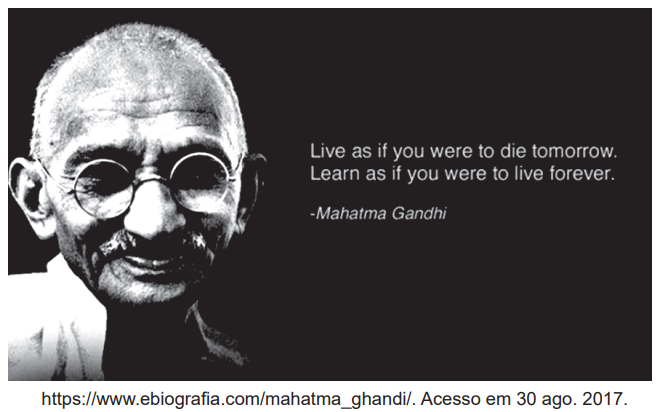
Imagem associada para resolução da questão


No TEXTO, Gandhi sugere que:

Alternativas
Ano: 2017 Banca: IFN-MG Órgão: IFN-MG Prova: IFN-MG - 2017 - IFN-MG - Vestibular - Primeiro Semestre |
Q961052 Inglês

A depressão é um problema de saúde pública mundial. Ela se distingue da tristeza pela duração de seus sinais e pelo contexto em que ocorre. Trata-se de uma experiência cotidiana associada a várias sensações de sofrimento psíquico e físico. Leia o TEXTO e responda

Depression in Developing Countries

The National Institute of Mental Health defines depression as a serious but common illness characterized by prolonged periods of sadness. According to the fifth edition of the Diagnostic and Statistical Manual of Mental Disorders, a diagnosis for major depressive disorder requires either symptoms of a depressed mood or loss of interest and pleasure, along with other symptoms such as changes in weight, fatigue or feelings of suicidal thoughts. We can better understand the global impact of depression by measuring it in terms of disability. When analyzed by the disruption and dysfunction it causes in peoples’ lives, depression is the leading cause of disability worldwide. Fortunately, today, many therapies for depression are highly effective.

Disponível em: https://yaleglobalhealthreview.com/2015/05/16/depression-in-developing countries/ . Acessado em: 08 set. 2017. Adaptado.


Na frase “We can better understand the global impact of depression by measuring it in terms of disability”, o pronome it, em destaque, refere-se:
Alternativas
Ano: 2017 Banca: IFN-MG Órgão: IFN-MG Prova: IFN-MG - 2017 - IFN-MG - Vestibular - Primeiro Semestre |
Q961051 Inglês

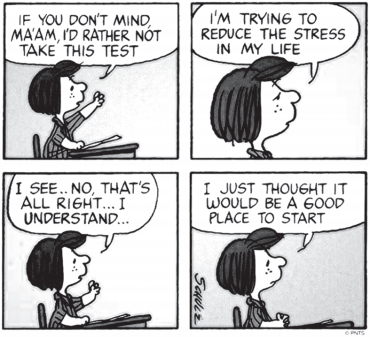
Imagem associada para resolução da questão

Disponível em: https://i.pinimg.com/736x/52/44/12/5244127bd1ca02b0bd30a8f8db96875a--peanuts-cartoon-peanuts-snoopy.jpg Acesso em: 30 de ago. 2017.


De acordo com o TEXTO, na frase “I’m trying to reduce the stress in my life ”, a palavra reduce só NÃO é sinônimo de:
Alternativas
Ano: 2017 Banca: IFN-MG Órgão: IFN-MG Prova: IFN-MG - 2017 - IFN-MG - Vestibular - Primeiro Semestre |
Q961050 Inglês

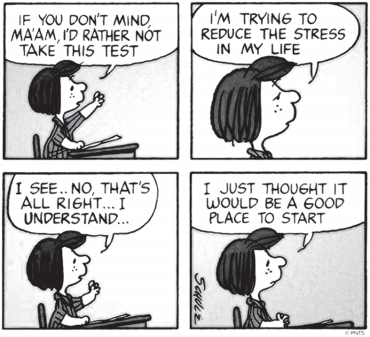
Imagem associada para resolução da questão

Disponível em: https://i.pinimg.com/736x/52/44/12/5244127bd1ca02b0bd30a8f8db96875a--peanuts-cartoon-peanuts-snoopy.jpg Acesso em: 30 de ago. 2017.


Pelo contexto, é possível compreender que:

Alternativas
Ano: 2017 Banca: UFGD Órgão: UFGD Prova: UFGD - 2017 - UFGD - Vestibular |
Q944593 Inglês

Leia o texto a seguir.


Pornography is now only an internet search away, and is becoming ever more immersive. How is it changing people’s behaviour, relationships and desires?

By Jessica Brown


Few things are truly universal. But while people across the world speak different languages, eat different foods and even feel different emotions, millions across the world watch porn. Despite being so widely consumed, porn is maligned as the source of society’s ills. It’s even been labelled a public health hazard by politicians in Utah. Porn has transformed over the past few decades, due to the availability of the internet and faster web connections. It is also becoming more immersive than ever before. Take virtual reality. Earlier this year, researchers from Newcastle University in the UK pointed out that VR changes the experience of porn from detached observer to protagonist. They warned that this has the potential to blur the line between reality and fantasy, perhaps damaging relationships and encouraging harmful behaviour. […] So what does the more recent research say? One review of more than 80 studies in 2009 concluded that evidence of a causal link between porn use and violence is slim, and any findings proving a connection are often exaggerated by the media and politicians. “It is time to discard the hypothesis that pornography contributes to increased sexual assault behaviour”, wrote the authors.

Available in: http://www.bbc.com/future/story/20170926-is-porn-harmful-theevidence-the-myths-and-the-unknowns. Accessed: Sep. 25, 2017.


According to the text, which is the correct option.

Alternativas
Ano: 2017 Banca: VUNESP Órgão: UNIFESP Prova: VUNESP - 2017 - UNIFESP - Vestibular |
Q944487 Inglês

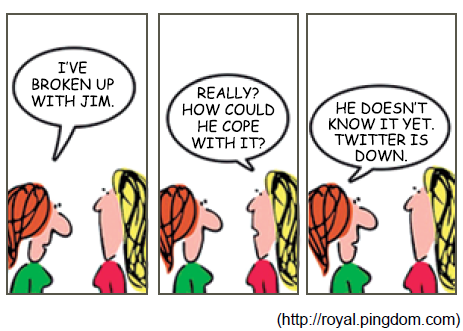
Examine a tira.


Imagem associada para resolução da questão


A tira evidencia que

Alternativas
Ano: 2017 Banca: VUNESP Órgão: UNIFESP Prova: VUNESP - 2017 - UNIFESP - Vestibular |
Q944486 Inglês
Mobile milestones: how your phone
became an essential part of your life


    Has any device changed our lives as much, and as quickly, as the mobile phone? There are people today for whom the world of address books, street atlases and phone boxes seems very far away, lost in the mists of time. Following, there are just some of the big milestones from the past 30 years that have made almost everything we do easier, more public and very, very fast.
• The first phones arrive – and become status symbols Few people got the chance to use the very early mobile phones. The first call was made in New York in 1973, but handsets with a network to use were not available until 1983 in the US, and 1985 in the UK. That first British mobile phone was essentially a heavy briefcase with a receiver attached by a wire. It cost £2,000 (£5,000 in today’s prices), and gave you half an hour’s chat on an overnight charge. Making a call was not something you could do subtly, but that wasn’t the point; the first handsets were there to be seen. They sent a message that you were bold and confident with new technology, that you were busy and important enough to need a mobile phone, and were rich enough to buy one.
• Text messages spawn a whole new language
    The first mobiles worked with analogue signals and could only make phone calls, but the digital ones that followed in the early 1990s could send SMS messages as well. After the first message was sent on 3 December 1992, texting took off like a rocket, even though it was still a pretty cumbersome procedure. Handsets with predictive text would make things easier, but in the 1990s you could save a lot of time by removing all excess letters from a message, often the vowels, and so txtspk ws brn. Today the average mobile phone sends more than 100 texts per month.
• Phones turn us all into photographers...
    There seemed to be no good reason for the first camera phones, which began to appear in 2002, with resolutions of about 0.3 megapixels. They took grainy, blurry pictures on postage stamp-sized screens, and even these filled the phone’s memory in no time. Gradually, though, as the quality improved, the uses followed. As well as the usual photos of friends and family, they were handy for “saving” pieces of paper, and in pubs you could take a picture of the specials board and take it back to your table. Modern camera phones have changed beyond recognition in the past 20 years. The new mobile phones boast the highest resolution dual camera on a smartphone: a 16-megapixel camera and a 20-megapixel camera side-by-side. The dual camera allows users to focus on their subjects, while blurring out the background, producing professional-looking portraits.
• …and we turn ourselves into celebrities
    Twenty years ago people would have thought you a little strange if you took flattering photos of yourself and your lifestyle and then distributed them to your friends – let alone to members of the public. If you used printed photographs rather than a smartphone app, they would still think so today. Yet sharing our lives on social media is now the norm, not the exception – and it was the camera phone that made it all possible. Now, some phones come with an enormous 64GB of memory, so you can capture, share and store an almost countless number of videos and pictures – well, certainly enough to keep up with the Kardashians.

(www.theguardian.com, 07.07.2017. Adaptado.)
No trecho do quinto parágrafo “they would still think so today”, o termo em destaque se refere ao fato de as pessoas considerarem que alguém 
Alternativas
Ano: 2017 Banca: VUNESP Órgão: UNIFESP Prova: VUNESP - 2017 - UNIFESP - Vestibular |
Q944485 Inglês
Mobile milestones: how your phone
became an essential part of your life


    Has any device changed our lives as much, and as quickly, as the mobile phone? There are people today for whom the world of address books, street atlases and phone boxes seems very far away, lost in the mists of time. Following, there are just some of the big milestones from the past 30 years that have made almost everything we do easier, more public and very, very fast.
• The first phones arrive – and become status symbols Few people got the chance to use the very early mobile phones. The first call was made in New York in 1973, but handsets with a network to use were not available until 1983 in the US, and 1985 in the UK. That first British mobile phone was essentially a heavy briefcase with a receiver attached by a wire. It cost £2,000 (£5,000 in today’s prices), and gave you half an hour’s chat on an overnight charge. Making a call was not something you could do subtly, but that wasn’t the point; the first handsets were there to be seen. They sent a message that you were bold and confident with new technology, that you were busy and important enough to need a mobile phone, and were rich enough to buy one.
• Text messages spawn a whole new language
    The first mobiles worked with analogue signals and could only make phone calls, but the digital ones that followed in the early 1990s could send SMS messages as well. After the first message was sent on 3 December 1992, texting took off like a rocket, even though it was still a pretty cumbersome procedure. Handsets with predictive text would make things easier, but in the 1990s you could save a lot of time by removing all excess letters from a message, often the vowels, and so txtspk ws brn. Today the average mobile phone sends more than 100 texts per month.
• Phones turn us all into photographers...
    There seemed to be no good reason for the first camera phones, which began to appear in 2002, with resolutions of about 0.3 megapixels. They took grainy, blurry pictures on postage stamp-sized screens, and even these filled the phone’s memory in no time. Gradually, though, as the quality improved, the uses followed. As well as the usual photos of friends and family, they were handy for “saving” pieces of paper, and in pubs you could take a picture of the specials board and take it back to your table. Modern camera phones have changed beyond recognition in the past 20 years. The new mobile phones boast the highest resolution dual camera on a smartphone: a 16-megapixel camera and a 20-megapixel camera side-by-side. The dual camera allows users to focus on their subjects, while blurring out the background, producing professional-looking portraits.
• …and we turn ourselves into celebrities
    Twenty years ago people would have thought you a little strange if you took flattering photos of yourself and your lifestyle and then distributed them to your friends – let alone to members of the public. If you used printed photographs rather than a smartphone app, they would still think so today. Yet sharing our lives on social media is now the norm, not the exception – and it was the camera phone that made it all possible. Now, some phones come with an enormous 64GB of memory, so you can capture, share and store an almost countless number of videos and pictures – well, certainly enough to keep up with the Kardashians.

(www.theguardian.com, 07.07.2017. Adaptado.)
De acordo com as informações do quinto parágrafo,
Alternativas
Ano: 2017 Banca: VUNESP Órgão: UNIFESP Prova: VUNESP - 2017 - UNIFESP - Vestibular |
Q944482 Inglês
Mobile milestones: how your phone
became an essential part of your life


    Has any device changed our lives as much, and as quickly, as the mobile phone? There are people today for whom the world of address books, street atlases and phone boxes seems very far away, lost in the mists of time. Following, there are just some of the big milestones from the past 30 years that have made almost everything we do easier, more public and very, very fast.
• The first phones arrive – and become status symbols Few people got the chance to use the very early mobile phones. The first call was made in New York in 1973, but handsets with a network to use were not available until 1983 in the US, and 1985 in the UK. That first British mobile phone was essentially a heavy briefcase with a receiver attached by a wire. It cost £2,000 (£5,000 in today’s prices), and gave you half an hour’s chat on an overnight charge. Making a call was not something you could do subtly, but that wasn’t the point; the first handsets were there to be seen. They sent a message that you were bold and confident with new technology, that you were busy and important enough to need a mobile phone, and were rich enough to buy one.
• Text messages spawn a whole new language
    The first mobiles worked with analogue signals and could only make phone calls, but the digital ones that followed in the early 1990s could send SMS messages as well. After the first message was sent on 3 December 1992, texting took off like a rocket, even though it was still a pretty cumbersome procedure. Handsets with predictive text would make things easier, but in the 1990s you could save a lot of time by removing all excess letters from a message, often the vowels, and so txtspk ws brn. Today the average mobile phone sends more than 100 texts per month.
• Phones turn us all into photographers...
    There seemed to be no good reason for the first camera phones, which began to appear in 2002, with resolutions of about 0.3 megapixels. They took grainy, blurry pictures on postage stamp-sized screens, and even these filled the phone’s memory in no time. Gradually, though, as the quality improved, the uses followed. As well as the usual photos of friends and family, they were handy for “saving” pieces of paper, and in pubs you could take a picture of the specials board and take it back to your table. Modern camera phones have changed beyond recognition in the past 20 years. The new mobile phones boast the highest resolution dual camera on a smartphone: a 16-megapixel camera and a 20-megapixel camera side-by-side. The dual camera allows users to focus on their subjects, while blurring out the background, producing professional-looking portraits.
• …and we turn ourselves into celebrities
    Twenty years ago people would have thought you a little strange if you took flattering photos of yourself and your lifestyle and then distributed them to your friends – let alone to members of the public. If you used printed photographs rather than a smartphone app, they would still think so today. Yet sharing our lives on social media is now the norm, not the exception – and it was the camera phone that made it all possible. Now, some phones come with an enormous 64GB of memory, so you can capture, share and store an almost countless number of videos and pictures – well, certainly enough to keep up with the Kardashians.

(www.theguardian.com, 07.07.2017. Adaptado.)
No trecho do quarto parágrafo “and even these filled the phone’s memory”, o termo em destaque se refere a
Alternativas
Ano: 2017 Banca: VUNESP Órgão: UNIFESP Prova: VUNESP - 2017 - UNIFESP - Vestibular |
Q944481 Inglês
Mobile milestones: how your phone
became an essential part of your life


    Has any device changed our lives as much, and as quickly, as the mobile phone? There are people today for whom the world of address books, street atlases and phone boxes seems very far away, lost in the mists of time. Following, there are just some of the big milestones from the past 30 years that have made almost everything we do easier, more public and very, very fast.
• The first phones arrive – and become status symbols Few people got the chance to use the very early mobile phones. The first call was made in New York in 1973, but handsets with a network to use were not available until 1983 in the US, and 1985 in the UK. That first British mobile phone was essentially a heavy briefcase with a receiver attached by a wire. It cost £2,000 (£5,000 in today’s prices), and gave you half an hour’s chat on an overnight charge. Making a call was not something you could do subtly, but that wasn’t the point; the first handsets were there to be seen. They sent a message that you were bold and confident with new technology, that you were busy and important enough to need a mobile phone, and were rich enough to buy one.
• Text messages spawn a whole new language
    The first mobiles worked with analogue signals and could only make phone calls, but the digital ones that followed in the early 1990s could send SMS messages as well. After the first message was sent on 3 December 1992, texting took off like a rocket, even though it was still a pretty cumbersome procedure. Handsets with predictive text would make things easier, but in the 1990s you could save a lot of time by removing all excess letters from a message, often the vowels, and so txtspk ws brn. Today the average mobile phone sends more than 100 texts per month.
• Phones turn us all into photographers...
    There seemed to be no good reason for the first camera phones, which began to appear in 2002, with resolutions of about 0.3 megapixels. They took grainy, blurry pictures on postage stamp-sized screens, and even these filled the phone’s memory in no time. Gradually, though, as the quality improved, the uses followed. As well as the usual photos of friends and family, they were handy for “saving” pieces of paper, and in pubs you could take a picture of the specials board and take it back to your table. Modern camera phones have changed beyond recognition in the past 20 years. The new mobile phones boast the highest resolution dual camera on a smartphone: a 16-megapixel camera and a 20-megapixel camera side-by-side. The dual camera allows users to focus on their subjects, while blurring out the background, producing professional-looking portraits.
• …and we turn ourselves into celebrities
    Twenty years ago people would have thought you a little strange if you took flattering photos of yourself and your lifestyle and then distributed them to your friends – let alone to members of the public. If you used printed photographs rather than a smartphone app, they would still think so today. Yet sharing our lives on social media is now the norm, not the exception – and it was the camera phone that made it all possible. Now, some phones come with an enormous 64GB of memory, so you can capture, share and store an almost countless number of videos and pictures – well, certainly enough to keep up with the Kardashians.

(www.theguardian.com, 07.07.2017. Adaptado.)
According to the fourth paragraph,
Alternativas
Ano: 2017 Banca: VUNESP Órgão: UNIFESP Prova: VUNESP - 2017 - UNIFESP - Vestibular |
Q944479 Inglês
Mobile milestones: how your phone
became an essential part of your life


    Has any device changed our lives as much, and as quickly, as the mobile phone? There are people today for whom the world of address books, street atlases and phone boxes seems very far away, lost in the mists of time. Following, there are just some of the big milestones from the past 30 years that have made almost everything we do easier, more public and very, very fast.
• The first phones arrive – and become status symbols Few people got the chance to use the very early mobile phones. The first call was made in New York in 1973, but handsets with a network to use were not available until 1983 in the US, and 1985 in the UK. That first British mobile phone was essentially a heavy briefcase with a receiver attached by a wire. It cost £2,000 (£5,000 in today’s prices), and gave you half an hour’s chat on an overnight charge. Making a call was not something you could do subtly, but that wasn’t the point; the first handsets were there to be seen. They sent a message that you were bold and confident with new technology, that you were busy and important enough to need a mobile phone, and were rich enough to buy one.
• Text messages spawn a whole new language
    The first mobiles worked with analogue signals and could only make phone calls, but the digital ones that followed in the early 1990s could send SMS messages as well. After the first message was sent on 3 December 1992, texting took off like a rocket, even though it was still a pretty cumbersome procedure. Handsets with predictive text would make things easier, but in the 1990s you could save a lot of time by removing all excess letters from a message, often the vowels, and so txtspk ws brn. Today the average mobile phone sends more than 100 texts per month.
• Phones turn us all into photographers...
    There seemed to be no good reason for the first camera phones, which began to appear in 2002, with resolutions of about 0.3 megapixels. They took grainy, blurry pictures on postage stamp-sized screens, and even these filled the phone’s memory in no time. Gradually, though, as the quality improved, the uses followed. As well as the usual photos of friends and family, they were handy for “saving” pieces of paper, and in pubs you could take a picture of the specials board and take it back to your table. Modern camera phones have changed beyond recognition in the past 20 years. The new mobile phones boast the highest resolution dual camera on a smartphone: a 16-megapixel camera and a 20-megapixel camera side-by-side. The dual camera allows users to focus on their subjects, while blurring out the background, producing professional-looking portraits.
• …and we turn ourselves into celebrities
    Twenty years ago people would have thought you a little strange if you took flattering photos of yourself and your lifestyle and then distributed them to your friends – let alone to members of the public. If you used printed photographs rather than a smartphone app, they would still think so today. Yet sharing our lives on social media is now the norm, not the exception – and it was the camera phone that made it all possible. Now, some phones come with an enormous 64GB of memory, so you can capture, share and store an almost countless number of videos and pictures – well, certainly enough to keep up with the Kardashians.

(www.theguardian.com, 07.07.2017. Adaptado.)
According to the third paragraph, people started to shorten words when writing messages by mobile phone because
Alternativas
Ano: 2017 Banca: VUNESP Órgão: UNIFESP Prova: VUNESP - 2017 - UNIFESP - Vestibular |
Q944478 Inglês
Mobile milestones: how your phone
became an essential part of your life


    Has any device changed our lives as much, and as quickly, as the mobile phone? There are people today for whom the world of address books, street atlases and phone boxes seems very far away, lost in the mists of time. Following, there are just some of the big milestones from the past 30 years that have made almost everything we do easier, more public and very, very fast.
• The first phones arrive – and become status symbols Few people got the chance to use the very early mobile phones. The first call was made in New York in 1973, but handsets with a network to use were not available until 1983 in the US, and 1985 in the UK. That first British mobile phone was essentially a heavy briefcase with a receiver attached by a wire. It cost £2,000 (£5,000 in today’s prices), and gave you half an hour’s chat on an overnight charge. Making a call was not something you could do subtly, but that wasn’t the point; the first handsets were there to be seen. They sent a message that you were bold and confident with new technology, that you were busy and important enough to need a mobile phone, and were rich enough to buy one.
• Text messages spawn a whole new language
    The first mobiles worked with analogue signals and could only make phone calls, but the digital ones that followed in the early 1990s could send SMS messages as well. After the first message was sent on 3 December 1992, texting took off like a rocket, even though it was still a pretty cumbersome procedure. Handsets with predictive text would make things easier, but in the 1990s you could save a lot of time by removing all excess letters from a message, often the vowels, and so txtspk ws brn. Today the average mobile phone sends more than 100 texts per month.
• Phones turn us all into photographers...
    There seemed to be no good reason for the first camera phones, which began to appear in 2002, with resolutions of about 0.3 megapixels. They took grainy, blurry pictures on postage stamp-sized screens, and even these filled the phone’s memory in no time. Gradually, though, as the quality improved, the uses followed. As well as the usual photos of friends and family, they were handy for “saving” pieces of paper, and in pubs you could take a picture of the specials board and take it back to your table. Modern camera phones have changed beyond recognition in the past 20 years. The new mobile phones boast the highest resolution dual camera on a smartphone: a 16-megapixel camera and a 20-megapixel camera side-by-side. The dual camera allows users to focus on their subjects, while blurring out the background, producing professional-looking portraits.
• …and we turn ourselves into celebrities
    Twenty years ago people would have thought you a little strange if you took flattering photos of yourself and your lifestyle and then distributed them to your friends – let alone to members of the public. If you used printed photographs rather than a smartphone app, they would still think so today. Yet sharing our lives on social media is now the norm, not the exception – and it was the camera phone that made it all possible. Now, some phones come with an enormous 64GB of memory, so you can capture, share and store an almost countless number of videos and pictures – well, certainly enough to keep up with the Kardashians.

(www.theguardian.com, 07.07.2017. Adaptado.)
The mobile phones connected to a network were first accessible
Alternativas
Ano: 2017 Banca: VUNESP Órgão: UNIFESP Prova: VUNESP - 2017 - UNIFESP - Vestibular |
Q944477 Inglês
Mobile milestones: how your phone
became an essential part of your life


    Has any device changed our lives as much, and as quickly, as the mobile phone? There are people today for whom the world of address books, street atlases and phone boxes seems very far away, lost in the mists of time. Following, there are just some of the big milestones from the past 30 years that have made almost everything we do easier, more public and very, very fast.
• The first phones arrive – and become status symbols Few people got the chance to use the very early mobile phones. The first call was made in New York in 1973, but handsets with a network to use were not available until 1983 in the US, and 1985 in the UK. That first British mobile phone was essentially a heavy briefcase with a receiver attached by a wire. It cost £2,000 (£5,000 in today’s prices), and gave you half an hour’s chat on an overnight charge. Making a call was not something you could do subtly, but that wasn’t the point; the first handsets were there to be seen. They sent a message that you were bold and confident with new technology, that you were busy and important enough to need a mobile phone, and were rich enough to buy one.
• Text messages spawn a whole new language
    The first mobiles worked with analogue signals and could only make phone calls, but the digital ones that followed in the early 1990s could send SMS messages as well. After the first message was sent on 3 December 1992, texting took off like a rocket, even though it was still a pretty cumbersome procedure. Handsets with predictive text would make things easier, but in the 1990s you could save a lot of time by removing all excess letters from a message, often the vowels, and so txtspk ws brn. Today the average mobile phone sends more than 100 texts per month.
• Phones turn us all into photographers...
    There seemed to be no good reason for the first camera phones, which began to appear in 2002, with resolutions of about 0.3 megapixels. They took grainy, blurry pictures on postage stamp-sized screens, and even these filled the phone’s memory in no time. Gradually, though, as the quality improved, the uses followed. As well as the usual photos of friends and family, they were handy for “saving” pieces of paper, and in pubs you could take a picture of the specials board and take it back to your table. Modern camera phones have changed beyond recognition in the past 20 years. The new mobile phones boast the highest resolution dual camera on a smartphone: a 16-megapixel camera and a 20-megapixel camera side-by-side. The dual camera allows users to focus on their subjects, while blurring out the background, producing professional-looking portraits.
• …and we turn ourselves into celebrities
    Twenty years ago people would have thought you a little strange if you took flattering photos of yourself and your lifestyle and then distributed them to your friends – let alone to members of the public. If you used printed photographs rather than a smartphone app, they would still think so today. Yet sharing our lives on social media is now the norm, not the exception – and it was the camera phone that made it all possible. Now, some phones come with an enormous 64GB of memory, so you can capture, share and store an almost countless number of videos and pictures – well, certainly enough to keep up with the Kardashians.

(www.theguardian.com, 07.07.2017. Adaptado.)
No texto, um dos exemplos da expressão “big milestones” (1o parágrafo) é
Alternativas
Ano: 2017 Banca: VUNESP Órgão: UNIFESP Prova: VUNESP - 2017 - UNIFESP - Vestibular |
Q944476 Inglês
Mobile milestones: how your phone
became an essential part of your life


    Has any device changed our lives as much, and as quickly, as the mobile phone? There are people today for whom the world of address books, street atlases and phone boxes seems very far away, lost in the mists of time. Following, there are just some of the big milestones from the past 30 years that have made almost everything we do easier, more public and very, very fast.
• The first phones arrive – and become status symbols Few people got the chance to use the very early mobile phones. The first call was made in New York in 1973, but handsets with a network to use were not available until 1983 in the US, and 1985 in the UK. That first British mobile phone was essentially a heavy briefcase with a receiver attached by a wire. It cost £2,000 (£5,000 in today’s prices), and gave you half an hour’s chat on an overnight charge. Making a call was not something you could do subtly, but that wasn’t the point; the first handsets were there to be seen. They sent a message that you were bold and confident with new technology, that you were busy and important enough to need a mobile phone, and were rich enough to buy one.
• Text messages spawn a whole new language
    The first mobiles worked with analogue signals and could only make phone calls, but the digital ones that followed in the early 1990s could send SMS messages as well. After the first message was sent on 3 December 1992, texting took off like a rocket, even though it was still a pretty cumbersome procedure. Handsets with predictive text would make things easier, but in the 1990s you could save a lot of time by removing all excess letters from a message, often the vowels, and so txtspk ws brn. Today the average mobile phone sends more than 100 texts per month.
• Phones turn us all into photographers...
    There seemed to be no good reason for the first camera phones, which began to appear in 2002, with resolutions of about 0.3 megapixels. They took grainy, blurry pictures on postage stamp-sized screens, and even these filled the phone’s memory in no time. Gradually, though, as the quality improved, the uses followed. As well as the usual photos of friends and family, they were handy for “saving” pieces of paper, and in pubs you could take a picture of the specials board and take it back to your table. Modern camera phones have changed beyond recognition in the past 20 years. The new mobile phones boast the highest resolution dual camera on a smartphone: a 16-megapixel camera and a 20-megapixel camera side-by-side. The dual camera allows users to focus on their subjects, while blurring out the background, producing professional-looking portraits.
• …and we turn ourselves into celebrities
    Twenty years ago people would have thought you a little strange if you took flattering photos of yourself and your lifestyle and then distributed them to your friends – let alone to members of the public. If you used printed photographs rather than a smartphone app, they would still think so today. Yet sharing our lives on social media is now the norm, not the exception – and it was the camera phone that made it all possible. Now, some phones come with an enormous 64GB of memory, so you can capture, share and store an almost countless number of videos and pictures – well, certainly enough to keep up with the Kardashians.

(www.theguardian.com, 07.07.2017. Adaptado.)
De acordo com o texto, um dos aspectos positivos dos telefones celulares é que eles
Alternativas
Ano: 2017 Banca: VUNESP Órgão: UNIFESP Prova: VUNESP - 2017 - UNIFESP - Vestibular |
Q944473 Inglês
Leia os quadrinhos para respondera à questão.


Os quadrinhos têm como tema principal
Alternativas
Ano: 2017 Banca: UECE-CEV Órgão: UECE Prova: UECE-CEV - 2017 - UECE - Vestibular - Segundo Semestre |
Q938814 Inglês

                                              T E X T


      If all of the children who currently are sedentary started exercising every day, societies could save enormous amounts of money in the coming decades and have healthier citizens as a whole, according to a remarkable new study. In the United States alone, we could expect to save more than $120 billion every year in health care and associated expenses. The study is the first to use sophisticated computer simulations to arrive at a literal and sobering societal price tag for allowing our children to be sedentary.

      Inactivity is, of course, widespread among young people today. Recent research shows that in the United States and Europe, physical activity tends to peak at about age 7 for both boys and girls and tail off continually throughout adolescence. More than two-thirds of children in the United States rarely exercise at all.

      The immediate health consequences for inactive children and their families are worrisome. Childhood obesity, which is linked to lack of exercise, is common, as is the incidence of Type 2 diabetes and other health problems related to being overweight among children as young as 6.

      But the long-term financial costs of inactivity in the young, both for them and society as a whole, have never been quantified. So for the new study, which was published this week in Health Affairs, researchers with the Global Obesity Prevention Center at Johns Hopkins University in Baltimore and other institutions decided to create a bogglingly complex computer model of what the future could look like if we do or do not get more of our children moving.

      The researchers began by gathering as much public data as is currently available about the health, weight and physical activity patterns of all 31.7 million American children now aged 8 to 11, using large-scale databases from the Census Bureau, the Centers for Disease Control and Prevention, and other groups.

      The researchers fed this information into a computerized modeling program that created an electronic avatar for every American child today. In line with reality, two-thirds of these children were programmed to rarely exercise and many were overweight or obese.

      The scientists then had the simulated children grow up. Using estimations about how calorie intake and activity patterns affect body weight, the program changed each virtual child’s body day-by-day and year-by-year into adulthood. Most became increasingly overweight.

      As the simulated children became adults, the scientists then modeled each one’s health, based on obesity-associated risks for heart disease, diabetes, stroke and cancer, and also the probable financial price of dealing with those diseases (adjusted for future inflation), both in terms of direct expenses for hospitalizations, drugs and so on, and lost productivity because of someone’s being ill.

      The results were staggering. According to the computer model, the costs of today’s 8- to 11- year-olds being inactive and consequently overweight would be almost $3 trillion in medical expenses and lost productivity every year once the children reached adulthood and for decades until their deaths.

      But when the researchers tweaked children’s activity levels within their model, the numbers began to look quite different. If they presumed that, in an imaginary America, half of all children exercised vigorously for about 25 minutes three times a week, such as during active recess or sports or, more ambitiously, ran around and moved for at least an hour every day, which is the amount of youth exercise recommended by the C.D.C., their virtual lives were transformed.

      Most obviously, the incidence of childhood obesity fell by more than 4 percent, a change that resonated throughout the simulated children’s lives and society. There were about half a million fewer cases of adult-onset heart disease, diabetes, cancer and strokes in this simulation, and the society-wide costs associated with these illnesses dropped by about $32 billion every year if the children romped about for 25 minutes three times per week and by almost $37 billion if they moved for an hour every day.

      The impacts were even more substantial when the researchers assumed that 100 percent of the children who are now sedentary got regular exercise. In this scenario, the annual total costs during adulthood from obesity-associated medical expenses and lost productivity plummeted by about $62 billion when children were active three times a week and by more than $120 billion every year when all of the virtual children played and moved for at least an hour each day.

                                                     From: https://www.nytimes.com May 3, 2017

According to the findings of the research, another aspect related to the consequences of children’s sedentary lifestyle is the fact that when becoming adults they would also
Alternativas
Respostas
1201: E
1202: A
1203: B
1204: B
1205: D
1206: C
1207: A
1208: D
1209: A
1210: E
1211: E
1212: E
1213: A
1214: B
1215: C
1216: E
1217: A
1218: D
1219: A
1220: A