Questões de Vestibular
Comentadas sobre interpretação de texto | reading comprehension em inglês
Foram encontradas 2.293 questões


You missed the starting gun (ℓ. 12)
The fragment above ends the metaphor created in the second stanza.
This metaphor establishes a connection between “life” and the following element:
The song “Time” could be used to introduce the class “O tempo em nossas vidas” suggested in the text “Física para poetas”.
The fragment of the lyrics that best relates to the class is:
Brazil must legalise drugs – its existing policy just destroys lives
For decades, guns and imprisonment have been the hallmarks of Brazil’s war against the drug trafficking. But the only way to beat the gangs is to stop creating criminals, says a top Brazilian judge
“The war raging in Rocinha, Latin America’s largest favela, has already been lost. Rooted in a dispute between gangs for control of drug trafficking, it has disrupted the daily life of the community in Rio de Janeiro since mid-September. With the sound of shots coming from all sides, schools and shops are constantly forced to close. Recently, a stray bullet killed a Spanish tourist. The war is not the only thing being lost.
For decades, Brazil has had the same drug policy approach. Police, weapons and numerous arrests. It does not take an expert to conclude the obvious: the strategy has failed. Drug trafficking and consumption have only increased. […]
In a case still before the Brazilian supreme court, I voted for decriminalising the possession of marijuana for private consumption. […]
Drugs are an issue that has a profound impact on the criminal justice system, and it is legitimate for the supreme court to participate in the public debate. So here are the reasons for my views.
First, drugs are bad and it is therefore the role of the state and society to discourage consumption, treat dependents and repress trafficking. The rationale behind legalisation is rooted in the belief that it will help in achieving these goals.
Second, the war on drugs has failed. Since the 1970s, under the influence and leadership of the US, the world has tackled this problem with the use of police forces, armies, and armaments. The tragic reality is that 40 years, billions of dollars, hundreds of thousands of prisoners and thousands of deaths later, things are worse. At least in countries like Brazil.
Third, as the American economist Milton Friedman argued, the only result of criminalisation is ensuring the trafficker’s monopoly.
With these points in mind, what would legalisation achieve?
In most countries in North America and Europe, the greatest concern of the authorities is users and the impact drugs have on their lives and on society. These are all important considerations. In Brazil, however, the principal focus must be ending the dominance drug dealers exercise over poor communities. Gangs have become the main political and economic power in thousands of modest neighbourhoods in Brazil. This scenario prevents a family of honest and hard-working people from educating their children away from the influence of criminal factions, who intimidate, co-opt and exercise an unfair advantage over any lawful activity. Crucially, this power of trafficking comes from illegality.
Another benefit of legalisation would be to prevent the mass incarceration of impoverished young people with no criminal record who are arrested for trafficking because they are caught in possession of negligible amounts of marijuana. A third of detainees in Brazil are imprisoned for drug trafficking. Once arrested, young prisoners will have to join one of the factions that control the penitentiaries – and on that day, they become dangerous.
[…]
We cannot be certain that a progressive and cautious policy of decriminalisation and legalisation will be successful. What we can affirm is that the existing policy of criminalisation has failed. We must take chances; otherwise, we risk simply accepting a terrible situation. As the Brazilian navigator Amyr Klink said: “The worst shipwreck is not setting off at all.”
Disponível em: <https://www.theguardian.com/global-development/2017/nov/15/brazil-must-legalise-drugs-existing-policy-destroys-lives-luis-roberto-barroso-supreme-court-judge>
Über-Adaptable Airless Tires
By Lisa Eadicicco
In the future, our cars will be smart, and our tires will be smarter. For starters, it’s airless, eliminating the need to worry about pounds per square inch. It’s also made from recycled materials in an effort to reduce waste. But the most impressive feature may be its 3-D--printed treads, which can be swapped in and out to accommodate various road conditions—without changing the tire itself. The challenge will be figuring out a way to do it quickly, says Terry Gettys, who helped lead the project, “because consumers are going to want their tires [ready to go] in just a few minutes.”
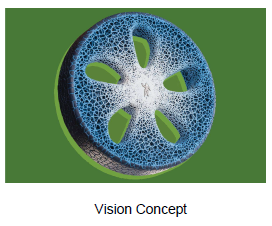
One of the most innovative features of this new concept tire is that it
A Shoe Engineered to Boost Performance
By Julia Zorthian
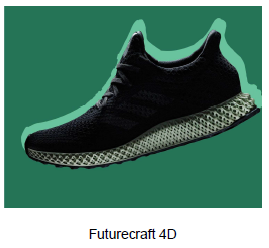
Imagine a shoe that lets you run faster, pivot better and jump higher. That’s the idea behind the Futurecraft 4D, a new sneaker whose midsole can be expertly tailored to the needs of its wearers—not only in size and shape, but also in flexibility, impact type, cushioning and more. The key is the 3-D printing process, which enables the company to “look at every single square millimeter of a midsole and tune it from a performance standpoint,” says Al VanNoy, who headed the project. It would take weeks to make those modifications using traditional shoemaking methods. But the Futurecraft 4D midsoles can be printed in as little as two hours, meaning they could even be produced in stores. At least that’s a possibility for the future.
Disponı́vel em: <http://time.com>. Acesso em: 25 mar. 2018.
Based on the text, Futurecraft 4D
“Weird.” “Curious.” “Baffling.” “Quite Stupid.” These words all once described Alexa, the voice-activated digital assistant on Amazon’s Echo device. But Amazon says the Echo Dot, a smaller, less expensive version of the Echo, was its “top-selling device” during the holiday season.
In 2014, it was odd to even consider owning an Echo — and impossible to buy without an invitation from Amazon. Today, you can pick from five Echo models. Or, you can try Google’s version: the Google Home, Google Home Mini or Google Home Max. Apple has also released a digital assistant device, the HomePod, which is fully capable with Siri. You can have your pick of digital assistants — each with varying capabilities of improving your life.
Alexa now has more than 15,000 skills, meaning any Echo device can go beyond describing the weather or playing music. The Google Assistant, first released in 2016, is catching up.
So why buy one now? First, they’re relatively inexpensive and far easier to use and understand than they were when first released. Think back to MP3 players or early smartphones: people learned a lot about using the products and became so adjusted to them that they didn’t know how to go back. Second, the future is paved with smart home devices, and voice-activated assistants to control them are becoming ubiquitous. The Echo and Google Home are no longer “test products” — the companies behind them want them to last.
Disponı́vel em: <www.nytimes.com>. Acesso em: 10 mar. 2018
Com base no texto, afirma-se que
I. existem vários modelos de assistentes digitais ativados por voz no mercado. II. Alexa ainda é bastante limitada, mas descreve o tempo e toca músicas., III. Google, Apple e Amazon desenvolveram assistentes digitais em parceria. IV. há justificativas para a compra de um Echo Dot ou de um Google Home. V. alguns dos assistentes digitais mencionados ainda se encontram em fase de testes.
Assinale a alternativa que apresenta apenas afirmativas corretas.
Do Gun Owners Want Gun Control?
By Jess Bidgood and Sabrina Tavernise
Tom Galinat signed a letter to lawmakers, urging them to expand background checks for gun purchases. Mr. Galinat, 35, a farmer and hunter who owns nine guns, traveled last month from his home in Peacham, Vt., to Montpelier, the state capital, with a firm goal in mind: Convince lawmakers to enact a ban on high-capacity magazines.
Jonathan Leach, 56, a policy analyst in Augusta, Me., and the owner of about 10 guns, testified before Maine legislators in favor of a bill to let judges order people deemed dangerous to surrender their firearms. Mr. Leach said he wanted to serve as a counterweight to gun rights enthusiasts he knew would speak against the idea.
Disponı́vel em: <www.nytimes.com>. Acesso em: 24 Abr. 2018.
Com base no texto, é correto afirmar que
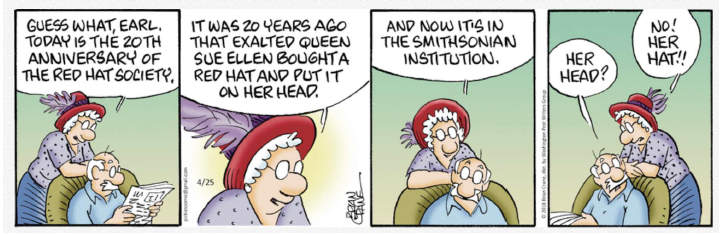
Sobre a tirinha, pode-se concluir que o efeito de humor ocorre devido ao fato
So You Want to Be a Space Tourist? Here Are Your Options
by Adam Mann / Jul.21.2017 /11:30 AM ET
Though we’ve been living in the Space Age for more than half a century, going into space remains an extreme rarity. Fewer than 600 people have gone above the Kármán line — the point, about 62 miles above Earth, that marks the beginning of space — and all were put there by the U.S. or another nation's government.
But the rise of private spaceflight companies like Virgin Galactic and Space X means that the final frontier may soon be within reach of a great many more of us. The firms have announced plans to put private astronauts, a.k.a. space tourists, on orbital or suborbital flights within the next few years.
Initially, the cost of a ride on one of these rockets will be hundreds of thousands of dollars at a minimum. That puts the experience within reach of only the wealthiest people. But advances in rocket and capsule design are expected to lower the price to the point that people of more modest fortunes are able to afford a ticket.
Some projections put the global space tourism market at approximately $34 billion by 2021.
What Space Tourists Can Expect
What exactly is in store for space tourists? The excitement of a rocket ride and a chance to experience weightlessness, for starters. And the bragging rights are hard to beat. But some say the biggest benefit of going into space is getting a dramatic new outlook on life on the fragile blue marble we call home. It’s a perspective shift that could have profound implications not just for individuals but also for society at large.
“I personally believe the planetary perspective is going to be crucial to solving humanity’s biggest challenges over the next century,” says Virgin Galactic CEO George Whitesides. “I’m inspired that we’ll take people up so they can experience that view, which is said to change your world view in a fundamental way.”
Adapted from: https://www.nbcnews.com/mach/science/so-you-want-be-space-tourist-here-are-your-options-ncna784166
Glossary
weightlessness: ausência de peso; bragging rights: direito
de gabar-se; to afford: poder comprar.
So You Want to Be a Space Tourist? Here Are Your Options
by Adam Mann / Jul.21.2017 /11:30 AM ET
Though we’ve been living in the Space Age for more than half a century, going into space remains an extreme rarity. Fewer than 600 people have gone above the Kármán line — the point, about 62 miles above Earth, that marks the beginning of space — and all were put there by the U.S. or another nation's government.
But the rise of private spaceflight companies like Virgin Galactic and Space X means that the final frontier may soon be within reach of a great many more of us. The firms have announced plans to put private astronauts, a.k.a. space tourists, on orbital or suborbital flights within the next few years.
Initially, the cost of a ride on one of these rockets will be hundreds of thousands of dollars at a minimum. That puts the experience within reach of only the wealthiest people. But advances in rocket and capsule design are expected to lower the price to the point that people of more modest fortunes are able to afford a ticket.
Some projections put the global space tourism market at approximately $34 billion by 2021.
What Space Tourists Can Expect
What exactly is in store for space tourists? The excitement of a rocket ride and a chance to experience weightlessness, for starters. And the bragging rights are hard to beat. But some say the biggest benefit of going into space is getting a dramatic new outlook on life on the fragile blue marble we call home. It’s a perspective shift that could have profound implications not just for individuals but also for society at large.
“I personally believe the planetary perspective is going to be crucial to solving humanity’s biggest challenges over the next century,” says Virgin Galactic CEO George Whitesides. “I’m inspired that we’ll take people up so they can experience that view, which is said to change your world view in a fundamental way.”
Adapted from: https://www.nbcnews.com/mach/science/so-you-want-be-space-tourist-here-are-your-options-ncna784166
Glossary
weightlessness: ausência de peso; bragging rights: direito
de gabar-se; to afford: poder comprar.
So You Want to Be a Space Tourist? Here Are Your Options
by Adam Mann / Jul.21.2017 /11:30 AM ET
Though we’ve been living in the Space Age for more than half a century, going into space remains an extreme rarity. Fewer than 600 people have gone above the Kármán line — the point, about 62 miles above Earth, that marks the beginning of space — and all were put there by the U.S. or another nation's government.
But the rise of private spaceflight companies like Virgin Galactic and Space X means that the final frontier may soon be within reach of a great many more of us. The firms have announced plans to put private astronauts, a.k.a. space tourists, on orbital or suborbital flights within the next few years.
Initially, the cost of a ride on one of these rockets will be hundreds of thousands of dollars at a minimum. That puts the experience within reach of only the wealthiest people. But advances in rocket and capsule design are expected to lower the price to the point that people of more modest fortunes are able to afford a ticket.
Some projections put the global space tourism market at approximately $34 billion by 2021.
What Space Tourists Can Expect
What exactly is in store for space tourists? The excitement of a rocket ride and a chance to experience weightlessness, for starters. And the bragging rights are hard to beat. But some say the biggest benefit of going into space is getting a dramatic new outlook on life on the fragile blue marble we call home. It’s a perspective shift that could have profound implications not just for individuals but also for society at large.
“I personally believe the planetary perspective is going to be crucial to solving humanity’s biggest challenges over the next century,” says Virgin Galactic CEO George Whitesides. “I’m inspired that we’ll take people up so they can experience that view, which is said to change your world view in a fundamental way.”
Adapted from: https://www.nbcnews.com/mach/science/so-you-want-be-space-tourist-here-are-your-options-ncna784166
Glossary
weightlessness: ausência de peso; bragging rights: direito
de gabar-se; to afford: poder comprar.

the question is not if another outbreak will happen, but when, (l. 28-29)
The underlined words present the health community’s opinion concerning new outbreaks of epidemics.
According to their opinion, future outbreaks are seen as:
The texts “Três teses sobre o avanço da febre amarela” and “The effect of climate change on epidemic risk” mention possible reasons for disease outbreaks.
The reason which is presented in both texts is:

In today’s political climate, it sometimes feels like we can’t even agree on basic facts. We bombard each other with statistics and figures, hoping that more data will make a difference. A progressive person might show you the same climate change graphs over and over while a conservative person might point to the trillions of dollars of growing national debt. We’re left wondering, “Why can’t they just see? It’s so obvious!”
Certain myths are so pervasive that no matter how many experts disprove them, they only seem to grow in popularity. There’s no shortage of serious studies showing no link between autism and vaccines, for example, but these are no match for an emotional appeal to parents worried for their young children.
Tali Sharot, a cognitive neuroscientist at University College London, studies how our minds work and how we process new information. In her upcoming book, The Influential Mind, she explores why we ignore facts and how we can get people to actually listen to the truth. Tali shows that we’re open to new information – but only if it confirms our existing beliefs. We find ways to ignore facts that challenge our ideals. And as neuroscientist Bahador Bahrami and colleagues have found, we weigh all opinions as equally valid, regardless of expertise.
So, having the data on your side is not always enough. For better or for worse, Sharot says, emotions may be the key to changing minds.
(Shankar Vedantam. www.npr.org. Adaptado.)
In today’s political climate, it sometimes feels like we can’t even agree on basic facts. We bombard each other with statistics and figures, hoping that more data will make a difference. A progressive person might show you the same climate change graphs over and over while a conservative person might point to the trillions of dollars of growing national debt. We’re left wondering, “Why can’t they just see? It’s so obvious!”
Certain myths are so pervasive that no matter how many experts disprove them, they only seem to grow in popularity. There’s no shortage of serious studies showing no link between autism and vaccines, for example, but these are no match for an emotional appeal to parents worried for their young children.
Tali Sharot, a cognitive neuroscientist at University College London, studies how our minds work and how we process new information. In her upcoming book, The Influential Mind, she explores why we ignore facts and how we can get people to actually listen to the truth. Tali shows that we’re open to new information – but only if it confirms our existing beliefs. We find ways to ignore facts that challenge our ideals. And as neuroscientist Bahador Bahrami and colleagues have found, we weigh all opinions as equally valid, regardless of expertise.
So, having the data on your side is not always enough. For better or for worse, Sharot says, emotions may be the key to changing minds.
(Shankar Vedantam. www.npr.org. Adaptado.)
In today’s political climate, it sometimes feels like we can’t even agree on basic facts. We bombard each other with statistics and figures, hoping that more data will make a difference. A progressive person might show you the same climate change graphs over and over while a conservative person might point to the trillions of dollars of growing national debt. We’re left wondering, “Why can’t they just see? It’s so obvious!”
Certain myths are so pervasive that no matter how many experts disprove them, they only seem to grow in popularity. There’s no shortage of serious studies showing no link between autism and vaccines, for example, but these are no match for an emotional appeal to parents worried for their young children.
Tali Sharot, a cognitive neuroscientist at University College London, studies how our minds work and how we process new information. In her upcoming book, The Influential Mind, she explores why we ignore facts and how we can get people to actually listen to the truth. Tali shows that we’re open to new information – but only if it confirms our existing beliefs. We find ways to ignore facts that challenge our ideals. And as neuroscientist Bahador Bahrami and colleagues have found, we weigh all opinions as equally valid, regardless of expertise.
So, having the data on your side is not always enough. For better or for worse, Sharot says, emotions may be the key to changing minds.
(Shankar Vedantam. www.npr.org. Adaptado.)
In today’s political climate, it sometimes feels like we can’t even agree on basic facts. We bombard each other with statistics and figures, hoping that more data will make a difference. A progressive person might show you the same climate change graphs over and over while a conservative person might point to the trillions of dollars of growing national debt. We’re left wondering, “Why can’t they just see? It’s so obvious!”
Certain myths are so pervasive that no matter how many experts disprove them, they only seem to grow in popularity. There’s no shortage of serious studies showing no link between autism and vaccines, for example, but these are no match for an emotional appeal to parents worried for their young children.
Tali Sharot, a cognitive neuroscientist at University College London, studies how our minds work and how we process new information. In her upcoming book, The Influential Mind, she explores why we ignore facts and how we can get people to actually listen to the truth. Tali shows that we’re open to new information – but only if it confirms our existing beliefs. We find ways to ignore facts that challenge our ideals. And as neuroscientist Bahador Bahrami and colleagues have found, we weigh all opinions as equally valid, regardless of expertise.
So, having the data on your side is not always enough. For better or for worse, Sharot says, emotions may be the key to changing minds.
(Shankar Vedantam. www.npr.org. Adaptado.)
Leia os cartuns 1 e 2 para responder à questão.

Leia os cartuns 1 e 2 para responder à questão.
Leia os cartuns 1 e 2 para responder à questão.

 Conheça nossos planos