Questões de Vestibular
Comentadas sobre interpretação de texto | reading comprehension em inglês
Foram encontradas 2.293 questões


Q1370257
Inglês
Texto associado
Why a global Language?
‘English is the global language.’ – A headline of this kind must have appeared in a thousand newspapers and
magazines in recent years. ‘English Rules’ is an actual example, presenting to the world an uncomplicated scenario
suggesting the universality of the language’s spread and the likelihood of its continuation. (…)
These are the kinds of statement which seem so obvious that most people would give them hardly a second
thought. Of course English is a global language, they would say. You hear it on television spoken by politicians from
all over the world. Wherever you travel, you see English signs and advertisements. Whenever you enter a hotel or
restaurant in a foreign city, they will understand English, and there will be an English menu. (…)
But English is news. The language continues to make news daily in many countries. And the headline isn’t
stating the obvious. For what does it mean, exactly? Is it saying that everyone in the world speaks English? This is
certainly not true, as we shall see. Is it saying, then, that every country in the world recognizes English as an offcial
language? This is not true either. So what does it mean to say that a language is a global language? Why is English
the language which is usually cited in this connection? How did the situation arise? And could it change? Or is it the
case that, once a language becomes a global language, it is there forever?
These are fascinating questions to explore, whether your frst language is English or not. If English is your
mother tongue, you may have mixed feelings about the way English is spreading around the world. You may feel
pride, that your language is the one which has been so successful; but your pride may be tinged with concern, when
you realize that people in other countries may not want to use the language in the same way that you do, and are
changing it to suit themselves. We are all sensitive to the way other people use (it is often said, abuse) ‘our’ language.
Deeply held feelings of ownership begin to be questioned. Indeed, if there is one predictable consequence of a
language becoming a global language, it is that nobody owns it any more. Or rather, everyone who has learned it now owns it – ‘has a share in it’ might be more accurate – and has the right to use it in the way they want. This fact alone
makes many people feel uncomfortable, even vaguely resentful. ‘Look what the Americans have done to English’ is a
not uncommon comment found in the letter-columns of the British press.
But similar comments can be heard in the USA when people encounter the sometimes striking variations in
English which are emerging all over the world. And if English is not your mother tongue, you may still have mixed
feelings about it. You may be strongly motivated to learn it, because you know it will put you in touch with more people
than any other language; but at the same time you know it will take a great deal of effort to master it, and you may
begrudge that effort. Having made progress, you will feel pride in your achievement, and savour the communicative
power you have at your disposal, but may none the less feel that mother-tongue speakers of English have an unfair
advantage over you. (…)
These feelings are natural, and would arise whichever language emerged as a global language. They are
feelings which give rise to fears, whether real or imaginary, and fears lead to conflict. Language is always in the news,
and the nearer a language moves to becoming a global language, the more newsworthy it is. So how does a
language come to achieve global status?
(Source: CRYSTAL, David. English as a global language. 2 ed. United Kingdom: Cambridge University Press, 2003.
According to the text, what is the one predictable consequence of a language becoming a global
language?
Q1370256
Inglês
Texto associado
Why a global Language?
‘English is the global language.’ – A headline of this kind must have appeared in a thousand newspapers and
magazines in recent years. ‘English Rules’ is an actual example, presenting to the world an uncomplicated scenario
suggesting the universality of the language’s spread and the likelihood of its continuation. (…)
These are the kinds of statement which seem so obvious that most people would give them hardly a second
thought. Of course English is a global language, they would say. You hear it on television spoken by politicians from
all over the world. Wherever you travel, you see English signs and advertisements. Whenever you enter a hotel or
restaurant in a foreign city, they will understand English, and there will be an English menu. (…)
But English is news. The language continues to make news daily in many countries. And the headline isn’t
stating the obvious. For what does it mean, exactly? Is it saying that everyone in the world speaks English? This is
certainly not true, as we shall see. Is it saying, then, that every country in the world recognizes English as an offcial
language? This is not true either. So what does it mean to say that a language is a global language? Why is English
the language which is usually cited in this connection? How did the situation arise? And could it change? Or is it the
case that, once a language becomes a global language, it is there forever?
These are fascinating questions to explore, whether your frst language is English or not. If English is your
mother tongue, you may have mixed feelings about the way English is spreading around the world. You may feel
pride, that your language is the one which has been so successful; but your pride may be tinged with concern, when
you realize that people in other countries may not want to use the language in the same way that you do, and are
changing it to suit themselves. We are all sensitive to the way other people use (it is often said, abuse) ‘our’ language.
Deeply held feelings of ownership begin to be questioned. Indeed, if there is one predictable consequence of a
language becoming a global language, it is that nobody owns it any more. Or rather, everyone who has learned it now owns it – ‘has a share in it’ might be more accurate – and has the right to use it in the way they want. This fact alone
makes many people feel uncomfortable, even vaguely resentful. ‘Look what the Americans have done to English’ is a
not uncommon comment found in the letter-columns of the British press.
But similar comments can be heard in the USA when people encounter the sometimes striking variations in
English which are emerging all over the world. And if English is not your mother tongue, you may still have mixed
feelings about it. You may be strongly motivated to learn it, because you know it will put you in touch with more people
than any other language; but at the same time you know it will take a great deal of effort to master it, and you may
begrudge that effort. Having made progress, you will feel pride in your achievement, and savour the communicative
power you have at your disposal, but may none the less feel that mother-tongue speakers of English have an unfair
advantage over you. (…)
These feelings are natural, and would arise whichever language emerged as a global language. They are
feelings which give rise to fears, whether real or imaginary, and fears lead to conflict. Language is always in the news,
and the nearer a language moves to becoming a global language, the more newsworthy it is. So how does a
language come to achieve global status?
(Source: CRYSTAL, David. English as a global language. 2 ed. United Kingdom: Cambridge University Press, 2003.
The text above states that
Q1370255
Inglês
Texto associado
Why a global Language?
‘English is the global language.’ – A headline of this kind must have appeared in a thousand newspapers and
magazines in recent years. ‘English Rules’ is an actual example, presenting to the world an uncomplicated scenario
suggesting the universality of the language’s spread and the likelihood of its continuation. (…)
These are the kinds of statement which seem so obvious that most people would give them hardly a second
thought. Of course English is a global language, they would say. You hear it on television spoken by politicians from
all over the world. Wherever you travel, you see English signs and advertisements. Whenever you enter a hotel or
restaurant in a foreign city, they will understand English, and there will be an English menu. (…)
But English is news. The language continues to make news daily in many countries. And the headline isn’t
stating the obvious. For what does it mean, exactly? Is it saying that everyone in the world speaks English? This is
certainly not true, as we shall see. Is it saying, then, that every country in the world recognizes English as an offcial
language? This is not true either. So what does it mean to say that a language is a global language? Why is English
the language which is usually cited in this connection? How did the situation arise? And could it change? Or is it the
case that, once a language becomes a global language, it is there forever?
These are fascinating questions to explore, whether your frst language is English or not. If English is your
mother tongue, you may have mixed feelings about the way English is spreading around the world. You may feel
pride, that your language is the one which has been so successful; but your pride may be tinged with concern, when
you realize that people in other countries may not want to use the language in the same way that you do, and are
changing it to suit themselves. We are all sensitive to the way other people use (it is often said, abuse) ‘our’ language.
Deeply held feelings of ownership begin to be questioned. Indeed, if there is one predictable consequence of a
language becoming a global language, it is that nobody owns it any more. Or rather, everyone who has learned it now owns it – ‘has a share in it’ might be more accurate – and has the right to use it in the way they want. This fact alone
makes many people feel uncomfortable, even vaguely resentful. ‘Look what the Americans have done to English’ is a
not uncommon comment found in the letter-columns of the British press.
But similar comments can be heard in the USA when people encounter the sometimes striking variations in
English which are emerging all over the world. And if English is not your mother tongue, you may still have mixed
feelings about it. You may be strongly motivated to learn it, because you know it will put you in touch with more people
than any other language; but at the same time you know it will take a great deal of effort to master it, and you may
begrudge that effort. Having made progress, you will feel pride in your achievement, and savour the communicative
power you have at your disposal, but may none the less feel that mother-tongue speakers of English have an unfair
advantage over you. (…)
These feelings are natural, and would arise whichever language emerged as a global language. They are
feelings which give rise to fears, whether real or imaginary, and fears lead to conflict. Language is always in the news,
and the nearer a language moves to becoming a global language, the more newsworthy it is. So how does a
language come to achieve global status?
(Source: CRYSTAL, David. English as a global language. 2 ed. United Kingdom: Cambridge University Press, 2003.
Taking into account the textual genre approach, we can say the text “Why a global language”? is
Ano: 2019
Banca:
FAG
Órgão:
FAG
Prova:
FAG - 2019 - FAG - Vestibular - Segundo Semestre - Medicina |
Q1369796
Inglês
Texto associado
Text 2
Text 2a. Second Language Learning
One of the principles of all learning is that we make sense of new information and ideas by relating them to
our previous knowledge. There are two main kinds of previous language knowledge which second language learners
can use in order to make sense of the new language they encounter: the first is their knowledge of their mother
tongue and the second is the knowledge they already possess about the second language itself.
LITTLEWOOD, W. Second Language Learning. In DAVIES, A. e ELDER, C. The Handbook of Applied Linguistics,
pp.504/5, Blackwell Publishing, 2010.
Text 2b. National Curriculum Parameters
Every text is organized within a specific genre according to its communicative purposes, as part of the
conditions of discourse production, which generate social uses that determine any and every text. Genres are,
therefore, historically determined, and constitute relatively stable forms of utterances available in a culture.
(National Curriculum Parameters, Brasil, 1988, p.21) (adaptado)
Answer the two questions below considering also texts "Second Language Learning" and "National Curriculum
Parameters", above.
When approaching foreign language texts 2a and 2b, the learner will most frequently use his/her
previous knowledge of the mother tongue to account for any difficulties, which may include dealing
with genres. About the use of previous knowledge and the study of genres in foreign language
education, it is correct to say that:
Ano: 2019
Banca:
FAG
Órgão:
FAG
Prova:
FAG - 2019 - FAG - Vestibular - Segundo Semestre - Medicina |
Q1369795
Inglês
Texto associado
Text 2
Text 2a. Second Language Learning
One of the principles of all learning is that we make sense of new information and ideas by relating them to
our previous knowledge. There are two main kinds of previous language knowledge which second language learners
can use in order to make sense of the new language they encounter: the first is their knowledge of their mother
tongue and the second is the knowledge they already possess about the second language itself.
LITTLEWOOD, W. Second Language Learning. In DAVIES, A. e ELDER, C. The Handbook of Applied Linguistics,
pp.504/5, Blackwell Publishing, 2010.
Text 2b. National Curriculum Parameters
Every text is organized within a specific genre according to its communicative purposes, as part of the
conditions of discourse production, which generate social uses that determine any and every text. Genres are,
therefore, historically determined, and constitute relatively stable forms of utterances available in a culture.
(National Curriculum Parameters, Brasil, 1988, p.21) (adaptado)
Answer the two questions below considering also texts "Second Language Learning" and "National Curriculum
Parameters", above.
Choose the correct option about some features of the texts 2a and 2b above:
Ano: 2019
Banca:
FAG
Órgão:
FAG
Prova:
FAG - 2019 - FAG - Vestibular - Segundo Semestre - Medicina |
Q1369794
Inglês
De acordo com o texto 1, a função do “central executive” é:
Ano: 2019
Banca:
FAG
Órgão:
FAG
Prova:
FAG - 2019 - FAG - Vestibular - Segundo Semestre - Medicina |
Q1369793
Inglês
Segundo o texto 1, pesquisas recentes acerca da memória de trabalho pretendem.
Q1369465
Inglês
Analise os pronomes presentes nas seguintes sentenças:
I. Is this book your?
II. James gave me those books. I really liked it.
III. Patty gave her brother a cassette and he gave she a video.
IV. It’s your decision, not ours.
V. I like this house but her windows are broken.
Escolha a alternativa que contenha a resposta correta:
Q1369463
Inglês
Analise os tempos verbais nas frases seguintes:
( )I. Ann was sat in an armchair watching television. ( )II. The police stops me on my way last night. ( )III. I’m hungry. I’m wanting something to eat. ( )IV. You’re always watched TV. You should do something more active. ( )V. Rice don’t grow in cold climates.
Assinale a alternativa correta:
( )I. Ann was sat in an armchair watching television. ( )II. The police stops me on my way last night. ( )III. I’m hungry. I’m wanting something to eat. ( )IV. You’re always watched TV. You should do something more active. ( )V. Rice don’t grow in cold climates.
Assinale a alternativa correta:
Q1369370
Inglês
Texto associado
First ever black hole image released.
Astronomers have taken the first ever image of a black hole, which is located in a distant galaxy.
It measures 40 billion km across - three million times the size of
the Earth - and has been described by scientists as "a monster".
The black hole is 500 million trillion km away and was
photographed by a network of eight telescopes across the world
It was captured by the Event Horizon Telescope (EHT), a network
of eight linked telescopes.
Prof Heino Falcke, of Radboud University in the Netherlands, who proposed the experiment, told
BBC News that the black hole was found in a galaxy called M87.
"What we see is larger than the size of our entire Solar System," he said.
"It has a mass 6.5 billion times that of the Sun. And it is one of the heaviest black holes that we think
exists. It is an absolute monster, the heavyweight champion of black holes in the Universe."
The image shows an intensely bright "ring of fire", as Prof Falcke describes it, surrounding a perfectly
circular dark hole. The bright halo is caused by superheated gas falling into the hole. The light is
brighter than all the billions of other stars in the galaxy combined - which is why it can be seen at
such distance from Earth.
The edge of the dark circle at the centre is the point at which the gas enters the black hole, which is
an object that has such a large gravitational pull, not even light can escape.
The image matches what theoretical physicists and indeed, Hollywood directors, imagined black
holes would look like, according to Dr Ziri Younsi, of University College London - who is part of the
EHT collaboration.
"Although they are relatively simple objects, black holes raise some of the most complex questions
about the nature of space and time, and ultimately of our existence," he said.
"It is remarkable that the image we observe is so similar to that which we obtain from our theoretical
calculations. So far, it looks like Einstein is correct once again."
But having the first image will enable researchers to learn more about these mysterious objects. They
will be keen to look out for ways in which the black hole departs from what's expected in physics.
No-one really knows how the bright ring around the hole is created. Even more intriguing is the
question of what happens when an object falls into a black hole.
Source: www.bbc.com/news/science-environment-47873592
“The image matches what theoretical physicists and indeed, Hollywood directors, imagined black
holes would look like, according to Dr.Ziri Younsi” […] (Verb Synonym)
Q1369369
Inglês
Texto associado
First ever black hole image released.
Astronomers have taken the first ever image of a black hole, which is located in a distant galaxy.
It measures 40 billion km across - three million times the size of
the Earth - and has been described by scientists as "a monster".
The black hole is 500 million trillion km away and was
photographed by a network of eight telescopes across the world
It was captured by the Event Horizon Telescope (EHT), a network
of eight linked telescopes.
Prof Heino Falcke, of Radboud University in the Netherlands, who proposed the experiment, told
BBC News that the black hole was found in a galaxy called M87.
"What we see is larger than the size of our entire Solar System," he said.
"It has a mass 6.5 billion times that of the Sun. And it is one of the heaviest black holes that we think
exists. It is an absolute monster, the heavyweight champion of black holes in the Universe."
The image shows an intensely bright "ring of fire", as Prof Falcke describes it, surrounding a perfectly
circular dark hole. The bright halo is caused by superheated gas falling into the hole. The light is
brighter than all the billions of other stars in the galaxy combined - which is why it can be seen at
such distance from Earth.
The edge of the dark circle at the centre is the point at which the gas enters the black hole, which is
an object that has such a large gravitational pull, not even light can escape.
The image matches what theoretical physicists and indeed, Hollywood directors, imagined black
holes would look like, according to Dr Ziri Younsi, of University College London - who is part of the
EHT collaboration.
"Although they are relatively simple objects, black holes raise some of the most complex questions
about the nature of space and time, and ultimately of our existence," he said.
"It is remarkable that the image we observe is so similar to that which we obtain from our theoretical
calculations. So far, it looks like Einstein is correct once again."
But having the first image will enable researchers to learn more about these mysterious objects. They
will be keen to look out for ways in which the black hole departs from what's expected in physics.
No-one really knows how the bright ring around the hole is created. Even more intriguing is the
question of what happens when an object falls into a black hole.
Source: www.bbc.com/news/science-environment-47873592
Which statement is considered incorrect or false in the text above. (Text Comprehension)
Ano: 2019
Banca:
UFVJM-MG
Órgão:
UFVJM-MG
Prova:
UFVJM-MG - 2019 - UFVJM-MG - Vestibular - Seleção Seriada - Sasi - Segunda Etapa |
Q1345356
Inglês
Texto associado
Conquering: conquistar
Leia este texto para responder a questão
Texto II
History of Human Rights
Originally, people had rights only because of their membership in a group, such as a family. Then, in 539
BC, Cyrus the Great, after conquering the city of Babylon, did something totally unexpected—he freed all
slaves to return home. Moreover, he declared people should choose their own religion. The Cyrus Cylinder,
a clay tablet containing his statements, is the first human rights declaration in history.
The idea of human rights spread quickly to India, Greece and eventually Rome. The most important
advances since then have included:
1215: The Magna Carta - gave people new rights and made the king subject to the law.
1628: The Petition of Right - set out the rights of the people.
1776: The United States Declaration of Independence - proclaimed the right to life, liberty and the pursuit of
happiness.
1789: The Declaration of the Rights of Man and of the Citizen - a document of France, stating that all citizens
are equal under the law.
1948: The Universal Declaration of Human Rights - the first document listing the 30 rights to which everyone
is entitled.
Fonte: Disponível em< https://www.youthforhumanrights.org/what-are-human-rights/background-of-human-rights.html >.
Acesso em: 17 de setembro de 2019.(Adaptado)
Glossário:
Conquering: conquistar
Clay tablet: bloco de argila
Spread: espalhou
Pursuit of: em busca de
De acordo com esse texto, é INCORRETO afirmar que:
Ano: 2019
Banca:
UFVJM-MG
Órgão:
UFVJM-MG
Prova:
UFVJM-MG - 2019 - UFVJM-MG - Vestibular - Seleção Seriada - Sasi - Segunda Etapa |
Q1345355
Inglês
Texto associado
Conquering: conquistar
Leia este texto para responder a questão
Texto II
History of Human Rights
Originally, people had rights only because of their membership in a group, such as a family. Then, in 539
BC, Cyrus the Great, after conquering the city of Babylon, did something totally unexpected—he freed all
slaves to return home. Moreover, he declared people should choose their own religion. The Cyrus Cylinder,
a clay tablet containing his statements, is the first human rights declaration in history.
The idea of human rights spread quickly to India, Greece and eventually Rome. The most important
advances since then have included:
1215: The Magna Carta - gave people new rights and made the king subject to the law.
1628: The Petition of Right - set out the rights of the people.
1776: The United States Declaration of Independence - proclaimed the right to life, liberty and the pursuit of
happiness.
1789: The Declaration of the Rights of Man and of the Citizen - a document of France, stating that all citizens
are equal under the law.
1948: The Universal Declaration of Human Rights - the first document listing the 30 rights to which everyone
is entitled.
Fonte: Disponível em< https://www.youthforhumanrights.org/what-are-human-rights/background-of-human-rights.html >.
Acesso em: 17 de setembro de 2019.(Adaptado)
Glossário:
Conquering: conquistar
Clay tablet: bloco de argila
Spread: espalhou
Pursuit of: em busca de
O texto II tem como principal ideia
Ano: 2019
Banca:
UFVJM-MG
Órgão:
UFVJM-MG
Prova:
UFVJM-MG - 2019 - UFVJM-MG - Vestibular - Seleção Seriada - Sasi - Segunda Etapa |
Q1345354
Inglês
Texto associado
Leia o texto abaixo e responda a questão.
Texto I
What Are Human Rights?
While some dictionaries define the word right as ―a privilege,‖ when used in the context of ―human rights,‖ we
are talking about something more basic.
Every person is entitled to certain fundamental rights, simply by the fact of being human. These are called
―human rights‖ rather than a privilege (which can be taken away at someone’s whim).
They are "rights" because they are things you are allowed to be, to do or to have. These rights are there for
your protection against people who might want to harm or hurt you.They are also there to help us get along
with each other and live in peace.
Many people know something about their rights. Generally they know they have the right to food and a safe
place to stay.They know they have a right to be paid for the work they do. But there are many other rights.
When human rights are not well known by people, abuses such as discrimination, intolerance, injustice,
oppression and slavery can arise.
Born out of the atrocities and enormous loss of life during World War II, the United Nations Universal
Declaration of Human Rights was signed in 1948 to provide a common understanding of what everyone’s
rights are. It forms the basis for a world built on freedom, justice and peace.
Fonte: Disponível em < https://www.youthforhumanrights.org/what-are-human-rights/ >.
Acesso em: 17 de setembro de 2019. (Adaptado)
Glossário:
Entitled to: direito a
Taken away: retirado
Whim: capricho
Allowed: permitido
Get along: se dar bem
Arise: surgir
Born out: nascida
A alternativa que NÃO representa um direito humano é:
Ano: 2019
Banca:
UFVJM-MG
Órgão:
UFVJM-MG
Prova:
UFVJM-MG - 2019 - UFVJM-MG - Vestibular - Seleção Seriada - Sasi - Segunda Etapa |
Q1345353
Inglês
Texto associado
Leia o texto abaixo e responda a questão.
Texto I
What Are Human Rights?
While some dictionaries define the word right as ―a privilege,‖ when used in the context of ―human rights,‖ we
are talking about something more basic.
Every person is entitled to certain fundamental rights, simply by the fact of being human. These are called
―human rights‖ rather than a privilege (which can be taken away at someone’s whim).
They are "rights" because they are things you are allowed to be, to do or to have. These rights are there for
your protection against people who might want to harm or hurt you.They are also there to help us get along
with each other and live in peace.
Many people know something about their rights. Generally they know they have the right to food and a safe
place to stay.They know they have a right to be paid for the work they do. But there are many other rights.
When human rights are not well known by people, abuses such as discrimination, intolerance, injustice,
oppression and slavery can arise.
Born out of the atrocities and enormous loss of life during World War II, the United Nations Universal
Declaration of Human Rights was signed in 1948 to provide a common understanding of what everyone’s
rights are. It forms the basis for a world built on freedom, justice and peace.
Fonte: Disponível em < https://www.youthforhumanrights.org/what-are-human-rights/ >.
Acesso em: 17 de setembro de 2019. (Adaptado)
Glossário:
Entitled to: direito a
Taken away: retirado
Whim: capricho
Allowed: permitido
Get along: se dar bem
Arise: surgir
Born out: nascida
De acordo com o texto, é INCORRETO afirmar sobre a Declaração Universal dos Direitos Humanos:
Ano: 2019
Banca:
UFVJM-MG
Órgão:
UFVJM-MG
Prova:
UFVJM-MG - 2019 - UFVJM-MG - Vestibular - Seleção Seriada - Sasi - Segunda Etapa |
Q1345352
Inglês
Texto associado
Leia o texto abaixo e responda a questão.
Texto I
What Are Human Rights?
While some dictionaries define the word right as ―a privilege,‖ when used in the context of ―human rights,‖ we
are talking about something more basic.
Every person is entitled to certain fundamental rights, simply by the fact of being human. These are called
―human rights‖ rather than a privilege (which can be taken away at someone’s whim).
They are "rights" because they are things you are allowed to be, to do or to have. These rights are there for
your protection against people who might want to harm or hurt you.They are also there to help us get along
with each other and live in peace.
Many people know something about their rights. Generally they know they have the right to food and a safe
place to stay.They know they have a right to be paid for the work they do. But there are many other rights.
When human rights are not well known by people, abuses such as discrimination, intolerance, injustice,
oppression and slavery can arise.
Born out of the atrocities and enormous loss of life during World War II, the United Nations Universal
Declaration of Human Rights was signed in 1948 to provide a common understanding of what everyone’s
rights are. It forms the basis for a world built on freedom, justice and peace.
Fonte: Disponível em < https://www.youthforhumanrights.org/what-are-human-rights/ >.
Acesso em: 17 de setembro de 2019. (Adaptado)
Glossário:
Entitled to: direito a
Taken away: retirado
Whim: capricho
Allowed: permitido
Get along: se dar bem
Arise: surgir
Born out: nascida
A ideia central do texto compreende:
Q1342537
Inglês
Consider an experiment by sociologist Devah Pager, who
sent pairs of experimenters — one black and one white —
to apply for 340 job ads in New York City. She gave them
resumes altered to have identical qualifications. She gave
them scripts so that the applicants said the same things when
handing in their applications. She even dressed them alike.
She found that black applicants got half the call backs that
white applicants got with the same qualifications.
(Keith Payne. www.scientificamerican.com, 18.07.2019. Adaptado.)
The experiment results suggest the existence of
The experiment results suggest the existence of
Q1342536
Inglês
Look at the pictures of the advertising campaign created by Fosbury&Brothers.
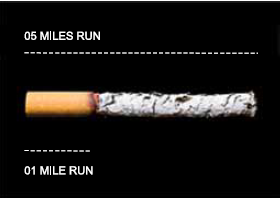
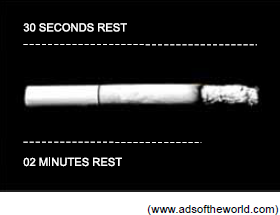
The purpose of the campaign is to show that smoking
Q1342535
Inglês
Texto associado
Leia o texto para responder à questao.
Is there a scientific explanation for
out-of-body experiences?
Imagine feeling as though you are floating above your
body, looking down upon your physical self. Some argue
that such out-of-body experiences (OBEs) prove that the
conscious mind — or even the soul — can leave the body.
Supporting this interpretation, people who have survived a
near-death experience often recall experiencing this out-ofbody sensation — as if their spiritual essence had separated
from their corporeal existence.
However, the scientific explanation for OBEs is more
terrestrial. Neuroscientists and psychologists believe it has to
do with neural processes going wrong. In those who come
close to death, such as cardiac arrest survivors, it is the lack of
oxygen to the brain, and the release of certain neurochemicals
triggered by trauma, that interferes with the sensory functions
that support our usual feelings of embodiment. People’s
recollections of seeing themselves from above — such as
observing surgeons working on their body — could be a form
of hallucination or false memory, as they try to make sense of
their experiences.
Researchers have induced out-of-body states in healthy
volunteers simply by confusing their sensory systems. For
instance, scientists at the Karolinska Institute in Stockholm
asked volunteers to wear goggles that showed the perspective
of a camera placed behind them (so that they could see
themselves from behind). When a researcher prodded the
camera with a baton at the same time as prodding the person’s
chest, the volunteer had the sensation that they were floating
behind their physical body. The fact it is possible to induce an
OBE argues against more mystical explanations.
(Christian Jarret. www.sciencefocus.com, 2019. Adaptado.)
De acordo com o último parágrafo, um argumento a favor da
concepção científica da experiência fora do corpo é a
Q1342534
Inglês
Texto associado
Leia o texto para responder à questao.
Is there a scientific explanation for
out-of-body experiences?
Imagine feeling as though you are floating above your
body, looking down upon your physical self. Some argue
that such out-of-body experiences (OBEs) prove that the
conscious mind — or even the soul — can leave the body.
Supporting this interpretation, people who have survived a
near-death experience often recall experiencing this out-ofbody sensation — as if their spiritual essence had separated
from their corporeal existence.
However, the scientific explanation for OBEs is more
terrestrial. Neuroscientists and psychologists believe it has to
do with neural processes going wrong. In those who come
close to death, such as cardiac arrest survivors, it is the lack of
oxygen to the brain, and the release of certain neurochemicals
triggered by trauma, that interferes with the sensory functions
that support our usual feelings of embodiment. People’s
recollections of seeing themselves from above — such as
observing surgeons working on their body — could be a form
of hallucination or false memory, as they try to make sense of
their experiences.
Researchers have induced out-of-body states in healthy
volunteers simply by confusing their sensory systems. For
instance, scientists at the Karolinska Institute in Stockholm
asked volunteers to wear goggles that showed the perspective
of a camera placed behind them (so that they could see
themselves from behind). When a researcher prodded the
camera with a baton at the same time as prodding the person’s
chest, the volunteer had the sensation that they were floating
behind their physical body. The fact it is possible to induce an
OBE argues against more mystical explanations.
(Christian Jarret. www.sciencefocus.com, 2019. Adaptado.)
No trecho do segundo parágrafo “could be a form of
hallucination”, o termo sublinhado implica

 Conheça nossos planos