Questões de Vestibular Comentadas sobre aspectos linguísticos | linguistic aspects em inglês

Foram encontradas 77 questões

Q1346691 Inglês

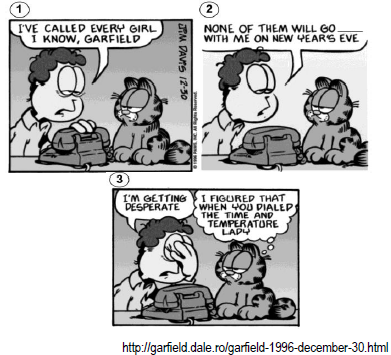
Imagem associada para resolução da questão


Muitos verbos em inglês consistem em duas partes: um verbo “base” (tais como bring, take, go, come) acompanhados de uma preposição ou de uma partícula adverbial (tais como up, down, out, in, off). No segundo quadro da tirinha, foi retirada a palavra que acompanha o verbo GO. A preposição que completa o sentido do verbo na fala do personagem é

Alternativas
Ano: 2015 Banca: UERR Órgão: UERR Prova: UERR - 2015 - UERR - Vestibular |
Q1340095 Inglês
Text 1

Typhoon, Hurricane, Cyclone: What's the Difference?
                                                              By Ker Than, for National Geographic
                                                              Published September 25, 2013.

    A powerful typhoon that struck Hong Kong on Sunday killed at least 30 people and forced the evacuation of thousands of people on the China mainland, and hundreds of flights were canceled. Typhoon Usagi— Japanese for rabbit—is the third and strongest Pacific typhoon to form this year. It was classified as a severe, or "super," typhoon after meteorologists recorded gusts of up to 160 miles per hour (260 kilometers per hour).
     If you've never lived in Asia, you might be wondering what it feels like to experience a typhoon. But if you've ever survived a hurricane or cyclone, you already know the answer. That's because hurricanes, cyclones, and typhoons are all the same weather phenomenon. Scientists just call these storms different things depending on where they occur.
     In the Atlantic and northern Pacific, the storms are called "hurricanes," after the Caribbean god of evil, named Hurrican. In the northwestern Pacific, the same powerful storms are called "typhoons." In the southeastern Indian Ocean and southwestern Pacific, they are called "severe tropical cyclones. In the northern Indian Ocean, they're called "severe cyclonic storms." In the southwestern Indian Ocean, they're just "tropical cyclones."
    To be classified as a hurricane, typhoon, or cyclone, a storm must reach wind speeds of at least 74 miles per hour (119 kilometers per hour). If a hurricane's winds reach speeds of 111 miles per hour (179 kilometers per hour), it is upgraded to an "intense hurricane." If a typhoon hits 150 miles per hour (241 kilometers per hour)—as Usagi did—then it becomes a "supertyphoon."

(Excerpt from the site: http://news.nationalgeographic.com/news/2013/09/130923- typhoon-hurricanecycloneprimernaturaldisaster/?source=hp_dl2_news_typhoon_e xplainer_20130924. Researched on: October 2015). 
Mark the CORRECT alternative about the text:
Alternativas
Ano: 2015 Banca: UECE-CEV Órgão: UECE Prova: UECE-CEV - 2015 - UECE - Língua Inglesa - 2ª Fase - 1º dia |
Q705507 Inglês

TEXT

    A library tradition is being refashioned to emphasize early literacy and better prepare young children for school, and drawing many new fans in the process.

    Among parents of the under-5 set, spots for story time have become as coveted as seats for a hot Broadway show like “Hamilton.” Lines stretch down the block at some branches, with tickets given out on a first-come-first-served basis because there is not enough room to accommodate all of the children who show up.

    Workers at the 67th Street Library on the Upper East Side of Manhattan turn away at least 10 people from every reading. They have been so overwhelmed by the rush at story time — held in the branch’s largest room, on the third floor — that once the space is full, they close the door and shut down the elevator. “It is so crowded and so popular, it’s insane,” Jacqueline Schector, a librarian, said.

    Story time is drawing capacity crowds at public libraries across New York and across the country at a time when, more than ever, educators are emphasizing the importance of early literacy in preparing children for school and for developing critical thinking skills. The demand crosses economic lines, with parents at all income levels vying to get in.

    Many libraries have refashioned the traditional readings to include enrichment activities such as counting numbers and naming colors, as well as music and dance. And many parents have made story time a fixture in their family routines alongside school pickups and playground outings — and, for those who employ nannies, a nonnegotiable requirement of the job.

    In New York, demand for story time has surged across the city’s three library systems — the New York Public Library, the Brooklyn Public Library, and the Queens Library — and has posed logistical challenges for some branches, particularly those in small or cramped buildings. Citywide, story time attendance rose to 510,367 people in fiscal year 2015, up nearly 28 percent from 399,751 in fiscal 2013.

    “The secret’s out,” said Lucy Yates, 44, an opera coach with two sons who goes to story time at the Fort Washington Library every week.

    Stroller-pushing parents and nannies begin to line up for story time outside some branches an hour before doors open. To prevent overcrowding, tickets are given out at the New Amsterdam and Webster branches, both in Manhattan, the Parkchester branch in the Bronx, and a half-dozen branches in Brooklyn, including in Park Slope, Kensington and Bay Ridge.

    The 67th Street branch keeps adding story times — there are now six a week — and holds sessions outdoors in the summer, when crowds can swell to 200 people.

    In Queens, 41 library branches are scheduled to add weekend hours this month, and many will undoubtedly include weekend story times. As Joanne King, a spokeswoman for the library explained, parents have been begging for them and “every story time is full, every time we have one.”

    Long a library staple, story time has typically been an informal reading to a small group of boys and girls sitting in a circle. Today’s story times involve carefully planned lessons by specially trained librarians that emphasize education as much as entertainment, and often include suggestions for parents and caregivers about how to reinforce what children have learned, library officials said.

    Libraries around the country have expanded story time and other children’s programs in recent years, attracting a new generation of patrons in an age when online offerings sometimes make trips to the book stacks unnecessary. Sari Feldman, president of the American Library Association, said such early-literacy efforts are part of a larger transformation libraries are undergoing to become active learning centers for their communities by offering services like classes in English as a second language, computer skills and career counseling.

    Ms. Feldman said the increased demand for story time was a product, in part, of more than a decade of work by the library association and others to encourage libraries to play a larger role in preparing young children for school. In 2004, as part of that effort, the association developed a curriculum, “Every Child Ready to Read,” that she said is now used by thousands of libraries.

    The New York Public Library is adding 45 children’s librarians to support story time and other programs, some of which are run in partnership with the city government. It has also designated 20 of its 88 neighborhood branches, including the Fort Washington Library, as “enhanced literary sites.” As such, they will double their story time sessions, to an average of four a week, and distribute 15,000 “family literacy kits” that include a book and a schedule of story times.

    “It is clear that reading and being exposed to books early in life are critical factors in student success,” Anthony W. Marx, president of the New York Public Library, said. “The library is playing an increasingly important role in strengthening early literacy in this city, expanding efforts to bring reading to children and their families through quality, free story times, curated literacy programs, after-school programs and more.”

    For its part, the Queens Library plans to expand a “Kick Off to Kindergarten” program that attracted more than 180 families for a series of workshops last year. Library officials said that more than three-quarters of the children who enrolled, many of whom spoke a language other than English at home, developed measurable classroom skills.

From: www.nytimes.com/2015/11/02

The sentence “Among parents of the under-5 set, spots for story time have become as coveted as seats for a hot Broadway show like Hamilton.” contains conjunctions that are classified as
Alternativas
Ano: 2015 Banca: UECE-CEV Órgão: UECE Prova: UECE-CEV - 2015 - UECE - Língua Inglesa - 2ª Fase - 1º dia |
Q705505 Inglês

TEXT

    A library tradition is being refashioned to emphasize early literacy and better prepare young children for school, and drawing many new fans in the process.

    Among parents of the under-5 set, spots for story time have become as coveted as seats for a hot Broadway show like “Hamilton.” Lines stretch down the block at some branches, with tickets given out on a first-come-first-served basis because there is not enough room to accommodate all of the children who show up.

    Workers at the 67th Street Library on the Upper East Side of Manhattan turn away at least 10 people from every reading. They have been so overwhelmed by the rush at story time — held in the branch’s largest room, on the third floor — that once the space is full, they close the door and shut down the elevator. “It is so crowded and so popular, it’s insane,” Jacqueline Schector, a librarian, said.

    Story time is drawing capacity crowds at public libraries across New York and across the country at a time when, more than ever, educators are emphasizing the importance of early literacy in preparing children for school and for developing critical thinking skills. The demand crosses economic lines, with parents at all income levels vying to get in.

    Many libraries have refashioned the traditional readings to include enrichment activities such as counting numbers and naming colors, as well as music and dance. And many parents have made story time a fixture in their family routines alongside school pickups and playground outings — and, for those who employ nannies, a nonnegotiable requirement of the job.

    In New York, demand for story time has surged across the city’s three library systems — the New York Public Library, the Brooklyn Public Library, and the Queens Library — and has posed logistical challenges for some branches, particularly those in small or cramped buildings. Citywide, story time attendance rose to 510,367 people in fiscal year 2015, up nearly 28 percent from 399,751 in fiscal 2013.

    “The secret’s out,” said Lucy Yates, 44, an opera coach with two sons who goes to story time at the Fort Washington Library every week.

    Stroller-pushing parents and nannies begin to line up for story time outside some branches an hour before doors open. To prevent overcrowding, tickets are given out at the New Amsterdam and Webster branches, both in Manhattan, the Parkchester branch in the Bronx, and a half-dozen branches in Brooklyn, including in Park Slope, Kensington and Bay Ridge.

    The 67th Street branch keeps adding story times — there are now six a week — and holds sessions outdoors in the summer, when crowds can swell to 200 people.

    In Queens, 41 library branches are scheduled to add weekend hours this month, and many will undoubtedly include weekend story times. As Joanne King, a spokeswoman for the library explained, parents have been begging for them and “every story time is full, every time we have one.”

    Long a library staple, story time has typically been an informal reading to a small group of boys and girls sitting in a circle. Today’s story times involve carefully planned lessons by specially trained librarians that emphasize education as much as entertainment, and often include suggestions for parents and caregivers about how to reinforce what children have learned, library officials said.

    Libraries around the country have expanded story time and other children’s programs in recent years, attracting a new generation of patrons in an age when online offerings sometimes make trips to the book stacks unnecessary. Sari Feldman, president of the American Library Association, said such early-literacy efforts are part of a larger transformation libraries are undergoing to become active learning centers for their communities by offering services like classes in English as a second language, computer skills and career counseling.

    Ms. Feldman said the increased demand for story time was a product, in part, of more than a decade of work by the library association and others to encourage libraries to play a larger role in preparing young children for school. In 2004, as part of that effort, the association developed a curriculum, “Every Child Ready to Read,” that she said is now used by thousands of libraries.

    The New York Public Library is adding 45 children’s librarians to support story time and other programs, some of which are run in partnership with the city government. It has also designated 20 of its 88 neighborhood branches, including the Fort Washington Library, as “enhanced literary sites.” As such, they will double their story time sessions, to an average of four a week, and distribute 15,000 “family literacy kits” that include a book and a schedule of story times.

    “It is clear that reading and being exposed to books early in life are critical factors in student success,” Anthony W. Marx, president of the New York Public Library, said. “The library is playing an increasingly important role in strengthening early literacy in this city, expanding efforts to bring reading to children and their families through quality, free story times, curated literacy programs, after-school programs and more.”

    For its part, the Queens Library plans to expand a “Kick Off to Kindergarten” program that attracted more than 180 families for a series of workshops last year. Library officials said that more than three-quarters of the children who enrolled, many of whom spoke a language other than English at home, developed measurable classroom skills.

From: www.nytimes.com/2015/11/02

The sentences “As such, they will double their story time sessions, to an average of four a week, and distribute 15,000 “family literacy kits” that include a book and a schedule of story time.” and “For its part, the Queens Library plans to expand a “Kick Off to Kindergarten” program that attracted more than 180 families for a series of workshops last year.” contain, respectively, a
Alternativas
Ano: 2015 Banca: UECE-CEV Órgão: UECE Prova: UECE-CEV - 2015 - UECE - Língua Inglesa - 2ª Fase - 1º dia |
Q705503 Inglês

TEXT

    A library tradition is being refashioned to emphasize early literacy and better prepare young children for school, and drawing many new fans in the process.

    Among parents of the under-5 set, spots for story time have become as coveted as seats for a hot Broadway show like “Hamilton.” Lines stretch down the block at some branches, with tickets given out on a first-come-first-served basis because there is not enough room to accommodate all of the children who show up.

    Workers at the 67th Street Library on the Upper East Side of Manhattan turn away at least 10 people from every reading. They have been so overwhelmed by the rush at story time — held in the branch’s largest room, on the third floor — that once the space is full, they close the door and shut down the elevator. “It is so crowded and so popular, it’s insane,” Jacqueline Schector, a librarian, said.

    Story time is drawing capacity crowds at public libraries across New York and across the country at a time when, more than ever, educators are emphasizing the importance of early literacy in preparing children for school and for developing critical thinking skills. The demand crosses economic lines, with parents at all income levels vying to get in.

    Many libraries have refashioned the traditional readings to include enrichment activities such as counting numbers and naming colors, as well as music and dance. And many parents have made story time a fixture in their family routines alongside school pickups and playground outings — and, for those who employ nannies, a nonnegotiable requirement of the job.

    In New York, demand for story time has surged across the city’s three library systems — the New York Public Library, the Brooklyn Public Library, and the Queens Library — and has posed logistical challenges for some branches, particularly those in small or cramped buildings. Citywide, story time attendance rose to 510,367 people in fiscal year 2015, up nearly 28 percent from 399,751 in fiscal 2013.

    “The secret’s out,” said Lucy Yates, 44, an opera coach with two sons who goes to story time at the Fort Washington Library every week.

    Stroller-pushing parents and nannies begin to line up for story time outside some branches an hour before doors open. To prevent overcrowding, tickets are given out at the New Amsterdam and Webster branches, both in Manhattan, the Parkchester branch in the Bronx, and a half-dozen branches in Brooklyn, including in Park Slope, Kensington and Bay Ridge.

    The 67th Street branch keeps adding story times — there are now six a week — and holds sessions outdoors in the summer, when crowds can swell to 200 people.

    In Queens, 41 library branches are scheduled to add weekend hours this month, and many will undoubtedly include weekend story times. As Joanne King, a spokeswoman for the library explained, parents have been begging for them and “every story time is full, every time we have one.”

    Long a library staple, story time has typically been an informal reading to a small group of boys and girls sitting in a circle. Today’s story times involve carefully planned lessons by specially trained librarians that emphasize education as much as entertainment, and often include suggestions for parents and caregivers about how to reinforce what children have learned, library officials said.

    Libraries around the country have expanded story time and other children’s programs in recent years, attracting a new generation of patrons in an age when online offerings sometimes make trips to the book stacks unnecessary. Sari Feldman, president of the American Library Association, said such early-literacy efforts are part of a larger transformation libraries are undergoing to become active learning centers for their communities by offering services like classes in English as a second language, computer skills and career counseling.

    Ms. Feldman said the increased demand for story time was a product, in part, of more than a decade of work by the library association and others to encourage libraries to play a larger role in preparing young children for school. In 2004, as part of that effort, the association developed a curriculum, “Every Child Ready to Read,” that she said is now used by thousands of libraries.

    The New York Public Library is adding 45 children’s librarians to support story time and other programs, some of which are run in partnership with the city government. It has also designated 20 of its 88 neighborhood branches, including the Fort Washington Library, as “enhanced literary sites.” As such, they will double their story time sessions, to an average of four a week, and distribute 15,000 “family literacy kits” that include a book and a schedule of story times.

    “It is clear that reading and being exposed to books early in life are critical factors in student success,” Anthony W. Marx, president of the New York Public Library, said. “The library is playing an increasingly important role in strengthening early literacy in this city, expanding efforts to bring reading to children and their families through quality, free story times, curated literacy programs, after-school programs and more.”

    For its part, the Queens Library plans to expand a “Kick Off to Kindergarten” program that attracted more than 180 families for a series of workshops last year. Library officials said that more than three-quarters of the children who enrolled, many of whom spoke a language other than English at home, developed measurable classroom skills.

From: www.nytimes.com/2015/11/02

In the sentence “In New York, demand for story time has surged across the city’s three library systems — the New York Public Library, the Brooklyn Public Library, and the Queens Library — and has posed logistical challenges for some branches…” the link between the two clauses is established by a/an
Alternativas
Ano: 2015 Banca: PUC - GO Órgão: PUC-GO Prova: PUC - GO - 2015 - PUC-GO - Vestibular |
Q640921 Inglês

TEXTO 5

                             Raios de sol ao meio

      Mais uma vez ele aparecia na minha frente como se tivesse vindo do nada. Seus olhos eram grandes e negros e pareciam ter nascido bem antes dele. Suas espinhas se agigantavam conforme o ângulo de que eram vistas. Sua orelha era algo indescritível. Além de orelha ela era disforme, meio redonda e meio achatada nas pontas. Ela era meio várias coisas. Uma orelha monstro. A boca era alguma coisa que só estava ali para cumprir seu espaço no rosto. Era boca porque estava exatamente no lugar da boca. E era a segunda vez que ele me mobilizava. Mas no conjunto de elementos díspares reinava uma sensualidade ímpar que me tirava de mim sem que eu soubesse navegar no outro que em mim surgia. De mim não sabia entender o que emanava para ele em toda a sua estranha vastidão de patologia visual. No meio sol da meia-noite as coisas se anunciaram e antes que a madrugada avançasse a lua em sua metade escondida ardeu com um olhar malicioso e sorriu.

    (GONÇALVES, Aguinaldo. Das estampas. São Paulo: Nankin, 2013. p. 177.)

In the fragment “a lua em sua metade escondida ardeu com um olhar malicioso e sorriu”, the image created by the sentence is:
Alternativas
Ano: 2015 Banca: VUNESP Órgão: UNESP Prova: VUNESP - 2015 - UNESP - Vestibular - Primeiro Semestre |
Q587682 Inglês

Examine o quadrinho para responder à questão.


Assinale a alternativa que completa corretamente a lacuna.
Alternativas
Ano: 2015 Banca: UERJ Órgão: UERJ Prova: UERJ - 2015 - UERJ - Vestibular -Segundo Exame |
Q583781 Inglês

In the text, there are euphemisms to refer to Maya Angelou’s death.

The words used by the author that represent euphemisms are:

Alternativas
Ano: 2015 Banca: PUC - GO Órgão: PUC-GO Prova: PUC - GO - 2015 - PUC-GO - Vestibular - Segundo Semestre |
Q534016 Inglês
TEXTO 7

                                      Ao mar

    Choveu dias e depois amanheceu. Joel chegou à janela e olhou o quintal: estava tudo inundado! Joel vestiu-se rapidamente, disse adeus à mãe, embarcou numa tábua e pôs-se a remar. Hasteou no mastro uma bandeira com a estrela de David... 

     O barco navegava mansamente. As noites se sucediam, estreladas. No cesto de gávea Joel vigiava e pensava em todos os esplêndidos aventureiros: Krishna, o faquir que ficou cento e dez dias comendo cascas de ovo; Mac-Dougal, o inglês que escalou o Itatiaia com uma das mãos amarradas às costas; Fred, que foi lançado num barril ao golfo do México e recolhido um ano depois na ilha da Pintada. Moma, irmão de sangue de um chefe comanche; Demócrito que dançava charleston sobre fios de alta tensão... 

    — A la mar! A la mar! – gritava Joel entoando cânticos ancestrais. Despertando pela manhã, alimentava-se de peixes exóticos; escrevia no diário de bordo e ficava a contemplar as ilhas. Os nativos viam-no passar – um ser taciturno, distante, nas águas, distante do céu. Certa vez – uma tempestade! Durou sete horas. Mas não o venceu, não o venceu! 

     E os monstros? Que dizer deles, se nunca ninguém os viu? 

     Joel remava afanosamente; às vezes, parava só para comer e escrever no diário de bordo. Um dia, disse em voz alta: "Mar, animal rumorejante!" Achou bonita esta frase; até anotou no diário. Depois, nunca mais falou. 

     À noite, Joel sonhava com barcos e mares, e ares e céus, e ventos e prantos, e rostos escuros, monstros soturnos. Que dizer destes monstros, se nunca ninguém os viu? 

     — Joel, vem almoçar! – gritava a mãe. Joel viajava ao largo; perto da África. 

(SCLIAR, Moacyr. Melhores contos. Seleção de Regina Zilbermann. São Paulo: Global, 2003. p. 105/106.)


In Text 7 we can see a repetition of the sentence “ninguém nunca os viu.” By translating it to English mark the sentence which is grammatically correct:
Alternativas
Ano: 2014 Banca: FADBA Órgão: Fadba Prova: FADBA - 2014 - Fadba - Vestibular - Primeiro Semestre |
Q1388777 Inglês
Read the questions. Look at the return-and-refund policy. Circle the answers. Return-and-Refund Policy

Full refunds:

We will refund 100% of the price for all books and for other new,

Unopened merchandise that is returned within 30 days. Items should be returned in their original product packaging. You will receive your refund check in six weeks.

Partial refunds:

We will refund less than 100% of the price for:

  •  Any items that are returned after more than 30 days.
  •  Any CD, DVD, or video game that is not in its plastic wrapping.
  •  Any item not in perfect condition.
How to send your return:


1.Call 1-800-555-3132 and ask for a shipping label.
2.Pack the items along with the receipt in a box. You can use the box that the arrived in or another box.
3.Put the shipping label on the outside of the box.
4.Bring the package to the post office.


Leia o texto e responda a questão, apenas uma alternativa.
I_____________late for work if the bus doesn’t arrive soon.
Alternativas
Ano: 2014 Banca: FADBA Órgão: Fadba Prova: FADBA - 2014 - Fadba - Vestibular - Primeiro Semestre |
Q1388776 Inglês
Read the questions. Look at the return-and-refund policy. Circle the answers. Return-and-Refund Policy

Full refunds:

We will refund 100% of the price for all books and for other new,

Unopened merchandise that is returned within 30 days. Items should be returned in their original product packaging. You will receive your refund check in six weeks.

Partial refunds:

We will refund less than 100% of the price for:

  •  Any items that are returned after more than 30 days.
  •  Any CD, DVD, or video game that is not in its plastic wrapping.
  •  Any item not in perfect condition.
How to send your return:


1.Call 1-800-555-3132 and ask for a shipping label.
2.Pack the items along with the receipt in a box. You can use the box that the arrived in or another box.
3.Put the shipping label on the outside of the box.
4.Bring the package to the post office.


Leia o texto e responda a questão, apenas uma alternativa.
I’d rather____________the movie. It’s supposed to be good.
Alternativas
Ano: 2014 Banca: FADBA Órgão: Fadba Prova: FADBA - 2014 - Fadba - Vestibular - Primeiro Semestre |
Q1388775 Inglês
Read the questions. Look at the return-and-refund policy. Circle the answers. Return-and-Refund Policy

Full refunds:

We will refund 100% of the price for all books and for other new,

Unopened merchandise that is returned within 30 days. Items should be returned in their original product packaging. You will receive your refund check in six weeks.

Partial refunds:

We will refund less than 100% of the price for:

  •  Any items that are returned after more than 30 days.
  •  Any CD, DVD, or video game that is not in its plastic wrapping.
  •  Any item not in perfect condition.
How to send your return:


1.Call 1-800-555-3132 and ask for a shipping label.
2.Pack the items along with the receipt in a box. You can use the box that the arrived in or another box.
3.Put the shipping label on the outside of the box.
4.Bring the package to the post office.


Leia o texto e responda a questão, apenas uma alternativa.

Circle the letter of the correct answer to complete each sentence.

1. Maria often goes to the movies by____________.

Alternativas
Ano: 2014 Banca: VUNESP Órgão: Faculdade Cultura Inglesa Prova: VUNESP - 2014 - Faculdade Cultura Inglesa - Vestibular - Prova 01 |
Q1274512 Inglês
How climate change ended world’s first great civilisations
David Keys
Monday, 3 March 2014
    The world’s first great civilisations appear to have collapsed because of an ancient episode of climate change – according to new research carried out by scientists and archaeologists. Their investigation demonstrates that the Bronze Age ‘megacities’ of the Indus Valley region of Pakistan and north-west India declined during the 21st and 20th centuries BC and never recovered – because of a dramatic increase in drought conditions. The research, carried out by the University of Cambridge and India’s Banaras Hindu University, reveals that a series of droughts lasting some 200 years hit the Indus Valley zone – and was probably responsible for the rapid decline of the great Bronze Age urban civilisation of that region.
    It’s now thought likely that the droughts at around that time were partly responsible for the collapse not only of the Indus Valley Civilisation, but also of the ancient Akkadian Empire, Old Kingdom Egypt and possibly Early Bronze Age civilisations in Greece. “Our evidence suggests that it was the most intense period of drought – probably due to frequent monsoon failure – in the 5000 year-long period we have examined,” said University of Cambridge Palaeoclimate scientist Professor David Hodell. The scientists studying the collapse of the Indus Valley Civilisation obtained their new evidence from a dried-up lake bed near India’s capital New Delhi which is just 40 miles east of the eastern edge of the Indus Valley Civilisation.
    The Indus Valley ‘megacities’ – some with populations of up to 100,000 – rapidly declined. Populations shrank and the old urban civilisation, which had lasted 500 years, collapsed.
    “Archaeologists get an opportunity to investigate how ancient populations responded to climatic and environmental change,” said University of Cambridge archaeologist, Dr. Cameron Petrie. “For the Indus populations, it looks as though living in large groups became untenable, and it was much more sustainable to live in smaller groups. This is of course a huge simplification of a complex process, but this transformation is the underlying dynamicˮ.
(www.independent.co.uk. Adaptado.)
A palavra megacities na frase do terceiro parágrafo – The Indus Valley ‘megacities’some with populations of up to 100,000 – rapidly declined. – aparece entre aspas para indicar que
Alternativas
Ano: 2014 Banca: VUNESP Órgão: UEA Prova: VUNESP - 2014 - UEA - Vestibular |
Q466661 Inglês
Leia o texto para responder à questão.

       Mr. Day was a teacher at a school in a big city in the north of England. He usually went to France or Germany for a few weeks during his summer holidays, and he spoke French and German quite well.
       But one year Mr. Day said to one of his friends, “I’m going to have a holiday in Athens. But I don’t speak Greek, so I’ll go to evening classes and have Greek lessons for a
month before I go.”
       He studied very hard for a month, and then 10 holidays began and he went to Greece.
       When he came back a few weeks later, his friend said to him, “Did you have any trouble with your Greek when you were in Athens, Dick?”
       “No, I didn’t have any trouble with it,” answered Mr. Day. “But the Greeks did!”

                                          (L. A. Hill. Elementary Stories for Reproduction, 1977.)

No trecho do quarto parágrafo “When he came back a few weeks later”, a palavra “weeks” é precedida por “a few” para indicar quantidade. Uma outra palavra que também pode ser precedida por “a few”, para indicar quantidade, é
Alternativas
Ano: 2013 Banca: UECE-CEV Órgão: UECE Prova: UECE-CEV - 2013 - UECE - Vestibular - Língua Inglesa - 2ª fase |
Q1279900 Inglês
TEXT

     BRASÍLIA — Brazil’s highest court has long viewed itself as a bastion of manners and formality. Justices call one another “Your Excellency,” dress in billowing robes and wrap each utterance in grandiloquence, as if little had changed from the era when marquises and dukes held sway from their vast plantations.
     In one televised feud, Mr. Barbosa questioned another justice about whether he would even be on the court had he not been appointed by his cousin, a former president impeached in 1992. With another justice, Mr. Barbosa rebuked him over what the chief justice considered his condescending tone, telling him he was not his “capanga,” a term describing a hired thug. 
      In one of his most scathing comments, Mr. Barbosa, the high court’s first and only black justice, took on the entire legal system of Brazil — where it is still remarkably rare for politicians to ever spend time in prison, even after being convicted of crimes — contending that the mentality of judges was “conservative, pro-status-quo and pro-impunity.”
     “I have a temperament that doesn’t adapt well to politics,” Mr. Barbosa, 58, said in a recent interview in his quarters here in the Supreme Federal Tribunal, a modernist landmark designed by the architect Oscar Niemeyer. “It’s because I speak my mind so much.” 
     His acknowledged lack of tact notwithstanding, he is the driving force behind a series of socially liberal and establishment-shaking rulings, turning Brazil’s highest court — and him in particular — into a newfound political power and the subject of popular fascination. 
   The court’s recent rulings include a unanimous decision upholding the University of Brasília’s admissions policies aimed at increasing the number of black and indigenous students, opening the way for one of the Western Hemisphere’s most sweeping affirmative action laws for higher education. 
     In another move, Mr. Barbosa used his sway as chief justice and president of the panel overseeing Brazil’s judiciary to effectively legalize same-sex marriage across the country. And in an anticorruption crusade, he is overseeing the precedent-setting trial of senior political figures in the governing Workers Party for their roles in a vast vote-buying scheme.
   Ascending to Brazil’s high court, much less pushing the institution to assert its independence, long seemed out of reach for Mr. Barbosa, the eldest of eight children raised in Paracatu, an impoverished city in Minas Gerais State, where his father worked as a bricklayer.  
    But his prominence — not just on the court, but in the streets as well — is so well established that masks with his face were sold for Carnival, amateur musicians have composed songs about his handling of the corruption trial and posted them on YouTube, and demonstrators during the huge street protests that shook the nation this year told pollsters that Mr. Barbosa was one of their top choices for president in next year’s elections.
     While the protests have subsided since their height in June, the political tumult they set off persists. The race for president, once considered a shoo-in for the incumbent, Dilma Rousseff, is now up in the air, with Mr. Barbosa — who is now so much in the public eye that gossip columnists are following his romance with a woman in her 20s — repeatedly saying he will not run. “I’m not a candidate for anything,” he says. 
     But the same public glare that has turned him into a celebrity has singed him as well. While he has won widespread admiration for his guidance of the high court, Mr. Barbosa, like almost every other prominent political figure in Brazil, has recently come under scrutiny. And for someone accustomed to criticizing the so-called supersalaries awarded to some members of Brazil’s legal system, the revelations have put Mr. Barbosa on the defensive. 
     One report in the Brazilian news media described how he received about $180,000 in payments for untaken leaves of absence during his 19 years as a public prosecutor. (Such payments are common in some areas of Brazil’s large public bureaucracy.) Another noted that he bought an apartment in Miami through a limited liability company, suggesting an effort to pay less taxes on the property. In statements, Mr. Barbosa contends that he has done nothing wrong. 
     In a country where a majority of people now define themselves as black or of mixed race — but where blacks remain remarkably rare in the highest echelons of political institutions and corporations — Mr. Barbosa’s trajectory and abrupt manner have elicited both widespread admiration and a fair amount of resistance. 
     As a teenager, Mr. Barbosa moved to the capital, Brasília, finding work as a janitor in a courtroom. Against the odds, he got into the University of Brasília, the only black student in its law program at the time. Wanting to see the world, he later won admission into Brazil’s diplomatic service, which promptly sent him to Helsinki, the Finnish capital on the shore of the Baltic Sea. 
     Sensing that he would not advance much in the diplomatic service, which he has called “one of the most discriminatory institutions of Brazil,” Mr. Barbosa opted for a career as a prosecutor. He alternated between legal investigations in Brazil and studies abroad, gaining fluency in English, French and German, and earning a doctorate in law at Pantheon-Assas University in Paris. 
   Fascinated by the legal systems of other countries, Mr. Barbosa wrote a book on affirmative action in the United States. He still voices his admiration for figures like Thurgood Marshall, the first black Supreme Court justice in the United States, and William J. Brennan Jr., who for years embodied the court’s liberal vision, clearly drawing inspiration from them as he pushed Brazil’s high court toward socially liberal rulings.
    Still, no decision has thrust Mr. Barbosa into Brazil’s public imagination as much as his handling of the trial of political operatives, legislators and bankers found guilty in a labyrinthine corruption scandal called the mensalão, or big monthly allowance, after the regular payments made to lawmakers in exchange for their votes. 
    Last November, at Mr. Barbosa’s urging, the high court sentenced some of the most powerful figures in the governing Workers Party to years in prison for their crimes in the scheme, including bribery and unlawful conspiracy, jolting a political system in which impunity for politicians has been the norm.  
     Now the mensalão trial is entering what could be its final phases, and Mr. Barbosa has at times been visibly exasperated that defendants who have already been found guilty and sentenced have managed to avoid hard jail time. He has clashed with other justices over their consideration of a rare legal procedure in which appeals over close votes at the high court are examined. 
     Losing his patience with one prominent justice, Ricardo Lewandowski, who tried to absolve some defendants of certain crimes, Mr. Barbosa publicly accused him this month of “chicanery” by using legalese to prop up certain positions. An outcry ensued among some who could not stomach Mr. Barbosa’s talking to a fellow justice like that. “Who does Justice Joaquim Barbosa think he is?” asked Ricardo Noblat, a columnist for the newspaper O Globo, questioning whether Mr. Barbosa was qualified to preside over the court. “What powers does he think he has just because he’s sitting in the chair of the chief justice of the Supreme Federal Tribunal?” 
      Mr. Barbosa did not apologize. In the interview, he said some tension was necessary for the court to function properly. “It was always like this,” he said, contending that arguments are now just easier to see because the court’s proceedings are televised. 
     Linking the court’s work to the recent wave of protests, he explained that he strongly disagreed with the violence of some demonstrators, but he also said he believed that the street movements were “a sign of democracy’s exuberance.” 
     “People don’t want to passively stand by and observe these arrangements of the elite, which were always the Brazilian tradition,” he said. 
In the sentence “Wanting to see the world, he later won admission into Brazil’s diplomatic service,” the underlined phrase can be correctly rewritten as
Alternativas
Ano: 2013 Banca: UECE-CEV Órgão: UECE Prova: UECE-CEV - 2013 - UECE - Vestibular - Língua Inglesa - 2ª fase |
Q1279899 Inglês
TEXT

     BRASÍLIA — Brazil’s highest court has long viewed itself as a bastion of manners and formality. Justices call one another “Your Excellency,” dress in billowing robes and wrap each utterance in grandiloquence, as if little had changed from the era when marquises and dukes held sway from their vast plantations.
     In one televised feud, Mr. Barbosa questioned another justice about whether he would even be on the court had he not been appointed by his cousin, a former president impeached in 1992. With another justice, Mr. Barbosa rebuked him over what the chief justice considered his condescending tone, telling him he was not his “capanga,” a term describing a hired thug. 
      In one of his most scathing comments, Mr. Barbosa, the high court’s first and only black justice, took on the entire legal system of Brazil — where it is still remarkably rare for politicians to ever spend time in prison, even after being convicted of crimes — contending that the mentality of judges was “conservative, pro-status-quo and pro-impunity.”
     “I have a temperament that doesn’t adapt well to politics,” Mr. Barbosa, 58, said in a recent interview in his quarters here in the Supreme Federal Tribunal, a modernist landmark designed by the architect Oscar Niemeyer. “It’s because I speak my mind so much.” 
     His acknowledged lack of tact notwithstanding, he is the driving force behind a series of socially liberal and establishment-shaking rulings, turning Brazil’s highest court — and him in particular — into a newfound political power and the subject of popular fascination. 
   The court’s recent rulings include a unanimous decision upholding the University of Brasília’s admissions policies aimed at increasing the number of black and indigenous students, opening the way for one of the Western Hemisphere’s most sweeping affirmative action laws for higher education. 
     In another move, Mr. Barbosa used his sway as chief justice and president of the panel overseeing Brazil’s judiciary to effectively legalize same-sex marriage across the country. And in an anticorruption crusade, he is overseeing the precedent-setting trial of senior political figures in the governing Workers Party for their roles in a vast vote-buying scheme.
   Ascending to Brazil’s high court, much less pushing the institution to assert its independence, long seemed out of reach for Mr. Barbosa, the eldest of eight children raised in Paracatu, an impoverished city in Minas Gerais State, where his father worked as a bricklayer.  
    But his prominence — not just on the court, but in the streets as well — is so well established that masks with his face were sold for Carnival, amateur musicians have composed songs about his handling of the corruption trial and posted them on YouTube, and demonstrators during the huge street protests that shook the nation this year told pollsters that Mr. Barbosa was one of their top choices for president in next year’s elections.
     While the protests have subsided since their height in June, the political tumult they set off persists. The race for president, once considered a shoo-in for the incumbent, Dilma Rousseff, is now up in the air, with Mr. Barbosa — who is now so much in the public eye that gossip columnists are following his romance with a woman in her 20s — repeatedly saying he will not run. “I’m not a candidate for anything,” he says. 
     But the same public glare that has turned him into a celebrity has singed him as well. While he has won widespread admiration for his guidance of the high court, Mr. Barbosa, like almost every other prominent political figure in Brazil, has recently come under scrutiny. And for someone accustomed to criticizing the so-called supersalaries awarded to some members of Brazil’s legal system, the revelations have put Mr. Barbosa on the defensive. 
     One report in the Brazilian news media described how he received about $180,000 in payments for untaken leaves of absence during his 19 years as a public prosecutor. (Such payments are common in some areas of Brazil’s large public bureaucracy.) Another noted that he bought an apartment in Miami through a limited liability company, suggesting an effort to pay less taxes on the property. In statements, Mr. Barbosa contends that he has done nothing wrong. 
     In a country where a majority of people now define themselves as black or of mixed race — but where blacks remain remarkably rare in the highest echelons of political institutions and corporations — Mr. Barbosa’s trajectory and abrupt manner have elicited both widespread admiration and a fair amount of resistance. 
     As a teenager, Mr. Barbosa moved to the capital, Brasília, finding work as a janitor in a courtroom. Against the odds, he got into the University of Brasília, the only black student in its law program at the time. Wanting to see the world, he later won admission into Brazil’s diplomatic service, which promptly sent him to Helsinki, the Finnish capital on the shore of the Baltic Sea. 
     Sensing that he would not advance much in the diplomatic service, which he has called “one of the most discriminatory institutions of Brazil,” Mr. Barbosa opted for a career as a prosecutor. He alternated between legal investigations in Brazil and studies abroad, gaining fluency in English, French and German, and earning a doctorate in law at Pantheon-Assas University in Paris. 
   Fascinated by the legal systems of other countries, Mr. Barbosa wrote a book on affirmative action in the United States. He still voices his admiration for figures like Thurgood Marshall, the first black Supreme Court justice in the United States, and William J. Brennan Jr., who for years embodied the court’s liberal vision, clearly drawing inspiration from them as he pushed Brazil’s high court toward socially liberal rulings.
    Still, no decision has thrust Mr. Barbosa into Brazil’s public imagination as much as his handling of the trial of political operatives, legislators and bankers found guilty in a labyrinthine corruption scandal called the mensalão, or big monthly allowance, after the regular payments made to lawmakers in exchange for their votes. 
    Last November, at Mr. Barbosa’s urging, the high court sentenced some of the most powerful figures in the governing Workers Party to years in prison for their crimes in the scheme, including bribery and unlawful conspiracy, jolting a political system in which impunity for politicians has been the norm.  
     Now the mensalão trial is entering what could be its final phases, and Mr. Barbosa has at times been visibly exasperated that defendants who have already been found guilty and sentenced have managed to avoid hard jail time. He has clashed with other justices over their consideration of a rare legal procedure in which appeals over close votes at the high court are examined. 
     Losing his patience with one prominent justice, Ricardo Lewandowski, who tried to absolve some defendants of certain crimes, Mr. Barbosa publicly accused him this month of “chicanery” by using legalese to prop up certain positions. An outcry ensued among some who could not stomach Mr. Barbosa’s talking to a fellow justice like that. “Who does Justice Joaquim Barbosa think he is?” asked Ricardo Noblat, a columnist for the newspaper O Globo, questioning whether Mr. Barbosa was qualified to preside over the court. “What powers does he think he has just because he’s sitting in the chair of the chief justice of the Supreme Federal Tribunal?” 
      Mr. Barbosa did not apologize. In the interview, he said some tension was necessary for the court to function properly. “It was always like this,” he said, contending that arguments are now just easier to see because the court’s proceedings are televised. 
     Linking the court’s work to the recent wave of protests, he explained that he strongly disagreed with the violence of some demonstrators, but he also said he believed that the street movements were “a sign of democracy’s exuberance.” 
     “People don’t want to passively stand by and observe these arrangements of the elite, which were always the Brazilian tradition,” he said. 
The expression “Not just on the court, but in the streets as well” can be correctly rewritten as
Alternativas
Ano: 2013 Banca: PUC-MINAS Órgão: PUC-MINAS Prova: PUC-MINAS - 2013 - PUC-MINAS - Prova - Medicina |
Q1263482 Inglês
Why the Internet is so addictive
    "Checking Facebook should only take a minute." Those are the famous last words of countless people every day, right before getting sucked into several hours of watching cat videos or commenting on Instagrammed sushi lunches. That behavior is natural, given how the Internet is structured, experts say. The Internet’s omnipresence and lack of limits encourage people to lose track of time, making it hard to exercise the self-control to turn it off.
    "The Internet is not addictive in the same way as pharmacological substances are," said Tom Stafford, a cognitive scientist at the University of Sheffield in the U.K. "But it's compulsive; it's compelling; it's distracting." Humans are social creatures. Therefore, people enjoy the social information available via email and the Web.     
    The main reason the Internet is so addictive is that it lacks boundaries between tasks, Stafford said. Someone may set out to "research something, and then accidentally go to Wikipedia, and then wind up trying to find out what ever happened to Depeche Mode," Stafford said, referring to the music band. Studies suggest willpower is like a muscle: It can be strengthened, but can also become exhausted. Because the Internet is always "on," staying on task requires constantly flexing that willpower muscle, which can exhaust a person's self-control.
    For those who want to loosen the grip of the Web on their lives, a few simple techniques may do the trick. Web-blocking tools that limit surfing time can help people regain control over their time. Another method is to plan ahead, committing to work for 20 minutes, or until a certain task is complete, and then allowing five minutes of Web surfing, Stafford said.
(Adapted from: http://www.mnn.com/green-tech/computers/stories/why-the-internet-is-so-addictive) 
The word Therefore in: “Therefore, people enjoy the social information…” (paragraph 2) indicates
Alternativas
Ano: 2013 Banca: UECE-CEV Órgão: UECE Prova: UECE-CEV - 2013 - UECE - Vestibular - Inglês - 1º Dia |
Q1261842 Inglês
TEXT
   
   HARVARD BUSINESS REVIEW calls data science “the sexiest job in the 21st century,” and by most accounts this hot new field promises to revolutionize industries from business to government, health care to academia. 
   The field has been spawned by the enormous amounts of data that modern technologies create — be it the online behavior of Facebook users, tissue samples of cancer patients, purchasing habits of grocery shoppers or crime statistics of cities. Data scientists are the magicians of the Big Data era. They crunch the data, use mathematical models to analyze it and create narratives or visualizations to explain it, then suggest how to use the information to make decisions. 
     In the last few years, dozens of programs under a variety of names have sprung up in response to the excitement about Big Data, not to mention the six-figure salaries for some recent graduates. In the fall, Columbia will offer new master’s and certificate programs heavy on data. The University of San Francisco will soon graduate its charter class of students with a master’s in analytics.
      Rachel Schutt, a senior research scientist at Johnson Research Labs, taught “Introduction to Data Science” last semester at Columbia (its first course with “data science” in the title). She described the data scientist this way: “a hybrid computer scientist software engineer statistician.” And added: “The best tend to be really curious people, thinkers who ask good questions and are O.K. dealing with unstructured situations and trying to find structure in them.”
      Eurry Kim, a 30-year-old “wannabe data scientist,” is studying at Columbia for a master’s in quantitative methods in the social sciences and plans to use her degree for government service. She discovered the possibilities while working as a corporate tax analyst at the Internal Revenue Service. She might, for example, analyze tax return data to develop algorithms that flag fraudulent filings, or cull national security databases to spot suspicious activity.
     Some of her classmates are hoping to apply their skills to e-commerce, where data about users’ browsing history is gold.
     “This is a generation of kids that grew up with data science around them — Netflix telling them what movies they should watch, Amazon telling them what books they should read — so this is an academic interest with real-world applications,” said Chris Wiggins, a professor of applied mathematics at Columbia who is involved in its new Institute for Data Sciences and Engineering. “And,” he added, “they know it will make them employable.”
  Universities can hardly turn out data scientists fast enough. To meet demand from employers, the United States will need to increase the number of graduates with skills handling large amounts of data by as much as 60 percent, according to a report by McKinsey Global Institute. There will be almost half a million jobs in five years, and a shortage of up to 190,000 qualified data scientists, plus a need for 1.5 million executives and support staff who have an understanding of data.
      Because data science is so new, universities are scrambling to define it and develop curriculums. As an academic field, it cuts across disciplines, with courses in statistics, analytics, computer science and math, coupled with the specialty a student wants to analyze, from patterns in marine life to historical texts.
    With the sheer volume, variety and speed of data today, as well as developing technologies, programs are more than a repackaging of existing courses. “Data science is emerging as an academic discipline, defined not by a mere amalgamation of interdisciplinary fields but as a body of knowledge, a set of professional practices, a professional organization and a set of ethical responsibilities,” said Christopher Starr, chairman of the computer science department at the College of Charleston, one of a few institutions offering data science at the undergraduate level.
     Most master’s degree programs in data science require basic programming skills. They start with what Ms. Schutt describes as the “boring” part — scraping and cleaning raw data and “getting it into a nice table where you can actually analyze it.” Many use data sets provided by businesses or government, and pass back their results. Some host competitions to see which student can come up with the best solution to a company’s problem.
     Studying a Web user’s data has privacy implications. Using data to decide someone’s eligibility for a line of credit or health insurance, or even recommending who they friend on Facebook, can affect their lives. “We’re building these models that have impact on human life,” Ms. Schutt said. “How can we do that carefully?” Ethics classes address these questions.
       Finally, students have to learn to communicate their findings, visually and orally, and they need business know-how, perhaps to develop new products.

From: www.nytimes.com
In the following question, some sentences from the text may have been modified to fit certain grammatical structures.

The correct form that completes the ifclause “If students had to learn to communicate their findings,” is “they __________________.”

Alternativas
Ano: 2013 Banca: UECE-CEV Órgão: UECE Prova: UECE-CEV - 2013 - UECE - Vestibular - Inglês - 1º Dia |
Q1261835 Inglês
TEXT
   
   HARVARD BUSINESS REVIEW calls data science “the sexiest job in the 21st century,” and by most accounts this hot new field promises to revolutionize industries from business to government, health care to academia. 
   The field has been spawned by the enormous amounts of data that modern technologies create — be it the online behavior of Facebook users, tissue samples of cancer patients, purchasing habits of grocery shoppers or crime statistics of cities. Data scientists are the magicians of the Big Data era. They crunch the data, use mathematical models to analyze it and create narratives or visualizations to explain it, then suggest how to use the information to make decisions. 
     In the last few years, dozens of programs under a variety of names have sprung up in response to the excitement about Big Data, not to mention the six-figure salaries for some recent graduates. In the fall, Columbia will offer new master’s and certificate programs heavy on data. The University of San Francisco will soon graduate its charter class of students with a master’s in analytics.
      Rachel Schutt, a senior research scientist at Johnson Research Labs, taught “Introduction to Data Science” last semester at Columbia (its first course with “data science” in the title). She described the data scientist this way: “a hybrid computer scientist software engineer statistician.” And added: “The best tend to be really curious people, thinkers who ask good questions and are O.K. dealing with unstructured situations and trying to find structure in them.”
      Eurry Kim, a 30-year-old “wannabe data scientist,” is studying at Columbia for a master’s in quantitative methods in the social sciences and plans to use her degree for government service. She discovered the possibilities while working as a corporate tax analyst at the Internal Revenue Service. She might, for example, analyze tax return data to develop algorithms that flag fraudulent filings, or cull national security databases to spot suspicious activity.
     Some of her classmates are hoping to apply their skills to e-commerce, where data about users’ browsing history is gold.
     “This is a generation of kids that grew up with data science around them — Netflix telling them what movies they should watch, Amazon telling them what books they should read — so this is an academic interest with real-world applications,” said Chris Wiggins, a professor of applied mathematics at Columbia who is involved in its new Institute for Data Sciences and Engineering. “And,” he added, “they know it will make them employable.”
  Universities can hardly turn out data scientists fast enough. To meet demand from employers, the United States will need to increase the number of graduates with skills handling large amounts of data by as much as 60 percent, according to a report by McKinsey Global Institute. There will be almost half a million jobs in five years, and a shortage of up to 190,000 qualified data scientists, plus a need for 1.5 million executives and support staff who have an understanding of data.
      Because data science is so new, universities are scrambling to define it and develop curriculums. As an academic field, it cuts across disciplines, with courses in statistics, analytics, computer science and math, coupled with the specialty a student wants to analyze, from patterns in marine life to historical texts.
    With the sheer volume, variety and speed of data today, as well as developing technologies, programs are more than a repackaging of existing courses. “Data science is emerging as an academic discipline, defined not by a mere amalgamation of interdisciplinary fields but as a body of knowledge, a set of professional practices, a professional organization and a set of ethical responsibilities,” said Christopher Starr, chairman of the computer science department at the College of Charleston, one of a few institutions offering data science at the undergraduate level.
     Most master’s degree programs in data science require basic programming skills. They start with what Ms. Schutt describes as the “boring” part — scraping and cleaning raw data and “getting it into a nice table where you can actually analyze it.” Many use data sets provided by businesses or government, and pass back their results. Some host competitions to see which student can come up with the best solution to a company’s problem.
     Studying a Web user’s data has privacy implications. Using data to decide someone’s eligibility for a line of credit or health insurance, or even recommending who they friend on Facebook, can affect their lives. “We’re building these models that have impact on human life,” Ms. Schutt said. “How can we do that carefully?” Ethics classes address these questions.
       Finally, students have to learn to communicate their findings, visually and orally, and they need business know-how, perhaps to develop new products.

From: www.nytimes.com
The sentences “In the fall, Columbia will offer new master’s and certificate programs heavy on data.” and “Data scientists are the magicians of the Big Data era.” contain, respectively, at least one
Alternativas
Ano: 2013 Banca: UECE-CEV Órgão: UECE Prova: UECE-CEV - 2013 - UECE - Vestibular - Inglês - 1º Dia |
Q1261833 Inglês
TEXT
   
   HARVARD BUSINESS REVIEW calls data science “the sexiest job in the 21st century,” and by most accounts this hot new field promises to revolutionize industries from business to government, health care to academia. 
   The field has been spawned by the enormous amounts of data that modern technologies create — be it the online behavior of Facebook users, tissue samples of cancer patients, purchasing habits of grocery shoppers or crime statistics of cities. Data scientists are the magicians of the Big Data era. They crunch the data, use mathematical models to analyze it and create narratives or visualizations to explain it, then suggest how to use the information to make decisions. 
     In the last few years, dozens of programs under a variety of names have sprung up in response to the excitement about Big Data, not to mention the six-figure salaries for some recent graduates. In the fall, Columbia will offer new master’s and certificate programs heavy on data. The University of San Francisco will soon graduate its charter class of students with a master’s in analytics.
      Rachel Schutt, a senior research scientist at Johnson Research Labs, taught “Introduction to Data Science” last semester at Columbia (its first course with “data science” in the title). She described the data scientist this way: “a hybrid computer scientist software engineer statistician.” And added: “The best tend to be really curious people, thinkers who ask good questions and are O.K. dealing with unstructured situations and trying to find structure in them.”
      Eurry Kim, a 30-year-old “wannabe data scientist,” is studying at Columbia for a master’s in quantitative methods in the social sciences and plans to use her degree for government service. She discovered the possibilities while working as a corporate tax analyst at the Internal Revenue Service. She might, for example, analyze tax return data to develop algorithms that flag fraudulent filings, or cull national security databases to spot suspicious activity.
     Some of her classmates are hoping to apply their skills to e-commerce, where data about users’ browsing history is gold.
     “This is a generation of kids that grew up with data science around them — Netflix telling them what movies they should watch, Amazon telling them what books they should read — so this is an academic interest with real-world applications,” said Chris Wiggins, a professor of applied mathematics at Columbia who is involved in its new Institute for Data Sciences and Engineering. “And,” he added, “they know it will make them employable.”
  Universities can hardly turn out data scientists fast enough. To meet demand from employers, the United States will need to increase the number of graduates with skills handling large amounts of data by as much as 60 percent, according to a report by McKinsey Global Institute. There will be almost half a million jobs in five years, and a shortage of up to 190,000 qualified data scientists, plus a need for 1.5 million executives and support staff who have an understanding of data.
      Because data science is so new, universities are scrambling to define it and develop curriculums. As an academic field, it cuts across disciplines, with courses in statistics, analytics, computer science and math, coupled with the specialty a student wants to analyze, from patterns in marine life to historical texts.
    With the sheer volume, variety and speed of data today, as well as developing technologies, programs are more than a repackaging of existing courses. “Data science is emerging as an academic discipline, defined not by a mere amalgamation of interdisciplinary fields but as a body of knowledge, a set of professional practices, a professional organization and a set of ethical responsibilities,” said Christopher Starr, chairman of the computer science department at the College of Charleston, one of a few institutions offering data science at the undergraduate level.
     Most master’s degree programs in data science require basic programming skills. They start with what Ms. Schutt describes as the “boring” part — scraping and cleaning raw data and “getting it into a nice table where you can actually analyze it.” Many use data sets provided by businesses or government, and pass back their results. Some host competitions to see which student can come up with the best solution to a company’s problem.
     Studying a Web user’s data has privacy implications. Using data to decide someone’s eligibility for a line of credit or health insurance, or even recommending who they friend on Facebook, can affect their lives. “We’re building these models that have impact on human life,” Ms. Schutt said. “How can we do that carefully?” Ethics classes address these questions.
       Finally, students have to learn to communicate their findings, visually and orally, and they need business know-how, perhaps to develop new products.

From: www.nytimes.com
The sentences “Many use data sets provided by businesses or government, and pass back their results.” and “Because data science is so new, universities are scrambling to define it…” contain, respectively, a
Alternativas
Respostas
41: D
42: B
43: C
44: A
45: A
46: B
47: E
48: A
49: C
50: C
51: A
52: D
53: E
54: D
55: C
56: B
57: D
58: D
59: A
60: D