Questões de Concurso
Para técnico em assuntos educacionais
Foram encontradas 10.295 questões
Resolva questões gratuitamente!
Junte-se a mais de 4 milhões de concurseiros!


Atente para o quadro a seguir, intitulado “O Lavrador de café” (produzido em 1934), do famoso pintor brasileiro Candido Portinari (1903-1962). Tenha em mente que uma pintura é um texto visual e, como tal, pode ser “lido”:
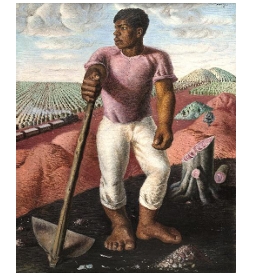
Fonte: https://masp.org.br/acervo/obra/o-lavrador-de-cafe
Leia agora as afirmativas a seguir, feitas sobre o quadro:
I. As mãos e os pés desproporcionais representam não só a força bruta, mas também o trabalho braçal pesado a que eram submetidos os lavradores de café.
II. A cor do lavrador não é gratuita e indica que, mesmo oficialmente extinta a escravidão, os negros continuavam a exercer trabalhos na agricultura.
III. O trem (que se vê à esquerda, a meia altura), representando a modernidade, cria um contraste com a figura do trabalhador dos cafezais; no caso, o conflito ocorre entre o novo e o antigo.
IV. Embora à época da feitura do quadro não houvesse, como hoje, preocupações com a ecologia, a árvore cortada indica a destruição do meio ambiente pelas plantações de café.
V. O quadro ultrapassa os limites do meramente estético, já que funciona como um documento que nos leva a pensar sobre a divisão do trabalho e a exclusão social.
Assinale a alternativa CORRETA:
Provisoriamente não cantaremos o amor,
que se refugiou mais abaixo dos subterrâneos.
Cantaremos o medo, que esteriliza os abraços,
não cantaremos o ódio, porque este não existe,
existe apenas o medo, nosso pai e nosso
companheiro,
o medo grande dos sertões, dos mares, dos
desertos,
o medo dos soldados, o medo das mães, o medo
das igrejas,
cantaremos o medo dos ditadores, o medo dos
democratas,
cantaremos o medo da morte e o medo depois da
morte.
Depois morreremos de medo
e sobre nossos túmulos nascerão flores amarelas e
medrosas.
Sobre o texto, fazem-se as afirmativas a seguir:
I. O clima de terror que perpassava o mundo, durante a II Guerra Mundial, sobrepõe-se a todos os sentimentos, inclusive ao amor e ao ódio.
II. As flores amarelas no último verso são uma referência ao sol e, embora elas sejam medrosas, indicam que o mundo poderá se renovar, uma vez finda a guerra.
III. Ao dizer que “cantaremos o medo dos ditadores, o medo dos democratas”, o poeta generaliza a guerra como um terror em si, independentemente de posições políticas.
IV.A repetição do vocábulo “medo” é uma antonomásia e essa característica estilística não se torna abusiva em virtude de evidenciar que o medo é maior do que tudo.
V. Com uma forte reflexão crítica, o poema ressalta a esperança de um mundo melhor, sentimento que invadiu os indivíduos durante a guerra.
Assinale a alternativa CORRETA:
Leia as frases a seguir, atentando para a pontuação que apresentam:
I. Os meus gatos, eu os considero como filhos.
II. A velha senhora esperava o telefonema aflita.
III. Quando chegaram de viagem, avisaram logo à família.
IV. A velha senhora, aflita, esperava o telefonema.
V. A moça dançava, e rodopiava, e ria, e transmitia alegria.
VI. João trabalha como escrivão, e seu filho, como bancário.
Quanto ao emprego ou a ausência da vírgula, podemos afirmar que:
Leia a crônica a seguir, intitulada “A aliança”, de Luís Fernando Veríssimo, antes de responder à questão que a ela se refere:
Esta é uma história exemplar, só não está muito claro qual é o exemplo. De qualquer jeito, mantenha-a longe das crianças. Também não tem nada a ver com a crise brasileira, o apartheid, a situação na América Central ou no Oriente Médio ou a grande aventura do homem sobre a Terra. Situa-se no terreno mais baixo das pequenas aflições da classe média. Enfim, aconteceu com um amigo meu. Fictício, claro.
Ele estava voltando para casa como fazia, com fidelidade rotineira, todos os dias à mesma hora. Um homem dos seus 40 anos, naquela idade em que já sabe que nunca será o dono de um cassino em Samarkand, com diamantes nos dentes, mas ainda pode esperar algumas surpresas da vida, como ganhar na loto ou furar-lhe um pneu. Furou-lhe um pneu.
Com dificuldade, ele encostou o carro no meio-fio e preparou-se para a batalha contra o macaco, não um dos grandes macacos que o desafiavam no jângal dos seus sonhos de infância, mas o macaco do seu carro tamanho médio, que provavelmente não funcionaria, resignação e reticências… Conseguiu fazer o macaco funcionar, ergueu o carro, trocou o pneu e já estava fechando o porta-malas quando a sua aliança escorregou pelo dedo sujo de óleo e caiu no chão. Ele deu um passo para pegar a aliança do asfalto, mas, sem querer, a chutou.
A aliança bateu na roda de um carro que passava e voou para um bueiro, onde desapareceu diante dos seus olhos, nos quais ele custou a acreditar. Limpou as mãos o melhor que pôde, entrou no carro e seguiu para casa.
Começou a pensar no que diria para a mulher. Imaginou a cena. Ele entrando em casa e respondendo às perguntas da mulher antes de ela fazê-las.
– Você não sabe o que me aconteceu!
– O quê?
– Uma coisa incrível.
– O quê?
– Contando, ninguém acredita.
– Conta!
– Você não nota nada de diferente em mim? Não está faltando nada?
– Não.
– Olhe.
E ele mostraria o dedo da aliança, sem a aliança.
– O que aconteceu?
E ele contaria. Tudo, exatamente como acontecera. O macaco. O óleo. A aliança no asfalto. O chute involuntário. E a aliança voando para o bueiro e desaparecendo.
– Que coisa – diria a mulher, calmamente.
– Não é difícil de acreditar?
– Não. É perfeitamente possível.
– Pois é. Eu…
– SEU CRETINO!
– Meu bem…
– Está me achando com cara de boba? De palhaça? Eu sei o que aconteceu com essa aliança. Você tirou do dedo para namorar. É ou não é? Para fazer um programa. Chega em casa a esta hora e ainda tem a cara de pau de inventar uma história em que só um imbecil acreditaria.
– Mas, meu bem…
– Eu sei onde está essa aliança. Perdida no tapete felpudo de algum motel. Dentro do ralo de alguma banheira redonda. Seu sem-vergonha!
E ela sairia de casa com as crianças, sem querer ouvir explicações.
Ele chegou em casa sem dizer nada.
– Por que o atraso?
– Muito trânsito.
– Por que essa cara?
– Nada, nada.
E, finalmente:
– Que fim levou a sua aliança?
E ele disse:
– Tirei para namorar. Para fazer um programa. E perdi no motel. Pronto. Não tenho desculpas. Se você quiser encerrar nosso casamento agora, eu compreenderei.
Ela fez cara de choro. Depois correu para o quarto e bateu com a porta. Dez minutos depois, reapareceu. Disse que aquilo significava uma crise no casamento deles, mas que eles, com bom senso, a venceriam.
– O mais importante é que você não mentiu pra mim.
E foi tratar do jantar.
Fonte: https://www.refletirpararefletir.com.br/4-cronicas-de-luis-fernando-verissimo.
I. verbo “acontecer” (em “exatamente como acontecera”) e o verbo “perder” (em “E perdi no motel”) estão ambos conjugados no pretérito perfeito do indicativo.
II. verbo “mostrar” (em “E ele mostraria o dedo da aliança”) e o verbo “sair” (em “E ela sairia de casa com as crianças”) expressam ações que poderiam ter acontecido após um evento no passado.
III. vocábulo “batalha” (em “e preparou-se para a batalha contra o macaco”) está empregado em sentido conotativo e se caracteriza como uma metáfora.
IV. vocábulos “mais” (em “Situa-se no terreno mais baixo”, no 1.º parágrafo) e “mas” (em “mas ainda pode esperar algumas surpresas da vida”, no 2.º parágrafo), são, respectivamente, um advérbio e uma conjunção.
V. período “Se você quiser encerrar nosso casamento agora, eu compreenderei” é composto por duas orações, sendo a primeira uma subordinada concessiva.
Assinale a alternativa CORRETA:
Leia a crônica a seguir, intitulada “A aliança”, de Luís Fernando Veríssimo, antes de responder à questão que a ela se refere:
Esta é uma história exemplar, só não está muito claro qual é o exemplo. De qualquer jeito, mantenha-a longe das crianças. Também não tem nada a ver com a crise brasileira, o apartheid, a situação na América Central ou no Oriente Médio ou a grande aventura do homem sobre a Terra. Situa-se no terreno mais baixo das pequenas aflições da classe média. Enfim, aconteceu com um amigo meu. Fictício, claro.
Ele estava voltando para casa como fazia, com fidelidade rotineira, todos os dias à mesma hora. Um homem dos seus 40 anos, naquela idade em que já sabe que nunca será o dono de um cassino em Samarkand, com diamantes nos dentes, mas ainda pode esperar algumas surpresas da vida, como ganhar na loto ou furar-lhe um pneu. Furou-lhe um pneu.
Com dificuldade, ele encostou o carro no meio-fio e preparou-se para a batalha contra o macaco, não um dos grandes macacos que o desafiavam no jângal dos seus sonhos de infância, mas o macaco do seu carro tamanho médio, que provavelmente não funcionaria, resignação e reticências… Conseguiu fazer o macaco funcionar, ergueu o carro, trocou o pneu e já estava fechando o porta-malas quando a sua aliança escorregou pelo dedo sujo de óleo e caiu no chão. Ele deu um passo para pegar a aliança do asfalto, mas, sem querer, a chutou.
A aliança bateu na roda de um carro que passava e voou para um bueiro, onde desapareceu diante dos seus olhos, nos quais ele custou a acreditar. Limpou as mãos o melhor que pôde, entrou no carro e seguiu para casa.
Começou a pensar no que diria para a mulher. Imaginou a cena. Ele entrando em casa e respondendo às perguntas da mulher antes de ela fazê-las.
– Você não sabe o que me aconteceu!
– O quê?
– Uma coisa incrível.
– O quê?
– Contando, ninguém acredita.
– Conta!
– Você não nota nada de diferente em mim? Não está faltando nada?
– Não.
– Olhe.
E ele mostraria o dedo da aliança, sem a aliança.
– O que aconteceu?
E ele contaria. Tudo, exatamente como acontecera. O macaco. O óleo. A aliança no asfalto. O chute involuntário. E a aliança voando para o bueiro e desaparecendo.
– Que coisa – diria a mulher, calmamente.
– Não é difícil de acreditar?
– Não. É perfeitamente possível.
– Pois é. Eu…
– SEU CRETINO!
– Meu bem…
– Está me achando com cara de boba? De palhaça? Eu sei o que aconteceu com essa aliança. Você tirou do dedo para namorar. É ou não é? Para fazer um programa. Chega em casa a esta hora e ainda tem a cara de pau de inventar uma história em que só um imbecil acreditaria.
– Mas, meu bem…
– Eu sei onde está essa aliança. Perdida no tapete felpudo de algum motel. Dentro do ralo de alguma banheira redonda. Seu sem-vergonha!
E ela sairia de casa com as crianças, sem querer ouvir explicações.
Ele chegou em casa sem dizer nada.
– Por que o atraso?
– Muito trânsito.
– Por que essa cara?
– Nada, nada.
E, finalmente:
– Que fim levou a sua aliança?
E ele disse:
– Tirei para namorar. Para fazer um programa. E perdi no motel. Pronto. Não tenho desculpas. Se você quiser encerrar nosso casamento agora, eu compreenderei.
Ela fez cara de choro. Depois correu para o quarto e bateu com a porta. Dez minutos depois, reapareceu. Disse que aquilo significava uma crise no casamento deles, mas que eles, com bom senso, a venceriam.
– O mais importante é que você não mentiu pra mim.
E foi tratar do jantar.
Fonte: https://www.refletirpararefletir.com.br/4-cronicas-de-luis-fernando-verissimo.
I. São apresentadas duas narrativas, uma imaginária e outra que, segundo o autor, de fato aconteceu, muito embora tenha sido com um amigo inexistente.
II. À maneira das fábulas, a crônica apresenta uma moral, ainda que não esteja de acordo com as regras sociais: a de que a mentira, muitas vezes, compensa.
III. A crônica sugere que os problemas do cotidiano das pessoas são mais importantes do que conflitos em escala planetária.
IV. A expressão “Seu cretino!”, proferida pela mulher, em virtude de estar grafada em maiúsculas, indica que se trata de um grito ou, pelo menos, de um insulto em voz alta.
V. Em geral, as narrativas se desenvolvem a partir de um problema; no caso de “A aliança”, o problema gerador foi a incompatibilidade de gênio entre os cônjuges.
Assinale a alternativa CORRETA:
[...]
É histórico o entendimento de que o técnico administrativo tem o papel de executar, e não de refletir, uma vez que questões de natureza complexa, que envolvem o futuro das instituições são tarefas para docentes (SANTOS, 2010, p. 40).
E assim a carreira dos Técnicos em Assuntos Educacionais [TAE] vai se constituindo, sem muito amparo na legislação, que é confusa e recente. Os editais de concurso estabeleciam as atribuições do cargo conforme a legislação, porém a realidade quando do início de suas atividades era diversa. Como construir uma identidade neste contexto? Servidores com formações diferentes, embora com uma única descrição de atividades a ser desempenhadas.
Um outro viés que o TAE se deparou foi o convívio com o Pedagogo. Atribuições muito semelhantes, alguns servidores TAEs tem formação em Pedagogia, mas o trabalho que desenvolvem é diferente? Se são quase as mesmas atribuições por que não se ampliaram as vagas para Pedagogo ao invés de criar o cargo de Técnico em Assuntos Educacionais. A formação em Pedagogia faz alguma diferença?
Esse conflito se deve também a legislação que ora exigia formação em Pedagogia somente, ora exigia formação em qualquer Licenciatura, fazendo com que a identidade destes servidores se tornasse frágil. Assim, a lei que deveria conduzir a uma identidade, acabou por desconstruí-la. Conforme o Edital 15/2016 IFPR, as atribuições do cargo de Pedagogo e TAE são
Pedagogo = Implementar a execução, avaliar e coordenar a (re)construção do projeto pedagógico de escolas de educação infantil, de ensino médio ou ensino profissionalizante com a equipe escolar. Viabilizar o trabalho pedagógico coletivo e facilitar o processo comunicativo da comunidade escolar e de associações a ela vinculadas. Assessorar nas atividades de ensino, pesquisa e extensão. TAE = Coordenar as atividades de ensino, planejamento, orientação, supervisionando e avaliando estas atividades, para assegurar a regularidade do desenvolvimento do processo educativo. Assessorar nas atividades de ensino, pesquisa e extensão (EDITAL IFPR, 2016).
É clara a similaridade das atribuições de ambos os cargos, que aponta para práticas de natureza essencialmente pedagógicas, assessoramento nas atividades de ensino, pesquisa e extensão; atividades fim das instituições escolares. O que os diferencia então? Primeiramente distinguir o TAE significa dizer que ele não é um Pedagogo e isto precisa ficar bem claro; lhe são atribuídas funções e cobrados saberes que são especificamente encontrados em suas formações. Suas formações acadêmicas lhes permitem atuar em atividades essencialmente pedagógicas e contribuir também com “pensar os processos da educação” dentre a pluralidade de conhecimento que possuem.
[...]
Fonte: LEWANDOWSKI, Jacqueline Maria Duarte. Os Técnicos em Assuntos Educacionais do Instituto Federal do Paraná: em busca de sua identidade profissional. Dissertação (Mestrado em Educação). Programa de Pós-Graduação em Educação. Universidade Estadual do Oeste do Paraná. Cascavel: Unioeste, 2028. Disponível em: https://tede.unioeste.br/bitstream/tede/4027/5/Jacqueline_Lewandowski_2018.pdf. Acesso em: 03 abr. 2026.
Em sua dissertação, Lewandowski (2018) investiga o trabalho do Técnico em Assuntos Educacionais (TAE) e tensiona a identidade deste profissional frente às atribuições de outros profissionais que compartilham o mesmo ambiente de trabalho, como os pedagogos, os professores e os gestores escolares. Neste processo de análise, a autora articula diversos autores para embasar os seus posicionamentos. Na listagem abaixo, assinale os posicionamentos utilizados pela autora na sua dissertação para discutir a identidade profissional do TAE.
I - A identidade então é marcada pela diferença. E os TAEs, neste contexto, apesar de desempenharem suas funções no espaço escolar não formal, ou seja, fora da sala de aula, não significa que desenvolvam atividades-meio, apenas de suporte às atividades docentes, e que as atividades-fim sejam de responsabilidade exclusiva destes.
II - A construção de uma identidade também se caracteriza por negar o que não lhe cabe fazer, ou o que não é sua atribuição e reconhecer o valor de seu trabalho. Precisam [os TAEs] se reconhecer perante a comunidade acadêmica como sujeito integrante insubstituível, e ser identificado da mesma maneira pelos demais servidores.
III - Ao dizer que o técnico em assuntos educacionais não é pedagogo, estamos afirmando uma diferença, excluindo-o da categoria de pedagogos, dizendo que não pertencem a categoria de pedagogos.
IV - Por se tratar de servidores [os TAEs] que não possuem uma marca característica, como por exemplo o Pedagogo, as chefias também não têm clareza de suas atribuições, falta o entendimento dos colegas e dos próprios TAEs.
V - Percebemos que a busca pela identidade dos TAEs vem desde o momento da criação do cargo, busca por autoafirmação e reconhecimento da comunidade acadêmica, busca pela apropriação de suas atribuições de maneira que sejam constituídas suas características e referências.
Assinale a alternativa que agrupa os posicionamentos encontrados na dissertação de Lewandowski (2018) para a discussão sobre a identidade do TAE.
I – Comparando os dados dos anos 2014 e 2015, este último foi superior em número de vagas, em número de ingressos e em número de concluintes.
II - Comparando os dados dos anos 2009 e 2010, este último foi superior em número de vagas, em número de concluintes e na taxa de concluintes.
III - Comparando os dados dos anos 2010 e 2015, o primeiro foi inferior em número de vagas e em número de concluintes, mas apresentou maior taxa de concluintes.
IV - Comparando os dados dos anos 2000 e 2015, este último foi superior em número de vagas, em número de concluintes e na taxa de concluintes.
V - Comparando os dados dos anos 2000 e 2010, o primeiro foi inferior em número de vagas, em número de concluintes e na taxa de concluintes.
Assinale a alternativa que agrupa somente as afirmativas verdadeiras.
[...]
A expansão e a massificação da educação superior representam o primeiro passo no sentido da democratização do sistema, porém não são suficientes para a inclusão, de fato, das camadas social e historicamente excluídas. Ezcurra (2011) nos mostra em suas análises que tem havido, na América Latina como um todo e o caso brasileiro não é exceção a esta regra, um fenômeno de massificação da educação superior que tem expulsado do sistema as camadas socialmente desfavorecidas. Estas têm sido vítimas de uma tendência estrutural do sistema - “una inclusión excluyente, según classes y sectores sociales, socialmente condicionada (p. 62)” – que se traduz na dificuldade de acesso e, sobretudo, de permanência dos estudantes das classes populares. [...]
Apesar das políticas voltadas para a “democratização” do ensino superior a partir de 2003 (Governos Lula e Dilma), como o Programa Universidade para Todos (PROUNI) , aprovado pela Lei n. 11.096, de 13/01/2005, que facilita o acesso de estudantes de baixa renda nas IES privadas; o Programa de Apoio a Planos de Reestruturação e Expansão das Universidades Federais – REUNI, instituído pelo Decreto no 6.096, de 24 de abril de 2007, que tem promovido a expansão e interiorização das universidades federais; as políticas de ação afirmativa, consolidadas pela Lei no 12.711, de 29/08/2012 (cotas reservadas a estudantes provenientes da escola pública nas universidades federais, priorizando os alunos de baixa renda e o recorte étnico-racial), entre outras medidas, a inclusão dos segmentos marginalizados socialmente ainda não se concretizou no Brasil, em especial nos cursos de alta demanda, que conferem maior possibilidade de mobilidade social.
[...]
Fonte: PAULA, Maria de Fátima Costa de; Políticas de democratização da educação superior brasileira: limites e desafios para a próxima década. Avaliação: Revista da Avaliação da Educação Superior, Campinas, v. 22, n. 2, p. 301-315, jul. 2017. DOI: https://doi.org/10.1590/S1414-40772017000200002 . Acesso em: 02 abr. 2026.
Sobre os índices de evasão observados nos cursos superiores no Brasil, tendo como referência o artigo de Paula (2017), assinale a afirmativa correta.
[...]
Desde o final da década de 1990, o sistema educacional brasileiro vem sofrendo forte pressão e ingerência do sistema produtivo, das empresas nacionais e transnacionais, aprovando suas pautas nas diretrizes e nos marcos legais, tais como o ocorrido com a Base Nacional Comum Curricular (BNCC) e com as Diretrizes de Formação de Professores, elaboradas pelo Conselho Nacional de Educação (CNE), e também na proposição e na implementação de programas e projetos com forte influência dos chamados “reformadores empresariais da educação” (Freitas, 2018). Para Luiz Carlos de Freitas (2020), esses são grupos ligados ao grande capital nacional e internacional, detentores das maiores riquezas do Brasil, que instituem suas fundações ou movimentos e passam a atuar de forma muito intensa nas definições das políticas educacionais. O mais recente programa proposto nessa perspectiva é o Programa de Inovação Educação Conectada (Brasil. MEC, [2021]), instituído em 23 de novembro de 2017, com os objetivos de “apoiar a universalização do acesso à internet em alta velocidade e fomentar o uso pedagógico de tecnologias digitais na educação básica” (Brasil. Decreto no 9.204, 2017), objetivos que já estavam presentes nos programas anteriores, como o Programa Nacional de Tecnologia Educacional (Proinfo), de 1997, reformulado em 2007, e o Programa Banda Larga nas Escolas (PBLE), de 2008. O Programa de Inovação Educação Conectada, que deveria estar sob a responsabilidade dos poderes públicos, nas três esferas da administração do Estado nacional, ou diretamente das escolas, é praticamente elaborado e executado por uma instituição de fora do sistema, a Sincroniza Educação (2021), uma parceria entre a Fundação Lemann e os diversos outros grupos empresariais por meio de suas fundações ou associações.
Aqui, passamos a identificar uma prática que vem sendo adotada desde os governos anteriores, que é a de não implementar políticas públicas universais – como foi a já referida implantação da internet no Brasil –, e, sim, elaborar projetos que precisam contar com a adesão dos setores interessados. Foi esse o modelo do Programa de Apoio a Planos de Reestruturação e Expansão das Universidades Federais Brasileiras (Reuni) e assim também é com o Programa de Inovação Educação Conectada e com o mais recente Reuni Digital: Plano de Expansão da EaD nas instituições de ensino superior (IES) públicas federais, cuja versão preliminar foi divulgada em maio de 2021 (Brasil. MCTI, CGEE, 2021). No caso do Programa de Inovação Educação Conectada, as escolas que aderirem e forem contempladas recebem uma verba, incorporada ao Programa Dinheiro Direto na Escola (PDDE), para adquirir, segundo o Artigo 4o, inciso II:
a) contratação de serviço de acesso à internet;
b) implantação de infraestrutura para distribuição do sinal da internet nas escolas;
c) aquisição ou contratação de dispositivos eletrônicos; e
d) aquisição de recursos educacionais digitais ou suas licenças (Brasil. Decreto no 9.204, 2017).
[...]
Fonte: PRETTO, Nelson de Luca; BONILLA, Maria Helena Silveira. Tecnologias e educações: um caminho em aberto. Em Aberto, v. 35, n. 113, 2022. Disponível em: https://emaberto.inep.gov.br/ojs3/index.php/emaberto/article/view/5085. Acesso em: 02 abr. 2026.
[...]
Portanto, como mencionamos, desde aquela época, anos 1990, insistíamos sobre as limitações da concepção instrumental que vinha presidindo os programas e os projetos de introdução das tecnologias na educação, por considerar as tecnologias digitais como (meros) recursos didático-pedagógicos, colocando-as como simples evolução dos retroprojetores ou dos livros didáticos. Lideramos essa crítica (Pretto, 2013), pois entendíamos (e continuamos entendendo) que essa redução esvaziava as tecnologias digitais de suas características fundamentais, transformando-as em animadoras da velha educação, o que perdurava apenas enquanto o dispositivo era novidade. Mantinham-se, assim, os velhos modelos educacionais, só que agora reforçados com os novos e avançados recursos tecnológicos (Pretto, 2002, p. 124). Nossa perspectiva defende a inserção das tecnologias nos processos educacionais como fundamento, como elementos carregados de conteúdos e como representantes de uma nova forma de pensar e sentir, a qual começa a ser gestada quando a humanidade se desloca de uma razão operativa para uma nova razão, baseada na globalidade e na integridade (Pretto, 2013). Ou seja, ao extrapolar a dimensão utilitarista de uso das tecnologias, pode-se incorporá-las como elementos estruturantes de novos territórios educativos, com [...] novas formas de ordenação da experiência humana, com múltiplos reflexos na área cognitiva e nas ações práticas, ao possibilitar novas formas de comunicação e produção de conhecimento, gerando com isso transformações na consciência individual, na percepção de mundo, nos valores e nas formas de atuação social. (Bonilla, 2002, p. 246).
Dessa forma, a escola aproxima-se da cultura digital, que se alastra com a chegada da internet, na década de 1990, desencadeando um movimento social e cultural de interação em rede e, com isso, as possibilidades de uso das tecnologias começam a se diversificar, abrindo novas formas de fazer, aprender, interagir, ser e estar em sociedade. Também na educação, novas frentes de pesquisa, análise e práticas se delineiam, aproximando-se da perspectiva estruturante que sempre defendemos.
[...]
Fonte: PRETTO, Nelson de Luca; BONILLA, Maria Helena Silveira. Tecnologias e educações: um caminho em aberto. Em Aberto, v. 35, n. 113, 2022. Disponível em: https://emaberto.inep.gov.br/ojs3/index.php/emaberto/article/view/5085. Acesso em: 02 abr. 2026.
Pretto e Bonilla (2022) apontam em seu artigo que o grupo de pesquisa do qual participam vem encampando algumas defesas ao longo dos anos sobre o uso das tecnologias nas escolas. Assinale a afirmativa que não registra uma dessas defesas.
I - A educação superior será ministrada em instituições de ensino superior, públicas ou privadas, com variados graus de abrangência ou especialização.
II - Na educação superior, o ano letivo regular, independente do ano civil, tem, no mínimo, 200 (duzentos) dias de trabalho acadêmico efetivo, excluído o tempo reservado aos exames finais, quando houver.
III - É obrigatória a frequência de alunos e professores, salvo nos programas de educação a distância.
IV - Os diplomas de cursos superiores reconhecidos, quando registrados, terão validade nacional como prova da formação recebida por seu titular.
V - Nas instituições públicas de educação superior, o professor ficará obrigado ao mínimo de 8 (oito) horas semanais de aulas.
Após analisar as afirmativas, assinale a alternativa correta.
Para seu conhecimento, o caput do art. 26 da LDB diz: "Os currículos da educação infantil, do ensino fundamental e do ensino médio devem ter base nacional comum, a ser complementada, em cada sistema de ensino e em cada estabelecimento escolar, por uma parte diversificada, exigida pelas características regionais e locais da sociedade, da cultura, da economia e dos educandos".
Tendo como referência a versão atualizada da Lei de Diretrizes e Bases da Educação Nacional (LDB), Lei n. 9.394/1996, assinale a afirmativa correta quanto à etapa do ensino médio da educação escolar.
Sobre as incumbências da União, dos Estados, do Distrito Federal e dos Municípios na organização da educação nacional estabelecidas na LDB, assinale a alternativa correta.
I - educação básica obrigatória e gratuita dos 4 (quatro) aos 17 (dezessete) anos de idade, organizada em: pré-escola, ensino fundamental e ensino médio.
II - atendimento educacional especializado gratuito aos educandos com deficiência, transtornos globais do desenvolvimento e altas habilidades ou superdotação, transversal a todos os níveis, etapas e modalidades, preferencialmente na rede regular de ensino.
III - acesso público e gratuito aos ensinos fundamental e médio para todos os que não os concluíram na idade própria.
IV - oferta de ensino noturno regular, adequado às condições do educando.
V - oferta de educação escolar regular para jovens e adultos, com características e modalidades adequadas às suas necessidades e disponibilidades, garantindo-se aos que forem trabalhadores as condições de acesso e permanência na escola.
Após a leitura dos itens acima, assinale a alternativa correta.
“As notas e as provas funcionam como redes de segurança em termos do controle exercido pelos professores sobre seus alunos, das escolas e dos pais sobre os professores, do sistema sobre suas escolas. Controle esse que parece não garantir o ensino de qualidade que pretendemos, pois as estatísticas são cruéis em relação à realidade das nossas escolas.”
(HOFFMANN, Jussara. Avaliação Mediadora: uma prática em construção da pré-escola à universidade. 30ª Edição. Porto Alegre: Editora Mediação, 2010, p. 26.)
Com base no texto e nas concepções de Hoffmann (2010) sobre avaliação e qualidade de ensino, analise as questões a seguir:
I- A qualidade do ensino deve ser avaliada pelo desenvolvimento máximo possível dos estudantes, a partir de oportunidades desafiadoras de produção de conhecimento.
II- Para ultrapassar as posturas convencionais na avaliação de desempenho dos estudantes é necessário ter especial atenção às questões atitudinais dos discentes, com foco na questão disciplinar, que é o principal fator de insucesso no processo de aprendizagem dos estudantes.
III- A qualidade de ensino se refere a padrões preestabelecidos, em bases comparativas: critérios de promoção, gabaritos de respostas às tarefas, padrões de comportamento ideal.
IV- A escola de qualidade é a que é capaz de promover processos de aprendizagem para todas as pessoas, concebidas em sua realidade concreta e em suas diferenças individuais.
Assinale a alternativa que apresenta todas as afirmações corretas:
“O Projeto Político-Pedagógico-PPP é o plano global da instituição. Pode ser entendido como a sistematização, nunca definitiva, de um processo de planejamento participativo, que se aperfeiçoa e se objetiva na caminhada, que define claramente o tipo de ação educativa que se quer realizar, a partir de um posicionamento quanto à sua intencionalidade e de uma leitura da realidade. Trata-se de um importante caminho para a construção da identidade da instituição. É um instrumento teórico-metodológico para a transformação da realidade. Enquanto processo, implica a expressão das opções da instituição, do conhecimento e julgamento da realidade, bem como das propostas de ação para concretizar o que se propõe a partir do que vem sendo; e vai além: supõe a colocação em prática daquilo que foi projetado, acompanhado da análise dos resultados.”
(VASCONCELLOS, C. S. Coordenação do trabalho pedagógico: do projeto político pedagógico ao cotidiano de sala de aula. 16ª Edição. São Paulo: Cortez, 2019, p. 25)
Com base no texto e nas concepções de Vasconcellos (2019) sobre PPP e organização do trabalho pedagógico, são finalidades do Projeto Político Pedagógico, exceto:

 Conheça nossos planos