Foram encontradas 355 questões

Resolva questões gratuitamente!

Junte-se a mais de 4 milhões de concurseiros!

Q630069 Administração Financeira e Orçamentária

O Plano Plurianual (PPA), previsto na Constituição Federal, é um instrumento de planejamento cujas definições devem orientar a elaboração dos demais. Acerca do PPA, analise as seguintes proposições:


I. Pode ser associado ao conceito de planejamento estratégico do governo, por estabelecer objetivos e metas.

II. Ao contrário da LOA, a realização de audiência pública durante a sua elaboração é facultativa.

III. No âmbito municipal deve incorporar as diretrizes e as prioridades contidas no plano diretor.

IV. Os prazos para sua elaboração e execução devem ser os mesmos para todos os entes da Federação.


Está correto somente o que se afirma em:

Alternativas
Q630068 Direito Administrativo
De acordo com o Decreto-Lei nº 200/1967, a Administração Direta se constitui dos serviços integrados na estrutura administrativa dos poderes que compõem o ente. Considerando a estrutura da Administração Pública Federal, o único órgão que NÃO integra essa estrutura é:
Alternativas
Q630067 Direito Administrativo
O município de Alfa do Sul, em decorrência de necessidades administrativas e também de características locais, criou uma entidade dotada de personalidade jurídica de direito privado, com patrimônio próprio e capital exclusivo do município, para executar os serviços de coleta, separação e destinação de lixo e entulhos no território municipal. Pelas características apresentadas, essa entidade é conceituada como:
Alternativas
Q630066 Administração Financeira e Orçamentária
O orçamento-programa, na concepção original da Organização das Nações Unidas (ONU), é tido como um sistema em que se presta particular atenção às coisas que um governo realiza mais do que às coisas que adquire. Desta forma, caso um ente público elabore sua proposta orçamentária com base na técnica do orçamento-programa, um elemento que NÃO está entre os essenciais é a identificação dos(as):
Alternativas
Q630065 Administração Financeira e Orçamentária

Como marco da evolução dos modelos e práticas orçamentárias, o orçamento base-zero (OBZ) surgiu nos Estados Unidos na década de 1970, no governo Jimmy Carter.


Não obstante suas contribuições para o aperfeiçoamento da moderna concepção de orçamento, o OBZ não é considerado um método de organizar ou apresentar o orçamento público. Uma das razões é que: 

Alternativas
Q630064 Administração Financeira e Orçamentária
Um determinado ente da Federação segue os prazos estabelecidos na Constituição Federal para elaboração e aprovação dos instrumentos de planejamento. Por questões políticas, o orçamento para o exercício de 2016 foi aprovado somente no dia 10 de fevereiro do referido exercício, quando deveria ter sido aprovado em 2015. Do ponto de vista formal, o princípio orçamentário afetado é o da:
Alternativas
Q630063 Administração Financeira e Orçamentária

As concepções que norteiam o desenvolvimento das técnicas orçamentárias passaram por constante evolução, sobretudo em decorrência da maior complexidade das atividades desempenhadas pelos entes estatais. Porém, os primeiros modelos de orçamento foram desenvolvidos a partir da concepção de orçamento tradicional.


Uma caraterística associada a essa concepção inicial do orçamento é: 

Alternativas
Ano: 2016 Banca: FGV Órgão: IBGE Provas: FGV - 2016 - IBGE - Analista - Processos Administrativos e Disciplinares | FGV - 2016 - IBGE - Analista - Análise de Sistemas - Desenvolvimento de Aplicações - Web Mobile | FGV - 2016 - IBGE - Analista - Recursos Humanos - Administração de Pessoal | FGV - 2016 - IBGE - Tecnologista - Economia | FGV - 2016 - IBGE - Analista - Engenharia Civil | FGV - 2016 - IBGE - Analista - Geoprocessamento | FGV - 2016 - IBGE - Analista - Auditoria | FGV - 2016 - IBGE - Tecnologista - Geografia | FGV - 2016 - IBGE - Analista - Educação Corporativa | FGV - 2016 - IBGE - Analista - Análise Biodiversidade | FGV - 2016 - IBGE - Analista - Ciências Contábeis | FGV - 2016 - IBGE - Analista - Planejamento e Gestão | FGV - 2016 - IBGE - Analista - Design Instrucional | FGV - 2016 - IBGE - Analista - Orçamento e Finanças | FGV - 2016 - IBGE - Analista - Engenharia Agrônomica | FGV - 2016 - IBGE - Analista - Análise de Projetos | FGV - 2016 - IBGE - Analista - Recursos Materiais e Logística | FGV - 2016 - IBGE - Tecnologista - Bliblioteconomia | FGV - 2016 - IBGE - Tecnologista - Programação Visual - Webdesign | FGV - 2016 - IBGE - Analista - Jornalista - Redes Sociais | FGV - 2016 - IBGE - Analista - Análise de Sistemas - Suporte Operacional | FGV - 2016 - IBGE - Analista - Recursos Humanos - Desenvolvimento de Pessoas | FGV - 2016 - IBGE - Tecnologista - Engenharia Cartográfica | FGV - 2016 - IBGE - Analista - Análise de Sistemas - Desenvolvimentos de Sistemas | FGV - 2016 - IBGE - Tecnologista - Engenharia Florestal |
Q629178 Raciocínio Lógico
Raíza e Diego resolvem disputar um jogo em que cada um deles lança uma moeda honesta de forma independente e simultânea. Ela será vencedora no caso de dois resultados iguais, e ele, de dois diferentes. As probabilidades de vitória dela e dele são, respectivamente, iguais a:
Alternativas
Ano: 2016 Banca: FGV Órgão: IBGE Provas: FGV - 2016 - IBGE - Analista - Processos Administrativos e Disciplinares | FGV - 2016 - IBGE - Analista - Análise de Sistemas - Desenvolvimento de Aplicações - Web Mobile | FGV - 2016 - IBGE - Analista - Recursos Humanos - Administração de Pessoal | FGV - 2016 - IBGE - Tecnologista - Economia | FGV - 2016 - IBGE - Analista - Engenharia Civil | FGV - 2016 - IBGE - Analista - Geoprocessamento | FGV - 2016 - IBGE - Analista - Auditoria | FGV - 2016 - IBGE - Tecnologista - Geografia | FGV - 2016 - IBGE - Analista - Educação Corporativa | FGV - 2016 - IBGE - Analista - Análise Biodiversidade | FGV - 2016 - IBGE - Analista - Ciências Contábeis | FGV - 2016 - IBGE - Analista - Planejamento e Gestão | FGV - 2016 - IBGE - Analista - Design Instrucional | FGV - 2016 - IBGE - Analista - Orçamento e Finanças | FGV - 2016 - IBGE - Analista - Engenharia Agrônomica | FGV - 2016 - IBGE - Analista - Análise de Projetos | FGV - 2016 - IBGE - Analista - Recursos Materiais e Logística | FGV - 2016 - IBGE - Tecnologista - Bliblioteconomia | FGV - 2016 - IBGE - Tecnologista - Programação Visual - Webdesign | FGV - 2016 - IBGE - Analista - Jornalista - Redes Sociais | FGV - 2016 - IBGE - Analista - Análise de Sistemas - Suporte Operacional | FGV - 2016 - IBGE - Analista - Recursos Humanos - Desenvolvimento de Pessoas | FGV - 2016 - IBGE - Tecnologista - Engenharia Cartográfica | FGV - 2016 - IBGE - Analista - Análise de Sistemas - Desenvolvimentos de Sistemas | FGV - 2016 - IBGE - Tecnologista - Engenharia Florestal |
Q628273 Estatística

Sejam Y, X, Z e W variáveis aleatórias tais que Z = 2.Y - 3.X, sendo E(X2 ) = 25, E(X) = 4, Var (Y) =16, Cov(X,Y)= 6.

Então a variância de Z é:

Alternativas
Ano: 2016 Banca: FGV Órgão: IBGE Provas: FGV - 2016 - IBGE - Analista - Processos Administrativos e Disciplinares | FGV - 2016 - IBGE - Analista - Análise de Sistemas - Desenvolvimento de Aplicações - Web Mobile | FGV - 2016 - IBGE - Analista - Recursos Humanos - Administração de Pessoal | FGV - 2016 - IBGE - Tecnologista - Economia | FGV - 2016 - IBGE - Analista - Engenharia Civil | FGV - 2016 - IBGE - Analista - Geoprocessamento | FGV - 2016 - IBGE - Analista - Auditoria | FGV - 2016 - IBGE - Analista - Educação Corporativa | FGV - 2016 - IBGE - Analista - Análise Biodiversidade | FGV - 2016 - IBGE - Analista - Ciências Contábeis | FGV - 2016 - IBGE - Analista - Planejamento e Gestão | FGV - 2016 - IBGE - Analista - Design Instrucional | FGV - 2016 - IBGE - Analista - Orçamento e Finanças | FGV - 2016 - IBGE - Analista - Engenharia Agrônomica | FGV - 2016 - IBGE - Analista - Análise de Projetos | FGV - 2016 - IBGE - Analista - Recursos Materiais e Logística | FGV - 2016 - IBGE - Tecnologista - Bliblioteconomia | FGV - 2016 - IBGE - Tecnologista - Programação Visual - Webdesign | FGV - 2016 - IBGE - Analista - Jornalista - Redes Sociais | FGV - 2016 - IBGE - Analista - Análise de Sistemas - Suporte Operacional | FGV - 2016 - IBGE - Analista - Recursos Humanos - Desenvolvimento de Pessoas | FGV - 2016 - IBGE - Tecnologista - Engenharia Cartográfica | FGV - 2016 - IBGE - Analista - Análise de Sistemas - Desenvolvimentos de Sistemas | FGV - 2016 - IBGE - Tecnologista - Engenharia Florestal |
Q628270 Estatística

Após a extração de uma amostra, as observações obtidas são tabuladas, gerando a seguinte distribuição de frequências:

Imagem associada para resolução da questão

Considerando que E(X) = Média de X, Mo(X) = Moda de X e Me(X) = Mediana de X, é correto afirmar que:

Alternativas
Ano: 2016 Banca: FGV Órgão: IBGE Provas: FGV - 2016 - IBGE - Analista - Processos Administrativos e Disciplinares | FGV - 2016 - IBGE - Analista - Análise de Sistemas - Desenvolvimento de Aplicações - Web Mobile | FGV - 2016 - IBGE - Analista - Recursos Humanos - Administração de Pessoal | FGV - 2016 - IBGE - Tecnologista - Economia | FGV - 2016 - IBGE - Analista - Engenharia Civil | FGV - 2016 - IBGE - Analista - Geoprocessamento | FGV - 2016 - IBGE - Analista - Auditoria | FGV - 2016 - IBGE - Tecnologista - Geografia | FGV - 2016 - IBGE - Analista - Educação Corporativa | FGV - 2016 - IBGE - Analista - Análise Biodiversidade | FGV - 2016 - IBGE - Analista - Ciências Contábeis | FGV - 2016 - IBGE - Analista - Planejamento e Gestão | FGV - 2016 - IBGE - Analista - Design Instrucional | FGV - 2016 - IBGE - Analista - Orçamento e Finanças | FGV - 2016 - IBGE - Analista - Engenharia Agrônomica | FGV - 2016 - IBGE - Analista - Análise de Projetos | FGV - 2016 - IBGE - Analista - Recursos Materiais e Logística | FGV - 2016 - IBGE - Tecnologista - Bliblioteconomia | FGV - 2016 - IBGE - Tecnologista - Programação Visual - Webdesign | FGV - 2016 - IBGE - Analista - Jornalista - Redes Sociais | FGV - 2016 - IBGE - Analista - Análise de Sistemas - Suporte Operacional | FGV - 2016 - IBGE - Analista - Recursos Humanos - Desenvolvimento de Pessoas | FGV - 2016 - IBGE - Tecnologista - Engenharia Cartográfica | FGV - 2016 - IBGE - Analista - Análise de Sistemas - Desenvolvimentos de Sistemas | FGV - 2016 - IBGE - Tecnologista - Engenharia Florestal |
Q628269 Raciocínio Lógico

Sobre os amigos Marcos, Renato e Waldo, sabe-se que:

I - Se Waldo é flamenguista, então Marcos não é tricolor;

II - Se Renato não é vascaíno, então Marcos é tricolor;

III - Se Renato é vascaíno, então Waldo não é flamenguista.

Logo, deduz-se que:

Alternativas
Ano: 2016 Banca: FGV Órgão: IBGE Provas: FGV - 2016 - IBGE - Analista - Processos Administrativos e Disciplinares | FGV - 2016 - IBGE - Analista - Análise de Sistemas - Desenvolvimento de Aplicações - Web Mobile | FGV - 2016 - IBGE - Analista - Recursos Humanos - Administração de Pessoal | FGV - 2016 - IBGE - Tecnologista - Economia | FGV - 2016 - IBGE - Analista - Engenharia Civil | FGV - 2016 - IBGE - Analista - Geoprocessamento | FGV - 2016 - IBGE - Analista - Auditoria | FGV - 2016 - IBGE - Tecnologista - Geografia | FGV - 2016 - IBGE - Analista - Educação Corporativa | FGV - 2016 - IBGE - Analista - Análise Biodiversidade | FGV - 2016 - IBGE - Analista - Ciências Contábeis | FGV - 2016 - IBGE - Analista - Planejamento e Gestão | FGV - 2016 - IBGE - Analista - Design Instrucional | FGV - 2016 - IBGE - Analista - Orçamento e Finanças | FGV - 2016 - IBGE - Analista - Engenharia Agrônomica | FGV - 2016 - IBGE - Analista - Análise de Projetos | FGV - 2016 - IBGE - Analista - Recursos Materiais e Logística | FGV - 2016 - IBGE - Tecnologista - Bliblioteconomia | FGV - 2016 - IBGE - Tecnologista - Programação Visual - Webdesign | FGV - 2016 - IBGE - Analista - Jornalista - Redes Sociais | FGV - 2016 - IBGE - Analista - Análise de Sistemas - Suporte Operacional | FGV - 2016 - IBGE - Analista - Recursos Humanos - Desenvolvimento de Pessoas | FGV - 2016 - IBGE - Tecnologista - Engenharia Cartográfica | FGV - 2016 - IBGE - Analista - Análise de Sistemas - Desenvolvimentos de Sistemas | FGV - 2016 - IBGE - Tecnologista - Engenharia Florestal |
Q628267 Raciocínio Lógico
Dos 40 funcionários de uma empresa, o mais novo tem 25 anos e o mais velho tem 37 anos. Considerando a idade de cada funcionário como um número inteiro de anos, conclui-se que:
Alternativas
Ano: 2016 Banca: FGV Órgão: IBGE Provas: FGV - 2016 - IBGE - Analista - Processos Administrativos e Disciplinares | FGV - 2016 - IBGE - Analista - Análise de Sistemas - Desenvolvimento de Aplicações - Web Mobile | FGV - 2016 - IBGE - Analista - Recursos Humanos - Administração de Pessoal | FGV - 2016 - IBGE - Tecnologista - Economia | FGV - 2016 - IBGE - Analista - Engenharia Civil | FGV - 2016 - IBGE - Analista - Geoprocessamento | FGV - 2016 - IBGE - Analista - Auditoria | FGV - 2016 - IBGE - Tecnologista - Geografia | FGV - 2016 - IBGE - Analista - Educação Corporativa | FGV - 2016 - IBGE - Analista - Análise Biodiversidade | FGV - 2016 - IBGE - Analista - Ciências Contábeis | FGV - 2016 - IBGE - Analista - Planejamento e Gestão | FGV - 2016 - IBGE - Analista - Design Instrucional | FGV - 2016 - IBGE - Analista - Orçamento e Finanças | FGV - 2016 - IBGE - Analista - Engenharia Agrônomica | FGV - 2016 - IBGE - Analista - Análise de Projetos | FGV - 2016 - IBGE - Analista - Recursos Materiais e Logística | FGV - 2016 - IBGE - Tecnologista - Bliblioteconomia | FGV - 2016 - IBGE - Tecnologista - Programação Visual - Webdesign | FGV - 2016 - IBGE - Analista - Jornalista - Redes Sociais | FGV - 2016 - IBGE - Analista - Análise de Sistemas - Suporte Operacional | FGV - 2016 - IBGE - Analista - Recursos Humanos - Desenvolvimento de Pessoas | FGV - 2016 - IBGE - Tecnologista - Engenharia Cartográfica | FGV - 2016 - IBGE - Analista - Análise de Sistemas - Desenvolvimentos de Sistemas | FGV - 2016 - IBGE - Tecnologista - Engenharia Florestal |
Q628266 Raciocínio Lógico

De um grupo de controle para o acompanhamento de uma determinada doença, 4% realmente têm a doença. A tabela a seguir mostra as porcentagens das pessoas que têm e das que não têm a doença e que apresentaram resultado positivo em um determinado teste.
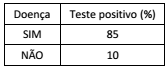
Imagem associada para resolução da questão

Entre as pessoas desse grupo que apresentaram resultado positivo no teste, a porcentagem daquelas que realmente têm a doença é aproximadamente:

Alternativas
Ano: 2016 Banca: FGV Órgão: IBGE Provas: FGV - 2016 - IBGE - Analista - Processos Administrativos e Disciplinares | FGV - 2016 - IBGE - Analista - Análise de Sistemas - Desenvolvimento de Aplicações - Web Mobile | FGV - 2016 - IBGE - Analista - Recursos Humanos - Administração de Pessoal | FGV - 2016 - IBGE - Tecnologista - Economia | FGV - 2016 - IBGE - Analista - Engenharia Civil | FGV - 2016 - IBGE - Analista - Geoprocessamento | FGV - 2016 - IBGE - Analista - Auditoria | FGV - 2016 - IBGE - Tecnologista - Geografia | FGV - 2016 - IBGE - Analista - Educação Corporativa | FGV - 2016 - IBGE - Analista - Análise Biodiversidade | FGV - 2016 - IBGE - Analista - Ciências Contábeis | FGV - 2016 - IBGE - Analista - Planejamento e Gestão | FGV - 2016 - IBGE - Analista - Design Instrucional | FGV - 2016 - IBGE - Analista - Orçamento e Finanças | FGV - 2016 - IBGE - Analista - Engenharia Agrônomica | FGV - 2016 - IBGE - Analista - Análise de Projetos | FGV - 2016 - IBGE - Analista - Recursos Materiais e Logística | FGV - 2016 - IBGE - Tecnologista - Bliblioteconomia | FGV - 2016 - IBGE - Tecnologista - Programação Visual - Webdesign | FGV - 2016 - IBGE - Analista - Jornalista - Redes Sociais | FGV - 2016 - IBGE - Analista - Análise de Sistemas - Suporte Operacional | FGV - 2016 - IBGE - Analista - Recursos Humanos - Desenvolvimento de Pessoas | FGV - 2016 - IBGE - Tecnologista - Engenharia Cartográfica | FGV - 2016 - IBGE - Analista - Análise de Sistemas - Desenvolvimentos de Sistemas | FGV - 2016 - IBGE - Tecnologista - Engenharia Florestal |
Q628265 Raciocínio Lógico

Em uma caixa há doze dúzias de laranjas, sobre as quais sabe-se que:

I - há pelo menos duas laranjas estragadas;

II - dadas seis quaisquer dessas laranjas, há pelo menos duas não estragadas.

Sobre essas doze dúzias de laranjas, deduz-se que:

Alternativas
Ano: 2016 Banca: FGV Órgão: IBGE Provas: FGV - 2016 - IBGE - Analista - Processos Administrativos e Disciplinares | FGV - 2016 - IBGE - Analista - Análise de Sistemas - Desenvolvimento de Aplicações - Web Mobile | FGV - 2016 - IBGE - Analista - Recursos Humanos - Administração de Pessoal | FGV - 2016 - IBGE - Tecnologista - Economia | FGV - 2016 - IBGE - Analista - Engenharia Civil | FGV - 2016 - IBGE - Analista - Geoprocessamento | FGV - 2016 - IBGE - Analista - Auditoria | FGV - 2016 - IBGE - Tecnologista - Geografia | FGV - 2016 - IBGE - Analista - Educação Corporativa | FGV - 2016 - IBGE - Analista - Análise Biodiversidade | FGV - 2016 - IBGE - Analista - Ciências Contábeis | FGV - 2016 - IBGE - Analista - Planejamento e Gestão | FGV - 2016 - IBGE - Tecnologista - Estatística | FGV - 2016 - IBGE - Analista - Design Instrucional | FGV - 2016 - IBGE - Analista - Orçamento e Finanças | FGV - 2016 - IBGE - Analista - Engenharia Agrônomica | FGV - 2016 - IBGE - Analista - Análise de Projetos | FGV - 2016 - IBGE - Analista - Recursos Materiais e Logística | FGV - 2016 - IBGE - Tecnologista - Bliblioteconomia | FGV - 2016 - IBGE - Tecnologista - Programação Visual - Webdesign | FGV - 2016 - IBGE - Analista - Jornalista - Redes Sociais | FGV - 2016 - IBGE - Analista - Análise de Sistemas - Suporte Operacional | FGV - 2016 - IBGE - Analista - Recursos Humanos - Desenvolvimento de Pessoas | FGV - 2016 - IBGE - Tecnologista - Engenharia Cartográfica | FGV - 2016 - IBGE - Analista - Análise de Sistemas - Desenvolvimentos de Sistemas | FGV - 2016 - IBGE - Tecnologista - Engenharia Florestal |
Q628264 Inglês

TEXT II

The backlash against big data

[…]

Big data refers to the idea that society can do things with a large body of data that weren’t possible when working with smaller amounts. The term was originally applied a decade ago to massive datasets from astrophysics, genomics and internet search engines, and to machine-learning systems (for voice-recognition and translation, for example) that work well only when given lots of data to chew on. Now it refers to the application of data-analysis and statistics in new areas, from retailing to human resources. The backlash began in mid-March, prompted by an article in Science by David Lazer and others at Harvard and Northeastern University. It showed that a big-data poster-child—Google Flu Trends, a 2009 project which identified flu outbreaks from search queries alone—had overestimated the number of cases for four years running, compared with reported data from the Centres for Disease Control (CDC). This led to a wider attack on the idea of big data.

The criticisms fall into three areas that are not intrinsic to big data per se, but endemic to data analysis, and have some merit. First, there are biases inherent to data that must not be ignored. That is undeniably the case. Second, some proponents of big data have claimed that theory (ie, generalisable models about how the world works) is obsolete. In fact, subject-area knowledge remains necessary even when dealing with large data sets. Third, the risk of spurious correlations—associations that are statistically robust but happen only by chance—increases with more data. Although there are new statistical techniques to identify and banish spurious correlations, such as running many tests against subsets of the data, this will always be a problem.

There is some merit to the naysayers' case, in other words. But these criticisms do not mean that big-data analysis has no merit whatsoever. Even the Harvard researchers who decried big data "hubris" admitted in Science that melding Google Flu Trends analysis with CDC’s data improved the overall forecast—showing that big data can in fact be a useful tool. And research published in PLOS Computational Biology on April 17th shows it is possible to estimate the prevalence of the flu based on visits to Wikipedia articles related to the illness. Behind the big data backlash is the classic hype cycle, in which a technology’s early proponents make overly grandiose claims, people sling arrows when those promises fall flat, but the technology eventually transforms the world, though not necessarily in ways the pundits expected. It happened with the web, and television, radio, motion pictures and the telegraph before it. Now it is simply big data’s turn to face the grumblers.

(From http://www.economist.com/blogs/economist explains/201 4/04/economist-explains-10)

The phrase “lots of data to chew on” in Text II makes use of figurative language and shares some common characteristics with:
Alternativas
Ano: 2016 Banca: FGV Órgão: IBGE Provas: FGV - 2016 - IBGE - Analista - Processos Administrativos e Disciplinares | FGV - 2016 - IBGE - Analista - Análise de Sistemas - Desenvolvimento de Aplicações - Web Mobile | FGV - 2016 - IBGE - Analista - Recursos Humanos - Administração de Pessoal | FGV - 2016 - IBGE - Tecnologista - Economia | FGV - 2016 - IBGE - Analista - Engenharia Civil | FGV - 2016 - IBGE - Analista - Geoprocessamento | FGV - 2016 - IBGE - Analista - Auditoria | FGV - 2016 - IBGE - Tecnologista - Geografia | FGV - 2016 - IBGE - Analista - Educação Corporativa | FGV - 2016 - IBGE - Analista - Análise Biodiversidade | FGV - 2016 - IBGE - Analista - Ciências Contábeis | FGV - 2016 - IBGE - Analista - Planejamento e Gestão | FGV - 2016 - IBGE - Tecnologista - Estatística | FGV - 2016 - IBGE - Analista - Design Instrucional | FGV - 2016 - IBGE - Analista - Orçamento e Finanças | FGV - 2016 - IBGE - Analista - Engenharia Agrônomica | FGV - 2016 - IBGE - Analista - Análise de Projetos | FGV - 2016 - IBGE - Analista - Recursos Materiais e Logística | FGV - 2016 - IBGE - Tecnologista - Bliblioteconomia | FGV - 2016 - IBGE - Tecnologista - Programação Visual - Webdesign | FGV - 2016 - IBGE - Analista - Jornalista - Redes Sociais | FGV - 2016 - IBGE - Analista - Análise de Sistemas - Suporte Operacional | FGV - 2016 - IBGE - Analista - Recursos Humanos - Desenvolvimento de Pessoas | FGV - 2016 - IBGE - Tecnologista - Engenharia Cartográfica | FGV - 2016 - IBGE - Analista - Análise de Sistemas - Desenvolvimentos de Sistemas | FGV - 2016 - IBGE - Tecnologista - Engenharia Florestal |
Q628263 Inglês

TEXT II

The backlash against big data

[…]

Big data refers to the idea that society can do things with a large body of data that weren’t possible when working with smaller amounts. The term was originally applied a decade ago to massive datasets from astrophysics, genomics and internet search engines, and to machine-learning systems (for voice-recognition and translation, for example) that work well only when given lots of data to chew on. Now it refers to the application of data-analysis and statistics in new areas, from retailing to human resources. The backlash began in mid-March, prompted by an article in Science by David Lazer and others at Harvard and Northeastern University. It showed that a big-data poster-child—Google Flu Trends, a 2009 project which identified flu outbreaks from search queries alone—had overestimated the number of cases for four years running, compared with reported data from the Centres for Disease Control (CDC). This led to a wider attack on the idea of big data.

The criticisms fall into three areas that are not intrinsic to big data per se, but endemic to data analysis, and have some merit. First, there are biases inherent to data that must not be ignored. That is undeniably the case. Second, some proponents of big data have claimed that theory (ie, generalisable models about how the world works) is obsolete. In fact, subject-area knowledge remains necessary even when dealing with large data sets. Third, the risk of spurious correlations—associations that are statistically robust but happen only by chance—increases with more data. Although there are new statistical techniques to identify and banish spurious correlations, such as running many tests against subsets of the data, this will always be a problem.

There is some merit to the naysayers' case, in other words. But these criticisms do not mean that big-data analysis has no merit whatsoever. Even the Harvard researchers who decried big data "hubris" admitted in Science that melding Google Flu Trends analysis with CDC’s data improved the overall forecast—showing that big data can in fact be a useful tool. And research published in PLOS Computational Biology on April 17th shows it is possible to estimate the prevalence of the flu based on visits to Wikipedia articles related to the illness. Behind the big data backlash is the classic hype cycle, in which a technology’s early proponents make overly grandiose claims, people sling arrows when those promises fall flat, but the technology eventually transforms the world, though not necessarily in ways the pundits expected. It happened with the web, and television, radio, motion pictures and the telegraph before it. Now it is simply big data’s turn to face the grumblers.

(From http://www.economist.com/blogs/economist explains/201 4/04/economist-explains-10)

When Text II mentions “grumblers” in “to face the grumblers”, it refers to:
Alternativas
Ano: 2016 Banca: FGV Órgão: IBGE Provas: FGV - 2016 - IBGE - Analista - Processos Administrativos e Disciplinares | FGV - 2016 - IBGE - Analista - Análise de Sistemas - Desenvolvimento de Aplicações - Web Mobile | FGV - 2016 - IBGE - Analista - Recursos Humanos - Administração de Pessoal | FGV - 2016 - IBGE - Tecnologista - Economia | FGV - 2016 - IBGE - Analista - Engenharia Civil | FGV - 2016 - IBGE - Analista - Geoprocessamento | FGV - 2016 - IBGE - Analista - Auditoria | FGV - 2016 - IBGE - Tecnologista - Geografia | FGV - 2016 - IBGE - Analista - Educação Corporativa | FGV - 2016 - IBGE - Analista - Análise Biodiversidade | FGV - 2016 - IBGE - Analista - Ciências Contábeis | FGV - 2016 - IBGE - Analista - Planejamento e Gestão | FGV - 2016 - IBGE - Tecnologista - Estatística | FGV - 2016 - IBGE - Analista - Design Instrucional | FGV - 2016 - IBGE - Analista - Orçamento e Finanças | FGV - 2016 - IBGE - Analista - Engenharia Agrônomica | FGV - 2016 - IBGE - Analista - Análise de Projetos | FGV - 2016 - IBGE - Analista - Recursos Materiais e Logística | FGV - 2016 - IBGE - Tecnologista - Bliblioteconomia | FGV - 2016 - IBGE - Tecnologista - Programação Visual - Webdesign | FGV - 2016 - IBGE - Analista - Jornalista - Redes Sociais | FGV - 2016 - IBGE - Analista - Análise de Sistemas - Suporte Operacional | FGV - 2016 - IBGE - Analista - Recursos Humanos - Desenvolvimento de Pessoas | FGV - 2016 - IBGE - Tecnologista - Engenharia Cartográfica | FGV - 2016 - IBGE - Analista - Análise de Sistemas - Desenvolvimentos de Sistemas | FGV - 2016 - IBGE - Tecnologista - Engenharia Florestal |
Q628262 Inglês

TEXT II

The backlash against big data

[…]

Big data refers to the idea that society can do things with a large body of data that weren’t possible when working with smaller amounts. The term was originally applied a decade ago to massive datasets from astrophysics, genomics and internet search engines, and to machine-learning systems (for voice-recognition and translation, for example) that work well only when given lots of data to chew on. Now it refers to the application of data-analysis and statistics in new areas, from retailing to human resources. The backlash began in mid-March, prompted by an article in Science by David Lazer and others at Harvard and Northeastern University. It showed that a big-data poster-child—Google Flu Trends, a 2009 project which identified flu outbreaks from search queries alone—had overestimated the number of cases for four years running, compared with reported data from the Centres for Disease Control (CDC). This led to a wider attack on the idea of big data.

The criticisms fall into three areas that are not intrinsic to big data per se, but endemic to data analysis, and have some merit. First, there are biases inherent to data that must not be ignored. That is undeniably the case. Second, some proponents of big data have claimed that theory (ie, generalisable models about how the world works) is obsolete. In fact, subject-area knowledge remains necessary even when dealing with large data sets. Third, the risk of spurious correlations—associations that are statistically robust but happen only by chance—increases with more data. Although there are new statistical techniques to identify and banish spurious correlations, such as running many tests against subsets of the data, this will always be a problem.

There is some merit to the naysayers' case, in other words. But these criticisms do not mean that big-data analysis has no merit whatsoever. Even the Harvard researchers who decried big data "hubris" admitted in Science that melding Google Flu Trends analysis with CDC’s data improved the overall forecast—showing that big data can in fact be a useful tool. And research published in PLOS Computational Biology on April 17th shows it is possible to estimate the prevalence of the flu based on visits to Wikipedia articles related to the illness. Behind the big data backlash is the classic hype cycle, in which a technology’s early proponents make overly grandiose claims, people sling arrows when those promises fall flat, but the technology eventually transforms the world, though not necessarily in ways the pundits expected. It happened with the web, and television, radio, motion pictures and the telegraph before it. Now it is simply big data’s turn to face the grumblers.

(From http://www.economist.com/blogs/economist explains/201 4/04/economist-explains-10)

The base form, past tense and past participle of the verb “fall” in “The criticisms fall into three areas” are, respectively:
Alternativas
Ano: 2016 Banca: FGV Órgão: IBGE Provas: FGV - 2016 - IBGE - Analista - Processos Administrativos e Disciplinares | FGV - 2016 - IBGE - Analista - Análise de Sistemas - Desenvolvimento de Aplicações - Web Mobile | FGV - 2016 - IBGE - Analista - Recursos Humanos - Administração de Pessoal | FGV - 2016 - IBGE - Tecnologista - Economia | FGV - 2016 - IBGE - Analista - Engenharia Civil | FGV - 2016 - IBGE - Analista - Geoprocessamento | FGV - 2016 - IBGE - Analista - Auditoria | FGV - 2016 - IBGE - Tecnologista - Geografia | FGV - 2016 - IBGE - Analista - Educação Corporativa | FGV - 2016 - IBGE - Analista - Análise Biodiversidade | FGV - 2016 - IBGE - Analista - Ciências Contábeis | FGV - 2016 - IBGE - Analista - Planejamento e Gestão | FGV - 2016 - IBGE - Tecnologista - Estatística | FGV - 2016 - IBGE - Analista - Design Instrucional | FGV - 2016 - IBGE - Analista - Orçamento e Finanças | FGV - 2016 - IBGE - Analista - Engenharia Agrônomica | FGV - 2016 - IBGE - Analista - Análise de Projetos | FGV - 2016 - IBGE - Analista - Recursos Materiais e Logística | FGV - 2016 - IBGE - Tecnologista - Bliblioteconomia | FGV - 2016 - IBGE - Tecnologista - Programação Visual - Webdesign | FGV - 2016 - IBGE - Analista - Jornalista - Redes Sociais | FGV - 2016 - IBGE - Analista - Análise de Sistemas - Suporte Operacional | FGV - 2016 - IBGE - Analista - Recursos Humanos - Desenvolvimento de Pessoas | FGV - 2016 - IBGE - Tecnologista - Engenharia Cartográfica | FGV - 2016 - IBGE - Analista - Análise de Sistemas - Desenvolvimentos de Sistemas | FGV - 2016 - IBGE - Tecnologista - Engenharia Florestal |
Q628261 Inglês

TEXT II

The backlash against big data

[…]

Big data refers to the idea that society can do things with a large body of data that weren’t possible when working with smaller amounts. The term was originally applied a decade ago to massive datasets from astrophysics, genomics and internet search engines, and to machine-learning systems (for voice-recognition and translation, for example) that work well only when given lots of data to chew on. Now it refers to the application of data-analysis and statistics in new areas, from retailing to human resources. The backlash began in mid-March, prompted by an article in Science by David Lazer and others at Harvard and Northeastern University. It showed that a big-data poster-child—Google Flu Trends, a 2009 project which identified flu outbreaks from search queries alone—had overestimated the number of cases for four years running, compared with reported data from the Centres for Disease Control (CDC). This led to a wider attack on the idea of big data.

The criticisms fall into three areas that are not intrinsic to big data per se, but endemic to data analysis, and have some merit. First, there are biases inherent to data that must not be ignored. That is undeniably the case. Second, some proponents of big data have claimed that theory (ie, generalisable models about how the world works) is obsolete. In fact, subject-area knowledge remains necessary even when dealing with large data sets. Third, the risk of spurious correlations—associations that are statistically robust but happen only by chance—increases with more data. Although there are new statistical techniques to identify and banish spurious correlations, such as running many tests against subsets of the data, this will always be a problem.

There is some merit to the naysayers' case, in other words. But these criticisms do not mean that big-data analysis has no merit whatsoever. Even the Harvard researchers who decried big data "hubris" admitted in Science that melding Google Flu Trends analysis with CDC’s data improved the overall forecast—showing that big data can in fact be a useful tool. And research published in PLOS Computational Biology on April 17th shows it is possible to estimate the prevalence of the flu based on visits to Wikipedia articles related to the illness. Behind the big data backlash is the classic hype cycle, in which a technology’s early proponents make overly grandiose claims, people sling arrows when those promises fall flat, but the technology eventually transforms the world, though not necessarily in ways the pundits expected. It happened with the web, and television, radio, motion pictures and the telegraph before it. Now it is simply big data’s turn to face the grumblers.

(From http://www.economist.com/blogs/economist explains/201 4/04/economist-explains-10)

The three main arguments against big data raised by Text II in the second paragraph are:
Alternativas
Ano: 2016 Banca: FGV Órgão: IBGE Provas: FGV - 2016 - IBGE - Analista - Processos Administrativos e Disciplinares | FGV - 2016 - IBGE - Analista - Análise de Sistemas - Desenvolvimento de Aplicações - Web Mobile | FGV - 2016 - IBGE - Analista - Recursos Humanos - Administração de Pessoal | FGV - 2016 - IBGE - Tecnologista - Economia | FGV - 2016 - IBGE - Analista - Engenharia Civil | FGV - 2016 - IBGE - Analista - Geoprocessamento | FGV - 2016 - IBGE - Analista - Auditoria | FGV - 2016 - IBGE - Tecnologista - Geografia | FGV - 2016 - IBGE - Analista - Educação Corporativa | FGV - 2016 - IBGE - Analista - Análise Biodiversidade | FGV - 2016 - IBGE - Analista - Ciências Contábeis | FGV - 2016 - IBGE - Analista - Planejamento e Gestão | FGV - 2016 - IBGE - Tecnologista - Estatística | FGV - 2016 - IBGE - Analista - Design Instrucional | FGV - 2016 - IBGE - Analista - Orçamento e Finanças | FGV - 2016 - IBGE - Analista - Engenharia Agrônomica | FGV - 2016 - IBGE - Analista - Análise de Projetos | FGV - 2016 - IBGE - Analista - Recursos Materiais e Logística | FGV - 2016 - IBGE - Tecnologista - Bliblioteconomia | FGV - 2016 - IBGE - Tecnologista - Programação Visual - Webdesign | FGV - 2016 - IBGE - Analista - Jornalista - Redes Sociais | FGV - 2016 - IBGE - Analista - Análise de Sistemas - Suporte Operacional | FGV - 2016 - IBGE - Analista - Recursos Humanos - Desenvolvimento de Pessoas | FGV - 2016 - IBGE - Tecnologista - Engenharia Cartográfica | FGV - 2016 - IBGE - Analista - Análise de Sistemas - Desenvolvimentos de Sistemas | FGV - 2016 - IBGE - Tecnologista - Engenharia Florestal |
Q628260 Inglês

TEXT II

The backlash against big data

[…]

Big data refers to the idea that society can do things with a large body of data that weren’t possible when working with smaller amounts. The term was originally applied a decade ago to massive datasets from astrophysics, genomics and internet search engines, and to machine-learning systems (for voice-recognition and translation, for example) that work well only when given lots of data to chew on. Now it refers to the application of data-analysis and statistics in new areas, from retailing to human resources. The backlash began in mid-March, prompted by an article in Science by David Lazer and others at Harvard and Northeastern University. It showed that a big-data poster-child—Google Flu Trends, a 2009 project which identified flu outbreaks from search queries alone—had overestimated the number of cases for four years running, compared with reported data from the Centres for Disease Control (CDC). This led to a wider attack on the idea of big data.

The criticisms fall into three areas that are not intrinsic to big data per se, but endemic to data analysis, and have some merit. First, there are biases inherent to data that must not be ignored. That is undeniably the case. Second, some proponents of big data have claimed that theory (ie, generalisable models about how the world works) is obsolete. In fact, subject-area knowledge remains necessary even when dealing with large data sets. Third, the risk of spurious correlations—associations that are statistically robust but happen only by chance—increases with more data. Although there are new statistical techniques to identify and banish spurious correlations, such as running many tests against subsets of the data, this will always be a problem.

There is some merit to the naysayers' case, in other words. But these criticisms do not mean that big-data analysis has no merit whatsoever. Even the Harvard researchers who decried big data "hubris" admitted in Science that melding Google Flu Trends analysis with CDC’s data improved the overall forecast—showing that big data can in fact be a useful tool. And research published in PLOS Computational Biology on April 17th shows it is possible to estimate the prevalence of the flu based on visits to Wikipedia articles related to the illness. Behind the big data backlash is the classic hype cycle, in which a technology’s early proponents make overly grandiose claims, people sling arrows when those promises fall flat, but the technology eventually transforms the world, though not necessarily in ways the pundits expected. It happened with the web, and television, radio, motion pictures and the telegraph before it. Now it is simply big data’s turn to face the grumblers.

(From http://www.economist.com/blogs/economist explains/201 4/04/economist-explains-10)

The use of the phrase “the backlash” in the title of Text II means the:
Alternativas
Ano: 2016 Banca: FGV Órgão: IBGE Provas: FGV - 2016 - IBGE - Analista - Processos Administrativos e Disciplinares | FGV - 2016 - IBGE - Analista - Análise de Sistemas - Desenvolvimento de Aplicações - Web Mobile | FGV - 2016 - IBGE - Analista - Recursos Humanos - Administração de Pessoal | FGV - 2016 - IBGE - Tecnologista - Economia | FGV - 2016 - IBGE - Analista - Engenharia Civil | FGV - 2016 - IBGE - Analista - Geoprocessamento | FGV - 2016 - IBGE - Analista - Auditoria | FGV - 2016 - IBGE - Tecnologista - Geografia | FGV - 2016 - IBGE - Analista - Educação Corporativa | FGV - 2016 - IBGE - Analista - Análise Biodiversidade | FGV - 2016 - IBGE - Analista - Ciências Contábeis | FGV - 2016 - IBGE - Analista - Planejamento e Gestão | FGV - 2016 - IBGE - Tecnologista - Estatística | FGV - 2016 - IBGE - Analista - Design Instrucional | FGV - 2016 - IBGE - Analista - Orçamento e Finanças | FGV - 2016 - IBGE - Analista - Engenharia Agrônomica | FGV - 2016 - IBGE - Analista - Análise de Projetos | FGV - 2016 - IBGE - Analista - Recursos Materiais e Logística | FGV - 2016 - IBGE - Tecnologista - Bliblioteconomia | FGV - 2016 - IBGE - Tecnologista - Programação Visual - Webdesign | FGV - 2016 - IBGE - Analista - Jornalista - Redes Sociais | FGV - 2016 - IBGE - Analista - Análise de Sistemas - Suporte Operacional | FGV - 2016 - IBGE - Analista - Recursos Humanos - Desenvolvimento de Pessoas | FGV - 2016 - IBGE - Tecnologista - Engenharia Cartográfica | FGV - 2016 - IBGE - Analista - Análise de Sistemas - Desenvolvimentos de Sistemas | FGV - 2016 - IBGE - Tecnologista - Engenharia Florestal |
Q628259 Inglês

TEXT I

Will computers ever truly understand what we’re saying?

Date: January 11, 2016

Source University of California - Berkeley

Summary:

If you think computers are quickly approaching true human communication, think again. Computers like Siri often get confused because they judge meaning by looking at a word’s statistical regularity. This is unlike humans, for whom context is more important than the word or signal, according to a researcher who invented a communication game allowing only nonverbal cues, and used it to pinpoint regions of the brain where mutual understanding takes place.

From Apple’s Siri to Honda’s robot Asimo, machines seem to be getting better and better at communicating with humans. But some neuroscientists caution that today’s computers will never truly understand what we’re saying because they do not take into account the context of a conversation the way people do.

Specifically, say University of California, Berkeley, postdoctoral fellow Arjen Stolk and his Dutch colleagues, machines don’t develop a shared understanding of the people, place and situation - often including a long social history - that is key to human communication. Without such common ground, a computer cannot help but be confused.

“People tend to think of communication as an exchange of linguistic signs or gestures, forgetting that much of communication is about the social context, about who you are communicating with,” Stolk said.

The word “bank,” for example, would be interpreted one way if you’re holding a credit card but a different way if you’re holding a fishing pole. Without context, making a “V” with two fingers could mean victory, the number two, or “these are the two fingers I broke.”

“All these subtleties are quite crucial to understanding one another,” Stolk said, perhaps more so than the words and signals that computers and many neuroscientists focus on as the key to communication. “In fact, we can understand one another without language, without words and signs that already have a shared meaning.”

(Adapted from http://www.sciencedaily.com/releases/2016/01/1 60111135231.htm)

The word “so” in “perhaps more so than the words and signals” is used to refer to something already stated in Text I. In this context, it refers to:
Alternativas
Respostas
81: B
82: A
83: B
84: D
85: E
86: C
87: B
88: D
89: B
90: E
91: D
92: E
93: D
94: B
95: A
96: B
97: C
98: B
99: D
100: B