Selecionar segmento
Estude com questões de diferentes segmentos
Atenção: Isso limpará todos os campos já preenchidos no filtro!
Foram encontradas 5.906 questões
Resolva questões gratuitamente!
Junte-se a mais de 4 milhões de concurseiros!


Ano: 2025
Banca:
FGV
Órgão:
CPRM
Provas:
FGV - 2025 - CPRM - Pesquisador em Geociências - Engenharia Ambiental
|
FGV - 2025 - CPRM - Pesquisador em Geociências - Geologia - Levantamento Geológico e de Recursos Minerais |
FGV - 2025 - CPRM - Pesquisador em Geociências - Geologia - Ordenamento Territorial - Área de Risco |
FGV - 2025 - CPRM - Pesquisador em Geociências - Geologia - Sedimentologia, Estratigrafia e Análise tectônica de Bacias Sedimentares |
FGV - 2025 - CPRM - Pesquisador em Geociências - Hidrologia |
FGV - 2025 - CPRM - Pesquisador em Geociências - Paleontologia |
FGV - 2025 - CPRM - Pesquisador em Geociências - Hidrogeologia |
Q3758082
Estatística
Para avaliar o efeito de um tratamento, um pesquisador mediu
uma variável em 35 unidades amostrais, antes e depois da
intervenção. A análise da diferença entre os pares de medidas por
meio de um teste t, para amostras pareadas, resultou em um pvalor = 0,021 e um intervalo de confiança de 95% para a diferença
média de [0,8; 5,3].
Com base nesses resultados, a conclusão correta é que
Com base nesses resultados, a conclusão correta é que
Ano: 2025
Banca:
FGV
Órgão:
CPRM
Provas:
FGV - 2025 - CPRM - Pesquisador em Geociências - Engenharia Ambiental
|
FGV - 2025 - CPRM - Pesquisador em Geociências - Geologia - Levantamento Geológico e de Recursos Minerais |
FGV - 2025 - CPRM - Pesquisador em Geociências - Geologia - Ordenamento Territorial - Área de Risco |
FGV - 2025 - CPRM - Pesquisador em Geociências - Geologia - Sedimentologia, Estratigrafia e Análise tectônica de Bacias Sedimentares |
FGV - 2025 - CPRM - Pesquisador em Geociências - Hidrologia |
FGV - 2025 - CPRM - Pesquisador em Geociências - Paleontologia |
FGV - 2025 - CPRM - Pesquisador em Geociências - Hidrogeologia |
Q3758081
Estatística
Um pesquisador aplicou um teste de normalidade em um conjunto
de dados e obteve p-valor = 0,45. Considerando um nível de
significância α = 0,05, ele precisa decidir qual teste estatístico usar
para comparar médias de dois grupos independentes.
Uma decisão metodológica adequada nessa situação, dentre as apresentadas a seguir, é
Uma decisão metodológica adequada nessa situação, dentre as apresentadas a seguir, é
Ano: 2025
Banca:
FGV
Órgão:
CPRM
Provas:
FGV - 2025 - CPRM - Pesquisador em Geociências - Engenharia Ambiental
|
FGV - 2025 - CPRM - Pesquisador em Geociências - Geologia - Levantamento Geológico e de Recursos Minerais |
FGV - 2025 - CPRM - Pesquisador em Geociências - Geologia - Ordenamento Territorial - Área de Risco |
FGV - 2025 - CPRM - Pesquisador em Geociências - Geologia - Sedimentologia, Estratigrafia e Análise tectônica de Bacias Sedimentares |
FGV - 2025 - CPRM - Pesquisador em Geociências - Hidrologia |
FGV - 2025 - CPRM - Pesquisador em Geociências - Paleontologia |
FGV - 2025 - CPRM - Pesquisador em Geociências - Hidrogeologia |
Q3758080
Estatística
Um pesquisador interpretou os resultados de uma análise de
correlação entre duas variáveis, Y e Z. O software estatístico
forneceu os seguintes resultados:
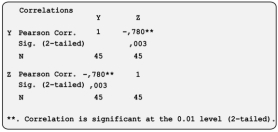
Sobre a interpretação desses resultados, analise as afirmativas:
I. Existe uma correlação linear negativa forte entre as variáveis Y e Z.
II. O resultado é estatisticamente significativo ao nível de 5%.
III. É correto concluir que a variável Y é a causa da variação observada na variável Z.
Está correto o que se afirma em
Sobre a interpretação desses resultados, analise as afirmativas:
I. Existe uma correlação linear negativa forte entre as variáveis Y e Z.
II. O resultado é estatisticamente significativo ao nível de 5%.
III. É correto concluir que a variável Y é a causa da variação observada na variável Z.
Está correto o que se afirma em
Ano: 2025
Banca:
FGV
Órgão:
CPRM
Provas:
FGV - 2025 - CPRM - Pesquisador em Geociências - Engenharia Ambiental
|
FGV - 2025 - CPRM - Pesquisador em Geociências - Geologia - Levantamento Geológico e de Recursos Minerais |
FGV - 2025 - CPRM - Pesquisador em Geociências - Geologia - Ordenamento Territorial - Área de Risco |
FGV - 2025 - CPRM - Pesquisador em Geociências - Geologia - Sedimentologia, Estratigrafia e Análise tectônica de Bacias Sedimentares |
FGV - 2025 - CPRM - Pesquisador em Geociências - Hidrologia |
FGV - 2025 - CPRM - Pesquisador em Geociências - Paleontologia |
FGV - 2025 - CPRM - Pesquisador em Geociências - Hidrogeologia |
Q3758079
Estatística
Um pesquisador coletou dados sobre uma variável X em 100
amostras e observou que a distribuição apresentava assimetria
positiva acentuada. Ao calcular as medidas de posição central, ele
obteve os seguintes valores: média = 45, mediana = 38 e
moda = 32.
Sobre a interpretação dessas informações, analise as afirmativas a seguir:
I. A ordem crescente das medidas de posição central (moda < mediana < média) é consistente com a assimetria positiva observada.
II. Para reduzir o efeito da assimetria, a mediana seria uma medida de tendência central mais adequada que a média para representar os dados.
III. A diferença observada entre os valores da média e da mediana sugere a presença de valores extremos (outliers) na cauda direita da distribuição.
Está correto o que se afirma em
Sobre a interpretação dessas informações, analise as afirmativas a seguir:
I. A ordem crescente das medidas de posição central (moda < mediana < média) é consistente com a assimetria positiva observada.
II. Para reduzir o efeito da assimetria, a mediana seria uma medida de tendência central mais adequada que a média para representar os dados.
III. A diferença observada entre os valores da média e da mediana sugere a presença de valores extremos (outliers) na cauda direita da distribuição.
Está correto o que se afirma em
Ano: 2025
Banca:
FGV
Órgão:
CPRM
Provas:
FGV - 2025 - CPRM - Pesquisador em Geociências - Engenharia Ambiental
|
FGV - 2025 - CPRM - Pesquisador em Geociências - Geologia - Levantamento Geológico e de Recursos Minerais |
FGV - 2025 - CPRM - Pesquisador em Geociências - Geologia - Ordenamento Territorial - Área de Risco |
FGV - 2025 - CPRM - Pesquisador em Geociências - Geologia - Sedimentologia, Estratigrafia e Análise tectônica de Bacias Sedimentares |
FGV - 2025 - CPRM - Pesquisador em Geociências - Hidrologia |
FGV - 2025 - CPRM - Pesquisador em Geociências - Paleontologia |
FGV - 2025 - CPRM - Pesquisador em Geociências - Hidrogeologia |
Q3758078
Matemática
João e Maria fazem parte de um grupo de pesquisa. Sabe-se que 3
pessoas do grupo serão sorteadas para representarem o grupo em
um evento. Todos os membros do grupo possuem a mesma
probabilidade de serem sorteados, e a probabilidade de João e
Maria estarem entre os três sorteados é igual 3/28.
Quantas pessoas há no grupo?
Quantas pessoas há no grupo?
Ano: 2025
Banca:
FGV
Órgão:
CPRM
Provas:
FGV - 2025 - CPRM - Pesquisador em Geociências - Engenharia Ambiental
|
FGV - 2025 - CPRM - Pesquisador em Geociências - Geologia - Levantamento Geológico e de Recursos Minerais |
FGV - 2025 - CPRM - Pesquisador em Geociências - Geologia - Ordenamento Territorial - Área de Risco |
FGV - 2025 - CPRM - Pesquisador em Geociências - Geologia - Sedimentologia, Estratigrafia e Análise tectônica de Bacias Sedimentares |
FGV - 2025 - CPRM - Pesquisador em Geociências - Hidrologia |
FGV - 2025 - CPRM - Pesquisador em Geociências - Paleontologia |
FGV - 2025 - CPRM - Pesquisador em Geociências - Hidrogeologia |
Q3758077
Raciocínio Lógico
Em um dos setores de uma empresa de engenharia, há uma placa
eletrônica de contagem regressiva que afirma “Nossa obra será
finalizada daqui a 1531 dias.”.
Suponha que, daqui a 1 dia, seja quarta-feira.
Assim, o dia da semana previsto para a finalização da obra é
Suponha que, daqui a 1 dia, seja quarta-feira.
Assim, o dia da semana previsto para a finalização da obra é
Ano: 2025
Banca:
FGV
Órgão:
CPRM
Provas:
FGV - 2025 - CPRM - Pesquisador em Geociências - Engenharia Ambiental
|
FGV - 2025 - CPRM - Pesquisador em Geociências - Geologia - Levantamento Geológico e de Recursos Minerais |
FGV - 2025 - CPRM - Pesquisador em Geociências - Geologia - Ordenamento Territorial - Área de Risco |
FGV - 2025 - CPRM - Pesquisador em Geociências - Geologia - Sedimentologia, Estratigrafia e Análise tectônica de Bacias Sedimentares |
FGV - 2025 - CPRM - Pesquisador em Geociências - Hidrologia |
FGV - 2025 - CPRM - Pesquisador em Geociências - Paleontologia |
FGV - 2025 - CPRM - Pesquisador em Geociências - Hidrogeologia |
Q3758076
Matemática
Considere P um polígono regular com 35 lados.
Um novo polígono regular Q, diferente de P, é tal que seus vértices também são vértices de P.
O maior número de lados que o polígono Q pode ter é
Um novo polígono regular Q, diferente de P, é tal que seus vértices também são vértices de P.
O maior número de lados que o polígono Q pode ter é
Ano: 2025
Banca:
FGV
Órgão:
CPRM
Provas:
FGV - 2025 - CPRM - Pesquisador em Geociências - Engenharia Ambiental
|
FGV - 2025 - CPRM - Pesquisador em Geociências - Geologia - Levantamento Geológico e de Recursos Minerais |
FGV - 2025 - CPRM - Pesquisador em Geociências - Geologia - Ordenamento Territorial - Área de Risco |
FGV - 2025 - CPRM - Pesquisador em Geociências - Geologia - Sedimentologia, Estratigrafia e Análise tectônica de Bacias Sedimentares |
FGV - 2025 - CPRM - Pesquisador em Geociências - Hidrologia |
FGV - 2025 - CPRM - Pesquisador em Geociências - Paleontologia |
FGV - 2025 - CPRM - Pesquisador em Geociências - Hidrogeologia |
Q3758075
Raciocínio Lógico
Em um grupo formado por 11 pessoas, no máximo 5 pessoas não
possuem doutorado, nem seguem uma carreira acadêmica.
Tal característica pode ser recolocada, de modo logicamente equivalente, pela seguinte assertiva:
Tal característica pode ser recolocada, de modo logicamente equivalente, pela seguinte assertiva:
Ano: 2025
Banca:
FGV
Órgão:
CPRM
Provas:
FGV - 2025 - CPRM - Pesquisador em Geociências - Engenharia Ambiental
|
FGV - 2025 - CPRM - Pesquisador em Geociências - Geologia - Levantamento Geológico e de Recursos Minerais |
FGV - 2025 - CPRM - Pesquisador em Geociências - Geologia - Ordenamento Territorial - Área de Risco |
FGV - 2025 - CPRM - Pesquisador em Geociências - Geologia - Sedimentologia, Estratigrafia e Análise tectônica de Bacias Sedimentares |
FGV - 2025 - CPRM - Pesquisador em Geociências - Hidrologia |
FGV - 2025 - CPRM - Pesquisador em Geociências - Paleontologia |
FGV - 2025 - CPRM - Pesquisador em Geociências - Hidrogeologia |
Q3758074
Matemática
Dois pontos do plano cartesiano P(x,y) e Q(x,y) são tais que suas
coordenadas satisfazem à equação algébrica:
x2 + y2 = 9
A maior distância possível entre P e Q mede
x2 + y2 = 9
A maior distância possível entre P e Q mede
Ano: 2025
Banca:
FGV
Órgão:
CPRM
Provas:
FGV - 2025 - CPRM - Pesquisador em Geociências - Engenharia Ambiental
|
FGV - 2025 - CPRM - Pesquisador em Geociências - Geologia - Levantamento Geológico e de Recursos Minerais |
FGV - 2025 - CPRM - Pesquisador em Geociências - Geologia - Ordenamento Territorial - Área de Risco |
FGV - 2025 - CPRM - Pesquisador em Geociências - Geologia - Sedimentologia, Estratigrafia e Análise tectônica de Bacias Sedimentares |
FGV - 2025 - CPRM - Pesquisador em Geociências - Hidrologia |
FGV - 2025 - CPRM - Pesquisador em Geociências - Paleontologia |
FGV - 2025 - CPRM - Pesquisador em Geociências - Hidrogeologia |
Q3758073
Estatística
Durante a análise de séries temporais, um pesquisador propõe a
hipótese de que determinadas condições da variável W
influenciam positivamente a diversidade de elementos Z. Para
testar essa hipótese de modo estatisticamente robusto, o objetivo
metodológico mais adequado é
Ano: 2025
Banca:
FGV
Órgão:
CPRM
Provas:
FGV - 2025 - CPRM - Pesquisador em Geociências - Engenharia Ambiental
|
FGV - 2025 - CPRM - Pesquisador em Geociências - Geologia - Levantamento Geológico e de Recursos Minerais |
FGV - 2025 - CPRM - Pesquisador em Geociências - Geologia - Ordenamento Territorial - Área de Risco |
FGV - 2025 - CPRM - Pesquisador em Geociências - Geologia - Sedimentologia, Estratigrafia e Análise tectônica de Bacias Sedimentares |
FGV - 2025 - CPRM - Pesquisador em Geociências - Hidrologia |
FGV - 2025 - CPRM - Pesquisador em Geociências - Paleontologia |
FGV - 2025 - CPRM - Pesquisador em Geociências - Hidrogeologia |
Q3758072
Hidrologia
Durante a revisão de um relatório técnico, um pesquisador
observa que a tabela de resultados apresenta o título abaixo da
tabela, omite as unidades de medida e substitui valores “não
determinados” por zero.
Considerando as normas e boas práticas de comunicação científica, a forma correta de apresentação seria
Considerando as normas e boas práticas de comunicação científica, a forma correta de apresentação seria
Ano: 2025
Banca:
FGV
Órgão:
CPRM
Provas:
FGV - 2025 - CPRM - Pesquisador em Geociências - Engenharia Ambiental
|
FGV - 2025 - CPRM - Pesquisador em Geociências - Geologia - Levantamento Geológico e de Recursos Minerais |
FGV - 2025 - CPRM - Pesquisador em Geociências - Geologia - Ordenamento Territorial - Área de Risco |
FGV - 2025 - CPRM - Pesquisador em Geociências - Geologia - Sedimentologia, Estratigrafia e Análise tectônica de Bacias Sedimentares |
FGV - 2025 - CPRM - Pesquisador em Geociências - Hidrologia |
FGV - 2025 - CPRM - Pesquisador em Geociências - Paleontologia |
FGV - 2025 - CPRM - Pesquisador em Geociências - Hidrogeologia |
Q3758071
Estatística
Para elaborar um mapa preliminar da distribuição de uma
propriedade Y em uma área de 5 km², a equipe deve empregar um
plano amostral exploratório.
A estratégia mais adequada é
A estratégia mais adequada é
Ano: 2025
Banca:
FGV
Órgão:
CPRM
Provas:
FGV - 2025 - CPRM - Pesquisador em Geociências - Engenharia Ambiental
|
FGV - 2025 - CPRM - Pesquisador em Geociências - Geologia - Levantamento Geológico e de Recursos Minerais |
FGV - 2025 - CPRM - Pesquisador em Geociências - Geologia - Ordenamento Territorial - Área de Risco |
FGV - 2025 - CPRM - Pesquisador em Geociências - Geologia - Sedimentologia, Estratigrafia e Análise tectônica de Bacias Sedimentares |
FGV - 2025 - CPRM - Pesquisador em Geociências - Hidrologia |
FGV - 2025 - CPRM - Pesquisador em Geociências - Paleontologia |
FGV - 2025 - CPRM - Pesquisador em Geociências - Hidrogeologia |
Q3758070
Gerência de Projetos
Um grupo de pesquisadores planeja conduzir um estudo
quantitativo de longo prazo, com o objetivo de identificar possíveis
relações entre variáveis observadas em um sistema natural
monitorado por cinco anos. O êxito do estudo depende de uma
sequência metodológica coerente e aderente aos princípios da
pesquisa científica.
Assinale a opção que apresenta a ordem lógica e tecnicamente adequada para o desenvolvimento do projeto.
Assinale a opção que apresenta a ordem lógica e tecnicamente adequada para o desenvolvimento do projeto.
Ano: 2025
Banca:
FGV
Órgão:
CPRM
Provas:
FGV - 2025 - CPRM - Pesquisador em Geociências - Engenharia Ambiental
|
FGV - 2025 - CPRM - Pesquisador em Geociências - Geologia - Levantamento Geológico e de Recursos Minerais |
FGV - 2025 - CPRM - Pesquisador em Geociências - Geologia - Ordenamento Territorial - Área de Risco |
FGV - 2025 - CPRM - Pesquisador em Geociências - Geologia - Sedimentologia, Estratigrafia e Análise tectônica de Bacias Sedimentares |
FGV - 2025 - CPRM - Pesquisador em Geociências - Hidrologia |
FGV - 2025 - CPRM - Pesquisador em Geociências - Paleontologia |
FGV - 2025 - CPRM - Pesquisador em Geociências - Hidrogeologia |
Q3758069
Geologia
Um pesquisador, ao analisar dados de concentração de uma
substância X em amostras coletadas em uma região de estudo,
observa valores elevados em uma área específica, sem fontes
aparentes na superfície. A anomalia coincide com uma zona onde
estudos prévios identificaram condições geológicas favoráveis ao
transporte de substâncias.
Assinale a opção que apresenta a formulação de uma hipótese de pesquisa científica válida e testável para explicar o fenômeno.
Assinale a opção que apresenta a formulação de uma hipótese de pesquisa científica válida e testável para explicar o fenômeno.
Ano: 2025
Banca:
FGV
Órgão:
CPRM
Provas:
FGV - 2025 - CPRM - Pesquisador em Geociências - Engenharia Ambiental
|
FGV - 2025 - CPRM - Pesquisador em Geociências - Geologia - Levantamento Geológico e de Recursos Minerais |
FGV - 2025 - CPRM - Pesquisador em Geociências - Geologia - Ordenamento Territorial - Área de Risco |
FGV - 2025 - CPRM - Pesquisador em Geociências - Geologia - Sedimentologia, Estratigrafia e Análise tectônica de Bacias Sedimentares |
FGV - 2025 - CPRM - Pesquisador em Geociências - Hidrologia |
FGV - 2025 - CPRM - Pesquisador em Geociências - Paleontologia |
FGV - 2025 - CPRM - Pesquisador em Geociências - Hidrogeologia |
Q3758068
Inglês
Texto associado
Jadarite, described as ‘Earth's kryptonite twin,’ has potential to
replace fossil fuels
A plain-white mineral found in western Serbia has a name straight
out of the comics and a chemical profile that battery makers crave.
Called jadarite, also known as sodium-lithium- boron silicate
hydroxide, was first pulled from drill cores in 2004 and officially
recognized as a new mineral two years later.
Geologists soon noticed that the formula on the sample label
matched the faux “kryptonite” shown in a 2006 Superman film,
minus the fluorine and the green glow. That pop-culture twist
helped the discovery grab headlines, yet the real excitement lies in
what the mineral could do for electric vehicles and renewable
power storage.
Jadarite occurs as dull, chalky nodules tucked inside fine-grained
shale in the Jadar Valley. The host rocks formed in an ancient lake
basin rich in volcanic ash, allowing lithium and boron to build up in
the pore waters until the mineral crystallized. Those conditions
have been found only in Serbia so far, making the deposit both
unique and strategically valuable.
Michael Page, a process chemist at Australia’s Nuclear Science and
Technology Organisation (ANSTO), points out that the valley “is
considered one of the largest lithium deposits in the world, making
it a potential game-changer for the global green energy
transition.” […]
Serbian communities are not unanimous in welcoming the mine.
Environmental groups warn that alkali-rich tailings could leak into
the Jadar River and harm local agriculture. Independent studies
have found elevated boron and lithium downstream of exploratory
boreholes, fueling weekly protests in Belgrade.
Supporters counter that rigorous water-management plans and
sealed tailings cells can limit impacts, and that the economic gains,
including thousands of skilled jobs, are hard to ignore. European
automakers also see the project as a chance to shorten supply
chains now dominated by South American brines and Chinese
refiners.
Whether or not the Jadar project reaches full production, the
mineral has already altered the critical-minerals map. Its existence
proves that lithium can concentrate outside traditional pegmatites
and brines, broadening the hunt to basins once dismissed as
uneconomic clay.
Researchers are now experimenting with synthetic pathways,
seeding gels of silica, borate, and lithium under lake-like conditions
to see if jadarite can be grown on demand. Success could pave the
way for engineered deposits that bypass mining altogether. For
now, though, nature’s one known batch in western Serbia remains
the focus of intense scientific, industrial, and public scrutiny.
Adapted from https://www.earth.com/news/jadarite-described-as-earthskryptonite-twin-has-potential-to-replace-fossil-fuels/
Based on the last paragraph, analyse the assertions below:
I. Scientific experimentation might do away with the need for mining.
II. Currently, interest in jadarite deposits seems to be waning.
III. It is highly unlikely that the deposits found in Serbia will reshape the future of energy.
Choose the correct answer.
I. Scientific experimentation might do away with the need for mining.
II. Currently, interest in jadarite deposits seems to be waning.
III. It is highly unlikely that the deposits found in Serbia will reshape the future of energy.
Choose the correct answer.
Ano: 2025
Banca:
FGV
Órgão:
CPRM
Provas:
FGV - 2025 - CPRM - Pesquisador em Geociências - Engenharia Ambiental
|
FGV - 2025 - CPRM - Pesquisador em Geociências - Geologia - Levantamento Geológico e de Recursos Minerais |
FGV - 2025 - CPRM - Pesquisador em Geociências - Geologia - Ordenamento Territorial - Área de Risco |
FGV - 2025 - CPRM - Pesquisador em Geociências - Geologia - Sedimentologia, Estratigrafia e Análise tectônica de Bacias Sedimentares |
FGV - 2025 - CPRM - Pesquisador em Geociências - Hidrologia |
FGV - 2025 - CPRM - Pesquisador em Geociências - Paleontologia |
FGV - 2025 - CPRM - Pesquisador em Geociências - Hidrogeologia |
Q3758067
Inglês
Texto associado
Jadarite, described as ‘Earth's kryptonite twin,’ has potential to
replace fossil fuels
A plain-white mineral found in western Serbia has a name straight
out of the comics and a chemical profile that battery makers crave.
Called jadarite, also known as sodium-lithium- boron silicate
hydroxide, was first pulled from drill cores in 2004 and officially
recognized as a new mineral two years later.
Geologists soon noticed that the formula on the sample label
matched the faux “kryptonite” shown in a 2006 Superman film,
minus the fluorine and the green glow. That pop-culture twist
helped the discovery grab headlines, yet the real excitement lies in
what the mineral could do for electric vehicles and renewable
power storage.
Jadarite occurs as dull, chalky nodules tucked inside fine-grained
shale in the Jadar Valley. The host rocks formed in an ancient lake
basin rich in volcanic ash, allowing lithium and boron to build up in
the pore waters until the mineral crystallized. Those conditions
have been found only in Serbia so far, making the deposit both
unique and strategically valuable.
Michael Page, a process chemist at Australia’s Nuclear Science and
Technology Organisation (ANSTO), points out that the valley “is
considered one of the largest lithium deposits in the world, making
it a potential game-changer for the global green energy
transition.” […]
Serbian communities are not unanimous in welcoming the mine.
Environmental groups warn that alkali-rich tailings could leak into
the Jadar River and harm local agriculture. Independent studies
have found elevated boron and lithium downstream of exploratory
boreholes, fueling weekly protests in Belgrade.
Supporters counter that rigorous water-management plans and
sealed tailings cells can limit impacts, and that the economic gains,
including thousands of skilled jobs, are hard to ignore. European
automakers also see the project as a chance to shorten supply
chains now dominated by South American brines and Chinese
refiners.
Whether or not the Jadar project reaches full production, the
mineral has already altered the critical-minerals map. Its existence
proves that lithium can concentrate outside traditional pegmatites
and brines, broadening the hunt to basins once dismissed as
uneconomic clay.
Researchers are now experimenting with synthetic pathways,
seeding gels of silica, borate, and lithium under lake-like conditions
to see if jadarite can be grown on demand. Success could pave the
way for engineered deposits that bypass mining altogether. For
now, though, nature’s one known batch in western Serbia remains
the focus of intense scientific, industrial, and public scrutiny.
Adapted from https://www.earth.com/news/jadarite-described-as-earthskryptonite-twin-has-potential-to-replace-fossil-fuels/
In the fourth paragraph, the process chemist’s opinion about the
Jadar Valley is that it is
Ano: 2025
Banca:
FGV
Órgão:
CPRM
Provas:
FGV - 2025 - CPRM - Pesquisador em Geociências - Engenharia Ambiental
|
FGV - 2025 - CPRM - Pesquisador em Geociências - Geologia - Levantamento Geológico e de Recursos Minerais |
FGV - 2025 - CPRM - Pesquisador em Geociências - Geologia - Ordenamento Territorial - Área de Risco |
FGV - 2025 - CPRM - Pesquisador em Geociências - Geologia - Sedimentologia, Estratigrafia e Análise tectônica de Bacias Sedimentares |
FGV - 2025 - CPRM - Pesquisador em Geociências - Hidrologia |
FGV - 2025 - CPRM - Pesquisador em Geociências - Paleontologia |
FGV - 2025 - CPRM - Pesquisador em Geociências - Hidrogeologia |
Q3758066
Inglês
Texto associado
Jadarite, described as ‘Earth's kryptonite twin,’ has potential to
replace fossil fuels
A plain-white mineral found in western Serbia has a name straight
out of the comics and a chemical profile that battery makers crave.
Called jadarite, also known as sodium-lithium- boron silicate
hydroxide, was first pulled from drill cores in 2004 and officially
recognized as a new mineral two years later.
Geologists soon noticed that the formula on the sample label
matched the faux “kryptonite” shown in a 2006 Superman film,
minus the fluorine and the green glow. That pop-culture twist
helped the discovery grab headlines, yet the real excitement lies in
what the mineral could do for electric vehicles and renewable
power storage.
Jadarite occurs as dull, chalky nodules tucked inside fine-grained
shale in the Jadar Valley. The host rocks formed in an ancient lake
basin rich in volcanic ash, allowing lithium and boron to build up in
the pore waters until the mineral crystallized. Those conditions
have been found only in Serbia so far, making the deposit both
unique and strategically valuable.
Michael Page, a process chemist at Australia’s Nuclear Science and
Technology Organisation (ANSTO), points out that the valley “is
considered one of the largest lithium deposits in the world, making
it a potential game-changer for the global green energy
transition.” […]
Serbian communities are not unanimous in welcoming the mine.
Environmental groups warn that alkali-rich tailings could leak into
the Jadar River and harm local agriculture. Independent studies
have found elevated boron and lithium downstream of exploratory
boreholes, fueling weekly protests in Belgrade.
Supporters counter that rigorous water-management plans and
sealed tailings cells can limit impacts, and that the economic gains,
including thousands of skilled jobs, are hard to ignore. European
automakers also see the project as a chance to shorten supply
chains now dominated by South American brines and Chinese
refiners.
Whether or not the Jadar project reaches full production, the
mineral has already altered the critical-minerals map. Its existence
proves that lithium can concentrate outside traditional pegmatites
and brines, broadening the hunt to basins once dismissed as
uneconomic clay.
Researchers are now experimenting with synthetic pathways,
seeding gels of silica, borate, and lithium under lake-like conditions
to see if jadarite can be grown on demand. Success could pave the
way for engineered deposits that bypass mining altogether. For
now, though, nature’s one known batch in western Serbia remains
the focus of intense scientific, industrial, and public scrutiny.
Adapted from https://www.earth.com/news/jadarite-described-as-earthskryptonite-twin-has-potential-to-replace-fossil-fuels/
In the fragment “a chemical profile that battery makers crave” (1st
paragraph), the verb is close in meaning to
Ano: 2025
Banca:
FGV
Órgão:
CPRM
Provas:
FGV - 2025 - CPRM - Pesquisador em Geociências - Engenharia Ambiental
|
FGV - 2025 - CPRM - Pesquisador em Geociências - Geologia - Levantamento Geológico e de Recursos Minerais |
FGV - 2025 - CPRM - Pesquisador em Geociências - Geologia - Ordenamento Territorial - Área de Risco |
FGV - 2025 - CPRM - Pesquisador em Geociências - Geologia - Sedimentologia, Estratigrafia e Análise tectônica de Bacias Sedimentares |
FGV - 2025 - CPRM - Pesquisador em Geociências - Hidrologia |
FGV - 2025 - CPRM - Pesquisador em Geociências - Paleontologia |
FGV - 2025 - CPRM - Pesquisador em Geociências - Hidrogeologia |
Q3758065
Inglês
Texto associado
Jadarite, described as ‘Earth's kryptonite twin,’ has potential to
replace fossil fuels
A plain-white mineral found in western Serbia has a name straight
out of the comics and a chemical profile that battery makers crave.
Called jadarite, also known as sodium-lithium- boron silicate
hydroxide, was first pulled from drill cores in 2004 and officially
recognized as a new mineral two years later.
Geologists soon noticed that the formula on the sample label
matched the faux “kryptonite” shown in a 2006 Superman film,
minus the fluorine and the green glow. That pop-culture twist
helped the discovery grab headlines, yet the real excitement lies in
what the mineral could do for electric vehicles and renewable
power storage.
Jadarite occurs as dull, chalky nodules tucked inside fine-grained
shale in the Jadar Valley. The host rocks formed in an ancient lake
basin rich in volcanic ash, allowing lithium and boron to build up in
the pore waters until the mineral crystallized. Those conditions
have been found only in Serbia so far, making the deposit both
unique and strategically valuable.
Michael Page, a process chemist at Australia’s Nuclear Science and
Technology Organisation (ANSTO), points out that the valley “is
considered one of the largest lithium deposits in the world, making
it a potential game-changer for the global green energy
transition.” […]
Serbian communities are not unanimous in welcoming the mine.
Environmental groups warn that alkali-rich tailings could leak into
the Jadar River and harm local agriculture. Independent studies
have found elevated boron and lithium downstream of exploratory
boreholes, fueling weekly protests in Belgrade.
Supporters counter that rigorous water-management plans and
sealed tailings cells can limit impacts, and that the economic gains,
including thousands of skilled jobs, are hard to ignore. European
automakers also see the project as a chance to shorten supply
chains now dominated by South American brines and Chinese
refiners.
Whether or not the Jadar project reaches full production, the
mineral has already altered the critical-minerals map. Its existence
proves that lithium can concentrate outside traditional pegmatites
and brines, broadening the hunt to basins once dismissed as
uneconomic clay.
Researchers are now experimenting with synthetic pathways,
seeding gels of silica, borate, and lithium under lake-like conditions
to see if jadarite can be grown on demand. Success could pave the
way for engineered deposits that bypass mining altogether. For
now, though, nature’s one known batch in western Serbia remains
the focus of intense scientific, industrial, and public scrutiny.
Adapted from https://www.earth.com/news/jadarite-described-as-earthskryptonite-twin-has-potential-to-replace-fossil-fuels/
In the second paragraph, the text informs that the discovery
Ano: 2025
Banca:
FGV
Órgão:
CPRM
Provas:
FGV - 2025 - CPRM - Pesquisador em Geociências - Engenharia Ambiental
|
FGV - 2025 - CPRM - Pesquisador em Geociências - Geologia - Levantamento Geológico e de Recursos Minerais |
FGV - 2025 - CPRM - Pesquisador em Geociências - Geologia - Ordenamento Territorial - Área de Risco |
FGV - 2025 - CPRM - Pesquisador em Geociências - Geologia - Sedimentologia, Estratigrafia e Análise tectônica de Bacias Sedimentares |
FGV - 2025 - CPRM - Pesquisador em Geociências - Hidrologia |
FGV - 2025 - CPRM - Pesquisador em Geociências - Paleontologia |
FGV - 2025 - CPRM - Pesquisador em Geociências - Hidrogeologia |
Q3758064
Inglês
Texto associado
Jadarite, described as ‘Earth's kryptonite twin,’ has potential to
replace fossil fuels
A plain-white mineral found in western Serbia has a name straight
out of the comics and a chemical profile that battery makers crave.
Called jadarite, also known as sodium-lithium- boron silicate
hydroxide, was first pulled from drill cores in 2004 and officially
recognized as a new mineral two years later.
Geologists soon noticed that the formula on the sample label
matched the faux “kryptonite” shown in a 2006 Superman film,
minus the fluorine and the green glow. That pop-culture twist
helped the discovery grab headlines, yet the real excitement lies in
what the mineral could do for electric vehicles and renewable
power storage.
Jadarite occurs as dull, chalky nodules tucked inside fine-grained
shale in the Jadar Valley. The host rocks formed in an ancient lake
basin rich in volcanic ash, allowing lithium and boron to build up in
the pore waters until the mineral crystallized. Those conditions
have been found only in Serbia so far, making the deposit both
unique and strategically valuable.
Michael Page, a process chemist at Australia’s Nuclear Science and
Technology Organisation (ANSTO), points out that the valley “is
considered one of the largest lithium deposits in the world, making
it a potential game-changer for the global green energy
transition.” […]
Serbian communities are not unanimous in welcoming the mine.
Environmental groups warn that alkali-rich tailings could leak into
the Jadar River and harm local agriculture. Independent studies
have found elevated boron and lithium downstream of exploratory
boreholes, fueling weekly protests in Belgrade.
Supporters counter that rigorous water-management plans and
sealed tailings cells can limit impacts, and that the economic gains,
including thousands of skilled jobs, are hard to ignore. European
automakers also see the project as a chance to shorten supply
chains now dominated by South American brines and Chinese
refiners.
Whether or not the Jadar project reaches full production, the
mineral has already altered the critical-minerals map. Its existence
proves that lithium can concentrate outside traditional pegmatites
and brines, broadening the hunt to basins once dismissed as
uneconomic clay.
Researchers are now experimenting with synthetic pathways,
seeding gels of silica, borate, and lithium under lake-like conditions
to see if jadarite can be grown on demand. Success could pave the
way for engineered deposits that bypass mining altogether. For
now, though, nature’s one known batch in western Serbia remains
the focus of intense scientific, industrial, and public scrutiny.
Adapted from https://www.earth.com/news/jadarite-described-as-earthskryptonite-twin-has-potential-to-replace-fossil-fuels/
Based on the information provided by the text, mark the
statements below as true (T) or false (F).
( ) Jadarite resembles to some extent a mineral previously depicted in fiction.
( ) Environmentalists support the Jadar project due to its harmless effects.
( ) Experimental work is underway to assess the possibility of producing the mineral upon request.
The statements are, respectively
( ) Jadarite resembles to some extent a mineral previously depicted in fiction.
( ) Environmentalists support the Jadar project due to its harmless effects.
( ) Experimental work is underway to assess the possibility of producing the mineral upon request.
The statements are, respectively
Ano: 2025
Banca:
FGV
Órgão:
CPRM
Provas:
FGV - 2025 - CPRM - Pesquisador em Geociências - Engenharia Ambiental
|
FGV - 2025 - CPRM - Pesquisador em Geociências - Geologia - Levantamento Geológico e de Recursos Minerais |
FGV - 2025 - CPRM - Pesquisador em Geociências - Geologia - Ordenamento Territorial - Área de Risco |
FGV - 2025 - CPRM - Pesquisador em Geociências - Geologia - Sedimentologia, Estratigrafia e Análise tectônica de Bacias Sedimentares |
FGV - 2025 - CPRM - Pesquisador em Geociências - Hidrologia |
FGV - 2025 - CPRM - Pesquisador em Geociências - Paleontologia |
FGV - 2025 - CPRM - Pesquisador em Geociências - Hidrogeologia |
Q3758063
Português
Assinale a opção em que as palavras estejam acentuadas
adequadamente.

 Conheça nossos planos