Questões de Concurso
Para analista de tecnologia da informação
Foram encontradas 21.308 questões
Resolva questões gratuitamente!
Junte-se a mais de 4 milhões de concurseiros!


Ano: 2023
Banca:
VUNESP
Órgão:
CIJUN - SP
Prova:
VUNESP - 2023 - CIJUN - SP - Analista de TI Junior (Desenvolvedor .NET) |
Q4197771
Noções de Informática
Uma das principais diferenças do Visual Studio Code,
quando comparado com outros editores de código, é a
existência de um rico marketplace. Nele são disponibilizados por desenvolvedores programas que podem ser
utilizados para incrementar funcionalidades do editor. O
nome dado aos programas disponíveis no marketplace é
Ano: 2023
Banca:
VUNESP
Órgão:
CIJUN - SP
Prova:
VUNESP - 2023 - CIJUN - SP - Analista de TI Junior (Desenvolvedor .NET) |
Q4197770
Noções de Informática
O Visual Studio Code possui nativamente um conjunto de
recursos disponíveis com o propósito de encontrar bugs
em um código. O atalho utilizado para dar toggle em um
breakpoint é a tecla
Ano: 2023
Banca:
VUNESP
Órgão:
CIJUN - SP
Prova:
VUNESP - 2023 - CIJUN - SP - Analista de TI Junior (Desenvolvedor .NET) |
Q4197769
Redes de Computadores
Uma requisição HTTP apresenta o seguinte cabeçalho:
Authorization: Basic dXNlcjpwYXNz
Nesse contexto, é correto afirmar que dXNlcjpwYXNz
corresponde a
Ano: 2023
Banca:
VUNESP
Órgão:
CIJUN - SP
Prova:
VUNESP - 2023 - CIJUN - SP - Analista de TI Junior (Desenvolvedor .NET) |
Q4197768
Arquitetura de Software
Em mensagens do protocolo SOAP, o elemento opcional
, em que soap corresponde ao namespace http://www.w3.org/2003/05/ soap-envelope/,
quando presente, deve ocorrer
Ano: 2023
Banca:
VUNESP
Órgão:
CIJUN - SP
Prova:
VUNESP - 2023 - CIJUN - SP - Analista de TI Junior (Desenvolvedor .NET) |
Q4197767
Programação
Observe o trecho de código escrito na linguagem PHP a seguir:
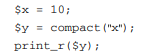
Com base neste trecho de código, o valor impresso pela função será:
Ano: 2023
Banca:
VUNESP
Órgão:
CIJUN - SP
Prova:
VUNESP - 2023 - CIJUN - SP - Analista de TI Junior (Desenvolvedor .NET) |
Q4197766
Programação
Char é um tipo de variável utilizada nas linguagens de
programação para representar um caractere. Na linguagem C#, este tipo de variável possui tamanho de
Ano: 2023
Banca:
VUNESP
Órgão:
CIJUN - SP
Prova:
VUNESP - 2023 - CIJUN - SP - Analista de TI Junior (Desenvolvedor .NET) |
Q4197765
Programação
Na documentação oficial do Git, os comandos são agrupados conforme suas funcionalidades. Um comando Git
utilizado para debugging é o:
Ano: 2023
Banca:
VUNESP
Órgão:
CIJUN - SP
Prova:
VUNESP - 2023 - CIJUN - SP - Analista de TI Junior (Desenvolvedor .NET) |
Q4197764
Programação
A plataforma de compilação do .NET com implementação
open source de compiladores C# e Visual Basic recebe a
denominação de
Ano: 2023
Banca:
VUNESP
Órgão:
CIJUN - SP
Prova:
VUNESP - 2023 - CIJUN - SP - Analista de TI Junior (Desenvolvedor .NET) |
Q4197763
Programação
De modo geral, o comando dotnet pack da CLI
(Command-Line Interface) do .NET Core 3.1 e versões
posteriores
Ano: 2023
Banca:
VUNESP
Órgão:
CIJUN - SP
Prova:
VUNESP - 2023 - CIJUN - SP - Analista de TI Junior (Desenvolvedor .NET) |
Q4197762
Engenharia de Software
O serviço do Azure DevOps que permite que equipes planejem, acompanhem e discutam o trabalho no processo de desenvolvimento, suportando metodologias ágeis
como Scrum e Kanban, é conhecido como
Ano: 2023
Banca:
VUNESP
Órgão:
CIJUN - SP
Prova:
VUNESP - 2023 - CIJUN - SP - Analista de TI Junior (Desenvolvedor .NET) |
Q4197761
Algoritmos e Estrutura de Dados
Analise o programa a seguir escrito em pseudolinguagem (Português Estruturado).
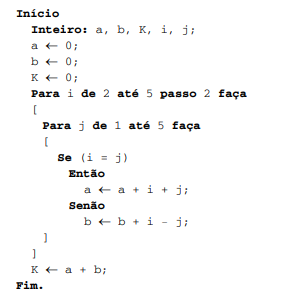
A variável K ao final da execução desse programa estará com o valor
Ano: 2023
Banca:
VUNESP
Órgão:
CIJUN - SP
Prova:
VUNESP - 2023 - CIJUN - SP - Analista de TI Junior (Desenvolvedor .NET) |
Q4197760
Algoritmos e Estrutura de Dados
Considere o seguinte programa, escrito em pseudolinguagem (Português Estruturado).
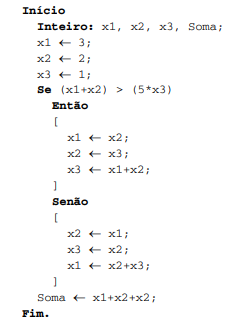
Ao término da execução desse programa, o valor presente da variável Soma será igual a:
Ano: 2023
Banca:
VUNESP
Órgão:
CIJUN - SP
Prova:
VUNESP - 2023 - CIJUN - SP - Analista de TI Junior (Desenvolvedor .NET) |
Q4197759
Engenharia de Software
Considerando um diagrama de estados da UML 2.0 e
seus estados inicial e final, é correto afirmar que
Ano: 2023
Banca:
VUNESP
Órgão:
CIJUN - SP
Prova:
VUNESP - 2023 - CIJUN - SP - Analista de TI Junior (Desenvolvedor .NET) |
Q4197758
Engenharia de Software
A UML2.0 define quatro níveis de visibilidade para atributos e operações em uma classe, sendo dois desses níveis:
Ano: 2023
Banca:
VUNESP
Órgão:
CIJUN - SP
Prova:
VUNESP - 2023 - CIJUN - SP - Analista de TI Junior (Desenvolvedor .NET) |
Q4197757
Modelagem de Processos de Negócio (BPM)
Observe as seguintes representações de gateways de controle utilizadas na notação BPMN (Business Process Model and Notation).

Essas duas representações indicam gateways dos tipos:
Ano: 2023
Banca:
VUNESP
Órgão:
CIJUN - SP
Prova:
VUNESP - 2023 - CIJUN - SP - Analista de TI Junior (Desenvolvedor .NET) |
Q4197756
Engenharia de Software
Constitui uma importante atividade a seleção da(s)
metodologia(s) de gestão de projetos atualmente aplicadas. Dentre tais metodologias é correto afirmar que se
enquadram
Ano: 2023
Banca:
VUNESP
Órgão:
CIJUN - SP
Provas:
VUNESP - 2023 - CIJUN - SP - Analista de Segurança da Informação Pleno (LGPD)
|
VUNESP - 2023 - CIJUN - SP - Analista de TI Junior (Desenvolvedor .NET) |
VUNESP - 2023 - CIJUN - SP - Analista de TI Junior (Geoprocessamento) |
VUNESP - 2023 - CIJUN - SP - Analista de TI Junior (Sites e Portas) |
VUNESP - 2023 - CIJUN - SP - Analista de TI Junior (Mobile) |
VUNESP - 2023 - CIJUN - SP - Arquiteto de Sistemas Pleno (Desenvolvimento de Sistemas) |
Q4197705
Inglês
Texto associado
Leia o texto para responder à questão.
Information Security (InfoSec) defined
Information security, often abbreviated InfoSec, is a set
of security procedures and tools that broadly protect sensitive
enterprise information from misuse, unauthorized access,
disruption, or destruction. InfoSec encompasses physical and
environmental security, access control, and cybersecurity. It
often includes technologies like cloud access security brokers
(CASB), deception tools, endpoint detection and response
(EDR), and security testing for DevOps (DevSecOps), among
others.
Key elements of information security
InfoSec comprises a range of security tools, solutions,
and processes that keep enterprise information secure across
devices and locations, helping to protect against cyberattacks
or other disruptive events.
• Application security - Policies, procedures, tools, and best
practices enacted to protect applications and their data.w
• Cloud security - Policies, procedures, tools, and best
practices enacted to protect all aspects of the cloud,
including systems, data, applications, and infrastructure.
• Cryptography - An algorithm-based method of securing
communication meant to ensure only intended recipients
of a specific message can view and decipher it.
• Disaster recovery - A method to reestablish functional
technological systems in the wake of an event like a
natural disaster, cyberattack, or another disruptive event.
• Incident response - An organization’s plan for responding
to, remediating, and managing the aftermath of a
cyberattack, data breach, or another disruptive event.
• Infrastructure security - Security that encompasses
an organization’s entire technological infrastructure,
including both hardware and software systems.
• Vulnerability management - The process an organization
takes to identify, assess, and remediate vulnerabilities in
its endpoints, software, and systems.
Three pillars of information security: the CIA triad
Confidentiality, integrity, and availability make up the
cornerstones of strong information protection, creating the
basis for an enterprise’s security infrastructure. The CIA
triad offers these three concepts as guiding principles for
implementing an InfoSec plan.
Confidentiality
Privacy is a major component of InfoSec, and
organizations should enact measures that allow only
authorized users access to information. Data encryption,
multi-factor authentication, and data loss prevention are
some of the tools enterprises can employ to help ensure
data confidentiality.
Integrity
Enterprises must maintain data’s integrity across its
entire lifecycle. Enterprises with strong InfoSec will recognize
the importance of accurate, reliable data, and permit no
unauthorized user to access, alter, or otherwise interfere with
it. Tools like file permissions, identity management, and user
access controls help ensure data integrity.
Availability
InfoSec involves consistently maintaining physical
hardware and regularly completing system upgrades to
guarantee that authorized users have dependable, consistent
access to data as they need it.
(www.microsoft.com/en-ww/security/business/security-101/
what-is-information-security-infosec#:~:text=Information%20
security%2C%20often%20abbreviated%20(InfoSec,access%2C%20
disruption%2C%20or%20destruction. Adaptado.)
Leia a parte do texto Three pillars of information security: the CIA triad para responder à questão.
De acordo com a parte do texto Three pillars of information security: the CIA triard, é correto afirmar que:
De acordo com a parte do texto Three pillars of information security: the CIA triard, é correto afirmar que:
Ano: 2023
Banca:
VUNESP
Órgão:
CIJUN - SP
Provas:
VUNESP - 2023 - CIJUN - SP - Analista de Segurança da Informação Pleno (LGPD)
|
VUNESP - 2023 - CIJUN - SP - Analista de TI Junior (Desenvolvedor .NET) |
VUNESP - 2023 - CIJUN - SP - Analista de TI Junior (Geoprocessamento) |
VUNESP - 2023 - CIJUN - SP - Analista de TI Junior (Sites e Portas) |
VUNESP - 2023 - CIJUN - SP - Analista de TI Junior (Mobile) |
VUNESP - 2023 - CIJUN - SP - Arquiteto de Sistemas Pleno (Desenvolvimento de Sistemas) |
Q4197704
Inglês
Texto associado
Leia o texto para responder à questão.
Information Security (InfoSec) defined
Information security, often abbreviated InfoSec, is a set
of security procedures and tools that broadly protect sensitive
enterprise information from misuse, unauthorized access,
disruption, or destruction. InfoSec encompasses physical and
environmental security, access control, and cybersecurity. It
often includes technologies like cloud access security brokers
(CASB), deception tools, endpoint detection and response
(EDR), and security testing for DevOps (DevSecOps), among
others.
Key elements of information security
InfoSec comprises a range of security tools, solutions,
and processes that keep enterprise information secure across
devices and locations, helping to protect against cyberattacks
or other disruptive events.
• Application security - Policies, procedures, tools, and best
practices enacted to protect applications and their data.w
• Cloud security - Policies, procedures, tools, and best
practices enacted to protect all aspects of the cloud,
including systems, data, applications, and infrastructure.
• Cryptography - An algorithm-based method of securing
communication meant to ensure only intended recipients
of a specific message can view and decipher it.
• Disaster recovery - A method to reestablish functional
technological systems in the wake of an event like a
natural disaster, cyberattack, or another disruptive event.
• Incident response - An organization’s plan for responding
to, remediating, and managing the aftermath of a
cyberattack, data breach, or another disruptive event.
• Infrastructure security - Security that encompasses
an organization’s entire technological infrastructure,
including both hardware and software systems.
• Vulnerability management - The process an organization
takes to identify, assess, and remediate vulnerabilities in
its endpoints, software, and systems.
Three pillars of information security: the CIA triad
Confidentiality, integrity, and availability make up the
cornerstones of strong information protection, creating the
basis for an enterprise’s security infrastructure. The CIA
triad offers these three concepts as guiding principles for
implementing an InfoSec plan.
Confidentiality
Privacy is a major component of InfoSec, and
organizations should enact measures that allow only
authorized users access to information. Data encryption,
multi-factor authentication, and data loss prevention are
some of the tools enterprises can employ to help ensure
data confidentiality.
Integrity
Enterprises must maintain data’s integrity across its
entire lifecycle. Enterprises with strong InfoSec will recognize
the importance of accurate, reliable data, and permit no
unauthorized user to access, alter, or otherwise interfere with
it. Tools like file permissions, identity management, and user
access controls help ensure data integrity.
Availability
InfoSec involves consistently maintaining physical
hardware and regularly completing system upgrades to
guarantee that authorized users have dependable, consistent
access to data as they need it.
(www.microsoft.com/en-ww/security/business/security-101/
what-is-information-security-infosec#:~:text=Information%20
security%2C%20often%20abbreviated%20(InfoSec,access%2C%20
disruption%2C%20or%20destruction. Adaptado.)
Leia a parte do texto Three pillars of information security: the CIA triad para responder à questão.
No trecho do item Availability “authorized users have dependable, consistent access to data as they need it”, o termo destacado em negrito pode ser substituído, sem alteração de sentido, po
No trecho do item Availability “authorized users have dependable, consistent access to data as they need it”, o termo destacado em negrito pode ser substituído, sem alteração de sentido, po
Ano: 2023
Banca:
VUNESP
Órgão:
CIJUN - SP
Provas:
VUNESP - 2023 - CIJUN - SP - Analista de Segurança da Informação Pleno (LGPD)
|
VUNESP - 2023 - CIJUN - SP - Analista de TI Junior (Desenvolvedor .NET) |
VUNESP - 2023 - CIJUN - SP - Analista de TI Junior (Geoprocessamento) |
VUNESP - 2023 - CIJUN - SP - Analista de TI Junior (Sites e Portas) |
VUNESP - 2023 - CIJUN - SP - Analista de TI Junior (Mobile) |
VUNESP - 2023 - CIJUN - SP - Arquiteto de Sistemas Pleno (Desenvolvimento de Sistemas) |
Q4197703
Inglês
Texto associado
Leia o texto para responder à questão.
Information Security (InfoSec) defined
Information security, often abbreviated InfoSec, is a set
of security procedures and tools that broadly protect sensitive
enterprise information from misuse, unauthorized access,
disruption, or destruction. InfoSec encompasses physical and
environmental security, access control, and cybersecurity. It
often includes technologies like cloud access security brokers
(CASB), deception tools, endpoint detection and response
(EDR), and security testing for DevOps (DevSecOps), among
others.
Key elements of information security
InfoSec comprises a range of security tools, solutions,
and processes that keep enterprise information secure across
devices and locations, helping to protect against cyberattacks
or other disruptive events.
• Application security - Policies, procedures, tools, and best
practices enacted to protect applications and their data.w
• Cloud security - Policies, procedures, tools, and best
practices enacted to protect all aspects of the cloud,
including systems, data, applications, and infrastructure.
• Cryptography - An algorithm-based method of securing
communication meant to ensure only intended recipients
of a specific message can view and decipher it.
• Disaster recovery - A method to reestablish functional
technological systems in the wake of an event like a
natural disaster, cyberattack, or another disruptive event.
• Incident response - An organization’s plan for responding
to, remediating, and managing the aftermath of a
cyberattack, data breach, or another disruptive event.
• Infrastructure security - Security that encompasses
an organization’s entire technological infrastructure,
including both hardware and software systems.
• Vulnerability management - The process an organization
takes to identify, assess, and remediate vulnerabilities in
its endpoints, software, and systems.
Three pillars of information security: the CIA triad
Confidentiality, integrity, and availability make up the
cornerstones of strong information protection, creating the
basis for an enterprise’s security infrastructure. The CIA
triad offers these three concepts as guiding principles for
implementing an InfoSec plan.
Confidentiality
Privacy is a major component of InfoSec, and
organizations should enact measures that allow only
authorized users access to information. Data encryption,
multi-factor authentication, and data loss prevention are
some of the tools enterprises can employ to help ensure
data confidentiality.
Integrity
Enterprises must maintain data’s integrity across its
entire lifecycle. Enterprises with strong InfoSec will recognize
the importance of accurate, reliable data, and permit no
unauthorized user to access, alter, or otherwise interfere with
it. Tools like file permissions, identity management, and user
access controls help ensure data integrity.
Availability
InfoSec involves consistently maintaining physical
hardware and regularly completing system upgrades to
guarantee that authorized users have dependable, consistent
access to data as they need it.
(www.microsoft.com/en-ww/security/business/security-101/
what-is-information-security-infosec#:~:text=Information%20
security%2C%20often%20abbreviated%20(InfoSec,access%2C%20
disruption%2C%20or%20destruction. Adaptado.)
Leia a parte do texto Three pillars of information security: the CIA triad para responder à questão.
O(s) item(ns) que destaca(m) a necessidade de permissão de acesso a dados apenas aos usuários autorizados são
O(s) item(ns) que destaca(m) a necessidade de permissão de acesso a dados apenas aos usuários autorizados são
Ano: 2023
Banca:
VUNESP
Órgão:
CIJUN - SP
Provas:
VUNESP - 2023 - CIJUN - SP - Analista de Segurança da Informação Pleno (LGPD)
|
VUNESP - 2023 - CIJUN - SP - Analista de TI Junior (Desenvolvedor .NET) |
VUNESP - 2023 - CIJUN - SP - Analista de TI Junior (Geoprocessamento) |
VUNESP - 2023 - CIJUN - SP - Analista de TI Junior (Sites e Portas) |
VUNESP - 2023 - CIJUN - SP - Analista de TI Junior (Mobile) |
VUNESP - 2023 - CIJUN - SP - Arquiteto de Sistemas Pleno (Desenvolvimento de Sistemas) |
Q4197702
Inglês
Texto associado
Leia o texto para responder à questão.
Information Security (InfoSec) defined
Information security, often abbreviated InfoSec, is a set
of security procedures and tools that broadly protect sensitive
enterprise information from misuse, unauthorized access,
disruption, or destruction. InfoSec encompasses physical and
environmental security, access control, and cybersecurity. It
often includes technologies like cloud access security brokers
(CASB), deception tools, endpoint detection and response
(EDR), and security testing for DevOps (DevSecOps), among
others.
Key elements of information security
InfoSec comprises a range of security tools, solutions,
and processes that keep enterprise information secure across
devices and locations, helping to protect against cyberattacks
or other disruptive events.
• Application security - Policies, procedures, tools, and best
practices enacted to protect applications and their data.w
• Cloud security - Policies, procedures, tools, and best
practices enacted to protect all aspects of the cloud,
including systems, data, applications, and infrastructure.
• Cryptography - An algorithm-based method of securing
communication meant to ensure only intended recipients
of a specific message can view and decipher it.
• Disaster recovery - A method to reestablish functional
technological systems in the wake of an event like a
natural disaster, cyberattack, or another disruptive event.
• Incident response - An organization’s plan for responding
to, remediating, and managing the aftermath of a
cyberattack, data breach, or another disruptive event.
• Infrastructure security - Security that encompasses
an organization’s entire technological infrastructure,
including both hardware and software systems.
• Vulnerability management - The process an organization
takes to identify, assess, and remediate vulnerabilities in
its endpoints, software, and systems.
Three pillars of information security: the CIA triad
Confidentiality, integrity, and availability make up the
cornerstones of strong information protection, creating the
basis for an enterprise’s security infrastructure. The CIA
triad offers these three concepts as guiding principles for
implementing an InfoSec plan.
Confidentiality
Privacy is a major component of InfoSec, and
organizations should enact measures that allow only
authorized users access to information. Data encryption,
multi-factor authentication, and data loss prevention are
some of the tools enterprises can employ to help ensure
data confidentiality.
Integrity
Enterprises must maintain data’s integrity across its
entire lifecycle. Enterprises with strong InfoSec will recognize
the importance of accurate, reliable data, and permit no
unauthorized user to access, alter, or otherwise interfere with
it. Tools like file permissions, identity management, and user
access controls help ensure data integrity.
Availability
InfoSec involves consistently maintaining physical
hardware and regularly completing system upgrades to
guarantee that authorized users have dependable, consistent
access to data as they need it.
(www.microsoft.com/en-ww/security/business/security-101/
what-is-information-security-infosec#:~:text=Information%20
security%2C%20often%20abbreviated%20(InfoSec,access%2C%20
disruption%2C%20or%20destruction. Adaptado.)
Leia a parte do texto Three pillars of information security: the CIA triad para responder à questão.
No trecho do item Confidentiality “organizations should enact measures”, o termo destacado em negrito pode ser substituído, sem alteração de sentido, por
No trecho do item Confidentiality “organizations should enact measures”, o termo destacado em negrito pode ser substituído, sem alteração de sentido, por

 Conheça nossos planos