Questões de Concurso
Para professor
Foram encontradas 96.122 questões
Resolva questões gratuitamente!
Junte-se a mais de 4 milhões de concurseiros!


The following text is reference to question.
Thanks to the field of linguistics we know much about the development of the 5,000 plus languages in existence today. We ___(1)___ their grammar and pronunciation and ___(2)___ how their spoken and written forms ___(3)___ over time. ___(4)___, we understand the origins of the Indo-European group of languages, which includes Norwegian, Hindi and English, and can trace them back to tribes in eastern Europe in about 3000 BC.
So, we have mapped out a great deal of the history of language, but there are still areas we know little about. Experts are beginning to look to the field of evolutionary biology to ___(5)___ how the human species developed to be able to use language. So far, there are far more questions and half-theories than answers.
Available in: https://learnenglish.britishcouncil.org.
The following text is reference to question.
Why strength training advice for women is mostly wrong
For years, women were told to train differently because of their hormones. New research suggests the fundamentals of building strength and muscle look remarkably similar across sexes.
For decades, women have been told they need special workout rules. Don’t lift too heavy. Train around your hormones. Change your workouts throughout the month.
The advice seemed logical. Men have substantially higher testosterone levels, a hormone that plays a major role in muscle growth. “Testosterone increases muscle mass in boys, and so you get an adult 20-year-old man and an adult 20-year-old woman, and there’s going to be differences in baseline muscle size and strength,” says Lauren Colenso-Semple, a researcher and science communicator specializing in female physiology and exercise.
___(1)___ a growing body of research suggests those differences may matter less than many people assume once training begins. A 2025 meta-analysis published in PeerJ found that women have a similar capacity for muscle growth, known as hypertrophy, as men. While men typically start with more muscle mass, women make comparable relative gains in muscle mass through resistance training.
Once people start exercising, the sex differences disappear quite quickly: “When you think about lifting weights and the magnitude of muscle size and strength that you can gain in response to training, the trajectory is very, very similar in men and women,” says Semple, a researcher and science specializing in female physiology and exercise.
___(2)___ hormones can influence how exercise feels from day to day, there is little evidence that most women need entirely different training programs to build muscle, strength, or fitness. That matters because resistance training remains one of the most powerful tools for improving cardiovascular health, preserving bone density, and supporting healthy aging.
Available in: https://www.nationalgeographic.com.
1. When a man begins training, he usually starts with more muscle mass.
2. When the process of working out begins, differences between men and women become insignificant.
3. Regular exercise maintains the body’s strength and it is the basis of aging well.
4. In the past, women were told to focus less on optimizing around their hormones and more on the fundamentals of getting stronger.
The text contains the idea(s) in the sentence(s):
The following text is reference to question.
Why strength training advice for women is mostly wrong
For years, women were told to train differently because of their hormones. New research suggests the fundamentals of building strength and muscle look remarkably similar across sexes.
For decades, women have been told they need special workout rules. Don’t lift too heavy. Train around your hormones. Change your workouts throughout the month.
The advice seemed logical. Men have substantially higher testosterone levels, a hormone that plays a major role in muscle growth. “Testosterone increases muscle mass in boys, and so you get an adult 20-year-old man and an adult 20-year-old woman, and there’s going to be differences in baseline muscle size and strength,” says Lauren Colenso-Semple, a researcher and science communicator specializing in female physiology and exercise.
___(1)___ a growing body of research suggests those differences may matter less than many people assume once training begins. A 2025 meta-analysis published in PeerJ found that women have a similar capacity for muscle growth, known as hypertrophy, as men. While men typically start with more muscle mass, women make comparable relative gains in muscle mass through resistance training.
Once people start exercising, the sex differences disappear quite quickly: “When you think about lifting weights and the magnitude of muscle size and strength that you can gain in response to training, the trajectory is very, very similar in men and women,” says Semple, a researcher and science specializing in female physiology and exercise.
___(2)___ hormones can influence how exercise feels from day to day, there is little evidence that most women need entirely different training programs to build muscle, strength, or fitness. That matters because resistance training remains one of the most powerful tools for improving cardiovascular health, preserving bone density, and supporting healthy aging.
Available in: https://www.nationalgeographic.com.
Consider the following headline:
Harry and Meghan likely to meet King Charles on UK return in matter of weeks.
Available in: https://www.mirror.co.uk.
According to the headline, it is correct to say that:
Mark the prepositon that fills in the gap of the sentence below:
The football game had to be postponed _______ weather conditions.
Mark the correct verb tenses that fill in the gaps of the sentence below:
If Mark _______ a scholarship he _______ to England to improve his English.
“People who live in glass houses should not throw stones.”
What does this proverb mean?
According to the comic strip on the right, Charlie Brown:
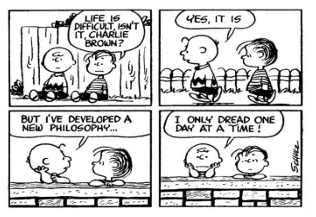
Observe a imagem.
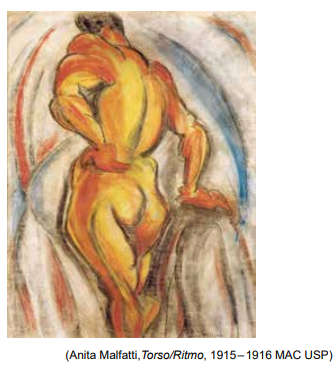
Segundo Barbosa (2014), a obra Torso, de Anita Malfatti, apresenta o traço descontínuo e a multiplicidade de nuances de uma mesma cor. Provavelmente, a pintura participou da exposição da artista em 1917 que gerou crítica de Monteiro Lobato. Para a autora, a crítica de Lobato foi exclusivamente estética, porém, o motivo da contundência do crítico deveu-se ao fato de a pintura

 Conheça nossos planos