Selecionar segmento
Estude com questões de diferentes segmentos
Atenção: Isso limpará todos os campos já preenchidos no filtro!
Foram encontradas 20.975 questões
Resolva questões gratuitamente!
Junte-se a mais de 4 milhões de concurseiros!


Ano: 2012
Banca:
CONSULPLAN
Órgão:
TSE
Prova:
CONSULPLAN - 2012 - TSE - Analista Judiciário - Engenharia Elétrica |
Q223491
Engenharia Elétrica
Em relação à corrente capacitiva nos circuitos RC paralelo e RC série, as tensões estão, respectivamente, nas condições
Ano: 2012
Banca:
CONSULPLAN
Órgão:
TSE
Prova:
CONSULPLAN - 2012 - TSE - Analista Judiciário - Engenharia Elétrica |
Q223490
Engenharia Elétrica
O circuito representa um divisor de corrente. Observe.
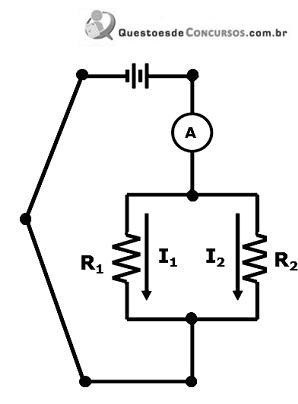
Para uma corrente de 4A no amperímetro, e = 80 ohms,
  = 20 ohms, a corrente
  tem valor igual a
Para uma corrente de 4A no amperímetro, e
= 80 ohms, = 20 ohms, a corrente tem valor igual a
Ano: 2012
Banca:
CONSULPLAN
Órgão:
TSE
Prova:
CONSULPLAN - 2012 - TSE - Analista Judiciário - Engenharia Elétrica |
Q223489
Engenharia Elétrica
O circuito representa um divisor de tensão. Observe.
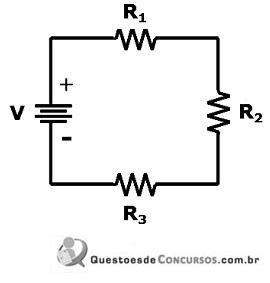
Para V = 220V, = 40 ohms,
  = 20 ohms e
  = 50 ohms, as tensões sobre
  são iguais, respectivamente, a
Para V = 220V,
= 40 ohms, = 20 ohms e = 50 ohms, as tensões sobre são iguais, respectivamente, a
Ano: 2012
Banca:
CONSULPLAN
Órgão:
TSE
Prova:
CONSULPLAN - 2012 - TSE - Analista Judiciário - Engenharia Elétrica |
Q223488
Engenharia Elétrica
Observe a citação a seguir.
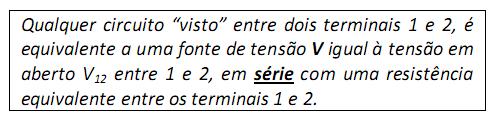
Essa citação refere-se a um teorema da teoria da análise de circuitos, conhecido como de
Essa citação refere-se a um teorema da teoria da análise de circuitos, conhecido como de
Ano: 2012
Banca:
CONSULPLAN
Órgão:
TSE
Prova:
CONSULPLAN - 2012 - TSE - Analista Judiciário - Engenharia Elétrica |
Q223487
Engenharia Elétrica
Analise o gráfico, que relaciona corrente [A] e tensão [V].
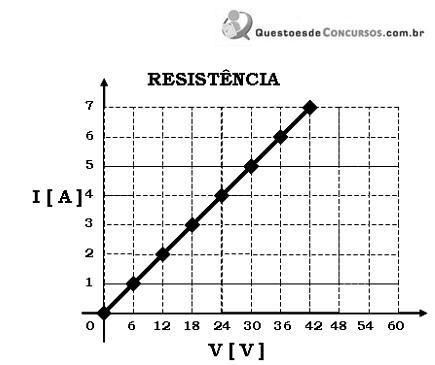
O valor da resistência, em ohms, é de
O valor da resistência, em ohms, é de
Ano: 2012
Banca:
CONSULPLAN
Órgão:
TSE
Provas:
CONSULPLAN - 2012 - TSE - Analista Judiciário - Contabilidade
|
CONSULPLAN - 2012 - TSE - Analista Judiciário - Engenharia Elétrica |
CONSULPLAN - 2012 - TSE - Analista Judiciário - Engenharia Mecânica |
CONSULPLAN - 2012 - TSE - Analista Judiciário - Estatística |
CONSULPLAN - 2012 - TSE - Analista Judiciário - Área Judiciária |
CONSULPLAN - 2012 - TSE - Analista Judiciário - Psicologia |
CONSULPLAN - 2012 - TSE - Analista Judiciário - Pedagogia |
Q223434
Noções de Informática
Observe a planilha criada no Microsoft Office Excel 2007 (idioma Português Brasil).
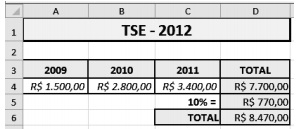
Na célula D4, foi inserida uma fórmula que determina a soma dos valores contidos em A4, B4 e C4. Em D5, foi inserida uma expressão que representa 10% do valor contido em D4. Sabe-se que o valor de D6 foi determinado por meio do acionamento de um ícone que inseriu a fórmula =SOMA(D4:D5). A alternativa que apresenta a fórmula inserida em D5 e o ícone que gerou a fórmula em D6, respectivamente, é
Na célula D4, foi inserida uma fórmula que determina a soma dos valores contidos em A4, B4 e C4. Em D5, foi inserida uma expressão que representa 10% do valor contido em D4. Sabe-se que o valor de D6 foi determinado por meio do acionamento de um ícone que inseriu a fórmula =SOMA(D4:D5). A alternativa que apresenta a fórmula inserida em D5 e o ícone que gerou a fórmula em D6, respectivamente, é
Ano: 2012
Banca:
CONSULPLAN
Órgão:
TSE
Provas:
CONSULPLAN - 2012 - TSE - Analista Judiciário - Análise de Sistemas
|
CONSULPLAN - 2012 - TSE - Analista Judiciário - Arquivologia |
CONSULPLAN - 2012 - TSE - Analista Judiciário - Área Administrativa |
CONSULPLAN - 2012 - TSE - Analista Judiciário - Biblioteconomia |
CONSULPLAN - 2012 - TSE - Analista Judiciário - Contabilidade |
CONSULPLAN - 2012 - TSE - Analista Judiciário - Engenharia Elétrica |
CONSULPLAN - 2012 - TSE - Analista Judiciário - Engenharia Mecânica |
CONSULPLAN - 2012 - TSE - Analista Judiciário - Estatística |
CONSULPLAN - 2012 - TSE - Analista Judiciário - Área Judiciária |
CONSULPLAN - 2012 - TSE - Analista Judiciário - Psicologia |
CONSULPLAN - 2012 - TSE - Analista Judiciário - Pedagogia |
Q223433
Português
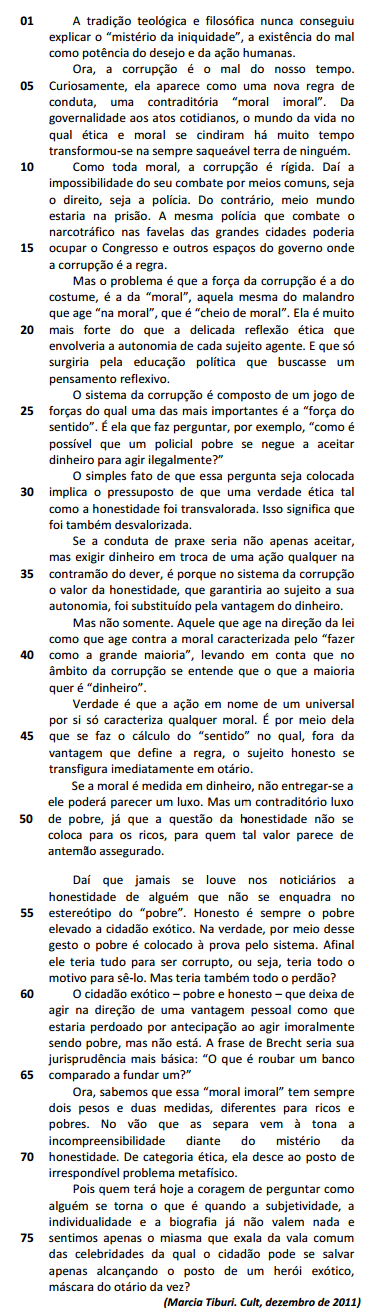
Assinale a alternativa em que o elemento destacado NÃO tenha o mesmo sentido que o de trans-, em transvalorada (L. 31)
Ano: 2012
Banca:
CONSULPLAN
Órgão:
TSE
Provas:
CONSULPLAN - 2012 - TSE - Analista Judiciário - Análise de Sistemas
|
CONSULPLAN - 2012 - TSE - Analista Judiciário - Arquivologia |
CONSULPLAN - 2012 - TSE - Analista Judiciário - Área Administrativa |
CONSULPLAN - 2012 - TSE - Analista Judiciário - Biblioteconomia |
CONSULPLAN - 2012 - TSE - Analista Judiciário - Contabilidade |
CONSULPLAN - 2012 - TSE - Analista Judiciário - Engenharia Elétrica |
CONSULPLAN - 2012 - TSE - Analista Judiciário - Engenharia Mecânica |
CONSULPLAN - 2012 - TSE - Analista Judiciário - Estatística |
CONSULPLAN - 2012 - TSE - Analista Judiciário - Psicologia |
CONSULPLAN - 2012 - TSE - Analista Judiciário - Pedagogia |
Q223365
Direito Administrativo
No que tange às modalidades de licitações é correto afirmar que
Ano: 2012
Banca:
CONSULPLAN
Órgão:
TSE
Provas:
CONSULPLAN - 2012 - TSE - Analista Judiciário - Análise de Sistemas
|
CONSULPLAN - 2012 - TSE - Analista Judiciário - Arquivologia |
CONSULPLAN - 2012 - TSE - Analista Judiciário - Área Administrativa |
CONSULPLAN - 2012 - TSE - Analista Judiciário - Biblioteconomia |
CONSULPLAN - 2012 - TSE - Analista Judiciário - Contabilidade |
CONSULPLAN - 2012 - TSE - Analista Judiciário - Engenharia Elétrica |
CONSULPLAN - 2012 - TSE - Analista Judiciário - Engenharia Mecânica |
CONSULPLAN - 2012 - TSE - Analista Judiciário - Estatística |
CONSULPLAN - 2012 - TSE - Analista Judiciário - Psicologia |
CONSULPLAN - 2012 - TSE - Analista Judiciário - Pedagogia |
Q223319
Direito Administrativo
Segundo o art. 5º da Lei nº 8.112/90, a nacionalidade brasileira é requisito básico para investidura em cargo público. Entretanto, o §3º do mesmo artigo abre exceção aos estrangeiros, na forma da lei, quando vierem a prover cargos de
Ano: 2012
Banca:
CONSULPLAN
Órgão:
TSE
Provas:
CONSULPLAN - 2012 - TSE - Analista Judiciário - Análise de Sistemas
|
CONSULPLAN - 2012 - TSE - Analista Judiciário - Arquivologia |
CONSULPLAN - 2012 - TSE - Analista Judiciário - Área Administrativa |
CONSULPLAN - 2012 - TSE - Analista Judiciário - Biblioteconomia |
CONSULPLAN - 2012 - TSE - Analista Judiciário - Contabilidade |
CONSULPLAN - 2012 - TSE - Analista Judiciário - Engenharia Elétrica |
CONSULPLAN - 2012 - TSE - Analista Judiciário - Engenharia Mecânica |
CONSULPLAN - 2012 - TSE - Analista Judiciário - Estatística |
CONSULPLAN - 2012 - TSE - Analista Judiciário - Área Judiciária |
CONSULPLAN - 2012 - TSE - Analista Judiciário - Psicologia |
CONSULPLAN - 2012 - TSE - Analista Judiciário - Pedagogia |
Q223301
Português
Assinale o termo que, no texto, desempenhe função sintática idêntica à de incompreensibilidade (L. 69).
Ano: 2012
Banca:
CONSULPLAN
Órgão:
TSE
Provas:
CONSULPLAN - 2012 - TSE - Analista Judiciário - Arquivologia
|
CONSULPLAN - 2012 - TSE - Analista Judiciário - Área Administrativa |
CONSULPLAN - 2012 - TSE - Analista Judiciário - Biblioteconomia |
CONSULPLAN - 2012 - TSE - Analista Judiciário - Contabilidade |
CONSULPLAN - 2012 - TSE - Analista Judiciário - Engenharia Elétrica |
CONSULPLAN - 2012 - TSE - Analista Judiciário - Engenharia Mecânica |
CONSULPLAN - 2012 - TSE - Analista Judiciário - Estatística |
CONSULPLAN - 2012 - TSE - Analista Judiciário - Área Judiciária |
CONSULPLAN - 2012 - TSE - Analista Judiciário - Psicologia |
CONSULPLAN - 2012 - TSE - Analista Judiciário - Pedagogia |
Q223248
Noções de Informática
Ao acessar o site do TSE – http://www.tse.jus.br/ – utiliza-se o browser Internet Explorer 8 (idioma Português Brasil). Para facilitar futuros acessos, pode-se adicionar o endereço do site desejado à Barra de Favoritos. Para isso, é necessário clicar no seguinte ícone:
Ano: 2012
Banca:
CONSULPLAN
Órgão:
TSE
Provas:
CONSULPLAN - 2012 - TSE - Analista Judiciário - Arquivologia
|
CONSULPLAN - 2012 - TSE - Analista Judiciário - Área Administrativa |
CONSULPLAN - 2012 - TSE - Analista Judiciário - Biblioteconomia |
CONSULPLAN - 2012 - TSE - Analista Judiciário - Contabilidade |
CONSULPLAN - 2012 - TSE - Analista Judiciário - Engenharia Elétrica |
CONSULPLAN - 2012 - TSE - Analista Judiciário - Engenharia Mecânica |
CONSULPLAN - 2012 - TSE - Analista Judiciário - Estatística |
CONSULPLAN - 2012 - TSE - Analista Judiciário - Área Judiciária |
CONSULPLAN - 2012 - TSE - Analista Judiciário - Psicologia |
CONSULPLAN - 2012 - TSE - Analista Judiciário - Pedagogia |
Q223247
Noções de Informática
Ao usar o Microsoft Office Outlook 2007 (idioma Português Brasil), dispõe-se de um recurso no software, denominado cópia oculta, que permite o envio de e-mails para diversos destinatários, sem que aqueles que não foram incluídos neste recurso saibam que também receberam aquela mensagem de correio. Para isso, deve-se digitar os endereços de e-mail no espaço identificado por
Ano: 2012
Banca:
CONSULPLAN
Órgão:
TSE
Provas:
CONSULPLAN - 2012 - TSE - Analista Judiciário - Arquivologia
|
CONSULPLAN - 2012 - TSE - Analista Judiciário - Área Administrativa |
CONSULPLAN - 2012 - TSE - Analista Judiciário - Biblioteconomia |
CONSULPLAN - 2012 - TSE - Analista Judiciário - Contabilidade |
CONSULPLAN - 2012 - TSE - Analista Judiciário - Engenharia Elétrica |
CONSULPLAN - 2012 - TSE - Analista Judiciário - Engenharia Mecânica |
CONSULPLAN - 2012 - TSE - Analista Judiciário - Estatística |
CONSULPLAN - 2012 - TSE - Analista Judiciário - Área Judiciária |
CONSULPLAN - 2012 - TSE - Analista Judiciário - Psicologia |
CONSULPLAN - 2012 - TSE - Analista Judiciário - Pedagogia |
Q223246
Noções de Informática
No Microsoft Office Word 2007 (idioma Português Brasil), clicar no ícone  por meio do ponteiro do mouse, tem por objetivo aumentar ou diminuir o
por meio do ponteiro do mouse, tem por objetivo aumentar ou diminuir o
Ano: 2012
Banca:
CONSULPLAN
Órgão:
TSE
Provas:
CONSULPLAN - 2012 - TSE - Analista Judiciário - Arquivologia
|
CONSULPLAN - 2012 - TSE - Analista Judiciário - Área Administrativa |
CONSULPLAN - 2012 - TSE - Analista Judiciário - Biblioteconomia |
CONSULPLAN - 2012 - TSE - Analista Judiciário - Contabilidade |
CONSULPLAN - 2012 - TSE - Analista Judiciário - Engenharia Elétrica |
CONSULPLAN - 2012 - TSE - Analista Judiciário - Engenharia Mecânica |
CONSULPLAN - 2012 - TSE - Analista Judiciário - Estatística |
CONSULPLAN - 2012 - TSE - Analista Judiciário - Área Judiciária |
CONSULPLAN - 2012 - TSE - Analista Judiciário - Psicologia |
CONSULPLAN - 2012 - TSE - Analista Judiciário - Pedagogia |
Q223245
Noções de Informática
A figura a seguir é mostrada na área de trabalho quando se clica no botão Iniciar, existente no canto inferior esquerdo da tela e representado no Windows 7 pelo ícone 
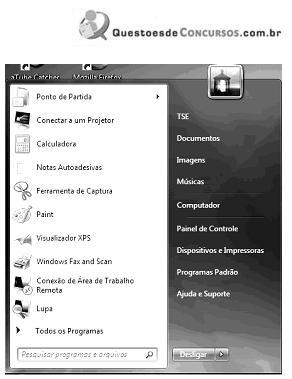
De forma alternativa, essa ação pode ser executada quando se aciona a tecla de logotipo do Windows no teclado ou por meio da execução do seguinte atalho de teclado:
De forma alternativa, essa ação pode ser executada quando se aciona a tecla de logotipo do Windows
no teclado ou por meio da execução do seguinte atalho de teclado:
Ano: 2012
Banca:
CONSULPLAN
Órgão:
TSE
Provas:
CONSULPLAN - 2012 - TSE - Analista Judiciário - Análise de Sistemas
|
CONSULPLAN - 2012 - TSE - Analista Judiciário - Arquivologia |
CONSULPLAN - 2012 - TSE - Analista Judiciário - Área Administrativa |
CONSULPLAN - 2012 - TSE - Analista Judiciário - Biblioteconomia |
CONSULPLAN - 2012 - TSE - Analista Judiciário - Contabilidade |
CONSULPLAN - 2012 - TSE - Analista Judiciário - Engenharia Elétrica |
CONSULPLAN - 2012 - TSE - Analista Judiciário - Engenharia Mecânica |
CONSULPLAN - 2012 - TSE - Analista Judiciário - Estatística |
CONSULPLAN - 2012 - TSE - Analista Judiciário - Psicologia |
CONSULPLAN - 2012 - TSE - Analista Judiciário - Pedagogia |
Q223190
Direito Eleitoral
Com base na Lei nº 4.737/65 e suas atualizações, NÃO compete ao juiz eleitoral
Ano: 2012
Banca:
CONSULPLAN
Órgão:
TSE
Provas:
CONSULPLAN - 2012 - TSE - Analista Judiciário - Análise de Sistemas
|
CONSULPLAN - 2012 - TSE - Analista Judiciário - Arquivologia |
CONSULPLAN - 2012 - TSE - Analista Judiciário - Área Administrativa |
CONSULPLAN - 2012 - TSE - Analista Judiciário - Biblioteconomia |
CONSULPLAN - 2012 - TSE - Analista Judiciário - Contabilidade |
CONSULPLAN - 2012 - TSE - Analista Judiciário - Engenharia Elétrica |
CONSULPLAN - 2012 - TSE - Analista Judiciário - Engenharia Mecânica |
CONSULPLAN - 2012 - TSE - Analista Judiciário - Estatística |
CONSULPLAN - 2012 - TSE - Analista Judiciário - Psicologia |
CONSULPLAN - 2012 - TSE - Analista Judiciário - Pedagogia |
Q223189
Direito Eleitoral
Em relação aos órgãos da Justiça Eleitoral, com base na Lei nº 4.737/65 e suas atualizações, é correto afirmar que
Ano: 2012
Banca:
CONSULPLAN
Órgão:
TSE
Provas:
CONSULPLAN - 2012 - TSE - Analista Judiciário - Análise de Sistemas
|
CONSULPLAN - 2012 - TSE - Analista Judiciário - Arquivologia |
CONSULPLAN - 2012 - TSE - Analista Judiciário - Área Administrativa |
CONSULPLAN - 2012 - TSE - Analista Judiciário - Biblioteconomia |
CONSULPLAN - 2012 - TSE - Analista Judiciário - Contabilidade |
CONSULPLAN - 2012 - TSE - Analista Judiciário - Engenharia Elétrica |
CONSULPLAN - 2012 - TSE - Analista Judiciário - Engenharia Mecânica |
CONSULPLAN - 2012 - TSE - Analista Judiciário - Estatística |
CONSULPLAN - 2012 - TSE - Analista Judiciário - Psicologia |
CONSULPLAN - 2012 - TSE - Analista Judiciário - Pedagogia |
Q223188
Direito Eleitoral
Com base na Resolução TSE 21.538 de 2003, em relação à hipótese de ilícito penal, assinale a afirmativa INCORRETA.
Ano: 2012
Banca:
CONSULPLAN
Órgão:
TSE
Provas:
CONSULPLAN - 2012 - TSE - Analista Judiciário - Análise de Sistemas
|
CONSULPLAN - 2012 - TSE - Analista Judiciário - Arquivologia |
CONSULPLAN - 2012 - TSE - Analista Judiciário - Área Administrativa |
CONSULPLAN - 2012 - TSE - Analista Judiciário - Biblioteconomia |
CONSULPLAN - 2012 - TSE - Analista Judiciário - Contabilidade |
CONSULPLAN - 2012 - TSE - Analista Judiciário - Engenharia Elétrica |
CONSULPLAN - 2012 - TSE - Analista Judiciário - Engenharia Mecânica |
CONSULPLAN - 2012 - TSE - Analista Judiciário - Estatística |
CONSULPLAN - 2012 - TSE - Analista Judiciário - Psicologia |
CONSULPLAN - 2012 - TSE - Analista Judiciário - Pedagogia |
Q223187
Direito Eleitoral
Em relação ao acesso às informações constantes do cadastro do eleitor, com base na Resolução TSE 21.538 de 2003, é INCORRETO afirmar que
Ano: 2012
Banca:
CONSULPLAN
Órgão:
TSE
Provas:
CONSULPLAN - 2012 - TSE - Analista Judiciário - Análise de Sistemas
|
CONSULPLAN - 2012 - TSE - Analista Judiciário - Arquivologia |
CONSULPLAN - 2012 - TSE - Analista Judiciário - Biblioteconomia |
CONSULPLAN - 2012 - TSE - Analista Judiciário - Contabilidade |
CONSULPLAN - 2012 - TSE - Analista Judiciário - Engenharia Elétrica |
CONSULPLAN - 2012 - TSE - Analista Judiciário - Engenharia Mecânica |
CONSULPLAN - 2012 - TSE - Analista Judiciário - Estatística |
CONSULPLAN - 2012 - TSE - Analista Judiciário - Psicologia |
CONSULPLAN - 2012 - TSE - Analista Judiciário - Pedagogia |
Q223185
Direito Administrativo
No que tange à rescisão dos contratos administrativos é correto afirmar que
Ano: 2012
Banca:
CONSULPLAN
Órgão:
TSE
Provas:
CONSULPLAN - 2012 - TSE - Analista Judiciário - Análise de Sistemas
|
CONSULPLAN - 2012 - TSE - Analista Judiciário - Arquivologia |
CONSULPLAN - 2012 - TSE - Analista Judiciário - Biblioteconomia |
CONSULPLAN - 2012 - TSE - Analista Judiciário - Contabilidade |
CONSULPLAN - 2012 - TSE - Analista Judiciário - Engenharia Elétrica |
CONSULPLAN - 2012 - TSE - Analista Judiciário - Engenharia Mecânica |
CONSULPLAN - 2012 - TSE - Analista Judiciário - Estatística |
CONSULPLAN - 2012 - TSE - Analista Judiciário - Psicologia |
CONSULPLAN - 2012 - TSE - Analista Judiciário - Pedagogia |
Q223184
Direito Administrativo
São motivos para a rescisão, EXCETO:

 Conheça nossos planos