Questões de Concurso
Para engenheiro eletricista
Foram encontradas 20.934 questões
Resolva questões gratuitamente!
Junte-se a mais de 4 milhões de concurseiros!


Ano: 2026
Banca:
VUNESP
Órgão:
Prefeitura de São José do Rio Preto - SP
Prova:
VUNESP - 2026 - Prefeitura de São José do Rio Preto - SP - Engenheiro Eletricista |
Q3850029
Engenharia Elétrica
Durante o projeto de um sistema de detecção e alarme de incêndio em um edifício comercial, o engenheiro
responsável deve prever a autonomia da alimentação
auxiliar do sistema para que o alarme continue operando mesmo em caso de falha da rede elétrica. De acordo
com as instruções técnicas do Corpo de Bombeiros do
Estado de São Paulo, essa alimentação auxiliar (baterias ou fonte reserva) deve garantir o funcionamento do
sistema por, no mínimo,
Ano: 2026
Banca:
VUNESP
Órgão:
Prefeitura de São José do Rio Preto - SP
Prova:
VUNESP - 2026 - Prefeitura de São José do Rio Preto - SP - Engenheiro Eletricista |
Q3850028
Engenharia Elétrica
Assinale a alternativa correta a respeito dos sistemas
de proteção contra descargas atmosféricas (SPDA) e
aterramento.
Ano: 2026
Banca:
VUNESP
Órgão:
Prefeitura de São José do Rio Preto - SP
Prova:
VUNESP - 2026 - Prefeitura de São José do Rio Preto - SP - Engenheiro Eletricista |
Q3850027
Engenharia Elétrica
Um galpão de manutenção mede 12 m de comprimento por 10 m de largura e deve possuir iluminância média
de 750 lux no plano de trabalho. Cada luminária fornece
7200 lúmens úteis, e o fator de manutenção do sistema
é 0,8, devido à presença de poeira e à degradação das
lâmpadas ao longo do tempo. Desprezando outras perdas, o número mínimo de luminárias necessário para
atingir o nível de iluminância especificado é
Ano: 2026
Banca:
VUNESP
Órgão:
Prefeitura de São José do Rio Preto - SP
Prova:
VUNESP - 2026 - Prefeitura de São José do Rio Preto - SP - Engenheiro Eletricista |
Q3850026
Engenharia Elétrica
Assinale a alternativa verdadeira a respeito dos estabilizadores e nobreaks utilizados em instalações elétricas
de baixa tensão.
Ano: 2026
Banca:
VUNESP
Órgão:
Prefeitura de São José do Rio Preto - SP
Prova:
VUNESP - 2026 - Prefeitura de São José do Rio Preto - SP - Engenheiro Eletricista |
Q3850025
Engenharia Elétrica
Considerando os princípios de instalação e funcionamento
de um dispositivo de proteção contra surtos (DPS), assinale
a alternativa que apresenta sua função correta.
Ano: 2026
Banca:
VUNESP
Órgão:
Prefeitura de São José do Rio Preto - SP
Prova:
VUNESP - 2026 - Prefeitura de São José do Rio Preto - SP - Engenheiro Eletricista |
Q3850024
Engenharia Elétrica
Um projeto residencial contemporâneo apresenta uma
sala de estar de formato pentagonal regular, com lado
de 6 metros. Considerando o que determina as normas
brasileiras, o número mínimo de pontos de tomada a ser
instalado nessa sala é
Ano: 2026
Banca:
VUNESP
Órgão:
Prefeitura de São José do Rio Preto - SP
Prova:
VUNESP - 2026 - Prefeitura de São José do Rio Preto - SP - Engenheiro Eletricista |
Q3850023
Engenharia Elétrica
Segundo as resoluções vigentes da Agência Nacional
de Energia Elétrica, o valor mínimo de fator de potência
exigido para instalações consumidoras com conexão em
tensão maior ou igual a 2,3 kV é
Ano: 2026
Banca:
VUNESP
Órgão:
Prefeitura de São José do Rio Preto - SP
Prova:
VUNESP - 2026 - Prefeitura de São José do Rio Preto - SP - Engenheiro Eletricista |
Q3850022
Engenharia Elétrica
Uma instalação trifásica possui as seguintes cargas instaladas:
• Iluminação: 10 kW
• Tomadas de uso geral: 20 kW
• Motores: 37,5 kVA com fator de potência 0,8
Adote: Fatores de demanda de 1,0 para iluminação, 0,8 para tomadas e 0,6 para motores.
Assinale a alternativa que apresenta o valor que melhor se aproxima do fator de demanda global da instalação.
Ano: 2026
Banca:
VUNESP
Órgão:
Prefeitura de São José do Rio Preto - SP
Prova:
VUNESP - 2026 - Prefeitura de São José do Rio Preto - SP - Engenheiro Eletricista |
Q3850021
Engenharia Elétrica
Em uma cabine primária de 13,8 kV/380 V, o transformador monofásico de 60 kVA foi submetido a ensaios de
rotina para determinação de seu rendimento. No ensaio
de circuito aberto, com o lado de baixa tensão (380 V)
energizado, registrou-se corrente eficaz de 4,3 A e potência dissipada de 200 W. No ensaio de curto-circuito, com
instrumentos no lado de alta tensão, observou-se tensão
de 40 V, corrente de 32 A e potência de 800 W. Durante
operação em carga nominal, o transformador atende equipamentos de ventilação industrial com fator de
potência 0,8 indutivo. Nessas condições, o rendimento
do transformador é de aproximadamente:
Ano: 2026
Banca:
VUNESP
Órgão:
Prefeitura de São José do Rio Preto - SP
Prova:
VUNESP - 2026 - Prefeitura de São José do Rio Preto - SP - Engenheiro Eletricista |
Q3850020
Engenharia Elétrica
Uma subestação 13,8 kV/380 V alimenta um quadro geral
de baixa tensão (BT) que supre um conjunto de cargas
trifásicas com potência ativa de 180 kW a 380 V. O fator
de potência global é inicialmente 0,60 (indutivo) e é corrigido para 0,90 (indutivo) por meio de banco automático
de capacitores. Admite-se tensão e potência ativa constantes e desconsideram-se harmônicas. Nessas condições, assinale a alternativa que apresenta corretamente
as reduções percentuais da corrente de linha no alimentador de BT (X) e das perdas ôhmicas nesse alimentador (Y)
após a correção.
Ano: 2026
Banca:
VUNESP
Órgão:
Prefeitura de São José do Rio Preto - SP
Prova:
VUNESP - 2026 - Prefeitura de São José do Rio Preto - SP - Engenheiro Eletricista |
Q3850019
Engenharia Elétrica
Em um alimentador de 13,8 kV, é utilizado um relé de
sobrecorrente temporizado de tempo inverso (função
ANSI 51) para proteção de sobrecorrente. O relé tem
corrente de partida (pick-up) Is = 300 A e Time Multiplier
Setting (TMS) igual a 0,20. Há também uma proteção
instantânea (função ANSI 50) ajustada para atuar em
10 vezes Is com tempo fixo de 0,10s. O tempo de
atuação da função 51 pode ser obtido usando a curva
obtida para TMS = 1 a seguir:
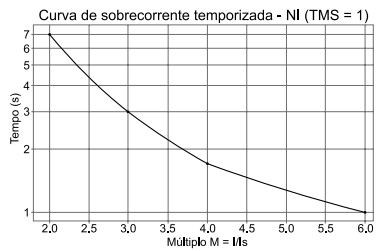
Durante uma falta no alimentador, a corrente medida pelo relé é de 900 A. Assinale a alternativa que apresenta corretamente o tempo de atuação da proteção do alimentador.
Durante uma falta no alimentador, a corrente medida pelo relé é de 900 A. Assinale a alternativa que apresenta corretamente o tempo de atuação da proteção do alimentador.
Ano: 2026
Banca:
FGV
Órgão:
AMAZUL
Provas:
FGV - 2026 - AMAZUL - Advogado
|
FGV - 2026 - AMAZUL - Contador |
FGV - 2026 - AMAZUL - Designer Gráfico |
FGV - 2026 - AMAZUL - Analista de Administração |
FGV - 2026 - AMAZUL - Engenheiro Mecatrônico |
FGV - 2026 - AMAZUL - Analista de Desenvolvimento de Sistemas |
FGV - 2026 - AMAZUL - Engenheiro Naval |
FGV - 2026 - AMAZUL - Engenheiro de Computação |
FGV - 2026 - AMAZUL - Médico do Trabalho |
FGV - 2026 - AMAZUL - Psicólogo |
FGV - 2026 - AMAZUL - Analista de Infraestrutura de Tecnologia da Informação |
FGV - 2026 - AMAZUL - Engenheiro de Controle da Qualidade |
FGV - 2026 - AMAZUL - Analista de Negócios |
FGV - 2026 - AMAZUL - Arquiteto |
FGV - 2026 - AMAZUL - Auditor |
FGV - 2026 - AMAZUL - Analista de Recursos Humanos |
FGV - 2026 - AMAZUL - Engenheiro Ambiental |
FGV - 2026 - AMAZUL - Engenheiro de Materiais |
FGV - 2026 - AMAZUL - Especialista de Radioproteção |
FGV - 2026 - AMAZUL - Engenheiro Nuclear |
FGV - 2026 - AMAZUL - Engenheiro de Produção |
FGV - 2026 - AMAZUL - Engenheiro Civil |
FGV - 2026 - AMAZUL - Engenheiro Controle e Automação |
FGV - 2026 - AMAZUL - Físico |
FGV - 2026 - AMAZUL - Engenheiro Químico |
FGV - 2026 - AMAZUL - Engenheiro de Telecomunicações |
FGV - 2026 - AMAZUL - Engenheiro de Segurança do Trabalho |
FGV - 2026 - AMAZUL - Engenheiro Eletricista |
FGV - 2026 - AMAZUL - Engenheiro Eletrônico |
FGV - 2026 - AMAZUL - Meteorologista |
FGV - 2026 - AMAZUL - Químico |
FGV - 2026 - AMAZUL - Tecnólogo em Fabricação Mecânica |
FGV - 2026 - AMAZUL - Engenheiro de Energia |
FGV - 2026 - AMAZUL - Engenheiro Mecânico |
Q3846042
Inglês
Texto associado
READ THE TEXT AND ANSWER THE FOLLOWING QUESTION
Social Dimensions of Climate Change
Extreme weather events are deeply intertwined with global
patterns of inequality. The poorest and most vulnerable people
bear the brunt of climate change impacts yet contribute the least
to the crisis. As the impacts of climate change mount, millions of
vulnerable people face disproportionate challenges in terms of
loss of jobs; physical harm; disease; mental health effects; food
insecurity; access to water; migration and forced displacement;
loss of shelter, assets, and community ties, and other related risks.
Some people are more vulnerable to climate change than others.
For example, workers in sectors such as agriculture, fishing, and
tourism rely on natural resources that are particularly sensitive to
increasingly unpredictable weather and seasonal patterns.
Female-headed households, children, persons with
disabilities, Indigenous Peoples and ethnic minorities, landless
tenants, migrant workers, displaced persons, older people, and
other socially marginalized groups often have fewer financial and
other resources to cope with and recover from shocks which might
threaten their wellbeing and the wellbeing of their families. The
root causes of their vulnerability lie in a combination of their
geographical locations; their financial, socio-economic, cultural,
and social status; and their access to resources, services, and
decision-making power.
The poor are often not just among the most vulnerable to climate
change, but also disproportionately impacted by measures to
address it. These impacts can include increased costs of living, loss
of livelihoods, and limited access to resources and support
systems, which exacerbate existing inequalities and poverty
trends. In the absence of well-designed and citizen-centered
policies, efforts to tackle climate change can have unintended
consequences for the livelihoods of certain groups, including
placing a higher financial burden on poor households […].
While much progress has been made on the science and the types
of policies needed to support a transition to low carbon, climateresilient development, a challenge facing many countries is
engaging citizens who are concerned that they will be unfairly
impacted by climate policies. Citizen-centered programs play a
vital role in ensuring that resources are used efficiently. Engaging
people in shaping climate action is equally critical for achieving
lasting impact. This means ensuring transparency, access to
information, and active citizen engagement on climate risks and
green growth. Such involvement can help build public support to
reduce climate impacts, overcome behavioral and political barriers
to decarbonization, as well as foster both new ideas and a sense of
ownership over solutions.
Moreover, communities bring unique perspectives, skills, and a
wealth of knowledge to the challenge of strengthening resilience
and addressing climate change. They should be engaged as
partners in resilience-building rather than being regarded merely
as beneficiaries. Research and experience show that community
leaders can successfully set priorities, influence ownership, as well
as design and implement investment programs that are responsive
to their community’s own needs. A 2022 report by the
Intergovernmental Panel on Climate Change (IPCC) recognizes the
value of diverse forms of knowledge — such as scientific,
Indigenous, and local knowledge — in building climate resilience.
Innovations in the architecture of climate finance can connect
communities and marginalized groups to the policy, technical, and
financial assistance that they need for locally relevant and
effective development outcomes.
From: https://www.worldbank.org/en/topic/social-dimensions-of-climate-change
The modal verb in “They should be engaged as partners” (5th
paragraph) indicates a(n):
Ano: 2026
Banca:
FGV
Órgão:
AMAZUL
Provas:
FGV - 2026 - AMAZUL - Advogado
|
FGV - 2026 - AMAZUL - Contador |
FGV - 2026 - AMAZUL - Designer Gráfico |
FGV - 2026 - AMAZUL - Analista de Administração |
FGV - 2026 - AMAZUL - Engenheiro Mecatrônico |
FGV - 2026 - AMAZUL - Analista de Desenvolvimento de Sistemas |
FGV - 2026 - AMAZUL - Engenheiro Naval |
FGV - 2026 - AMAZUL - Engenheiro de Computação |
FGV - 2026 - AMAZUL - Médico do Trabalho |
FGV - 2026 - AMAZUL - Psicólogo |
FGV - 2026 - AMAZUL - Analista de Infraestrutura de Tecnologia da Informação |
FGV - 2026 - AMAZUL - Engenheiro de Controle da Qualidade |
FGV - 2026 - AMAZUL - Analista de Negócios |
FGV - 2026 - AMAZUL - Arquiteto |
FGV - 2026 - AMAZUL - Auditor |
FGV - 2026 - AMAZUL - Analista de Recursos Humanos |
FGV - 2026 - AMAZUL - Engenheiro Ambiental |
FGV - 2026 - AMAZUL - Engenheiro de Materiais |
FGV - 2026 - AMAZUL - Especialista de Radioproteção |
FGV - 2026 - AMAZUL - Engenheiro Nuclear |
FGV - 2026 - AMAZUL - Engenheiro de Produção |
FGV - 2026 - AMAZUL - Engenheiro Civil |
FGV - 2026 - AMAZUL - Engenheiro Controle e Automação |
FGV - 2026 - AMAZUL - Físico |
FGV - 2026 - AMAZUL - Engenheiro Químico |
FGV - 2026 - AMAZUL - Engenheiro de Telecomunicações |
FGV - 2026 - AMAZUL - Engenheiro de Segurança do Trabalho |
FGV - 2026 - AMAZUL - Engenheiro Eletricista |
FGV - 2026 - AMAZUL - Engenheiro Eletrônico |
FGV - 2026 - AMAZUL - Meteorologista |
FGV - 2026 - AMAZUL - Químico |
FGV - 2026 - AMAZUL - Tecnólogo em Fabricação Mecânica |
FGV - 2026 - AMAZUL - Engenheiro de Energia |
FGV - 2026 - AMAZUL - Engenheiro Mecânico |
Q3846041
Inglês
Texto associado
READ THE TEXT AND ANSWER THE FOLLOWING QUESTION
Social Dimensions of Climate Change
Extreme weather events are deeply intertwined with global
patterns of inequality. The poorest and most vulnerable people
bear the brunt of climate change impacts yet contribute the least
to the crisis. As the impacts of climate change mount, millions of
vulnerable people face disproportionate challenges in terms of
loss of jobs; physical harm; disease; mental health effects; food
insecurity; access to water; migration and forced displacement;
loss of shelter, assets, and community ties, and other related risks.
Some people are more vulnerable to climate change than others.
For example, workers in sectors such as agriculture, fishing, and
tourism rely on natural resources that are particularly sensitive to
increasingly unpredictable weather and seasonal patterns.
Female-headed households, children, persons with
disabilities, Indigenous Peoples and ethnic minorities, landless
tenants, migrant workers, displaced persons, older people, and
other socially marginalized groups often have fewer financial and
other resources to cope with and recover from shocks which might
threaten their wellbeing and the wellbeing of their families. The
root causes of their vulnerability lie in a combination of their
geographical locations; their financial, socio-economic, cultural,
and social status; and their access to resources, services, and
decision-making power.
The poor are often not just among the most vulnerable to climate
change, but also disproportionately impacted by measures to
address it. These impacts can include increased costs of living, loss
of livelihoods, and limited access to resources and support
systems, which exacerbate existing inequalities and poverty
trends. In the absence of well-designed and citizen-centered
policies, efforts to tackle climate change can have unintended
consequences for the livelihoods of certain groups, including
placing a higher financial burden on poor households […].
While much progress has been made on the science and the types
of policies needed to support a transition to low carbon, climateresilient development, a challenge facing many countries is
engaging citizens who are concerned that they will be unfairly
impacted by climate policies. Citizen-centered programs play a
vital role in ensuring that resources are used efficiently. Engaging
people in shaping climate action is equally critical for achieving
lasting impact. This means ensuring transparency, access to
information, and active citizen engagement on climate risks and
green growth. Such involvement can help build public support to
reduce climate impacts, overcome behavioral and political barriers
to decarbonization, as well as foster both new ideas and a sense of
ownership over solutions.
Moreover, communities bring unique perspectives, skills, and a
wealth of knowledge to the challenge of strengthening resilience
and addressing climate change. They should be engaged as
partners in resilience-building rather than being regarded merely
as beneficiaries. Research and experience show that community
leaders can successfully set priorities, influence ownership, as well
as design and implement investment programs that are responsive
to their community’s own needs. A 2022 report by the
Intergovernmental Panel on Climate Change (IPCC) recognizes the
value of diverse forms of knowledge — such as scientific,
Indigenous, and local knowledge — in building climate resilience.
Innovations in the architecture of climate finance can connect
communities and marginalized groups to the policy, technical, and
financial assistance that they need for locally relevant and
effective development outcomes.
From: https://www.worldbank.org/en/topic/social-dimensions-of-climate-change
The verb in “efforts to tackle climate change” (3rd paragraph) is
semantically equivalent to:
Ano: 2026
Banca:
FGV
Órgão:
AMAZUL
Provas:
FGV - 2026 - AMAZUL - Advogado
|
FGV - 2026 - AMAZUL - Contador |
FGV - 2026 - AMAZUL - Designer Gráfico |
FGV - 2026 - AMAZUL - Analista de Administração |
FGV - 2026 - AMAZUL - Engenheiro Mecatrônico |
FGV - 2026 - AMAZUL - Analista de Desenvolvimento de Sistemas |
FGV - 2026 - AMAZUL - Engenheiro Naval |
FGV - 2026 - AMAZUL - Engenheiro de Computação |
FGV - 2026 - AMAZUL - Médico do Trabalho |
FGV - 2026 - AMAZUL - Psicólogo |
FGV - 2026 - AMAZUL - Analista de Infraestrutura de Tecnologia da Informação |
FGV - 2026 - AMAZUL - Engenheiro de Controle da Qualidade |
FGV - 2026 - AMAZUL - Analista de Negócios |
FGV - 2026 - AMAZUL - Arquiteto |
FGV - 2026 - AMAZUL - Auditor |
FGV - 2026 - AMAZUL - Analista de Recursos Humanos |
FGV - 2026 - AMAZUL - Engenheiro Ambiental |
FGV - 2026 - AMAZUL - Engenheiro de Materiais |
FGV - 2026 - AMAZUL - Especialista de Radioproteção |
FGV - 2026 - AMAZUL - Engenheiro Nuclear |
FGV - 2026 - AMAZUL - Engenheiro de Produção |
FGV - 2026 - AMAZUL - Engenheiro Civil |
FGV - 2026 - AMAZUL - Engenheiro Controle e Automação |
FGV - 2026 - AMAZUL - Físico |
FGV - 2026 - AMAZUL - Engenheiro Químico |
FGV - 2026 - AMAZUL - Engenheiro de Telecomunicações |
FGV - 2026 - AMAZUL - Engenheiro de Segurança do Trabalho |
FGV - 2026 - AMAZUL - Engenheiro Eletricista |
FGV - 2026 - AMAZUL - Engenheiro Eletrônico |
FGV - 2026 - AMAZUL - Meteorologista |
FGV - 2026 - AMAZUL - Químico |
FGV - 2026 - AMAZUL - Tecnólogo em Fabricação Mecânica |
FGV - 2026 - AMAZUL - Engenheiro de Energia |
FGV - 2026 - AMAZUL - Engenheiro Mecânico |
Q3846040
Inglês
Texto associado
READ THE TEXT AND ANSWER THE FOLLOWING QUESTION
Social Dimensions of Climate Change
Extreme weather events are deeply intertwined with global
patterns of inequality. The poorest and most vulnerable people
bear the brunt of climate change impacts yet contribute the least
to the crisis. As the impacts of climate change mount, millions of
vulnerable people face disproportionate challenges in terms of
loss of jobs; physical harm; disease; mental health effects; food
insecurity; access to water; migration and forced displacement;
loss of shelter, assets, and community ties, and other related risks.
Some people are more vulnerable to climate change than others.
For example, workers in sectors such as agriculture, fishing, and
tourism rely on natural resources that are particularly sensitive to
increasingly unpredictable weather and seasonal patterns.
Female-headed households, children, persons with
disabilities, Indigenous Peoples and ethnic minorities, landless
tenants, migrant workers, displaced persons, older people, and
other socially marginalized groups often have fewer financial and
other resources to cope with and recover from shocks which might
threaten their wellbeing and the wellbeing of their families. The
root causes of their vulnerability lie in a combination of their
geographical locations; their financial, socio-economic, cultural,
and social status; and their access to resources, services, and
decision-making power.
The poor are often not just among the most vulnerable to climate
change, but also disproportionately impacted by measures to
address it. These impacts can include increased costs of living, loss
of livelihoods, and limited access to resources and support
systems, which exacerbate existing inequalities and poverty
trends. In the absence of well-designed and citizen-centered
policies, efforts to tackle climate change can have unintended
consequences for the livelihoods of certain groups, including
placing a higher financial burden on poor households […].
While much progress has been made on the science and the types
of policies needed to support a transition to low carbon, climateresilient development, a challenge facing many countries is
engaging citizens who are concerned that they will be unfairly
impacted by climate policies. Citizen-centered programs play a
vital role in ensuring that resources are used efficiently. Engaging
people in shaping climate action is equally critical for achieving
lasting impact. This means ensuring transparency, access to
information, and active citizen engagement on climate risks and
green growth. Such involvement can help build public support to
reduce climate impacts, overcome behavioral and political barriers
to decarbonization, as well as foster both new ideas and a sense of
ownership over solutions.
Moreover, communities bring unique perspectives, skills, and a
wealth of knowledge to the challenge of strengthening resilience
and addressing climate change. They should be engaged as
partners in resilience-building rather than being regarded merely
as beneficiaries. Research and experience show that community
leaders can successfully set priorities, influence ownership, as well
as design and implement investment programs that are responsive
to their community’s own needs. A 2022 report by the
Intergovernmental Panel on Climate Change (IPCC) recognizes the
value of diverse forms of knowledge — such as scientific,
Indigenous, and local knowledge — in building climate resilience.
Innovations in the architecture of climate finance can connect
communities and marginalized groups to the policy, technical, and
financial assistance that they need for locally relevant and
effective development outcomes.
From: https://www.worldbank.org/en/topic/social-dimensions-of-climate-change
“Yet” in “yet contribute the least” (1st paragraph) introduces an
idea of:
Ano: 2026
Banca:
FGV
Órgão:
AMAZUL
Provas:
FGV - 2026 - AMAZUL - Advogado
|
FGV - 2026 - AMAZUL - Contador |
FGV - 2026 - AMAZUL - Designer Gráfico |
FGV - 2026 - AMAZUL - Analista de Administração |
FGV - 2026 - AMAZUL - Engenheiro Mecatrônico |
FGV - 2026 - AMAZUL - Analista de Desenvolvimento de Sistemas |
FGV - 2026 - AMAZUL - Engenheiro Naval |
FGV - 2026 - AMAZUL - Engenheiro de Computação |
FGV - 2026 - AMAZUL - Médico do Trabalho |
FGV - 2026 - AMAZUL - Psicólogo |
FGV - 2026 - AMAZUL - Analista de Infraestrutura de Tecnologia da Informação |
FGV - 2026 - AMAZUL - Engenheiro de Controle da Qualidade |
FGV - 2026 - AMAZUL - Analista de Negócios |
FGV - 2026 - AMAZUL - Arquiteto |
FGV - 2026 - AMAZUL - Auditor |
FGV - 2026 - AMAZUL - Analista de Recursos Humanos |
FGV - 2026 - AMAZUL - Engenheiro Ambiental |
FGV - 2026 - AMAZUL - Engenheiro de Materiais |
FGV - 2026 - AMAZUL - Especialista de Radioproteção |
FGV - 2026 - AMAZUL - Engenheiro Nuclear |
FGV - 2026 - AMAZUL - Engenheiro de Produção |
FGV - 2026 - AMAZUL - Engenheiro Civil |
FGV - 2026 - AMAZUL - Engenheiro Controle e Automação |
FGV - 2026 - AMAZUL - Físico |
FGV - 2026 - AMAZUL - Engenheiro Químico |
FGV - 2026 - AMAZUL - Engenheiro de Telecomunicações |
FGV - 2026 - AMAZUL - Engenheiro de Segurança do Trabalho |
FGV - 2026 - AMAZUL - Engenheiro Eletricista |
FGV - 2026 - AMAZUL - Engenheiro Eletrônico |
FGV - 2026 - AMAZUL - Meteorologista |
FGV - 2026 - AMAZUL - Químico |
FGV - 2026 - AMAZUL - Tecnólogo em Fabricação Mecânica |
FGV - 2026 - AMAZUL - Engenheiro de Energia |
FGV - 2026 - AMAZUL - Engenheiro Mecânico |
Q3846039
Inglês
Texto associado
READ THE TEXT AND ANSWER THE FOLLOWING QUESTION
Social Dimensions of Climate Change
Extreme weather events are deeply intertwined with global
patterns of inequality. The poorest and most vulnerable people
bear the brunt of climate change impacts yet contribute the least
to the crisis. As the impacts of climate change mount, millions of
vulnerable people face disproportionate challenges in terms of
loss of jobs; physical harm; disease; mental health effects; food
insecurity; access to water; migration and forced displacement;
loss of shelter, assets, and community ties, and other related risks.
Some people are more vulnerable to climate change than others.
For example, workers in sectors such as agriculture, fishing, and
tourism rely on natural resources that are particularly sensitive to
increasingly unpredictable weather and seasonal patterns.
Female-headed households, children, persons with
disabilities, Indigenous Peoples and ethnic minorities, landless
tenants, migrant workers, displaced persons, older people, and
other socially marginalized groups often have fewer financial and
other resources to cope with and recover from shocks which might
threaten their wellbeing and the wellbeing of their families. The
root causes of their vulnerability lie in a combination of their
geographical locations; their financial, socio-economic, cultural,
and social status; and their access to resources, services, and
decision-making power.
The poor are often not just among the most vulnerable to climate
change, but also disproportionately impacted by measures to
address it. These impacts can include increased costs of living, loss
of livelihoods, and limited access to resources and support
systems, which exacerbate existing inequalities and poverty
trends. In the absence of well-designed and citizen-centered
policies, efforts to tackle climate change can have unintended
consequences for the livelihoods of certain groups, including
placing a higher financial burden on poor households […].
While much progress has been made on the science and the types
of policies needed to support a transition to low carbon, climateresilient development, a challenge facing many countries is
engaging citizens who are concerned that they will be unfairly
impacted by climate policies. Citizen-centered programs play a
vital role in ensuring that resources are used efficiently. Engaging
people in shaping climate action is equally critical for achieving
lasting impact. This means ensuring transparency, access to
information, and active citizen engagement on climate risks and
green growth. Such involvement can help build public support to
reduce climate impacts, overcome behavioral and political barriers
to decarbonization, as well as foster both new ideas and a sense of
ownership over solutions.
Moreover, communities bring unique perspectives, skills, and a
wealth of knowledge to the challenge of strengthening resilience
and addressing climate change. They should be engaged as
partners in resilience-building rather than being regarded merely
as beneficiaries. Research and experience show that community
leaders can successfully set priorities, influence ownership, as well
as design and implement investment programs that are responsive
to their community’s own needs. A 2022 report by the
Intergovernmental Panel on Climate Change (IPCC) recognizes the
value of diverse forms of knowledge — such as scientific,
Indigenous, and local knowledge — in building climate resilience.
Innovations in the architecture of climate finance can connect
communities and marginalized groups to the policy, technical, and
financial assistance that they need for locally relevant and
effective development outcomes.
From: https://www.worldbank.org/en/topic/social-dimensions-of-climate-change
The idiom in “bear the brunt of climate change impacts” (1st
paragraph) means to:
Ano: 2026
Banca:
FGV
Órgão:
AMAZUL
Provas:
FGV - 2026 - AMAZUL - Advogado
|
FGV - 2026 - AMAZUL - Contador |
FGV - 2026 - AMAZUL - Designer Gráfico |
FGV - 2026 - AMAZUL - Analista de Administração |
FGV - 2026 - AMAZUL - Engenheiro Mecatrônico |
FGV - 2026 - AMAZUL - Analista de Desenvolvimento de Sistemas |
FGV - 2026 - AMAZUL - Engenheiro Naval |
FGV - 2026 - AMAZUL - Engenheiro de Computação |
FGV - 2026 - AMAZUL - Médico do Trabalho |
FGV - 2026 - AMAZUL - Psicólogo |
FGV - 2026 - AMAZUL - Analista de Infraestrutura de Tecnologia da Informação |
FGV - 2026 - AMAZUL - Engenheiro de Controle da Qualidade |
FGV - 2026 - AMAZUL - Analista de Negócios |
FGV - 2026 - AMAZUL - Arquiteto |
FGV - 2026 - AMAZUL - Auditor |
FGV - 2026 - AMAZUL - Analista de Recursos Humanos |
FGV - 2026 - AMAZUL - Engenheiro Ambiental |
FGV - 2026 - AMAZUL - Engenheiro de Materiais |
FGV - 2026 - AMAZUL - Especialista de Radioproteção |
FGV - 2026 - AMAZUL - Engenheiro Nuclear |
FGV - 2026 - AMAZUL - Engenheiro de Produção |
FGV - 2026 - AMAZUL - Engenheiro Civil |
FGV - 2026 - AMAZUL - Engenheiro Controle e Automação |
FGV - 2026 - AMAZUL - Físico |
FGV - 2026 - AMAZUL - Engenheiro Químico |
FGV - 2026 - AMAZUL - Engenheiro de Telecomunicações |
FGV - 2026 - AMAZUL - Engenheiro de Segurança do Trabalho |
FGV - 2026 - AMAZUL - Engenheiro Eletricista |
FGV - 2026 - AMAZUL - Engenheiro Eletrônico |
FGV - 2026 - AMAZUL - Meteorologista |
FGV - 2026 - AMAZUL - Químico |
FGV - 2026 - AMAZUL - Tecnólogo em Fabricação Mecânica |
FGV - 2026 - AMAZUL - Engenheiro de Energia |
FGV - 2026 - AMAZUL - Engenheiro Mecânico |
Q3846038
Inglês
Texto associado
READ THE TEXT AND ANSWER THE FOLLOWING QUESTION
Social Dimensions of Climate Change
Extreme weather events are deeply intertwined with global
patterns of inequality. The poorest and most vulnerable people
bear the brunt of climate change impacts yet contribute the least
to the crisis. As the impacts of climate change mount, millions of
vulnerable people face disproportionate challenges in terms of
loss of jobs; physical harm; disease; mental health effects; food
insecurity; access to water; migration and forced displacement;
loss of shelter, assets, and community ties, and other related risks.
Some people are more vulnerable to climate change than others.
For example, workers in sectors such as agriculture, fishing, and
tourism rely on natural resources that are particularly sensitive to
increasingly unpredictable weather and seasonal patterns.
Female-headed households, children, persons with
disabilities, Indigenous Peoples and ethnic minorities, landless
tenants, migrant workers, displaced persons, older people, and
other socially marginalized groups often have fewer financial and
other resources to cope with and recover from shocks which might
threaten their wellbeing and the wellbeing of their families. The
root causes of their vulnerability lie in a combination of their
geographical locations; their financial, socio-economic, cultural,
and social status; and their access to resources, services, and
decision-making power.
The poor are often not just among the most vulnerable to climate
change, but also disproportionately impacted by measures to
address it. These impacts can include increased costs of living, loss
of livelihoods, and limited access to resources and support
systems, which exacerbate existing inequalities and poverty
trends. In the absence of well-designed and citizen-centered
policies, efforts to tackle climate change can have unintended
consequences for the livelihoods of certain groups, including
placing a higher financial burden on poor households […].
While much progress has been made on the science and the types
of policies needed to support a transition to low carbon, climateresilient development, a challenge facing many countries is
engaging citizens who are concerned that they will be unfairly
impacted by climate policies. Citizen-centered programs play a
vital role in ensuring that resources are used efficiently. Engaging
people in shaping climate action is equally critical for achieving
lasting impact. This means ensuring transparency, access to
information, and active citizen engagement on climate risks and
green growth. Such involvement can help build public support to
reduce climate impacts, overcome behavioral and political barriers
to decarbonization, as well as foster both new ideas and a sense of
ownership over solutions.
Moreover, communities bring unique perspectives, skills, and a
wealth of knowledge to the challenge of strengthening resilience
and addressing climate change. They should be engaged as
partners in resilience-building rather than being regarded merely
as beneficiaries. Research and experience show that community
leaders can successfully set priorities, influence ownership, as well
as design and implement investment programs that are responsive
to their community’s own needs. A 2022 report by the
Intergovernmental Panel on Climate Change (IPCC) recognizes the
value of diverse forms of knowledge — such as scientific,
Indigenous, and local knowledge — in building climate resilience.
Innovations in the architecture of climate finance can connect
communities and marginalized groups to the policy, technical, and
financial assistance that they need for locally relevant and
effective development outcomes.
From: https://www.worldbank.org/en/topic/social-dimensions-of-climate-change
Based on the text, mark the statements below as TRUE (T) or FALSE
(F).
( ) Harsh climate conditions exert a uniform impact across populations.
( ) Supporting citizen involvement is key to building commitment.
( ) At this stage, the challenges have been wholly addressed and handled.
The statements are, respectively:
( ) Harsh climate conditions exert a uniform impact across populations.
( ) Supporting citizen involvement is key to building commitment.
( ) At this stage, the challenges have been wholly addressed and handled.
The statements are, respectively:
Ano: 2026
Banca:
FGV
Órgão:
AMAZUL
Provas:
FGV - 2026 - AMAZUL - Advogado
|
FGV - 2026 - AMAZUL - Contador |
FGV - 2026 - AMAZUL - Designer Gráfico |
FGV - 2026 - AMAZUL - Analista de Administração |
FGV - 2026 - AMAZUL - Engenheiro Mecatrônico |
FGV - 2026 - AMAZUL - Analista de Desenvolvimento de Sistemas |
FGV - 2026 - AMAZUL - Engenheiro Naval |
FGV - 2026 - AMAZUL - Engenheiro de Computação |
FGV - 2026 - AMAZUL - Médico do Trabalho |
FGV - 2026 - AMAZUL - Psicólogo |
FGV - 2026 - AMAZUL - Analista de Infraestrutura de Tecnologia da Informação |
FGV - 2026 - AMAZUL - Engenheiro de Controle da Qualidade |
FGV - 2026 - AMAZUL - Analista de Negócios |
FGV - 2026 - AMAZUL - Arquiteto |
FGV - 2026 - AMAZUL - Auditor |
FGV - 2026 - AMAZUL - Analista de Recursos Humanos |
FGV - 2026 - AMAZUL - Engenheiro Ambiental |
FGV - 2026 - AMAZUL - Engenheiro de Materiais |
FGV - 2026 - AMAZUL - Especialista de Radioproteção |
FGV - 2026 - AMAZUL - Engenheiro Nuclear |
FGV - 2026 - AMAZUL - Engenheiro de Produção |
FGV - 2026 - AMAZUL - Engenheiro Civil |
FGV - 2026 - AMAZUL - Engenheiro Controle e Automação |
FGV - 2026 - AMAZUL - Físico |
FGV - 2026 - AMAZUL - Engenheiro Químico |
FGV - 2026 - AMAZUL - Engenheiro de Telecomunicações |
FGV - 2026 - AMAZUL - Engenheiro de Segurança do Trabalho |
FGV - 2026 - AMAZUL - Engenheiro Eletricista |
FGV - 2026 - AMAZUL - Engenheiro Eletrônico |
FGV - 2026 - AMAZUL - Meteorologista |
FGV - 2026 - AMAZUL - Químico |
FGV - 2026 - AMAZUL - Tecnólogo em Fabricação Mecânica |
FGV - 2026 - AMAZUL - Engenheiro de Energia |
FGV - 2026 - AMAZUL - Engenheiro Mecânico |
Q3846037
Segurança da Informação
No contexto de segurança da informação, mais especificamente
sobre malwares, associe corretamente o cada item numerado no
primeiro bloco (variando de 1 a 4) às lacunas do segundo bloco.
1. Cavalo de troia (trojan horse)
2. Verme (worm)
3. Bomba lógica (logic bomb)
4. Zumbi (zombie, bot)
( ) Execução autônoma com capacidade de replicação automática e propagação entre sistemas conectados.
( ) Malware ativado por condição predefinida após período hibernado.
( ) Ataque a outras máquinas executado por software malicioso instalado em host comprometido.
( ) Software aparentemente útil que possui desvio oculto e malicioso de finalidade.
Assinale a opção que corretamente associa o nome do malware no primeiro bloco e a característica apresentada no segundo bloco.
1. Cavalo de troia (trojan horse)
2. Verme (worm)
3. Bomba lógica (logic bomb)
4. Zumbi (zombie, bot)
( ) Execução autônoma com capacidade de replicação automática e propagação entre sistemas conectados.
( ) Malware ativado por condição predefinida após período hibernado.
( ) Ataque a outras máquinas executado por software malicioso instalado em host comprometido.
( ) Software aparentemente útil que possui desvio oculto e malicioso de finalidade.
Assinale a opção que corretamente associa o nome do malware no primeiro bloco e a característica apresentada no segundo bloco.
Ano: 2026
Banca:
FGV
Órgão:
AMAZUL
Provas:
FGV - 2026 - AMAZUL - Advogado
|
FGV - 2026 - AMAZUL - Contador |
FGV - 2026 - AMAZUL - Designer Gráfico |
FGV - 2026 - AMAZUL - Analista de Administração |
FGV - 2026 - AMAZUL - Engenheiro Mecatrônico |
FGV - 2026 - AMAZUL - Analista de Desenvolvimento de Sistemas |
FGV - 2026 - AMAZUL - Engenheiro Naval |
FGV - 2026 - AMAZUL - Engenheiro de Computação |
FGV - 2026 - AMAZUL - Médico do Trabalho |
FGV - 2026 - AMAZUL - Psicólogo |
FGV - 2026 - AMAZUL - Analista de Infraestrutura de Tecnologia da Informação |
FGV - 2026 - AMAZUL - Engenheiro de Controle da Qualidade |
FGV - 2026 - AMAZUL - Analista de Negócios |
FGV - 2026 - AMAZUL - Arquiteto |
FGV - 2026 - AMAZUL - Auditor |
FGV - 2026 - AMAZUL - Analista de Recursos Humanos |
FGV - 2026 - AMAZUL - Engenheiro Ambiental |
FGV - 2026 - AMAZUL - Engenheiro de Materiais |
FGV - 2026 - AMAZUL - Especialista de Radioproteção |
FGV - 2026 - AMAZUL - Engenheiro Nuclear |
FGV - 2026 - AMAZUL - Engenheiro de Produção |
FGV - 2026 - AMAZUL - Engenheiro Civil |
FGV - 2026 - AMAZUL - Engenheiro Controle e Automação |
FGV - 2026 - AMAZUL - Físico |
FGV - 2026 - AMAZUL - Engenheiro Químico |
FGV - 2026 - AMAZUL - Engenheiro de Telecomunicações |
FGV - 2026 - AMAZUL - Engenheiro de Segurança do Trabalho |
FGV - 2026 - AMAZUL - Engenheiro Eletricista |
FGV - 2026 - AMAZUL - Engenheiro Eletrônico |
FGV - 2026 - AMAZUL - Meteorologista |
FGV - 2026 - AMAZUL - Químico |
FGV - 2026 - AMAZUL - Tecnólogo em Fabricação Mecânica |
FGV - 2026 - AMAZUL - Engenheiro de Energia |
FGV - 2026 - AMAZUL - Engenheiro Mecânico |
Q3846036
Redes de Computadores
No que concerne aos conceitos relacionados a redes de
computadores, assinale a alternativa que apresenta uma
associação incorreta.
Ano: 2026
Banca:
FGV
Órgão:
AMAZUL
Provas:
FGV - 2026 - AMAZUL - Advogado
|
FGV - 2026 - AMAZUL - Contador |
FGV - 2026 - AMAZUL - Designer Gráfico |
FGV - 2026 - AMAZUL - Analista de Administração |
FGV - 2026 - AMAZUL - Engenheiro Mecatrônico |
FGV - 2026 - AMAZUL - Analista de Desenvolvimento de Sistemas |
FGV - 2026 - AMAZUL - Engenheiro Naval |
FGV - 2026 - AMAZUL - Engenheiro de Computação |
FGV - 2026 - AMAZUL - Médico do Trabalho |
FGV - 2026 - AMAZUL - Psicólogo |
FGV - 2026 - AMAZUL - Analista de Infraestrutura de Tecnologia da Informação |
FGV - 2026 - AMAZUL - Engenheiro de Controle da Qualidade |
FGV - 2026 - AMAZUL - Analista de Negócios |
FGV - 2026 - AMAZUL - Arquiteto |
FGV - 2026 - AMAZUL - Auditor |
FGV - 2026 - AMAZUL - Analista de Recursos Humanos |
FGV - 2026 - AMAZUL - Engenheiro Ambiental |
FGV - 2026 - AMAZUL - Engenheiro de Materiais |
FGV - 2026 - AMAZUL - Especialista de Radioproteção |
FGV - 2026 - AMAZUL - Engenheiro Nuclear |
FGV - 2026 - AMAZUL - Engenheiro de Produção |
FGV - 2026 - AMAZUL - Engenheiro Civil |
FGV - 2026 - AMAZUL - Engenheiro Controle e Automação |
FGV - 2026 - AMAZUL - Físico |
FGV - 2026 - AMAZUL - Engenheiro Químico |
FGV - 2026 - AMAZUL - Engenheiro de Telecomunicações |
FGV - 2026 - AMAZUL - Engenheiro de Segurança do Trabalho |
FGV - 2026 - AMAZUL - Engenheiro Eletricista |
FGV - 2026 - AMAZUL - Engenheiro Eletrônico |
FGV - 2026 - AMAZUL - Meteorologista |
FGV - 2026 - AMAZUL - Químico |
FGV - 2026 - AMAZUL - Tecnólogo em Fabricação Mecânica |
FGV - 2026 - AMAZUL - Engenheiro de Energia |
FGV - 2026 - AMAZUL - Engenheiro Mecânico |
Q3846035
Sistemas Operacionais
O Registro do Windows organiza informações do sistema e dos
usuários em uma estrutura hierárquica.
Considerando a forma como o registro é estruturado, assinale a opção correta.
Considerando a forma como o registro é estruturado, assinale a opção correta.
Ano: 2026
Banca:
FGV
Órgão:
AMAZUL
Provas:
FGV - 2026 - AMAZUL - Advogado
|
FGV - 2026 - AMAZUL - Contador |
FGV - 2026 - AMAZUL - Designer Gráfico |
FGV - 2026 - AMAZUL - Analista de Administração |
FGV - 2026 - AMAZUL - Engenheiro Mecatrônico |
FGV - 2026 - AMAZUL - Analista de Desenvolvimento de Sistemas |
FGV - 2026 - AMAZUL - Engenheiro Naval |
FGV - 2026 - AMAZUL - Engenheiro de Computação |
FGV - 2026 - AMAZUL - Médico do Trabalho |
FGV - 2026 - AMAZUL - Psicólogo |
FGV - 2026 - AMAZUL - Analista de Infraestrutura de Tecnologia da Informação |
FGV - 2026 - AMAZUL - Engenheiro de Controle da Qualidade |
FGV - 2026 - AMAZUL - Analista de Negócios |
FGV - 2026 - AMAZUL - Arquiteto |
FGV - 2026 - AMAZUL - Auditor |
FGV - 2026 - AMAZUL - Analista de Recursos Humanos |
FGV - 2026 - AMAZUL - Engenheiro Ambiental |
FGV - 2026 - AMAZUL - Engenheiro de Materiais |
FGV - 2026 - AMAZUL - Especialista de Radioproteção |
FGV - 2026 - AMAZUL - Engenheiro Nuclear |
FGV - 2026 - AMAZUL - Engenheiro de Produção |
FGV - 2026 - AMAZUL - Engenheiro Civil |
FGV - 2026 - AMAZUL - Engenheiro Controle e Automação |
FGV - 2026 - AMAZUL - Físico |
FGV - 2026 - AMAZUL - Engenheiro Químico |
FGV - 2026 - AMAZUL - Engenheiro de Telecomunicações |
FGV - 2026 - AMAZUL - Engenheiro de Segurança do Trabalho |
FGV - 2026 - AMAZUL - Engenheiro Eletricista |
FGV - 2026 - AMAZUL - Engenheiro Eletrônico |
FGV - 2026 - AMAZUL - Meteorologista |
FGV - 2026 - AMAZUL - Químico |
FGV - 2026 - AMAZUL - Tecnólogo em Fabricação Mecânica |
FGV - 2026 - AMAZUL - Engenheiro de Energia |
FGV - 2026 - AMAZUL - Engenheiro Mecânico |
Q3846034
Redes de Computadores
Considerando a família de protocolos da arquitetura TCP/IP,
assinale a opção que corretamente apresenta o protocolo que
implementa a técnica de "lease" ou "leasing", na qual a concessão
de um endereço IP pelo servidor a um cliente deve ser renovada
antes de expirada.

 Conheça nossos planos