Questões de Concurso
Para professor - inglês
Foram encontradas 31.411 questões
Resolva questões gratuitamente!
Junte-se a mais de 4 milhões de concurseiros!


( ) No primeiro parágrafo, primeiro período, o verbo surpreendeu está na terceira pessoa do singular do pretérito perfeito do modo indicativo e pertence à segunda conjugação.
( ) No segundo parágrafo, a palavra que é um pronome relativo e se refere ao antecedente Emgepron.
( ) No sétimo parágrafo, primeiro período, a expressão a fim de é uma locução conjuntiva.
( ) No décimo parágrafo, terceiro período, a palavra que é um pronome relativo e introduz uma oração subordinada adjetiva.
De acordo com as afirmações, a sequência correta é
I – No décimo primeiro parágrafo, primeiro período, a oração “[...] que o equipamento militar brasileiro pode estar sendo sucateado.” é uma subordinada substantiva, subjetiva,
PORQUE
II – exerce a função sintática de objeto direto da oração principal “É argumentável [...]”.
A respeito das asserções, é correto afirmar que
I – No primeiro parágrafo, segundo período, foram usadas adequadamente as vírgulas para separar o adjunto adverbial de tempo em dezembro.
II – No terceiro parágrafo, o uso da vírgula antes da expressão por exemplo é facultativo.
III – No quarto parágrafo, o uso da vírgula após o adjetivo pública é facultativo.
IV – No sétimo parágrafo, no primeiro período, em lugar dos dois parênteses empregados, também seria adequado à norma-padrão substituí-los por um único travessão, usado após a palavra privilegiadas.
V – No nono parágrafo, no segundo período, o emprego das vírgulas no trecho: “[...] pessoal militar, civil, [...]” é facultativo.
Está correto apenas o que se afirma em
( ) No primeiro parágrafo, o vocábulo público foi acentuado corretamente porque se trata de uma proparoxítona.
( ) No segundo parágrafo, no trecho “[...] destinada a construir navios [...]”, faltou o acento indicativo da crase antes do verbo construir: destinada à construir, pois há a contração da preposição “a” com o artigo feminino “a”: destinada à construção.
( ) No terceiro parágrafo, os vocábulos ministérios e Saúde foram corretamente grafados, pois o primeiro é uma paroxítona terminada em ditongo; o segundo porque se acentua a vogal -u- quando for tônica e em hiato.
( ) No sétimo parágrafo, no primeiro período, grafou-se incorretamente a locução a fim de, a qual deveria ser escrita: afim de.
De acordo com as afirmações, a sequência correta é
I – O tipo predominante no texto é argumentativo; o gênero dele é editorial.
II – O tipo predominante no texto é narrativo; o gênero dele é artigo de opinião.
III – Os tipos textuais são categorias reduzidas; os gêneros, extensos e variáveis.
IV – O tipo injuntivo encontra-se presente em várias partes do texto.
V – O tipo predominante no texto é descritivo; o gênero dele é crônica jornalística.
Está correto apenas o que se afirma em
Leia o texto a seguir e responda a questão.
“He remembered the time he had hooked one of a pair of marlin. The male fish always let the female fish feed first and the hooked fish, the female, made a wild, panic-stricken, despairing fight that soon exhausted her, and all the time the male had stayed with her, crossing the line and circling with her on the surface.
He had stayed so close that the old man was afraid he would cut the line with his tail which was sharp as a scythe and almost of that size and shape. When the old man had gaffed her and clubbed her, holding the rapier bill with its sandpaper edge and clubbing her across the top of her head until her colour turned to a colour almost like the backing of mirrors, and then, with the boy’s aid, hoisted her aboard, the male fish had stayed by the side of the boat.
Then, while the old man was clearing the lines and preparing the harpoon, the male fish jumped high into the air beside the boat to see where the female was and then went down deep, his lavender wings, that were his pectoral fins, spread wide and all his wide lavender stripes showing. He was beautiful, the old man remembered, and he had stayed.”
HEMINGWAY, Ernest. The Old Man and the Sea.
Eua: Hueber Verlag, 1952. 108 p.
“the male fish jumped high into the air beside the boat to see where the female was and then went down deep, his lavender wings, that were his pectoral fins,”
O trecho destacado acima tem a função de:
Leia o texto a seguir e responda a questão.
“He remembered the time he had hooked one of a pair of marlin. The male fish always let the female fish feed first and the hooked fish, the female, made a wild, panic-stricken, despairing fight that soon exhausted her, and all the time the male had stayed with her, crossing the line and circling with her on the surface.
He had stayed so close that the old man was afraid he would cut the line with his tail which was sharp as a scythe and almost of that size and shape. When the old man had gaffed her and clubbed her, holding the rapier bill with its sandpaper edge and clubbing her across the top of her head until her colour turned to a colour almost like the backing of mirrors, and then, with the boy’s aid, hoisted her aboard, the male fish had stayed by the side of the boat.
Then, while the old man was clearing the lines and preparing the harpoon, the male fish jumped high into the air beside the boat to see where the female was and then went down deep, his lavender wings, that were his pectoral fins, spread wide and all his wide lavender stripes showing. He was beautiful, the old man remembered, and he had stayed.”
HEMINGWAY, Ernest. The Old Man and the Sea.
Eua: Hueber Verlag, 1952. 108 p.
“When the old man had gaffed her and clubbed her, holding the rapier bill with its sandpaper edge.”
A expressão destacada no trecho acima pode ser traduzida como:
Leia o texto a seguir e responda a questão.
“He remembered the time he had hooked one of a pair of marlin. The male fish always let the female fish feed first and the hooked fish, the female, made a wild, panic-stricken, despairing fight that soon exhausted her, and all the time the male had stayed with her, crossing the line and circling with her on the surface.
He had stayed so close that the old man was afraid he would cut the line with his tail which was sharp as a scythe and almost of that size and shape. When the old man had gaffed her and clubbed her, holding the rapier bill with its sandpaper edge and clubbing her across the top of her head until her colour turned to a colour almost like the backing of mirrors, and then, with the boy’s aid, hoisted her aboard, the male fish had stayed by the side of the boat.
Then, while the old man was clearing the lines and preparing the harpoon, the male fish jumped high into the air beside the boat to see where the female was and then went down deep, his lavender wings, that were his pectoral fins, spread wide and all his wide lavender stripes showing. He was beautiful, the old man remembered, and he had stayed.”
HEMINGWAY, Ernest. The Old Man and the Sea.
Eua: Hueber Verlag, 1952. 108 p.
“Then, while the old man was clearing the lines and preparing the harpoon”
Assinale a alternativa que apresenta, corretamente, a frase acima em sua forma de voz passiva:
Leia o texto a seguir e responda a questão.
“He remembered the time he had hooked one of a pair of marlin. The male fish always let the female fish feed first and the hooked fish, the female, made a wild, panic-stricken, despairing fight that soon exhausted her, and all the time the male had stayed with her, crossing the line and circling with her on the surface.
He had stayed so close that the old man was afraid he would cut the line with his tail which was sharp as a scythe and almost of that size and shape. When the old man had gaffed her and clubbed her, holding the rapier bill with its sandpaper edge and clubbing her across the top of her head until her colour turned to a colour almost like the backing of mirrors, and then, with the boy’s aid, hoisted her aboard, the male fish had stayed by the side of the boat.
Then, while the old man was clearing the lines and preparing the harpoon, the male fish jumped high into the air beside the boat to see where the female was and then went down deep, his lavender wings, that were his pectoral fins, spread wide and all his wide lavender stripes showing. He was beautiful, the old man remembered, and he had stayed.”
HEMINGWAY, Ernest. The Old Man and the Sea.
Eua: Hueber Verlag, 1952. 108 p.
Leia o texto a seguir e responda a questão.
“He remembered the time he had hooked one of a pair of marlin. The male fish always let the female fish feed first and the hooked fish, the female, made a wild, panic-stricken, despairing fight that soon exhausted her, and all the time the male had stayed with her, crossing the line and circling with her on the surface.
He had stayed so close that the old man was afraid he would cut the line with his tail which was sharp as a scythe and almost of that size and shape. When the old man had gaffed her and clubbed her, holding the rapier bill with its sandpaper edge and clubbing her across the top of her head until her colour turned to a colour almost like the backing of mirrors, and then, with the boy’s aid, hoisted her aboard, the male fish had stayed by the side of the boat.
Then, while the old man was clearing the lines and preparing the harpoon, the male fish jumped high into the air beside the boat to see where the female was and then went down deep, his lavender wings, that were his pectoral fins, spread wide and all his wide lavender stripes showing. He was beautiful, the old man remembered, and he had stayed.”
HEMINGWAY, Ernest. The Old Man and the Sea.
Eua: Hueber Verlag, 1952. 108 p.
François Gouin, francês, professor de latim do final dos anos 1800, decidiu aprender alemão e, para isso, morou em Hamburgo por um ano. Ao invés de comunicar-se com falantes de alemão, Gouin fez sequências de tentativas de dominar a língua através de técnicas como memorizar uma gramática da língua alemã e uma tabela de verbos irregulares. Ao ir para a universidade testar seus conhecimentos, percebeu que não conseguia compreender nenhuma palavra na língua. Ele retornou ao isolamento e continuou em sua árdua tarefa de memorização de regras e tradução de clássicos de Goethe e Schiller, porém ao tentar estabelecer comunicação oral com falantes da língua continuou sem êxito. Tais experiências mostraram a François Gouin o absurdo do Método Tradicional, fazendo com que ele, após falhar, voltasse para casa.
Após retornar para seu país e observar os avanços que seu sobrinho de três anos tinha obtido na aquisição de sua língua materna, Gouin percebeu que o aprendizado de uma língua é “primeiramente uma questão de transformar percepções em conceitos. As crianças usam a língua para representar seus conceitos. A língua é uma maneira de pensar, de representar o mundo para alguém.” (BROWN, 2007, p. 20, tradução da autora).
François Gouin foi responsável pela criação de qual metodologia de ensino de língua estrangeira?
Observe as sentenças a seguir:
I - For now on you have your own bedroom.
II - My father was a bus driver for 10 years.
III - My mother-in-law is very sweet.
Assinale a alternativa correta:
Observe a tabela a seguir:
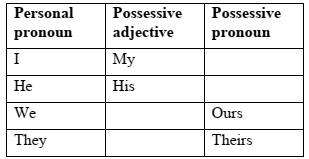
Assinale a alternativa que preenche corretamente os espaços em branco na tabela acima:
Observe a estrutura verbal a seguir:
• Sujeito + simple future do verbo to have (will have) + o particípio do verbo principal.
A estrutura verbal apresentada acima é a representação de qual tempo verbal?
Observe as sentenças abaixo:
I - My father always was an honest man.
II - He built a hospital downtown.
III - Today, his hospital is also a university
Assinale a alternativa correta:

 Conheça nossos planos