Questões de Concurso
Para professor - inglês
Foram encontradas 31.229 questões
Resolva questões gratuitamente!
Junte-se a mais de 4 milhões de concurseiros!


Ano: 2025
Banca:
OBJETIVA
Órgão:
Prefeitura de Canoas - RS
Provas:
OBJETIVA - 2025 - Prefeitura de Canoas - RS - Professor de Educação Básica/PEB I AI (Anos Iniciais)
|
OBJETIVA - 2025 - Prefeitura de Canoas - RS - Professor de Educação Básica/PEB I EI (Educação Infantil) |
OBJETIVA - 2025 - Prefeitura de Canoas - RS - Professor de Educação Básica/PEB II – Artes |
OBJETIVA - 2025 - Prefeitura de Canoas - RS - Professor de Educação Básica/PEB II – Ciências |
OBJETIVA - 2025 - Prefeitura de Canoas - RS - Professor de Educação Básica/PEB II – Educação Especial |
OBJETIVA - 2025 - Prefeitura de Canoas - RS - Professor de Educação Básica/PEB II – Educação Física |
OBJETIVA - 2025 - Prefeitura de Canoas - RS - Professor de Educação Básica/PEB II – História |
OBJETIVA - 2025 - Prefeitura de Canoas - RS - Professor de Educação Básica/PEB II – Língua Inglesa |
OBJETIVA - 2025 - Prefeitura de Canoas - RS - Professor de Educação Básica/PEB II – Geografia |
OBJETIVA - 2025 - Prefeitura de Canoas - RS - Professor de Educação Básica/PEB II – Língua Portuguesa |
OBJETIVA - 2025 - Prefeitura de Canoas - RS - Professor de Educação Básica/PEB II – Matemática |
Q3727163
Noções de Informática
Considerar os dados abaixo inseridos em uma planilha
do Excel 2016.
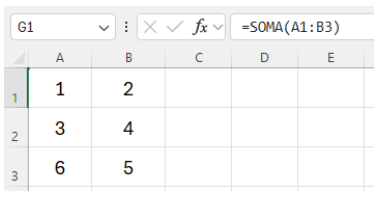
A fórmula inserida na célula G1 “=SOMA(A1:B3)” retornará como resultado a soma dos seguintes valores:
A fórmula inserida na célula G1 “=SOMA(A1:B3)” retornará como resultado a soma dos seguintes valores:
Ano: 2025
Banca:
OBJETIVA
Órgão:
Prefeitura de Canoas - RS
Provas:
OBJETIVA - 2025 - Prefeitura de Canoas - RS - Professor de Educação Básica/PEB I AI (Anos Iniciais)
|
OBJETIVA - 2025 - Prefeitura de Canoas - RS - Professor de Educação Básica/PEB I EI (Educação Infantil) |
OBJETIVA - 2025 - Prefeitura de Canoas - RS - Professor de Educação Básica/PEB II – Artes |
OBJETIVA - 2025 - Prefeitura de Canoas - RS - Professor de Educação Básica/PEB II – Ciências |
OBJETIVA - 2025 - Prefeitura de Canoas - RS - Professor de Educação Básica/PEB II – Educação Especial |
OBJETIVA - 2025 - Prefeitura de Canoas - RS - Professor de Educação Básica/PEB II – Educação Física |
OBJETIVA - 2025 - Prefeitura de Canoas - RS - Professor de Educação Básica/PEB II – História |
OBJETIVA - 2025 - Prefeitura de Canoas - RS - Professor de Educação Básica/PEB II – Língua Inglesa |
OBJETIVA - 2025 - Prefeitura de Canoas - RS - Professor de Educação Básica/PEB II – Geografia |
OBJETIVA - 2025 - Prefeitura de Canoas - RS - Professor de Educação Básica/PEB II – Língua Portuguesa |
OBJETIVA - 2025 - Prefeitura de Canoas - RS - Professor de Educação Básica/PEB II – Matemática |
Q3727162
Raciocínio Lógico
Considerar a relação abaixo.
11 → 121
12 → 144
13 → 169
14 → 196
15 → ?
Seguindo o mesmo padrão de relação, o número que se relaciona com o 15 é:
11 → 121
12 → 144
13 → 169
14 → 196
15 → ?
Seguindo o mesmo padrão de relação, o número que se relaciona com o 15 é:
Ano: 2025
Banca:
OBJETIVA
Órgão:
Prefeitura de Canoas - RS
Provas:
OBJETIVA - 2025 - Prefeitura de Canoas - RS - Professor de Educação Básica/PEB I AI (Anos Iniciais)
|
OBJETIVA - 2025 - Prefeitura de Canoas - RS - Professor de Educação Básica/PEB I EI (Educação Infantil) |
OBJETIVA - 2025 - Prefeitura de Canoas - RS - Professor de Educação Básica/PEB II – Artes |
OBJETIVA - 2025 - Prefeitura de Canoas - RS - Professor de Educação Básica/PEB II – Ciências |
OBJETIVA - 2025 - Prefeitura de Canoas - RS - Professor de Educação Básica/PEB II – Educação Especial |
OBJETIVA - 2025 - Prefeitura de Canoas - RS - Professor de Educação Básica/PEB II – Educação Física |
OBJETIVA - 2025 - Prefeitura de Canoas - RS - Professor de Educação Básica/PEB II – História |
OBJETIVA - 2025 - Prefeitura de Canoas - RS - Professor de Educação Básica/PEB II – Língua Inglesa |
OBJETIVA - 2025 - Prefeitura de Canoas - RS - Professor de Educação Básica/PEB II – Geografia |
OBJETIVA - 2025 - Prefeitura de Canoas - RS - Professor de Educação Básica/PEB II – Língua Portuguesa |
OBJETIVA - 2025 - Prefeitura de Canoas - RS - Professor de Educação Básica/PEB II – Matemática |
Q3727161
Matemática
A nota final de cada aluno em uma turma será calculada
pela média aritmética simples das notas obtidas em cinco
avaliações. Um determinado aluno obteve as seguintes
notas nessas avaliações: 6,0; 8,0; 7,0; 9,0; 10,0. Qual é a nota
final desse aluno?
Ano: 2025
Banca:
OBJETIVA
Órgão:
Prefeitura de Canoas - RS
Provas:
OBJETIVA - 2025 - Prefeitura de Canoas - RS - Professor de Educação Básica/PEB I AI (Anos Iniciais)
|
OBJETIVA - 2025 - Prefeitura de Canoas - RS - Professor de Educação Básica/PEB I EI (Educação Infantil) |
OBJETIVA - 2025 - Prefeitura de Canoas - RS - Professor de Educação Básica/PEB II – Artes |
OBJETIVA - 2025 - Prefeitura de Canoas - RS - Professor de Educação Básica/PEB II – Ciências |
OBJETIVA - 2025 - Prefeitura de Canoas - RS - Professor de Educação Básica/PEB II – Educação Especial |
OBJETIVA - 2025 - Prefeitura de Canoas - RS - Professor de Educação Básica/PEB II – Educação Física |
OBJETIVA - 2025 - Prefeitura de Canoas - RS - Professor de Educação Básica/PEB II – História |
OBJETIVA - 2025 - Prefeitura de Canoas - RS - Professor de Educação Básica/PEB II – Língua Inglesa |
OBJETIVA - 2025 - Prefeitura de Canoas - RS - Professor de Educação Básica/PEB II – Geografia |
OBJETIVA - 2025 - Prefeitura de Canoas - RS - Professor de Educação Básica/PEB II – Língua Portuguesa |
OBJETIVA - 2025 - Prefeitura de Canoas - RS - Professor de Educação Básica/PEB II – Matemática |
Q3727160
Raciocínio Lógico
Considerando-se o ordenamento decrescente dos
números, relacionar as colunas e assinalar a sequência
correspondente.
(1) Primeiro.
(2) Segundo.
(3) Terceiro.
( ) 155
( ) 210
( ) 3-2
(1) Primeiro.
(2) Segundo.
(3) Terceiro.
( ) 155
( ) 210
( ) 3-2
Ano: 2025
Banca:
OBJETIVA
Órgão:
Prefeitura de Canoas - RS
Provas:
OBJETIVA - 2025 - Prefeitura de Canoas - RS - Professor de Educação Básica/PEB I AI (Anos Iniciais)
|
OBJETIVA - 2025 - Prefeitura de Canoas - RS - Professor de Educação Básica/PEB I EI (Educação Infantil) |
OBJETIVA - 2025 - Prefeitura de Canoas - RS - Professor de Educação Básica/PEB II – Artes |
OBJETIVA - 2025 - Prefeitura de Canoas - RS - Professor de Educação Básica/PEB II – Ciências |
OBJETIVA - 2025 - Prefeitura de Canoas - RS - Professor de Educação Básica/PEB II – Educação Especial |
OBJETIVA - 2025 - Prefeitura de Canoas - RS - Professor de Educação Básica/PEB II – Educação Física |
OBJETIVA - 2025 - Prefeitura de Canoas - RS - Professor de Educação Básica/PEB II – História |
OBJETIVA - 2025 - Prefeitura de Canoas - RS - Professor de Educação Básica/PEB II – Língua Inglesa |
OBJETIVA - 2025 - Prefeitura de Canoas - RS - Professor de Educação Básica/PEB II – Geografia |
OBJETIVA - 2025 - Prefeitura de Canoas - RS - Professor de Educação Básica/PEB II – Língua Portuguesa |
OBJETIVA - 2025 - Prefeitura de Canoas - RS - Professor de Educação Básica/PEB II – Matemática |
Q3727159
Matemática
No quadro abaixo, deve-se marcar um X em cada caixa
em que o número seja divisível pelo respectivo divisor.
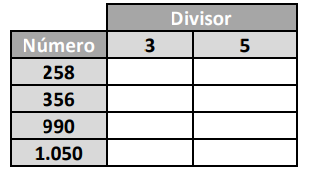
Ao final, quantos X estarão marcados no total?
Ao final, quantos X estarão marcados no total?
Ano: 2025
Banca:
OBJETIVA
Órgão:
Prefeitura de Canoas - RS
Provas:
OBJETIVA - 2025 - Prefeitura de Canoas - RS - Professor de Educação Básica/PEB I AI (Anos Iniciais)
|
OBJETIVA - 2025 - Prefeitura de Canoas - RS - Professor de Educação Básica/PEB I EI (Educação Infantil) |
OBJETIVA - 2025 - Prefeitura de Canoas - RS - Professor de Educação Básica/PEB II – Artes |
OBJETIVA - 2025 - Prefeitura de Canoas - RS - Professor de Educação Básica/PEB II – Ciências |
OBJETIVA - 2025 - Prefeitura de Canoas - RS - Professor de Educação Básica/PEB II – Educação Especial |
OBJETIVA - 2025 - Prefeitura de Canoas - RS - Professor de Educação Básica/PEB II – Educação Física |
OBJETIVA - 2025 - Prefeitura de Canoas - RS - Professor de Educação Básica/PEB II – História |
OBJETIVA - 2025 - Prefeitura de Canoas - RS - Professor de Educação Básica/PEB II – Língua Inglesa |
OBJETIVA - 2025 - Prefeitura de Canoas - RS - Professor de Educação Básica/PEB II – Geografia |
OBJETIVA - 2025 - Prefeitura de Canoas - RS - Professor de Educação Básica/PEB II – Língua Portuguesa |
OBJETIVA - 2025 - Prefeitura de Canoas - RS - Professor de Educação Básica/PEB II – Matemática |
Q3727158
Matemática
Em uma prova de Matemática com o mesmo número de
questões para todos os alunos, Pedro acertou três quartos
do total de questões, enquanto João acertou dois quintos,
errando as demais. Com base nisso, avaliar se as afirmativas
são certas (C) ou erradas (E) e assinalar a sequência
correspondente.
( ) Pedro acertou mais questões que João.
( ) João errou mais questões que Pedro.
( ) Não é possível saber quem acertou mais questões.
( ) Pedro acertou mais questões que João.
( ) João errou mais questões que Pedro.
( ) Não é possível saber quem acertou mais questões.
Ano: 2025
Banca:
OBJETIVA
Órgão:
Prefeitura de Canoas - RS
Provas:
OBJETIVA - 2025 - Prefeitura de Canoas - RS - Professor de Educação Básica/PEB I AI (Anos Iniciais)
|
OBJETIVA - 2025 - Prefeitura de Canoas - RS - Professor de Educação Básica/PEB I EI (Educação Infantil) |
OBJETIVA - 2025 - Prefeitura de Canoas - RS - Professor de Educação Básica/PEB II – Artes |
OBJETIVA - 2025 - Prefeitura de Canoas - RS - Professor de Educação Básica/PEB II – Ciências |
OBJETIVA - 2025 - Prefeitura de Canoas - RS - Professor de Educação Básica/PEB II – Educação Especial |
OBJETIVA - 2025 - Prefeitura de Canoas - RS - Professor de Educação Básica/PEB II – Educação Física |
OBJETIVA - 2025 - Prefeitura de Canoas - RS - Professor de Educação Básica/PEB II – História |
OBJETIVA - 2025 - Prefeitura de Canoas - RS - Professor de Educação Básica/PEB II – Língua Inglesa |
OBJETIVA - 2025 - Prefeitura de Canoas - RS - Professor de Educação Básica/PEB II – Geografia |
OBJETIVA - 2025 - Prefeitura de Canoas - RS - Professor de Educação Básica/PEB II – Língua Portuguesa |
OBJETIVA - 2025 - Prefeitura de Canoas - RS - Professor de Educação Básica/PEB II – Matemática |
Q3727157
Matemática
Uma pessoa deseja pagar uma compra de exatamente
R$ 1,00 usando apenas moedas de 5 centavos e/ou 10
centavos. De quantas formas diferentes ela pode formar um
real?
Ano: 2025
Banca:
OBJETIVA
Órgão:
Prefeitura de Canoas - RS
Provas:
OBJETIVA - 2025 - Prefeitura de Canoas - RS - Professor de Educação Básica/PEB I AI (Anos Iniciais)
|
OBJETIVA - 2025 - Prefeitura de Canoas - RS - Professor de Educação Básica/PEB I EI (Educação Infantil) |
OBJETIVA - 2025 - Prefeitura de Canoas - RS - Professor de Educação Básica/PEB II – Artes |
OBJETIVA - 2025 - Prefeitura de Canoas - RS - Professor de Educação Básica/PEB II – Ciências |
OBJETIVA - 2025 - Prefeitura de Canoas - RS - Professor de Educação Básica/PEB II – Educação Especial |
OBJETIVA - 2025 - Prefeitura de Canoas - RS - Professor de Educação Básica/PEB II – Educação Física |
OBJETIVA - 2025 - Prefeitura de Canoas - RS - Professor de Educação Básica/PEB II – História |
OBJETIVA - 2025 - Prefeitura de Canoas - RS - Professor de Educação Básica/PEB II – Língua Inglesa |
OBJETIVA - 2025 - Prefeitura de Canoas - RS - Professor de Educação Básica/PEB II – Geografia |
OBJETIVA - 2025 - Prefeitura de Canoas - RS - Professor de Educação Básica/PEB II – Língua Portuguesa |
OBJETIVA - 2025 - Prefeitura de Canoas - RS - Professor de Educação Básica/PEB II – Matemática |
Q3727156
Matemática
O Autódromo Internacional de Tarumã está localizado
em Viamão, na Grande Porto Alegre, e é o circuito que
detém a maior média de velocidade do Brasil. A pista tem
extensão total de 3,039km, com 9 curvas, conforme
ilustrado abaixo.
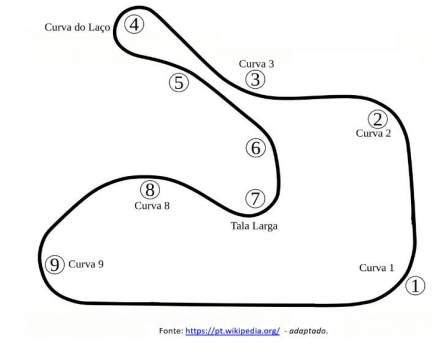
Uma competição será realizada no autódromo, utilizando sempre o circuito completo. O objetivo será completar uma distância de 200km, o que ocorrerá durante a:
Uma competição será realizada no autódromo, utilizando sempre o circuito completo. O objetivo será completar uma distância de 200km, o que ocorrerá durante a:
Ano: 2025
Banca:
OBJETIVA
Órgão:
Prefeitura de Canoas - RS
Provas:
OBJETIVA - 2025 - Prefeitura de Canoas - RS - Professor de Educação Básica/PEB I AI (Anos Iniciais)
|
OBJETIVA - 2025 - Prefeitura de Canoas - RS - Professor de Educação Básica/PEB I EI (Educação Infantil) |
OBJETIVA - 2025 - Prefeitura de Canoas - RS - Professor de Educação Básica/PEB II – Artes |
OBJETIVA - 2025 - Prefeitura de Canoas - RS - Professor de Educação Básica/PEB II – Ciências |
OBJETIVA - 2025 - Prefeitura de Canoas - RS - Professor de Educação Básica/PEB II – Educação Especial |
OBJETIVA - 2025 - Prefeitura de Canoas - RS - Professor de Educação Básica/PEB II – Educação Física |
OBJETIVA - 2025 - Prefeitura de Canoas - RS - Professor de Educação Básica/PEB II – História |
OBJETIVA - 2025 - Prefeitura de Canoas - RS - Professor de Educação Básica/PEB II – Língua Inglesa |
OBJETIVA - 2025 - Prefeitura de Canoas - RS - Professor de Educação Básica/PEB II – Geografia |
OBJETIVA - 2025 - Prefeitura de Canoas - RS - Professor de Educação Básica/PEB II – Língua Portuguesa |
OBJETIVA - 2025 - Prefeitura de Canoas - RS - Professor de Educação Básica/PEB II – Matemática |
Q3727155
Matemática
Em um salão de eventos, deseja-se montar uma
decoração composta por 5 vasos de flores distintos, que
serão dispostos em 5 pedestais também distintos. De
quantas maneiras diferentes é possível organizar os vasos
nesses pedestais?
Ano: 2025
Banca:
OBJETIVA
Órgão:
Prefeitura de Canoas - RS
Provas:
OBJETIVA - 2025 - Prefeitura de Canoas - RS - Professor de Educação Básica/PEB I AI (Anos Iniciais)
|
OBJETIVA - 2025 - Prefeitura de Canoas - RS - Professor de Educação Básica/PEB I EI (Educação Infantil) |
OBJETIVA - 2025 - Prefeitura de Canoas - RS - Professor de Educação Básica/PEB II – Artes |
OBJETIVA - 2025 - Prefeitura de Canoas - RS - Professor de Educação Básica/PEB II – Ciências |
OBJETIVA - 2025 - Prefeitura de Canoas - RS - Professor de Educação Básica/PEB II – Educação Especial |
OBJETIVA - 2025 - Prefeitura de Canoas - RS - Professor de Educação Básica/PEB II – Educação Física |
OBJETIVA - 2025 - Prefeitura de Canoas - RS - Professor de Educação Básica/PEB II – História |
OBJETIVA - 2025 - Prefeitura de Canoas - RS - Professor de Educação Básica/PEB II – Língua Inglesa |
OBJETIVA - 2025 - Prefeitura de Canoas - RS - Professor de Educação Básica/PEB II – Geografia |
OBJETIVA - 2025 - Prefeitura de Canoas - RS - Professor de Educação Básica/PEB II – Língua Portuguesa |
OBJETIVA - 2025 - Prefeitura de Canoas - RS - Professor de Educação Básica/PEB II – Matemática |
Q3727154
Matemática
Em uma liquidação, uma loja decidiu reduzir os preços
de vários itens, incluindo o de um sofá que custava
R$ 3.500,00. Esse sofá recebeu um desconto especial de
25%. Qual é o novo preço do sofá após o desconto?
Ano: 2025
Banca:
OBJETIVA
Órgão:
Prefeitura de Canoas - RS
Provas:
OBJETIVA - 2025 - Prefeitura de Canoas - RS - Professor de Educação Básica/PEB I AI (Anos Iniciais)
|
OBJETIVA - 2025 - Prefeitura de Canoas - RS - Professor de Educação Básica/PEB I EI (Educação Infantil) |
OBJETIVA - 2025 - Prefeitura de Canoas - RS - Professor de Educação Básica/PEB II – Artes |
OBJETIVA - 2025 - Prefeitura de Canoas - RS - Professor de Educação Básica/PEB II – Ciências |
OBJETIVA - 2025 - Prefeitura de Canoas - RS - Professor de Educação Básica/PEB II – Educação Especial |
OBJETIVA - 2025 - Prefeitura de Canoas - RS - Professor de Educação Básica/PEB II – Educação Física |
OBJETIVA - 2025 - Prefeitura de Canoas - RS - Professor de Educação Básica/PEB II – História |
OBJETIVA - 2025 - Prefeitura de Canoas - RS - Professor de Educação Básica/PEB II – Língua Inglesa |
OBJETIVA - 2025 - Prefeitura de Canoas - RS - Professor de Educação Básica/PEB II – Geografia |
OBJETIVA - 2025 - Prefeitura de Canoas - RS - Professor de Educação Básica/PEB II – Língua Portuguesa |
OBJETIVA - 2025 - Prefeitura de Canoas - RS - Professor de Educação Básica/PEB II – Matemática |
Q3727153
Raciocínio Lógico
Se A = {1, 2, 3} e B = {2, 3, 4}, qual é a intersecção de A e
B?
Ano: 2025
Banca:
OBJETIVA
Órgão:
Prefeitura de Canoas - RS
Provas:
OBJETIVA - 2025 - Prefeitura de Canoas - RS - Professor de Educação Básica/PEB I AI (Anos Iniciais)
|
OBJETIVA - 2025 - Prefeitura de Canoas - RS - Professor de Educação Básica/PEB I EI (Educação Infantil) |
OBJETIVA - 2025 - Prefeitura de Canoas - RS - Professor de Educação Básica/PEB II – Artes |
OBJETIVA - 2025 - Prefeitura de Canoas - RS - Professor de Educação Básica/PEB II – Ciências |
OBJETIVA - 2025 - Prefeitura de Canoas - RS - Professor de Educação Básica/PEB II – Educação Especial |
OBJETIVA - 2025 - Prefeitura de Canoas - RS - Professor de Educação Básica/PEB II – Educação Física |
OBJETIVA - 2025 - Prefeitura de Canoas - RS - Professor de Educação Básica/PEB II – História |
OBJETIVA - 2025 - Prefeitura de Canoas - RS - Professor de Educação Básica/PEB II – Língua Inglesa |
OBJETIVA - 2025 - Prefeitura de Canoas - RS - Professor de Educação Básica/PEB II – Geografia |
OBJETIVA - 2025 - Prefeitura de Canoas - RS - Professor de Educação Básica/PEB II – Língua Portuguesa |
OBJETIVA - 2025 - Prefeitura de Canoas - RS - Professor de Educação Básica/PEB II – Matemática |
Q3727152
Português
Texto associado
Entenda por que o descarte errado de roupas e o acúmulo
de tecidos geram um problema ambiental grave
Resíduo têxtil chega a 55 toneladas diárias só na cidade de
São Paulo
O que você faz com aquele look rasgado ou
aquela lingerie velha? E o que acontece com as peças que
não são vendidas nas lojas? No geral, o destino é o mesmo:
tudo acaba virando resíduo têxtil. Com isso, pequenas
sobras de tecido nas etapas de produção das peças, por
exemplo, transformam-se em toneladas de lixo.
“Estima-se que cerca de 40 mil toneladas de tecido
são descartadas anualmente no deserto do Atacama, no
Chile. Roupas não vendidas, em geral”, explica a
pesquisadora de moda sustentável e coordenadora de
mobilização no Fashion Revolution Brasil, Marina de
Luca. Segundo ela, no Brasil, a questão é, também, um
problema.
“Ainda que vigore a política nacional de resíduos
sólidos, hoje, no Brasil, não temos soluções
institucionalizadas para o descarte têxtil. Cada um vai
fazendo o que pode. É preciso que o poder público, unido ao
privado, ofereça possibilidades de tratamento e reinserção
dessa sobra têxtil, para que se possa construir uma cadeia
circular”, reforça a especialista.
Conforme dados do Residômetro Têxtil, do Instituto
Sustentabilidade Têxtil e Moda, só a cidade de São Paulo
coleta, em média, 20 toneladas diárias de roupas pósconsumo e 35 toneladas de resíduos de corte.
“O Brasil é um dos maiores produtores de vestuário
do mundo e o último país que ainda contém a cadeia
completa desde a plantação ou extração do petróleo,
passando pela produção do fio, corte e costura, e venda do
produto final. Ou seja, esse é um tema essencial quando
falamos de economia brasileira”, retoma Marina de Luca.
O impacto ambiental da moda ultrapassa o descarte.
É preciso, também, atentar-se às emissões geradas em torno
das produções.
“Além da liberação de gases, a indústria da moda é
responsável pela poluição de aproximadamente 20% das
águas totais do mundo. O tingimento de fios, a lavagem de
tecidos e o curtimento de couro são grandes fontes de
químicos altamente poluentes liberados na natureza",
comenta a pesquisadora.
O que fazer com as roupas? O ideal é buscar manter a
peça útil — customizando, doando, revendendo ou algo
nesse sentido. Se, realmente, tratar-se de resíduo têxtil, o
material pode ser deixado em pontos de coleta. Em uma
pesquisa rápida na internet, pode-se encontrar diversas
iniciativas sustentáveis que fazem o reaproveitamento dos
tecidos.
Fonte: Terra – adaptado.
Considerando a sintaxe do período composto, analisar os
itens.
I. Em: “Estima-se que cerca de 40 mil toneladas de tecido são descartadas anualmente no deserto do Atacama” (2º parágrafo), a oração sublinhada é subordinada substantiva subjetiva. A mesma classificação pode ser atribuída em: “É preciso que o poder público [...] ofereça possibilidades de tratamento e reinserção dessa sobra têxtil” (3º parágrafo).
II. Em: “Conforme dados do Residômetro Têxtil”, caso seja acrescentado o verbo “indicam” logo após a palavra sublinhada, tem-se uma oração subordinada adverbial conformativa.
III. Em: “O Brasil é [...] o último país que ainda contém a cadeia completa”, a oração sublinhada é subordinada adverbial consecutiva.
Está CORRETO o que se afirma:
I. Em: “Estima-se que cerca de 40 mil toneladas de tecido são descartadas anualmente no deserto do Atacama” (2º parágrafo), a oração sublinhada é subordinada substantiva subjetiva. A mesma classificação pode ser atribuída em: “É preciso que o poder público [...] ofereça possibilidades de tratamento e reinserção dessa sobra têxtil” (3º parágrafo).
II. Em: “Conforme dados do Residômetro Têxtil”, caso seja acrescentado o verbo “indicam” logo após a palavra sublinhada, tem-se uma oração subordinada adverbial conformativa.
III. Em: “O Brasil é [...] o último país que ainda contém a cadeia completa”, a oração sublinhada é subordinada adverbial consecutiva.
Está CORRETO o que se afirma:
Ano: 2025
Banca:
OBJETIVA
Órgão:
Prefeitura de Canoas - RS
Provas:
OBJETIVA - 2025 - Prefeitura de Canoas - RS - Professor de Educação Básica/PEB I AI (Anos Iniciais)
|
OBJETIVA - 2025 - Prefeitura de Canoas - RS - Professor de Educação Básica/PEB I EI (Educação Infantil) |
OBJETIVA - 2025 - Prefeitura de Canoas - RS - Professor de Educação Básica/PEB II – Artes |
OBJETIVA - 2025 - Prefeitura de Canoas - RS - Professor de Educação Básica/PEB II – Ciências |
OBJETIVA - 2025 - Prefeitura de Canoas - RS - Professor de Educação Básica/PEB II – Educação Especial |
OBJETIVA - 2025 - Prefeitura de Canoas - RS - Professor de Educação Básica/PEB II – Educação Física |
OBJETIVA - 2025 - Prefeitura de Canoas - RS - Professor de Educação Básica/PEB II – História |
OBJETIVA - 2025 - Prefeitura de Canoas - RS - Professor de Educação Básica/PEB II – Língua Inglesa |
OBJETIVA - 2025 - Prefeitura de Canoas - RS - Professor de Educação Básica/PEB II – Geografia |
OBJETIVA - 2025 - Prefeitura de Canoas - RS - Professor de Educação Básica/PEB II – Língua Portuguesa |
OBJETIVA - 2025 - Prefeitura de Canoas - RS - Professor de Educação Básica/PEB II – Matemática |
Q3727151
Português
Texto associado
Entenda por que o descarte errado de roupas e o acúmulo
de tecidos geram um problema ambiental grave
Resíduo têxtil chega a 55 toneladas diárias só na cidade de
São Paulo
O que você faz com aquele look rasgado ou
aquela lingerie velha? E o que acontece com as peças que
não são vendidas nas lojas? No geral, o destino é o mesmo:
tudo acaba virando resíduo têxtil. Com isso, pequenas
sobras de tecido nas etapas de produção das peças, por
exemplo, transformam-se em toneladas de lixo.
“Estima-se que cerca de 40 mil toneladas de tecido
são descartadas anualmente no deserto do Atacama, no
Chile. Roupas não vendidas, em geral”, explica a
pesquisadora de moda sustentável e coordenadora de
mobilização no Fashion Revolution Brasil, Marina de
Luca. Segundo ela, no Brasil, a questão é, também, um
problema.
“Ainda que vigore a política nacional de resíduos
sólidos, hoje, no Brasil, não temos soluções
institucionalizadas para o descarte têxtil. Cada um vai
fazendo o que pode. É preciso que o poder público, unido ao
privado, ofereça possibilidades de tratamento e reinserção
dessa sobra têxtil, para que se possa construir uma cadeia
circular”, reforça a especialista.
Conforme dados do Residômetro Têxtil, do Instituto
Sustentabilidade Têxtil e Moda, só a cidade de São Paulo
coleta, em média, 20 toneladas diárias de roupas pósconsumo e 35 toneladas de resíduos de corte.
“O Brasil é um dos maiores produtores de vestuário
do mundo e o último país que ainda contém a cadeia
completa desde a plantação ou extração do petróleo,
passando pela produção do fio, corte e costura, e venda do
produto final. Ou seja, esse é um tema essencial quando
falamos de economia brasileira”, retoma Marina de Luca.
O impacto ambiental da moda ultrapassa o descarte.
É preciso, também, atentar-se às emissões geradas em torno
das produções.
“Além da liberação de gases, a indústria da moda é
responsável pela poluição de aproximadamente 20% das
águas totais do mundo. O tingimento de fios, a lavagem de
tecidos e o curtimento de couro são grandes fontes de
químicos altamente poluentes liberados na natureza",
comenta a pesquisadora.
O que fazer com as roupas? O ideal é buscar manter a
peça útil — customizando, doando, revendendo ou algo
nesse sentido. Se, realmente, tratar-se de resíduo têxtil, o
material pode ser deixado em pontos de coleta. Em uma
pesquisa rápida na internet, pode-se encontrar diversas
iniciativas sustentáveis que fazem o reaproveitamento dos
tecidos.
Fonte: Terra – adaptado.
A respeito da relação entre letras e fonemas, dos dígrafos
e dos encontros consonantais, avaliar se as afirmativas são
certas (C) ou erradas (E) e assinalar a sequência
correspondente.
( ) As palavras “chapéu”, “guerra” e “guaraná” apresentam número maior de letras que de fonemas.
( ) Os vocábulos “barro”, “piscina” e “venda” apresentam dígrafo.
( ) As palavras “corrupção”, “represa” e “advento” apresentam encontro consonantal. Com exceção da segunda palavra, as duas outras também contêm dígrafo.
( ) As palavras “chapéu”, “guerra” e “guaraná” apresentam número maior de letras que de fonemas.
( ) Os vocábulos “barro”, “piscina” e “venda” apresentam dígrafo.
( ) As palavras “corrupção”, “represa” e “advento” apresentam encontro consonantal. Com exceção da segunda palavra, as duas outras também contêm dígrafo.
Ano: 2025
Banca:
OBJETIVA
Órgão:
Prefeitura de Canoas - RS
Provas:
OBJETIVA - 2025 - Prefeitura de Canoas - RS - Professor de Educação Básica/PEB I AI (Anos Iniciais)
|
OBJETIVA - 2025 - Prefeitura de Canoas - RS - Professor de Educação Básica/PEB I EI (Educação Infantil) |
OBJETIVA - 2025 - Prefeitura de Canoas - RS - Professor de Educação Básica/PEB II – Artes |
OBJETIVA - 2025 - Prefeitura de Canoas - RS - Professor de Educação Básica/PEB II – Ciências |
OBJETIVA - 2025 - Prefeitura de Canoas - RS - Professor de Educação Básica/PEB II – Educação Especial |
OBJETIVA - 2025 - Prefeitura de Canoas - RS - Professor de Educação Básica/PEB II – Educação Física |
OBJETIVA - 2025 - Prefeitura de Canoas - RS - Professor de Educação Básica/PEB II – História |
OBJETIVA - 2025 - Prefeitura de Canoas - RS - Professor de Educação Básica/PEB II – Língua Inglesa |
OBJETIVA - 2025 - Prefeitura de Canoas - RS - Professor de Educação Básica/PEB II – Geografia |
OBJETIVA - 2025 - Prefeitura de Canoas - RS - Professor de Educação Básica/PEB II – Língua Portuguesa |
OBJETIVA - 2025 - Prefeitura de Canoas - RS - Professor de Educação Básica/PEB II – Matemática |
Q3727150
Português
Texto associado
Entenda por que o descarte errado de roupas e o acúmulo
de tecidos geram um problema ambiental grave
Resíduo têxtil chega a 55 toneladas diárias só na cidade de
São Paulo
O que você faz com aquele look rasgado ou
aquela lingerie velha? E o que acontece com as peças que
não são vendidas nas lojas? No geral, o destino é o mesmo:
tudo acaba virando resíduo têxtil. Com isso, pequenas
sobras de tecido nas etapas de produção das peças, por
exemplo, transformam-se em toneladas de lixo.
“Estima-se que cerca de 40 mil toneladas de tecido
são descartadas anualmente no deserto do Atacama, no
Chile. Roupas não vendidas, em geral”, explica a
pesquisadora de moda sustentável e coordenadora de
mobilização no Fashion Revolution Brasil, Marina de
Luca. Segundo ela, no Brasil, a questão é, também, um
problema.
“Ainda que vigore a política nacional de resíduos
sólidos, hoje, no Brasil, não temos soluções
institucionalizadas para o descarte têxtil. Cada um vai
fazendo o que pode. É preciso que o poder público, unido ao
privado, ofereça possibilidades de tratamento e reinserção
dessa sobra têxtil, para que se possa construir uma cadeia
circular”, reforça a especialista.
Conforme dados do Residômetro Têxtil, do Instituto
Sustentabilidade Têxtil e Moda, só a cidade de São Paulo
coleta, em média, 20 toneladas diárias de roupas pósconsumo e 35 toneladas de resíduos de corte.
“O Brasil é um dos maiores produtores de vestuário
do mundo e o último país que ainda contém a cadeia
completa desde a plantação ou extração do petróleo,
passando pela produção do fio, corte e costura, e venda do
produto final. Ou seja, esse é um tema essencial quando
falamos de economia brasileira”, retoma Marina de Luca.
O impacto ambiental da moda ultrapassa o descarte.
É preciso, também, atentar-se às emissões geradas em torno
das produções.
“Além da liberação de gases, a indústria da moda é
responsável pela poluição de aproximadamente 20% das
águas totais do mundo. O tingimento de fios, a lavagem de
tecidos e o curtimento de couro são grandes fontes de
químicos altamente poluentes liberados na natureza",
comenta a pesquisadora.
O que fazer com as roupas? O ideal é buscar manter a
peça útil — customizando, doando, revendendo ou algo
nesse sentido. Se, realmente, tratar-se de resíduo têxtil, o
material pode ser deixado em pontos de coleta. Em uma
pesquisa rápida na internet, pode-se encontrar diversas
iniciativas sustentáveis que fazem o reaproveitamento dos
tecidos.
Fonte: Terra – adaptado.
Em relação aos recursos coesivos do texto, considerar as
passagens a seguir:
• “Segundo ela, no Brasil, a questão é, também, um problema.” (2º parágrafo)
• “Ainda que vigore a política nacional de resíduos sólidos, hoje, no Brasil, não temos soluções institucionalizadas para o descarte têxtil.” (3º parágrafo)
• “Ou seja, esse é um tema essencial quando falamos de economia brasileira [...].” (5º parágrafo)
• “Se, realmente, tratar-se de resíduo têxtil, o material pode ser deixado em pontos de coleta.” (8º parágrafo)
Nos fragmentos, os elementos linguísticos sublinhados indicam, CORRETA e respectivamente, as ideias de:
• “Segundo ela, no Brasil, a questão é, também, um problema.” (2º parágrafo)
• “Ainda que vigore a política nacional de resíduos sólidos, hoje, no Brasil, não temos soluções institucionalizadas para o descarte têxtil.” (3º parágrafo)
• “Ou seja, esse é um tema essencial quando falamos de economia brasileira [...].” (5º parágrafo)
• “Se, realmente, tratar-se de resíduo têxtil, o material pode ser deixado em pontos de coleta.” (8º parágrafo)
Nos fragmentos, os elementos linguísticos sublinhados indicam, CORRETA e respectivamente, as ideias de:
Ano: 2025
Banca:
OBJETIVA
Órgão:
Prefeitura de Canoas - RS
Provas:
OBJETIVA - 2025 - Prefeitura de Canoas - RS - Professor de Educação Básica/PEB I AI (Anos Iniciais)
|
OBJETIVA - 2025 - Prefeitura de Canoas - RS - Professor de Educação Básica/PEB I EI (Educação Infantil) |
OBJETIVA - 2025 - Prefeitura de Canoas - RS - Professor de Educação Básica/PEB II – Artes |
OBJETIVA - 2025 - Prefeitura de Canoas - RS - Professor de Educação Básica/PEB II – Ciências |
OBJETIVA - 2025 - Prefeitura de Canoas - RS - Professor de Educação Básica/PEB II – Educação Especial |
OBJETIVA - 2025 - Prefeitura de Canoas - RS - Professor de Educação Básica/PEB II – Educação Física |
OBJETIVA - 2025 - Prefeitura de Canoas - RS - Professor de Educação Básica/PEB II – História |
OBJETIVA - 2025 - Prefeitura de Canoas - RS - Professor de Educação Básica/PEB II – Língua Inglesa |
OBJETIVA - 2025 - Prefeitura de Canoas - RS - Professor de Educação Básica/PEB II – Geografia |
OBJETIVA - 2025 - Prefeitura de Canoas - RS - Professor de Educação Básica/PEB II – Língua Portuguesa |
OBJETIVA - 2025 - Prefeitura de Canoas - RS - Professor de Educação Básica/PEB II – Matemática |
Q3727149
Português
Texto associado
Entenda por que o descarte errado de roupas e o acúmulo
de tecidos geram um problema ambiental grave
Resíduo têxtil chega a 55 toneladas diárias só na cidade de
São Paulo
O que você faz com aquele look rasgado ou
aquela lingerie velha? E o que acontece com as peças que
não são vendidas nas lojas? No geral, o destino é o mesmo:
tudo acaba virando resíduo têxtil. Com isso, pequenas
sobras de tecido nas etapas de produção das peças, por
exemplo, transformam-se em toneladas de lixo.
“Estima-se que cerca de 40 mil toneladas de tecido
são descartadas anualmente no deserto do Atacama, no
Chile. Roupas não vendidas, em geral”, explica a
pesquisadora de moda sustentável e coordenadora de
mobilização no Fashion Revolution Brasil, Marina de
Luca. Segundo ela, no Brasil, a questão é, também, um
problema.
“Ainda que vigore a política nacional de resíduos
sólidos, hoje, no Brasil, não temos soluções
institucionalizadas para o descarte têxtil. Cada um vai
fazendo o que pode. É preciso que o poder público, unido ao
privado, ofereça possibilidades de tratamento e reinserção
dessa sobra têxtil, para que se possa construir uma cadeia
circular”, reforça a especialista.
Conforme dados do Residômetro Têxtil, do Instituto
Sustentabilidade Têxtil e Moda, só a cidade de São Paulo
coleta, em média, 20 toneladas diárias de roupas pósconsumo e 35 toneladas de resíduos de corte.
“O Brasil é um dos maiores produtores de vestuário
do mundo e o último país que ainda contém a cadeia
completa desde a plantação ou extração do petróleo,
passando pela produção do fio, corte e costura, e venda do
produto final. Ou seja, esse é um tema essencial quando
falamos de economia brasileira”, retoma Marina de Luca.
O impacto ambiental da moda ultrapassa o descarte.
É preciso, também, atentar-se às emissões geradas em torno
das produções.
“Além da liberação de gases, a indústria da moda é
responsável pela poluição de aproximadamente 20% das
águas totais do mundo. O tingimento de fios, a lavagem de
tecidos e o curtimento de couro são grandes fontes de
químicos altamente poluentes liberados na natureza",
comenta a pesquisadora.
O que fazer com as roupas? O ideal é buscar manter a
peça útil — customizando, doando, revendendo ou algo
nesse sentido. Se, realmente, tratar-se de resíduo têxtil, o
material pode ser deixado em pontos de coleta. Em uma
pesquisa rápida na internet, pode-se encontrar diversas
iniciativas sustentáveis que fazem o reaproveitamento dos
tecidos.
Fonte: Terra – adaptado.
Em: “É preciso que o poder público, unido ao privado,
ofereça possibilidades de tratamento e reinserção dessa
sobra têxtil [...]”, o termo destacado:
Ano: 2025
Banca:
OBJETIVA
Órgão:
Prefeitura de Canoas - RS
Provas:
OBJETIVA - 2025 - Prefeitura de Canoas - RS - Professor de Educação Básica/PEB I AI (Anos Iniciais)
|
OBJETIVA - 2025 - Prefeitura de Canoas - RS - Professor de Educação Básica/PEB I EI (Educação Infantil) |
OBJETIVA - 2025 - Prefeitura de Canoas - RS - Professor de Educação Básica/PEB II – Artes |
OBJETIVA - 2025 - Prefeitura de Canoas - RS - Professor de Educação Básica/PEB II – Ciências |
OBJETIVA - 2025 - Prefeitura de Canoas - RS - Professor de Educação Básica/PEB II – Educação Especial |
OBJETIVA - 2025 - Prefeitura de Canoas - RS - Professor de Educação Básica/PEB II – Educação Física |
OBJETIVA - 2025 - Prefeitura de Canoas - RS - Professor de Educação Básica/PEB II – História |
OBJETIVA - 2025 - Prefeitura de Canoas - RS - Professor de Educação Básica/PEB II – Língua Inglesa |
OBJETIVA - 2025 - Prefeitura de Canoas - RS - Professor de Educação Básica/PEB II – Geografia |
OBJETIVA - 2025 - Prefeitura de Canoas - RS - Professor de Educação Básica/PEB II – Língua Portuguesa |
OBJETIVA - 2025 - Prefeitura de Canoas - RS - Professor de Educação Básica/PEB II – Matemática |
Q3727148
Português
Texto associado
Entenda por que o descarte errado de roupas e o acúmulo
de tecidos geram um problema ambiental grave
Resíduo têxtil chega a 55 toneladas diárias só na cidade de
São Paulo
O que você faz com aquele look rasgado ou
aquela lingerie velha? E o que acontece com as peças que
não são vendidas nas lojas? No geral, o destino é o mesmo:
tudo acaba virando resíduo têxtil. Com isso, pequenas
sobras de tecido nas etapas de produção das peças, por
exemplo, transformam-se em toneladas de lixo.
“Estima-se que cerca de 40 mil toneladas de tecido
são descartadas anualmente no deserto do Atacama, no
Chile. Roupas não vendidas, em geral”, explica a
pesquisadora de moda sustentável e coordenadora de
mobilização no Fashion Revolution Brasil, Marina de
Luca. Segundo ela, no Brasil, a questão é, também, um
problema.
“Ainda que vigore a política nacional de resíduos
sólidos, hoje, no Brasil, não temos soluções
institucionalizadas para o descarte têxtil. Cada um vai
fazendo o que pode. É preciso que o poder público, unido ao
privado, ofereça possibilidades de tratamento e reinserção
dessa sobra têxtil, para que se possa construir uma cadeia
circular”, reforça a especialista.
Conforme dados do Residômetro Têxtil, do Instituto
Sustentabilidade Têxtil e Moda, só a cidade de São Paulo
coleta, em média, 20 toneladas diárias de roupas pósconsumo e 35 toneladas de resíduos de corte.
“O Brasil é um dos maiores produtores de vestuário
do mundo e o último país que ainda contém a cadeia
completa desde a plantação ou extração do petróleo,
passando pela produção do fio, corte e costura, e venda do
produto final. Ou seja, esse é um tema essencial quando
falamos de economia brasileira”, retoma Marina de Luca.
O impacto ambiental da moda ultrapassa o descarte.
É preciso, também, atentar-se às emissões geradas em torno
das produções.
“Além da liberação de gases, a indústria da moda é
responsável pela poluição de aproximadamente 20% das
águas totais do mundo. O tingimento de fios, a lavagem de
tecidos e o curtimento de couro são grandes fontes de
químicos altamente poluentes liberados na natureza",
comenta a pesquisadora.
O que fazer com as roupas? O ideal é buscar manter a
peça útil — customizando, doando, revendendo ou algo
nesse sentido. Se, realmente, tratar-se de resíduo têxtil, o
material pode ser deixado em pontos de coleta. Em uma
pesquisa rápida na internet, pode-se encontrar diversas
iniciativas sustentáveis que fazem o reaproveitamento dos
tecidos.
Fonte: Terra – adaptado.
Considerando o uso do acento indicativo de crase, avaliar
se as afirmativas são certas (C) ou erradas (E) e assinalar a
sequência correspondente.
( ) Em: “O impacto ambiental da moda ultrapassa o descarte” (6º parágrafo), caso a palavra sublinhada fosse substituída por “eliminação”, o “o” que a antecede deveria ser substituído por “à”, resultando em: “O impacto ambiental da moda ultrapassa à eliminação”.
( ) Em: “É preciso, também, se atentar às emissões geradas em torno das produções” (6º parágrafo), caso a palavra sublinhada fosse substituída por “difusões”, o acento indicativo da crase no “às” que a antecede deveria ser mantido.
( ) Em: “Resíduo têxtil chega a 55 toneladas diárias só na cidade de São Paulo” (subtítulo), caso houvesse o acréscimo do vocábulo “atingir” antes da expressão sublinhada, o “a” deveria receber o acento indicativo da crase.
( ) Em: “retoma Marina de Luca” (5º parágrafo), caso a expressão sublinhada fosse substituída pelo vocábulo “especialista”, haveria a necessidade de acréscimo de “à” antes dele, resultando em: “retoma à especialista”.
( ) Em: “O impacto ambiental da moda ultrapassa o descarte” (6º parágrafo), caso a palavra sublinhada fosse substituída por “eliminação”, o “o” que a antecede deveria ser substituído por “à”, resultando em: “O impacto ambiental da moda ultrapassa à eliminação”.
( ) Em: “É preciso, também, se atentar às emissões geradas em torno das produções” (6º parágrafo), caso a palavra sublinhada fosse substituída por “difusões”, o acento indicativo da crase no “às” que a antecede deveria ser mantido.
( ) Em: “Resíduo têxtil chega a 55 toneladas diárias só na cidade de São Paulo” (subtítulo), caso houvesse o acréscimo do vocábulo “atingir” antes da expressão sublinhada, o “a” deveria receber o acento indicativo da crase.
( ) Em: “retoma Marina de Luca” (5º parágrafo), caso a expressão sublinhada fosse substituída pelo vocábulo “especialista”, haveria a necessidade de acréscimo de “à” antes dele, resultando em: “retoma à especialista”.
Ano: 2025
Banca:
OBJETIVA
Órgão:
Prefeitura de Canoas - RS
Provas:
OBJETIVA - 2025 - Prefeitura de Canoas - RS - Professor de Educação Básica/PEB I AI (Anos Iniciais)
|
OBJETIVA - 2025 - Prefeitura de Canoas - RS - Professor de Educação Básica/PEB I EI (Educação Infantil) |
OBJETIVA - 2025 - Prefeitura de Canoas - RS - Professor de Educação Básica/PEB II – Artes |
OBJETIVA - 2025 - Prefeitura de Canoas - RS - Professor de Educação Básica/PEB II – Ciências |
OBJETIVA - 2025 - Prefeitura de Canoas - RS - Professor de Educação Básica/PEB II – Educação Especial |
OBJETIVA - 2025 - Prefeitura de Canoas - RS - Professor de Educação Básica/PEB II – Educação Física |
OBJETIVA - 2025 - Prefeitura de Canoas - RS - Professor de Educação Básica/PEB II – História |
OBJETIVA - 2025 - Prefeitura de Canoas - RS - Professor de Educação Básica/PEB II – Língua Inglesa |
OBJETIVA - 2025 - Prefeitura de Canoas - RS - Professor de Educação Básica/PEB II – Geografia |
OBJETIVA - 2025 - Prefeitura de Canoas - RS - Professor de Educação Básica/PEB II – Língua Portuguesa |
OBJETIVA - 2025 - Prefeitura de Canoas - RS - Professor de Educação Básica/PEB II – Matemática |
Q3727147
Português
Texto associado
Entenda por que o descarte errado de roupas e o acúmulo
de tecidos geram um problema ambiental grave
Resíduo têxtil chega a 55 toneladas diárias só na cidade de
São Paulo
O que você faz com aquele look rasgado ou
aquela lingerie velha? E o que acontece com as peças que
não são vendidas nas lojas? No geral, o destino é o mesmo:
tudo acaba virando resíduo têxtil. Com isso, pequenas
sobras de tecido nas etapas de produção das peças, por
exemplo, transformam-se em toneladas de lixo.
“Estima-se que cerca de 40 mil toneladas de tecido
são descartadas anualmente no deserto do Atacama, no
Chile. Roupas não vendidas, em geral”, explica a
pesquisadora de moda sustentável e coordenadora de
mobilização no Fashion Revolution Brasil, Marina de
Luca. Segundo ela, no Brasil, a questão é, também, um
problema.
“Ainda que vigore a política nacional de resíduos
sólidos, hoje, no Brasil, não temos soluções
institucionalizadas para o descarte têxtil. Cada um vai
fazendo o que pode. É preciso que o poder público, unido ao
privado, ofereça possibilidades de tratamento e reinserção
dessa sobra têxtil, para que se possa construir uma cadeia
circular”, reforça a especialista.
Conforme dados do Residômetro Têxtil, do Instituto
Sustentabilidade Têxtil e Moda, só a cidade de São Paulo
coleta, em média, 20 toneladas diárias de roupas pósconsumo e 35 toneladas de resíduos de corte.
“O Brasil é um dos maiores produtores de vestuário
do mundo e o último país que ainda contém a cadeia
completa desde a plantação ou extração do petróleo,
passando pela produção do fio, corte e costura, e venda do
produto final. Ou seja, esse é um tema essencial quando
falamos de economia brasileira”, retoma Marina de Luca.
O impacto ambiental da moda ultrapassa o descarte.
É preciso, também, atentar-se às emissões geradas em torno
das produções.
“Além da liberação de gases, a indústria da moda é
responsável pela poluição de aproximadamente 20% das
águas totais do mundo. O tingimento de fios, a lavagem de
tecidos e o curtimento de couro são grandes fontes de
químicos altamente poluentes liberados na natureza",
comenta a pesquisadora.
O que fazer com as roupas? O ideal é buscar manter a
peça útil — customizando, doando, revendendo ou algo
nesse sentido. Se, realmente, tratar-se de resíduo têxtil, o
material pode ser deixado em pontos de coleta. Em uma
pesquisa rápida na internet, pode-se encontrar diversas
iniciativas sustentáveis que fazem o reaproveitamento dos
tecidos.
Fonte: Terra – adaptado.
Em “falamos de economia brasileira”, o verbo que exige o
mesmo tipo de complemento que o sublinhado está na
alternativa:
Ano: 2025
Banca:
OBJETIVA
Órgão:
Prefeitura de Canoas - RS
Provas:
OBJETIVA - 2025 - Prefeitura de Canoas - RS - Professor de Educação Básica/PEB I AI (Anos Iniciais)
|
OBJETIVA - 2025 - Prefeitura de Canoas - RS - Professor de Educação Básica/PEB I EI (Educação Infantil) |
OBJETIVA - 2025 - Prefeitura de Canoas - RS - Professor de Educação Básica/PEB II – Artes |
OBJETIVA - 2025 - Prefeitura de Canoas - RS - Professor de Educação Básica/PEB II – Ciências |
OBJETIVA - 2025 - Prefeitura de Canoas - RS - Professor de Educação Básica/PEB II – Educação Especial |
OBJETIVA - 2025 - Prefeitura de Canoas - RS - Professor de Educação Básica/PEB II – Educação Física |
OBJETIVA - 2025 - Prefeitura de Canoas - RS - Professor de Educação Básica/PEB II – História |
OBJETIVA - 2025 - Prefeitura de Canoas - RS - Professor de Educação Básica/PEB II – Língua Inglesa |
OBJETIVA - 2025 - Prefeitura de Canoas - RS - Professor de Educação Básica/PEB II – Geografia |
OBJETIVA - 2025 - Prefeitura de Canoas - RS - Professor de Educação Básica/PEB II – Língua Portuguesa |
OBJETIVA - 2025 - Prefeitura de Canoas - RS - Professor de Educação Básica/PEB II – Matemática |
Q3727146
Português
Texto associado
Entenda por que o descarte errado de roupas e o acúmulo
de tecidos geram um problema ambiental grave
Resíduo têxtil chega a 55 toneladas diárias só na cidade de
São Paulo
O que você faz com aquele look rasgado ou
aquela lingerie velha? E o que acontece com as peças que
não são vendidas nas lojas? No geral, o destino é o mesmo:
tudo acaba virando resíduo têxtil. Com isso, pequenas
sobras de tecido nas etapas de produção das peças, por
exemplo, transformam-se em toneladas de lixo.
“Estima-se que cerca de 40 mil toneladas de tecido
são descartadas anualmente no deserto do Atacama, no
Chile. Roupas não vendidas, em geral”, explica a
pesquisadora de moda sustentável e coordenadora de
mobilização no Fashion Revolution Brasil, Marina de
Luca. Segundo ela, no Brasil, a questão é, também, um
problema.
“Ainda que vigore a política nacional de resíduos
sólidos, hoje, no Brasil, não temos soluções
institucionalizadas para o descarte têxtil. Cada um vai
fazendo o que pode. É preciso que o poder público, unido ao
privado, ofereça possibilidades de tratamento e reinserção
dessa sobra têxtil, para que se possa construir uma cadeia
circular”, reforça a especialista.
Conforme dados do Residômetro Têxtil, do Instituto
Sustentabilidade Têxtil e Moda, só a cidade de São Paulo
coleta, em média, 20 toneladas diárias de roupas pósconsumo e 35 toneladas de resíduos de corte.
“O Brasil é um dos maiores produtores de vestuário
do mundo e o último país que ainda contém a cadeia
completa desde a plantação ou extração do petróleo,
passando pela produção do fio, corte e costura, e venda do
produto final. Ou seja, esse é um tema essencial quando
falamos de economia brasileira”, retoma Marina de Luca.
O impacto ambiental da moda ultrapassa o descarte.
É preciso, também, atentar-se às emissões geradas em torno
das produções.
“Além da liberação de gases, a indústria da moda é
responsável pela poluição de aproximadamente 20% das
águas totais do mundo. O tingimento de fios, a lavagem de
tecidos e o curtimento de couro são grandes fontes de
químicos altamente poluentes liberados na natureza",
comenta a pesquisadora.
O que fazer com as roupas? O ideal é buscar manter a
peça útil — customizando, doando, revendendo ou algo
nesse sentido. Se, realmente, tratar-se de resíduo têxtil, o
material pode ser deixado em pontos de coleta. Em uma
pesquisa rápida na internet, pode-se encontrar diversas
iniciativas sustentáveis que fazem o reaproveitamento dos
tecidos.
Fonte: Terra – adaptado.
Sobre os aspectos linguísticos do texto, analisar os itens.
I. A substituição da locução conjuntiva “para que” (último período do 3º parágrafo) por “a fim de que” manteria a relação de sentido estabelecida no trecho.
II. A inserção de uma vírgula após “peças” (2º período do 1º parágrafo) preservaria a correção gramatical e o sentido do excerto.
III. A substituição da palavra “na” (último período do 7º parágrafo) pela preposição “pela” manteria o sentido estabelecido no trecho.
Está CORRETO o que se afirma:
I. A substituição da locução conjuntiva “para que” (último período do 3º parágrafo) por “a fim de que” manteria a relação de sentido estabelecida no trecho.
II. A inserção de uma vírgula após “peças” (2º período do 1º parágrafo) preservaria a correção gramatical e o sentido do excerto.
III. A substituição da palavra “na” (último período do 7º parágrafo) pela preposição “pela” manteria o sentido estabelecido no trecho.
Está CORRETO o que se afirma:
Ano: 2025
Banca:
OBJETIVA
Órgão:
Prefeitura de Canoas - RS
Provas:
OBJETIVA - 2025 - Prefeitura de Canoas - RS - Professor de Educação Básica/PEB I AI (Anos Iniciais)
|
OBJETIVA - 2025 - Prefeitura de Canoas - RS - Professor de Educação Básica/PEB I EI (Educação Infantil) |
OBJETIVA - 2025 - Prefeitura de Canoas - RS - Professor de Educação Básica/PEB II – Artes |
OBJETIVA - 2025 - Prefeitura de Canoas - RS - Professor de Educação Básica/PEB II – Ciências |
OBJETIVA - 2025 - Prefeitura de Canoas - RS - Professor de Educação Básica/PEB II – Educação Especial |
OBJETIVA - 2025 - Prefeitura de Canoas - RS - Professor de Educação Básica/PEB II – Educação Física |
OBJETIVA - 2025 - Prefeitura de Canoas - RS - Professor de Educação Básica/PEB II – História |
OBJETIVA - 2025 - Prefeitura de Canoas - RS - Professor de Educação Básica/PEB II – Língua Inglesa |
OBJETIVA - 2025 - Prefeitura de Canoas - RS - Professor de Educação Básica/PEB II – Geografia |
OBJETIVA - 2025 - Prefeitura de Canoas - RS - Professor de Educação Básica/PEB II – Língua Portuguesa |
OBJETIVA - 2025 - Prefeitura de Canoas - RS - Professor de Educação Básica/PEB II – Matemática |
Q3727145
Português
Texto associado
Entenda por que o descarte errado de roupas e o acúmulo
de tecidos geram um problema ambiental grave
Resíduo têxtil chega a 55 toneladas diárias só na cidade de
São Paulo
O que você faz com aquele look rasgado ou
aquela lingerie velha? E o que acontece com as peças que
não são vendidas nas lojas? No geral, o destino é o mesmo:
tudo acaba virando resíduo têxtil. Com isso, pequenas
sobras de tecido nas etapas de produção das peças, por
exemplo, transformam-se em toneladas de lixo.
“Estima-se que cerca de 40 mil toneladas de tecido
são descartadas anualmente no deserto do Atacama, no
Chile. Roupas não vendidas, em geral”, explica a
pesquisadora de moda sustentável e coordenadora de
mobilização no Fashion Revolution Brasil, Marina de
Luca. Segundo ela, no Brasil, a questão é, também, um
problema.
“Ainda que vigore a política nacional de resíduos
sólidos, hoje, no Brasil, não temos soluções
institucionalizadas para o descarte têxtil. Cada um vai
fazendo o que pode. É preciso que o poder público, unido ao
privado, ofereça possibilidades de tratamento e reinserção
dessa sobra têxtil, para que se possa construir uma cadeia
circular”, reforça a especialista.
Conforme dados do Residômetro Têxtil, do Instituto
Sustentabilidade Têxtil e Moda, só a cidade de São Paulo
coleta, em média, 20 toneladas diárias de roupas pósconsumo e 35 toneladas de resíduos de corte.
“O Brasil é um dos maiores produtores de vestuário
do mundo e o último país que ainda contém a cadeia
completa desde a plantação ou extração do petróleo,
passando pela produção do fio, corte e costura, e venda do
produto final. Ou seja, esse é um tema essencial quando
falamos de economia brasileira”, retoma Marina de Luca.
O impacto ambiental da moda ultrapassa o descarte.
É preciso, também, atentar-se às emissões geradas em torno
das produções.
“Além da liberação de gases, a indústria da moda é
responsável pela poluição de aproximadamente 20% das
águas totais do mundo. O tingimento de fios, a lavagem de
tecidos e o curtimento de couro são grandes fontes de
químicos altamente poluentes liberados na natureza",
comenta a pesquisadora.
O que fazer com as roupas? O ideal é buscar manter a
peça útil — customizando, doando, revendendo ou algo
nesse sentido. Se, realmente, tratar-se de resíduo têxtil, o
material pode ser deixado em pontos de coleta. Em uma
pesquisa rápida na internet, pode-se encontrar diversas
iniciativas sustentáveis que fazem o reaproveitamento dos
tecidos.
Fonte: Terra – adaptado.
O enunciado “Em uma pesquisa rápida na internet, podese encontrar diversas iniciativas sustentáveis que fazem o
reaproveitamento dos tecidos” continuará gramaticalmente
CORRETO, mesmo havendo mudança de sentido, caso se
substitua o elemento sublinhado por:
Ano: 2025
Banca:
OBJETIVA
Órgão:
Prefeitura de Canoas - RS
Provas:
OBJETIVA - 2025 - Prefeitura de Canoas - RS - Professor de Educação Básica/PEB I AI (Anos Iniciais)
|
OBJETIVA - 2025 - Prefeitura de Canoas - RS - Professor de Educação Básica/PEB I EI (Educação Infantil) |
OBJETIVA - 2025 - Prefeitura de Canoas - RS - Professor de Educação Básica/PEB II – Artes |
OBJETIVA - 2025 - Prefeitura de Canoas - RS - Professor de Educação Básica/PEB II – Ciências |
OBJETIVA - 2025 - Prefeitura de Canoas - RS - Professor de Educação Básica/PEB II – Educação Especial |
OBJETIVA - 2025 - Prefeitura de Canoas - RS - Professor de Educação Básica/PEB II – Educação Física |
OBJETIVA - 2025 - Prefeitura de Canoas - RS - Professor de Educação Básica/PEB II – História |
OBJETIVA - 2025 - Prefeitura de Canoas - RS - Professor de Educação Básica/PEB II – Língua Inglesa |
OBJETIVA - 2025 - Prefeitura de Canoas - RS - Professor de Educação Básica/PEB II – Geografia |
OBJETIVA - 2025 - Prefeitura de Canoas - RS - Professor de Educação Básica/PEB II – Língua Portuguesa |
OBJETIVA - 2025 - Prefeitura de Canoas - RS - Professor de Educação Básica/PEB II – Matemática |
Q3727144
Português
Texto associado
Entenda por que o descarte errado de roupas e o acúmulo
de tecidos geram um problema ambiental grave
Resíduo têxtil chega a 55 toneladas diárias só na cidade de
São Paulo
O que você faz com aquele look rasgado ou
aquela lingerie velha? E o que acontece com as peças que
não são vendidas nas lojas? No geral, o destino é o mesmo:
tudo acaba virando resíduo têxtil. Com isso, pequenas
sobras de tecido nas etapas de produção das peças, por
exemplo, transformam-se em toneladas de lixo.
“Estima-se que cerca de 40 mil toneladas de tecido
são descartadas anualmente no deserto do Atacama, no
Chile. Roupas não vendidas, em geral”, explica a
pesquisadora de moda sustentável e coordenadora de
mobilização no Fashion Revolution Brasil, Marina de
Luca. Segundo ela, no Brasil, a questão é, também, um
problema.
“Ainda que vigore a política nacional de resíduos
sólidos, hoje, no Brasil, não temos soluções
institucionalizadas para o descarte têxtil. Cada um vai
fazendo o que pode. É preciso que o poder público, unido ao
privado, ofereça possibilidades de tratamento e reinserção
dessa sobra têxtil, para que se possa construir uma cadeia
circular”, reforça a especialista.
Conforme dados do Residômetro Têxtil, do Instituto
Sustentabilidade Têxtil e Moda, só a cidade de São Paulo
coleta, em média, 20 toneladas diárias de roupas pósconsumo e 35 toneladas de resíduos de corte.
“O Brasil é um dos maiores produtores de vestuário
do mundo e o último país que ainda contém a cadeia
completa desde a plantação ou extração do petróleo,
passando pela produção do fio, corte e costura, e venda do
produto final. Ou seja, esse é um tema essencial quando
falamos de economia brasileira”, retoma Marina de Luca.
O impacto ambiental da moda ultrapassa o descarte.
É preciso, também, atentar-se às emissões geradas em torno
das produções.
“Além da liberação de gases, a indústria da moda é
responsável pela poluição de aproximadamente 20% das
águas totais do mundo. O tingimento de fios, a lavagem de
tecidos e o curtimento de couro são grandes fontes de
químicos altamente poluentes liberados na natureza",
comenta a pesquisadora.
O que fazer com as roupas? O ideal é buscar manter a
peça útil — customizando, doando, revendendo ou algo
nesse sentido. Se, realmente, tratar-se de resíduo têxtil, o
material pode ser deixado em pontos de coleta. Em uma
pesquisa rápida na internet, pode-se encontrar diversas
iniciativas sustentáveis que fazem o reaproveitamento dos
tecidos.
Fonte: Terra – adaptado.
Em relação à estrutura do texto, analisar os itens.
I. O parágrafo inicial começa com duas perguntas. O primeiro questionamento é dirigido ao leitor, e o segundo, respondido na continuidade do próprio parágrafo.
II. O segundo e o quarto parágrafo trazem dados relativos, respectivamente, ao descarte de tecidos fora do Brasil e à coleta diária de roupas não mais utilizadas e de resíduos de corte em uma cidade brasileira.
III. Pode-se afirmar que os parágrafos seis e sete se completam. O sexto introduz a questão do impacto ambiental além do descarte, e o sétimo detalha os danos da indústria da moda para a natureza.
IV. Os parágrafos três e oito trazem iniciativas a serem realizadas no âmbito individual, ou seja, o que cada pessoa pode fazer a fim de descartar adequadamente resíduos têxteis.
Está CORRETO o que se afirma:
I. O parágrafo inicial começa com duas perguntas. O primeiro questionamento é dirigido ao leitor, e o segundo, respondido na continuidade do próprio parágrafo.
II. O segundo e o quarto parágrafo trazem dados relativos, respectivamente, ao descarte de tecidos fora do Brasil e à coleta diária de roupas não mais utilizadas e de resíduos de corte em uma cidade brasileira.
III. Pode-se afirmar que os parágrafos seis e sete se completam. O sexto introduz a questão do impacto ambiental além do descarte, e o sétimo detalha os danos da indústria da moda para a natureza.
IV. Os parágrafos três e oito trazem iniciativas a serem realizadas no âmbito individual, ou seja, o que cada pessoa pode fazer a fim de descartar adequadamente resíduos têxteis.
Está CORRETO o que se afirma:

 Conheça nossos planos