Questões de Concurso
Para prefeitura de cariacica - es
Foram encontradas 2.422 questões
Resolva questões gratuitamente!
Junte-se a mais de 4 milhões de concurseiros!


Ano: 2021
Banca:
FUNDATEC
Órgão:
Prefeitura de Cariacica - ES
Provas:
FUNDATEC - 2021 - Prefeitura de Cariacica - ES - Professor MAPB - Área de Conhecimento - Geografia
|
FUNDATEC - 2021 - Prefeitura de Cariacica - ES - Professor MAPB - Área de Conhecimento - Matemática |
FUNDATEC - 2021 - Prefeitura de Cariacica - ES - Professor MAPB - Área de Conhecimento - Língua Portuguesa |
FUNDATEC - 2021 - Prefeitura de Cariacica - ES - Professor MAPB - Área de Conhecimento - História |
FUNDATEC - 2021 - Prefeitura de Cariacica - ES - Professor MAPA1 - Professor de Ensino "A" - Turmas de Educação Infantil |
Q4177853
Noções de Informática
A professora de Zequinha pediu para que ele entregasse seu trabalho de Língua
Portuguesa nas normas da ABNT, devendo ser escrito no Editor de Texto Microsoft Word 2013. Qual
ação ele precisa realizar para configurar as margens de forma a atender ao pedido da professora?
Ano: 2021
Banca:
FUNDATEC
Órgão:
Prefeitura de Cariacica - ES
Provas:
FUNDATEC - 2021 - Prefeitura de Cariacica - ES - Professor MAPB - Área de Conhecimento - Geografia
|
FUNDATEC - 2021 - Prefeitura de Cariacica - ES - Professor MAPB - Área de Conhecimento - Matemática |
FUNDATEC - 2021 - Prefeitura de Cariacica - ES - Professor MAPB - Área de Conhecimento - Língua Portuguesa |
FUNDATEC - 2021 - Prefeitura de Cariacica - ES - Professor MAPB - Área de Conhecimento - História |
FUNDATEC - 2021 - Prefeitura de Cariacica - ES - Professor MAPA1 - Professor de Ensino "A" - Turmas de Educação Infantil |
Q4177852
Estatística
Observe o gráfico abaixo que apresenta dados do censo da educação básica do ano
de 2019 em relação ao percentual de matrículas por cor/raça conforme etapas de ensino.
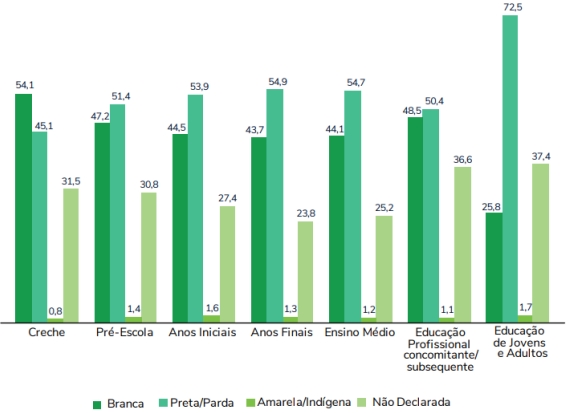
Fonte: Elaborado por Deed/Inep com base nos dados do Censo da Educação Básica
Com base no gráfico acima, analise as assertivas abaixo e assinale V, se verdadeiras, ou F, se falsas.
( ) Alunos declarados de cor amarela ou indígena são minoria em todas as etapas do ensino.
( ) Há um número de matrículas maior na Educação de Jovens e Adultos de alunos de cor/raça preta ou parda.
( ) Alunos de cor branca representam mais da metade dos alunos na etapa creche.
( ) Existe um percentual de mais de vinte e cinco por cento, em todas as etapas, de alunos que não declararam sua cor/raça.
( ) O menor percentual de alunos de cor branca é na etapa de Educação de Jovens e Adultos.
A ordem correta de preenchimento dos parênteses, de cima para baixo, é:
Fonte: Elaborado por Deed/Inep com base nos dados do Censo da Educação Básica
Com base no gráfico acima, analise as assertivas abaixo e assinale V, se verdadeiras, ou F, se falsas.
( ) Alunos declarados de cor amarela ou indígena são minoria em todas as etapas do ensino.
( ) Há um número de matrículas maior na Educação de Jovens e Adultos de alunos de cor/raça preta ou parda.
( ) Alunos de cor branca representam mais da metade dos alunos na etapa creche.
( ) Existe um percentual de mais de vinte e cinco por cento, em todas as etapas, de alunos que não declararam sua cor/raça.
( ) O menor percentual de alunos de cor branca é na etapa de Educação de Jovens e Adultos.
A ordem correta de preenchimento dos parênteses, de cima para baixo, é:
Ano: 2021
Banca:
FUNDATEC
Órgão:
Prefeitura de Cariacica - ES
Provas:
FUNDATEC - 2021 - Prefeitura de Cariacica - ES - Professor MAPB - Área de Conhecimento - Geografia
|
FUNDATEC - 2021 - Prefeitura de Cariacica - ES - Professor MAPB - Área de Conhecimento - Matemática |
FUNDATEC - 2021 - Prefeitura de Cariacica - ES - Professor MAPB - Área de Conhecimento - Língua Portuguesa |
FUNDATEC - 2021 - Prefeitura de Cariacica - ES - Professor MAPB - Área de Conhecimento - História |
FUNDATEC - 2021 - Prefeitura de Cariacica - ES - Professor MAPA1 - Professor de Ensino "A" - Turmas de Educação Infantil |
Q4177851
Raciocínio Lógico
Três amigas, Juliana, Nicole e Luana, são mães do Raul, da Lydia e do Gael, mas não
sabemos quem é mãe de quem. Elas moram nas cidades de Estância Velha, Viamão e Porto Alegre,
mas também não sabemos onde cada uma mora. Analise as afirmações abaixo para descobrir quem
são os filhos das três amigas e quais são as cidades onde moram:
Quem mora em Estância Velha é mãe de Gael.
Luana mora em Porto Alegre.
Raul não é filho da Luana.
Juliana não mora em Viamão.
I. Juliana é mãe de Gael.
II. Raul mora em Viamão.
III. Luana é mãe de Lydia.
Quais estão corretas?
Quem mora em Estância Velha é mãe de Gael.
Luana mora em Porto Alegre.
Raul não é filho da Luana.
Juliana não mora em Viamão.
Com base nessas informações, analise as assertivas abaixo:
I. Juliana é mãe de Gael.
II. Raul mora em Viamão.
III. Luana é mãe de Lydia.
Quais estão corretas?
Ano: 2021
Banca:
FUNDATEC
Órgão:
Prefeitura de Cariacica - ES
Provas:
FUNDATEC - 2021 - Prefeitura de Cariacica - ES - Professor MAPB - Área de Conhecimento - Geografia
|
FUNDATEC - 2021 - Prefeitura de Cariacica - ES - Professor MAPB - Área de Conhecimento - Matemática |
FUNDATEC - 2021 - Prefeitura de Cariacica - ES - Professor MAPB - Área de Conhecimento - Língua Portuguesa |
FUNDATEC - 2021 - Prefeitura de Cariacica - ES - Professor MAPB - Área de Conhecimento - História |
FUNDATEC - 2021 - Prefeitura de Cariacica - ES - Professor MAPA1 - Professor de Ensino "A" - Turmas de Educação Infantil |
Q4177850
Raciocínio Lógico
Analise a sequência de números abaixo:
84 – 79 – 75 – 70 – 66 – 61 – ____
Após análise, qual será o próximo número da sequência?
84 – 79 – 75 – 70 – 66 – 61 – ____
Após análise, qual será o próximo número da sequência?
Ano: 2021
Banca:
FUNDATEC
Órgão:
Prefeitura de Cariacica - ES
Provas:
FUNDATEC - 2021 - Prefeitura de Cariacica - ES - Professor MAPB - Área de Conhecimento - Geografia
|
FUNDATEC - 2021 - Prefeitura de Cariacica - ES - Professor MAPB - Área de Conhecimento - Matemática |
FUNDATEC - 2021 - Prefeitura de Cariacica - ES - Professor MAPB - Área de Conhecimento - Língua Portuguesa |
FUNDATEC - 2021 - Prefeitura de Cariacica - ES - Professor MAPB - Área de Conhecimento - História |
FUNDATEC - 2021 - Prefeitura de Cariacica - ES - Professor MAPA1 - Professor de Ensino "A" - Turmas de Educação Infantil |
Q4177849
Pedagogia
Para Moran (2018), existem mais de cem Metodologias Ativas, há algumas
diferenciações, mas todas têm algo em comum, que é:
Ano: 2021
Banca:
FUNDATEC
Órgão:
Prefeitura de Cariacica - ES
Provas:
FUNDATEC - 2021 - Prefeitura de Cariacica - ES - Professor MAPB - Área de Conhecimento - Geografia
|
FUNDATEC - 2021 - Prefeitura de Cariacica - ES - Professor MAPB - Área de Conhecimento - Matemática |
FUNDATEC - 2021 - Prefeitura de Cariacica - ES - Professor MAPB - Área de Conhecimento - Língua Portuguesa |
FUNDATEC - 2021 - Prefeitura de Cariacica - ES - Professor MAPB - Área de Conhecimento - História |
FUNDATEC - 2021 - Prefeitura de Cariacica - ES - Professor MAPA1 - Professor de Ensino "A" - Turmas de Educação Infantil |
Q4177848
Pedagogia
O aluno estuda o material da aula previamente, e já tem informações para tirar
dúvidas e aprofundar o conhecimento. Diferente do que é feito no ensino tradicional, o aluno estuda
sozinho primeiro para depois aplicar os conceitos e tirar dúvidas com os colegas e com os
professores. Assim, a teoria é estudada em casa remotamente, e, na sala de aula, os alunos aplicam
e resolvem atividades. O trecho acima descreve um modelo de ensino híbrido denominado:
Ano: 2021
Banca:
FUNDATEC
Órgão:
Prefeitura de Cariacica - ES
Provas:
FUNDATEC - 2021 - Prefeitura de Cariacica - ES - Professor MAPB - Área de Conhecimento - Geografia
|
FUNDATEC - 2021 - Prefeitura de Cariacica - ES - Professor MAPB - Área de Conhecimento - Matemática |
FUNDATEC - 2021 - Prefeitura de Cariacica - ES - Professor MAPB - Área de Conhecimento - Língua Portuguesa |
FUNDATEC - 2021 - Prefeitura de Cariacica - ES - Professor MAPB - Área de Conhecimento - História |
FUNDATEC - 2021 - Prefeitura de Cariacica - ES - Professor MAPA1 - Professor de Ensino "A" - Turmas de Educação Infantil |
Q4177847
Pedagogia
A respeito do currículo, Vasconcellos (2013) faz as seguintes afirmações:
I. Uma das funções básicas do currículo escolar é possibilitar a relação do educando com as objetivações humanas, com objetos culturais relevantes, que despertam, que criam a sensibilidade humana.
II. O currículo é um processo mecânico e natural que se desdobra em si mesmo a partir de definições dadas a priori.
III. O currículo deve contribuir para o processo de desalienação dos sujeitos.
Quais estão corretas?
I. Uma das funções básicas do currículo escolar é possibilitar a relação do educando com as objetivações humanas, com objetos culturais relevantes, que despertam, que criam a sensibilidade humana.
II. O currículo é um processo mecânico e natural que se desdobra em si mesmo a partir de definições dadas a priori.
III. O currículo deve contribuir para o processo de desalienação dos sujeitos.
Quais estão corretas?
Ano: 2021
Banca:
FUNDATEC
Órgão:
Prefeitura de Cariacica - ES
Provas:
FUNDATEC - 2021 - Prefeitura de Cariacica - ES - Professor MAPB - Área de Conhecimento - Geografia
|
FUNDATEC - 2021 - Prefeitura de Cariacica - ES - Professor MAPB - Área de Conhecimento - Matemática |
FUNDATEC - 2021 - Prefeitura de Cariacica - ES - Professor MAPB - Área de Conhecimento - Língua Portuguesa |
FUNDATEC - 2021 - Prefeitura de Cariacica - ES - Professor MAPB - Área de Conhecimento - História |
FUNDATEC - 2021 - Prefeitura de Cariacica - ES - Professor MAPA1 - Professor de Ensino "A" - Turmas de Educação Infantil |
Q4177846
Pedagogia
Freitas (2020) destaca que o Ensino Híbrido oferece uma série de vantagens aos
alunos, dentre elas:
I. Flexibilidade no tempo de estudo.
II. Possibilidade aos alunos mais introspectivos de romperem a barreira da timidez.
III. Facilidade em relação ao trabalho colaborativo do aluno mediado pela tecnologia.
Quais estão corretas?
I. Flexibilidade no tempo de estudo.
II. Possibilidade aos alunos mais introspectivos de romperem a barreira da timidez.
III. Facilidade em relação ao trabalho colaborativo do aluno mediado pela tecnologia.
Quais estão corretas?
Ano: 2021
Banca:
FUNDATEC
Órgão:
Prefeitura de Cariacica - ES
Provas:
FUNDATEC - 2021 - Prefeitura de Cariacica - ES - Professor MAPB - Área de Conhecimento - Geografia
|
FUNDATEC - 2021 - Prefeitura de Cariacica - ES - Professor MAPB - Área de Conhecimento - Matemática |
FUNDATEC - 2021 - Prefeitura de Cariacica - ES - Professor MAPB - Área de Conhecimento - Língua Portuguesa |
FUNDATEC - 2021 - Prefeitura de Cariacica - ES - Professor MAPB - Área de Conhecimento - História |
FUNDATEC - 2021 - Prefeitura de Cariacica - ES - Professor MAPA1 - Professor de Ensino "A" - Turmas de Educação Infantil |
Q4177845
Pedagogia
Segundo Camargo (2018), dentre as características das metodologias ativas está:
Ano: 2021
Banca:
FUNDATEC
Órgão:
Prefeitura de Cariacica - ES
Provas:
FUNDATEC - 2021 - Prefeitura de Cariacica - ES - Professor MAPB - Área de Conhecimento - Geografia
|
FUNDATEC - 2021 - Prefeitura de Cariacica - ES - Professor MAPB - Área de Conhecimento - Matemática |
FUNDATEC - 2021 - Prefeitura de Cariacica - ES - Professor MAPB - Área de Conhecimento - Língua Portuguesa |
FUNDATEC - 2021 - Prefeitura de Cariacica - ES - Professor MAPB - Área de Conhecimento - História |
FUNDATEC - 2021 - Prefeitura de Cariacica - ES - Professor MAPA1 - Professor de Ensino "A" - Turmas de Educação Infantil |
Q4177844
Pedagogia
Sobre os estudos de recuperação, o Art.24 da Lei nº 9.394/1996 dispõe que devam
ser:
I. Disciplinados pelas instituições de ensino em seus regimentos.
II. Organizados de preferência paralelos ao período letivo.
III. Facultativos aos casos de rendimento escolar insuficiente.
Quais estão corretos?
I. Disciplinados pelas instituições de ensino em seus regimentos.
II. Organizados de preferência paralelos ao período letivo.
III. Facultativos aos casos de rendimento escolar insuficiente.
Quais estão corretos?
Ano: 2021
Banca:
FUNDATEC
Órgão:
Prefeitura de Cariacica - ES
Provas:
FUNDATEC - 2021 - Prefeitura de Cariacica - ES - Professor MAPB - Área de Conhecimento - Geografia
|
FUNDATEC - 2021 - Prefeitura de Cariacica - ES - Professor MAPB - Área de Conhecimento - Matemática |
FUNDATEC - 2021 - Prefeitura de Cariacica - ES - Professor MAPB - Área de Conhecimento - Língua Portuguesa |
FUNDATEC - 2021 - Prefeitura de Cariacica - ES - Professor MAPB - Área de Conhecimento - História |
FUNDATEC - 2021 - Prefeitura de Cariacica - ES - Professor MAPA1 - Professor de Ensino "A" - Turmas de Educação Infantil |
Q4177843
Pedagogia
Segundo a Lei nº 9.394/1996, a educação básica tem por finalidade:
I. Assegurar a formação comum indispensável para o exercício da cidadania.
II. Priorizar a capacitação técnica do estudante.
III. Capacitar o aluno para o mundo do trabalho informal.
Quais estão corretas?
I. Assegurar a formação comum indispensável para o exercício da cidadania.
II. Priorizar a capacitação técnica do estudante.
III. Capacitar o aluno para o mundo do trabalho informal.
Quais estão corretas?
Ano: 2021
Banca:
FUNDATEC
Órgão:
Prefeitura de Cariacica - ES
Provas:
FUNDATEC - 2021 - Prefeitura de Cariacica - ES - Professor MAPB - Área de Conhecimento - Geografia
|
FUNDATEC - 2021 - Prefeitura de Cariacica - ES - Professor MAPB - Área de Conhecimento - Matemática |
FUNDATEC - 2021 - Prefeitura de Cariacica - ES - Professor MAPB - Área de Conhecimento - Língua Portuguesa |
FUNDATEC - 2021 - Prefeitura de Cariacica - ES - Professor MAPB - Área de Conhecimento - História |
FUNDATEC - 2021 - Prefeitura de Cariacica - ES - Professor MAPA1 - Professor de Ensino "A" - Turmas de Educação Infantil |
Q4177842
Pedagogia
A verificação do rendimento escolar, no ensino fundamental e no ensino médio,
segundo a Lei de Diretrizes e Bases da Educação Nacional, deverá observar os seguintes critérios:
I. Aproveitamento de estudos concluídos com êxito.
II. Avaliação contínua e cumulativa do desempenho do aluno, com prevalência dos aspectos qualitativos sobre os quantitativos e dos resultados ao longo do período sobre os de eventuais provas finais.
III. Possibilidade de aceleração de estudos para alunos com atraso escolar.
Quais estão corretos?
I. Aproveitamento de estudos concluídos com êxito.
II. Avaliação contínua e cumulativa do desempenho do aluno, com prevalência dos aspectos qualitativos sobre os quantitativos e dos resultados ao longo do período sobre os de eventuais provas finais.
III. Possibilidade de aceleração de estudos para alunos com atraso escolar.
Quais estão corretos?
Ano: 2021
Banca:
FUNDATEC
Órgão:
Prefeitura de Cariacica - ES
Provas:
FUNDATEC - 2021 - Prefeitura de Cariacica - ES - Professor MAPB - Área de Conhecimento - Geografia
|
FUNDATEC - 2021 - Prefeitura de Cariacica - ES - Professor MAPB - Área de Conhecimento - Matemática |
FUNDATEC - 2021 - Prefeitura de Cariacica - ES - Professor MAPB - Área de Conhecimento - Língua Portuguesa |
FUNDATEC - 2021 - Prefeitura de Cariacica - ES - Professor MAPB - Área de Conhecimento - História |
FUNDATEC - 2021 - Prefeitura de Cariacica - ES - Professor MAPA1 - Professor de Ensino "A" - Turmas de Educação Infantil |
Q4177841
Legislação dos Municípios do Estado do Espírito Santo
NÃO corresponde a uma das diretrizes do Plano Municipal de Educação de Cariacica:
Ano: 2021
Banca:
FUNDATEC
Órgão:
Prefeitura de Cariacica - ES
Provas:
FUNDATEC - 2021 - Prefeitura de Cariacica - ES - Professor MAPB - Área de Conhecimento - Geografia
|
FUNDATEC - 2021 - Prefeitura de Cariacica - ES - Professor MAPB - Área de Conhecimento - Matemática |
FUNDATEC - 2021 - Prefeitura de Cariacica - ES - Professor MAPB - Área de Conhecimento - Língua Portuguesa |
FUNDATEC - 2021 - Prefeitura de Cariacica - ES - Professor MAPB - Área de Conhecimento - História |
FUNDATEC - 2021 - Prefeitura de Cariacica - ES - Professor MAPA1 - Professor de Ensino "A" - Turmas de Educação Infantil |
Q4177840
Direito da Criança e do Adolescente - Estatuto da Criança e do Adolescente (ECA) - Lei nº 8.069 de 1990
O Art. 16 da Lei nº 8.069/1990 afirma que o direito à liberdade de crianças e
adolescentes compreende os seguintes aspectos:
I. Candidatar-se nas eleições gerais a cargos do executivo municipal.
II. Brincar, praticar esportes e divertir-se.
III. Participar do mercado de trabalho formal e informal, sem discriminação.
Quais estão corretas?
I. Candidatar-se nas eleições gerais a cargos do executivo municipal.
II. Brincar, praticar esportes e divertir-se.
III. Participar do mercado de trabalho formal e informal, sem discriminação.
Quais estão corretas?
Ano: 2021
Banca:
FUNDATEC
Órgão:
Prefeitura de Cariacica - ES
Provas:
FUNDATEC - 2021 - Prefeitura de Cariacica - ES - Professor MAPB - Área de Conhecimento - Geografia
|
FUNDATEC - 2021 - Prefeitura de Cariacica - ES - Professor MAPB - Área de Conhecimento - Matemática |
FUNDATEC - 2021 - Prefeitura de Cariacica - ES - Professor MAPB - Área de Conhecimento - Língua Portuguesa |
FUNDATEC - 2021 - Prefeitura de Cariacica - ES - Professor MAPB - Área de Conhecimento - História |
FUNDATEC - 2021 - Prefeitura de Cariacica - ES - Professor MAPA1 - Professor de Ensino "A" - Turmas de Educação Infantil |
Q4177839
Português
Texto associado
Instrução: A questão refere-se ao texto abaixo. Os destaques ao longo do texto está citado na questão.
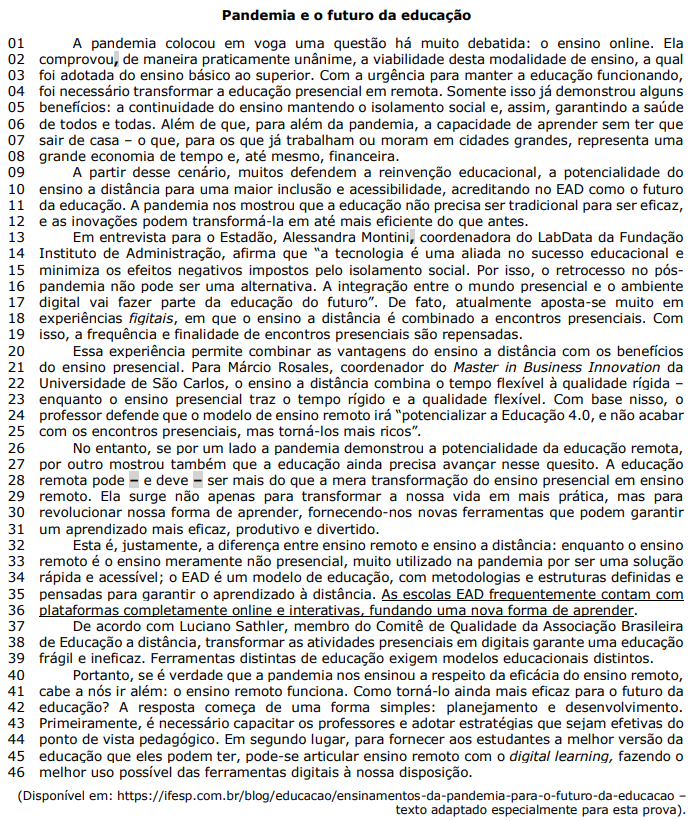
Sobre estratégias argumentativas, analise as seguintes assertivas:
I. O autor do texto se vale do argumento de autoridade mais de uma vez.
II. Não é possível identificar argumento de exemplificação no texto.
III. Há, pelo menos, um argumento por comprovação.
Quais estão corretas?
I. O autor do texto se vale do argumento de autoridade mais de uma vez.
II. Não é possível identificar argumento de exemplificação no texto.
III. Há, pelo menos, um argumento por comprovação.
Quais estão corretas?
Ano: 2021
Banca:
FUNDATEC
Órgão:
Prefeitura de Cariacica - ES
Provas:
FUNDATEC - 2021 - Prefeitura de Cariacica - ES - Professor MAPB - Área de Conhecimento - Geografia
|
FUNDATEC - 2021 - Prefeitura de Cariacica - ES - Professor MAPB - Área de Conhecimento - Matemática |
FUNDATEC - 2021 - Prefeitura de Cariacica - ES - Professor MAPB - Área de Conhecimento - Língua Portuguesa |
FUNDATEC - 2021 - Prefeitura de Cariacica - ES - Professor MAPB - Área de Conhecimento - História |
FUNDATEC - 2021 - Prefeitura de Cariacica - ES - Professor MAPA1 - Professor de Ensino "A" - Turmas de Educação Infantil |
Q4177838
Português
Texto associado
Instrução: A questão refere-se ao texto abaixo. Os destaques ao longo do texto está citado na questão.
Assinale a alternativa que apresenta corretamente o sujeito do verbo “mostrou”
(l. 27).
Ano: 2021
Banca:
FUNDATEC
Órgão:
Prefeitura de Cariacica - ES
Provas:
FUNDATEC - 2021 - Prefeitura de Cariacica - ES - Professor MAPB - Área de Conhecimento - Geografia
|
FUNDATEC - 2021 - Prefeitura de Cariacica - ES - Professor MAPB - Área de Conhecimento - Matemática |
FUNDATEC - 2021 - Prefeitura de Cariacica - ES - Professor MAPB - Área de Conhecimento - Língua Portuguesa |
FUNDATEC - 2021 - Prefeitura de Cariacica - ES - Professor MAPB - Área de Conhecimento - História |
FUNDATEC - 2021 - Prefeitura de Cariacica - ES - Professor MAPA1 - Professor de Ensino "A" - Turmas de Educação Infantil |
Q4177837
Português
Texto associado
Instrução: A questão refere-se ao texto abaixo. Os destaques ao longo do texto está citado na questão.
A respeito da ortografia de palavras no texto, analise as assertivas a seguir.
I. A palavra “voga”, na linha 01, está grafada incorretamente, pois, considerando o contexto de ocorrência, o certo seria utilizar a palavra “vaga”.
II. O termo “quesito”, na linha 27, além de estar grafado incorretamente, pois essa palavra deve ser escrita com “z” no lugar de “s”, também não se aplica ao contexto.
III. A palavra “estratégias”, na linha 43, está escrita incorretamente, pois deve ser grafada “estratégeas”.
Quais estão INCORRETAS?
I. A palavra “voga”, na linha 01, está grafada incorretamente, pois, considerando o contexto de ocorrência, o certo seria utilizar a palavra “vaga”.
II. O termo “quesito”, na linha 27, além de estar grafado incorretamente, pois essa palavra deve ser escrita com “z” no lugar de “s”, também não se aplica ao contexto.
III. A palavra “estratégias”, na linha 43, está escrita incorretamente, pois deve ser grafada “estratégeas”.
Quais estão INCORRETAS?
Ano: 2021
Banca:
FUNDATEC
Órgão:
Prefeitura de Cariacica - ES
Provas:
FUNDATEC - 2021 - Prefeitura de Cariacica - ES - Professor MAPB - Área de Conhecimento - Geografia
|
FUNDATEC - 2021 - Prefeitura de Cariacica - ES - Professor MAPB - Área de Conhecimento - Matemática |
FUNDATEC - 2021 - Prefeitura de Cariacica - ES - Professor MAPB - Área de Conhecimento - Língua Portuguesa |
FUNDATEC - 2021 - Prefeitura de Cariacica - ES - Professor MAPB - Área de Conhecimento - História |
FUNDATEC - 2021 - Prefeitura de Cariacica - ES - Professor MAPA1 - Professor de Ensino "A" - Turmas de Educação Infantil |
Q4177836
Português
Texto associado
Instrução: A questão refere-se ao texto abaixo. Os destaques ao longo do texto está citado na questão.
Sobre sinais de pontuação, analise as assertivas abaixo:
I. A vírgula da linha 02 está empregada incorretamente, pois separa o sujeito de seu predicado verbal.
II. A vírgula da linha 13 introduz um aposto.
III. Os travessões da linha 28 marcam a introdução de uma fala.
Quais estão corretas?
I. A vírgula da linha 02 está empregada incorretamente, pois separa o sujeito de seu predicado verbal.
II. A vírgula da linha 13 introduz um aposto.
III. Os travessões da linha 28 marcam a introdução de uma fala.
Quais estão corretas?
Ano: 2021
Banca:
FUNDATEC
Órgão:
Prefeitura de Cariacica - ES
Provas:
FUNDATEC - 2021 - Prefeitura de Cariacica - ES - Professor MAPB - Área de Conhecimento - Geografia
|
FUNDATEC - 2021 - Prefeitura de Cariacica - ES - Professor MAPB - Área de Conhecimento - Matemática |
FUNDATEC - 2021 - Prefeitura de Cariacica - ES - Professor MAPB - Área de Conhecimento - Língua Portuguesa |
FUNDATEC - 2021 - Prefeitura de Cariacica - ES - Professor MAPB - Área de Conhecimento - História |
FUNDATEC - 2021 - Prefeitura de Cariacica - ES - Professor MAPA1 - Professor de Ensino "A" - Turmas de Educação Infantil |
Q4177835
Português
Texto associado
Instrução: A questão refere-se ao texto abaixo. Os destaques ao longo do texto está citado na questão.
Quantas orações há no trecho sublinhado do texto?
Ano: 2021
Banca:
FUNDATEC
Órgão:
Prefeitura de Cariacica - ES
Provas:
FUNDATEC - 2021 - Prefeitura de Cariacica - ES - Professor MAPB - Área de Conhecimento - Geografia
|
FUNDATEC - 2021 - Prefeitura de Cariacica - ES - Professor MAPB - Área de Conhecimento - Matemática |
FUNDATEC - 2021 - Prefeitura de Cariacica - ES - Professor MAPB - Área de Conhecimento - Língua Portuguesa |
FUNDATEC - 2021 - Prefeitura de Cariacica - ES - Professor MAPB - Área de Conhecimento - História |
FUNDATEC - 2021 - Prefeitura de Cariacica - ES - Professor MAPA1 - Professor de Ensino "A" - Turmas de Educação Infantil |
Q4177834
Português
Texto associado
Instrução: A questão refere-se ao texto abaixo. Os destaques ao longo do texto está citado na questão.
Sobre nexos coesivos, analise as assertivas abaixo e assinale V, se verdadeiras, ou
F, se falsas.
( ) “No entanto”, na linha 26, expressa um sentido de contraste entre a ideia anteriormente apresentada e a ideia que ele introduz.
( ) “enquanto”, na linha 32, expressa uma ideia de concessão.
( ) “Portanto”, na linha 40, expressa a ideia de finalidade.
A ordem correta de preenchimento dos parênteses, de cima para baixo, é:
( ) “No entanto”, na linha 26, expressa um sentido de contraste entre a ideia anteriormente apresentada e a ideia que ele introduz.
( ) “enquanto”, na linha 32, expressa uma ideia de concessão.
( ) “Portanto”, na linha 40, expressa a ideia de finalidade.
A ordem correta de preenchimento dos parênteses, de cima para baixo, é:

 Conheça nossos planos