Selecionar segmento
Estude com questões de diferentes segmentos
Atenção: Isso limpará todos os campos já preenchidos no filtro!
Foram encontradas 642 questões
Resolva questões gratuitamente!
Junte-se a mais de 4 milhões de concurseiros!


Q105419
Inglês
Texto associado
Technology and legal pressure have changed
spammers’ terms of trade. They long relied on sending
more e-mails from more computers, knowing that some
will get through. But it is hard to send 100m e-mails
without someone noticing. In 2008 researchers from the
University of California at Berkeley and San Diego posed
as spammers, infiltrated a botnet and measured its
success rate. The investigation confirmed only 28 “sales”
on 350m e-mail messages sent, a conversion rate
under .00001%. Since then the numbers have got worse.
But spammers are a creative bunch.
 of tricking
consumers into a purchase, they are stealing their money
directly. Links used to direct the gullible to a site selling
counterfeits. Now they install “Trojan” software that
ransacks hard drives for bank details and the like.
Spammers also have become more sophisticated
about exploiting trust. In few places is it granted more
readily than on social-networking sites. Twitter, a forum for
short, telegram-like messages, estimates that only 1% of
its traffic is spam. But researchers from the University of
California at Berkeley and the University of Illinois at
Champaign-Urbana show that 8% of links published were
shady, with
 of them leading to scams and the rest to
Trojans. Links in Twitter messages, they found, are over
20 times more likely to get clicked than those in e-mail
spam.
Nor is Facebook as safe as it seems. As an
experiment, BitDefender, an online-security firm, set up
fake profiles on the social network and asked strangers to
enter into a digital friendship. They were able to create as
many as 100 new friends a day. Offering a profile picture,
particularly of a pretty woman, increased their odds. When
the firm’s researchers expanded their requests to strangers
who shared even one mutual friend, almost half accepted.
Worse, a quarter of BitDefender’s new friends clicked on
links posted by the firm, even when the destination was
obscured.
(Adapted from http://www.economist.com/node/17519964)
Technology and legal pressure have changed
spammers’ terms of trade. They long relied on sending
more e-mails from more computers, knowing that some
will get through. But it is hard to send 100m e-mails
without someone noticing. In 2008 researchers from the
University of California at Berkeley and San Diego posed
as spammers, infiltrated a botnet and measured its
success rate. The investigation confirmed only 28 “sales”
on 350m e-mail messages sent, a conversion rate
under .00001%. Since then the numbers have got worse.
But spammers are a creative bunch.
of tricking consumers into a purchase, they are stealing their money
directly. Links used to direct the gullible to a site selling
counterfeits. Now they install “Trojan” software that
ransacks hard drives for bank details and the like.
Spammers also have become more sophisticated
about exploiting trust. In few places is it granted more
readily than on social-networking sites. Twitter, a forum for
short, telegram-like messages, estimates that only 1% of
its traffic is spam. But researchers from the University of
California at Berkeley and the University of Illinois at
Champaign-Urbana show that 8% of links published were
shady, with
of them leading to scams and the rest to Trojans. Links in Twitter messages, they found, are over
20 times more likely to get clicked than those in e-mail
spam.
Nor is Facebook as safe as it seems. As an
experiment, BitDefender, an online-security firm, set up
fake profiles on the social network and asked strangers to
enter into a digital friendship. They were able to create as
many as 100 new friends a day. Offering a profile picture,
particularly of a pretty woman, increased their odds. When
the firm’s researchers expanded their requests to strangers
who shared even one mutual friend, almost half accepted.
Worse, a quarter of BitDefender’s new friends clicked on
links posted by the firm, even when the destination was
obscured.
(Adapted from http://www.economist.com/node/17519964)
De acordo com o texto,
Q105418
Inglês
Texto associado
Technology and legal pressure have changed
spammers’ terms of trade. They long relied on sending
more e-mails from more computers, knowing that some
will get through. But it is hard to send 100m e-mails
without someone noticing. In 2008 researchers from the
University of California at Berkeley and San Diego posed
as spammers, infiltrated a botnet and measured its
success rate. The investigation confirmed only 28 “sales”
on 350m e-mail messages sent, a conversion rate
under .00001%. Since then the numbers have got worse.
But spammers are a creative bunch.
of tricking
consumers into a purchase, they are stealing their money
directly. Links used to direct the gullible to a site selling
counterfeits. Now they install “Trojan” software that
ransacks hard drives for bank details and the like.
Spammers also have become more sophisticated
about exploiting trust. In few places is it granted more
readily than on social-networking sites. Twitter, a forum for
short, telegram-like messages, estimates that only 1% of
its traffic is spam. But researchers from the University of
California at Berkeley and the University of Illinois at
Champaign-Urbana show that 8% of links published were
shady, with
of them leading to scams and the rest to
Trojans. Links in Twitter messages, they found, are over
20 times more likely to get clicked than those in e-mail
spam.
Nor is Facebook as safe as it seems. As an
experiment, BitDefender, an online-security firm, set up
fake profiles on the social network and asked strangers to
enter into a digital friendship. They were able to create as
many as 100 new friends a day. Offering a profile picture,
particularly of a pretty woman, increased their odds. When
the firm’s researchers expanded their requests to strangers
who shared even one mutual friend, almost half accepted.
Worse, a quarter of BitDefender’s new friends clicked on
links posted by the firm, even when the destination was
obscured.
(Adapted from http://www.economist.com/node/17519964)
Technology and legal pressure have changed
spammers’ terms of trade. They long relied on sending
more e-mails from more computers, knowing that some
will get through. But it is hard to send 100m e-mails
without someone noticing. In 2008 researchers from the
University of California at Berkeley and San Diego posed
as spammers, infiltrated a botnet and measured its
success rate. The investigation confirmed only 28 “sales”
on 350m e-mail messages sent, a conversion rate
under .00001%. Since then the numbers have got worse.
But spammers are a creative bunch.
of tricking consumers into a purchase, they are stealing their money
directly. Links used to direct the gullible to a site selling
counterfeits. Now they install “Trojan” software that
ransacks hard drives for bank details and the like.
Spammers also have become more sophisticated
about exploiting trust. In few places is it granted more
readily than on social-networking sites. Twitter, a forum for
short, telegram-like messages, estimates that only 1% of
its traffic is spam. But researchers from the University of
California at Berkeley and the University of Illinois at
Champaign-Urbana show that 8% of links published were
shady, with
of them leading to scams and the rest to Trojans. Links in Twitter messages, they found, are over
20 times more likely to get clicked than those in e-mail
spam.
Nor is Facebook as safe as it seems. As an
experiment, BitDefender, an online-security firm, set up
fake profiles on the social network and asked strangers to
enter into a digital friendship. They were able to create as
many as 100 new friends a day. Offering a profile picture,
particularly of a pretty woman, increased their odds. When
the firm’s researchers expanded their requests to strangers
who shared even one mutual friend, almost half accepted.
Worse, a quarter of BitDefender’s new friends clicked on
links posted by the firm, even when the destination was
obscured.
(Adapted from http://www.economist.com/node/17519964)
A alternativa que preenche corretamente a lacuna  é
é
é
Ano: 2011
Banca:
FCC
Órgão:
TRE-RN
Prova:
FCC - 2011 - TRE-RN - Analista Judiciário - Engenharia Civil |
Q105404
Engenharia Civil
Considere a viga biapoiada apresentada na figura.
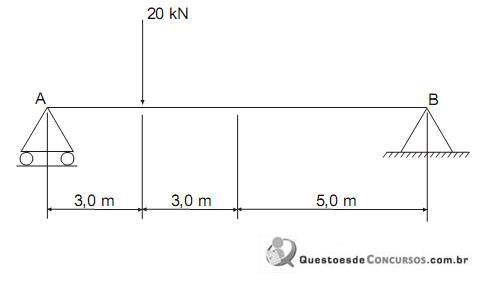
O momento fletor, em kN.m, e o esforço cortante, em kN, máximos na viga são, respectivamente,
O momento fletor, em kN.m, e o esforço cortante, em kN, máximos na viga são, respectivamente,
Ano: 2011
Banca:
FCC
Órgão:
TRE-RN
Prova:
FCC - 2011 - TRE-RN - Analista Judiciário - Engenharia Civil |
Q105403
Engenharia Civil
Considere:
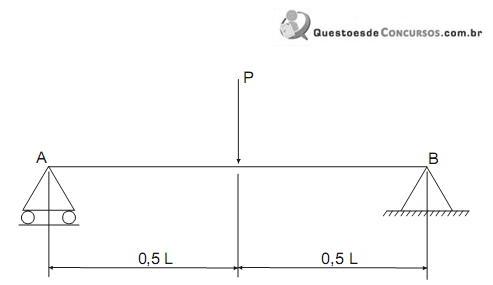
O deslocamento vertical máximo de uma viga simplesmente apoiada, submetida a uma carga concentrada no meio do vão é
O deslocamento vertical máximo de uma viga simplesmente apoiada, submetida a uma carga concentrada no meio do vão é
Ano: 2011
Banca:
FCC
Órgão:
TRE-RN
Prova:
FCC - 2011 - TRE-RN - Analista Judiciário - Engenharia Civil |
Q105402
Engenharia Civil
A emenda de barras de aço em estruturas de concreto armado por traspasse NÃO é permitida em barras com diâmetro maior que, em mm,
Ano: 2011
Banca:
FCC
Órgão:
TRE-RN
Prova:
FCC - 2011 - TRE-RN - Analista Judiciário - Engenharia Civil |
Q105401
Engenharia Civil
Se não forem considerados os efeitos de retração térmica do concreto no dimensionamento das estruturas de concreto armado, a distância das juntas de concretagem deve ser prevista a cada
Ano: 2011
Banca:
FCC
Órgão:
TRE-RN
Prova:
FCC - 2011 - TRE-RN - Analista Judiciário - Engenharia Civil |
Q105400
Engenharia Civil
Para uma viga de concreto armado aparente, o cobrimento nominal mínimo das armaduras em ambiente classe III de agressividade é, em mm,
Ano: 2011
Banca:
FCC
Órgão:
TRE-RN
Prova:
FCC - 2011 - TRE-RN - Analista Judiciário - Engenharia Civil |
Q105399
Engenharia Civil
A espessura mínima de uma peça principal isolada de uma estrutura de madeira, como uma viga ou uma barra longitudinal de treliça é, em cm,
Ano: 2011
Banca:
FCC
Órgão:
TRE-RN
Prova:
FCC - 2011 - TRE-RN - Analista Judiciário - Engenharia Civil |
Q105398
Engenharia Civil
O estado limite de utilização de uma estrutura metálica caracteriza-se pela
Ano: 2011
Banca:
FCC
Órgão:
TRE-RN
Prova:
FCC - 2011 - TRE-RN - Analista Judiciário - Engenharia Civil |
Q105397
Engenharia Civil
Considere as afirmações abaixo sobre ligações em projetos de estruturas metálicas.
I. Parafusos de alta resistência em ligações por contato não podem ser considerados trabalhando em conjunto com soldas em construções novas.
II. Parafusos de alta resistência em ligações por atrito, adequadamente instalados, podem ser considerados trabalhando em conjunto com a solda em construções novas.
III. Devem ser usados soldas ou parafusos de alta resistência com protensão inicial para emendas de pilares nas estruturas com mais de 70 m de altura.
Está correto que se afirma APENAS em
I. Parafusos de alta resistência em ligações por contato não podem ser considerados trabalhando em conjunto com soldas em construções novas.
II. Parafusos de alta resistência em ligações por atrito, adequadamente instalados, podem ser considerados trabalhando em conjunto com a solda em construções novas.
III. Devem ser usados soldas ou parafusos de alta resistência com protensão inicial para emendas de pilares nas estruturas com mais de 70 m de altura.
Está correto que se afirma APENAS em
Ano: 2011
Banca:
FCC
Órgão:
TRE-RN
Prova:
FCC - 2011 - TRE-RN - Analista Judiciário - Engenharia Civil |
Q105396
Engenharia Civil
A norma regulamentadora NR-18 estabelece diretrizes de ordem administrativa, de planejamento e de organização, que objetivam a implementação de medidas de controle e de sistemas preventivos de segurança no meio ambiente de trabalho da indústria da construção. São obrigatórios a elaboração e o cumprimento do PCMAT (Programa de Condições e Meio Ambiente de Trabalho na Indústria da Construção) nos estabelecimentos com, no mínimo,
Ano: 2011
Banca:
FCC
Órgão:
TRE-RN
Prova:
FCC - 2011 - TRE-RN - Analista Judiciário - Engenharia Civil |
Q105395
Engenharia Civil
Considere as afirmações abaixo do cronograma físico-financeiro de uma obra com previsão de duração de seis meses.
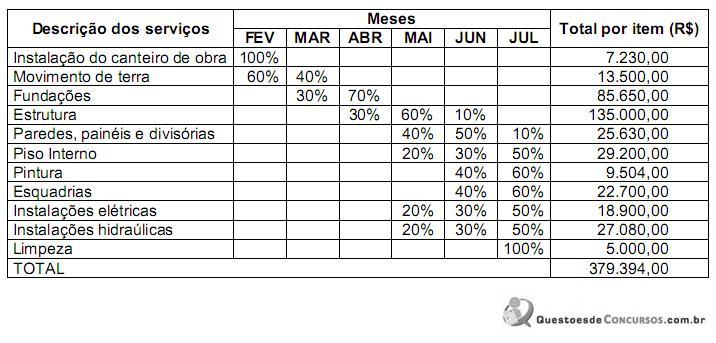
I. O desembolso financeiro para o mês de maio é de R$ 106.288,00.
II. O desembolso financeiro realizado até o mês de abril é de R$ 106.380,00.
III. O serviço de Fundações corresponde a 15,60% do valor total da obra.
Está correto que se afirma em
I. O desembolso financeiro para o mês de maio é de R$ 106.288,00.
II. O desembolso financeiro realizado até o mês de abril é de R$ 106.380,00.
III. O serviço de Fundações corresponde a 15,60% do valor total da obra.
Está correto que se afirma em
Ano: 2011
Banca:
FCC
Órgão:
TRE-RN
Prova:
FCC - 2011 - TRE-RN - Analista Judiciário - Engenharia Civil |
Q105394
Engenharia Civil
Considere a rede representada na figura abaixo.
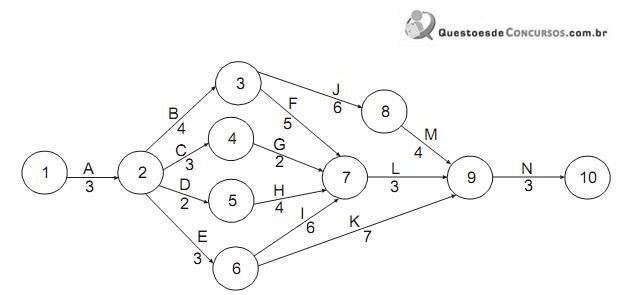
Os círculos representam os eventos, as letras as atividades e a duração, em semanas, é indicada abaixo de cada atividade. O tempo, em semanas, necessário para completar as atividades apresentadas é de
Os círculos representam os eventos, as letras as atividades e a duração, em semanas, é indicada abaixo de cada atividade. O tempo, em semanas, necessário para completar as atividades apresentadas é de
Ano: 2011
Banca:
FCC
Órgão:
TRE-RN
Prova:
FCC - 2011 - TRE-RN - Analista Judiciário - Engenharia Civil |
Q105393
Engenharia Civil
A representação gráfica dos valores dos serviços e obras a serem executados, em conformidade com o cronograma físico, é denominada
Ano: 2011
Banca:
FCC
Órgão:
TRE-RN
Prova:
FCC - 2011 - TRE-RN - Analista Judiciário - Engenharia Civil |
Q105392
Engenharia Civil
Para a identificação do custo de um bem existem diferentes metodologias. O método que identifica o custo do bem por meio de um tratamento técnico dos atributos dos elementos comparáveis constituintes da amostra é denominado
Ano: 2011
Banca:
FCC
Órgão:
TRE-RN
Prova:
FCC - 2011 - TRE-RN - Analista Judiciário - Engenharia Civil |
Q105391
Engenharia Civil
A atividade que envolve a apuração das causas que motivaram determinado evento de engenharia é denominada
Ano: 2011
Banca:
FCC
Órgão:
TRE-RN
Prova:
FCC - 2011 - TRE-RN - Analista Judiciário - Engenharia Civil |
Q105390
Direito Administrativo
A Lei no 8.666/1993 estabelece motivos para a rescisão unilateral do contrato administrativo por parte do Poder Público. Constituem motivos para rescisão do contrato:
I. O atraso injustificado no início da obra, serviço ou fornecimento.
II. A dissolução da sociedade ou o falecimento do contratado.
III. A subcontratação total ou parcial do seu objeto, a associação do contratado com outrem, a cessão ou transferência, total ou parcial, bem como a fusão, cisão ou incorporação, não admitidas no edital e no contrato.
Está correto que se afirma em
I. O atraso injustificado no início da obra, serviço ou fornecimento.
II. A dissolução da sociedade ou o falecimento do contratado.
III. A subcontratação total ou parcial do seu objeto, a associação do contratado com outrem, a cessão ou transferência, total ou parcial, bem como a fusão, cisão ou incorporação, não admitidas no edital e no contrato.
Está correto que se afirma em
Ano: 2011
Banca:
FCC
Órgão:
TRE-RN
Prova:
FCC - 2011 - TRE-RN - Analista Judiciário - Engenharia Civil |
Q105389
Direito Administrativo
De acordo com a Lei no 8.666/1993, obras e serviços de engenharia somente poderão ser licitadas quando:
I. Existir projeto básico aprovado por autoridade competente e disponível para exame dos interessados em participar do processo licitatório.
II. Existir orçamento detalhado do serviço de engenharia e composição dos custos unitários.
III. Existir previsão de recursos orçamentários que assegure o pagamento das obrigações decorrentes de obras ou serviços a serem executados no exercício financeiro em curso, de acordo com o respectivo cronograma.
Está correto que se afirma em
I. Existir projeto básico aprovado por autoridade competente e disponível para exame dos interessados em participar do processo licitatório.
II. Existir orçamento detalhado do serviço de engenharia e composição dos custos unitários.
III. Existir previsão de recursos orçamentários que assegure o pagamento das obrigações decorrentes de obras ou serviços a serem executados no exercício financeiro em curso, de acordo com o respectivo cronograma.
Está correto que se afirma em
Ano: 2011
Banca:
FCC
Órgão:
TRE-RN
Prova:
FCC - 2011 - TRE-RN - Analista Judiciário - Engenharia Civil |
Q105388
Direito Administrativo
A Lei no 8.666/1993, que fixa normas para licitações e contratos da Administração Pública, estabelece que a modalidade de licitação entre interessados devidamente cadastrados ou que atendam a todas as condições exigidas para cadastramento até o terceiro dia anterior à data do recebimento das propostas, observada a necessária qualificação, é denominada
Ano: 2011
Banca:
FCC
Órgão:
TRE-RN
Prova:
FCC - 2011 - TRE-RN - Analista Judiciário - Engenharia Civil |
Q105387
Engenharia Civil
Na elaboração do orçamento de uma obra, o preço global resultará na soma dos custos diretos da obra e da taxa de BDI. A taxa de BDI é composta por:
I. ISS, COFINS e PIS/PASEP.
II. Lucro líquido do empreendimento.
III. Taxa de riscos do empreendimento.
IV. Materiais e mão de obra.
Está correto que se afirma APENAS em
I. ISS, COFINS e PIS/PASEP.
II. Lucro líquido do empreendimento.
III. Taxa de riscos do empreendimento.
IV. Materiais e mão de obra.
Está correto que se afirma APENAS em

 Conheça nossos planos